








If you are comparing quotes, it often looks like is low MOQ clothing manufacturing more expensive has an easy answer: yes, the unit price is usually higher. But the more useful answer for apparel buyers is that low MOQ changes how costs are distributed, not just how much each piece costs. For many brands, the real question is whether a smaller run lowers risk enough to justify the higher per-unit price.
For buyers looking for low MOQ clothing manufacturing options, the decision is rarely about price alone. At Ninghow, we usually help brands look at fabric availability, trim sourcing, pattern setup, sampling, decoration methods, and packaging so they can judge whether a small run is a smart launch strategy or an expensive way to produce the same product. That broader view matters because the cheapest quote is not always the cheapest outcome once inventory, sell-through, and reorders are considered.
What low MOQ clothing manufacturing means in practice
Low MOQ means the factory agrees to produce a smaller quantity than its standard bulk minimum. In apparel, that can mean dozens of units instead of hundreds or thousands, depending on the garment type, fabric, and customization level. The main trade-off is flexibility: you can test demand sooner, but you lose some scale efficiency.
In practice, low MOQ can work well when a brand wants to launch a new style, test a new market, or reduce the risk of overbuying inventory. It is especially useful when buyers need apparel sampling and fit validation before bulk orders because the sample stage reveals sizing, construction, and decoration issues before money is tied up in a larger run.
Why the same garment can cost more in a smaller run
The garment itself may not be fundamentally different, but the factory has to divide setup, planning, and material handling across fewer pieces. That means the overhead per unit increases. A small order still requires fabric cutting, sewing line preparation, QC checks, trims, labels, and packing, even if the order is only a fraction of a standard production lot.
Key takeaway: low MOQ usually costs more per piece because the factory’s fixed work does not shrink at the same pace as the order quantity.
Unit cost vs. total business cost: the comparison buyers should make

The biggest mistake we see is comparing only unit price. A $10 higher unit cost can still be the better deal if the smaller order prevents dead stock, markdowns, storage fees, and cash flow pressure. That is why pricing should be measured against the full business outcome, not just the invoice.
When buyers evaluate how to compare supplier quotes beyond unit price, we recommend separating direct manufacturing cost from business risk. Direct cost is what you pay the factory. Business cost includes inventory held too long, unsold sizes, delayed launches, and the capital you cannot use elsewhere while stock sits in a warehouse.
| Cost Factor | Low MOQ | Standard MOQ / Bulk |
|---|---|---|
| Per-piece manufacturing cost | Usually higher | Usually lower |
| Inventory risk | Lower | Higher |
| Cash tied up upfront | Lower | Higher |
| Production efficiency | Lower | Higher |
| Flexibility to test demand | Higher | Lower |
University inventory and production models also support this logic: larger runs lower unit cost because fixed setup is spread over more units, but they can increase inventory carrying costs and exposure if demand is uncertain. That is why a quote should be read as a trade-off between production efficiency and stock risk, not as a simple yes-or-no cost verdict. A useful reference on that relationship is Cornell University’s explanation of why larger production runs usually lower unit cost.
Why low MOQ orders usually have a higher per-piece price
Low MOQ pricing is typically higher because the factory cannot dilute setup expenses across a large volume. Even before production begins, the team may need to source fabric, match color, prepare patterns, test decoration, and coordinate trims. Those tasks take time whether the order is 50 pieces or 500.
There is also less room for material optimization. Fabric suppliers often price more favorably at larger volumes, and production teams can plan cutting, sewing, and finishing more efficiently when the order is bigger. For a low MOQ project, the factory often works with smaller fabric buys, more manual handling, and shorter production runs, all of which can raise the per-piece cost.
- Setup time is spread over fewer units.
- Fabric and trims may cost more in smaller quantities.
- Cutting efficiency is lower, so fabric waste can be higher.
- Labor productivity is usually better in longer runs.
- Packaging and labeling are often less automated for small batches.
Key takeaway: low MOQ is not overpriced by definition; it simply carries less scale efficiency than a full bulk run.
The hidden cost drivers behind low MOQ apparel cost
Buyers often focus on fabric weight or garment style, but the real cost drivers are usually broader. Two orders that look similar on paper can produce very different quotes once the factory evaluates fabric sourcing, construction complexity, and finishing requirements. That is why we review the full product brief before we talk about numbers.
From our manufacturing perspective, the biggest hidden cost drivers are the ones that reduce process efficiency or add manual steps. If you want to estimate whether is low MOQ clothing manufacturing more expensive for your specific product, you should look at the following variables first.
| Cost Driver | Why It Raises Low MOQ Price | What Buyers Can Do |
|---|---|---|
| Fabric sourcing | Small buys may not qualify for better mill pricing | Use fabrics already stocked or widely available |
| Cutting efficiency | Smaller spreads can increase waste | Choose simpler pattern layouts where possible |
| Sampling iterations | More rounds add labor and time | Prepare clear specs and reference samples |
| Printing or embroidery | Setup charges do not shrink much in small runs | Keep decoration placements efficient |
| Trims and labels | Custom components often have minimums | Standardize labels and packaging if launching small |
Fabric sourcing and GSM choices
Fabric choice affects both cost and manufacturability. A common cotton jersey may be easier to source in low quantities than a custom-knit or specialty performance fabric. Heavier GSM options may also increase fabric cost and reduce yield, while very lightweight fabrics can require extra care during cutting and sewing.
For a brand comparing options, the right question is not only “What is the cheapest fabric?” but “What fabric gives the best balance of hand feel, durability, and order flexibility?” That is especially important when product teams are building a first collection and need reliable repeatability across styles.
Decoration method and production setup
Printing, embroidery, heat transfer, and sublimation each affect cost differently. Screen printing can be efficient on larger runs, but the setup is harder to amortize in small orders. Embroidery adds a premium because it requires digitizing and machine setup, though the actual price impact depends on stitch count and placement.
If your garment uses multiple logos, sleeve prints, woven patches, or special finishing, low MOQ can become more expensive quickly because every added detail creates another setup point. This is one reason we ask buyers to clarify logo size, placement, and artwork format early in the process.
How low MOQ reduces inventory risk and cash flow pressure
Low MOQ may cost more per piece, but it can reduce the total cost of a weak launch. If a new style underperforms, a smaller run limits dead stock and gives the brand more flexibility to adjust color, fit, or messaging before reordering. That is often more valuable than the savings from a larger order that sells slowly.
Inventory models show that storage, insurance, obsolescence, and shortage costs all influence the true economics of order quantity. MIT OpenCourseWare’s discussion of how inventory carrying costs change the true economics of MOQ is a useful reminder that stock sitting in a warehouse is not free. For apparel brands, that matters because fashion timing, size curves, and seasonal demand can move quickly.
- Lower upfront spend frees cash for marketing or product development.
- Smaller stock positions reduce markdown exposure.
- Test launches can identify winning colors and sizes faster.
- Reorders can be based on real sales data instead of forecasts alone.
Key takeaway: low MOQ can be the cheaper business decision when it helps you avoid unsold inventory or a failed first run.
When low MOQ is the smarter choice
Low MOQ is often the right move when the product is unproven or when the buyer needs flexibility more than scale. That includes new brand launches, seasonal capsules, event merchandise, and products with highly uncertain demand. It is also useful when the team wants to validate fit and construction before committing to a larger size run.
We usually see the strongest fit for small-batch ordering when the buyer is still learning what customers want. If you are still refining product-market fit, apparel sampling and fit validation before bulk orders can save significant time and cost by catching issues before production scales. That is one reason many early-stage brands choose a test order before a deeper inventory commitment.
Examples of good low MOQ use cases
- First collection launches with uncertain demand
- Seasonal products that need market testing
- Limited-edition drops or collaborations
- Teamwear pilots before a larger club order
- Uniform refreshes that need approval from multiple stakeholders
When standard MOQ or bulk production is more cost-effective
Standard MOQ becomes more attractive when demand is stable, repeat orders are likely, or the style is simple enough to scale efficiently. In those situations, the factory can run longer lines, buy materials more efficiently, and reduce unit labor cost. The per-piece price improves because the production process becomes easier to optimize.
This is why buyers should not treat low MOQ as the default answer for every garment. If a product already has a proven sales record and a predictable size curve, a larger run may deliver a better margin. That is particularly true for core basics that sell consistently across seasons.
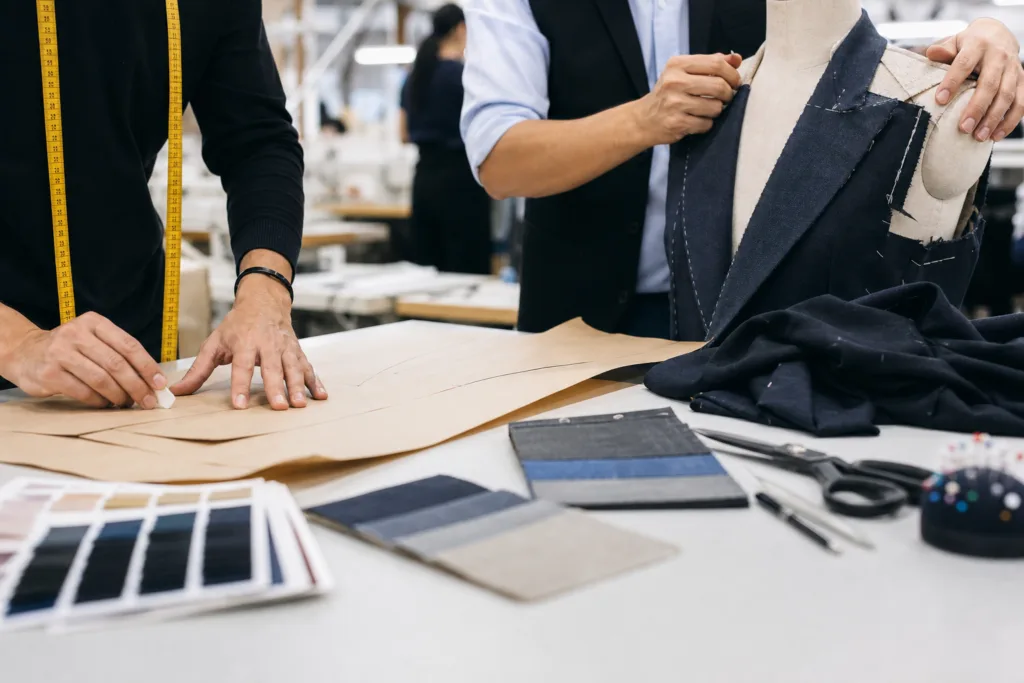
Key takeaway: the more predictable the demand, the more likely bulk production will outperform low MOQ on cost.
How product type changes the price of low MOQ apparel
Not every garment responds to MOQ the same way. A simple T-shirt is easier to produce in small quantities than a heavy hoodie with complex rib construction, custom drawcords, woven labels, and multiple print locations. Similarly, a polo shirt with collar structure and placket details generally has more setup complexity than a basic tee.
Product category also influences how the factory handles fabric and trimming. Sportswear and teamwear may require performance fabrics, stretch, or specialized stitching, while uniforms may require consistent color matching and repeatable sizing across multiple size ranges. These differences affect both cost and lead time.
| Product Type | Low MOQ Cost Pressure | Why It Changes |
|---|---|---|
| T-shirts | Lower to moderate | Simpler construction and fewer trims |
| Polos | Moderate | Collar, placket, and finishing complexity |
| Hoodies | Moderate to higher | More fabric, more labor, more trims |
| Sportswear | Moderate to higher | Performance fabrics and technical stitching |
| Custom uniforms | Moderate | Fit consistency and branding requirements |
If you are still exploring small-batch ordering considerations for early-stage brands, it helps to match the garment type to the order strategy. Simple styles often tolerate low MOQ better than highly technical products, while complex styles need tighter planning to stay cost-effective.
How customization changes the final cost
Customization is one of the fastest ways to increase the price gap between low MOQ and bulk production. Every additional label, patch, print location, or packaging requirement adds labor, material handling, or setup. The more customized the garment, the more important it becomes to simplify where possible.
Our manufacturing teams usually separate customization into three categories: construction changes, decoration changes, and presentation changes. Construction changes include pattern adjustments and fit changes. Decoration changes include embroidery, screen printing, heat transfer, and sublimation. Presentation changes include hangtags, folded packing, polybags, and size stickers.
- Fabric: custom-dyed or specialty fabrics often raise MOQ pressure.
- Fit: graded size adjustments may require extra pattern work.
- Labeling: woven labels, neck prints, and care labels all affect setup.
- Embroidery and printing: artwork complexity changes production time.
- Packaging: branded cartons or custom inserts can add fixed costs.
- Finishing: washing, garment dyeing, or special treatments increase labor.
If a project needs more than one type of customization, buyers should ask which items are truly essential for launch and which can wait for a reorder. That approach keeps the initial low MOQ run focused on sell-through rather than on maximum complexity.
How to evaluate quotes without comparing only unit price
A strong quote comparison starts with the same product brief, the same size breakdown, and the same decoration requirements. If one supplier quotes a lower unit price but excludes sampling, trims, or packaging, the comparison is not meaningful. You need a like-for-like breakdown before deciding.
For a practical framework, we recommend checking whether the quote reflects the same assumptions about fabric, decoration, quality level, and delivery timing. Our guide on what apparel manufacturing costs are really made of can help buyers see where the numbers come from. Once you understand the cost components, you can ask better questions and avoid false savings.
| Quote Checkpoint | What to Verify |
|---|---|
| Fabric | Composition, GSM, dye method, and source availability |
| Sampling | How many rounds are included and what changes cost extra |
| Decoration | Placement, size, artwork format, and setup charges |
| Trims and labels | Whether standard or custom components are included |
| Packing | Bulk packing, folding style, hangtags, and bagging |
| Lead time | Production window, shipping assumptions, and approval timing |
At Ninghow, we often advise buyers to request the quote in stages if the project is not fully finalized. That approach makes it easier to see which items affect price most and where simplification might reduce cost without hurting the product.
Questions to ask before placing a low MOQ apparel order
The right questions can reveal whether a low MOQ quote is truly workable or only attractive on paper. They also help you understand where cost may change later, especially if the product still needs development. A supplier should be able to explain the trade-offs clearly.
- What is the MOQ for this exact fabric, trim, and decoration combination?
- Which details affect the quote most if I increase or reduce quantity?
- How many sample rounds should I expect before bulk approval?
- Are labels, hangtags, packaging, and size stickers included?
- What lead time should I plan for material sourcing and production?
- Can you suggest lower-cost alternatives without changing the core product?
When buyers prepare these details early, the production discussion becomes faster and more accurate. If you want a smoother quote process, it also helps to review what to prepare before requesting a production quote before reaching out to suppliers.
Common mistakes buyers make when judging low MOQ cost
The most common mistake is assuming the cheapest small-batch quote is the best choice. A low price can hide missing services, weaker quality control, or later cost increases. Another common mistake is asking for too much customization before the product has even been validated in the market.
Buyers also sometimes underestimate how long small-batch work can take. Because setup and approvals matter more in low MOQ, skipping the sample stage often leads to avoidable revisions later. That is why the apparel development process should remain structured even when the order is small.
- Comparing quotes with different fabrics or trims
- Ignoring sampling time and revision cost
- Over-customizing the first production run
- Forgetting packaging and labeling costs
- Choosing a product concept that is too complex for a test launch
A simple decision framework for choosing low MOQ, standard MOQ, or bulk
A practical decision should start with demand confidence. If you do not yet know how the product will sell, low MOQ is often the safer starting point. If demand is proven and repeatable, standard MOQ or bulk can improve margins.
You can use the framework below to simplify the choice.
| Launch Stage | Best Order Strategy | Reason |
|---|---|---|
| Idea validation | Low MOQ | Limits risk while testing product-market fit |
| First launch | Low MOQ or flexible MOQ | Helps refine sizing, fabric, and decoration choices |
| Growing repeat sales | Standard MOQ | Balances efficiency and manageable inventory |
| Proven core item | Bulk production | Best for lower unit cost and stable demand |
Key takeaway: the right MOQ depends on sales confidence, not just on the unit price shown in the quote.
Conclusion: low MOQ is about risk control, not the cheapest single unit
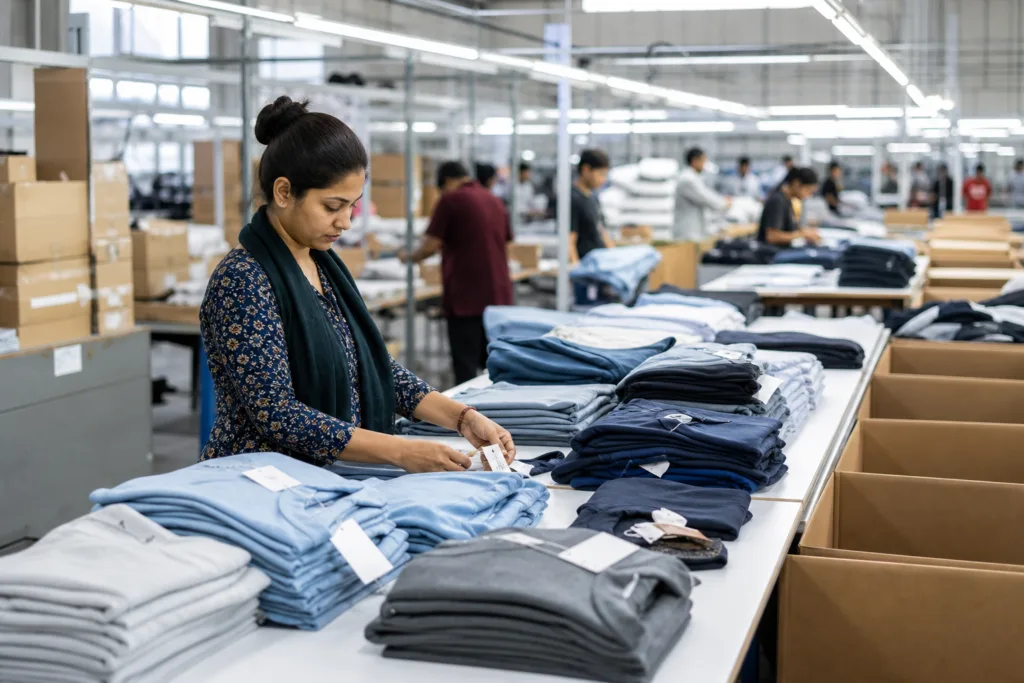
So, is low MOQ clothing manufacturing more expensive? In most cases, yes on a per-piece basis, but not always on a total-business basis. The higher unit price reflects smaller-scale production, less material leverage, and more setup cost per garment. At the same time, a lower commitment can reduce inventory risk, protect cash flow, and help brands learn faster.
For apparel buyers, the best decision is usually the one that matches the stage of the brand and the certainty of demand. If you are still testing a concept, low MOQ can be a smarter business move than chasing the lowest unit cost. If your product is already proven, bulk may make more sense.
If you are planning a new style, a relaunch, or a small-batch test, speaking with a manufacturer early can help you compare fabric options, fit requirements, labeling, packaging, and expected cost structure before you commit. That is often the fastest way to turn a quote into a realistic production plan.
Frequently Asked Questions
Is low MOQ clothing manufacturing more expensive per piece?
Yes, low MOQ clothing manufacturing is usually more expensive per piece because setup, sourcing, and production overhead are spread across fewer garments. The real question is whether that higher unit cost is worth the lower inventory risk and smaller upfront cash commitment.
Why do factories charge more for small orders?
Factories charge more for small orders because they still need to complete the same core work, such as fabric sourcing, cutting, sewing, labeling, and QC. With fewer units, the factory cannot spread those fixed costs as efficiently as it can in a larger run.
Can low MOQ still be profitable for a new brand?
Yes, low MOQ can be profitable for a new brand if it helps you avoid overstock, test demand accurately, and improve the product before scaling. Profitability depends on sell-through, margin structure, and how well the first run supports future reorders.
What makes one low MOQ quote cheaper than another?
One low MOQ quote can be cheaper because of fabric choice, decoration complexity, trim standards, packaging, or the supplier’s production structure. The lowest quote is only useful if it includes the same materials, quality level, and deliverables as the others.
Should I choose low MOQ for custom uniforms or teamwear?
Low MOQ can be a good choice for custom uniforms or teamwear when you need to test sizing, approve branding, or serve a small group first. If the same design will be reordered frequently, a standard MOQ may deliver better cost efficiency later.
How can I reduce cost without raising MOQ too much?
You can reduce cost by simplifying decoration, using more available fabrics, standardizing labels, and keeping the first sample version close to the final production plan. Clear specifications also reduce revision time, which helps control both cost and lead time.