






Choosing the right polo shirt manufacturer is not only about price. For custom bulk orders, the better decision usually comes from comparing fabric options, fit consistency, logo application methods, sampling control, MOQ logic, and the supplier’s ability to keep bulk production stable from first sample to final carton. A polo shirt may look simple, but in manufacturing it combines fabric behavior, collar construction, placket finishing, size grading, and branding details that can quickly affect quality and cost.
If your project involves uniforms, golf polos, teamwear, retail private label styles, or event apparel, custom polo shirt manufacturing support should include more than sewing capacity alone. At Ninghow, we help buyers evaluate fabric weight, collar and cuff construction, embroidery or printing options, sample refinement, private label details, and bulk planning so the final polo program fits the brand image and the real use scenario.
What buyers should evaluate first in a polo shirt manufacturer
The first question is simple: can the manufacturer produce the kind of polo you actually need? A factory may be capable in general knitwear production but still be a poor fit for performance golf polos, heavyweight cotton retail polos, or strict school uniform programs.
From our manufacturing perspective, the best early evaluation points are fabric specialization, construction control, customization range, and communication quality. Buyers often save time by checking these areas before discussing final pricing in detail.
- Fabric capability for pique, jersey, interlock, and performance blends
- Experience with collars, plackets, side vents, rib cuffs, and reinforcement details
- Ability to handle embroidery, screen printing, heat transfer, and private label trims
- Sampling process clarity and size specification accuracy
- Bulk production planning, QC checkpoints, and packaging options
Key takeaway: The right polo shirt manufacturer should match your product category, not just your budget target.
How fabric choice affects polo shirt quality, cost, and wearer experience
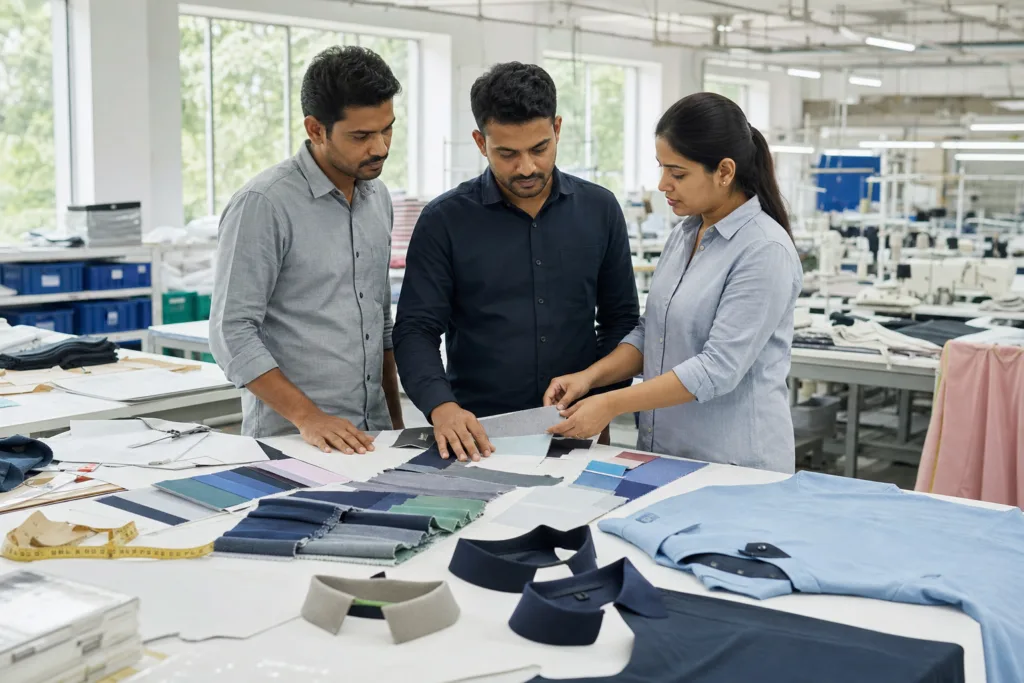
Fabric is the biggest quality driver in a polo shirt. It influences appearance, comfort, shrinkage behavior, durability, and how well the garment holds its shape after repeated washing and wear.
For many buyers, the most common choice is still cotton or cotton-rich pique because it gives the classic polo texture and a familiar hand feel. However, polyester performance polos, cotton-poly blends, and elastane blends can be better choices when moisture management, wrinkle resistance, or extra stretch matter more.
| Fabric Type | Common Use | Strengths | Points to Check |
|---|---|---|---|
| Cotton pique | Uniforms, retail basics, casualwear | Classic texture, breathable, natural hand feel | Shrinkage, colorfastness, collar stability |
| Cotton polyester pique | Corporate wear, schoolwear, promotions | Better durability, easier care, balanced cost | Pilling resistance, hand feel, color consistency |
| Polyester performance knit | Golf, sports, teamwear | Quick drying, lightweight, stable color | Logo application compatibility, sheen, breathability |
| Cotton elastane blend | Premium casual or fitted styles | More stretch, better shape recovery | Fit tolerance, recovery after washing, higher cost |
| Interlock knit | Smoother premium polos | Soft surface, fuller body, clean appearance | Weight, drape, heat retention, price level |
GSM matters too. Lightweight polos can feel cooler and more athletic, while midweight or heavier polos usually feel more substantial and premium. But heavier is not automatically better. A golf brand may prefer a lighter moisture-wicking knit, while a school or corporate buyer may want a more stable midweight fabric that resists transparency and keeps its shape.
When buyers want exact shade matching across styles or repeat orders, custom fabric dyeing for consistent polo shirt color can be an important part of the planning stage. This is especially relevant for brand colors, school uniforms, and team programs where color variation becomes very visible in group wear.
Which polo shirt construction details matter most in bulk production
The most important construction details are the collar, placket, sleeve finish, hem shape, and side seam stability. These are the parts that buyers notice first and the parts that most often separate a polished polo from an average one.
Collars deserve special attention. A polo collar that curls, twists, or loses shape after washing can make the whole garment look low quality even if the body fabric is acceptable. Manufacturers should control collar rib quality, fusing or support structure where appropriate, matching quality, and sewing balance at the neckline.
Plackets also change the final look more than many buyers expect. Two-button and three-button plackets can both work well, but the spacing, reinforcement, topstitching neatness, and button alignment need to stay consistent in bulk.
- Check whether the collar matches the body fabric tone under different lighting
- Confirm placket depth and button count before sample approval
- Review sleeve opening shape for comfort and visual balance
- Decide whether side vents are required for movement and style
- Confirm hem finish, especially for untucked retail or golf polos
At this stage, a reliable manufacturer should already be asking practical questions about use scenario, wash expectations, and logo placement. That usually indicates stronger production understanding, not unnecessary complexity.
How to compare fit, sizing, and grading before placing a custom bulk order
Fit consistency is one of the most underestimated issues in polo sourcing. Buyers often approve a good-looking sample but do not define measurement tolerances, grading rules, or target fit clearly enough for bulk production.
A polo can be regular fit, slim fit, relaxed fit, athletic fit, or unisex. Each option changes shoulder width, chest allowance, sleeve shape, body length, and hem balance. If these decisions are not locked during development, the same style can drift during revisions.
We usually advise buyers to prepare a size specification table early, especially for private label programs. If you already have a benchmark garment, sending that sample together with target measurements can reduce misunderstanding significantly.
| Fit Decision | What It Changes | Buyer Risk If Unclear |
|---|---|---|
| Regular vs slim fit | Chest, waist, sleeve shape | Final garment feels too tight or too boxy |
| Body length | Tucked or untucked appearance | Different use scenarios not supported |
| Sleeve length and opening | Comfort and visual proportion | Unbalanced look across sizes |
| Grading method | Size progression from S to XXL+ | Good sample but poor larger-size fit |
| Tolerance setting | Acceptable production variation | QC disputes during shipment review |
If you are developing a new style rather than copying an existing one, the apparel sampling process and sample approval becomes the main control point for fit refinement. That is where pattern changes, measurement comments, wear testing, and final spec confirmation should happen before fabric and trims are committed in bulk.
What logo application method works best for custom polo shirts
Embroidery is often the safest default for polo shirts, but it is not always the best option. The right branding method depends on fabric type, logo size, garment use, and brand positioning.
For corporate uniforms and schoolwear, embroidery is popular because it looks durable and professional. For lightweight performance polos, however, a heavy embroidered logo can distort the fabric or reduce comfort. In that case, heat transfer or other low-profile branding methods may perform better.
| Method | Best For | Advantages | Limitations |
|---|---|---|---|
| Embroidery | Uniforms, golf polos, premium branding | Durable, textured, classic look | Can add bulk on lightweight knits |
| Screen printing | Promotional polos, larger graphics | Cost-effective for volume, strong color | Less common for small chest logos on pique |
| Heat transfer | Performance polos, detailed logos | Lightweight, sharp detail | Must test wash durability and placement feel |
| Sublimation | Polyester team polos | All-over design flexibility, no added hand feel | Limited to compatible polyester fabrics |
Private label buyers should also define neck labels, size labels, hangtags, spare buttons, polybags, carton marks, and barcode needs at the same time. Branding decisions affect more than appearance; they also affect sourcing, lead time, and packing workflow.
Key takeaway: The best logo method is the one that fits the fabric, use case, and expected wash performance, not simply the one that looks best in artwork.
When MOQ is realistic and what makes it increase
MOQ for custom polos depends on fabric availability, dyeing needs, trim customization, color count, and size breakdown. Buyers sometimes hear a low number early in discussion, then discover later that the true MOQ is higher once custom colors, private labels, or special fabrics are included.
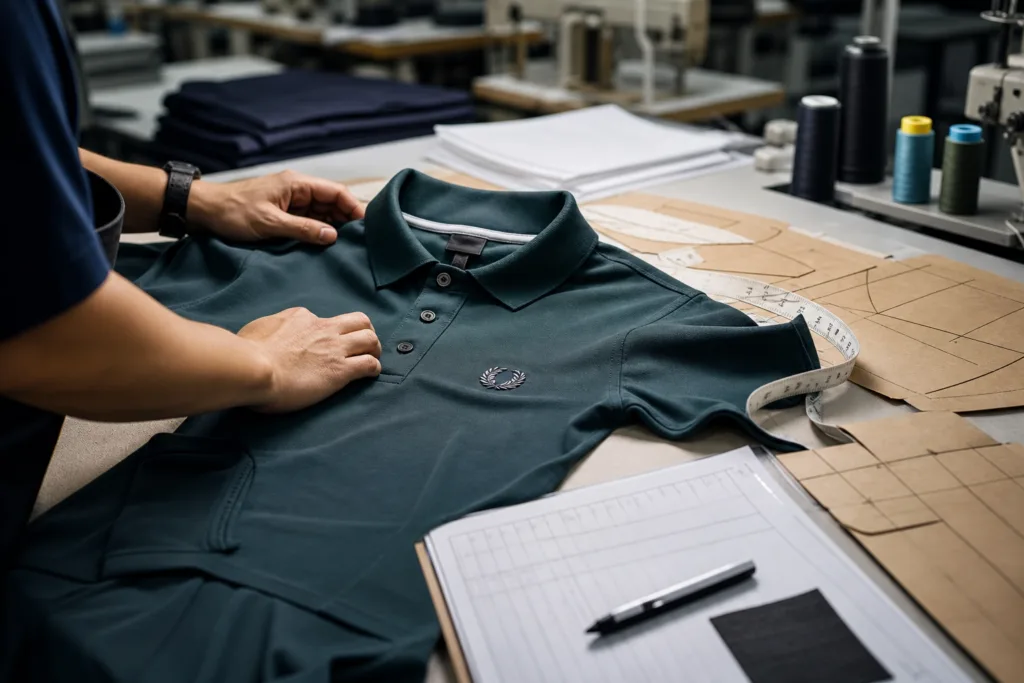
From a factory standpoint, lower MOQ is more realistic when the project uses stocked or easier-to-source fabric, standard accessories, and simpler decoration. MOQ rises when buyers ask for custom dyed fabric, multiple body colors, special trims, or complex packaging in one order.
- Stock fabric usually supports lower MOQ than custom-developed fabric
- Fewer colors generally reduce risk and material minimums
- Shared trims are easier than unique branded accessories for every colorway
- Wide size ranges can affect fabric consumption and planning efficiency
- Private label packaging can raise handling complexity on smaller orders
This is where working with an experienced manufacturer matters. At Ninghow, we usually encourage buyers to review MOQ together with fabric route, decoration plan, and packaging detail rather than treating MOQ as a standalone number.
How to plan lead time for polo shirt bulk production
Lead time should be discussed backwards from the required delivery date. For custom polos, total timing usually includes development, sampling, material approval, fabric booking or dyeing, bulk production, finishing, inspection, and shipping preparation.
One common mistake is counting only sewing time. In real production, delays often come earlier through artwork confirmation, label approval, trim sourcing, lab dip approval, or sample comments. A realistic supplier should explain these steps clearly instead of giving one simple number without conditions.
Buyers managing seasonal launches or event deadlines should review production timeline planning for bulk polo orders before confirming the order schedule. That helps reduce last-minute pressure and clarifies which approvals must happen first to protect the shipment date.
| Stage | Why It Matters | Typical Delay Risk |
|---|---|---|
| Tech pack and artwork confirmation | Locks product definition | Missing logo files or unclear specs |
| Sampling and revisions | Confirms fit and construction | Too many late design changes |
| Fabric and trim preparation | Secures production inputs | Custom dyeing or special trim sourcing |
| Bulk sewing and finishing | Main production stage | Capacity congestion or quality rework |
| Inspection and packing | Shipment readiness | Carton detail errors or final QC issues |
What quality control points reduce problems in custom polo production
The most useful QC approach is preventive, not reactive. Waiting until finished goods inspection to discover color mismatch, collar shape issues, or embroidery placement errors is expensive and avoidable.
For custom polo shirts, we recommend checking fabric shade, shrinkage behavior, pattern consistency, logo placement, measurement tolerance, placket symmetry, sewing cleanliness, and packaging accuracy at different stages. Quality control should follow the product’s risk points, not just a generic checklist.
Buyers who want a clearer view of inspection priorities can review apparel quality control for color, stitching, and finish. For polos specifically, those checkpoints are especially relevant because small visual inconsistencies are easy to notice on collars, chest logos, and plackets.
- Pre-production review for sample approval, measurement specs, and trim confirmation
- Inline checks for collar setting, placket alignment, stitching quality, and logo position
- Mid-production measurement checks across multiple sizes
- Final inspection for finishing, thread trimming, pressing, labeling, and packing accuracy
Good QC also protects repeat business. If the first order performs well but the second order has different color tone or fit balance, buyers lose confidence quickly. Consistency is one of the strongest signs of a capable manufacturer.
Common mistakes buyers make when sourcing a polo shirt manufacturer
The biggest mistake is approving a price before defining the product clearly. A polo quote without exact fabric, GSM, collar structure, decoration method, labels, and packaging usually creates comparison errors between suppliers.
Another common mistake is assuming all polos are interchangeable. A low-cost promotional polo, a premium retail polo, and a golf performance polo may use different yarns, knitting methods, finishing standards, and branding techniques. Comparing them as if they are the same product leads to disappointment later.
- Choosing by unit price without confirming fabric composition and weight
- Skipping detailed sample comments before bulk confirmation
- Not defining color tolerance for brand-sensitive orders
- Ignoring collar and placket construction during sample review
- Requesting very low MOQ together with too many custom details
- Approving packaging too late in the production process
Key takeaway: Clear product definition early in the sourcing process is one of the easiest ways to avoid delays, disputes, and hidden cost increases.
How to decide if a manufacturer is the right long-term fit
The right long-term fit comes from process alignment, not only the first order result. Buyers should assess whether the manufacturer communicates clearly, asks the right technical questions, manages revisions well, and can maintain consistency as order volume or style complexity changes.
In our apparel production work, the strongest partnerships usually begin when buyers share realistic targets: target price range, quality level, expected reorder potential, brand positioning, and required customization details. That allows the manufacturer to suggest the most practical fabric route, construction option, and production plan rather than forcing a mismatch.
If your polo program may expand into T-shirts, hoodies, jackets, or teamwear later, it is worth choosing a supplier that can support broader private label development, not just one basic item. That creates more consistency in fit management, branding execution, and production communication over time.
Conclusion
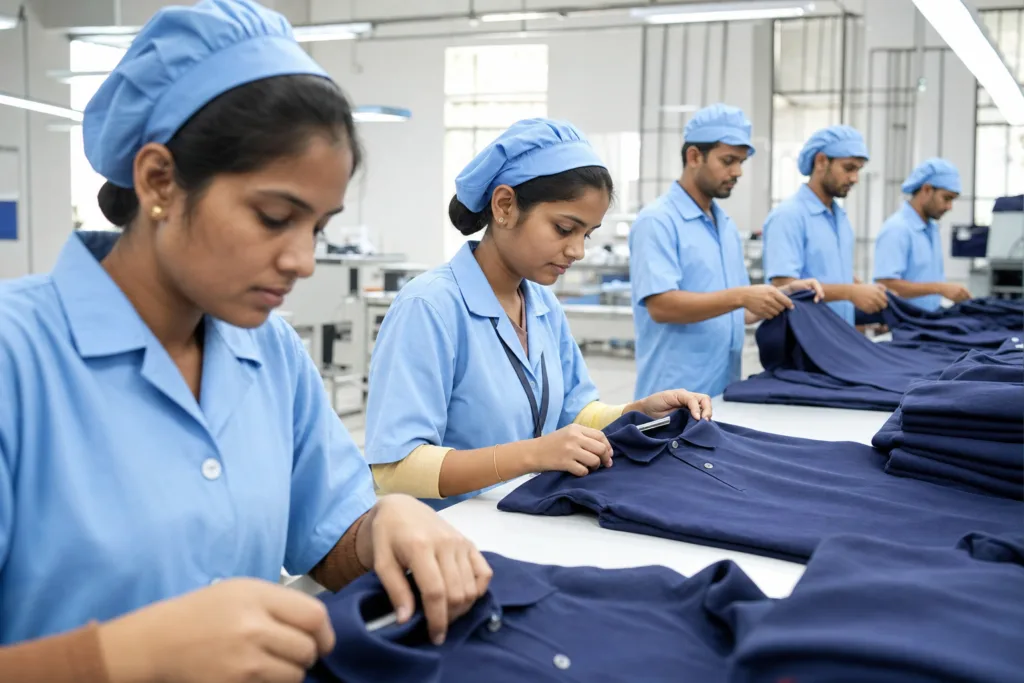
A strong polo shirt manufacturer should help you make better product decisions before bulk production starts. That means guiding fabric selection, reviewing fit and grading, matching the best logo application to the fabric, setting realistic MOQ and lead time expectations, and controlling quality at the points where polos usually fail.
For buyers planning custom bulk orders, the safest path is to define the product clearly, sample carefully, and choose a manufacturer with relevant polo experience rather than comparing offers only by headline price. When those pieces are aligned, custom polo production becomes more predictable, more scalable, and easier to repeat successfully.
FAQs
How do I know if a polo shirt manufacturer is suitable for my project?
A suitable polo shirt manufacturer should be able to match your fabric type, fit target, decoration method, and order structure. Ask for experience with similar polo categories such as uniforms, golf polos, or retail private label styles, and confirm how they handle sampling, grading, QC, and packaging before comparing quotations.
What is the best fabric for custom polo shirts?
The best fabric depends on how the polo will be used. Cotton pique works well for classic casual and uniform programs, cotton-poly blends balance comfort and durability, and polyester performance knits are often better for sports or golf because they are lighter, quicker drying, and easier to maintain.
Is embroidery always the best logo option for polo shirts?
No, embroidery is not always the best option for polo shirts. It is a strong choice for many uniform and premium applications, but lightweight performance fabrics may work better with a lower-profile method such as heat transfer to avoid puckering, added weight, or reduced comfort.
Why does MOQ change for custom polo orders?
MOQ changes because it is tied to material and production conditions, not just garment quantity. Custom dyed fabric, special trims, multiple colors, private labels, and complex packaging can all increase minimums, while simpler programs using more available materials usually allow greater flexibility.
How many samples should I expect before bulk production?
The number of samples depends on how developed your product is at the start. If your tech pack, measurements, and branding details are clear, one or two rounds may be enough, but new styles or premium private label polos often need more refinement to confirm fit, collar behavior, color, and decoration quality.
What should I check before approving bulk polo production?
Before approving bulk polo production, confirm the final sample, measurement spec, fabric composition, GSM, color standard, logo placement, label details, packaging method, and delivery timeline. These approvals reduce the chance of later disputes and give both buyer and factory a clear production reference.