




If you are looking for a low MOQ polo shirt manufacturer, the first thing to understand is that low minimums can be useful, but they also come with limits. Small brands often focus on the minimum order number first, yet the better question is what that MOQ actually includes in fabric options, color range, size spread, logo application, and production consistency. A low minimum can reduce risk at launch, but only if the order is planned around realistic manufacturing conditions.
Many startup teams begin by comparing suppliers and trying to review polo shirt manufacturing options for small brands before committing to a first run. That is a smart starting point because polo production is not just about sewing a basic top. Fabric weight, collar construction, placket shape, embroidery placement, size grading, labels, and packaging all affect whether a small order works smoothly. At Ninghow, we help buyers sort through these decisions with sampling, material selection, customization planning, and bulk production preparation so the first order is small enough to manage but structured well enough to scale later.
What “Low MOQ” really means in polo shirt manufacturing
Low MOQ does not always mean you can order any polo design in any quantity. In manufacturing, MOQ usually depends on the combination of fabric sourcing, dyeing method, trims, logo process, and how much customization is required.
For example, a factory may support a low minimum if you choose an existing fabric, standard color card, and common collar structure. The same factory may require a much higher MOQ if you want custom-dyed pique, a unique yarn-dyed collar, branded buttons, woven labels, individual polybags, and multiple embroidery placements.
Key takeaway: Low MOQ is not one fixed number. It is a production condition tied to materials, trims, customization complexity, and whether stock components can be used.
From our manufacturing perspective, buyers get the best results when they ask not only “What is your MOQ?” but also “What version of my polo design fits that MOQ?” This changes the conversation from a generic quote request into a realistic production plan.
What usually helps keep polo MOQ lower
- Using stock or regularly sourced polo fabrics
- Choosing standard solid colors instead of custom dyeing
- Keeping size ranges focused
- Using one decoration method instead of several
- Limiting special trims and custom packaging in the first run
- Approving a standard fit block with minor changes rather than a fully new pattern
Who needs a low MOQ polo shirt manufacturer and who does not
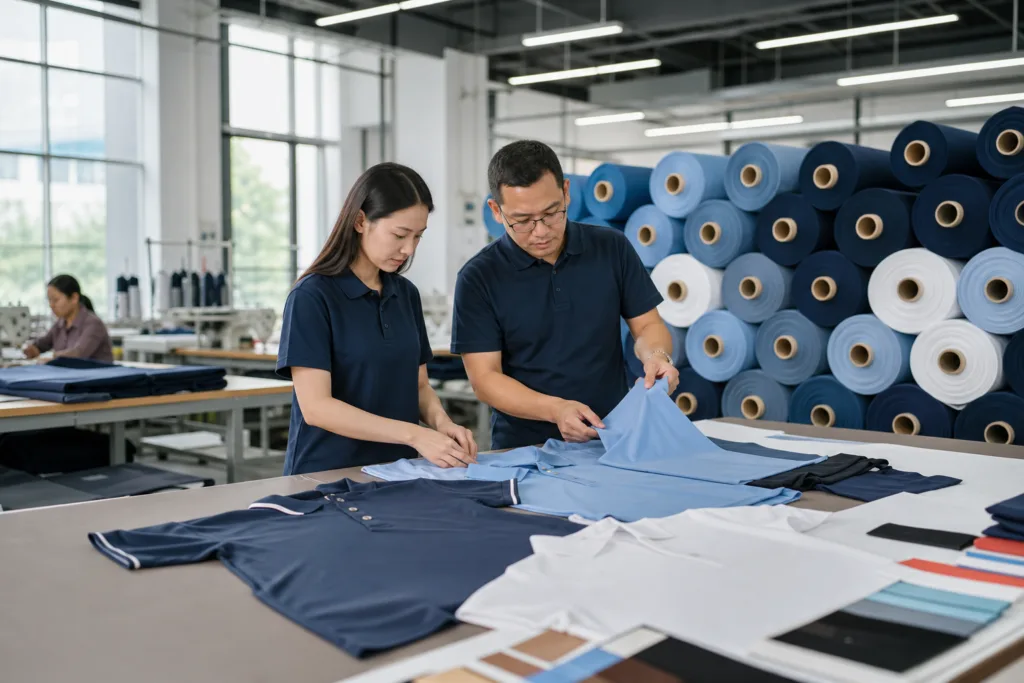
A low MOQ setup is usually best for brands that are still testing product-market fit. That includes startup labels, golf or teamwear concepts launching a first collection, uniform buyers running a pilot program, and retailers validating color or fit demand before placing a larger reorder.
It is less suitable for buyers who already know their exact repeat volumes and need lower unit costs across many colors. In that case, a higher MOQ can unlock better fabric efficiency, more customization freedom, and smoother line planning.
Small brands should also separate “low risk” from “low cost.” A lower minimum reduces inventory exposure, but it often increases unit price because development, setup, cutting, and quality checks are spread across fewer pieces.
When brands evaluate low MOQ clothing manufacturing options, they should compare not only the minimum quantity but also what compromises come with it. This is especially important for polo shirts because collars, plackets, and fabric texture make construction more sensitive than a simple T-shirt.
Best use cases for small batch polo shirts
Small-batch polo production works best when the first order has a clear testing purpose. The goal is not to build the entire future line in one run. The goal is to learn what sells, what fits, and what needs adjustment before scale.
Good reasons to start with a low minimum polo order
- Launching a new brand and testing core colors
- Developing golf polos or club polos with embroidered branding
- Running pre-season teamwear or schoolwear trials
- Testing two fits, such as regular and slim
- Comparing fabric performance for retail feedback
- Opening a new wholesale channel with a controlled initial inventory
In our experience, the strongest small-batch projects are tightly edited. Instead of ordering six colors and a wide size run, successful buyers often start with two core colors, a practical size range, and one branding method.
Common mistakes small brands make when ordering custom polo shirts low MOQ
The most common mistake is over-customizing too early. Buyers want the first polo to express the whole brand identity, so they add custom neck tape, special labels, contrast plackets, unique buttons, hem side vents, embroidered chest logo, sleeve print, and custom packaging at the same time. That usually raises cost and slows development.
The second mistake is under-specifying the product. Some brands ask for a “premium cotton polo” without defining GSM, knit type, shrinkage expectations, collar style, fit target, or placket length. That creates confusion and inconsistent quoting.
Other problems that cause delays or disappointment
- Choosing too many sizes for too few total pieces
- Requesting custom dyeing for very small color quantities
- Skipping sample revisions to save time
- Sending low-resolution logo files
- Approving fit based only on flat measurements without trying the sample on body
- Ignoring collar and cuff stability after washing
Key takeaway: The first small polo order should prove the product concept, not exhaust every customization idea.
How MOQ affects price, fabric options, and customization freedom
MOQ directly affects unit cost because many production steps have setup labor whether the order is 80 pieces or 800 pieces. Pattern review, marker making, logo setup, cutting preparation, sewing line balancing, ironing, packing, and inspection still need time.
It also affects sourcing flexibility. Lower quantities usually work best with available or commonly stocked materials. Higher quantities make it easier to book custom fabric knitting, dye to exact Pantone targets, and develop special trims.
| Production Factor | Low MOQ Situation | Higher MOQ Situation |
|---|---|---|
| Unit price | Higher per piece | Lower per piece through scale |
| Fabric choice | More likely stock or standard options | More room for custom fabric programs |
| Color freedom | Limited if custom dyeing is needed | Better support for custom colors |
| Branding details | Keep simple and focused | More flexibility across trims and packaging |
| Pattern development | Best with standard block adjustments | Easier to justify deeper development |
| Reorder strategy | Needs careful planning to avoid changes | More stable if volume is repeatable |
This is why small buyers should ask for two quote scenarios when possible: one based on a truly low minimum and another based on a moderate volume breakpoint. Sometimes the price and customization gap between the two is more important than the MOQ itself.
How to choose the right polo style for a low MOQ order
The right style is usually the one that looks brand-appropriate while staying production-efficient. For small orders, it is often wiser to start with a classic silhouette and let fabric, fit, and branding do the work.
Fabric choices small brands should compare
Pique cotton and cotton blends remain common for polos because they offer familiar texture, breathable structure, and a clean surface for embroidery. Polyester polos may work better for sports, golf, or performance-focused projects where moisture management matters more than natural hand feel.
Blends are often the practical middle ground. Cotton-polyester blends can improve shape retention and reduce cost pressure, while adding elastane in some constructions can help movement and recovery.
| Fabric Option | Typical Feel | Best For | Low MOQ Consideration |
|---|---|---|---|
| 100% cotton pique | Natural, classic, breathable | Casual retail, uniforms, lifestyle brands | Good if stock fabric is available |
| Cotton polyester pique | Balanced, stable, practical | Uniforms, everyday polos, value-conscious brands | Often easier for low minimum runs |
| Polyester performance knit | Light, smooth, functional | Golf, sports, teamwear | Works well if color and decoration are simple |
| Cotton blend with stretch | Softer with movement | Premium casual or fitted polos | Check fabric availability carefully |
GSM matters too. A lighter polo can feel cooler and more athletic, while a heavier one can look more structured and substantial. But GSM alone does not define quality. Knit structure, yarn type, finishing, and shrinkage control all affect the final hand feel.
Fit, collar, placket, and construction details
For first runs, regular fit is usually safer than extreme slim cuts because it serves more body types and reduces return risk. If your brand identity is built around a fitted look, make sure the sample is wear-tested before approval.
Collars deserve special attention. A polo can look expensive or cheap depending on collar shape, stand, edge stability, and how it behaves after washing. Small brands often underestimate this point, but we treat the collar as one of the most important technical areas in polo development.
If you are unsure where to start, Ninghow can help compare knit structures, fit blocks, logo methods, and trim choices before you commit to a bulk plan. That kind of early clarification usually saves more money than chasing the absolute lowest quote.
Color planning for small orders: stock colors vs custom dyeing
Color planning is one of the biggest decision points in a low minimum polo project. If the order quantity per color is small, stock or standard color programs are usually more realistic than custom dyeing.
Custom dyeing can improve brand consistency, but it generally needs more quantity and can add lead time. It also creates extra risk if the shade needs correction after lab dips or if your first order spreads a small quantity across too many colorways.
How small brands should approach first-order color planning
- Start with one to three commercially safe colors
- Use stock colors if the quantity per color is limited
- Reserve custom Pantone matching for stronger repeat programs
- Think about logo visibility on each base color
- Check whether collar and cuff rib can match the body fabric acceptably
Key takeaway: On a small first run, color discipline is usually more valuable than color variety.
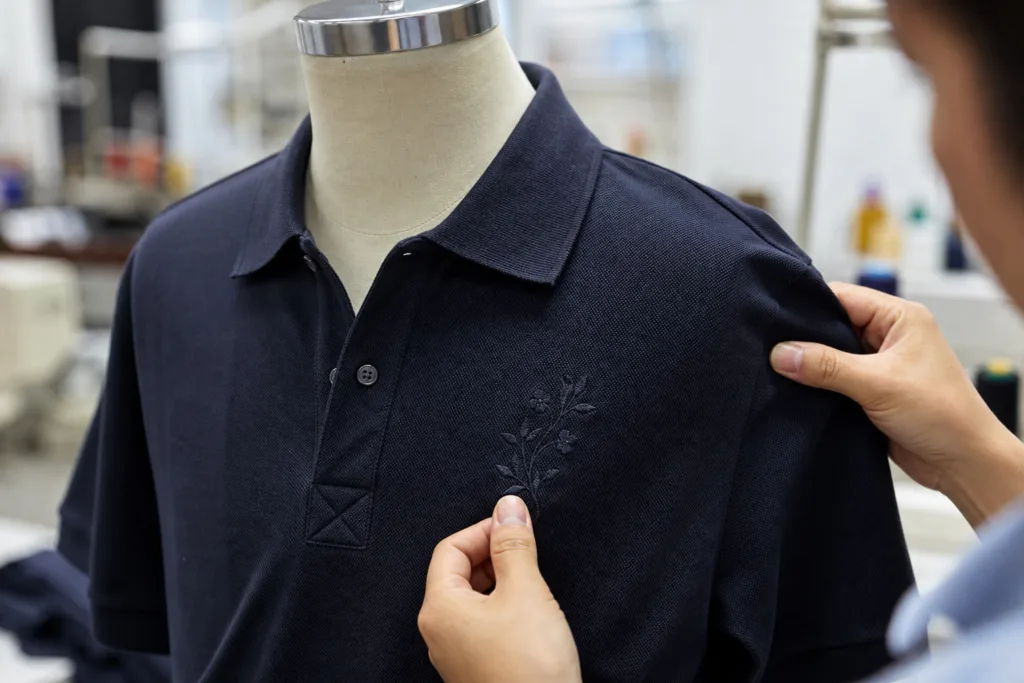
Size range planning: how to avoid overextending your first polo order
One of the easiest ways to make a low minimum order inefficient is to spread a small quantity across too many sizes. Buyers want to be inclusive, but if the total order is limited, a very wide size run can create poor stock balance and weak size-level quality evaluation.
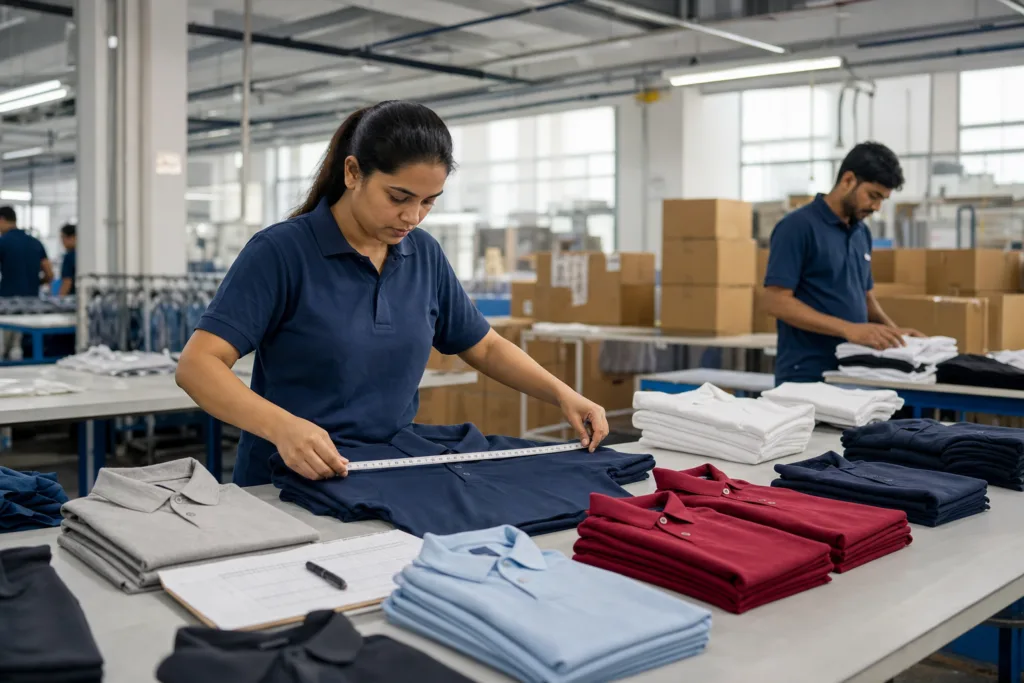
A better approach is to build the size range around your actual customer profile and fit target. Brands should request a clear size spec sheet and graded measurements, because sizing should be based on body-measurement logic rather than guesswork. Guidance on apparel sizing and grading standards helps explain why consistent body-based development matters when moving from one sample to a complete size run.
Practical tips for first-order size planning
- Start with the sizes that cover most expected customers
- Avoid adding fringe sizes unless demand is known
- Review chest, shoulder, body length, and sleeve opening across the graded spec
- Check fit on at least one sample size and compare the grade logic
- Align fit naming honestly, such as regular, slim, or relaxed
For many startup runs, a narrower and well-balanced size range performs better than a broad range with very few pieces per size.
Decoration options for low MOQ orders: embroidery, printing, and labels
Decoration affects not only appearance but also cost, MOQ practicality, and production flow. For polos, embroidery is often the safest starting point because it suits the category and works well on chest branding, sleeves, or back neck areas.
Printing can still work, especially for fashion or event-driven polos, but the knit texture and garment color should be considered carefully. Some logo styles show better in embroidery, while others need a cleaner printed result.
| Decoration Method | Advantages | Limitations | Best Use Case |
|---|---|---|---|
| Embroidery | Premium look, durable, classic for polos | Thread density can affect small details | Chest logos, club branding, uniforms |
| Screen printing | Strong color impact, good for bold graphics | Less common for classic polos, setup sensitive | Promotional or fashion polos |
| Heat transfer | Sharp detail, flexible for small runs | Must match fabric and wash expectations | Small logos, sports-oriented polos |
| Woven labels and neck labels | Supports private label identity | Adds trim planning complexity | Brand development and retail finishing |
Private label details should be prioritized. If the budget is limited, focus first on the logo, main label, and size label. Extras such as custom hangtags or highly specialized packaging can wait until reorder volume is proven.
Sampling before bulk: what to confirm in fit, construction, and branding
Sampling is where small brands protect themselves. A low MOQ order does not reduce the need for sample review. In fact, it makes sample approval more important because you have less room for error in a first run.
Before bulk production, buyers should review sampling steps before a low minimum polo order and confirm exactly what kind of sample is being approved. Is it a fit sample, a pre-production sample, or a branded confirmation sample? Each serves a different purpose.
What to check on the sample
- Fabric hand feel, stretch, and recovery
- Body fit, sleeve shape, and body length
- Collar roll, collar stand, and cuff firmness
- Placket length, button spacing, and stitching neatness
- Logo position, size, thread color, or print sharpness
- Label placement and comfort
- Wash response including shrinkage, twisting, and puckering
At Ninghow, we usually advise buyers to wear-test the sample in the intended use scenario. A golf polo, casual retail polo, and staff uniform polo may all need different performance priorities even if the silhouette looks similar on a flat table.
How to evaluate a polo manufacturer for startups
The right supplier is not just the one who accepts the lowest quantity. The right one can explain what is realistic, identify risk early, and keep the first order aligned with your actual business stage.
Small brands should ask practical questions about sourcing, sampling, communication, and bulk control. If the answers stay vague, the low MOQ may only look good on paper.
Questions worth asking a manufacturer
- Which polo fabrics are available for low minimum production?
- Can the factory support stock colors, and when is custom dyeing realistic?
- What sample stages are included before bulk?
- How are graded specs confirmed across sizes?
- Which logo methods work best for the chosen fabric?
- What defects are checked before packing?
- How are reorders handled if the first batch succeeds?
It also helps to understand the apparel order process for small-batch production so you know when approvals are needed and which changes are still possible at each stage. This reduces misunderstanding and helps both the buyer and manufacturer manage expectations.
Lead time, reorder planning, and scalability after the first small batch
Lead time depends on fabric readiness, sample approval speed, trim sourcing, logo setup, and factory scheduling. A low minimum order is not automatically faster if the product uses custom materials or unresolved specs.
What matters more is whether the first order creates a stable foundation for reordering. If the fabric source changes, if the color was never locked clearly, or if the size grading was approved loosely, the second order may not match the first as closely as you expect.
Key takeaway: The best low MOQ strategy is one that leaves a clear path to repeat production, not one that solves only the first purchase order.
How to make reorders easier
- Lock the approved fabric composition and GSM range
- Keep approved color references and trim details
- Store final logo files and placement specs
- Save the graded size chart and sample comments
- Document packaging and carton requirements
When a startup order is prepared carefully, scale-up becomes much easier. The first run then acts as a controlled pilot rather than a one-off experiment.
Checklist for preparing a low minimum polo order
Before confirming production, buyers should organize the project into simple approval points. This is where many small brands gain confidence and avoid expensive last-minute changes.
- Define the target use: retail, golf, uniform, teamwear, or event
- Choose one clear fit direction
- Select fabric type, composition, and approximate GSM
- Limit launch colors to a manageable range
- Set a realistic size range based on expected demand
- Confirm logo method and placement
- Prepare label and packaging priorities
- Approve the sample only after checking fit and finishing
- Confirm lead time and reorder expectations
- Check quality control support for small batch polo shirts before bulk starts
This is also the stage where a buyer should decide which elements are essential now and which can wait until the second order. That separation often protects both budget and timeline.
When a low MOQ polo supplier is the right choice and when to scale up
A low MOQ polo supplier is the right choice when your brand is testing demand, validating fit, building first customer feedback, or entering a niche market without proven volume. It is also useful when you want to refine branding and construction through a controlled first run.
It is time to scale up when demand becomes repeatable, when color and size ratios are clearer, and when you want lower unit costs or more custom material freedom. At that point, a slightly larger order may be more efficient than repeating very small runs.
For many startups, the smartest path is staged growth. Start with a realistic minimum, simplify the product, learn from the first batch, and then increase volume once the data supports it. That approach usually creates better polos, more consistent margins, and stronger supplier relationships.
Conclusion
Choosing a low MOQ polo shirt manufacturer is not just about finding the smallest number on a quote sheet. It is about understanding what that minimum allows in fabric, fit, color, decoration, and quality control. Small brands that treat the first order as a structured test usually make better decisions than those trying to launch a fully customized range all at once.
From our manufacturing side, the most successful low minimum polo projects are focused, clearly specified, and sample-driven. If your team approaches the first run with disciplined color planning, realistic size distribution, and practical branding priorities, a low MOQ can be an effective way to launch without overcommitting inventory.
FAQs
What is considered a low MOQ for custom polo shirts?
A low MOQ for custom polo shirts usually means a quantity small enough for a startup or test run, but the exact number depends on fabric, color, trims, and branding. In practice, the minimum can vary widely because stock fabric and simple embroidery may allow smaller runs, while custom dyeing and special trims often require more pieces.
Why is the unit price higher on a low MOQ polo order?
The unit price is higher because the same development and production setup work is spread across fewer garments. Pattern review, sampling, cutting preparation, logo setup, sewing line organization, inspection, and packing still take time, so smaller quantities naturally carry less production efficiency.
Can I get custom colors on a small polo shirt order?
You can sometimes get custom colors on a small polo order, but it is often less practical than using stock colors. Custom dyeing usually needs more volume, adds lead time, and increases risk if the shade needs correction, so many small brands start with standard colors and move to custom matching after demand is proven.
What is the best logo method for low MOQ polo shirts?
Embroidery is often the best logo method for low MOQ polo shirts because it suits the category and gives a durable, premium look. The best choice still depends on your design, fabric, and target market, since some performance polos or graphic-led concepts may work better with transfer or printing methods.
Should a small brand make a sample before placing a polo bulk order?
Yes, a small brand should usually make a sample before placing a polo bulk order because sample approval reduces fit, construction, and branding risk. A sample helps confirm collar shape, body proportions, placket finishing, logo placement, and overall hand feel before money is committed to full production.
How do I know if a low MOQ polo shirt manufacturer is right for my brand?
A low MOQ polo shirt manufacturer is right for your brand if the supplier can explain realistic material options, support clear sample development, communicate size and quality standards well, and offer a practical path for reorders. The best fit is not only about accepting a small quantity, but about helping that small quantity succeed commercially and operationally.