
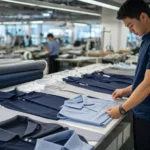
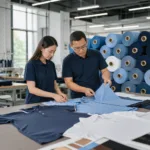
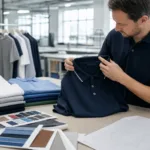




Bulk custom polo shirts can look similar on a quote sheet while being very different in real manufacturing cost, minimum order quantity, and production timing. From our factory perspective, the biggest reason quotes vary is that buyers are often comparing different fabric standards, logo methods, fit requirements, packaging details, and delivery assumptions under the same product name. A basic corporate polo, a premium golf polo, and a teamwear polo may all be called polo shirts, but they do not behave the same way in sourcing or production.
If you need to review polo shirt manufacturing options for bulk orders, it helps to compare more than the unit price. At Ninghow, we support buyers with fabric selection, logo application planning, sample development, private label setup, and bulk production coordination so the quote reflects the actual product target instead of a vague estimate. That is especially useful when your project involves multiple sizes, color matching, embroidery, or a delivery deadline tied to events, retail launches, or seasonal programs.
What bulk custom polo shirts usually include in a manufacturing quote
A manufacturing quote usually includes more than cut-and-sew labor. In most cases, the supplier is pricing fabric, trims, logo application, labels, packing, production labor, and standard quality control. Depending on the request, it may also include development work, fabric testing, sampling, export packing, or shipping terms.
Before comparing suppliers, buyers should check whether the quote is based on the same assumptions. One factory may quote a 200gsm cotton pique polo with chest embroidery and individual polybags, while another may price a lighter polyester blend with screen print and bulk packing. The lower quote is not automatically the better value if the specification is different.
| Quote Element | Often Included | May Be Separate |
|---|---|---|
| Fabric and garment sewing | Yes | Rarely |
| Embroidery or printing | Usually | Sometimes itemized |
| Main label, care label, size label | Often | Custom private label upgrades |
| Hangtags and retail packaging | Sometimes | Often itemized |
| Samples and revisions | Sometimes not included | Often separate |
| Freight and duties | No | Depends on trade terms |
Key takeaway: A useful quote is not just a price. It is a pricing structure built on fabric, logo, sizing, packaging, and delivery assumptions.
Why fabric type and composition change cost first
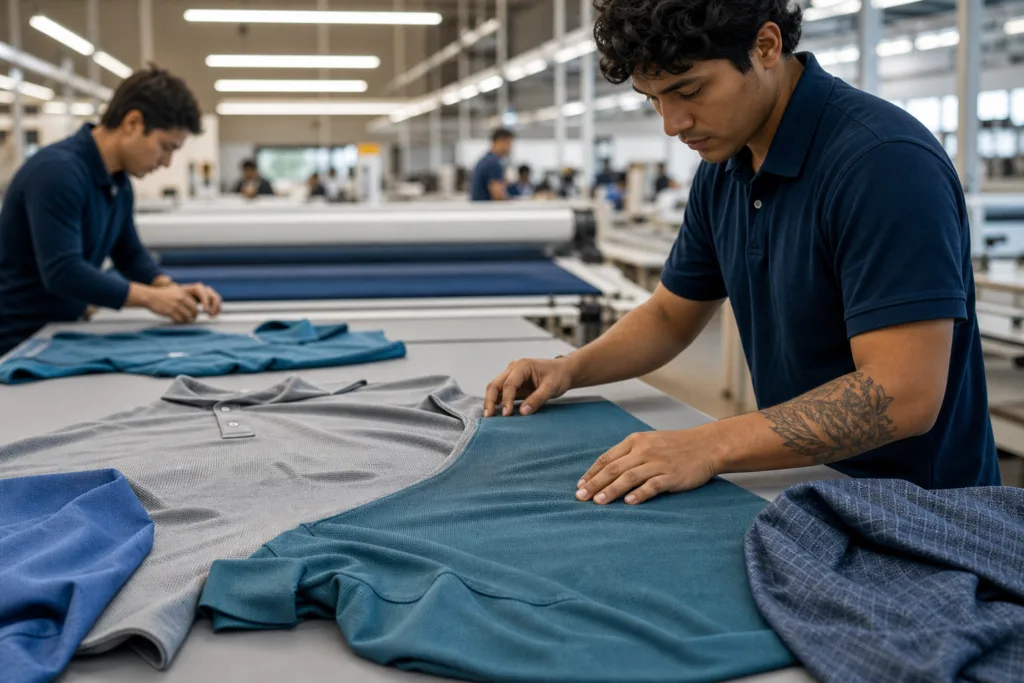
Fabric is usually the largest cost component in bulk custom polo shirts. Cotton, cotton polyester blends, recycled polyester, performance polyester, and elastane blends all affect raw material cost, fabric behavior, and production planning.
A standard corporate polo may use cotton pique or a cotton polyester blend because it balances comfort, durability, and cost. A golf or performance polo may require moisture management, stretch, UV-related features, or a smoother face for a cleaner premium appearance. Those upgrades increase fabric cost and sometimes extend sourcing time if the mill needs custom development.
In our production work, fabric composition also influences shrinkage control, color fastness, and the garment hand feel after washing. These are not only technical details. They affect return risk, wearer satisfaction, and size stability in bulk orders.
- 100% cotton: natural hand feel, breathable, often preferred for casual or corporate wear, but shrinkage and color consistency need attention.
- Cotton polyester blend: cost-efficient, easier care, more stable in bulk, often practical for uniforms.
- 100% polyester performance fabric: lighter, faster drying, common in sports and golf programs.
- Polyester with elastane: adds stretch and comfort, usually priced higher and may require closer fit control.
When buyers need exact shade control for brand colors, fabric composition also matters because fiber type affects dye uptake. For that reason, some orders need specific custom fabric dyeing options instead of using only stock shades.
How fabric weight, yarn quality, and construction method affect the final result
GSM alone does not tell the full story, but it changes both cost and perceived quality. A heavier polo can feel more substantial and premium, while a lighter polo may be more suitable for hot climates, sportswear, or lower-cost promotions. The right choice depends on the use scenario, not only on price.
Yarn quality matters because cleaner, more consistent yarn usually improves surface appearance, pilling performance, and hand feel. Better yarn can raise fabric cost, but it also helps the garment look more uniform in bulk production. Buyers often notice this difference when comparing a value-level polo with a retail-ready private label program.
Construction method is another cost driver. Pique, jersey, interlock, and engineered performance knits each create different texture, drape, and logo compatibility. Embroidery on thick pique behaves differently from heat transfer on smooth polyester, so the fabric and logo method should be planned together instead of separately.
| Fabric Factor | Lower-Cost Direction | Higher-Cost Direction |
|---|---|---|
| GSM | Lighter standard weight | Heavier premium weight |
| Yarn quality | Basic yarn count | Finer or cleaner yarn |
| Knit type | Standard pique | Specialized knit structures |
| Finish | Basic finish | Moisture wicking, peaching, stretch finishing |
Why dyeing method, color count, and matching complexity can slow approval
Color is one of the most underestimated quote variables. Stock colors are usually faster and more cost-efficient than custom dyed colors, especially for medium-size orders. Once a buyer requests exact pantone-style matching, heather effects, contrast panels, or matching across multiple materials, the development path becomes more complex.
For solid polo programs, piece-dyed or yarn-dyed choices affect both appearance and cost. Yarn-dyed stripes or tipping on collars and cuffs often look more premium, but they require earlier planning and different MOQ logic than simple solid-dyed fabric. That is why two visually similar polos can have very different prices.
Color approval can also add time. Lab dips, strike-offs, and trim matching may need confirmation before bulk fabric production begins. If the project includes contrasting plackets, rib collars, woven labels, and printed packaging, all those elements must align with the color standard.
Which logo method fits the product and budget best
The logo method changes setup cost, visual impact, durability, and lead time. Buyers should choose the method based on brand positioning, logo size, fabric type, and order quantity instead of personal preference alone.
Embroidery is common for corporate and golf polos because it creates a durable, textured brand image. However, large or dense embroidery increases cost, adds stitching time, and can affect drape on lighter fabrics. Screen printing is efficient for larger runs when the artwork is simple and the fabric face is suitable. Heat transfer is useful for sharp small details or performance fabrics. Sublimation works best on polyester-based garments designed for all-over or panel printing.
| Logo Method | Best For | Cost Effect | Lead Time Effect |
|---|---|---|---|
| Embroidery | Corporate, golf, premium branding | Medium to high | Digitizing and production time needed |
| Screen printing | Simple artwork in larger runs | Good unit economy at scale | Setup screens required |
| Heat transfer | Fine details, small runs, performance polos | Moderate | Usually flexible |
| Sublimation | Poly teamwear, full-color designs | Depends on panel layout | Requires print planning early |
From a manufacturer perspective, the most efficient projects are the ones where logo files, size, placement, and color are confirmed before sampling. If these points keep changing, the quote may remain provisional and lead time becomes harder to predict.
How labeling, hangtags, packaging, and private label details add hidden cost
Private label details are important, but they are rarely free. A blank or simple branded polo has a very different trim structure from a full private label program with neck label, care label, size flag, hangtag string, barcode sticker, folded presentation, and export carton marking requirements.
These additions may not raise the unit price dramatically one by one, but together they create sourcing work, approval steps, and packing labor. They also affect MOQ because custom trims often have their own minimums from the trim supplier.
- Main woven or printed neck labels may require a trim MOQ.
- Care labels must match the actual composition and care instructions.
- Retail hangtags add design, printing, attachment, and sometimes compliance review.
- Individual folding, tissue, or branded polybags increase finishing time.
For U.S.-bound programs or other regulated markets, compliance and labeling review may need extra attention. Some buyers also need approval steps tied to apparel safety and testing, which can influence pre-shipment timing even when the garment itself seems straightforward.
Why pattern, fit, sizing range, and grading complexity matter
A standard fit using an existing base pattern is usually faster and cheaper than a custom fit block. If a buyer wants a specific slim fit, women’s shape adjustment, extended sizes, or multiple market-specific measurements, pattern development becomes more involved.
Grading complexity matters because consistency across size ranges is one of the biggest quality concerns in bulk custom polo shirts. An order with sizes XS to 5XL, plus separate men’s and women’s fits, is not the same production job as one unisex size set from S to XL. More sizes require more pattern checks, marker planning, cutting control, and measurement inspection.
At Ninghow, we often advise buyers to confirm their intended fit target early and compare it against an existing sample or detailed size spec sheet. That reduces misunderstandings later in sampling and helps avoid a lower quote that becomes expensive once re-patterning starts.
How sample development and revision rounds affect both price and speed
Sampling is where many hidden costs appear. A single development sample based on clear artwork and a confirmed spec can move quickly. Multiple revisions caused by changing fabric, changing fit, changing collar shape, or changing logo size will add both cost and time.
This does not mean revisions are bad. It means they should be managed deliberately. For buyer teams launching a new private label polo, it is better to identify which elements are still open before the first sample so the factory can plan the development path correctly.
Buyers who want a deeper view of this stage should review how custom polo shirt sampling works before bulk production. It clarifies why sample approval is not only a formality, but the main checkpoint for fit, fabric, logo placement, workmanship, and expectations before the bulk order is cut.
Key takeaway: The fastest bulk orders usually come from the clearest sample approvals, not from the shortest promises at the quotation stage.
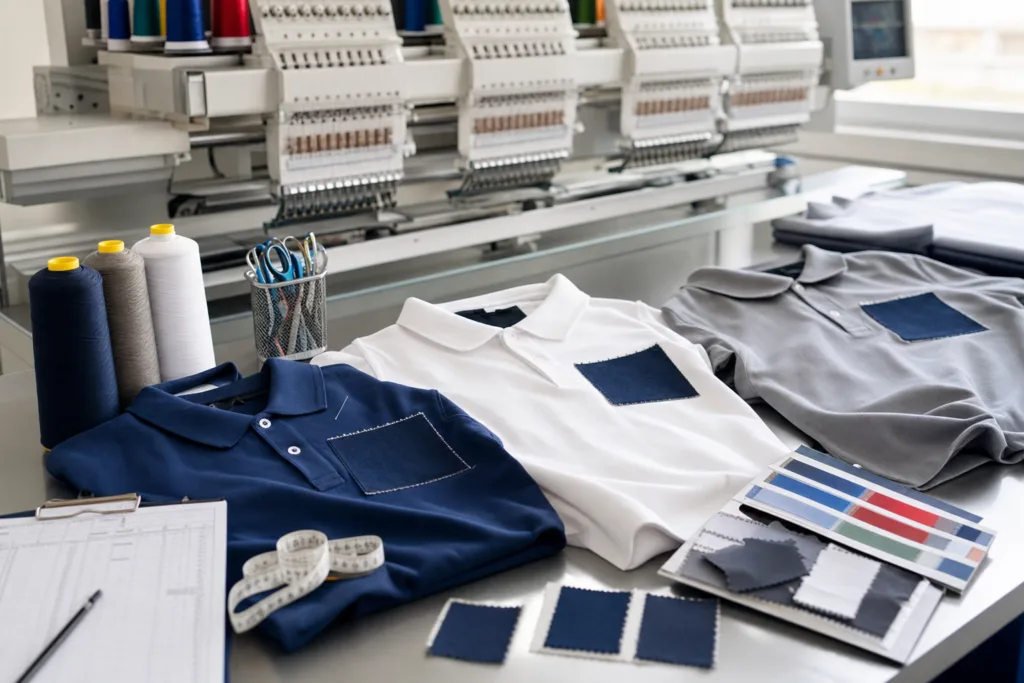
How MOQ is really calculated in custom polo shirt production
MOQ is rarely just one number chosen by the factory. It is usually the result of fabric minimums, dyeing minimums, trim minimums, logo setup efficiency, and production line practicality. That is why a supplier may support a lower MOQ for one polo style but not for another.
For example, a basic polo using stock fabric color, standard fit, and one chest embroidery can often run at a lower MOQ than a custom yarn-dyed striped collar polo with special labels and multiple colorways. The second program creates more upstream minimums even if the garment shape is similar.
MOQ can also be style-specific or color-specific. Buyers should ask whether the MOQ applies per style, per color, per logo, or total order quantity across combined variants.
| MOQ Driver | Why It Matters |
|---|---|
| Fabric mill minimum | Custom fabric may require a minimum yardage or weight |
| Custom dye lot | Exact colors often need minimum batch sizes |
| Trim minimum | Labels, buttons, tags, and packaging may have separate minimums |
| Logo setup | Embroidery digitizing or print setup is less efficient at very low quantities |
| Production efficiency | Small fragmented runs increase line changeover cost |
Why order quantity and unit price move together
In most cases, larger orders reduce the unit price because fixed costs are spread across more garments. Sample setup, pattern work, embroidery digitizing, marker making, and some trim costs do not increase in a straight line with quantity. Once those fixed elements are absorbed, the unit price becomes more efficient.
However, the price curve is not unlimited. After a certain quantity, the savings may flatten unless fabric or trim purchasing reaches another stronger cost break. Buyers should not assume that doubling units always halves the cost difference.
From our manufacturing perspective, the most useful question is not only “What is your MOQ?” but also “At what quantity does the price become efficient for this specification?” That gives better planning value than focusing on the lowest possible entry quantity.
How seasonal demand and factory capacity affect lead time
Lead time is not only about sewing days. It depends on fabric readiness, trim sourcing, sample approval, line booking, finishing, inspection, and shipping preparation. Peak-season congestion can add significant time even when the product itself is simple.
Corporate uniform programs, school orders, teamwear deadlines, golf seasons, and promotional campaigns often create concentrated demand periods. If the order is placed late, the supplier may still accept it, but fabric booking or production slot availability can become the real constraint.
This is where structured apparel order process planning becomes valuable. Buyers who align artwork approval, sample sign-off, trim confirmation, and deposit timing earlier usually get more predictable scheduling than buyers who try to compress everything into the last production window.
How shipping method, destination, and delivery terms change landed cost
Freight can significantly change the effective cost of bulk custom polo shirts, especially for urgent orders or remote delivery destinations. Air shipping may rescue a schedule, but it can erase the savings won during factory negotiation. Sea freight is usually more economical, but it requires earlier planning and more stable delivery windows.
Trade terms also matter. Whether the quote is closer to EXW, FOB, CIF, or another structure affects who carries the freight cost, customs responsibility, and delivery risk. Buyers comparing landed cost should understand the basics of shipping terms and landed cost rather than comparing factory prices alone.
Even before shipping starts, buyers should ask for realistic apparel production timeline expectations that separate sample timing, material preparation, bulk production, and dispatch. A short factory lead time means little if color approval or freight booking is still unresolved.
Typical price drivers by order scenario
The easiest way to understand quote variation is to compare three common order types. Each has a different cost structure even if all are polo shirts.
| Order Scenario | Main Cost Drivers | MOQ Pressure | Lead-Time Risk |
|---|---|---|---|
| Basic corporate polo | Standard fabric, chest embroidery, simple labels | Usually moderate | Lower if stock colors are used |
| Premium golf polo | Performance fabric, stretch, refined fit, premium trims | Higher for custom materials | Moderate to high due to development |
| Teamwear polo | Multiple colors, player or club branding, coordinated sizing | Depends on print method and colorways | High if deadline is event-based |
A buyer choosing between these directions should decide what value matters most: price, premium hand feel, performance function, or branding impact. Without that priority, quote comparison becomes confusing.
How to reduce cost without sacrificing product quality
The safest cost reductions usually come from simplification, not from weakening the product. In practice, that means keeping the core fabric suitable for the use case while reducing variables that trigger extra setup, sourcing, or QC risk.
- Use a stock or readily available fabric color when exact custom dyeing is not essential.
- Limit the number of body colorways in the first bulk run.
- Choose one efficient logo method instead of mixing multiple applications.
- Use a standard fit block if the target market does not need custom pattern development.
- Simplify packaging for non-retail programs.
- Consolidate size breakdowns where possible to improve production efficiency.
We generally advise buyers not to cut cost by ignoring shrinkage, weak collars, poor placket construction, or unstable size grading. Those shortcuts may lower the quote, but they often create quality claims later.
What to ask a wholesale polo shirts manufacturer before requesting a quote
The right questions improve quote accuracy. A supplier can price much more reliably when the buyer clarifies the product goal and business constraints from the start.
- What fabric composition, weight, and finish do you want?
- Is the fit standard, slim, oversized, men’s, women’s, or youth?
- How many colors, logos, and placements are required?
- Do you need private labels, hangtags, or retail packaging?
- What quantity applies per color and per size?
- What is the target ship date and destination?
- Are there any compliance, testing, or import requirements?
What a clear RFQ should include for accurate pricing
A strong RFQ helps the factory quote the real product instead of an assumption. This usually leads to fewer revisions and more predictable lead times.
- Reference image or tech pack
- Fabric composition and target GSM
- Color requirements and whether exact color matching is needed
- Logo files with size and placement notes
- Size chart and fit comments
- Estimated quantity by color and size
- Label, packaging, and carton requirements
- Sampling expectations and target delivery window
Key takeaway: The more specific the RFQ, the more useful the quote. Vague briefs create low-confidence prices that often change later.
Common mistakes that cause unclear quotes, higher costs, or delays
Most quote problems come from incomplete information rather than bad intention. Buyers and suppliers both work better when the product scope is fixed early enough to plan correctly.
- Comparing quotes with different fabric assumptions
- Sending logo artwork without dimensions or placement
- Changing color standards after sampling starts
- Requesting low MOQ with too many custom trims
- Ignoring size range complexity in the first quote request
- Assuming freight is included when it is not
- Approving samples late but expecting the original ship date
Checklist for comparing multiple quotes fairly
When buyers compare several manufacturers, the goal is not to find the cheapest number first. The goal is to identify which quote best matches the intended product, quantity strategy, and delivery requirement.
- Check fabric composition, GSM, and knit type line by line.
- Confirm whether colors are stock or custom dyed.
- Compare logo method, size, and quantity of applications.
- Review label and packaging inclusions carefully.
- Ask whether MOQ is per style, color, or total order.
- Separate sample charges from bulk unit price.
- Clarify trade terms, freight assumptions, and destination responsibility.
- Review lead time from approval, not only from deposit.
- Check quality control checkpoints and tolerance standards.
How to plan a better polo shirt order with more predictable pricing and lead time
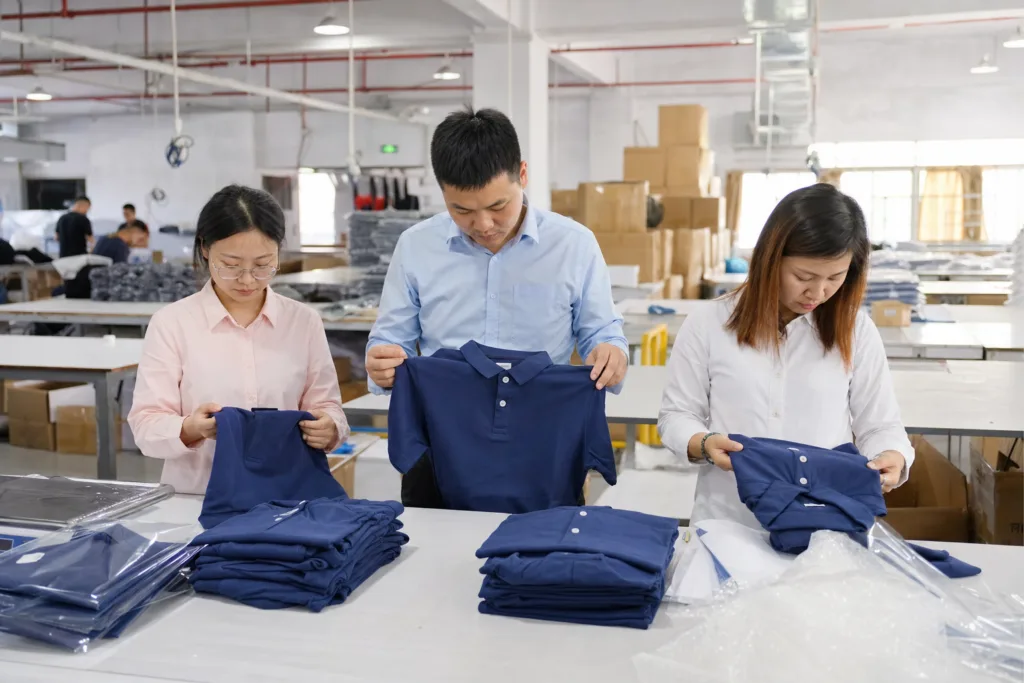
The most reliable bulk custom polo shirts orders are usually built on clear priorities. If the project values low cost, keep the specification simple and use proven materials. If the project values premium brand presentation, plan for more development time and a higher trim and fabric budget. If the project has a hard deadline, simplify variables early and protect the sample approval schedule.
From our manufacturer perspective, better outcomes come from aligning the product brief, quantity plan, and shipping target before requesting final pricing. That allows the supplier to recommend the right fabric route, trim structure, MOQ approach, and production timeline instead of forcing the order into the wrong model. For buyers comparing quotes, that is the difference between a low number on paper and a workable bulk production plan.
FAQs
Why do bulk custom polo shirts from different suppliers have very different prices?
Prices vary because suppliers may be quoting different fabric compositions, GSM levels, logo methods, trim packages, and delivery terms under the same product name. A meaningful comparison only happens when the specification, quantity breakdown, and shipping assumptions are aligned across all quotes.
What is a realistic MOQ for custom polo shirts?
A realistic MOQ depends on whether the order uses stock fabric, custom dyeing, special trims, and private label details. Simple polos with standard materials can often support lower minimums, while custom colors, yarn-dyed collars, and branded packaging usually push the MOQ higher because mills and trim suppliers have their own minimum requirements.
Does embroidery always cost more than printing on polo shirts?
Embroidery often costs more for small logos on polos, but not in every scenario. The real cost depends on stitch count, logo size, placement, fabric type, and quantity, while printing can become expensive too if there are multiple colors, special effects, or small order quantities with setup charges.
How long does bulk production usually take after sample approval?
Bulk production timing depends on material readiness, line capacity, order size, and finishing requirements, but sample approval is the key starting point for any reliable schedule. Buyers should ask for a timeline that separates fabric preparation, sewing, inspection, packing, and dispatch instead of relying on one total number only.
How can buyers lower cost without hurting polo shirt quality?
Buyers usually save money most effectively by reducing unnecessary complexity rather than downgrading the core garment. Using stock colors, simplifying packaging, limiting colorways, and choosing one efficient logo method can cut cost while keeping fabric performance, collar stability, and overall workmanship at an acceptable level.
What should be included in a polo shirt RFQ to get an accurate quote?
An accurate RFQ should include product images or a tech pack, fabric composition, target weight, colors, logo files, placements, size chart, estimated quantity by size and color, label and packaging needs, and the target delivery window. The clearer the RFQ, the less likely the quote will need major revision later.