


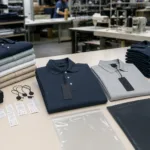

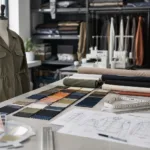


Custom polo shirts for brands work best when every development choice supports positioning, not just appearance. Fabric hand feel, GSM, fit shape, collar construction, logo method, trims, and packaging all influence whether the final product feels corporate, sporty, premium, fashion-forward, or value-driven. From our manufacturing perspective, strong polo development starts by defining the customer, price point, use scenario, and expected quality level before any sample is made.
If your project involves comparing custom polo shirt production paths for brands, it helps to evaluate more than decoration or color alone. We typically guide buyers through fabric selection, fit refinement, logo application, private label details, sampling priorities, and bulk production planning so the polo shirt is aligned with the brand story and realistic for manufacturing.
Why custom polo shirts matter for brand identity and product positioning
A polo shirt sits in a unique product space. It can be used for premium uniforms, clubwear, golf collections, casual retail, team apparel, or corporate gifting, so the same basic garment can communicate very different brand messages.
That is why generic development usually creates weak results. A polo intended for a modern golf line should not feel like a heavy office uniform, and a business polo should not use details that make it look too athletic or overly promotional.
Key takeaway: The most successful custom polo shirts for brands are built around a clear product role, not around a logo added at the end.
What makes a polo shirt feel premium or truly brand-aligned?
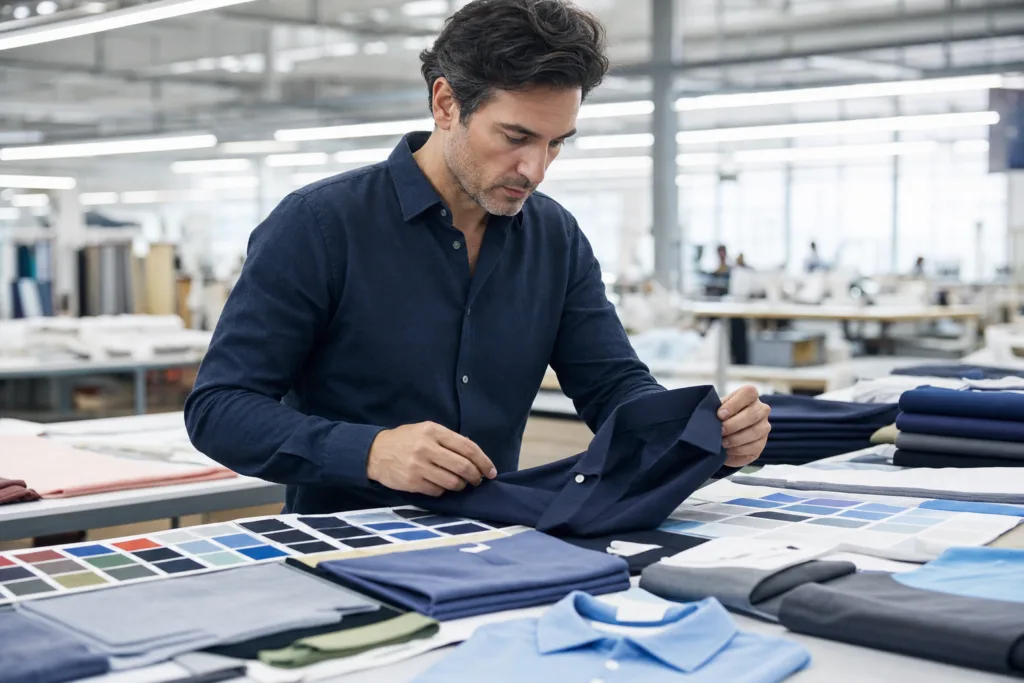
The answer is usually a combination of fabric, silhouette, construction, and finishing consistency. Buyers often focus first on embroidery or packaging, but end customers notice touch, drape, collar behavior, and fit much faster.
A premium feel does not always mean the most expensive fabric. It means the fabric, structure, and details suit the product goal. A smooth mercerized cotton polo may feel premium for a business collection, while a light stretch performance knit may feel more premium for golf or active use because it performs better in that context.
- Fabric surface should match the brand image: textured, smooth, sporty, or refined.
- Collar shape should hold correctly after wear and washing.
- Fit should suit the target customer, not just follow trend pictures.
- Logo method should match the product tier and use scenario.
- Labels, hangtags, and packaging should feel intentional rather than generic.
How to choose the right fabric for custom polo shirts for brands
Fabric is the biggest product decision because it affects appearance, comfort, durability, printability, shrinkage risk, and target cost at the same time. In polo manufacturing, the right choice depends on where and how the garment will be worn.
The most common fabric families are cotton, polyester, cotton-poly blends, pique, jersey, and performance knits with stretch or moisture management. Each one creates a different wearing experience and a different brand impression.
| Fabric Option | Best For | Main Advantages | Watchouts |
|---|---|---|---|
| 100% cotton pique | Classic retail, business casual | Natural hand feel, breathable, traditional polo texture | Can shrink more, may lose crispness if low quality |
| Cotton jersey | Fashion polos, softer casual look | Smooth surface, softer drape, easier for certain prints | Less structured than pique |
| Polyester pique | Uniforms, sports, golf | Durable, colorfast, quick drying | Can feel less natural if yarn quality is basic |
| Cotton-poly blend | Balanced business or everyday use | Better stability, comfort-cost balance | Hand feel varies greatly by blend ratio |
| Performance stretch knit | Golf, active, premium sportswear | Mobility, recovery, moisture management | Higher development complexity and trim matching needs |
For sports-oriented programs, many buyers need a more technical route such as custom golf polo shirt development for branded collections. In those cases we usually pay closer attention to stretch recovery, snag resistance, cooling feel, and how the collar behaves in lighter synthetic fabrics.
When pique, jersey, and performance structures make the biggest difference
Pique gives the classic polo identity because its textured surface adds body and helps hide minor surface irregularities. It is often the safest choice when a brand wants a recognizable polo look.
Jersey feels smoother and often looks more modern or fashion-oriented. It can work well for slim or minimal styles, but it usually needs more attention to collar structure so the finished polo does not feel too close to a T-shirt.
Performance knits are ideal when movement, sweat management, or fast drying matters. These fabrics are common in golf, clubwear, and premium teamwear, but they need careful review of logo application and color consistency because some decoration methods behave differently on synthetic stretch fabrics.
Fabric weight, GSM, breathability, drape, and durability considerations
GSM affects more than thickness. It changes drape, opacity, structure, warmth, and perceived value. Many buyers ask for a premium polo but choose a fabric that is too light for the intended market position.
As a general development guide, lighter GSM often feels more active or summer-oriented, while mid-weight fabrics usually provide better shape and broader customer acceptance. Heavier GSM can feel more substantial, but if the yarn and knit are not balanced, the garment may feel hot or rigid.
| GSM Range | Typical Feel | Common Use | Development Note |
|---|---|---|---|
| 160-180 GSM | Light, airy | Performance, summer, layering | Check opacity and collar support |
| 180-220 GSM | Balanced, versatile | Retail polos, business polos, golf | Often the safest range for broad programs |
| 220-260 GSM | Substantial, structured | Premium casual, heavier uniform use | Review heat comfort and drape carefully |
Breathability should be judged together with fiber content and knit structure. A lighter polyester fabric is not automatically better than a well-engineered cotton blend, and a heavy cotton pique is not automatically more premium if the end user needs all-day active comfort.
Durability also needs testing, not assumptions. When we review bulk readiness, we encourage brands to think about wash appearance retention, not only initial sample appearance. Standards-based methods such as testing polo shirts for wash performance and appearance retention help explain why pilling, seam smoothness, color change, and collar behavior should be reviewed before scale production.
Shrinkage risk is especially important for cotton-rich polos and blended knits. Fit can change after laundering, so using fabric test methods related to dimensional stability in fabric evaluation supports more reliable size approval before bulk production starts.
How to select the right fit for your target customer
Fit is where many polo programs miss their market. A good-looking sample on one model does not mean the size range will work commercially. The right fit should match customer body shape, intended use, and styling expectation.
Regular fit remains the safest choice for broad commercial use because it works across corporate, club, and casual channels. Slim fit suits modern retail positioning but can create higher return risk if grading is too aggressive. Relaxed and oversized fits can work for fashion-led brands, while athletic fits need more attention around chest, biceps, and back mobility.
- Regular fit: versatile, easier for uniforms and general retail.
- Slim fit: sharper look, but sizing tolerance must be carefully managed.
- Relaxed fit: easier comfort, better for casual lifestyle positioning.
- Athletic fit: suitable for golf and movement-focused wear.
- Oversized fit: trend-driven and more dependent on fashion styling consistency.
From our product development work, fit approval should always include chest width, shoulder slope, sleeve opening, body length, and collar proportion together. Looking at only one sample size often hides grading problems that appear later in XXL or smaller sizes.
How collar shape, placket design, and rib details change the final look
Collar construction is one of the fastest ways to shift a polo from basic to refined. A soft flat collar creates a more relaxed mood, while a firmer rib collar can make the garment feel cleaner and more uniform-ready.
Placket length also matters. A short placket can look modern and compact, while a longer placket may feel more traditional or better suited to business wear. Two-button and three-button layouts each create slightly different visual balance depending on collar spread and body fit.
For office and presentation use, many buyers prefer logo-ready business polo shirt options with cleaner placket finishing, stable collars, and more restrained detailing. That usually means paying more attention to interlining choice, rib density, button tone, and stitching neatness than to loud contrast features.
Small construction details that affect perceived quality
- Rib collar recovery after stretching
- Clean placket topstitching
- Neck seam binding for comfort and stability
- Side slits with reinforcement
- Shoulder and armhole seam consistency
- Button spacing and alignment
Key takeaway: If the collar twists, bubbles, or collapses after washing, the polo will not feel premium even if the embroidery looks excellent.
How to approach color strategy and consistency
Color development should reflect both branding and manufacturing practicality. Core solids are easiest to scale, but custom dyed brand shades, contrast tipping, inside placket colors, and neck tape accents can make a polo feel more distinctive.
The important point is consistency. A brand color that looks right on lab dip approval can still shift across body fabric, rib collar, embroidery thread, labels, and packaging if matching standards are not clearly defined.
We recommend buyers confirm these points before sampling moves forward:
- Main body color reference and tolerance
- Rib collar and cuff color match method
- Embroidery thread or print color reference
- Button color and finish
- Packaging and hangtag color harmony
If exact brand color control matters, fabric dyeing, rib dyeing, and trim sourcing should be discussed early rather than after the first sample. That reduces rework and avoids a situation where the body fabric matches but the collar trim does not.
Which logo method is right for your polo shirt program?
The right logo method depends on branding style, fabric type, order quantity, and price positioning. There is no single best technique for all polo shirts.
| Logo Method | Best For | Strengths | Limitations |
|---|---|---|---|
| Embroidery | Premium, corporate, clubwear | Durable, dimensional, polished look | Can add stiffness on light fabrics |
| Screen printing | Bold graphics, larger logos | Cost-effective in quantity, good visual impact | Less ideal for some textured pique surfaces |
| Heat transfer | Fine detail, performance polos | Sharp logo edges, light hand feel | Requires correct application settings and testing |
| Sublimation | All-over polyester designs | Excellent for full design integration | Works mainly on polyester-based fabrics |
| Woven label or badge | Subtle branding, fashion details | Refined secondary branding | Not always enough for primary logo impact |
For a more elevated result, many brands choose embroidered polo shirt customization for premium branding because it suits chest logos, sleeve logos, and club or corporate positioning. The key is balancing stitch density with fabric weight so the logo looks crisp without puckering the body panel.
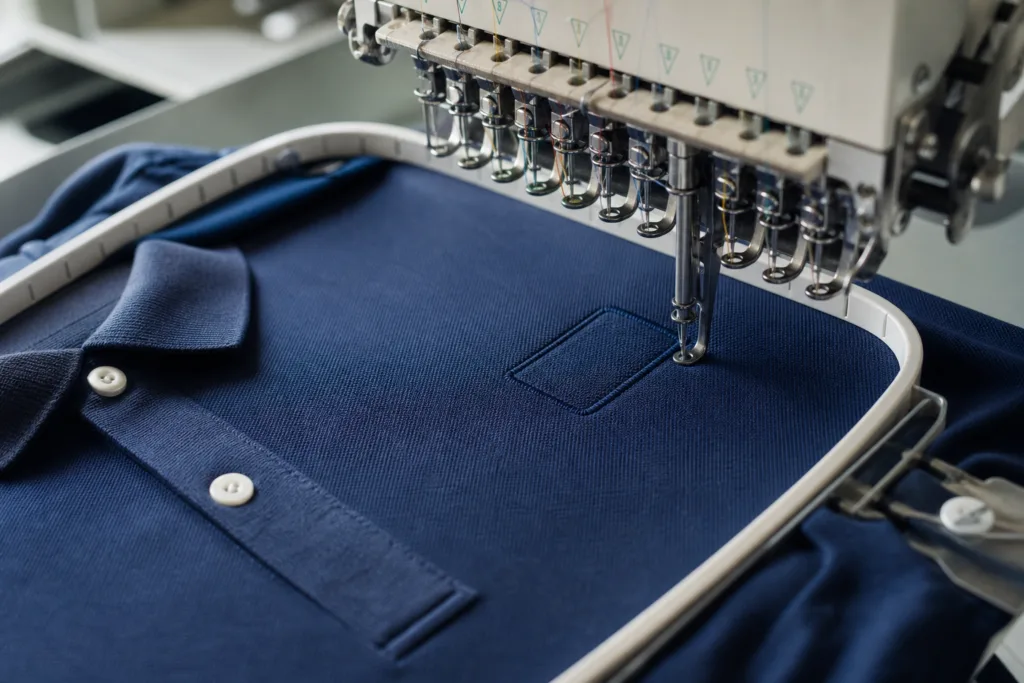
When visual identity depends on bolder graphics, contrast messaging, or larger back prints, printed polo shirt decoration options for brand identity may be more suitable. This is especially true when the brand wants cleaner edges, larger artwork, or a lighter decoration feel on performance fabrics.
Where should the logo go for the best brand impact?
Left chest placement remains the most common because it is balanced, wearable, and easy to scale across business, retail, and event use. But it is not always the strongest choice.
Brands should decide whether the logo is meant to signal prestige, visibility, team identity, or subtle ownership. A golf or club polo may work well with chest plus sleeve branding, while a fashion-led polo may look better with a small hem label and minimal chest detail.
- Left chest: classic, versatile, low-risk
- Center chest: stronger statement, not ideal for all logos
- Sleeve: useful secondary branding, team or sponsor style
- Back neck: subtle and premium if executed cleanly
- Hem label: understated fashion branding
Before approving placement, we usually test logo scale against garment size grading. A logo that feels perfect on size M can look undersized on 3XL or too dominant on XS if no size-proportion discussion happens during development.
Private label polo shirts: labels, hangtags, and packaging details
Private label details shape how finished and ownable the garment feels. Even a well-made polo can look generic if the neck label, care label, hangtag, and packaging are treated as afterthoughts.
At Ninghow, we usually suggest that buyers define private label priorities during sample planning, not after bulk approval. Label type, fold method, country-of-origin marking, size presentation, barcode needs, and packaging format can all affect sourcing and timelines.
| Private Label Element | Purpose | Development Tip |
|---|---|---|
| Main neck label | Brand identity | Choose woven, printed, or heat transfer based on comfort and positioning |
| Care label | Compliance and garment care info | Confirm content, washing language, and placement early |
| Hangtag | Retail presentation | Align paper, finish, and string style with target price point |
| Polybag or retail packaging | Protection and presentation | Match fold method and sticker needs to channel requirements |
| Size sticker or barcode | Warehouse and retail handling | Lock format before bulk packing starts |
If the polo is sold through retail or direct-to-consumer channels, packaging should support the product story. A premium cotton polo in an elegant folded presentation sends a different message from a performance event polo packed for volume distribution.
Trims and finishing touches that influence the final impression
Buttons, thread color, side slits, bartacks, and reinforcement tapes may look minor on paper, but together they often define whether the garment looks basic or deliberate. These details also affect cost and production complexity.
For example, custom buttons add branding value but usually increase sourcing steps and MOQ considerations. Contrast thread can create visual identity, but it also makes sewing consistency more visible. Side slit reinforcement improves durability, especially on longer body lengths or active-use polos.
- Buttons: resin, shell-look, dyed-to-match, branded, matte or glossy
- Thread: tonal for clean finish, contrast for design character
- Side slits: practical for comfort and mobility
- Bartacks: useful at stress points
- Neck tape: improves comfort and inside finishing appearance
What the sample development process should look like
A smooth sampling process starts with a complete tech pack and realistic priorities. If the buyer has not decided fabric direction, logo method, target fit, and label needs, the first sample often becomes a rough concept rather than a true development step.
We generally recommend that brands prepare the following before first sample confirmation:
- Reference images and intended use scenario
- Fabric preference or target hand feel
- Estimated GSM range
- Measurement chart and fit comments
- Logo files with size and placement notes
- Label and packaging requirements
- Target price range and planned MOQ
Sample rounds should have clear objectives. One round may validate silhouette, another may confirm color and trims, and another may check bulk readiness. Trying to solve every issue in one rushed sample usually causes delay rather than saving time.
How to plan MOQ, size range, and lead time realistically
MOQ for polo shirts depends on fabric availability, dyeing requirements, customization complexity, and size-color breakdown. Buyers often think MOQ is only a factory policy, but in practice it is also shaped by fabric mill minimums, trim sourcing, and decoration setup efficiency.
Low MOQ is more realistic when using stock fabrics, standard colors, and simpler trims. MOQ usually rises when brands need custom-dyed fabric, special ribs, branded buttons, multiple logo applications, or highly segmented size-color ratios.
Lead time also includes development, revisions, material preparation, production scheduling, and finishing. Understanding the broader idea of manufacturing cycle time helps explain why a delayed approval on fabric or packaging can affect delivery even when sewing capacity is available.
Key takeaway: The fastest way to protect lead time is to lock fabric, fit, color, logos, labels, and packing details before bulk material booking begins.
What buyers should check before bulk production starts
Bulk production should not begin until the approved sample and production comments are fully aligned. Verbal approval is rarely enough for a garment with several custom details.
Before bulk launch, we recommend a checkpoint covering:
- Approved fabric and GSM tolerance
- Shrinkage and wash appearance review
- Approved measurement chart and grading
- Collar and cuff quality confirmation
- Logo strike-off or embroidery panel approval
- Label artwork and legal content review
- Packing method and carton ratio confirmation
For branded polo shirts, quality control is not only about defects. It is also about consistency between the approved development sample and the full order. That includes color continuity, embroidery placement, placket neatness, button security, measurement tolerance, and final folding presentation.
Common mistakes brands make when developing custom polo shirts
The most common mistake is trying to make one polo serve too many roles. A shirt meant for premium retail, active golf, and low-cost uniform use usually ends up compromised in fabric, fit, or finish.
Another frequent issue is approving a sample without wash testing or full measurement review. The garment may look correct at first fitting but lose shape after laundering or become inconsistent once graded into larger sizes.
- Choosing fabric by composition only, without checking hand feel and structure
- Ignoring collar performance in wash and wear
- Using a logo method that does not suit the fabric surface
- Leaving labels and packaging decisions too late
- Underestimating lead time for custom dyeing or trims
- Comparing suppliers by unit price without comparing sample accuracy and communication quality
How to compare a custom polo shirts manufacturer
Buyers should compare manufacturers by development control, consistency, and communication clarity, not only quoted price. A good partner should be able to explain why one fabric behaves differently from another, where shrinkage risk may appear, and how collar construction or logo application will affect the finished result.
We believe the right manufacturing fit includes practical guidance as well as execution. That means asking useful questions about use scenario, target customer, price point, wash expectations, packaging, and order structure before quoting a final production path.
| Evaluation Area | What to Ask | Why It Matters |
|---|---|---|
| Fabric knowledge | Can they explain suitable knit options and GSM trade-offs? | Impacts comfort, positioning, and performance |
| Pattern and fit control | How do they handle grading and fit revisions? | Reduces size inconsistency risk |
| Decoration capability | Which logo methods suit your artwork and fabric? | Prevents poor finish or unnecessary cost |
| Sampling process | Do they structure revisions clearly? | Improves development efficiency |
| QC system | What checkpoints happen before shipment? | Supports bulk consistency |
| Communication | Are comments translated into actionable production notes? | Reduces misunderstandings |
A practical checklist for launching a brand-aligned polo shirt
If you want the development process to move efficiently, define the product before asking for the final price. The better the brief, the better the sample and the lower the risk of costly revisions.
- Define the target customer and use scenario
- Choose fabric family, hand feel, and estimated GSM
- Set fit direction and measurement expectations
- Confirm collar, placket, and construction style
- Select the logo method and placement
- List label, hangtag, and packaging requirements
- Review MOQ impact of custom colors and trims
- Approve sample with wash, measurement, and finish checks
- Lock bulk comments before production starts
Conclusion
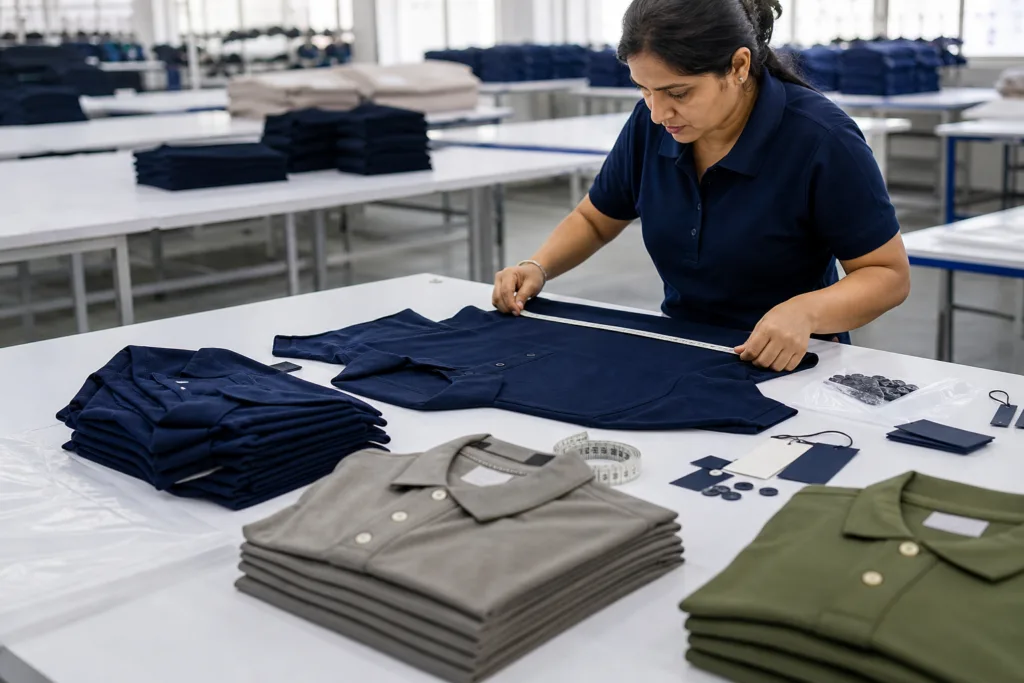
Developing custom polo shirts for brands is not about adding a logo to a standard blank. It is a product development exercise where fabric, GSM, fit, collar structure, decoration, trims, and packaging must work together to express the right market position.
From our manufacturing perspective, the strongest outcomes come when brands make early decisions clearly, sample with purpose, and check performance as seriously as appearance. When those steps are handled well, the final polo shirt is easier to scale, easier to merchandise, and far more likely to feel genuinely aligned with the brand.
FAQs
What fabric is best for custom polo shirts for brands?
The best fabric depends on the product goal. Cotton pique works well for classic and business-casual polos, blends offer a practical balance of comfort and stability, and performance polyester or stretch knits are usually better for golf, sports, or high-mobility use. Brands should choose based on hand feel, GSM, wash behavior, and how the fabric supports the intended market position.
How do I choose between embroidery and printing for a polo logo?
Embroidery is usually better for premium, corporate, or club-style branding, while printing is often better for larger graphics, sharper visual detail, or lighter decoration on technical fabrics. The decision should also consider fabric texture, logo size, cost target, and whether the logo needs a subtle or more graphic appearance.
What details make a polo shirt look more premium?
A polo looks more premium when the fabric feels right for the brand, the collar holds its shape, the fit is balanced, and the finishing is consistent. Details such as clean placket stitching, quality buttons, reinforced side slits, refined embroidery, and well-designed private label packaging often matter more than adding extra decorative features.
Why does MOQ vary so much for custom polo development?
MOQ changes because it is tied to fabric sourcing, dyeing minimums, trim customization, decoration setup, and size-color breakdown. A basic polo using stock materials can often be produced at a lower MOQ, while custom-dyed fabrics, branded buttons, special ribs, and complex packaging usually increase the minimum production requirement.
What should brands approve before bulk polo production starts?
Brands should approve the final sample, measurement chart, fabric quality, color standard, collar and cuff construction, logo method and placement, label artwork, and packing details before bulk production begins. It is also wise to review wash performance, shrinkage risk, and grading logic so the bulk order matches the approved product more closely.
How can I compare a custom polo shirts manufacturer effectively?
You can compare manufacturers by looking at fabric knowledge, sample accuracy, fit development ability, logo application guidance, communication quality, and quality control discipline. A strong manufacturer should be able to explain technical trade-offs clearly and turn your comments into production-ready actions rather than only sending a low quote.