








Your first production order should be small enough to control risk, but large enough to test real manufacturing conditions. That balance is what makes a first small clothing order valuable: it helps you confirm fit, fabric, branding, packaging, communication, and repeatability before you commit to larger volume.
If your launch plan depends on low MOQ clothing manufacturing options for risk control, the goal is not just to find a factory willing to accept fewer units. The more important question is whether the supplier can support the right fabric choices, realistic customization, sampling discipline, and bulk planning without creating hidden cost or quality problems later. From our manufacturing perspective, small orders work best when buyers simplify early decisions and build a production plan around what really needs to be tested first.
What a first small clothing order should achieve
A first order is not mainly about chasing the lowest quantity. It is about proving that your product can move from idea to stable production with acceptable quality and timing.
In practice, your first small order should answer a few critical questions. Can the supplier match your intended fabric hand feel? Does the size set fit your target customer? Will your logo method hold up on the chosen fabric? Can labels, trims, and packaging be delivered consistently? Those answers matter more than getting the unit count as low as possible.
Key takeaway: A smart first order is a controlled production test, not just a purchasing event.
Good goals for a first order
- Validate fabric quality, color, and GSM in finished garments
- Confirm fit, grading, and size consistency
- Test embroidery, printing, or private label details in real production
- Evaluate communication speed and problem solving
- Check whether packaging and finishing meet your market needs
- Learn the realistic lead time before scaling
How to choose the right product for your first run

The easiest first order is usually a product with fewer variables. Simple T-shirts, fleece hoodies in standard fabrics, basic polo shirts, or straightforward shorts are often better first projects than highly technical outerwear or heavily paneled sportswear.
When we advise new buyers, we usually recommend starting with one core style instead of a broad launch range. One style in one or two colors lets you focus on fit, sewing quality, logo execution, and customer response. If you launch too many SKUs too early, you increase the chance of confusion in size breakdown, trim matching, and stock planning.
| Product Type | Good for First Small Order? | Why | Main Risk |
|---|---|---|---|
| Basic cotton T-shirt | Yes | Simple construction, easier fit review, broad fabric options | Fabric and collar quality still matter |
| Fleece hoodie | Yes | Strong value perception, good for logo testing | GSM, shrinkage, and cuff quality need attention |
| Polo shirt | Yes | Good for teams, uniforms, golf, and brand basics | Placket shape and collar stability affect appearance |
| Compression sportswear | Sometimes | Useful if it is your core market | Fit tolerance, stretch recovery, and panel accuracy are more demanding |
| Technical jacket | No for most first runs | High complexity, many trims, more failure points | MOQ, testing, and lead time often increase |
If your concept includes multiple products, choose the one that best represents your brand and has the highest chance of repeat demand. That gives you better feedback from the market and cleaner production learning.
How fabric selection affects cost, feel, and MOQ
Fabric is often the biggest decision in a first small clothing order because it affects cost, fit, appearance, performance, and minimum quantity. Buyers sometimes focus on color and overlook the fact that fabric availability can decide whether a small run is realistic at all.
In our production work, stock-supported fabrics usually make small orders more practical. Custom-dyed fabrics, special blends, unusual textures, or exclusive performance finishes can push MOQs up because mills may require higher minimums than the garment factory itself.
What buyers should compare in fabric selection
- Composition, such as 100% cotton, cotton polyester blend, or polyester spandex
- GSM and how it changes drape, opacity, warmth, and structure
- Surface feel, such as soft, brushed, dry hand, smooth, or technical
- Stretch and recovery for sportswear or fitted garments
- Shrinkage behavior after washing
- Colorfastness and print compatibility
| Fabric Factor | Lower-Risk Choice for First Order | Higher-Risk Choice |
|---|---|---|
| Fabric source | Available stock fabric | Custom-developed fabric |
| Color route | Mill standard color | Custom pantone dyeing |
| Composition | Common jersey or fleece blend | Special functional blend |
| Weight | Commercially proven GSM | Very light or very heavy niche GSM |
| Finish | Standard finish | Special wash or coating |
GSM should never be chosen by number alone. A 180 GSM T-shirt can still feel very different depending on yarn type, knit structure, and finishing. That is why swatches and prototypes matter before bulk approval.
For buyers that need support with fabric choices and development logic, Ninghow can help compare practical options based on target price, use scenario, and production scale. This is especially useful when a product needs to look branded and premium without forcing an unnecessarily complex first run.
When measurement precision becomes important, especially for size specs, tolerances, and labeling consistency, it helps to follow NIST standards and measurement guidance as a reference mindset. Even when apparel programs are customized, disciplined measurement language reduces misunderstandings between buyer, sample room, and production floor.
How to prepare product information before you ask for pricing
Manufacturers can quote more accurately when the request is specific. A vague inquiry often leads to rough estimates that change later, which can disrupt your launch budget.
Before requesting a first order quote, prepare the product details that actually drive cost and feasibility. If you do not have a full tech pack yet, a clear specification sheet is still much better than sending only inspiration images.
Minimum information that helps a factory quote correctly
- Garment type and intended use
- Target fabric composition and approximate GSM
- Colorways and expected quantity per color
- Logo application method and approximate size
- Size range and quantity breakdown by size
- Required labels, hangtags, polybags, or cartons
- Target market and price positioning
- Desired delivery timing
Private label projects also need branding details early. Neck labels, care labels, size labels, hangtags, barcode stickers, and retail packaging may seem small, but together they affect sourcing time, approval steps, and MOQ logic.
Key takeaway: Clear product information shortens quote revisions and reduces the chance of surprise cost increases later.
Why sampling should come before bulk commitment
You should not move directly into bulk production from concept images alone. A proper sample helps reveal fit issues, fabric mismatch, logo execution problems, stitching weaknesses, and trim conflicts while changes are still manageable.
This is why we encourage buyers to treat the apparel sampling process for testing fit and color as a decision tool rather than a formality. The sample stage is where patterns are adjusted, construction details are clarified, and expectations become visible instead of assumed.
Sampling is also where buyer communication becomes easier to evaluate. If comments are handled carefully, measurements are updated correctly, and revisions are tracked clearly, the supplier is more likely to stay organized in bulk.
What to review in a development sample
- Overall silhouette and brand positioning
- Chest, length, sleeve, and shoulder measurements
- Fabric hand feel after sewing and pressing
- Logo placement, sharpness, and durability
- Label position and content accuracy
- Stitch density, seam appearance, and finishing
- Color consistency between body fabric and trims
For more structured internal planning, many startups benefit from planning a first small clothing order as a phased project instead of trying to finalize every variable at once. That usually means locking the product, then the fit, then the branding details, then the packaging.
How customization choices change MOQ and lead time
Customization is one of the main reasons first orders become more complex than expected. The garment itself may have a manageable minimum, but your labels, trims, printing method, or special packaging can raise the effective MOQ.
As an example, a simple blank hoodie in an available fabric may be easy to produce in a smaller run. But if you add custom-dyed drawcords, woven main labels, inside neck print, embroidery, hangtags, zipper pulls, and branded bags, several components now need separate sourcing and approvals.
| Customization Item | Impact on Small Orders | What to Check |
|---|---|---|
| Screen printing | Usually efficient for moderate quantities | Color count, placement, and fabric compatibility |
| Embroidery | Good for premium look in smaller runs | Stitch density, backing, and distortion on light fabric |
| Heat transfer | Useful for names, numbers, and small runs | Wash durability and application temperature |
| Woven labels | Often requires trim MOQ | Fold type, size, and content approval |
| Custom packaging | Can raise cost and lead time | Material, print method, and carton planning |
If your brand strategy depends on smaller entry quantities, it is worth studying low MOQ private label clothing planning before finalizing every branding detail. In many cases, the best path is to keep the first run branded but operationally simple, then add more packaging layers once the product proves demand.
What size planning buyers often underestimate
Size planning is more than choosing S to XXL. It affects grading, marker efficiency, quantity allocation, and how satisfied your customers will be when they reorder.
A first order should use a size chart built for your target market, not copied blindly from another brand. Men’s, women’s, youth, athletic, and streetwear fits all need different assumptions about ease and body shape. Even for a simple T-shirt, the same chest measurement can feel different depending on shoulder width, sleeve opening, and body length.
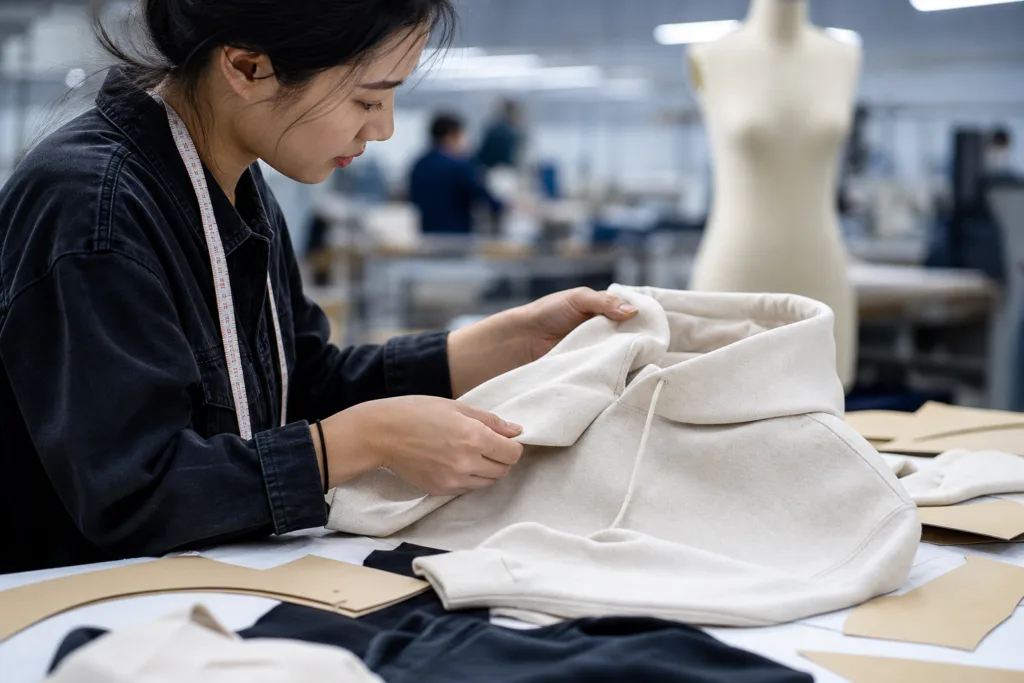
From our manufacturer perspective, poor size planning causes two common problems. The first is fitting dissatisfaction because the base size was wrong. The second is a distorted size ratio in bulk, where too many units are placed into unpopular sizes and too few into the commercial core sizes.
A practical size-planning checklist
- Decide whether the fit should be slim, regular, relaxed, or oversized
- Approve a clear base size before grading the rest
- Review size tolerance expectations in advance
- Match the size chart to the target sales region
- Build quantity ratios around realistic demand, not equal quantities per size
How to estimate realistic lead time for a first order
Lead time for a first order is usually longer than for repeat production. The reason is simple: development, approvals, material sourcing, and communication all take time before sewing can even begin.
A realistic schedule usually includes quotation review, sample making, sample revision if needed, fabric confirmation, trim sourcing, pre-production approval, bulk sewing, finishing, inspection, and packing. Buyers who only count the sewing days often underestimate the actual project timeline.
At this stage, it also helps to judge whether the supplier follows disciplined systems aligned with broader ISO quality and process standards principles. Even when a program is not built around a formal standard requirement, process consistency, document control, and repeatable checkpoints are what protect a small first order from avoidable errors.
Common lead time drivers
- Need for custom fabric or dyeing
- Number of sample rounds
- Complex logo or trim development
- Large color range in a small order
- Seasonal production congestion
- Packaging approvals arriving late
Key takeaway: Small quantity does not always mean short lead time. Development complexity usually matters more than unit count.
What quality control should look like in a first small order
Quality control on a small order should still be systematic. A lower quantity is not a reason to skip measurement checks, color review, logo inspection, or packaging verification.
In our factory-oriented workflow, first orders benefit from checkpoints before, during, and after sewing. That means checking materials when they arrive, verifying a pre-production sample or pilot piece, inspecting workmanship during sewing, and confirming measurements and packing before shipment.
Useful QC checkpoints for first runs
- Fabric inspection for color, flaws, and hand feel consistency
- Measurement confirmation against approved spec sheet
- Logo inspection for placement and execution quality
- Seam and stitching review for skipped stitches, puckering, or loose threads
- Trim and label verification
- Final packing check for size stickers, carton marks, and quantity accuracy
Buyers who want to assess a supplier more deeply should review what sampling reveals about manufacturer capability. The sample stage often shows whether the factory can interpret comments accurately, solve pattern issues, and maintain consistency when moving toward bulk.
Common mistakes that make a first order harder than it needs to be
The most common mistake is adding too much complexity too early. Too many colors, too many SKUs, too many branding components, and too many fit changes all at once create avoidable delays.
Another frequent issue is treating MOQ as the only negotiation point. Buyers sometimes push for a lower quantity without checking whether the fabric, labels, or packaging are the real MOQ drivers. That can result in an unrealistic quote or a compromised product.
Mistakes to avoid
- Starting with a technically complex garment when a simpler one could validate the brand faster
- Approving fabric by photo only instead of reviewing swatches or samples
- Sending incomplete artwork or unclear branding files
- Ignoring care label and packaging details until late in production
- Using copied size charts without fit testing
- Expecting bulk speed before sample approval is complete
- Ordering equal quantities across all sizes without demand logic
When a buyer simplifies the first run, the project becomes easier to cost, easier to inspect, and easier to repeat successfully. That is usually the smarter path for startups and new product lines.
When a low MOQ first order is realistic and when it is not
A low MOQ is realistic when the product uses available fabrics, standard construction, limited colorways, and straightforward branding. It becomes less realistic when the order depends on custom materials, many trims, multiple placements, or advanced performance details.
For example, a small branded T-shirt program can often be structured efficiently. A custom golf polo with special yarn, exact pantone matching, jacquard neck tape, woven badge, and retail gift packaging may require higher minimums or a different cost structure.
That does not mean buyers should avoid ambitious products. It means the first order should be planned around the operational reality of the product. Sometimes the right move is a simplified version one, followed by a more developed version in repeat production.
How to communicate with a manufacturer for better results
Clear communication reduces cost revisions and production risk. The best factory relationships start with specific product information, timely approvals, and one organized channel for feedback.
We recommend sending comments in a structured format with marked measurements, close-up photos, logo corrections, and packaging notes. If the buyer changes multiple things at once, those changes should be consolidated clearly so the sample room and production team do not work from conflicting instructions.
Communication habits that help first orders succeed
- Use one approved version of the spec sheet
- Keep artwork files organized and editable when needed
- Respond quickly on sample comments and approvals
- Confirm whether changes affect price or lead time
- Separate must-have requirements from nice-to-have additions
From our experience, projects move faster when buyers define their non-negotiables early. That could be fit, fabric feel, logo quality, or retail packaging. Once those priorities are clear, the rest of the production plan becomes easier to manage.
Conclusion
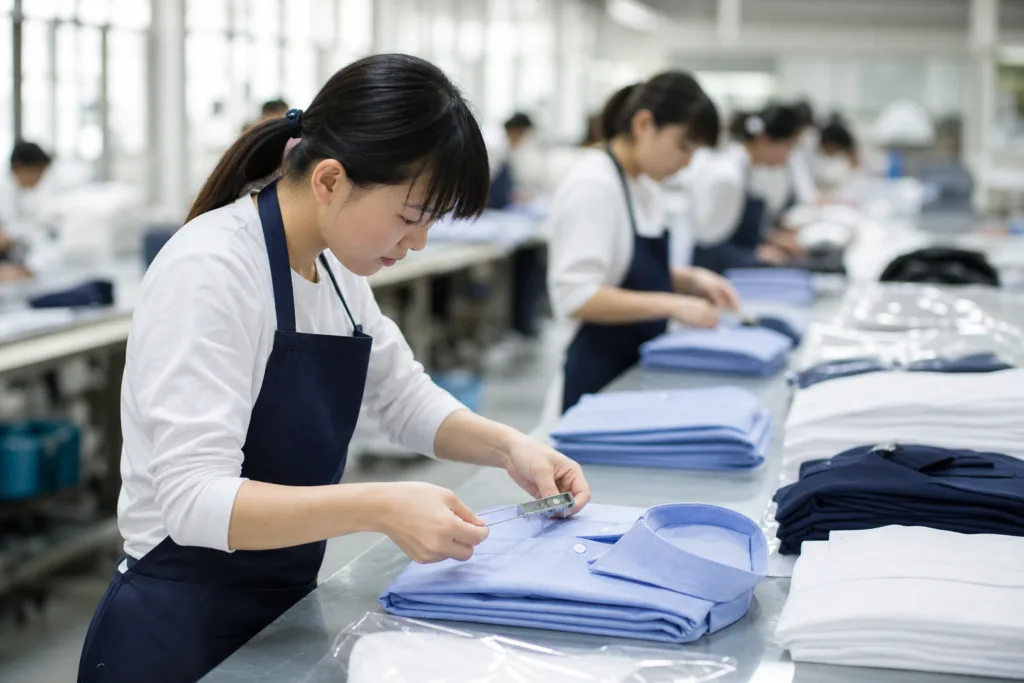
How to plan a first small clothing order comes down to disciplined simplification. Choose one commercially meaningful product, use practical fabric options, approve the sample carefully, and keep customization focused on what really needs testing in the market.
Your first order should teach you whether the product, supplier, and production setup are ready for growth. If the development process is handled well, even a modest run can give you strong information about fit consistency, branding quality, lead time reality, and future scaling decisions.
At Ninghow, we see the strongest first orders as the ones built around clarity. When the buyer has realistic MOQ expectations, organized product details, and a sample-first mindset, small-batch manufacturing becomes a practical way to reduce risk and build toward repeat production.
FAQs
What is a good quantity for a first small clothing order?
A good first quantity is the smallest volume that still allows meaningful testing of fit, quality, customization, and sales response. The exact number depends on fabric availability, number of colors, size breakdown, and branding details, so buyers should judge the order by learning value as much as by unit count.
Can I start with custom labels and packaging on a small order?
Yes, but it is best to keep those details selective on a first run. Custom labels, hangtags, and packaging can strengthen branding, but they may also introduce separate trim minimums, added approvals, and longer sourcing time, so buyers should prioritize the branding elements that matter most.
Why does a small clothing order still take several weeks?
A small order can still take time because development and approvals often drive the schedule more than sewing volume. Sampling, fabric confirmation, logo testing, trim sourcing, pre-production checks, and final inspection all happen before shipment, and those steps are necessary to reduce risk.
What should I approve before bulk production starts?
You should approve the final sample, size specifications, fabric choice, colors, logo details, labels, packaging requirements, and any special construction points before bulk begins. If these items are not confirmed clearly, the chance of rework, delay, or inconsistent output increases.
How do I know if a manufacturer is suitable for my first order?
A suitable manufacturer should communicate clearly, explain MOQ logic honestly, handle sampling carefully, and show control over fabric, fit, customization, and quality checks. The sample stage is usually the best place to evaluate whether the factory can follow instructions and maintain consistency.
Should I launch many styles or start with one core product?
Starting with one core product is usually the safer choice for a first order. It simplifies development, reduces SKU complexity, makes quality review easier, and gives clearer market feedback before you invest in a wider product range.
Related Reading