








The lowest factory quote can look attractive, especially when a brand is trying to protect cash flow or launch quickly. But in apparel production, the cheapest number on a spreadsheet rarely tells the full story. The real issue behind cheapest clothing manufacturer risks is not only price; it is whether that quote can still protect fit, fabric quality, customization accuracy, delivery timing, and bulk consistency once production starts.
If you are comparing suppliers for a new private label line, teamwear order, or repeat bulk program, it helps to review how to compare clothing manufacturers beyond the lowest quote. In many projects, buyers need more than a low unit price. They need clear fabric guidance, realistic MOQ logic, dependable sampling, logo application planning, and a factory process that can support bulk production without creating avoidable rework or delays.
What buyers usually see in a cheap clothing manufacturer quote
Most low apparel quotes look simple: a unit price, a rough MOQ, and a claimed lead time. What buyers often do not see is what has been left out, simplified, or assumed. A quote can appear competitive because the supplier used a lighter fabric, excluded testing, ignored packaging details, based sizing on a generic pattern, or priced the logo method unrealistically.
From our manufacturing perspective, the first question is not whether a quote is low. The first question is whether the quote is complete enough to produce the garment you actually want. A cheap number based on incomplete assumptions usually becomes expensive later.
| What the buyer sees | What may be missing underneath | Possible later cost |
|---|---|---|
| Low unit price | Lower GSM, lower-grade fabric, or simplified construction | Weak hand feel, returns, poor brand perception |
| Fast lead time | Unverified material availability or overloaded sewing line | Launch delay, air freight, missed sales |
| Low sample cost | Minimal development work or weak pattern review | Multiple revisions, extra courier cost, timeline loss |
| Low MOQ promise | Shared materials, limited color choice, or missing trim plan | Compromise on product details or price changes later |
| Included logo application | Basic method not suited to fabric or brand standard | Cracking print, poor embroidery, remake risk |
Key takeaway: A low quote is only useful if it matches the real garment specification, service scope, and production standard needed for your brand.
Why cheapest clothing manufacturer risks usually appear after approval
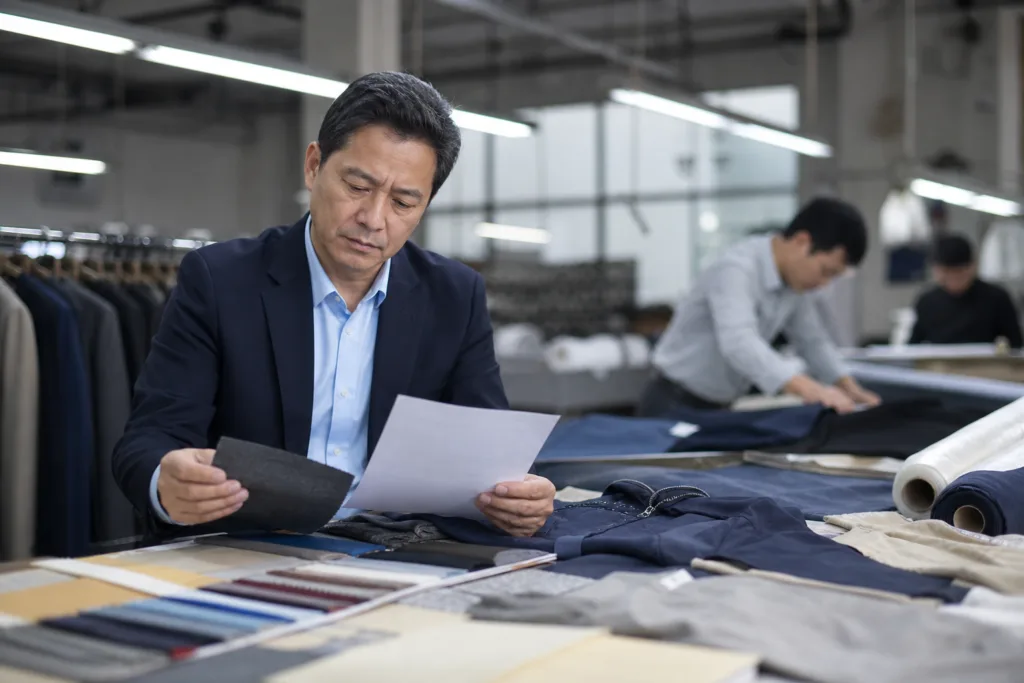
The biggest danger appears after the buyer says yes. Once the sample is approved, materials are ordered, and cutting starts, hidden problems become harder and more expensive to fix. At that stage, every issue affects labor, delivery, and inventory planning.
This is why we encourage buyers to ask for a detailed breakdown early, including fabric composition, GSM, trim assumptions, logo method, packing details, and quality expectations. A factory that cannot explain the quote clearly may not be controlling the production process clearly either.
Hidden cost #1: Rework caused by poor workmanship and weak quality control
Rework is one of the fastest ways to destroy the value of a cheap quote. If stitching is uneven, seams pucker, labels are misplaced, or print positions vary, the factory may need to repair goods, re-cut panels, or reproduce part of the order. Even when the supplier absorbs some of the direct repair cost, the buyer still loses time and consistency.
Weak inspection discipline also creates hidden risk. A garment can pass a casual visual check but still fail during packing, customer use, or wash testing. That is why a defined apparel quality control process matters more than a supplier’s low opening price.
Common workmanship issues that later become cost problems include:
- Skipped stitches or seam slippage on stress points
- Uneven collar shape on polos or rib distortion on T-shirts and hoodies
- Mismatched panel measurements affecting size balance
- Poor thread trimming and finishing that lower retail presentation
- Incorrect embroidery placement or inconsistent print registration
- Packing errors such as wrong size stickers, labels, or assortments
At Ninghow, we find that rework risk often starts before sewing. If the pattern is weak, fabric is unstable, or tolerances are unclear, sewing quality becomes harder to control. Quality is not just an end inspection activity; it depends on preparation, inline checks, and approval standards before bulk output accelerates.
Hidden cost #2: Quality inconsistency between sample approval and bulk production
Sample quality and bulk quality are not automatically the same. A supplier may put extra attention into a development sample, then switch to less stable fabric lots, different operators, or rushed finishing during mass production. Buyers who chose a low quote often discover that the approved sample represented a standard the bulk order did not maintain.
This issue matters most when the garment relies on fabric hand feel, drape, stretch, or fit balance. A cotton T-shirt can feel premium in one fabric lot and basic in another. A sportswear top can fit correctly in a sample but twist, shrink, or lose recovery in bulk if the knitting, dyeing, or finishing process changes.
For fabric-heavy products, defect control should not be assumed. Understanding fabric defect grading standards helps buyers see why low-cost fabric can create larger losses once cutting begins. Small defects at the roll stage can become visible panel problems, shade variation, or rejectable finished garments.
Inconsistent bulk quality often shows up in these ways:
- Color variation between lots or between body and trim
- Size set inconsistency across the run
- Different shrinkage results after washing
- Fabric surface problems such as barre, slubs, or needle lines
- Logo application differences from carton to carton
Key takeaway: A sample is only meaningful if the factory can repeat the same material, pattern, workmanship, and finishing standard in bulk.
Hidden cost #3: Delayed delivery can cost more than the price difference
A delayed order can erase the savings from a cheap quote very quickly. If a launch date is missed, a seasonal style arrives late, or uniforms are not ready for an event, the commercial damage goes beyond freight cost. Buyers may face cancelled campaigns, retailer penalties, or unsellable timing.
One reason this happens is that low quotes are sometimes paired with unrealistic lead-time promises. The factory may not have secured fabric capacity, trim sourcing, print booking, or line space when the quote was issued. That is why a realistic apparel production timeline should explain development, material preparation, production, inspection, and packing milestones rather than only one final shipment date.
Missed delivery usually comes from one or more of these causes:
- Fabric or trim availability was assumed, not confirmed
- Sample comments were not resolved before bulk booking
- The factory accepted too many orders at once
- Printing, embroidery, or washing capacity was constrained
- QC failures were discovered too late, forcing repair or remake
From a buyer’s side, the cost of delay may include air shipment, postponed sales, additional coordination time, and internal stress across merchandising and procurement teams. The cheapest factory can become the most expensive one if delivery reliability is weak.
Hidden cost #4: Repeated sample revisions waste development time
Repeated sample rounds are often treated as a normal part of apparel development, but too many rounds usually signal a process problem. If the factory does not understand the tech pack, fit target, branding details, or fabric behavior early enough, development slows down and the buyer pays in time, freight, and lost momentum.
A structured apparel sampling process should reduce uncertainty step by step. That includes reviewing specs, checking pattern logic, confirming available materials, validating artwork method, and documenting comments clearly after each revision.
Common reasons low-cost suppliers trigger extra sample rounds include:
- Generic base patterns that do not match the requested fit
- Incorrect GSM or fabric substitution during sampling
- Inaccurate logo scaling or placement
- Weak understanding of collar, cuff, placket, or pocket construction
- Insufficient review of labels, hangtags, and packaging requirements
Every extra sample round affects more than cost. It also compresses the bulk window. If approval happens late, production may be rushed, which increases the likelihood of later mistakes.
Hidden cost #5: Poor fabric, trims, or logo method reduce product value
Some low quotes are achieved by selecting materials that technically meet the description but not the product goal. A T-shirt can be quoted in 180 GSM cotton, for example, but the spinning quality, compactness, softness, and finish may be very different from what the buyer expects. The same issue applies to rib, zipper quality, drawcords, care labels, and packaging.
Logo application is another common shortcut. Screen printing, heat transfer, embroidery, and sublimation each have different cost, appearance, and durability implications. A low quote may include the cheapest workable method, not the most suitable one for the fabric and end use.
| Area | Low-cost shortcut | What buyers may experience later |
|---|---|---|
| Fabric | Lighter or less stable fabric than expected | Weak hand feel, shrinkage, poor drape |
| Rib and trims | Generic matching with loose standards | Color mismatch, shape loss, lower durability |
| Embroidery | High density on unsuitable fabric | Puckering, distortion, stiff hand feel |
| Low-cost ink or wrong print method | Cracking, fading, poor stretch performance | |
| Packaging | Minimal protection or inaccurate labeling | Presentation issues and warehouse errors |
Performance should also be discussed in measurable terms when relevant. Buyers comparing fabrics for uniforms, golf apparel, or activewear should review shrinkage, seam performance, colorfastness, and durability against appropriate textile testing standards, instead of relying only on a low per-piece quote.
At Ninghow, we often explain that fabric and logo decisions affect not only appearance but also pattern behavior, production efficiency, and repeat order consistency. A slightly higher-cost material or application method can lower claims and improve retail value.
How cheap pricing can signal missing services or weak communication
Not every low quote is wrong, but some are low because important services are not included. Pattern adjustment, marker planning, print strike-off review, shrinkage allowance, measurement control, in-line inspection, and packing verification all require labor and management attention. If those steps disappear from the process, the quoted price goes down, but buyer risk goes up.
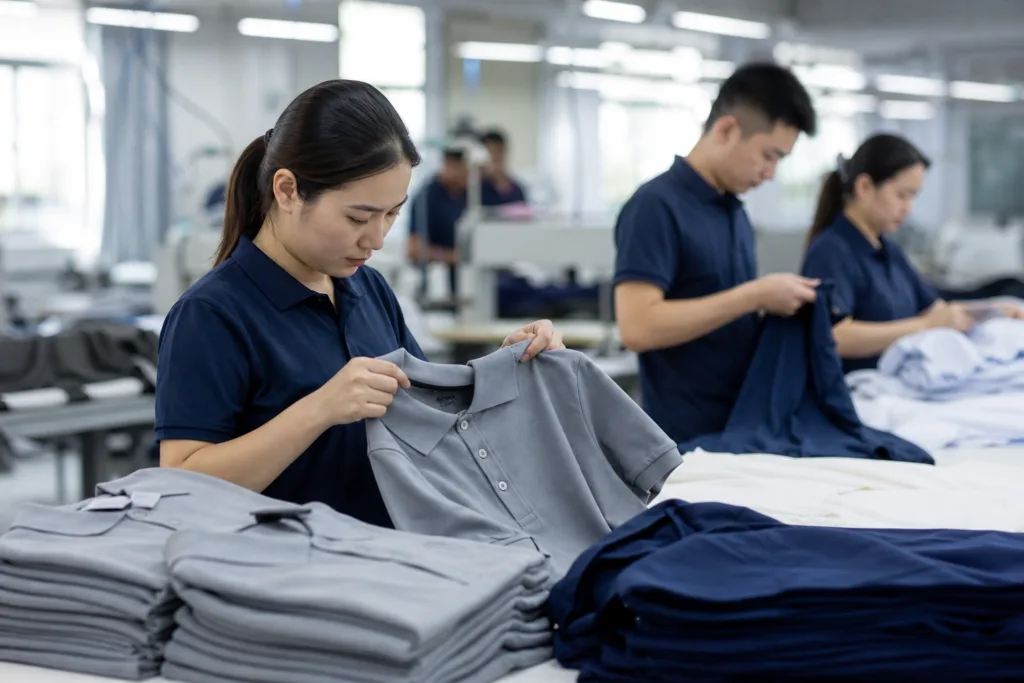
Communication quality is another major factor. If a supplier answers slowly, avoids detail, or gives broad promises without confirming specifications, buyers should be careful. Production problems are easier to solve with a factory that communicates clearly before any deposit is paid.
Useful questions to ask when a quote seems unusually low:
- Is fabric sourced to an exact composition and GSM or only a broad category?
- Are pattern making and grading included?
- How many sample revisions are expected and what is charged extra?
- What inspection points are used before packing?
- Are labels, hangtags, polybags, and carton marks included?
- Has lead time been confirmed with fabric and logo processes?
Quote price vs true landed cost vs business risk
The right comparison is not supplier A at $5.20 versus supplier B at $5.70. The better comparison is total landed cost after development, inspection, delay risk, replacements, and internal time are considered. A slightly higher quote can be the lower-cost decision if it protects schedule and consistency.
| Cost layer | Low quote scenario | Better-controlled scenario |
|---|---|---|
| Unit price | Lower at first | Slightly higher |
| Sampling rounds | More revisions and courier fees | Fewer revisions through better pre-checks |
| QC and rework | Higher defect handling | Lower defect exposure |
| Delivery | Late risk and air freight pressure | More realistic planning |
| Brand impact | Returns or weaker repeat orders | More stable customer experience |
| Total cost | Often rises after approval | More predictable |
Key takeaway: The cheapest quote may win on paper, but true cost is measured across quality, timing, repeatability, and internal management load.
What buyers should check before choosing a manufacturer
Before selecting any supplier, ask for enough detail to see whether the quote can be repeated in production. A clear cost discussion often prevents later disputes.
We recommend reviewing what a factory needs to quote accurately because quote quality depends heavily on the quality of the buyer’s input. Better tech packs, clearer size specs, logo files, and packaging notes help both sides reduce misunderstandings.
Sampling process
Confirm what sample type is being quoted and what must be approved before bulk. For many projects, fabric hand feel, fit balance, logo execution, and wash behavior all need to be reviewed before production is locked.
QA system
Ask where quality is checked: incoming materials, cutting, sewing, finishing, and packing. A supplier that only checks finished goods at the end may discover defects too late.
MOQ logic
Ask what drives the MOQ. It may depend on fabric dyeing minimums, trim sourcing, print setup, or line efficiency. A factory that explains MOQ clearly is often more trustworthy than one that promises any quantity without qualification.
Lead-time assumptions
Check whether the lead time starts from deposit, sample approval, material arrival, or final artwork confirmation. Many schedule misunderstandings come from different definitions of when the clock begins.
Communication standard
Review how comments, revisions, approvals, and shipment updates will be documented. Clear communication is part of cost control, not just customer service.
Red flags in low price apparel quote problems
Some warning signs should not be ignored, especially if several appear together.
- The factory avoids confirming fabric composition, GSM, or shrinkage expectation
- The sample price is very low but pattern and fit questions are barely discussed
- The lead time is much shorter than competing suppliers without explanation
- The quote excludes labels, packaging, or artwork setup that the buyer clearly requested
- There is no clear comment sheet or revision process
- The supplier changes terms after the buyer shows interest
- Quality claims are broad but unsupported by process details
These red flags do not always prove failure, but they often indicate that the low price is being supported by weak process control or incomplete scope.
How to compare manufacturers fairly
The most useful comparison method is a weighted decision view rather than a simple lowest-price ranking. Buyers should score price alongside fabric suitability, sample accuracy, communication speed, QC clarity, and realistic lead time.
A practical comparison checklist might include:
- Did the supplier understand the garment and end use clearly?
- Did the quote specify fabric, GSM, logo method, and packaging scope?
- Was the sample close to target without excessive revision?
- Did communication remain clear and documented?
- Can the supplier explain how bulk consistency will be controlled?
- Are timeline commitments realistic based on materials and process?
From our side as a manufacturer, reliable buyers also help the process by providing a clean tech pack, brand positioning, target cost range, size chart, artwork files, and comments that are specific enough to act on. Better preparation usually produces better quotes.
When a low quote can still be acceptable
A low quote is not automatically a bad choice. It can be acceptable when the product is relatively simple, the material is standard and available, the customization is limited, and the factory can prove repeatability through sample quality and clear production control.
For example, a basic promotional T-shirt with standard fabric, simple screen printing, and straightforward packaging may allow more price flexibility than a fitted golf polo with custom collar structure, branded trims, and strict color matching. The more detail-sensitive the garment is, the less safe it is to choose only on price.
Conditions that should be proven first include:
- Confirmed fabric source and stable specification
- Sample accuracy that matches the requested standard
- Defined QC checkpoints
- Documented lead-time plan
- Clear responsibility for labels, trims, and packaging
- No vague wording around substitutions
Practical checklist for evaluating cheap clothing manufacturer risks
Before placing a bulk order, buyers can use this short decision checklist to reduce avoidable mistakes.
- Match the quote against the full tech pack and mark any missing scope
- Compare fabric composition, GSM, and hand feel across suppliers
- Check whether fit comments were solved in the latest sample
- Verify the logo method is suitable for the fabric and end use
- Ask how color, size, and workmanship are controlled in bulk
- Review delivery assumptions and material booking status
- Confirm what happens if defects or delays occur
- Estimate total landed cost, not only FOB or EXW price
Key takeaway: The best supplier decision protects margin through fewer surprises, not simply through the lowest opening quote.
Conclusion

The problem with chasing the lowest apparel price is not that low pricing is impossible. The problem is that many cheap quotes shift cost from the quote stage to the production stage, where fixing mistakes becomes slower, harder, and more expensive. That is the real lesson behind cheapest clothing manufacturer risks.
Buyers usually gain better long-term results by choosing the supplier that can explain costs clearly, sample accurately, communicate consistently, and deliver bulk goods that match approval. In apparel manufacturing, value comes from repeatability, not from a number that only looks good before production starts.
FAQs
Why is the cheapest clothing manufacturer quote often risky?
The cheapest quote is often risky because it may exclude important production details or rely on weaker materials and process control. Buyers can end up paying more later through rework, delayed delivery, extra sample rounds, inconsistent quality, or product claims after goods reach the market.
How can I tell if a low apparel quote is incomplete?
You can usually tell by checking whether the quote clearly defines fabric composition, GSM, trims, logo method, labels, packaging, sampling scope, MOQ conditions, and lead time assumptions. If those details are vague or missing, the quote may not reflect the real production cost of your garment.
What hidden costs matter most in bulk clothing production?
The biggest hidden costs are often quality repairs, replacement pieces, repeated development, shipment delays, and internal time spent solving preventable problems. These costs may not appear in the initial unit price, but they can reduce margin and disrupt launch plans quickly.
Should I always avoid the lowest-priced clothing manufacturer?
No, not always. A low quote can still be workable if the product is simple, materials are standard, and the supplier proves quality consistency, realistic lead time, and clear communication through the sample and quoting process.
What should I ask a factory before approving a cheap quote?
You should ask what exact fabric and trims are included, how the pattern and sizing will be controlled, what quality checkpoints are used, how many sample rounds may be needed, and whether the timeline has been confirmed with material and decoration capacity. Those answers show whether the quote is based on real production planning or only a sales assumption.
How do I compare manufacturers beyond price alone?
Compare them using total value: sample accuracy, fabric suitability, quality control process, communication quality, realistic lead time, and bulk repeatability. A supplier that is slightly higher in price but much stronger in execution often delivers the lower total cost in practice.