






Private label clothing quality control should start before bulk production, not after it. The sample stage is where you confirm fabric hand feel, stitching quality, fit, branding placement, and packaging details while changes are still affordable and fast.
If your project needs private label apparel development support, the most useful step is to treat the sample as a production decision tool rather than a display piece. That is exactly where Ninghow can help brands with fabric selection, fit refinement, label and trim planning, and bulk-ready approvals for custom apparel.
Why Private Label Clothing Quality Control Belongs Before Bulk Production
The bulk order should only begin after the sample has answered the questions that matter most: does the garment match the tech pack, can the chosen fabric support the intended fit, and are the branding details ready for repeat production? Once cutting and sewing begin at scale, even a small mistake can multiply into a large waste problem.
Early quality control also protects your launch timeline. If a sample reveals a wrong color shade, a misaligned logo, or a size issue, you can revise the spec before the factory commits fabric, trims, and labor to hundreds or thousands of units.
For safety-related checks, the apparel safety compliance guidance from the U.S. Consumer Product Safety Commission is a useful reminder that product risk should be reviewed early, especially when the garment category has specific safety or labeling concerns.
Key takeaway: bulk production is the wrong time to discover what the sample should have proven.
What Buyers Should Confirm During the Sample Stage
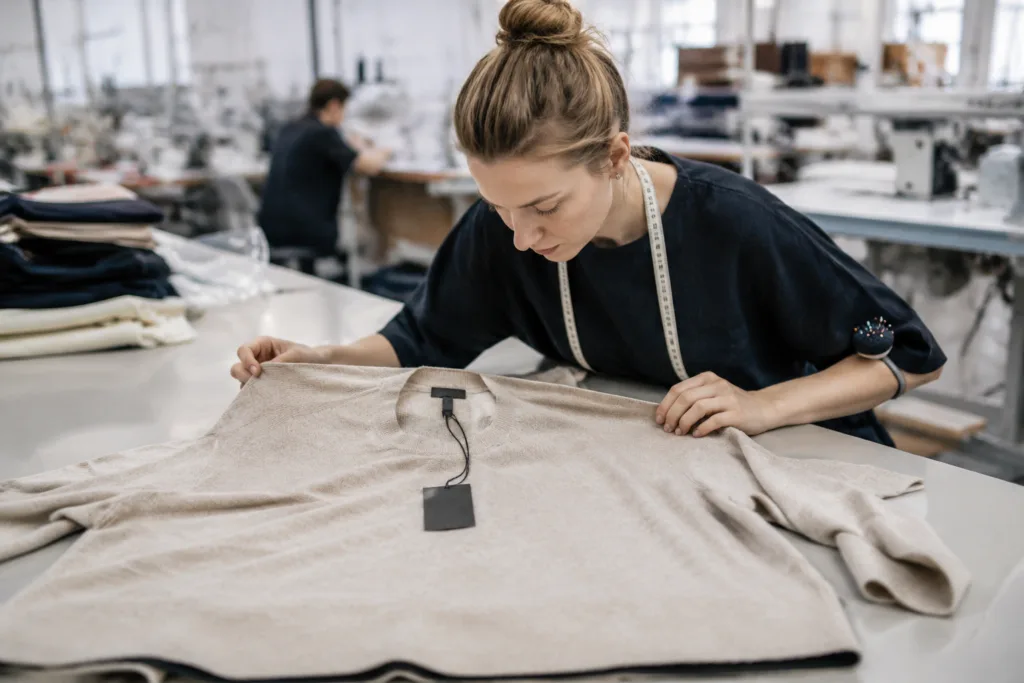
The sample stage should answer five buyer questions: is the fabric correct, is the fit acceptable, is the workmanship clean, is the branding accurate, and is the packaging ready for shipment? If any of these are unclear, the sample is not ready for approval.
A practical sample approval workflow before bulk production should be written down, shared with the factory, and followed consistently. We usually recommend that buyers review the sample in the same way they expect the bulk goods to be checked later, so no one is guessing about standards.
At Ninghow, we usually recommend that buyers compare the sample against a signed tech pack, a measurement table, approved artwork, and packaging notes. That reduces back-and-forth and keeps decisions objective.
- Check the garment against the spec sheet, not memory.
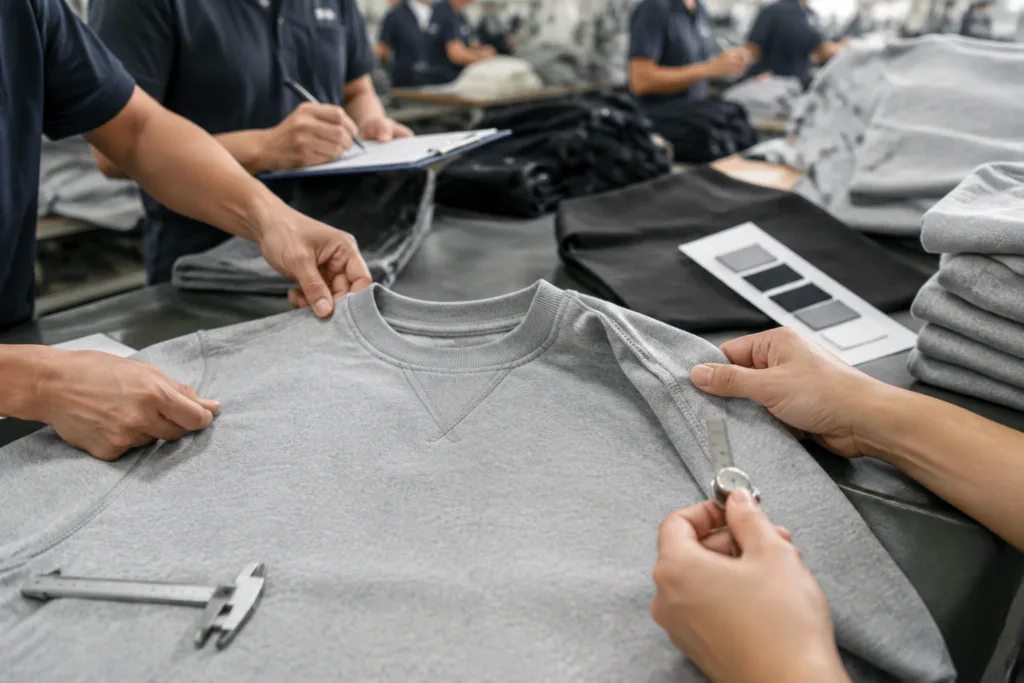
- Measure key points on the sample, including tolerance limits.
- Verify colors, trims, labels, and hangtags as a complete set.
- Confirm that the sample is comfortable in real wear, not only visually correct.
- Record all approvals and all requested changes in writing.
How to Review Workmanship, Fabric, Color, and Construction on the Sample
Good sample review starts with the details you can see and feel. Fabric weight, surface texture, stretch recovery, seam flatness, stitch density, and color consistency all affect how the final garment performs in bulk.
A practical apparel inspection checklist is useful here because it shows why seam quality, workmanship, and deviation from approved standards should be checked before mass production. The goal is not perfection in one sample stitch, but proof that the production method can repeat the same result.
Fabric and color checks
Start with the fabric because it sets the product’s cost, hand feel, and durability. A fabric that looks acceptable in a loose sample may feel too thin, too stiff, or too warm when the garment is worn, washed, or packed.
Color should be checked under normal daylight and under indoor light if possible. If the garment uses panels, collars, cuffs, or contrast trims, all panels should be checked for shade consistency before you approve the bulk order.
Construction and workmanship checks
Look closely at seams, coverstitch lines, needle holes, topstitch spacing, and any puckering around curves or stress points. A clean sample usually means the factory understands the construction method, but you still need to confirm whether that level of quality can be repeated at scale.
| Check Area | What Good Looks Like | What Needs Revision |
|---|---|---|
| Fabric | Correct weight, hand feel, and recovery | Too thin, too heavy, or unstable after stretching |
| Color | Consistent shade across panels and trims | Visible shade difference or uneven dye appearance |
| Stitching | Straight seams and balanced stitch tension | Skipped stitches, loose thread, or puckering |
| Construction | Clean finishing at neck, hem, and cuffs | Twisting, misalignment, or weak stress points |
Logo and Label Placement Checks: Position, Size, Alignment, and Consistency
Branding details can make a sample look finished even when the garment still needs revision. That is why labels, tags, embroidery, screen prints, heat transfers, and woven patches should be checked as carefully as the garment body itself.
If you are planning private label branding, the branding details for labels, tags, and packaging should be reviewed before production starts. Logo size, placement distance, and alignment should all be specified clearly, because small placement differences become obvious when repeated on a bulk order.
We recommend checking the following points on the physical sample rather than only on artwork files:
- Logo size matches the approved artwork dimensions.
- Placement is centered or offset exactly as specified.
- Embroidery density does not distort the fabric.
- Printed graphics sit flat and do not crack, blur, or shift.
- Neck labels, care labels, and size labels are readable and securely attached.
Key takeaway: branding issues are easier to fix before bulk stitching, printing, or packing begins.
Why Size Tolerance Matters and How to Define Acceptable Measurements
Fit is one of the most common reasons a sample is rejected or revised. The sample should not only look right on a hanger; it should match the intended size range and sizing logic that your buyers or end users will expect.
Size tolerance matters because two garments can share the same label size while still fitting differently. That difference may come from pattern grading, shrinkage behavior, fabric stretch, or seam allowance variation.
| Measurement Point | Why It Matters | Practical Buyer Note |
|---|---|---|
| Chest width | Controls ease and overall body fit | Compare against your size chart, not another brand |
| Body length | Affects visual balance and coverage | Confirm front and back lengths if the style is curved |
| Sleeve length | Impacts comfort and wear position | Check with the intended fit posture in mind |
| Waist or hem opening | Shapes movement and silhouette | Test after light stretching if the fabric has recovery |
The best approach is to define an acceptable tolerance range on the tech pack and then measure the sample against that range. If the first sample is close but not perfect, a controlled re-sample is often better than accepting a risky bulk spec.
Packaging Review: Hangtags, Polybags, Folding Method, Cartons, and Barcode Details
Packaging is part of quality control because it affects presentation, protection, and receiving accuracy. A garment can be well made and still arrive in a poor brand state if the folding method, insert cards, size stickers, or barcode labels are inconsistent.
Packaging should be checked in the sample stage when possible, especially for private label orders that require retail-ready presentation. If the carton marking or barcode format is wrong, the issue becomes a warehouse and distribution problem rather than a simple sewing fix.
- Confirm hangtag position, string length, and tag finish.
- Check that polybag size fits the garment without excessive compression.
- Verify size stickers, warnings, and barcode placement.
- Review folding direction so the front presentation is consistent.
- Confirm carton count, carton markings, and shipping labels.
The Role of the PP Sample and Why It Should Not Be Skipped
The PP sample, or pre-production sample, is the last sample before bulk manufacturing. It should reflect the final approved fabric, trims, branding, and construction method, so the factory can use it as the production reference.
The sample approval workflow before bulk production works best when the PP sample is treated as a sign-off checkpoint, not as another casual revision round. By the time this sample is reviewed, the buyer should already know what is approved, what is still under review, and what must not change in production.
If the PP sample is skipped, the factory may still produce a technically acceptable garment that does not match the buyer’s final intention. That is a common reason for avoidable disputes over label placement, trim color, or measurement drift.
Key takeaway: the PP sample turns design intent into a production lock.
Sample Approval Checklist for Private Label Clothing Buyers
Before you sign off, use a checklist that is simple enough for your team and the factory to follow. The goal is to remove ambiguity, not create a long document that no one reads.
| Checklist Item | Approval Question | Action If It Fails |
|---|---|---|
| Fabric | Is the hand feel, weight, and stretch correct? | Request a fabric change or a second sample |
| Fit | Does the garment match the approved size spec? | Revise pattern or grading before bulk |
| Workmanship | Are seams, finishing, and stitch lines clean? | Ask for construction correction and re-sample |
| Branding | Are logo, labels, and tags accurate? | Update artwork, placement, or application method |
| Packaging | Does the garment pack and present correctly? | Revise folding, inserts, or carton marking |
- Keep one approved sample as the physical reference.
- Mark all approved measurements in writing.
- Store artwork, label specs, and packaging specs together.
- Record who approved each element and on what date.
- Do not approve verbally if the order is large or time-sensitive.
Common Sample Approval Mistakes That Lead to Bulk Production Problems
The biggest mistake is approving a sample because it is close enough. Close enough often becomes expensive once the order is in production, because the same small issue repeats across every unit.
Another common mistake is focusing only on the front view. Buyers sometimes miss inside finishing, label placement, measurement points, or packaging details because they only check the sample visually. That is why private label clothing quality control should always include a structured inspection pass, not just a quick look.
When a buyer is unsure about workmanship consistency, it helps to compare the sample process with a more formal inspection approach. The point is not to turn sample approval into a lab test, but to make sure key quality risks are identified early.
The third mistake is changing details after approval without updating the spec sheet. Once the factory has signed off on a sample, any later change should be documented clearly, or the bulk order can drift away from the approved version.
How to Document Approvals and Lock Specifications Before Mass Production
The best approval process is one that another person on your team could understand without asking extra questions. A complete approval record should include the final sample, the final measurement table, the approved artwork files, the label and packaging notes, and any agreed tolerance exceptions.
From our manufacturing perspective, buyers get better results when they treat the approval packet as the single source of truth. At Ninghow, we see fewer production delays when specs are organized early, because the factory can align cutting, sewing, printing, labeling, and packing around the same reference.
Keep the approval record in one place and share it with everyone involved in the order. That includes sourcing teams, product developers, quality teams, and anyone who will inspect the bulk goods later.
When to Request Revisions, Re-Sampling, or a Second PP Sample
You should request a revision when the sample shows a clear mismatch with your approved spec, especially in fit, branding, or construction. Do not accept a sample that creates uncertainty about how the factory will reproduce it in bulk.
A second PP sample is worth requesting when the first revision touches more than one critical area, such as fabric plus fit, or label placement plus packaging. A small delay at this stage is usually cheaper than correcting a bulk shipment later.
It is also smart to ask for another sample if your order depends on a special fabric, custom trim, or a complex decoration method. These projects often need one more round to lock repeatability.
Final Pre-Bulk Production Sign-Off: What Must Be Confirmed
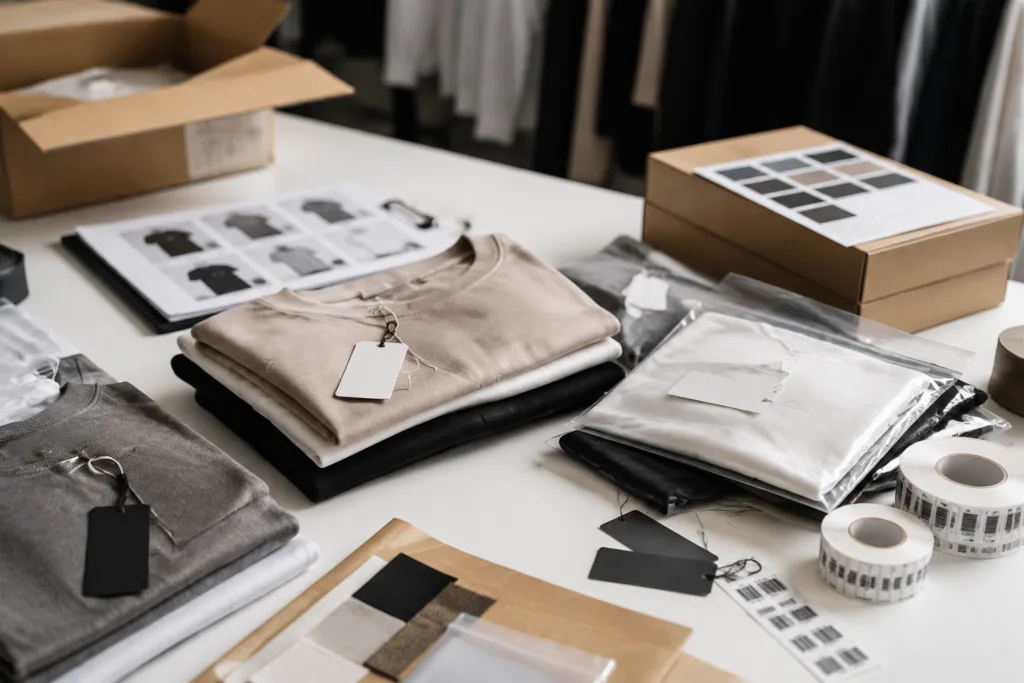
Before you release bulk production, confirm that the sample has been approved in writing, the measurement limits are clear, and the factory knows which version is final. If your team is still debating details, the order is not ready.
You should also confirm that the approved fabric, labels, trims, packaging, and decoration method are all available in the planned lead time. Many production issues are not sewing issues at all; they are sourcing issues that were not checked soon enough.
When this sign-off is complete, bulk production can start with far less risk. That is the real purpose of private label clothing quality control: to protect the final order before materials are cut and labor is spent.
FAQs
What should I inspect first on a private label sample?
Start with fabric, fit, and branding, because those three areas usually decide whether the sample can move forward. If the material, measurements, or logo placement are wrong, there is no reason to approve the rest of the sample yet.
How tight should size tolerances be?
Size tolerances should be tight enough to keep the fit consistent but realistic enough for the fabric and construction method. The right range depends on the style, fabric behavior, and target customer, so the tolerance should be defined in the tech pack before production starts.
Do I need a PP sample if the first sample already looks good?
Yes, you usually still need a PP sample if the project is going into bulk production. The PP sample confirms that the final fabric, trims, labels, and construction details are all locked and ready for repeat production.
What branding details cause the most sample delays?
Logo size, label placement, tag format, and packaging details cause the most delays because they are easy to overlook and hard to fix late. These items should be confirmed with artwork files and physical placement checks before approval.
When should I request a re-sample?
Request a re-sample when the issue affects fit, fabric, workmanship, branding, or packaging in a way that would be repeated across the bulk order. If the sample is only slightly different in a non-critical detail, document the exception clearly before moving forward.
What must be confirmed before bulk production starts?
Before bulk production starts, confirm the approved sample, final measurements, artwork, label and packaging specs, and material availability. If any of those items are still unclear, the order should stay on hold until the gap is closed.