






Private label clothing branding is more than adding a logo. The details approved before bulk production—neck labels, care labels, hang tags, packaging, barcode systems, and carton marks—shape how the garment feels in hand, how it looks on shelf, and how efficiently it moves through production.
If you are preparing a new launch and want to review private label apparel development options, the smartest next step is to connect branding choices with fabric, fit, sample approval, and packing so the finished product is practical to manufacture, not just attractive on a design board.
Why private label clothing branding changes first impressions and retail readiness
Buyers often judge a garment in seconds. Before they inspect stitching or fabric weight, they notice the collar finish, the hang tag, the package presentation, and whether the product looks ready for retail.
That is why we treat branding as a manufacturing decision, not a decorative afterthought. At Ninghow, we usually review labels, tags, packaging, and size markings together because a mismatch in any one of them can make an otherwise strong product feel unfinished.
| Branding detail | What the buyer sees | What the manufacturer should confirm |
|---|---|---|
| Neck label | Comfort, identity, and premium feel | Material, placement, stitch method, and print durability |
| Care label | Trust and product information | Fiber content, care symbols, origin data, and legal copy |
| Hang tag | Price presentation and story | Card stock, artwork, attachment method, and barcode space |
| Polybag and carton | Protection and shelf cleanliness | Bag size, sealing method, size sticker, and carton marks |
| Barcode and SKU | Retail scan readiness | Data format, placement, print quality, and scan test |
Key takeaway: branding details should be approved as one system, because the garment, the label set, and the packaging all affect how retail-ready the product appears.
Which neck label choices improve comfort and brand recall

The neck label is the most visible brand marker inside the garment, so it should balance identity and comfort. A label that scratches, peels, or curls can reduce the perceived value of the product even when the rest of the construction is strong.
For many apparel categories, the right choice depends on fabric and end use. A premium woven label can work well on heavier garments, while a printed or heat-transfer neck mark often feels better on performance fabrics and lightweight tops.
- Woven labels usually support a more premium look and sharper brand identity.
- Printed labels reduce bulk and help soft garments feel smoother at the neck.
- Heat-transfer branding can work well when you want a clean internal finish.
- Size information should stay readable after washing and repeated wear.
Placement matters too. If the label sits too low, too high, or on a seam that moves under tension, the buyer may notice irritation before they notice the brand name. That is why the sample stage should always include a wear check, not just a visual approval.
What care labels must say before bulk production
Care labels are where branding meets compliance and customer trust. They need to tell the buyer how to care for the garment, but they also need to support the market where the product will be sold.
If you want a practical reference point, it helps to confirm the apparel labeling requirements to confirm before production before artwork is final. When the wording is approved late, the label size, line spacing, and placement often need to change, which slows sampling and can create avoidable rework.
At a minimum, care labels usually need clear fiber content, washing guidance, and country information. Depending on the destination market, the wording, icons, and order of information may need to follow specific labeling rules, so the layout should be planned early rather than squeezed into the last sample.
For import and retail programs, the country of origin label placement and verification should also be locked before approval. If that detail is overlooked, even a strong garment can be delayed by relabeling, carton correction, or warehouse intake issues.
How hang tags and packaging change shelf impact
Hang tags do more than carry the logo. They tell the buyer how the brand wants the product to be read: premium, technical, sporty, sustainable, minimal, or value-focused.
Packaging has a similar effect. A neatly folded garment in a correctly sized polybag with the right sticker and barcode can look ready for retail before it ever reaches a store shelf or distribution center.
- Hang tags should match the brand voice, not just repeat the logo.
- Card stock weight, finish, and string choice all change perceived quality.
- Polybags should protect the garment without creating excess bulk.
- Carton labels and size stickers should be easy for warehouse staff to read.
- If the product will hang on a retail rack, the tag shape and hole placement should support that use.
Different channels need different packaging logic. A direct-to-consumer brand may want a stronger unboxing experience, while a wholesale buyer may care more about carton efficiency, sorting clarity, and damage prevention during transit.
Why barcode and SKU systems matter in omnichannel selling
Barcode and SKU systems are often treated as back-end details, but they affect retail intake, warehouse accuracy, and sales-channel synchronization. If the code cannot be scanned quickly, the product can slow down at receiving, checkout, or inventory reconciliation.
For point-of-sale compatibility, GS1’s retail barcode and SKU best practices are a useful technical reference. The main idea is simple: the code should be scannable, consistent, and matched to the product data your customers and distribution partners will use.
Barcode planning is also part of quality control. A print that looks acceptable on a screen can still fail in a warehouse if the ink bleeds, the sticker reflects too much light, or the placement makes scanning awkward.
Before shipment, quality control support for brand-ready packaging should include scan checks, carton mark review, and a count of the final sticker and label set. Those small checks help prevent a shipment from arriving correct on the outside but unusable in operations.
| Identifier | Used by | What to verify |
|---|---|---|
| SKU | Brand and warehouse teams | Color, size, style, and channel coding |
| Barcode | Retail and logistics teams | Readable format, placement, and scan quality |
| Carton mark | Receiving and fulfillment teams | Style name, size run, carton count, and destination |
How branding choices differ for DTC, retail, and wholesale orders
Not every sales channel wants the same branding package. The right answer depends on where the product will be handled, sold, and opened.
| Channel | What matters most | Common mistake |
|---|---|---|
| DTC | Unboxing, storytelling, and return-friendly packaging | Over-investing in packaging while underchecking fit and label clarity |
| Retail | Scan readiness, shelf appeal, and standardized tagging | Using a tag set that looks good but slows store intake |
| Wholesale | Carton efficiency, sorting accuracy, and low damage risk | Ignoring carton marks, case packs, or size sorting |
The same garment can succeed in one channel and struggle in another if the branding details do not match the operational reality. That is why private label clothing branding should always be reviewed alongside channel requirements, not in isolation.
How to keep branding consistent across the whole garment
Consistency is what makes branding feel intentional. If the hang tag says one thing, the neck label says another, and the carton mark uses a third format, the product can feel disorganized even when the design itself is strong.

When we review a new private label project, we look at the entire set as one system: label copy, color names, size order, logo placement, packaging finish, and how all of it reads when the box is opened. That is the simplest way to keep the brand experience aligned from sample room to warehouse.
Consistency also helps scale production. Once the brand rules are fixed, the factory can repeat them more reliably across reorders, different fabric lots, and new seasonal colors.
How branding choices differ when the product must fit a retail program
Retail buyers often want more structure than startup DTC brands. They may need packaging dimensions, ticketing rules, barcode placement, and carton labeling to match their intake system.
That is why the preparation stage should include the same paperwork the warehouse will later rely on. If the order flow is not organized, the brand may spend more time correcting labels than selling product.
For that reason, our apparel order process for packaging and labeling details is most effective when the buyer shares artwork, sizing logic, barcode data, and packaging references before sample approval. Clear input at that stage saves time later in the run.
What buyers should avoid when finalizing private label branding
The most common mistake is treating branding as the last step. In practice, labels and packaging should be specified before sampling so there is enough time to test placement, readability, and material compatibility.
Another frequent issue is over-customizing too early. A complex tag set, custom polybag, special insert card, and multiple label types can be useful, but each one adds cost, lead time, and approval risk. If the project is a first run, the smarter move is often to keep the system simple and expand later.
- Do not finalize artwork before confirming label sizes and available print areas.
- Do not assume a premium-looking tag will work if the barcode has poor scan contrast.
- Do not approve packaging before confirming folding method and carton fit.
- Do not separate branding decisions from size specs and garment measurements.
How to prepare branding specs for a manufacturer
A manufacturer can work faster and more accurately when the brand file is complete. The most useful information is usually not a long creative brief, but a clean set of instructions that can be translated into production.
Include logo files, Pantone or color references if needed, label dimensions, placement notes, barcode data, carton marking instructions, and packaging references. If the branding elements are part of a retail launch, add the launch date and the channel so the factory understands the production priority.
The more specific the files, the fewer assumptions the factory has to make. That is especially important for private label clothing branding because a small difference in label size or tag finish can change the feel of the final product.
Balancing cost, MOQ, and customization without weakening brand perception
There is usually a trade-off between brand detail and production efficiency. More custom components can improve presentation, but they can also raise MOQ requirements or extend lead time if the trims need to be sourced separately.
For new brands, the better question is not how many branding elements can be added, but which ones create the most value. A well-made neck label, a clear care label, and a clean hang tag often do more for perception than an overly complex package that is hard to repeat.
Key takeaway: the best branding plan is the one your factory can repeat consistently at the target MOQ, without slowing sampling or creating inventory waste.
Checklist before bulk production
If you want the branding to hold up in bulk, check the following before you approve the order:
- Logo artwork is final and approved in the correct file format.
- Neck label material, size, and placement are confirmed on a sample.
- Care label copy matches the target market and the garment content.
- Country of origin wording and placement have been verified.
- Hang tag artwork, stock, and attachment method are approved.
- Polybag size, sealing method, and warning text are correct where needed.
- Barcode and SKU data scan correctly and match the sales system.
- Carton marks and size stickers match the packing list.
- Retail, DTC, or wholesale packaging rules are clearly documented.
- Final sample photos are approved before mass packing begins.
If a project is still in sampling, this is the stage where small adjustments are cheapest. Once bulk production starts, even a minor change to a label or sticker can create unnecessary rework.
Conclusion
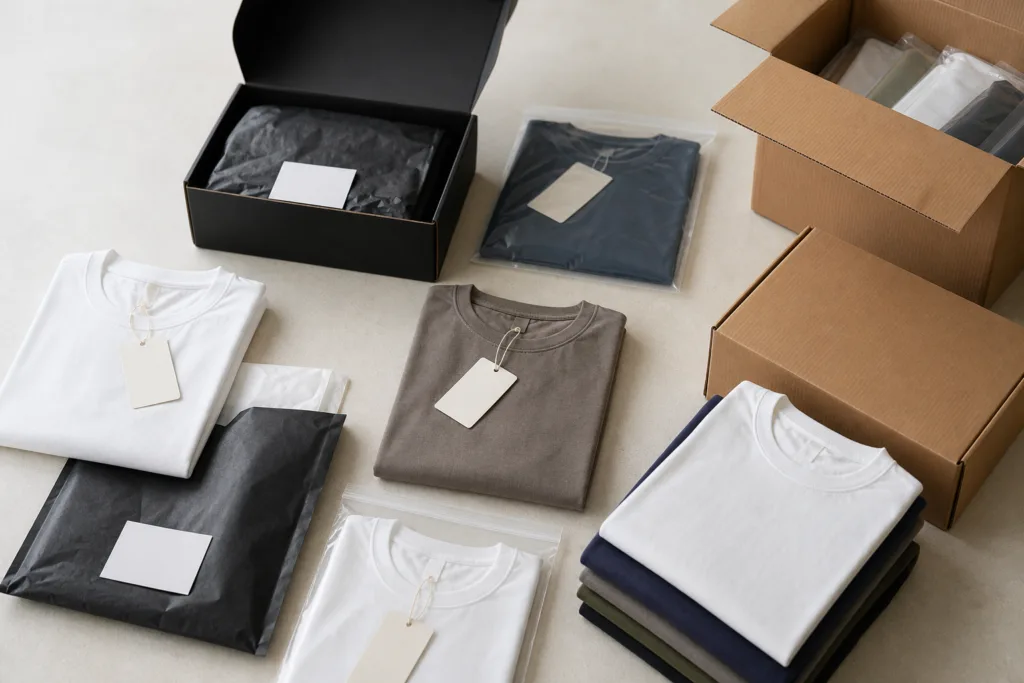
Strong private label clothing branding should make the product easier to sell and easier to produce. When labels, tags, packaging, and barcode systems are planned together, the garment looks more professional and the production run is less likely to slip.
From a manufacturer’s perspective, the best branding choices are the ones that fit the fabric, the sales channel, the MOQ, and the timing of the launch. If you treat every branding element as part of the product definition, you give your team a better chance of getting retail-ready results on the first approved sample.
Frequently Asked Questions
What branding detail matters most in private label clothing?
The most important detail is consistency across the label, tag, and packaging set. Buyers judge the garment as a finished product, so the first visible touchpoints should match the quality position, channel, and retail expectation.
What should a care label include before bulk production?
A care label should include fiber content, care instructions, country of origin, and any market-specific information required for sale. We recommend finalizing the copy before sampling so the layout, size, and placement do not change later.
Should I use woven neck labels or printed labels?
Woven labels feel more premium, while printed or heat-transfer labels are better when softness matters. The right choice depends on the fabric, the garment type, and the comfort level your customer expects.
How do hang tags and packaging affect retail perception?
Hang tags and packaging influence perceived value even when the garment itself is unchanged. A clean tag layout, correct carton marks, and tidy polybag presentation can make the same product feel more retail-ready.
Can low MOQ still support custom branding?
Yes, but low MOQ projects usually work better with simpler branding. Fewer custom components mean less sourcing risk, fewer approval points, and more control over cost and lead time.
What should I approve before bulk production?
Approve logo files, label dimensions, placement notes, barcode numbers, and packaging references before sample cut. That single step prevents the most common rework problems during bulk production.