







Your first small order should be simple enough to execute well and specific enough to test real demand. In our manufacturing work, the biggest problem we see is not that a first-time buyer orders too little, but that they try to launch too many colors, too many sizes, too many logo methods, and too many style variations before they have market feedback. Good first small clothing order planning is really about reducing variables so you can judge sell-through, fit response, and production consistency with less risk.
If your launch plan needs flexible small-batch clothing production support, it helps to work from a tighter product brief from the start. That means choosing a small number of core SKUs, confirming the most practical size range, simplifying logo application, and building a realistic sample-to-bulk timeline before committing to trims, labels, and packaging details. A leaner first order is usually easier to cost, easier to approve, and easier to restock if the response is strong.
Why first small clothing orders fail when they are too complicated
Most first orders fail operationally before they fail commercially. A buyer may have a good product idea, but complexity creates friction at every stage: sourcing, pattern development, sample approval, color matching, trim preparation, packing, and final QC.
Every extra color multiplies fabric planning. Every extra size changes the size curve. Every extra decoration method adds setup steps, approval points, and possible quality variation. When MOQ is already limited, complexity can make a small order less efficient and more expensive per piece.
Key takeaway: A small first order works best when it is treated as a controlled product test, not a miniature version of a full seasonal assortment.
What a smart first-order goal should be: validation, not full-scale assortment coverage
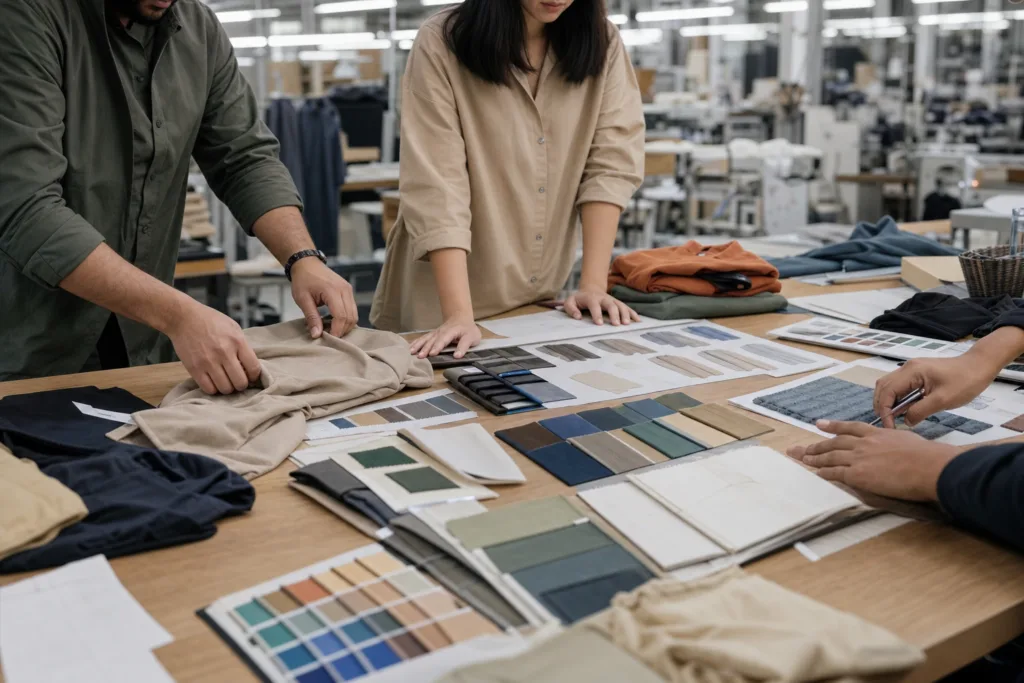
The smartest goal for a first order is validation. You are trying to learn what customers actually buy, how the garment fits in real use, whether your price point is accepted, and whether your quality expectations match the budget.
That changes how you make decisions. Instead of asking, “How many options can I launch?” ask, “What is the smallest range that still tells me what to make next?” That mindset protects cash flow and gives cleaner data for the second order.
In practical terms, a first order should usually validate these points:
- Which style gets the strongest demand
- Which color has the highest conversion
- Which sizes sell through first
- Whether the fit needs adjustment
- Whether the logo method matches the price level and look you want
- Whether the garment can be reproduced consistently in bulk
At Ninghow, we often advise buyers to protect the learning value of the first run. If too many variables are mixed together, it becomes hard to know whether a weak result came from the style, color, fit, decoration, or timing.
How to decide the right number of SKUs for a low MOQ apparel order
For a low MOQ project, fewer SKUs are usually better. A practical first range is often one style in one to three colors with a narrow size range, rather than multiple styles each ordered in very small quantities.
SKU count matters because each combination of style, color, and size becomes a separate stock unit. If you add decoration placement differences or separate fabric versions, complexity rises again. That can leave you with fragmented inventory and weak size depth.
| Order Approach | Advantages | Risks | Best Use |
|---|---|---|---|
| 1 style, 1 color, focused sizes | Lowest complexity, easier QC, stronger size depth | Less visual variety | Pure market validation |
| 1 style, 2 to 3 colors, focused sizes | Balanced offer, still manageable | More inventory splitting | Most first launches |
| 2 to 3 styles, limited colors | Broader brand story | Sampling and MOQ pressure | Only if product direction is already clear |
| Multiple styles and many colors | High assortment feel | High risk of overstock and delays | Rarely suitable for a first small order |
A useful rule is to protect quantity depth before range width. It is usually better to hold enough units in your best style and most likely sizes than to spread the same budget across too many options.
How many SKUs is usually reasonable?
For many startups, 6 to 15 total SKUs is a workable zone for a first run. That could mean one hoodie in two colors across three to four sizes, or one T-shirt in three colors across two to three sizes. The exact number depends on MOQ, but the principle is the same: keep the matrix tight.
If you are still refining fit or branding, review the apparel sampling process for first-order approval before finalizing your size-color matrix. Sample clarity often saves more money than trying to optimize too many variables on paper.
How to choose 1 to 3 core colors instead of spreading across too many options
The best first-order colors are usually the ones that are easiest to sell, easiest to coordinate, and easiest to repeat. Black, navy, heather gray, off-white, and other commercially stable shades are common first-run choices because they suit many brand positions and reduce demand uncertainty.
Color planning should be based on expected sales, not only design preference. A color may look strong in a mockup but move slowly once inventory is live. For a first run, one dependable base color and one accent color is often enough.
Choose colors by asking:
- Which color matches the broadest customer demand?
- Which color works best with your logo application?
- Which shade is easiest to restock later?
- Will color matching require special dye development or approval time?
- Does the fabric show print, embroidery, or seam details clearly?
From a production standpoint, stock-supported or standard colors can reduce sourcing friction. Custom dyeing can be worthwhile, but in small quantities it may increase lead time, raise cost, or create approval delays if you need exact shade matching.
Key takeaway: For a first order, color discipline is usually more valuable than color variety. A focused palette is easier to merchandise, easier to reorder, and easier to evaluate after launch.
How to simplify size ranges based on real customer demand and body data
Your first size range should reflect who you expect to sell to, not every possible wearer. Many first-time buyers over-extend size options because they want to be inclusive from day one, but on a very small order that can produce weak stock depth and leftover fringe sizes.
A better approach is to choose a narrow but defensible size run and build a sensible ratio inside it. Size planning should be based on target market, fit intention, and measurement logic. References on apparel sizing and fit planning are useful reminders that sizing works best when it follows body data rather than guesswork.
In many cases, these first-order strategies are more practical:
- Start with the core selling range such as S to XL, if that matches your audience
- Reduce edge sizes unless you have evidence of demand
- Build more units into the middle sizes
- Use one fit block per style instead of mixing slim, regular, and oversized in the same launch
- Confirm garment measurements clearly in the tech pack, not only alpha sizes
| Size Planning Choice | Why It Helps | Main Risk |
|---|---|---|
| Core sizes only | Protects stock depth and MOQ efficiency | Some buyers may request edge sizes |
| Wide size range from start | Broader offer on paper | Low units per size and harder replenishment |
| Single fit direction | Cleaner customer message and easier grading | Less experimentation |
| Multiple fit directions | More style variety | More patterns, more samples, more confusion |
Clear grading matters as much as size labels. If the garment is meant to feel oversized, specify that in measurements and fit notes. If it is a performance or slim product, tolerance control becomes more important because small grading errors are more noticeable.
How to reduce decoration complexity: print, embroidery, trims, and label choices
Decoration is one of the fastest ways to overcomplicate a small order. A chest print, sleeve print, woven patch, neck label, hangtag, hem tab, and custom zipper pull may all look manageable separately, but together they add approvals, placement control, setup cost, and more chances for inconsistency.
For a first order, use one primary decoration statement and keep the rest functional. That usually means one logo position, one main print or embroidery method, and essential private label components only.
| Decoration Element | Lower-Risk First-Order Choice | Higher-Risk Choice |
|---|---|---|
| Main logo | Single screen print or single embroidery placement | Multiple placements with mixed methods |
| Brand label | Simple neck label or printed neck info | Several custom labels plus specialty trims |
| Packaging | Basic polybag and size sticker | Complex branded packaging set |
| Special trim | Standard drawcord or zipper when suitable | Custom-molded hardware in small quantity |
Buyers should also remember that label planning is not just branding. Small runs still need product information handled correctly. For U.S.-bound orders, U.S. apparel labeling and compliance requirements should be checked early so fiber content, care instructions, and origin-related details are not left until after sampling.
If you want to keep the order efficient, simplify these items first:
- Use one decoration method per style where possible
- Avoid too many placement variations by color or size
- Use standard trims unless a custom trim is central to the brand story
- Confirm artwork files and print dimensions before sampling
- Keep private label packaging basic for the first run
Which garment styles are safest for a first small order and which ones add risk
The safest first-order styles are usually those with straightforward construction and stable fit expectations. Basic T-shirts, fleece hoodies, sweatshirts, simple joggers, and classic polo shirts are often easier to sample and repeat than highly technical outerwear, lined jackets, or multi-panel fashion pieces.
Higher-risk styles are not bad products. They simply ask more from a small first order. Technical fabrics, waterproof construction, bonded seams, complicated pocket systems, or mixed-material designs can all increase sampling rounds and QC pressure.
Safer first-order garment characteristics include:
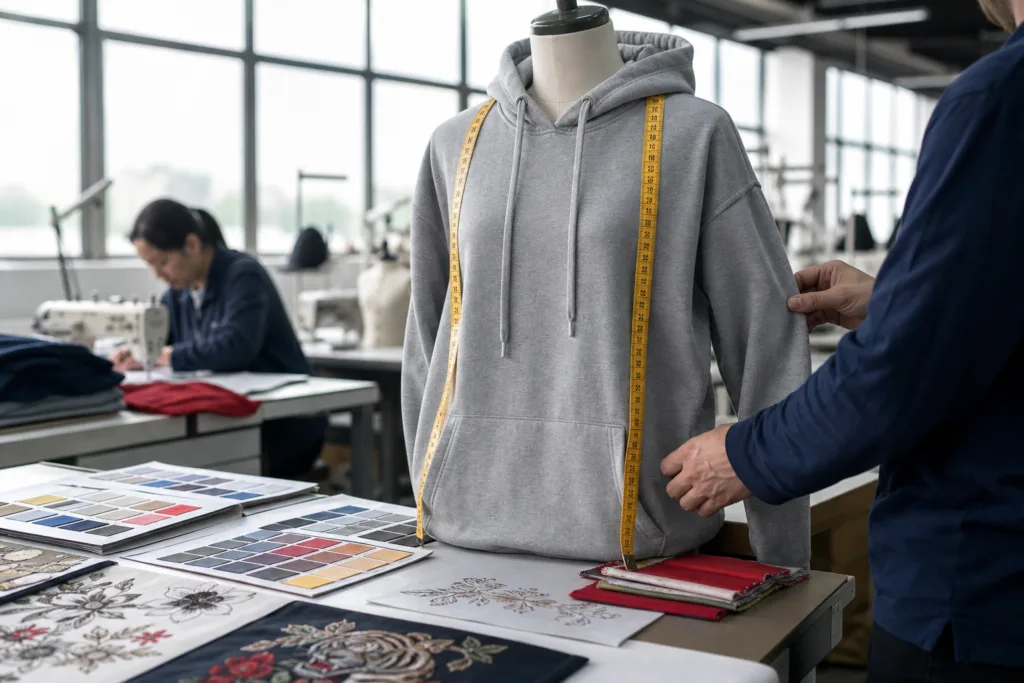
- Stable knit or woven fabric with known behavior
- Simple silhouette and fewer panels
- Low trim count
- Clear fit reference from the market
- Standard sewing operations
Higher-risk characteristics include:
- Complex wash effects or garment dye
- Heavy dependence on custom trims
- Special performance claims
- Lined or insulated construction
- Many style-dependent size or color variations
When buyers ask us what to start with, we normally recommend choosing the product that best communicates the brand while still being easy to reproduce consistently. That is where startup-friendly clothing manufacturing support becomes useful, because first-time teams often need help balancing look, MOQ reality, and production simplicity.
How to balance fabric choice, fit, and sample development without overdeveloping
Fabric, fit, and sample approval should be handled together. Many first-time buyers spend too much time perfecting details that customers will not notice while missing the bigger issue of whether the garment feels right, fits consistently, and lands at a workable cost.
For first small clothing order planning, start with a fabric direction that supports your target use and price point. Then build one good fit sample around that fabric before exploring too many alternatives. A soft 100% cotton jersey, cotton-poly fleece, or balanced stretch knit can often tell you more about market response than an extended development phase across several fabric options.
Fabric choice affects all of these:
- Hand feel and perceived quality
- Shrinkage and shape retention
- Print or embroidery performance
- Weight, drape, and fit behavior
- Cost and MOQ feasibility
The most productive sample process is usually one that answers specific questions. Does the GSM feel right for the selling season? Does the neckline recover? Does the hoodie drape as intended? Does the embroidery cause puckering? Keep the review focused.
In the middle of development, it also helps to review the apparel order workflow for new buyers so fabric approval, measurement comments, artwork confirmation, and bulk signoff happen in the right sequence.
From our manufacturing perspective, overdeveloping a first order often means too many sample rounds caused by changing direction, not by real technical necessity. If the product is commercially clear, one to two strong sample rounds are often more useful than repeated minor edits.
How to plan MOQ, production lead time, and budget around a small first order
MOQ should be planned around fabric availability, trim sourcing, and order complexity, not just total units. A buyer may think the order is small and simple because the unit count is low, but if it includes many colors, custom labels, several size breaks, and mixed decoration methods, the production burden becomes much larger.
Lead time follows the same logic. A simple product with available fabric and standard trims can move faster than a small order with custom dyeing, special labels, and repeated sample corrections.
| Planning Factor | What Keeps It Efficient | What Increases Risk |
|---|---|---|
| MOQ | Fewer colors and shared trims | Fragmented style-color-size matrix |
| Lead time | Available fabric and early approvals | Late artwork, custom dyeing, trim delays |
| Budget | Focused SKU plan and simple decoration | Custom details on low volume |
| QC | Clear specs and stable construction | Many variables and changing standards |
Production timing should also be mapped backward from your launch need. That includes sample review, labelling decisions, packaging preparation, bulk production, inspection, and shipping. Buyers who need a practical scheduling reference can review production timeline planning for early collections before they finalize their drop date.
This is also the right stage to involve Ninghow or another manufacturer in a realistic discussion about cost-performance trade-offs. Sometimes a slightly simpler fabric, fewer logo placements, or one less color can protect both budget and delivery without reducing the product’s market value.
Common first-order mistakes that increase cost, delay sampling, or create unsold stock
The most common mistake is trying to solve branding, assortment, and scale all at once. A first order should prove demand and establish a repeatable base, not satisfy every future product idea immediately.
Another frequent issue is changing decisions too late. If artwork, size specs, labels, or color choices are still moving after sampling has started, the schedule and cost can drift quickly.
Watch for these common mistakes:
- Launching too many SKUs for the total unit count
- Choosing colors based only on preference, not sales probability
- Offering wide size ranges without enough depth
- Using several decoration methods on one small order
- Ignoring label and care requirements until the end
- Approving a sample without checking measurement points carefully
- Underestimating how long custom trims and packaging can take
- Skipping a clear replenishment plan if the launch succeeds
There can also be product safety or compliance implications depending on category and materials. If your garment type or fabric choice raises questions, check relevant fabric safety and flammability requirements for apparel before confirming development decisions, especially for categories with more specific testing or construction concerns.
A simple first-order checklist for brands and buyers before sending a tech pack or inquiry
Before you request pricing or sampling, make sure the first order is narrow enough to manufacture efficiently and clear enough to quote accurately. This checklist helps keep the project production-ready.
- Confirm the main style you want to test first
- Limit the first run to one to three core colors
- Set a focused size range and rough size ratio
- Choose one primary decoration method
- Decide which labels and packaging are essential now
- Define target fabric composition and approximate GSM
- Prepare logo files and placement notes
- Write key garment measurements and fit intent clearly
- Set a realistic target price and total quantity
- List must-have dates for sample approval and launch
Key takeaway: A clean inquiry usually gets a cleaner quote, faster sample alignment, and fewer surprises during bulk production.
When to expand the assortment in the second order after the market response is clear
Expand only after the first order gives useful signals. That usually means you know which style led sales, which color was strongest, where size demand concentrated, and whether customers liked the fit and decoration quality.
The second order is the right time to add controlled complexity. You might introduce a new color, a refined fit, one additional style, or upgraded packaging. But expansion should follow evidence, not just enthusiasm.
The best signs you are ready to expand include:
- Fast sell-through in core sizes
- Low return or complaint rate related to fit
- Clear repeat demand for the same style
- Stable sample-to-bulk consistency
- Enough margin to support one new variable at a time
The second order is also where you can revisit stretch options, specialty trims, broader size coverage, or seasonal color additions with more confidence. By then, you are scaling from feedback instead of assumptions.
How to keep the first order lean, testable, and production-ready
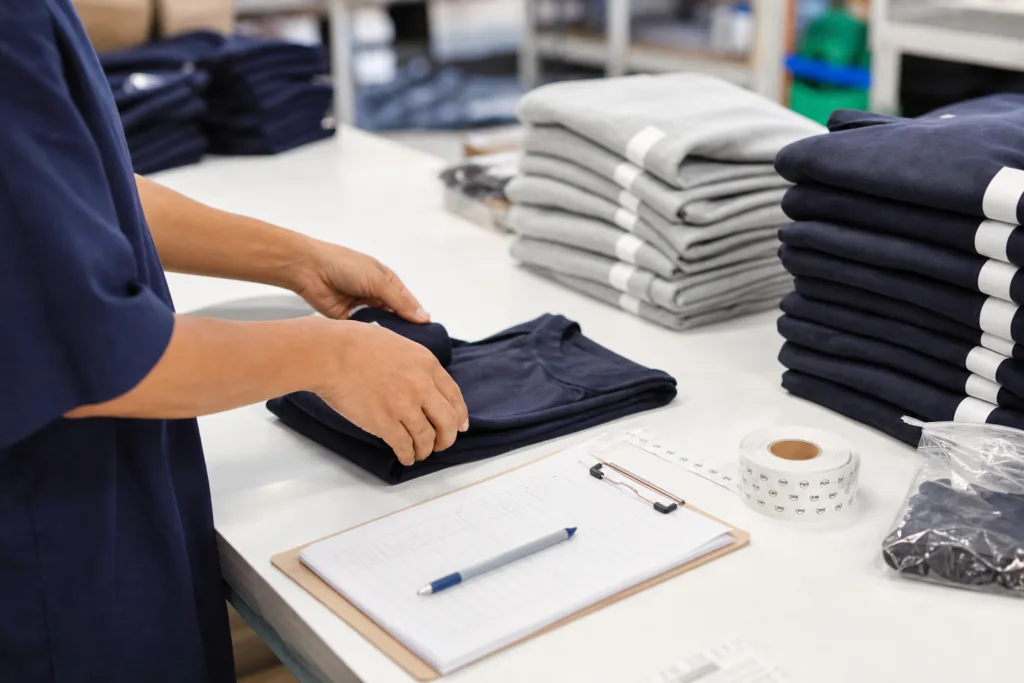
The simplest path is usually the strongest one. If your first range has a focused SKU count, commercially safe colors, a sensible size plan, and one clear decoration direction, you give yourself a better chance to launch on time and learn something valuable from the result.
Good first small clothing order planning is not about making the line feel small. It is about making the decision set manageable so that sourcing, sampling, approval, and bulk production can all stay aligned. Once demand is proven, complexity becomes much easier to justify and manage.
FAQs
How many styles should I include in my first small clothing order?
One to two styles is usually the safest starting point for a first small order. That keeps your quantity concentrated, reduces sample and sourcing complexity, and makes it easier to understand which product is actually driving demand after launch.
How many colors are realistic for a low MOQ first order?
One to three colors is realistic for most low MOQ first orders. This range gives enough visual choice for customers while still protecting fabric planning, inventory depth, color consistency, and reorder efficiency.
Should I offer a full size range in my first launch?
No, a focused core size range is usually better for the first launch. Small orders need enough units in each size to sell properly, so it is often smarter to start with the sizes most likely to move and expand later when real sales data confirms broader demand.
What decoration method is easiest for a first order?
A single decoration method with one main placement is usually the easiest choice for a first order. Simple screen printing or a clean embroidery placement often keeps approvals, setup, and QC more manageable than combining several logo methods on the same garment.
How do I avoid overcomplicating my first sample development?
Start with one clear style direction, one target fabric, and one fit intention before asking for samples. When comments are focused on measurements, hand feel, and construction rather than constant redesign, the sample process is faster and much more useful for bulk approval.
When should I add more SKUs, colors, or sizes?
You should expand after the first order gives clear market feedback. Once you know which style, color, and sizes are selling best and you are satisfied with fit consistency and production quality, you can add complexity in a more controlled and lower-risk way.