


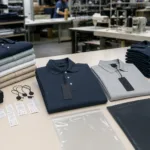

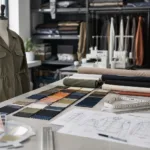


Private label polo shirts are a practical starting product for many apparel startups because they sit between casualwear, uniform, sport, and smart-casual categories. From a manufacturing perspective, they are also flexible: you can begin with a proven base style, add simple branding, and later move into custom fabrics, trims, fit blocks, and full packaging as your brand grows.
If you are comparing sourcing paths, it helps to review polo shirt manufacturing options before locking in a development plan. That step usually clarifies whether you need ready base styles with private labels, a custom fit and fabric program, logo decoration support, or a more complete OEM/ODM setup that includes sampling, trim sourcing, packaging, and bulk quality control.
For startups, the key is not just choosing a polo shirt that looks good in photos. You also need to think about collar stability, fabric weight, shrinkage, fit consistency, decoration method, label compliance, and how much inventory risk you can carry in the first production run.
In our apparel production work, we see polo shirts perform well for new brands because they can serve multiple channels at once. The same core body can be adapted for eCommerce, schoolwear, club uniforms, golf collections, hospitality programs, or premium casual lines depending on fabric, finishing, and branding choices.
Why private label polo shirts are a strong product for apparel startups
The short answer is that polos are easier to position than many fashion-heavy garments. They have clear use cases, broad customer acceptance, and a familiar silhouette, which reduces fit risk compared with more trend-sensitive categories.
They also allow staged brand development. A startup can begin with stock colors and woven labels, then later upgrade into custom dyed fabric, branded buttons, retail packaging, and unique pattern details once demand is validated.
From a margin perspective, polos can support different price tiers. A basic cotton or cotton-poly pique polo can target uniform and teamwear buyers, while mercerized cotton, performance knits, or upgraded trims can support more premium retail positioning.
Key takeaway: Polo shirts are startup-friendly because they combine broad demand, manageable development complexity, and room for brand upgrades over time.
What private label polo shirts mean in a manufacturing context
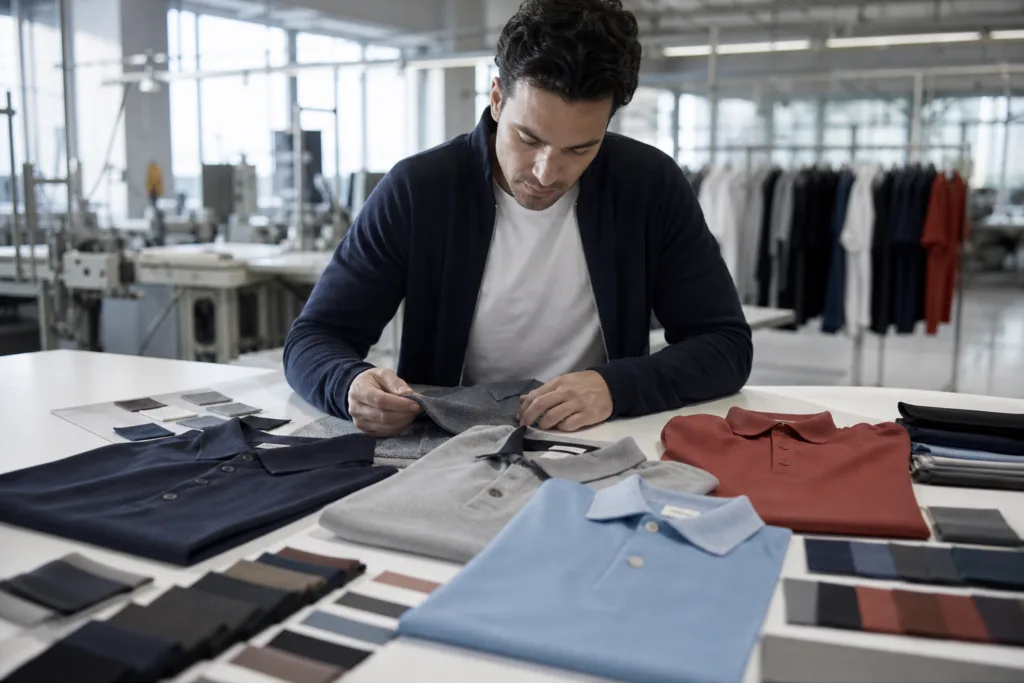
In manufacturing terms, private label polo shirts are not just polos with a logo. They are garments produced so the final product carries your brand identity through labels, trims, packaging, and sometimes fit, fabric, and color decisions.
At the simplest level, private label may mean replacing the neck label and adding a hangtag to an existing polo body. At a more advanced level, it can include custom yarn or fabric selection, Pantone-based color development, special placket construction, branded buttons, size labeling, care labeling, barcode packaging, and a fit block made specifically for your customer.
This matters because buyers often use “custom” and “private label” interchangeably. In production, they are related but not identical. A custom logo on a stock polo is not the same as a full private label product system.
Who should consider private label polo shirts
Private label polos are a good fit for several buyer types, especially those who need a branded product without the development burden of highly technical outerwear or fashion-led tailoring.
- Apparel startups testing a smart-casual or basics collection
- eCommerce brands that want a repeatable branded core item
- Golf, sportswear, and clubwear programs needing identity and consistency
- Schools, teams, and organizations buying branded uniforms
- Corporate and distributor buyers building retail-ready or staff apparel lines
They are especially useful when you need a product that can work in both B2B and direct-to-consumer channels. One body can be offered as a branded staff shirt, a club shop item, or an online retail product with only modest changes in decoration and packaging.
Blank, simple white-label, and full private label: what stage fits your brand?
The best path depends on your budget, launch speed, and confidence in the product. Most startups do not need a fully custom polo on day one.
| Development stage | What it includes | Best for | Main trade-off |
|---|---|---|---|
| Blank base | Ready style with no branding or minimal decoration | Market testing and urgent launches | Lowest uniqueness |
| Simple white-label | Stock body plus neck label, care label, hangtag, basic logo application | Startups and small eCommerce brands | Limited design control |
| Full private label | Custom fit, fabric, color, trims, packaging, and branded details | Growing brands with a clearer product strategy | Higher MOQ and more development time |
We often suggest that founders match the development stage to proven demand. If you have not yet tested your audience, a simple white-label model is usually a safer first step than funding a fully custom program with multiple sizes and colors.
How to choose the right base for private label polo shirts
The base shirt determines most of the product outcome. Before discussing logos or labels, decide whether the body itself supports your target customer, expected price point, and intended use.
Fabric choice affects feel, performance, and positioning
Pique cotton is the classic polo option because it has texture, breathability, and a familiar hand feel. Jersey polos feel smoother and can appear more fashion-forward, while polyester-rich performance polos can offer better moisture management and easier care for sports or uniform use.
If your project includes officewear or premium everyday wear, custom business polo shirt development often starts with cleaner knits, more stable collars, and refined placket finishing. If your target is golf, clubwear, or active programs, stretch and moisture-control properties may matter more than a traditional cotton hand feel.
| Fabric option | Typical feel | Common use | Watch points |
|---|---|---|---|
| 100% cotton pique | Natural, breathable, textured | Casual, uniform, everyday retail | Shrinkage and collar recovery |
| Cotton-poly blend | Balanced, stable, practical | Uniforms, volume programs | Hand feel may be less premium |
| Polyester performance knit | Light, smooth, quick-dry | Sports, golf, teamwear | Decoration method and heat sensitivity |
| Cotton-spandex blend | Softer with stretch | Retail and fitted polos | Recovery and long-term shape retention |
GSM changes drape and perceived value
For many polos, lighter weights may feel cooler and more athletic, while midweight fabrics often feel more substantial and premium. The right GSM depends on climate, intended channel, and fabric structure rather than a fixed “better” number.
A very light polo may photograph well but feel too thin in hand. A heavier polo may feel premium but become warm or stiff if the knit structure and finishing are not balanced correctly.
Collar, placket, and fit are not small details
Collar shape retention is one of the most common buyer concerns in polo production. A collar that curls, twists, or collapses after washing can make the whole garment feel low quality even if the body fabric is acceptable.
Buyers should also confirm placket length, button spacing, button count, sleeve opening shape, hem style, and side vent construction. These details directly affect how formal, sporty, or casual the polo looks.
Fit matters just as much. A startup should decide early whether the target block is regular, slim, relaxed, oversized, or performance-athletic, because decoration placement, grading, and customer satisfaction all depend on that decision.
How to position branded polo shirts for your target customer
Positioning should come before customization spend. If you do not know who the shirt is for, it is easy to overspend on trims that do not improve sell-through.
- For eCommerce basics, focus on fabric hand feel, fit clarity, and clean branding
- For corporate or distributor programs, prioritize color consistency, repeatability, and logo durability
- For golf and active use, emphasize stretch, breathability, and easy care
- For clubs or schools, balance price stability with reliable size grading and reorder capability
Startups should also think about sales channel. Retail-ready polos often need stronger hangtag and packaging presentation, while uniform or teamwear buyers may care more about repeat color availability and size coverage.
Which customization options matter most in a private label program?
The most useful private label upgrades are the ones customers notice during use, purchase, and reordering. That usually means labels, logo application, and packaging should be planned together rather than as separate last-minute add-ons.
Labels and trims
Typical private label elements include brand neck labels, size tabs, care labels, woven side labels, branded buttons, hangtags, and polybag stickers. Care label planning is especially important for export readiness and consumer trust. Many global apparel programs align with international care-label symbols when setting up private label artwork and garment information.
In practical terms, startups should provide the brand name format, logo files, fiber content expectations, care instruction preferences, country-of-origin requirements, and size presentation style before sampling. When those points are unclear, sample revisions usually increase.
Embroidery, print, and placement choices
Embroidery works well for classic polos because it supports a premium, durable look on the chest, sleeve, or back yoke. For buyers considering raised logos, fine lettering, or clubwear finishes, embroidered polo shirt finishing options should be checked early because logo size, stitch density, and fabric thickness all affect the final appearance.
Print can be a better fit when the artwork is large, multicolor, lightweight, or fashion-led. If your brand concept depends on graphic placement or tonal visual effects, printed polo shirt branding options may provide more flexibility than embroidery, especially on performance fabrics where stitch bulk is less desirable.
| Branding method | Best for | Advantages | Watch points |
|---|---|---|---|
| Embroidery | Classic logos, uniforms, premium polos | Durable and textured look | Can add stiffness on light fabric |
| Screen or transfer print | Graphic branding and lighter feel | More detail and color flexibility | Must test wash durability |
| Sublimation | Poly performance polos | All-over design potential | Fabric content limitations |
Key takeaway: Choose branding methods based on fabric, logo style, and use case, not only on appearance in a digital mockup.
Stock colors or custom color development?
Stock colors are faster and safer for startup launches. They reduce dye minimums, shorten lead times, and lower the risk of color approval delays.
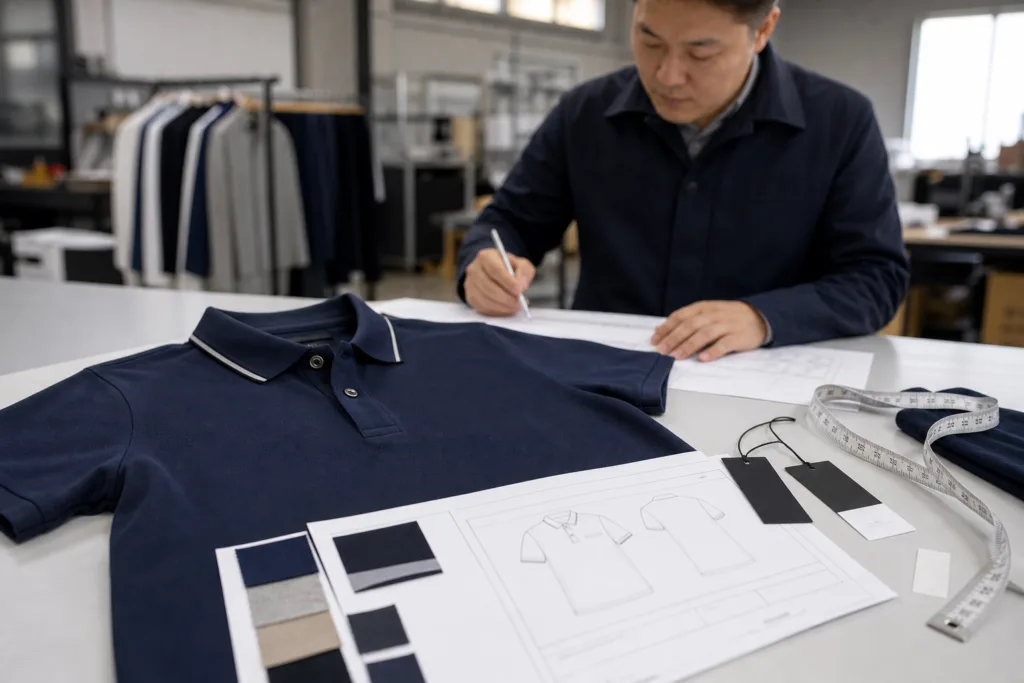
Custom color matching makes more sense when brand identity depends on a precise shade or when multiple styles in a collection must match. That usually requires fabric dyeing planning, lab dips, approval cycles, and clearer tolerance expectations.
From our manufacturing perspective, custom colors are often where startup expectations and production reality diverge. A Pantone reference is useful, but final color still depends on fiber content, knit structure, dye method, and finishing. Polyester, cotton, and blended fabrics do not all take color in the same way.
How the sampling workflow should work
A smooth sampling process reduces expensive bulk surprises. The usual path is tech pack review, prototype or development sample, fit sample, revision if needed, and then pre-production approval before bulk.
- Tech pack or reference confirmation
- Fabric and trim selection
- Prototype sample for overall concept
- Fit sample to refine measurements and shape
- Pre-production sample to confirm final bulk standard
Startups often underestimate how much time is saved by clear inputs. A useful tech pack does not need to be overly complex, but it should cover measurements, fabric idea, collar and placket style, logo placement, labels, packaging, and target quality level.
If you are building a seasonal or multi-variant line, Ninghow can support the transition from sample comments to bulk-ready specifications, which is often where early-stage brands need the most structure. The goal is to turn design intent into a repeatable production standard, not just approve one attractive sample.
What MOQ is realistic for startup brands?
MOQ depends on how custom your polo really is. A stock body with simple relabeling usually supports lower minimums than a fully custom polo with dyed fabric, branded buttons, and retail packaging.
The biggest MOQ drivers are fabric commitment, color count, size breakdown, trim customization, and whether the factory can source from existing stock programs. Buyers should avoid asking for a very low order quantity while also requesting multiple custom colors, many sizes, several logo positions, and unique packaging.
| Order type | MOQ tendency | Why |
|---|---|---|
| Relabeled stock polo | Lower | Uses existing fabric and pattern |
| Stock body plus custom decoration | Low to medium | Some added setup, limited development |
| Full custom private label polo | Medium to higher | Custom fabric, trims, labels, and approvals |
A better startup question is not “What is the lowest MOQ?” but “What product version gives me a workable MOQ without hurting brand presentation?” That framing usually leads to stronger launch decisions.
Lead time expectations from sampling to bulk production
Lead time is driven by clarity and material readiness more than by one universal calendar. Sampling can move quickly when artwork, specs, and trims are confirmed, while small unanswered details can create repeated delays.
As a practical guide, expect time for sample development, revisions, material booking, bulk cutting, sewing, finishing, inspection, and packing. Custom dyeing, branded trims, and multi-step approvals usually extend the schedule.
If your line includes seasonal variation, long sleeve polo shirt production choices should be planned early as well, because sleeve pattern differences, cuff details, and fabric seasonality can affect both timing and material allocation.
What quality control checkpoints matter most for branded polos?
The most important checkpoints are not complicated, but they must be defined before bulk production. Polo shirts should be checked for fabric appearance, measurement tolerance, collar symmetry, placket construction, logo accuracy, labeling correctness, thread finishing, and packing consistency.
Wash performance should also be part of approval logic. Appearance after laundering affects customer satisfaction more than many startups expect, especially for collar shape, seam puckering, shrinkage, and color change. For quality-sensitive programs, manufacturers may use standards-based approaches related to wash testing and appearance retention when evaluating whether the sample remains acceptable after domestic care.
- Check collar points and edge shape before and after washing
- Confirm placket lies flat and buttons are aligned
- Measure chest, length, shoulder, and sleeve opening against approved tolerances
- Verify logo placement, size, and thread or print quality
- Review label content, stitching, and placement accuracy
- Inspect color consistency across size sets and cartons
Key takeaway: The approved pre-production sample should become the practical quality standard for bulk, not just a visual reference.
Common mistakes startups make when ordering private label polo shirts
The most common mistake is trying to customize everything at once. Too many variables in the first order make it harder to control cost, timing, and quality.
- Choosing fabric only by price without checking hand feel and shrinkage
- Ignoring collar construction until after sampling
- Sending incomplete logo or label artwork
- Requesting low MOQ with too many color and size combinations
- Approving a sample without wash testing or fit review
- Over-designing packaging before confirming unit economics
Another frequent issue is weak size planning. Even a well-made polo can underperform if the grading does not suit the target customer. Startups should compare the size spec to real customer expectations, not only to a competitor’s website description.
How to evaluate a manufacturer for startup readiness
A startup-ready manufacturer should be able to explain trade-offs clearly. You want a partner that can help you simplify where needed, identify risk points, and build a practical path from first sample to repeat bulk orders.
Ask how the factory handles sampling revisions, trim sourcing, label setup, wash testing, MOQ flexibility, and production quality checkpoints. Also ask whether they can support phased development, such as beginning with relabeled stock and moving to a full custom program later.
Good communication matters as much as technical ability. If comments are not tracked clearly during sampling, errors tend to multiply in bulk.
When to start with simple white-label polos and when to upgrade
Start simple if your main goal is speed, market testing, or early revenue. White-label polos with solid branding basics can still look professional if the fit, fabric, and logo execution are right.
Move toward a fuller private label system when you have repeat demand, clearer customer feedback, and enough volume to justify custom fabric, dyed colors, and more advanced packaging. That is usually the point where brand distinctiveness starts delivering stronger returns than basic launch efficiency.
How we support different stages of private label polo shirt development
At Ninghow, we work with buyers whose needs range from straightforward relabeling to more developed private label programs. That may include fabric guidance, sample coordination, logo application planning, label and packaging setup, and production quality control aligned with the buyer’s channel and budget.
For startups, the most useful support is often practical decision filtering. Not every project needs every customization feature in the first order. A scalable plan usually starts with the product essentials, confirms customer response, and then adds complexity where it improves brand value or reorder performance.
What to check before placing your first bulk order
Before bulk approval, make sure the product standard is documented clearly. That means size spec, approved fabric, color reference, logo file, label artwork, packaging method, carton details, and inspection expectations should all be aligned.
- Approved final sample matches your intended market position
- Measurement chart and grading are confirmed
- Fabric composition and GSM are accepted
- Logo method and placement are approved
- Care label, size label, and hangtag details are finalized
- Packaging and carton requirements are clear
- MOQ, lead time, and payment milestones are understood
- Bulk QC checkpoints are agreed before production starts
This checklist matters because most startup problems do not begin on the sewing line. They begin earlier, when assumptions replace written approvals.
Conclusion
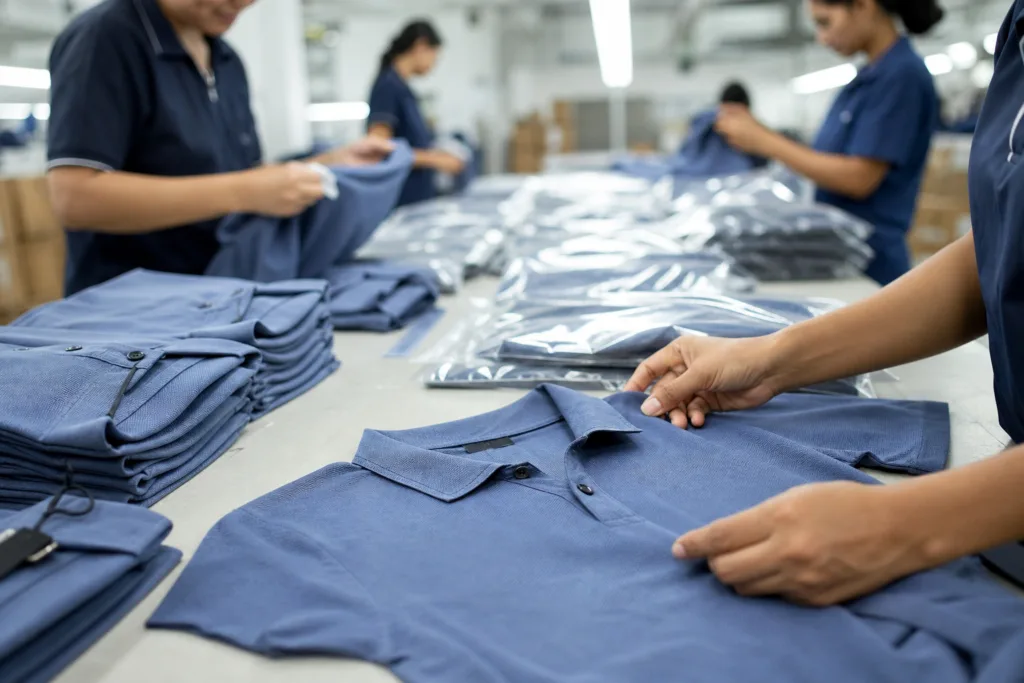
Private label polo shirts can be an excellent product for apparel startups because they offer a clear path from simple launch to stronger brand differentiation. The most successful projects usually begin with the right base garment, realistic MOQ planning, disciplined sampling, and a private label setup that matches actual business stage rather than idealized future plans.
If you approach development in steps, private label polo shirts can become a repeatable core product instead of a risky first order. Focus on fabric, collar quality, fit, branding method, labels, and pre-production approval, and you will make better decisions long before bulk production begins.
FAQs
What is the difference between white-label and private label polo shirts?
White-label polo shirts usually start from an existing base product with limited branding changes, while private label polo shirts can include your own labels, trims, packaging, and sometimes custom fabric, fit, or color development. For startups, white-label is often faster and lower risk, while full private label offers stronger brand control once demand is proven.
What fabric is best for startup private label polo shirts?
The best fabric depends on your target market, but cotton pique, cotton-poly blends, and performance knits are the most common starting points. Cotton pique suits classic retail and casualwear, blends help with cost and stability, and performance fabrics fit golf, teamwear, and active use, so the right answer depends on hand feel, care expectations, and selling channel.
How many pieces do I need to start a private label polo shirt order?
The required quantity depends on how customized the product is, because relabeling a stock polo usually needs fewer pieces than developing custom fabric, colors, and trims. If you want a lower-risk launch, reduce the number of colorways and packaging variations first, since those details often affect MOQ more than the polo style itself.
What should be included in a polo shirt tech pack for sampling?
A useful polo tech pack should include the silhouette, measurements, fabric idea, collar and placket details, logo placement, label requirements, color references, and packaging notes. Even a simple startup brief becomes much more effective when it clearly shows what must be customized and what can follow an existing factory standard.
How long does private label polo shirt development usually take?
Development time varies by sample revisions and material complexity, but it normally includes prototype review, fit correction, pre-production approval, and then bulk manufacturing. Projects move faster when artwork, size specs, fabric direction, and label details are confirmed early, while custom dyeing and branded trims usually add more time.
How can I reduce risk before placing a bulk order for private label polo shirts?
The best way to reduce risk is to approve a realistic final sample and make sure it reflects your true bulk standard for fabric, fit, color, logo, and labels. You should also confirm wash performance, measurement tolerances, and packaging details in writing before production starts, because undocumented assumptions are one of the main causes of startup order problems.