


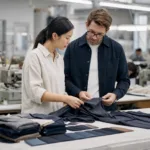
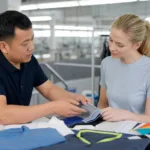


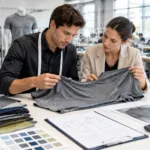

For a new apparel brand, sampling is not a formality before production. It is the stage where ideas become measurable products, and where many expensive mistakes can still be corrected at a manageable cost. When founders understand how to use clothing samples for startups properly, they reduce risk in fit, fabric, trims, branding, pricing, and launch timing before committing to bulk quantities.
If your collection is still moving from concept to product, startup-friendly garment manufacturing support matters because early decisions around fabric, pattern, branding, and packaging affect every later step. We often help new brands turn sketches or tech packs into workable samples, refine fit, test logo application, review labels, and plan a realistic path from development to bulk production without guessing.
What garment sampling actually means in the apparel development process
Sampling means developing one or more trial versions of a garment so the product can be reviewed before bulk production starts. It is how a brand checks whether the design can be manufactured as intended, not just whether the concept looks good on paper.
From our manufacturing perspective, sampling sits between design intent and production reality. A sample helps confirm whether the fabric behaves correctly, whether the pattern shape is balanced, whether the construction method is durable, and whether the decoration method matches the garment type.
For startups, this is especially important because the first collection often includes assumptions. A sleeve may look clean in a sketch but twist in wear. A heavy cotton may feel premium but make the fit too stiff. A logo placement may seem simple until seam position, zipper paths, or fabric stretch change the result.
That is why we usually advise founders to treat samples as development tools, not showroom pieces only. A structured review process during Ninghow’s apparel sampling process helps new brands move from an idea to a product that can actually be repeated consistently in bulk.
How samples validate fit, sizing, and pattern accuracy before bulk production
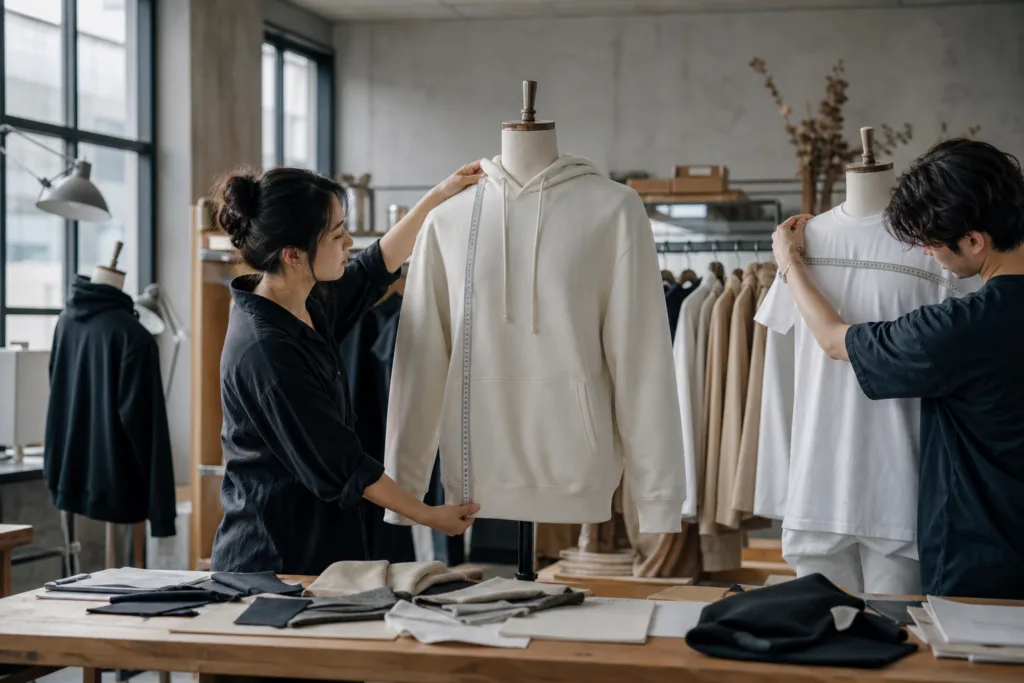
Fit is one of the biggest reasons garments fail after launch. A sample gives the brand a real chance to check body proportions, wearing ease, balance, and measurement consistency before those errors are multiplied across hundreds or thousands of units.
A startup may have a clear style direction, but that does not automatically produce a correct pattern. Oversized does not mean shapeless, athletic does not mean tight, and relaxed does not mean inconsistent. Sample fittings help identify whether shoulder width, chest ease, rise, inseam, sleeve pitch, neck opening, or hem shape need to change.
The first useful fit review should compare three things at the same time: the approved spec sheet, the actual sample measurements, and the way the garment looks and moves on the intended wearer. That combination matters because a piece can measure correctly and still fit poorly if the pattern balance is off.
What founders should check during a fit review
- Overall silhouette compared with the target market and intended use
- Critical measurements such as chest, waist, hip, length, sleeve, rise, and inseam
- Comfort in movement, especially for sportswear, uniforms, and fitted products
- Symmetry at collars, plackets, side seams, pocket positions, and hems
- How grading will likely behave when the style moves into a full size range
Key takeaway: A sample should not only answer “does it look right?” It should answer “can this fit correctly and repeat consistently across sizes in bulk?”
Why fabric testing in sampling prevents costly material mistakes
Fabric selection is where many startups underestimate risk. The same garment pattern can feel, drape, stretch, shrink, and wear differently depending on composition, GSM, knit or weave structure, and finishing. Sampling reveals those differences before the fabric order locks the project into one direction.
In practical terms, the sample stage tells you whether the fabric is too thin, too heavy, too soft, too unstable, too transparent, or simply wrong for the use case. A T-shirt intended for premium retail may need a smoother hand feel and better recovery. A team polo may need shape retention and color stability. A hoodie that feels impressive on the rack may become too bulky after branding and washing.
Technical review also matters. Brands should understand GSM, shrinkage behavior, pilling risk, colorfastness, and dimensional stability, and many of those checks are grounded in recognized fabric testing standards. Even when a startup does not run every laboratory test at the first stage, it should still use sampling to decide what needs closer verification before bulk approval.
| Fabric factor | What a sample can reveal | Why it matters before bulk |
|---|---|---|
| GSM | Weight, opacity, warmth, drape | Affects comfort, price, and customer expectation |
| Composition | Stretch, recovery, moisture behavior, hand feel | Changes use performance and care needs |
| Knit or weave structure | Shape retention and surface appearance | Influences fit stability and decoration suitability |
| Finish | Softness, smoothness, shrinkage response | Impacts quality perception and wash outcome |
| Color | Depth, consistency, match to brand direction | Reduces approval issues later in production |
We also encourage startups to wash-test sample garments before final approval. That is not only a quality decision but a labeling decision, because care instructions should match actual product behavior and relevant U.S. care-labeling requirements.
How sampling reveals construction, stitching, and workmanship issues early
Construction quality is easier to discuss with a real sample in hand than in a design brief. Sampling shows whether seams sit flat, whether topstitching is clean, whether the garment twists after assembly, and whether the chosen construction method supports the product’s positioning.
For example, a startup may request a clean premium T-shirt but not specify whether shoulder reinforcement, neck binding, seam type, or coverstitch finish should change. A sample makes those choices visible. It also shows whether a pocket opening warps, whether a placket rolls, or whether rib and body fabric fight each other after sewing.
This stage is also where print, embroidery, heat transfer, and label application should be reviewed carefully. Some logo methods look excellent on a firm cotton piqué but distort a light jersey. Some embroidery densities work on sweatshirts but cause puckering on lightweight performance fabrics.
Before moving forward, we recommend a workmanship review that follows the same logic as apparel quality control for fit and finish. A startup does not need a complicated inspection manual at the first sample stage, but it does need clear expectations on seam quality, placement accuracy, trimming, pressing, and final presentation.
How samples help startups understand real production cost, not just target cost
A target price is only a starting point. A sample exposes the real cost drivers hidden inside the design. Those drivers often include fabric consumption, trim complexity, labor time, decoration method, packaging requirements, and the number of development changes still unresolved.
This is where startup teams learn an important lesson: a garment can be simple in appearance but expensive to manufacture. A minimal-looking hoodie may require heavy brushed fleece, custom-dyed rib, thick drawcords, embroidery, branded eyelets, woven labels, and individual polybag stickers. The sample stage turns those assumptions into visible cost decisions.
| Cost driver | What sampling helps confirm | Typical startup risk |
|---|---|---|
| Fabric usage | Actual consumption by size and pattern shape | Underestimating bulk fabric cost |
| Trims | Zippers, cords, labels, buttons, packaging | Missing small items that add up quickly |
| Construction time | Difficult operations and finishing steps | Designing beyond the budget |
| Decoration | Print size, stitch count, setup complexity | Choosing methods that do not match the margin |
| Revisions | Number of re-samples needed | Delaying launch and increasing development cost |
Key takeaway: Sampling does not make a product more expensive. It exposes where the cost already exists so the brand can control it before bulk production.
Why sampling aligns brand vision with the final product customers will receive
New brands often talk about look, feel, and positioning in broad terms such as premium, clean, athletic, or street. Sampling forces those words into specific product choices. It answers what premium means in GSM, what athletic means in stretch and recovery, and what clean means in seam finish and branding restraint.
That alignment matters because customers will judge the final product, not the concept board. If the brand story promises a structured heavyweight tee but the garment arrives soft and thin, the customer experience breaks immediately. If the branding is meant to feel understated but the embroidery looks bulky, the product misses the intended identity.
At this stage, startups should review the full sensory result: drape, hand feel, color, logo scale, trim finish, packaging impression, and how the garment performs after handling and washing. In our experience, this is where a brand starts behaving like a product company rather than a design idea.
Which sample stages new apparel brands should know
Not every project needs the same number of stages, but startups should understand the purpose of each sample type. Skipping stages may save money at first, but it often increases risk later.
| Sample stage | Main purpose | What should be reviewed |
|---|---|---|
| Proto sample | Translate concept into a first physical garment | Basic shape, construction approach, design feasibility |
| Fit sample | Refine measurements and pattern balance | Body fit, ease, movement, proportion, grading direction |
| Salesman sample | Represent the style for presentation or pre-selling | Visual appearance, branding, color, finish |
| Pre-production sample | Confirm production-ready version before bulk | Approved fabric, trims, labels, workmanship, packaging |
For many startups, the most critical stage is the pre-production sample because it should reflect what bulk production will follow. If the approved sample and the production file do not match, avoidable confusion starts immediately.
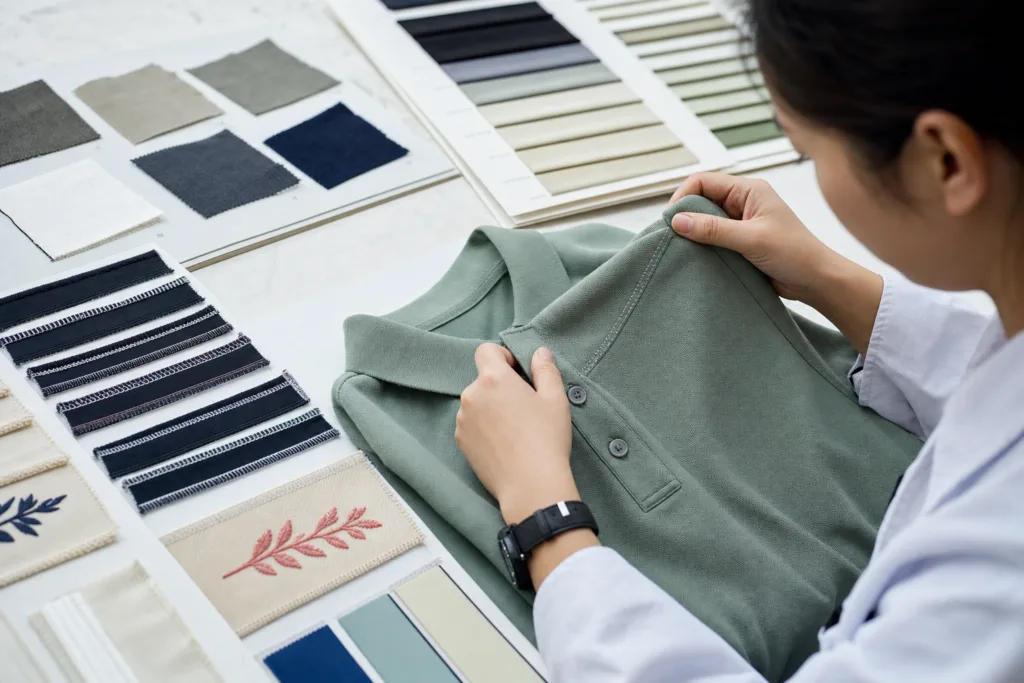
What to review in every sample before you approve it
The best sample reviews are systematic. Instead of reacting only to what looks wrong, brands should compare each sample against a checklist so approvals are consistent and documented.
- Measurements against the spec sheet and tolerance plan
- Fit on the intended wearer or fit model
- Drape, hand feel, weight, and fabric recovery
- Color accuracy under normal viewing conditions
- Logo size, placement, method, and durability
- Trims including zippers, cords, buttons, labels, and hangtags
- Finishing details such as pressing, loose threads, and fold presentation
- Care label content, fiber content, and country-of-origin planning where required
When compliance details are involved, sample review should also include labels and consumer-facing information. That is one reason we advise startups to understand apparel manufacturing compliance early rather than trying to add it just before shipment.
Common sampling mistakes startups make and how to avoid them
The most common mistake is approving a sample emotionally instead of technically. A founder may like the overall look and miss issues in measurement, fabric behavior, or branding consistency that become obvious only after production begins.
Another frequent problem is unclear feedback. Comments such as “make it better” or “feel more premium” are difficult to execute. Better feedback includes exact measurement changes, photos with markups, trim replacements, revised artwork files, and a clear list of what is approved versus what is still pending.
We also see startups change too many variables at once. If fabric, fit, color, logo method, and trims all change between rounds, it becomes harder to identify what solved the problem and what created a new one.
How to avoid avoidable sample delays
- Send a usable tech pack or a clearly structured idea brief
- Prioritize the biggest fit or fabric issues first
- Keep approval notes organized in one version-controlled document
- Separate aesthetic preferences from production-critical corrections
- Do not approve a sample just to save one more round if key risks remain
How many sample rounds are normal for a new clothing brand
For a startup, two to four rounds on an important new style are common. The exact number depends on how complete the initial brief is, how custom the product is, and whether the project uses standard available materials or newly developed components.
A simpler cotton T-shirt with a clear spec and basic branding may move faster. A more technical polo, hoodie, or outerwear style with custom trims, embroidery, special washes, and unique fit goals usually needs more iteration. From our production perspective, extra sample rounds are not a problem when they solve real risk before bulk.
Key takeaway: The right question is not “how few sample rounds can we get away with?” It is “how many rounds are needed to approve the product with confidence?”
How sampling affects MOQ, lead time, and launch planning
Sampling is directly connected to MOQ and scheduling. Buyers sometimes treat development and bulk planning as separate conversations, but in reality the sample outcome determines fabric booking, trim sourcing, packaging decisions, and production slot timing.
If the approved sample uses in-stock fabric and standard trims, MOQ may be more flexible. If it requires custom dyeing, private label packaging, special labels, or uncommon accessories, the MOQ can rise because material suppliers also have minimums. Sampling helps define these conditions before purchase orders are placed.
Timing also matters. A delayed fit approval can push color confirmation, trim ordering, and bulk cutting further back. That is why startup teams should understand production timing for sample-to-bulk transitions before announcing a launch date to customers or distributors.
- Confirm which materials are stock-supported and which require custom sourcing
- Ask when lead time starts: from inquiry, sample approval, or deposit
- Check whether packaging and labels run on separate timelines
- Build buffer time for one more correction round than originally expected
A practical sampling checklist for startup founders and product teams
Before sample approval, the product team should be able to answer a few direct questions. If any answer is still uncertain, bulk production is probably premature.
- Does the sample match the intended fit and customer profile?
- Does the fabric perform correctly in wear and after washing?
- Are logos, labels, trims, and finishing commercially acceptable?
- Are measurements signed off with tolerances?
- Is the cost still workable after material and construction decisions?
- Are care, fiber, and labeling details ready for the target market?
- Has the team documented what the factory should follow in bulk?
When to move from sample approval to bulk production
You should move to bulk only when the garment is production-ready, not when the team is simply tired of revising it. That means the sample, spec sheet, artwork, bill of materials, labels, packaging, and approval comments all point to one clear standard.
At Ninghow, we usually tell buyers that bulk readiness depends on consistency more than excitement. If the approved sample still includes unresolved fabric questions, open trim substitutions, missing label content, or uncertain measurements, bulk production will carry those uncertainties forward.
This is also the point where pre-production controls matter most. The approved sample should become the reference for cutting, sewing, decoration, and finishing so the first production run reflects the same expectation the brand signed off on.
How to choose a manufacturer that supports proper startup garment sampling
A manufacturer for a startup should do more than quote a price. The right partner should be able to explain what is realistic, where the product risks are, how sample comments should be handled, and how the style can move into stable production.
We believe founders should look for clarity, not just speed. Good sampling support includes practical advice on fabric alternatives, fit correction, decoration suitability, label planning, and what changes will affect MOQ or lead time. That is part of why many buyers review Ninghow as a manufacturing partner when they need product development thinking rather than order taking.
- Ask how sample feedback is documented and tracked
- Ask whether pattern corrections are handled in-house or externally
- Ask what sample stages are recommended for your garment type
- Ask how approved samples are controlled before bulk starts
- Ask what risks the factory already sees in your current brief
Use sampling to reduce risk, protect your budget, and launch with confidence

Sampling is the point where a new apparel brand either gains control or stays in guesswork. It validates fit, fabric, construction, cost, compliance details, and production readiness before those choices become expensive to reverse.
For founders and sourcing teams, clothing samples for startups should be treated as a structured risk-reduction step, not as an optional preview. The stronger the sample process, the more likely the first bulk order will match the brand vision, customer expectation, and budget plan.
If the project is still early, the most useful next step is usually a disciplined review of the design brief, target fabric direction, fit goals, branding method, and launch timing. Once those are clear, sampling becomes a decision tool that helps the brand move forward with more confidence and fewer surprises.
Frequently Asked Questions
Why are clothing samples for startups so important?
Clothing samples for startups are important because they reduce risk before a brand spends money on bulk production. A proper sample lets the team verify fit, fabric behavior, workmanship, branding details, and likely cost so that avoidable mistakes are corrected while the order is still small and manageable.
How many sample rounds should a new apparel brand expect?
A new apparel brand should usually expect two to four sample rounds for an important new style. The number depends on how complete the tech pack is, how custom the fabric and trims are, and how much fit refinement is needed before the style is ready for production.
What should be approved before moving from sample to bulk production?
Before moving from sample to bulk production, the brand should approve measurements, fit, fabric, color, logo application, trims, labels, finishing, and packaging direction. The sample should also match the production documents so the factory has one clear standard to follow during bulk manufacturing.
Can sampling help control apparel production cost?
Yes, sampling helps control apparel production cost because it reveals the real cost impact of fabric choice, trim selection, sewing complexity, decoration method, and packaging requirements. That visibility helps startups simplify designs or adjust specifications before they commit to a larger order.
Does sampling affect MOQ and lead time?
Yes, sampling affects MOQ and lead time because the approved sample determines what materials need to be sourced and whether custom components are required. If the style depends on custom dyeing, labels, or trims, the minimum order and timeline may change compared with a style built from stock-supported materials.
How do startups choose a manufacturer that handles sampling well?
Startups should choose a manufacturer that can explain the sampling stages clearly, give practical feedback on fit and fabric, document revisions accurately, and connect sample approval to bulk planning. A capable factory should help the brand solve product problems early instead of only quoting prices and waiting for final instructions.