







If you want faster quotes, fewer misunderstandings, and a smoother sample process, the quality of your first inquiry matters more than many buyers expect. When brands ask us what to prepare before contacting clothing manufacturer partners, our answer is simple: give enough information for a factory to judge feasibility, estimate cost, flag risks, and suggest better options before sampling begins. Vague requests such as “I need hoodies” or “Can you make sportswear?” usually lead to slow back-and-forth, unclear pricing, and preventable development mistakes.
For buyers still comparing factories, our guide to finding the right clothing manufacturer helps connect inquiry preparation with supplier selection. If your project involves custom T-shirts, polos, hoodies, teamwear, or private label apparel, we recommend preparing product details, target quantities, fabric expectations, logo files, and approval workflow before reaching out. That gives manufacturers like us enough context to advise on fabric choice, fit refinement, decoration methods, sample planning, and bulk production readiness without wasting your timeline.
A one-page checklist manufacturers want first
If you need a practical summary, send these items in your first message: garment category, intended use, target market, quantity by color and size, target fabric and GSM, size chart, artwork files, branding requirements, packaging expectations, target price range, sample deadline, bulk delivery window, destination country, and any compliance requirements. This short briefing is often enough for us to decide whether the project is technically clear, what questions still need answers, and whether your budget and timeline match the product complexity.
Product overview every manufacturer needs
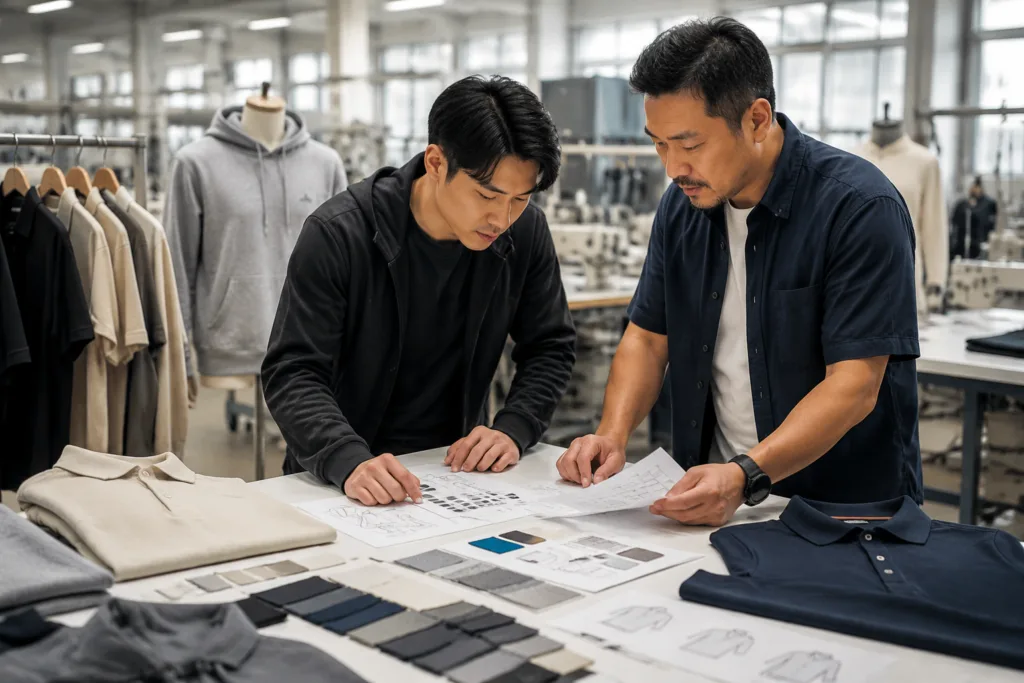
Start with the product itself. A manufacturer needs to know whether you are developing a polo shirt, oversized T-shirt, performance hoodie, golf mid-layer, school uniform, or team jacket. Product category affects pattern shape, sewing operations, trims, packaging, testing, and cost. It also affects whether a supplier is the right fit for your order.
Include a short construction summary. For example: “Men’s cotton-spandex polo, regular fit, flat knit collar, 3-button placket, side vents, chest embroidery.” That sentence immediately gives us more useful direction than a reference photo alone. Add the intended season and use-case too. A summer golf polo, a gym tee, and a fleece-lined school hoodie all require different material logic.
| Item | What to provide | Why it matters |
|---|---|---|
| Style name | Internal style code or product name | Keeps communication organized |
| Category | T-shirt, polo, hoodie, shorts, jacket | Determines machinery, seams, trims, and cost |
| Use-case | Sports, retail, school, workwear, golf | Guides fabric and durability choices |
| Key features | Pockets, zippers, rib cuffs, mesh panels | Helps estimate sampling and production steps |
Quantity, MOQ, and scaling expectations
Quantity is one of the first numbers we look at because it changes almost everything: fabric sourcing options, dyeing method, printing efficiency, trim procurement, and unit price. Buyers should prepare launch quantity, quantity per color, size ratio, and expected reorder plan. If you only know an estimate, say so clearly.
It is also useful to explain whether you expect a phased rollout such as prototype, salesman sample, pilot run, then bulk order. From a factory perspective, that is very different from a single large production order. Low quantities can still be workable, but they may limit fabric customization, color matching flexibility, or trim options. Instead of only asking for low MOQ, explain your growth plan and reorder potential.
Be realistic about MOQ negotiation. A lower MOQ is easier when you accept stock fabrics, fewer colors, simpler decoration, and shared trims. It becomes harder when every detail is custom from day one.
Fabric and material specifications
Fabric is where many inquiries become unclear. If possible, provide fiber composition, knit or weave type, GSM, desired hand feel, stretch expectations, and performance needs such as moisture management, anti-pilling, or water repellency. If you have a reference swatch, say whether it is the exact standard or only a general direction.
Good fabric notes might look like this: “95% cotton 5% spandex pique, 220 GSM, soft hand feel, moderate stretch, pre-shrunk preferred, dark navy and white.” That level of information lets a manufacturer propose the closest available fabric or explain why a nearby alternative may perform better.
Color references matter too. If exact brand color is important, provide Pantone references and note whether a lab dip approval is required. Also share fallback options. When buyers tell us which details are non-negotiable and which can be adjusted, we can protect budget and lead time more effectively.
Fit, sizing, and grading rules
Even strong-looking samples fail if the fit is wrong. Before contacting a manufacturer, prepare the target wearer, fit intention, and size system. Is the garment for men, women, youth, unisex, plus size, or athletic fit? Is it oversized, slim, classic, or boxy? A single reference photo cannot answer those questions.
Provide a size chart with flat measurements for the base sample size and, if possible, grade rules for other sizes. Also include tolerances. Without tolerances, buyers sometimes reject bulk production for small differences that are normal in garment manufacturing. Tolerance ranges help both sides define what is acceptable before cutting begins.
If your team is still building these documents, our article on the tech pack checklist for apparel manufacturers explains the core measurements, construction details, and spec sheets that reduce confusion during development.
Tech pack and prototype assets
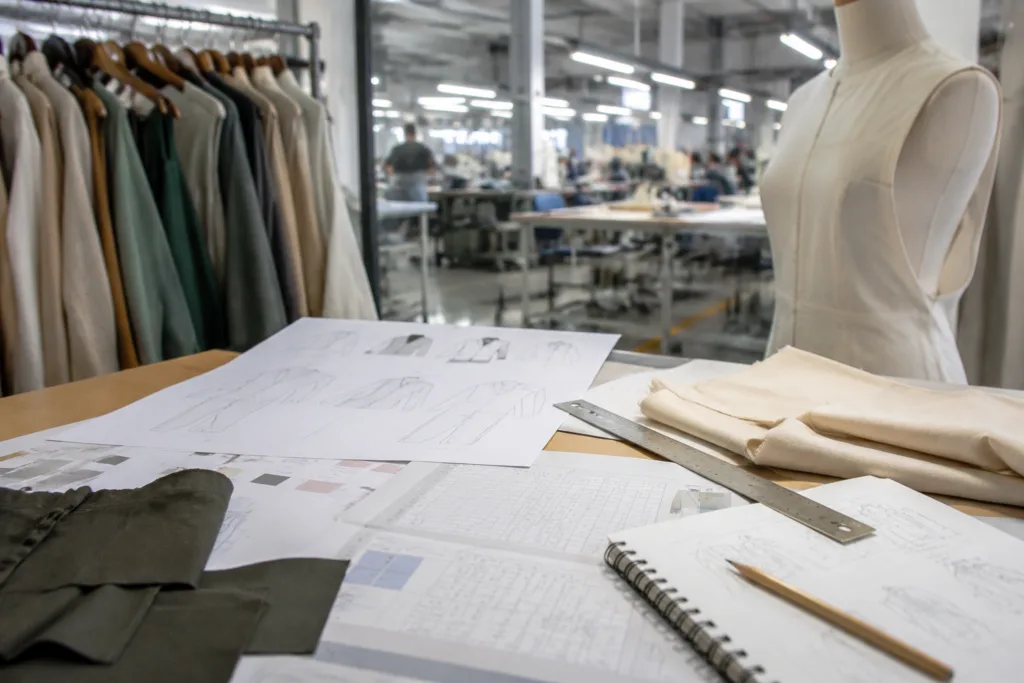
A complete tech pack is not mandatory for every simple project, but the more custom the garment becomes, the more necessary it is. At minimum, prepare front and back flats, measurement chart, bill of materials, logo placements, colorways, trim notes, and construction instructions. If your garment uses unusual seam types, binding, bartacks, coverstitching, or zipper details, show them clearly.
Useful file formats include AI, EPS, PDF, and high-resolution PNG for visual references. For measurements and BOM details, editable spreadsheets are often helpful. Clear file naming also matters. We regularly see delays caused not by sewing complexity but by disorganized buyer files.
For products that need several sample rounds, it helps to understand the apparel sampling process and sample requirements before making your first request. That way you can separate prototype goals from bulk-ready approval standards and avoid judging the first sample by the wrong criteria.
Artwork, logos, labels, and trims
Branding assets need the same level of preparation as garment specs. Send logos in vector format whenever possible. For embroidery, note approximate logo size, stitch density expectations if known, and preferred backing. For screen print or heat transfer, share color count, placement, dimensions, and whether you require special inks or finishes.
Labels and trims deserve their own checklist: main label, size label, care label, country-of-origin requirement, hangtag, barcode sticker, zip puller, cord end, button style, and packaging insert. If you are building a private label program, decide early which components are supplier-sourced and which are buyer-supplied. Mixed ownership of trims can affect lead time and accountability if something arrives late or fails quality checks.
Construction, finishing, and packaging requirements
Seam details, washing methods, and finishing treatments often change cost more than buyers expect. A basic tee with standard overlock and coverstitch is very different from a garment-dyed heavyweight tee with silicone wash, shoulder taping, and exact shrinkage control. The same goes for outerwear with water-repellent finishing or activewear with bonded details.
State any must-have techniques up front: topstitching width, seam binding, brushed interior, anti-pilling finish, enzyme wash, garment wash, or heat-sealed seams. If you only know the visual effect you want, say that too. We can often suggest a simpler method that achieves a similar result with better production consistency.
Packaging should not be an afterthought. If your goods are retail-ready, specify folding method, polybag material, warning labels, sticker format, carton markings, barcode rules, and pack ratio. Missing packaging instructions are a common reason why otherwise good production orders get delayed at the final stage.
Target market, compliance, and testing
The country of sale affects labeling, testing, and material choices. Tell the manufacturer where the garments will be sold and whether your buyer or retail channel has special rules. For example, some customers ask for restricted substance compliance, fiber-content confirmation, or specific safety documentation for children’s products.
If your brand requires certified material input, say so before quoting. A common example is OEKO-TEX STANDARD 100 certification for textile safety, which may influence available fabric options and sourcing cost. It is much easier to build compliance into the inquiry stage than to discover the requirement after sample approval.
Also clarify care-label language, origin labeling needs, and any retailer-specific packaging or testing instructions. These details may feel administrative, but they directly affect production planning.
Budget, target costing, and lead-time expectations
Many buyers hesitate to share budget, but target pricing actually helps serious manufacturers guide the project. If your target is too low for the requested quality level, it is better to learn that early and adjust fabric, decoration, or packaging than to spend weeks on unrealistic development. Instead of asking only for the “best price,” provide a target range and note what matters most: fabric quality, visual finish, speed, or customization depth.
Lead-time planning should be just as clear. Share your sample deadline, approval milestone, bulk ship window, and any event-driven delivery date. At Ninghow, we often find that the real constraint is not sewing capacity but approval timing, custom trim arrival, or lab-dip confirmation. Our guide to the apparel production timeline and realistic lead times can help buyers map backward from their launch date and leave room for revisions.
Sample workflow, QC standards, and shipping details
Before your first inquiry, decide who approves samples, how many revision rounds are acceptable, and what counts as a pass or fail. A clear approval chain prevents internal delays after the factory has already completed a sample. It is also wise to define bulk quality checkpoints: fabric inspection, in-line sewing checks, measurement review, decoration inspection, finishing review, and final random inspection.
If your team uses AQL or a specific defect classification system, mention it early. The same applies to shrinkage testing, colorfastness expectations, and measurement tolerances. Clear standards reduce emotional disputes later because both sides are working from the same acceptance criteria.
Shipping information matters more than many new brands realize. Say whether you prefer air, sea, express, or buyer-nominated forwarder arrangements. If the goods must arrive pre-ticketed for retail or palletized by store allocation, include that in your inquiry instead of adding it after production is complete.
Questions manufacturers will ask you anyway
Even a good inquiry usually needs follow-up. In our production work, the most common factory questions are: What is your target price? Are the fabrics custom or stock? Is the logo print or embroidery? What quantity do you need per color? What is the destination market? Do you have a confirmed size chart? How many sample revisions do you expect? Are labels and packaging custom? Can alternative fabrics or trims be accepted if lead time becomes tight?
If you prepare those answers before contacting Ninghow or any other manufacturer, you will get more useful quotations and better technical feedback. Good buyers do not need every answer on day one, but they do need enough clarity to make supplier discussions productive.
Common mistakes before the first inquiry
- Sending only inspiration photos. Images help, but they do not replace measurements, materials, or decoration specs.
- Ignoring MOQ logic. Very small orders with fully custom details often create cost and lead-time conflict.
- Leaving size charts for later. Fit problems discovered after sample approval are expensive to fix.
- Asking for exact quotes without core specs. Serious manufacturers can estimate, but exact costing needs structure.
- Underestimating packaging and compliance. Missing labels, barcode rules, and testing needs cause last-stage delays.
- Using unrealistic calendars. Rush timelines rarely leave enough room for sample revision, trim procurement, and QC.
A practical inquiry template you can adapt
A short first message can still be effective if it contains decision-ready information. We suggest this structure: introduce your brand or buying company, describe the garment type and use-case, state target quantity and colorways, attach size chart and reference images, list fabric goals and logo method, mention target price range, specify destination market, and request sample and bulk timing. If some items are still undecided, mark them as open questions rather than leaving them blank.
For larger sourcing teams, build an internal inquiry pack with a tech pack, grading sheet, artwork folder, packaging sheet, compliance checklist, and approval matrix. That saves time not only for the manufacturer but also for your own team when quotes come back and technical clarifications begin.
How to compare manufacturer responses
Once replies arrive, do not compare factories on price alone. Review how clearly each supplier addressed your product, whether they identified risks, whether MOQ explanations make sense, how sample policy is handled, what lead times are realistic, and whether they proposed practical alternatives. A useful supplier response often includes clarifying questions, not just a low price.
We recommend building a simple scorecard with these points: technical understanding, communication speed, completeness of quote, fabric suitability, sampling approach, MOQ flexibility, packaging capability, QC transparency, and delivery confidence. A manufacturer who asks the right questions early is often easier to work with than one who promises everything immediately.
What to prepare before contacting clothing manufacturer partners: minimum vs later-stage details
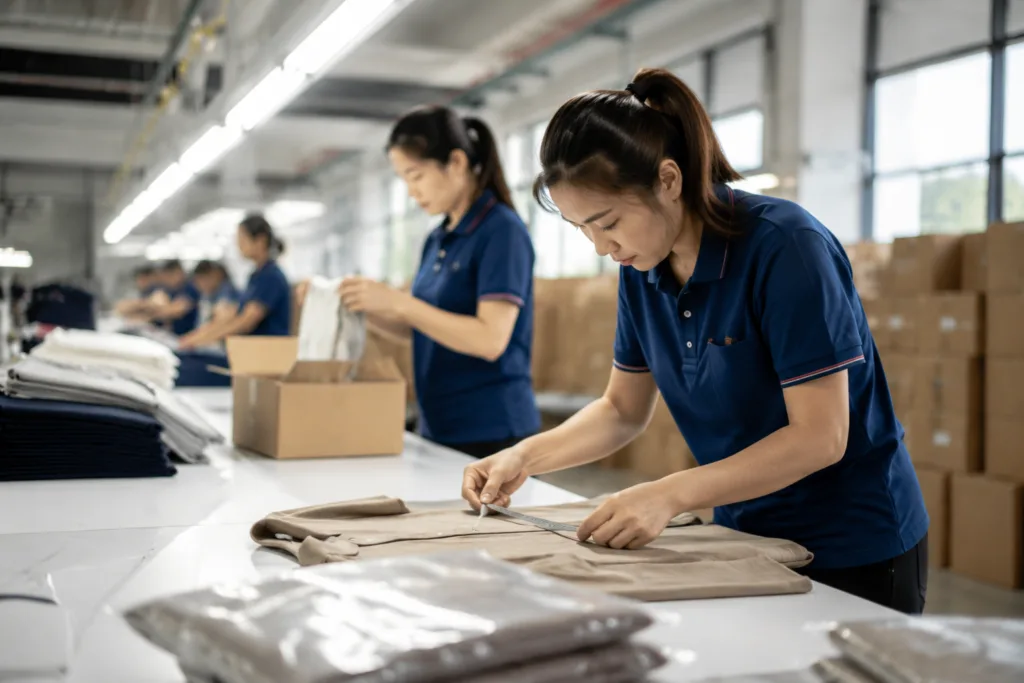
If you need a final priority list, include these items in the first message: product category, intended use, quantity, size range, target fabric, artwork, customization method, target market, deadline, and budget range. Then provide deeper detail such as final grading, packaging artwork, exact carton marks, and full QC protocol once the project moves into sample development or pre-production confirmation.
From our manufacturer perspective, strong preparation does not mean having every answer perfectly locked before first contact. It means knowing which details are essential for feasibility, costing, and risk control. When buyers organize that information early, they usually get faster feedback, fewer revisions, and a clearer path from concept to bulk production.
FAQs
Do I need a full tech pack before contacting a clothing manufacturer?
No. For a simple product, a clear product description, reference images, size chart, quantity, and logo files may be enough to start the discussion. But for custom garments with special construction, multiple trims, or strict fit requirements, a full tech pack will speed up quoting and reduce sampling errors.
What is the most important information in a first inquiry?
The most important items are garment type, quantity, fabric direction, size range, logo method, target market, and deadline. Those details let a manufacturer assess feasibility, likely MOQ, and major cost drivers before moving into deeper technical review.
Should I share my target price with a manufacturer?
Yes, if you can provide a realistic range. A target price helps the factory suggest the right fabric, trim, and decoration balance instead of developing a product that later becomes too expensive for your business model.
How detailed should my size chart be?
Your size chart should include the sample size, core flat measurements, size range, and tolerances if available. If you already have grade rules, include them as well. Even a basic but organized chart is much better than leaving fit decisions to visual references alone.
When should I mention compliance or certification requirements?
Mention them in the first inquiry whenever they affect fabric sourcing, labeling, testing, or destination-market rules. Requirements such as certified materials, special safety testing, or retailer packaging standards can change both lead time and cost if they are introduced too late.
What if I do not know my final quantity yet?
Give the best estimate you have and explain whether it is a trial order, launch order, or forecasted repeat program. Manufacturers can usually advise more accurately when they understand whether the project is a one-time small run or the first phase of a larger rollout.