
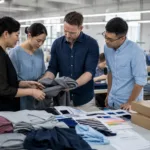







Choosing the right method for shipping clothing from China affects more than freight cost. It changes your landed cost, delivery reliability, customs workload, cash flow timing, and even how safely garments arrive for retail or distribution. For apparel buyers, the best option depends on order size, carton volume, urgency, destination rules, and whether the supplier or buyer is managing the shipment.
If your project needs apparel sourcing support for shipping and order planning, it helps to align freight decisions with production, packaging, labeling, and delivery requirements from the start. We support buyers by checking fabric readiness, sample approval status, carton planning, private label details, and bulk shipment timing so the shipping method fits the real order instead of becoming a last-minute cost problem.
This guide is written for clothing brands, startups, sourcing teams, distributors, clubs, schools, and bulk buyers who need a practical way to compare air freight, sea freight, express shipping, and DDP terms. From our manufacturing perspective, the smartest shipping plan is usually the one that matches garment value, replenishment urgency, and operational risk, not simply the cheapest quoted rate.
What are the main options for shipping clothing from China?
The four options most buyers compare are express shipping, air freight, sea freight, and DDP shipping arrangements. Each one solves a different problem, and confusion usually comes from mixing transport mode with trade term responsibility.
| Option | Best for | Typical size | Main advantage | Main caution |
|---|---|---|---|---|
| Express shipping | Samples, urgent small cartons | Very small orders | Fast door-to-door handling | High cost per kg |
| Air freight | Urgent commercial orders | Small to medium bulk | Faster than sea with better scaling than express | Volumetric weight can raise cost |
| Sea freight | Planned bulk production | Medium to large orders | Lowest cost per unit for volume | Longest transit and more planning needed |
| DDP | Buyers who want simplified delivery | Small to large orders | Seller manages more of the shipping chain | Need clarity on taxes, duties, and service scope |
Key takeaway: air, sea, and express describe transport methods, while DDP describes who carries cost and responsibility through delivery.
How should buyers choose by order size, urgency, and product type?

The fastest way to decide is to start with the order profile. A sample set of polo shirts and a full container of uniforms should not be shipped under the same logic, even if they come from the same factory.
- Use express shipping for sales samples, fit approvals, photo shoot pieces, and urgent replacement cartons.
- Use air freight for medium orders that are time-sensitive but too large to justify express rates.
- Use sea freight for planned bulk production where unit freight cost matters more than a few extra weeks.
- Use DDP when your team wants fewer logistics steps, especially if you do not have a strong import process at destination.
- Check garment type before deciding. Puffer jackets, fleece sets, and bulky hoodies consume much more volume than lightweight tees or golf polos.
Apparel volume matters because freight is often affected by carton dimensions, not just net garment weight. A lightweight but bulky hoodie shipment can become surprisingly expensive by air, while dense cotton T-shirts can be more efficient in the same mode.
What shipping method usually fits each order size?
For most clothing buyers, order size is the clearest starting point. The table below gives a practical rule of thumb, but the final decision should still consider launch date, seasonality, and customs capability.
| Order stage | Common apparel examples | Usually best option | Why |
|---|---|---|---|
| Samples | Proto samples, PPS, sales kits | Express shipping | Fast, simple, and good for a few cartons |
| Low MOQ order | Startup hoodies, team polos, test run tees | Express or air freight | Balances speed with manageable cost |
| Medium commercial order | Several hundred to a few thousand units | Air or sea depending on deadline | Transit choice changes based on launch schedule |
| Large bulk production | Retail programs, uniforms, seasonal replenishment | Sea freight | Best cost efficiency for many cartons or pallets |
One of the most common sourcing mistakes is deciding freight only after garments are finished. Better results come from aligning shipment timing with production lead time planning for different order sizes, because the true schedule includes fabric booking, sampling, cutting, sewing, finishing, packing, and customs release.
When is air freight the best choice for apparel shipments?
Air freight is usually the right choice when the order is commercially important, date-sensitive, and too large for express shipping to remain economical. This often applies to launch inventory, urgent replenishment, trade event uniforms, or late-season sportswear programs that still need to arrive in time to sell.
From our factory perspective, air freight works well when the production delay is short enough that a faster transit method can still recover the sales window. If a shipment misses a promotion, school term, tournament, or holiday selling period, the extra freight cost may be less damaging than holding unsold stock or disappointing retail partners.
- Best for medium-sized apparel shipments with a firm delivery deadline.
- Better than express once carton count increases beyond small sample volume.
- Useful for branded garments with higher value per piece.
- Less suitable for bulky items with large carton dimensions and low margin.
The main caution is volumetric weight. Airlines and forwarders often charge whichever is higher between actual weight and dimensional weight, so low-density garments can become expensive quickly if carton size is not controlled.
When should bulk clothing orders move by sea freight?
Sea freight is usually the best choice for planned bulk orders because it lowers freight cost per unit and handles high carton volume better than air. For large programs, ocean shipping often turns a difficult margin structure into a workable one.
It is especially effective for basics, uniforms, teamwear, private label T-shirts, sweatshirts, and other items where buyers can forecast demand earlier. If production is scheduled correctly, the longer transit time becomes a planning issue rather than a business problem.
- Use sea freight when the order is bulky, heavy, or both.
- Use it when your launch date allows buffer time for customs and inland delivery.
- It is often the strongest choice for replenishment programs with stable demand.
- It becomes even more attractive when packaging is standardized across many cartons.
The risk with sea freight is not just transit time. Port congestion, vessel rollovers, customs exams, and destination drayage delays can all stretch the real delivery schedule. That is why bulk planning should include buffer days instead of only reading the nominal sailing time.
What is express shipping best for in apparel sourcing?
Express shipping is best for samples, small cartons, urgent replacement pieces, and approval stages where speed matters more than freight efficiency. It is the simplest method for many buyers because the courier manages pickup, international movement, and last-mile delivery under one system.
In apparel development, express makes sense for fit samples, color swatches, trims, packaging mockups, and pre-production approvals. It is also helpful when a buyer needs a small top-up shipment to prevent a stockout while the main order moves by sea.
Key takeaway: express shipping is not usually the cheapest option, but it is often the most practical one when the shipment is small and every day matters.
What does DDP really mean for clothing buyers?
DDP means Delivered Duty Paid, which generally indicates that the seller arranges transport and covers more of the cost and responsibility through delivery to the named destination. Many apparel buyers prefer it because it simplifies coordination, especially when they do not have their own broker or freight process.
However, DDP is often misunderstood. It does not automatically mean every service level is identical, and it does not remove the need to confirm what is included. Buyers should still check whether duties, taxes, customs clearance, local delivery, appointment handling, and any destination surcharges are clearly defined.
- DDP suits buyers who want a more turnkey import process.
- It is useful for startups or small teams without in-house logistics resources.
- It can help budgeting when the landed quote is clear and complete.
- It still requires accurate product information, HS code alignment, and compliant paperwork.
If your team is comparing service scope, timelines, and handoff points, it helps to review order process details for FOB, EXW, and DDP buyers before confirming terms.
How do FOB, EXW, and CIF differ in simple terms?
These terms matter because they define where cost and responsibility shift between seller and buyer. In apparel sourcing, misunderstanding them can create surprise fees or missed handoffs even when the factory finishes production correctly.
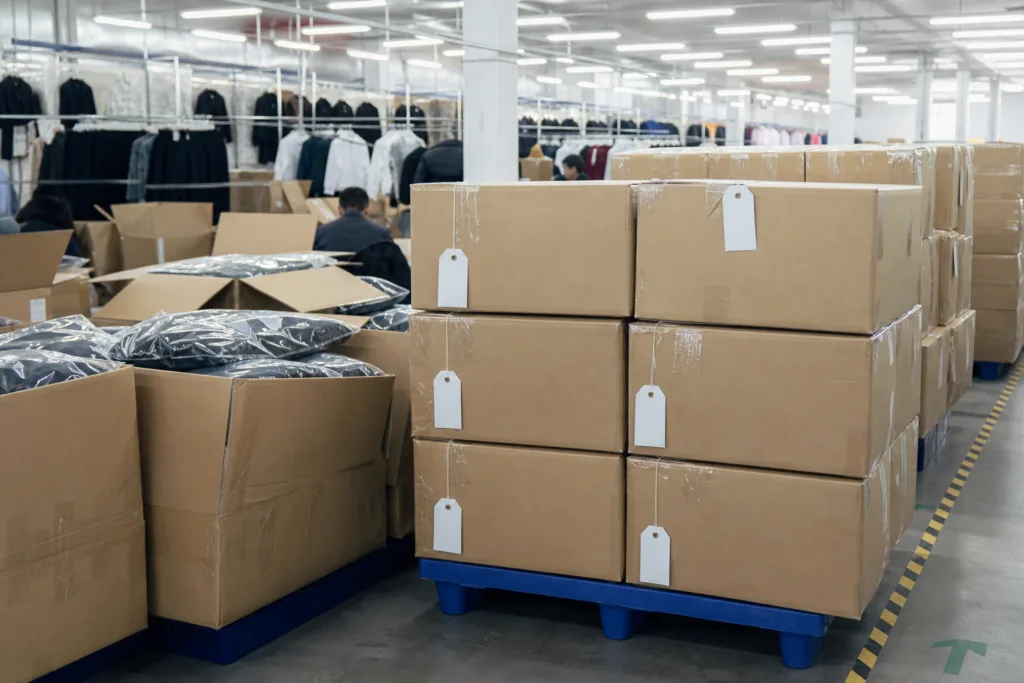
| Term | Seller usually handles | Buyer usually handles | Good for |
|---|---|---|---|
| EXW | Goods available at factory | Pickup onward, export, freight, import | Experienced importers with their own forwarder |
| FOB | Factory to port and export loading | Main freight, import, destination delivery | Buyers who want control over international freight |
| CIF | Cost, insurance, freight to destination port | Import clearance and onward delivery | Buyers who want port delivery but manage destination steps |
For many apparel buyers, FOB is a balanced option because the factory handles export-side work while the buyer keeps control of the freight partner and destination cost. EXW can look cheaper at first but often shifts more coordination onto the buyer than expected.
What hidden costs raise the real price of shipping clothing from China?
The quoted freight line is only part of the landed cost. Hidden or underestimated charges often come from volume, destination handling, and incomplete assumptions about customs and local delivery.
- Volumetric weight on air and express shipments.
- Oversized cartons that reduce packing efficiency.
- Port handling, documentation, terminal, and destination fees.
- Customs clearance charges and possible examination costs.
- Delivery appointments, residential surcharges, or remote-area fees.
- Repacking or relabeling if carton marks or product labeling are incomplete.
Garment packaging decisions affect freight more than many buyers realize. Fold method, polybag size, carton dimensions, and pack ratio can change cubic volume enough to alter the shipping method choice.
How should packaging and cartons be planned for apparel shipments?
Packaging should protect the garments while keeping volume efficient and destination handling practical. The best carton is not simply the largest one. It is the carton that supports garment condition, warehouse handling, and freight efficiency without creating dimensional weight waste.
For branded programs, packaging also needs to align with final retail or distributor use. In private label clothing production for brand-ready shipments, we usually confirm size stickers, hangtags, woven labels, carton marks, barcode needs, and pack ratios before bulk packing starts so there is less risk of relabeling after shipment.
- Keep carton sizes consistent when possible to simplify loading and receiving.
- Avoid over-compressing garments that wrinkle easily or have structured trims.
- Confirm inner pack ratios by size and color before production finishes.
- Match carton marks with PO, style, color, and destination requirements.
- Protect embellishments such as embroidery, heat transfers, and buttons during transit.
What documents are usually needed for clothing shipping?
Most clothing shipments require a commercial invoice, packing list, and transport documents, with additional import or customs paperwork depending on destination and trade term. Some buyers may also need certificate-related documents, testing support, or broker instructions based on local rules and product category.
Accuracy matters more than complexity. Incorrect style descriptions, quantity mismatches, wrong consignee details, or inconsistent carton counts can delay customs even when the garments themselves are ready to move.
What common mistakes cause delays or extra cost?
The biggest mistakes usually come from late decisions, unclear terms, and weak carton planning. They are avoidable, but only if logistics is treated as part of sourcing strategy rather than a final shipping task.
- Choosing air or express before checking volumetric weight.
- Booking sea freight without enough buffer before the selling season.
- Assuming DDP quotes all include the same duties and delivery scope.
- Using EXW without a reliable forwarder or export coordination plan.
- Approving bulk packing before label, barcode, or carton mark details are final.
- Separating production and shipping decisions when they should be planned together.
Key takeaway: the cheapest quoted method can become the most expensive option if it creates customs issues, launch delays, or repacking work at destination.
When should your clothing manufacturer help coordinate shipping?
You should ask the manufacturer to coordinate earlier when the project has multiple styles, custom trims, split destinations, launch deadlines, or private label packaging requirements. Freight planning is easier when the factory can estimate carton volume, completion timing, and packing sequence while production is still in progress.
At Ninghow, we often help buyers align sampling, packaging approval, booking windows, and bulk readiness so the shipment plan fits the actual order status. This is especially useful for OEM and ODM production support for overseas apparel orders, where fabric choice, logo application, and accessory sourcing can affect both lead time and shipping volume.
Manufacturer coordination becomes even more valuable when buyers are still comparing low MOQ testing against future scale-up. A factory-side view helps estimate how fabric availability, decoration method, carton density, and QC timing will influence freight decisions.
How can buyers reduce shipping cost without creating import problems?
The safest cost savings come from better planning, not from cutting documentation or choosing unsuitable trade terms. In apparel, small operational improvements often produce better savings than chasing the lowest headline freight rate.
- Approve samples and labels early so bulk ships on the first planned booking.
- Optimize carton dimensions before mass packing starts.
- Consolidate styles when the delivery window allows it.
- Use sea freight for stable bulk orders and reserve air for exceptions.
- Make sure invoice, packing list, and shipment terms match exactly.
- Ask for landed-cost comparisons instead of rate-only comparisons.
For some buyers, a split shipment is the best answer: send a small urgent portion by air or express and move the main volume by sea. This protects the launch date without applying premium freight to the entire order.
Final decision guide for shipping clothing from China
If you need the simplest practical answer, use express for samples and very small urgent cartons, air for commercially important medium orders, sea for planned bulk production, and DDP when you want a more managed delivery structure. Then refine the choice by garment bulkiness, destination process, launch deadline, and who will handle customs.
From our manufacturing perspective, the best logistics decision is made before the goods are packed, not after. When buyers align production timing, packaging details, trade terms, and booking strategy early, shipping clothing from China becomes more predictable, more cost-effective, and much easier to manage at scale.
FAQs
What is the cheapest way to ship clothing from China?
Sea freight is usually the cheapest way to ship clothing from China for bulk orders. It offers the lowest cost per unit when you have enough volume and enough time to absorb longer transit and customs handling.
When should I use air freight instead of express shipping?
You should use air freight instead of express shipping when the order is too large for courier rates to stay efficient but still needs fast delivery. Air freight generally works better for medium commercial shipments where speed matters and carton volume is beyond sample size.
Is DDP a good option for small clothing brands?
Yes, DDP can be a good option for small clothing brands that want a simpler import process. It is especially useful when the buyer does not have a strong freight or customs setup, but the quote still needs to clearly define duties, taxes, and delivery scope.
What trade term is most common for apparel bulk orders?
FOB is one of the most common trade terms for apparel bulk orders because it gives buyers control over the main freight while the factory handles export-side work. It is often a practical middle ground between EXW, which gives the buyer more responsibility, and DDP, which shifts more logistics management to the seller.
How much does carton size affect clothing shipping cost?
Carton size can affect clothing shipping cost significantly, especially for air and express shipments that use volumetric weight. Even lightweight garments can become expensive to ship if cartons are oversized or packed inefficiently.
Should my manufacturer help arrange shipping for private label garments?
Yes, your manufacturer should often help arrange shipping for private label garments when the order includes custom labels, branded packaging, multiple styles, or strict launch timing. Factory coordination can reduce errors in carton planning, packing details, and shipment readiness before goods leave China.