
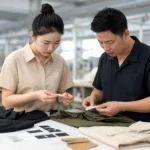
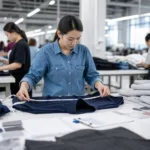
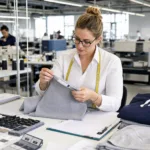




A country of origin label clothing requirement is not just a small trim detail. For apparel buyers, importers, and product developers, it affects customs clearance, retail readiness, private label execution, and the accuracy of what reaches the end customer. If the origin marking is unclear, placed incorrectly, or missing from the approved labeling plan, a garment order can face delays, relabeling costs, or compliance problems after production.
If your project includes private label garments, custom neck labels, care labels, or destination-specific packaging, it helps to review private label apparel development options before bulk approval. In our manufacturing work, this usually means confirming label wording, placement, permanence, fabric compatibility, and supporting trims early, so sampling and production move forward with fewer avoidable corrections.
What does a country of origin label mean in clothing imports?
The short answer is simple: it tells the importing market where the garment legally originates. In practice, that usually appears as wording such as “Made in China,” “Made in Vietnam,” or another approved country statement based on where the product meets origin rules for that market.
Buyers should not treat this as a branding phrase. It is a compliance marking tied to how the garment is manufactured, assembled, or substantially transformed under destination-market rules. The exact legal interpretation can vary by country, so the same production flow may need different review depending on where the goods will be imported.
From our perspective as a manufacturer, origin marking should be confirmed as early as fabric booking and trim planning. If the buyer changes the production country, finishing route, or label setup late in development, the label package often has to be revised across neck labels, care labels, polybags, cartons, and sometimes hangtags.
Why do origin labels matter for customs clearance, retail compliance, and buyer trust?
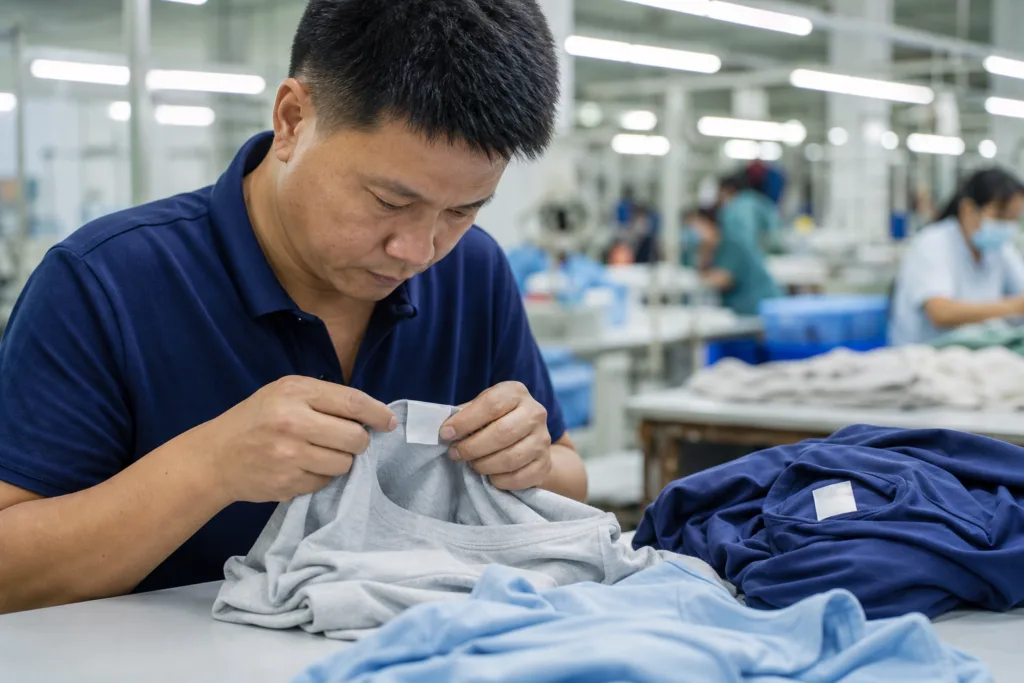
They matter because origin labels serve three functions at once. First, they help customs authorities identify imported goods correctly. Second, they support in-market labeling compliance. Third, they give retailers and end users a clear country statement that aligns with the product they received.
For importers, the cost of getting this wrong is usually higher than the cost of checking it early. Missing or inconsistent origin marking can trigger inspection issues, rework, relabeling after arrival, or a hold on sell-through until corrections are made.
Buyer trust also matters. If a polo shirt says one country on the sewn-in label, another on the hangtag, and a third on the carton paperwork, the issue is no longer only administrative. It becomes a product integrity problem.
Key takeaway: Origin labeling should be handled as a production-control item, not as a last-minute packaging detail.
How to interpret common origin markings without confusion
Most buyers will see standard phrases such as “Made in China,” “Made in Bangladesh,” or “Made in Pakistan.” These are usually straightforward, but they still need to match the actual origin determination used for import documentation and labeling approval.
The confusion often starts when buyers mix legal origin with commercial storytelling. A brand may be registered in Europe, designed in the US, and produced in China. In that case, the legal country of origin label clothing statement is still about production origin, not headquarters, design office location, or where the collection was merchandised.
In technical programs, we recommend checking the exact wording before sample label creation. Even small variations in phrasing, language, or abbreviated country names may not be acceptable in every market or retail channel.
| Label Statement | What It Usually Means | Buyer Checkpoint |
|---|---|---|
| Made in China | Garment origin is China for the destination market | Confirm paperwork, sewn label, and carton marks match |
| Made in Vietnam | Garment origin is Vietnam | Verify the actual production route supports the claim |
| Designed in Italy, Made in China | Design location and manufacturing origin are different | Do not confuse design country with legal origin |
| Imported | Only indicates the item was brought into market | Usually not a substitute for origin marking |
Country of origin vs. brand country vs. finishing country
Buyers should separate these terms clearly. The country of origin is the legal origin statement used for import and labeling. The brand country is where the brand is based or owned. The finishing country may be where minor post-production work happens, such as steaming, repacking, relabeling, or ticketing.
These are not automatically the same thing. If a hoodie is cut and sewn in one country, then packed in another, the packing country does not automatically become the origin country. The same logic applies to hangtags printed elsewhere or warehouse processing after export.
This is one reason we advise buyers to document the final manufacturing flow before approving trims. If origin is not fully confirmed, any label artwork created too early may need revision later.
Where should country of origin labels be placed on garments?
The correct answer depends on the destination market and garment type, but the most common placement is on a permanent sewn-in label that the buyer or wearer can reasonably find. In many apparel categories, that means the neck area, care label, side seam, or waistband zone.
Placement is not only a compliance question. It also affects comfort, garment construction, and private label presentation. For example, performance T-shirts may use soft satin care labels in the side seam, while woven shirts may combine origin and care information in a neck-area label package.
Buyers reviewing imported clothing labeling rules buyers should confirm should pay close attention to how origin, fiber content, care instructions, and RN or brand information may need to work together on the same label set.
Typical placement areas by garment type
- Neck label: Common for T-shirts, polos, sweatshirts, and outerwear.
- Care label: Often used to carry origin plus care and composition details.
- Side seam label: Useful when neck comfort or clean branding is a priority.
- Waist area: Common for shorts, pants, leggings, and underwear programs.
- Hangtag: May support product information, but often should not be the only origin marking if permanence is required.
Key takeaway: A hangtag can help communicate origin, but buyers should not assume it replaces a permanent sewn label where the market requires one.
What destination-country rules should buyers check before production?
Buyers should check destination-market rules before sampling, not after bulk goods are packed. The key point is that labeling requirements are not identical across all import markets. The wording, permanence, language expectations, and placement standards can differ between the US, EU, UK, Middle East, and other regions.
At minimum, a sourcing team should confirm whether the market requires permanent origin marking, whether it must appear in English or another language, and whether it needs to sit alongside fiber and care information. This becomes even more important when a single production run will be split across more than one destination.
For mixed-market programs, we often suggest separate label versions by destination rather than trying to force one label package to cover every market. That approach can reduce confusion in packing and lower the risk of non-compliant stock reaching the wrong channel.
When buyers need a broader pre-production review, apparel compliance checks for destination-market requirements are useful for aligning labels, packing, and production documents before bulk cutting starts.
Common rules across major markets and why they are not the same everywhere
The common principle is consistency: the garment should carry an origin statement that is clear, truthful, and placed in a way the market accepts. But beyond that, details vary. Some markets focus strongly on permanence and conspicuous placement, while others involve broader consumer labeling frameworks tied to composition and care.
That is why buyers should avoid copying a competitor label and assuming it works everywhere. A garment sold successfully in one country may still need a different sewn label format for another market, even if the product itself is the same.
| Issue | What Often Changes by Market | Why Buyers Should Care |
|---|---|---|
| Label permanence | Permanent sewn label vs. supplemental tag use | Affects construction and trim planning |
| Language | English only or multilingual support | Changes artwork and label size |
| Placement | Neck, side seam, waistband, or visible position expectations | Impacts pattern and sewing operations |
| Combined information | Origin with care, fiber content, importer info, or other details | Affects label layout and approval workflow |
How wording, language, and permanence affect compliance
Small wording choices can create large problems. Buyers should use clear, approved country statements and avoid casual phrasing that may not meet the market standard. If the market expects a direct origin declaration, creative wording is usually not helpful.
Language is another practical issue. If the goods are shipping to multiple regions, each label version may need separate translation review. This affects not only the label itself but also care content, packaging inserts, and carton details.
Permanence matters because some markets expect the origin statement to remain on the garment until purchase, and in some cases beyond. Adhesive stickers, removable tags, or packaging-only statements may not be enough. From a production standpoint, permanence also affects whether the label is woven, printed satin, heat transfer, or another method.
Which information often appears alongside origin marking?
Origin is often only one part of the full apparel labeling package. Depending on the market and product category, the same label set may also include fiber content, care instructions, size, brand name, style code, importer identification, or tracking information.
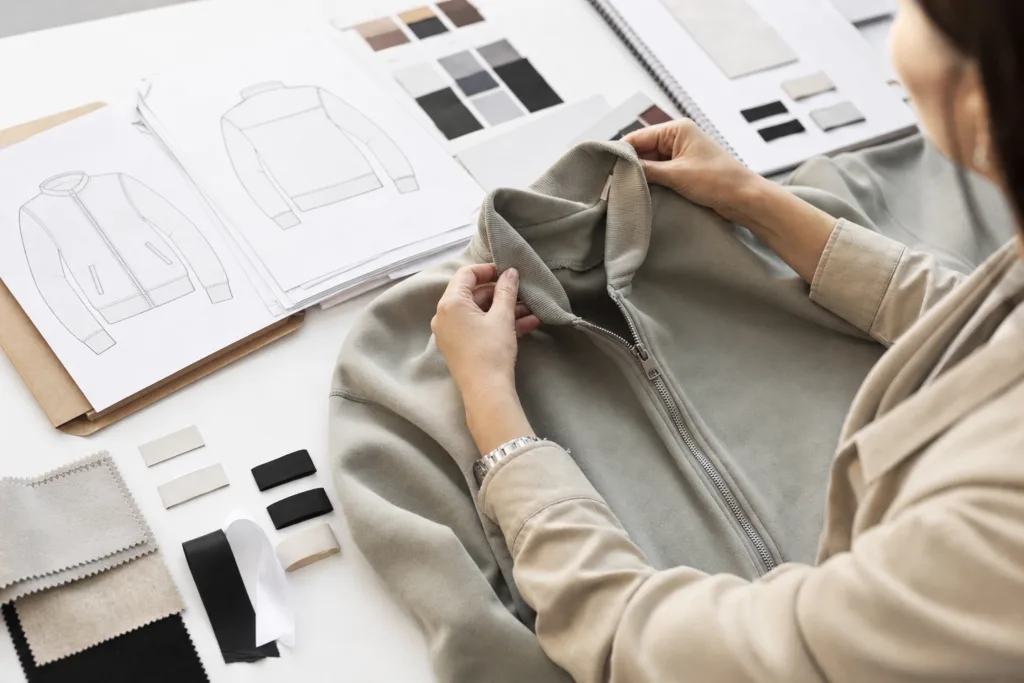
This is where layout discipline matters. If too much information is forced into a small label, readability suffers and approval cycles get longer. In our sample reviews, label overcrowding is a frequent reason for revisions because buyers want branding, comfort, compliance, and multilingual content all in one space.
- Country of origin statement
- Fiber composition
- Care instructions
- Size marking
- Brand or private label name
- PO, style, or traceability code when needed
Good label planning balances compliance with wear comfort. For example, a soft side seam care label may carry composition, care, and origin, while the neck area stays cleaner with a size or brand-only solution.
How origin labeling interacts with OEM, ODM, and private label production
Origin labeling should be built into the development path, whether the order is OEM, ODM, or a deeper private label program. The key difference is how much of the product specification the buyer controls from the beginning.
In OEM projects, the buyer usually provides more detailed artwork, tech pack information, and label instructions. In ODM projects, the base garment may already exist, so origin labeling needs to be checked against the modified product and final destination requirements. For private label work, brand presentation and compliance often need to be balanced very carefully.
Buyers comparing OEM and ODM production paths for overseas apparel programs should include labeling ownership in that discussion. Who provides final artwork, who verifies wording, and who signs off on placement should all be clear before sample approval.
From our manufacturing perspective, this is where Ninghow often sees preventable errors. A buyer may approve fit, fabric, and print placement, but leave label details “for later.” That usually creates avoidable back-and-forth just before bulk production, when changes are slower and more expensive.
How to specify country of origin labels correctly in a tech pack or purchase order
The most effective approach is to specify origin labels as part of the core trim package. Do not treat them as an informal note in email. Put the wording, placement, dimensions, material type, fold style, attachment method, and destination market on record in the tech pack or PO.
When buyers provide a complete label page, our teams can move faster in sampling and trim sourcing. When instructions are vague, factories often need to stop and ask whether the label should be center back, side seam, folded loop, flat satin, heat transfer, or combined with care content.
What to include in the label spec
- Exact origin wording to be used
- Destination market or markets
- Label type such as woven, printed satin, cotton, or transfer
- Placement point on the garment
- Finished label size and fold style
- Artwork file reference and revision number
- Whether origin is combined with care or fiber content
- Approval process for sample and bulk labels
Key takeaway: The more precise the tech pack label page is, the lower the risk of inconsistent labels between sample stage and bulk production.
Common mistakes in country of origin label clothing programs
The most common mistake is assuming origin labeling can be fixed at the end. By then, labels may already be printed, trims purchased, and garment construction locked. Corrections become slower because they touch multiple parts of the order.
Another frequent issue is inconsistency. A buyer may approve one country statement for the sewn label, another for the hangtag, and forget to update carton marks or shipping paperwork. This can create confusion at inspection or import.
We also see buyers confuse factory location with legal origin determination. A sourcing office, warehouse, or finishing center in one country does not automatically make that country the origin for label purposes.
- Leaving origin wording out of the approved tech pack
- Using removable tags when permanent labeling is needed
- Combining multiple markets without separate label review
- Forgetting to align labels with packing lists and invoices
- Approving samples without checking the actual sewn label location
What should buyers confirm before sampling and bulk production?
Before sampling, buyers should confirm the destination market, expected origin statement, and preferred label construction. Before bulk production, they should confirm that the approved sample label exactly matches the bulk trim order.
This is also the stage where logistics planning matters. Label corrections made after goods are packed can affect dispatch schedules, repacking work, and booking windows. Teams reviewing shipping considerations that affect imported apparel orders should remember that a small labeling issue can become a shipment timing issue very quickly.
| Stage | What to Confirm | Why It Matters |
|---|---|---|
| Before sample | Destination market, wording, label type, placement | Prevents avoidable resampling |
| Sample approval | Actual sewn position and readability | Confirms the spec works on the garment |
| Before bulk | Bulk trim matches approved sample | Protects consistency |
| Before shipment | Labels, packing, invoices, and cartons align | Reduces customs and receiving issues |
A practical compliance checklist for importing clothing with the correct origin label
For most buyers, a simple checklist is more useful than a long regulation summary. The goal is to make sure the product, documents, and labeling package all tell the same story.
- Confirm the destination market before making labels
- Verify the legal origin statement with your compliance or customs support team
- Add origin wording and placement to the tech pack
- Approve a physical sample showing the sewn label position
- Check whether permanence and language rules apply
- Align sewn labels, hangtags, polybags, cartons, and invoices
- Review split shipments separately if destinations differ
- Keep final approved label artwork under version control
This checklist becomes even more important for teamwear, schoolwear, golf apparel, and retailer programs, where repeat orders rely on label consistency from one season to the next.
When should buyers get help from customs brokers or compliance teams?
Buyers should get help early when the production route is complex or the destination market is unfamiliar. If the garment involves multiple countries for cutting, sewing, finishing, packing, or relabeling, origin review should not be left to assumption.
The same applies when the order is large, retailer-facing, or split between regions with different rules. In those cases, local compliance advice can prevent expensive relabeling after import. A manufacturer can help with execution, but the buyer should still confirm the final destination-market requirement with the appropriate professional support.
What buyers should verify before approving production
Before production approval, buyers should check four things together: the legal wording, the label placement, the trim construction, and the document consistency. If one of these is still unclear, approval is premature.
In practical terms, we suggest reviewing the physical sample, the label artwork file, the PO notes, and the packing plan in one approval step. This reduces the chance that the sewing team, trim supplier, and shipping team are working from different instructions.
If your program includes custom garments, multiple destinations, or private label development, a short pre-bulk label review is often more valuable than a long correction cycle later. It is a simple control point, but it protects cost, timing, and product credibility.
Conclusion
A country of origin label clothing requirement should be handled as part of product development, not as a final accessory decision. When the wording, placement, permanence, and supporting documents are aligned early, buyers are in a much stronger position to move from sample approval to bulk production without unnecessary risk.
For apparel importers, brands, and sourcing teams, the practical goal is straightforward: know what the origin statement should say, know where it should appear, and verify that the garment, trims, and shipment documents all match. That discipline helps protect compliance, delivery timelines, and confidence in the finished product.
FAQs
Does every imported garment need a country of origin label?
Many imported garments do need a country of origin label, but the exact requirement depends on the destination market and product category. Buyers should confirm the applicable rule before sampling because some markets expect a permanent sewn label, while others may have different placement or consumer-labeling conditions.
Can a hangtag be used instead of a sewn-in origin label?
A hangtag alone is often not enough when the market requires a permanent origin marking on the garment itself. Buyers should treat hangtags as supplemental unless their compliance review clearly confirms that a removable tag is acceptable for the destination and product type.
What is the difference between brand country and country of origin?
The brand country is where the brand is based, while the country of origin is the legal production origin used for import and labeling purposes. A garment can be designed, marketed, or owned in one country and still legally require an origin statement for another country where it was made.
When should origin labels be approved during apparel development?
Origin labels should be approved before bulk production and ideally during the sampling stage. This gives buyers time to verify wording, placement, comfort, and label construction on the actual garment instead of trying to correct trim details after production planning is already fixed.
What documents should match the origin label on clothing?
The sewn label should generally align with related order and shipping information such as packing details, invoices, carton markings, and approved label artwork. Consistency across these items helps reduce confusion during inspection, import handling, and receiving at the buyer’s warehouse or retail channel.
How can buyers reduce mistakes in country of origin label clothing orders?
Buyers can reduce mistakes by putting exact origin wording, placement, label type, and destination market requirements into the tech pack and purchase order from the start. A physical sample review, version-controlled artwork approval, and a final pre-bulk check are usually the most effective safeguards.