




Choosing the right custom clothing manufacturer is one of the most important decisions a brand can make. The factory you select affects far more than production cost. It shapes fabric quality, fit consistency, sampling speed, customization options, delivery reliability, and how smoothly your product moves from idea to repeatable bulk production.
If you are comparing factories in China or planning your first overseas order, this guide to import support for first-time clothing buyers is relevant because many sourcing problems start before production even begins. Buyers often need help with supplier communication, sample planning, label and packaging details, MOQ expectations, and shipment coordination. At Ninghow, we support brands through these early decisions so product development, private label setup, and bulk production can move forward with fewer surprises.
The goal is not simply to find a factory that can sew garments. The real goal is to find a manufacturing partner that can understand your product, control quality, communicate clearly, and produce your designs consistently at the level your market expects.
What does a custom clothing manufacturer actually do?
A custom clothing manufacturer develops and produces garments based on a buyer’s specifications instead of selling only ready-made stock. That usually includes fabric sourcing, pattern development, sample making, logo application, label and trim setup, grading, production planning, sewing, finishing, inspection, and packaging.
This model is useful for startups, established clothing brands, sportswear labels, golf apparel companies, uniform buyers, schools, clubs, and retailers that need product differentiation. It is also suitable for buyers who want more control over fit, fabric, branding, and packaging than they can get from blank or wholesale stock programs.
From our manufacturing perspective, buyers often underestimate how many decisions happen before cutting fabric. A capable manufacturer helps translate a concept into practical production details so the final garment is not only attractive in a sample, but repeatable in bulk.
Why brands choose custom apparel manufacturing instead of ready-made sourcing
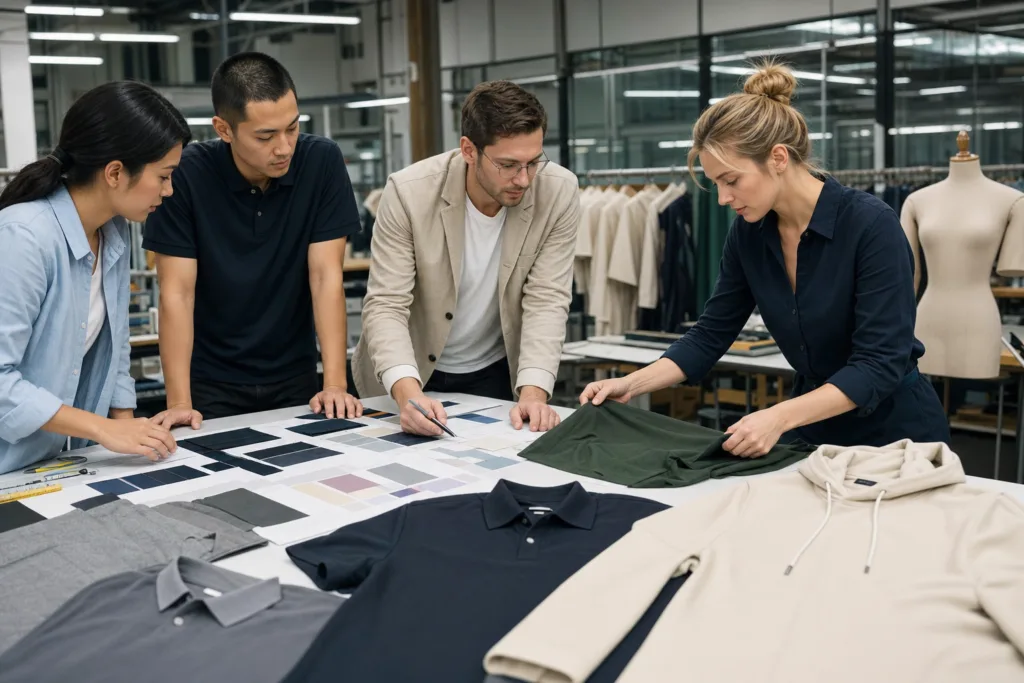
The short answer is control. Brands choose custom manufacturing when they want products that match a target customer, a pricing strategy, and a brand identity rather than whatever is already available in the market.
Ready-made sourcing can work for simple reselling projects, but it limits originality. A custom development route allows you to control fabric weight, shape, silhouette, print position, embroidery size, label setup, and the overall hand feel of the finished garment.
- Brand differentiation: unique fit, color, trims, and logo treatment
- Better margin planning: materials and construction can be matched to target retail pricing
- Private label consistency: woven labels, hangtags, packaging, and size presentation stay aligned
- Market fit: the garment can be built for a sport, climate, age group, or use case
- Scalability: successful samples can move into repeat bulk programs with better consistency
Key takeaway: Custom manufacturing is usually the right path when product identity, fit, and long-term brand growth matter more than the fastest possible stock purchase.
Which manufacturing model fits your brand best?
OEM works when you already know what you want
OEM means the product is produced according to your design requirements. This is often the best fit for brands that already have tech packs, size specs, logo files, fabric direction, and construction expectations.
OEM gives more control, but it also requires clearer buyer input. If your information is incomplete, sampling may take longer because the factory has to fill in gaps that should have been defined earlier.
ODM works when you want a faster development base
ODM usually means the manufacturer begins from an existing shape, pattern, or product concept and adjusts branding, colors, trims, or selected details. This can reduce development time and cost when you do not need a fully original silhouette.
It is common for startup brands to use ODM as a stepping stone. The key is to confirm exactly what can and cannot be changed before sampling starts.
Private label is mainly about brand presentation and consistency
Private label can involve OEM or ODM, but the focus is your branding. That includes neck labels, care labels, hangtags, packaging, carton marks, and logo applications that make the product look like your own collection.
When buyers invest in private label, they should also think about design ownership, logo authorization, and protecting fashion designs and trademarks as part of the overall sourcing process.
Fully bespoke development is best for differentiated products
Fully bespoke development starts from a new pattern or a heavily customized fit block. This is common in performance wear, golf apparel, teamwear, and premium branded basics where fit and fabric identity are central to the product.
It offers the highest level of control, but normally requires more sample rounds, stronger technical communication, and more careful MOQ planning.
How to define your product goals before contacting a custom clothing manufacturer
The best way to speed up sourcing is to be clear before you request a quote. Many delays happen because buyers ask for pricing first and define the product second. A manufacturer can quote more accurately when the garment, materials, branding, and quantity expectations are already framed.
Before contacting suppliers, prepare answers to these questions:
- What garment are you developing: polo, T-shirt, hoodie, jacket, shorts, pants, or uniform?
- Who is the target customer and how will the product be used?
- What fit direction do you want: slim, regular, oversized, athletic, relaxed?
- What fabric composition and GSM range do you expect?
- Which logo method is required: embroidery, print, transfer, or sublimation?
- Do you need woven labels, hangtags, custom bags, or retail packaging?
- What is your sample deadline and launch window?
- What is your target order quantity by color and size?
If you need more structure at this stage, it helps to review how to evaluate and find a suitable clothing manufacturer before sending requests. Better preparation usually leads to clearer quotes, more realistic lead times, and fewer changes later.
How to choose the right fabric for your product
Fabric is one of the biggest factors in cost, appearance, comfort, and repeat order success. Buyers should not choose fabric by composition alone. GSM, yarn type, knit or weave structure, finishing, stretch behavior, and wash response all affect the final garment.
For example, two 100% cotton T-shirts can feel very different if one uses carded yarn in a basic jersey and the other uses combed yarn with a softer finish. Likewise, two polyester performance polos can vary widely in breathability, drape, and logo suitability depending on knit structure and finishing treatment.
| Factor | What It Tells You | Why It Matters in Production |
|---|---|---|
| Composition | Cotton, polyester, spandex, blends | Affects comfort, stretch, moisture management, and cost |
| GSM | Fabric weight per square meter | Influences opacity, drape, durability, and price |
| Hand feel | Softness, smoothness, structure | Changes perceived quality and target market fit |
| Recovery | How fabric returns after stretch | Important for activewear, cuffs, waistbands, and shape retention |
| Colorfastness | Resistance to fading or transfer | Matters for washing, sweat exposure, and dark color programs |
| Shrinkage | Dimensional change after washing | Directly affects fit stability and bulk consistency |
As a general guide, lighter GSM fabrics are often better for hot-weather basics and layering pieces, while higher GSM fabrics support structure, opacity, and a more premium hand feel. But heavier is not always better. The right weight depends on use case, price point, climate, and desired silhouette.
When buyers ask us to recommend materials, we usually start with use scenario first. A gym top, golf polo, staff uniform, fashion hoodie, and merch T-shirt may all look simple on paper, but they need very different fabric behavior in actual wear.
Useful fabric starting points by garment type
| Garment Type | Common Fabric Direction | Typical Buyer Focus |
|---|---|---|
| T-shirt | Cotton jersey, cotton-spandex, cotton-poly blend | Softness, print surface, shrinkage control |
| Polo shirt | Pique knit, jersey knit, polyester performance knit | Breathability, collar stability, logo finish |
| Hoodie | French terry, fleece, cotton-poly blend | Warmth, weight, anti-pilling performance |
| Sportswear | Polyester-spandex, interlock, mesh panels | Stretch, recovery, sweat management |
| Shorts | Woven stretch fabric, jersey, brushed poly blend | Mobility, durability, waistband performance |
Key takeaway: The right fabric is not just about what looks good on a swatch. It must also support your fit, decoration method, wash performance, and target selling price.
Why fit, sizing, and pattern development matter so much
Fit problems are one of the most expensive issues in custom apparel. A garment can use good fabric and clean logo work, but still fail if shoulder width, body length, sleeve opening, rise, or grading does not match the target customer.
Strong pattern development reduces this risk. A manufacturer should understand how to build or refine a base pattern, apply size grading logically, and keep measurement tolerance under control during bulk production.
- Ask whether the factory works from your tech pack, a reference sample, or a developed block
- Confirm which point-of-measurement chart will govern sample approval
- Check tolerance expectations before bulk production begins
- Review fit on a body, not only flat measurements
- Discuss shrinkage allowance when sizing washed garments
In our experience, many sourcing issues come from buyers approving a style based only on appearance. A sample that looks good on a table may still have grading or wearability problems once production scales across full size ranges.
Which customization options should you compare?
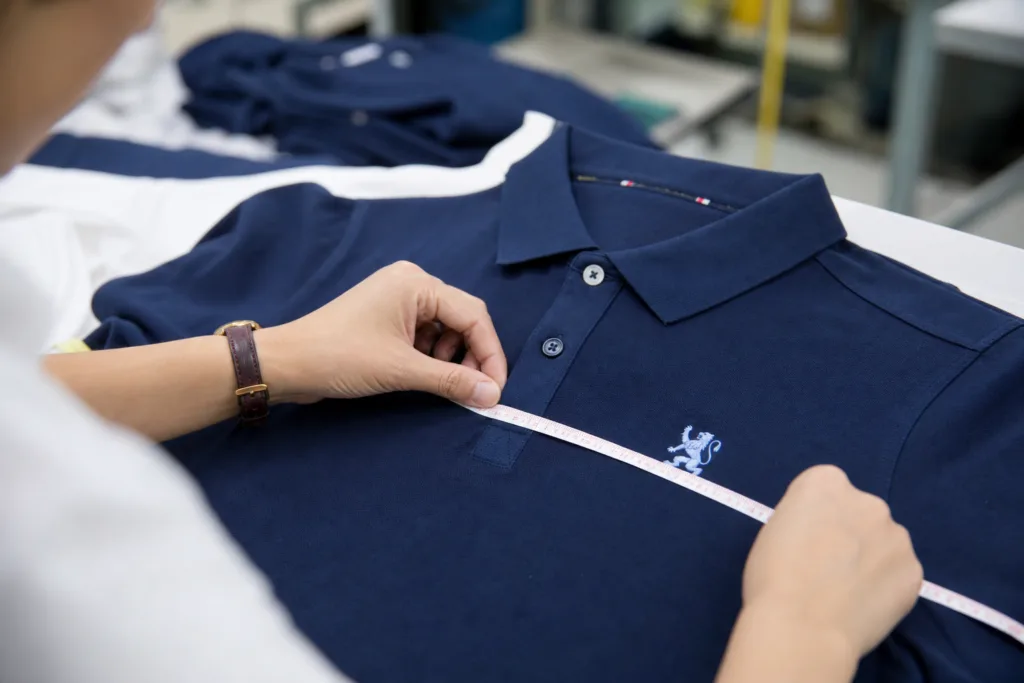
Customization affects both visual identity and manufacturing complexity. The right method depends on fabric type, logo detail, quantity, use scenario, and target price.
| Method | Best Use | Advantages | Points to Check |
|---|---|---|---|
| Embroidery | Polos, caps, outerwear, uniforms | Premium look, durable logo finish | Stitch density, backing, puckering risk |
| Screen printing | T-shirts, hoodies, event apparel | Cost-effective for volume, strong color coverage | Color count, print hand feel, artwork separation |
| Heat transfer | Sportswear names, numbers, detail logos | Sharp detail, flexible application | Adhesion, heat sensitivity, wash durability |
| Sublimation | Polyester teamwear, all-over graphics | No heavy print feel, vivid coverage | Works best on suitable polyester fabrics |
| Woven labels | Neck, side seam, hem branding | Private label identity | Fold type, material, placement |
| Packaging | Retail and e-commerce programs | Improves presentation and packing consistency | Bag specs, barcode needs, carton marks |
Customization choices should be decided early because they affect sampling timeline, trim sourcing, and MOQ. For example, a special zipper pull, custom drawcord tip, molded badge, or printed polybag may seem minor, but each extra custom component adds development steps.
When projects involve mixed branding details, the most efficient path is to align logo files, Pantone references, label content, and packaging requirements before sample cutting starts. This helps avoid changes after trims are already produced.
How to evaluate samples before approving bulk production
Sample approval is where product ideas become manufacturing reality. A first sample is not only for checking appearance. It is the stage where buyers should assess fabric suitability, pattern accuracy, sewing quality, logo execution, labeling, and whether the garment can be repeated consistently in bulk.
We recommend that buyers understand the apparel sampling process before bulk production so they know what feedback to give at each stage. Clear comments on fit, fabric, logo placement, and construction help reduce rework and shorten development time.
- Measure the sample against the size spec
- Check the garment on body if fit matters
- Review collar, cuff, waistband, and seam behavior
- Inspect embroidery, print registration, and color match
- Confirm label content, care information, and packaging details
- Wash test when fabric performance is important
It is better to delay approval than to rush a weak sample into bulk. Small development compromises often become large production problems once hundreds or thousands of pieces are cut.
How MOQ and lead time shape your budget and launch plan
MOQ is not just a factory policy. It usually reflects fabric ordering rules, trim minimums, color complexity, machine setup, and the production efficiency required to make a style commercially viable.
Low MOQ can be realistic for some products, especially when stock fabrics or standard trims are available. It becomes harder when buyers want custom-dyed fabric, many colors, many sizes, special packaging, or multiple decoration methods on a single style.
| Factor | How It Affects MOQ | How It Affects Lead Time |
|---|---|---|
| Custom fabric dyeing | Usually increases minimum usage needs | Adds mill processing time |
| Multiple colorways | Splits quantity across variations | Can extend material and production planning |
| Custom trims | May require separate supplier minimums | Adds development and approval steps |
| Complex logos | May need extra setup or testing | Can slow sample approval and pre-production |
| Peak season booking | Does not always change MOQ | Can significantly increase queue time |
Buyers should also ask how the full production calendar works, not just the sewing dates. Material booking, lab dips, trim approval, pre-production sample confirmation, cutting, finishing, and inspection all affect delivery. A practical overview of the clothing manufacturing workflow from development to shipment can help teams plan launches more accurately.
Key takeaway: The cheapest quote can become the slowest or riskiest option if MOQ, trim development, and realistic lead time are not discussed together.
What quality control checkpoints should buyers expect?
A strong manufacturer should not treat quality control as a final inspection only. Good quality control starts during development, continues through pre-production, and stays active during cutting, sewing, finishing, and packing.
Buyers comparing factories should ask how they handle measurement checks, fabric inspection, color continuity, logo placement standards, in-line sewing review, and final packaging verification. A useful benchmark is whether the supplier can explain apparel quality control checks during production and inspection in a structured way.
Compliance matters too. Beyond sewing capability, a responsible factory should understand labeling, testing, and market-specific requirements, especially when products are for children or regulated categories. Buyers can review government guidance on apparel compliance and quality checkpoints when assessing supplier readiness.
- Development stage: fabric identity, construction feasibility, trim approval
- Pre-production stage: sample confirmation, size specs, color references, packaging standards
- In-line production: sewing quality, measurements, logo positioning, defect control
- Final inspection: appearance, quantity, labels, folding, assortments, carton accuracy
At Ninghow, we see the best results when buyers approve clear standards before bulk begins. QC works better when expectations are documented early rather than discussed only after defects appear.
How to compare manufacturers beyond price
The right supplier decision should balance capability, communication, and risk control, not just unit cost. Price matters, but a lower quote can hide weaker fabrics, shorter workmanship standards, missing trim details, loose tolerances, or unrealistic lead times.
| Evaluation Area | What Buyers Should Ask | Why It Matters |
|---|---|---|
| Product capability | Do they regularly make your garment type? | Reduces trial-and-error in development |
| Fabric understanding | Can they recommend options by use case and budget? | Improves performance and cost alignment |
| Sampling quality | Are sample comments handled clearly and quickly? | Shows development discipline |
| Communication | Are questions answered directly and accurately? | Prevents production misunderstandings |
| MOQ logic | Can they explain minimums honestly? | Helps realistic launch planning |
| Quality systems | What checkpoints are used during bulk? | Reduces defect risk |
| Reliability | Do timelines reflect actual workflow? | Protects launch and replenishment schedules |
One practical test is to see how a manufacturer responds to incomplete information. A strong supplier does not simply give a random low price. They ask the right follow-up questions about fabric, measurements, trims, and quantity structure because that is what responsible production planning requires.
Common mistakes buyers make when sourcing custom clothing manufacturers
The most common mistake is approving too much based on too little information. Buyers often rush because they want fast prices or quick samples, but speed without clarity usually creates expensive revisions later.
- Choosing by unit price alone
- Sending vague reference photos without size specs or fabric direction
- Approving samples without proper measurement review
- Ignoring trim and packaging details until late in development
- Assuming low MOQ and fast lead time can always exist together
- Not checking whether the factory really specializes in the product type
- Skipping wash testing or wear testing for performance garments
Another frequent issue is treating all factories as interchangeable. A supplier that is good at simple cotton T-shirts may not be the right choice for structured polos, lined jackets, stretch sportswear, or multi-trim private label programs.
What information should you prepare before requesting a quote or sample?
The more precise your brief, the more useful the factory response will be. Even if you do not have a full tech pack, you should still organize the main product details so the manufacturer can assess feasibility and quote realistically.
- Reference images or design sketches
- Target fabric composition and preferred GSM range
- Color requirements and logo artwork files
- Estimated order quantity by style or color
- Size range and fit direction
- Required labels, hangtags, and packaging details
- Target market and any special compliance concerns
- Requested sample date and bulk delivery window
Clear preparation improves every step that follows. It also makes it easier for the manufacturer to suggest alternatives if your first plan is not cost-effective or production-friendly.
When is Ninghow a good fit for your project?
We are usually a good fit when a buyer needs more than basic garment assembly. That includes projects where fabric selection, private label details, sample refinement, logo application, MOQ planning, and production consistency all need to be managed together.
For example, brands developing polos, T-shirts, hoodies, jackets, sportswear, and team apparel often need support across multiple linked decisions: fabric hand feel, fit correction, trim sourcing, decoration choice, and packaging alignment. Those decisions are easier to control when the manufacturer understands the full process rather than only the sewing stage.
If your project is still early, we generally recommend defining the product direction first, then building the sample path around your real budget and launch timing. That leads to better sourcing outcomes than chasing the lowest quote before the garment is properly specified.
Conclusion: choose a manufacturer that can support repeatable results
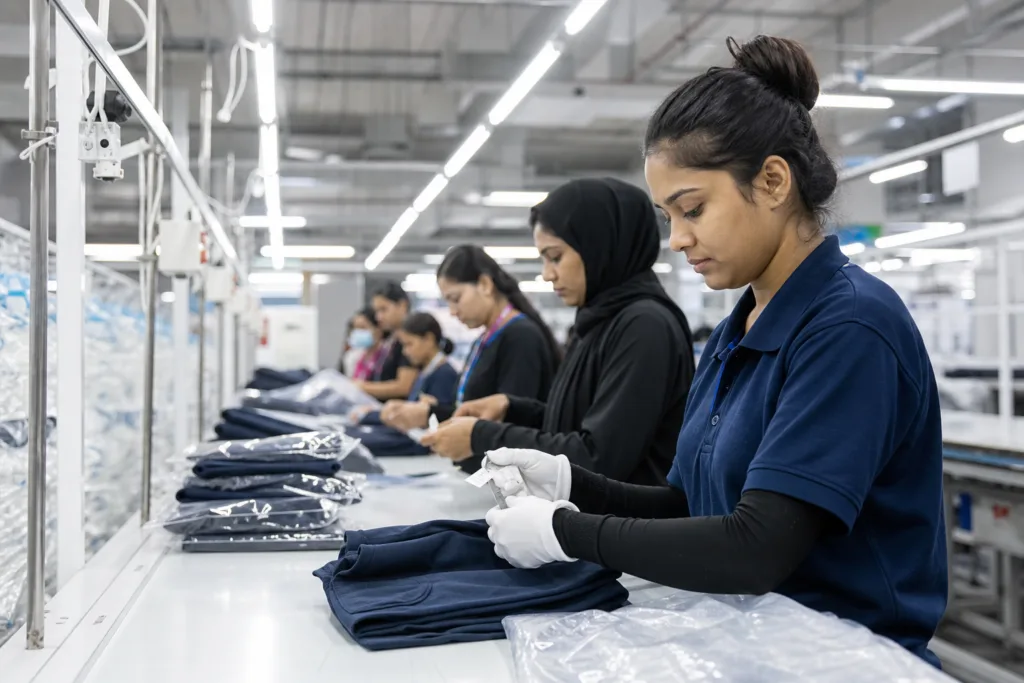
The right custom clothing manufacturer should help your brand move from concept to consistent production with fewer hidden risks. That means understanding fabric behavior, fit logic, customization methods, sample refinement, MOQ realities, lead time planning, and quality control in practical detail.
For most serious brands, the best supplier is not the one that says yes to everything immediately. It is the one that asks smart questions, explains trade-offs clearly, and can turn approved samples into bulk orders with stable quality. If you approach manufacturer selection this way, you will make stronger sourcing decisions and build a more reliable product foundation for growth.
FAQs
How do I know if a custom clothing manufacturer is right for my product category?
You should confirm that the factory already has experience with your garment type and construction requirements. A supplier that regularly makes performance polos, hoodies, or teamwear will usually understand the right fabrics, stitching methods, decoration choices, and quality checkpoints better than a general factory with limited category focus.
What is the most important thing to prepare before asking for a quote?
The most important thing is a clear product brief with enough detail to price accurately. At minimum, buyers should provide the garment type, reference images, expected fabric direction, logo method, quantity estimate, size range, and packaging needs so the manufacturer can assess cost and feasibility properly.
Can I start with a low MOQ when developing a new brand?
Yes, but only when the product setup is compatible with smaller production. Low MOQ is more realistic when you use available fabrics, simpler trims, fewer colorways, and limited customization, while fully custom materials and multiple branded components usually push minimums higher.
How many samples are normally needed before bulk production?
Many projects need more than one sample round before they are ready for bulk. The exact number depends on how complete your initial specifications are, whether the pattern is new, how complex the branding is, and whether fit, fabric, or trim corrections are needed after the first review.
What quality checks should I ask a manufacturer to perform?
You should ask about fabric inspection, measurement control, in-line sewing checks, logo placement review, finishing standards, and final packing inspection. A reliable manufacturer should be able to explain how quality is checked from development through bulk production rather than treating inspection as a last-minute step.
When should I choose a custom clothing manufacturer instead of buying ready-made garments?
You should choose a custom clothing manufacturer when your brand needs control over fit, fabric, branding, and long-term consistency. Custom production makes more sense than ready-made sourcing when you want differentiated products, stronger private label presentation, and a repeatable supply plan built around your own specifications.