





Custom polo shirt sampling is the stage where design ideas become something measurable, wearable, and manufacturable. Before any bulk order starts, buyers need to see whether the fabric, fit, collar shape, placket construction, logo application, and finishing details actually work together in a real garment. From our manufacturing perspective, custom polo shirt sampling is not just a formality; it is the main checkpoint that protects quality, controls avoidable cost, and reduces production risk before cutting bulk fabric.
If your project requires custom polo shirt production support, the sampling stage is where material selection, fit refinement, logo execution, private label details, and bulk-readiness all start to become clear. At Ninghow, we use this stage to help buyers confirm fabric hand feel, collar and placket construction, size consistency, decoration method, and packaging expectations before moving into larger production commitments.
What custom polo shirt sampling is and why it matters before bulk production
A sample is the trial version of the product you intend to manufacture in volume. It allows the buyer and manufacturer to verify that the polo shirt can be produced to the required standard, within the intended cost structure, and on a workable delivery schedule.
For polo shirts, sampling is especially important because this garment looks simple but contains several balance-sensitive details. Collar roll, placket shape, sleeve proportion, body fit, side vent finishing, fabric recovery, and logo placement can all affect whether the final shirt feels premium or inconsistent.
Sampling also exposes misunderstandings early. A tech pack may say “220 GSM pique cotton blend,” but the actual fabric may feel too heavy for golf use or too soft to hold embroidery cleanly. A logo that looks sharp on screen may need a different stitch density or application method once tested on the garment.
Key takeaway: Sampling is the point where buyers confirm whether the product idea is commercially and technically ready for bulk production, not just visually attractive.
How sampling supports quality control, cost control, and delivery planning

The practical value of sampling is simple: it prevents expensive surprises later. A sample gives both sides a chance to identify pattern issues, trim mismatches, construction problems, color risk, or decoration limitations before these issues are multiplied across hundreds or thousands of units.
From a cost perspective, small corrections made during development are usually manageable. The same corrections made after bulk fabric cutting can lead to rework, replacement materials, extra labor, and delayed shipment. That is why we treat sample approval as a decision gate, not just a visual review step.
Sampling also shapes production scheduling. Fabric booking, trim sourcing, embroidery digitizing, and line planning all become more reliable once the approved sample locks the product standard. Buyers who want to understand the full apparel sampling process from first sample to approval usually find that the best delivery results come from strong approvals, not rushed approvals.
| Sampling Function | What It Confirms | Why It Matters Before Bulk |
|---|---|---|
| Quality control | Fit, stitching, fabric behavior, logo quality | Reduces bulk defects and inconsistency |
| Cost control | Construction feasibility, trim choices, decoration method | Prevents late changes that increase cost |
| Lead time planning | Material readiness and approval timing | Helps factories schedule bulk accurately |
| Supplier evaluation | Communication, detail handling, sample accuracy | Shows how the manufacturer may perform in bulk |
What should be reviewed before sampling starts?
The best sampling results start with complete information. Before making the first sample, we normally review the design file, logo artwork, measurement chart, fabric target, color expectations, trims, labels, and intended use of the garment.
For apparel buyers, this step is less about perfection and more about clarity. If the polo shirt is for golf, hospitality, schoolwear, teamwear, or promotional use, that use case will influence fabric choice, fit tolerance, logo application, and finishing priorities.
What buyers should prepare before first sample development
- Technical sketch with front, back, and close detail views
- Measurement chart with tolerance expectations
- Fabric composition target and preferred GSM range
- Color references for body fabric and contrast details
- Logo files in usable vector or embroidery-ready format
- Label, hangtag, and packaging requirements if private label is needed
- Comments on fit direction such as slim, regular, athletic, or relaxed
Missing information at this stage usually causes avoidable back-and-forth. In our production work, unclear placket length, collar type, or hem detail often leads to revisions that could have been prevented with a stronger spec sheet.
How fabric, GSM, color, trims, sizing, and construction should be confirmed
Before sample sewing begins, the product team should align on the build of the polo shirt. This includes not only fabric composition, but also how the material behaves in the intended style.
A 100% cotton pique polo can feel breathable and classic, but it may shrink differently from a cotton-poly blend. A polyester performance polo may dry faster and hold color well, but hand feel and logo application should be tested carefully to make sure it matches the brand position.
| Element | What to Confirm | Common Risk if Unclear |
|---|---|---|
| Fabric | Composition, knit type, finish, stretch | Wrong hand feel or end use mismatch |
| GSM | Target weight range | Garment feels too thin, too heavy, or unstable |
| Color | Pantone or physical reference | Shade mismatch between expectation and production |
| Collar and cuff | Rib quality, shape, recovery | Collar curling or poor appearance after wear |
| Sizing | Base size, grading logic, tolerance | Fit inconsistency across size range |
| Construction | Placket type, side vents, seam finish | Visual imbalance or weak durability |
Polo shirts also require close attention to collar and placket structure. If the collar is too soft, the garment may look casual even when the buyer wants a cleaner retail look. If the placket is too stiff or narrow, it can distort the front body and affect wear comfort.
Key takeaway: For polo shirts, fabric and construction should be confirmed together because material behavior directly affects shape, comfort, and perceived quality.
What should buyers check in the first sample?
The first sample is where the design becomes testable. At this stage, buyers should not expect every detail to be final, especially if substitute trims or provisional fabric are used. The purpose is to judge whether the direction is correct and whether the product can be refined efficiently.
We usually advise buyers to review the first sample in a structured way rather than react only to overall appearance. Looking at one issue at a time helps separate minor comments from bulk-critical problems.
First sample review points
- Overall silhouette and body proportion
- Shoulder width and sleeve balance
- Collar shape, rib recovery, and neck opening
- Placket length, topstitching, and button spacing
- Hem shape and side vent clean finish
- Fabric hand feel, drape, and opacity
- Workmanship such as seam neatness and puckering
This stage also reveals whether the supplier understands the product category well. In fact, why sampling shows a manufacturer’s real production capabilities becomes clear when you review detail handling, comment follow-up, and how accurately the sample reflects the brief.
How the fit sample should be reviewed for polo shirt shape and balance
The fit sample is one of the most important stages for a polo shirt. Buyers should focus on wear, proportion, and movement rather than surface appearance alone. A polo that looks acceptable on a table may still fail when worn if the collar stands awkwardly, the sleeve opening flares, or the chest and waist balance does not suit the target customer.
For fit approval, we recommend checking the shirt on the intended body type or fit model. Photos on a hanger are useful, but they cannot fully show neck shape, shoulder drop, or how the placket sits during wear.
Fit areas that matter most for polos
- Neck opening comfort without gaping
- Collar lay and roll when buttoned and unbuttoned
- Shoulder alignment and sleeve pitch
- Chest ease for movement without excess bulk
- Waist shape based on slim or regular fit direction
- Front and back length balance
- Sleeve length and cuff tension
Size review should also consider grading, not only one sample size. If the medium size works but the grading logic is weak, larger or smaller sizes may lose proportion. This is why we often ask buyers to confirm both fit intent and measurement tolerance before moving on.
When should buyers request a logo or decoration sample?
Buyers should request a logo or decoration sample as soon as the artwork and base fabric direction are stable. For polo shirts, embroidery, screen printing, heat transfer, woven patches, and private labels all interact differently with the fabric surface and garment construction.
Embroidery on pique fabric, for example, can look sharp, but if stitch density is too high it may pull the fabric or make the chest panel ripple. Heat transfer may work well on smoother performance fabrics, but placement and durability should still be tested. If neck labels, hem tabs, or custom buttons are involved, these details should also be sampled before final approval.
| Decoration Method | Best Use Case | What to Check in Sampling |
|---|---|---|
| Embroidery | Corporate, school, golf, premium branding | Thread coverage, puckering, backing, placement |
| Screen printing | Simple artwork on suitable fabric | Color opacity, edge sharpness, hand feel |
| Heat transfer | Sportswear or small detailed logos | Adhesion, stretch response, wash durability |
| Patch application | Fashion or teamwear accents | Edge finish, stitch security, bulkiness |
| Woven or printed labels | Private label identification | Readability, position, skin comfort |
If the project includes multiple custom components, buyers should slow down enough to verify compatibility. A clean garment body can still fail commercial expectations if the label irritates the neck, the embroidery distorts the chest, or the patch thickness affects folding and packing.
How revision samples should be managed clearly
A revision sample is where comments from earlier stages are translated into corrected execution. This step works best when feedback is specific, documented, and prioritized.
We recommend using one consolidated comment sheet instead of scattered chat messages, screenshots, and verbal notes. Clear comments reduce misinterpretation and allow the factory team to address technical corrections in an organized way.
What clear revision comments should include
- Issue observed
- Exact location on the garment
- Requested correction
- Whether the issue is mandatory or preferred
- Updated measurement if sizing is involved
- Reference photo if appearance matters
Examples of useful comments include “increase placket length by 1.5 cm,” “reduce sleeve opening by 1 cm on size M,” or “move chest embroidery 1 cm higher.” Comments such as “make it look better” are difficult to execute consistently and often create another revision round.
What must be approved in the pre-production sample before bulk starts?
The pre-production sample, often called the PP sample, should represent the garment as it is intended to be made in bulk. At this point, the buyer should be reviewing final or near-final fabric, approved construction, confirmed decoration method, labels, and packing direction.
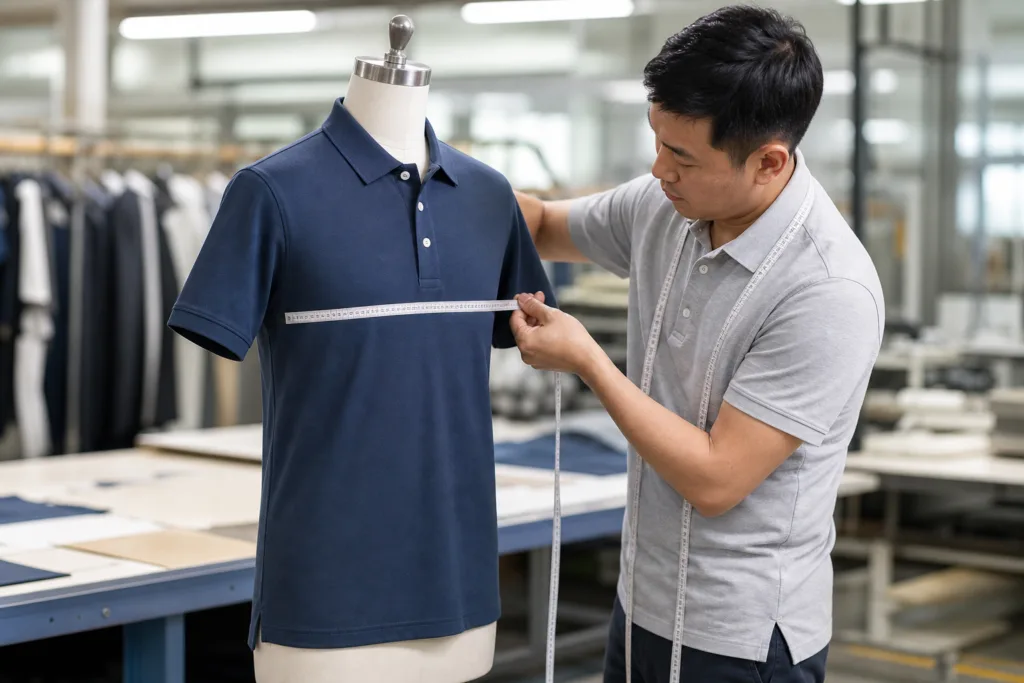
This is the stage where bulk standards should be locked. If major issues still exist in the PP sample, starting production is risky because downstream departments may already be planning cutting, sourcing, and line allocation based on assumed approval.
PP sample approval checklist
- Final fabric and color are approved
- Measurement chart is confirmed
- Collar, placket, sleeve, and hem construction are locked
- Logo method, size, placement, and color are approved
- Main label, size label, care label, and hangtag are correct
- Packing instructions are defined if custom packaging is needed
- Buyer comments from earlier stages are fully closed
Before bulk, buyers should also confirm the manufacturer’s quality control checkpoints for sample approval and bulk consistency. A good PP sample matters most when the same standard is then controlled through fabric inspection, inline sewing checks, decoration checks, finishing, and final packing review.
Key takeaway: Do not treat PP approval as a routine signature. It is the reference standard that bulk production should follow.
What changes are acceptable at each stage and which ones affect cost or lead time?
Not all changes have the same impact. Early-stage changes are usually easier to absorb, while later-stage changes can disrupt sourcing, pattern work, trim bookings, and production scheduling.
| Sampling Stage | Usually Acceptable Changes | Changes Likely to Affect Cost or Lead Time |
|---|---|---|
| Before first sample | Fit direction, collar type, placket detail, basic logo size | Major fabric switch, full design rebuild |
| After first sample | Measurement correction, shape refinement, minor trim updates | Changing fabric composition or decoration method |
| Fit sample stage | Size adjustments, sleeve or body balance changes | Reworking grading logic across all sizes |
| Logo sample stage | Small placement or density adjustment | Switching embroidery to print or adding extra applications |
| PP sample stage | Minor label text fix, packing clarification | Color change, fabric change, major construction change |
In practical terms, changing a label is very different from changing a fabric. New fabric may require re-sourcing, fresh lab dips, new shrinkage testing, revised pattern allowances, and revised decoration settings. Buyers should therefore separate “nice to improve” comments from “must fix before bulk” decisions.
How sampling prevents defects, rework, and inconsistent final quality
Strong sampling reduces risk because it creates a shared production reference. When the factory knows exactly what collar shape, stitch appearance, embroidery backing, and measurement tolerance are approved, operators and quality teams can work toward a defined standard rather than guess from mixed instructions.
Bulk inconsistency often starts with weak pre-production decisions. If a buyer approves a sample without checking shrinkage behavior, logo placement, or side vent symmetry, those issues may repeat throughout the order. Fixing them later is slower and more expensive than identifying them early.
In our experience, the best sample process also improves communication between merchandisers, pattern makers, sample room staff, cutting teams, and production supervisors. A stable sample acts as the technical language that aligns departments before volume begins.
What common mistakes slow down custom apparel sampling?
The most common mistake is approving too quickly without structured review. Buyers sometimes focus only on color or branding and miss fit imbalance, stitching quality, or measurement risk that becomes more obvious in bulk.
Another common issue is changing too many variables at once. If fabric, fit, collar, and logo method are all revised in one round, it becomes hard to identify which change improved or harmed the result.
- Sending incomplete tech packs or unclear artwork
- Giving feedback in scattered channels instead of one comment file
- Approving a sample without wear testing
- Ignoring grading and checking only one size
- Leaving labels and packaging decisions too late
- Confusing a development sample with a PP-ready sample
Buyers should also avoid treating speed as the only success metric. A very fast sample is not useful if the process does not reveal the issues that matter before bulk.
How to evaluate a polo shirt manufacturer’s sample process
A strong sample process is one of the clearest signs of a capable manufacturer. Buyers should evaluate not just the final sample, but also how the supplier asks questions, documents comments, explains limitations, and manages revisions.
At Ninghow, we view sampling as the stage where buyers can see whether a manufacturer understands product development discipline, not just sewing. The factory’s ability to clarify material options, fit risks, logo methods, and approval logic often predicts how smoothly bulk production will run.
What to look for when comparing manufacturers
- Do they review your tech pack carefully before sampling?
- Do they explain fabric and construction trade-offs clearly?
- Do they provide organized comments and revision tracking?
- Do they distinguish development samples from PP samples?
- Do they identify risks instead of simply saying yes to everything?
- Do they connect sample approval to bulk QC and timeline planning?
A weak supplier may produce a visually acceptable sample but fail to communicate what can or cannot be repeated consistently in bulk. A stronger supplier will help you understand both the sample result and the production implications behind it.
What timeline and sample fees should buyers expect?
Sampling timelines vary by fabric availability, artwork readiness, trim sourcing, complexity, and revision count. A simple polo shirt with available fabric and standard trims may move faster than a private label project that needs custom dyeing, custom buttons, embroidery testing, and special packaging.
Sample fees also vary. In many B2B manufacturing projects, the fee reflects development labor, pattern work, material use, custom trims, decoration setup, and shipping. Some fees may later be credited against a qualifying bulk order, but buyers should confirm that policy before starting.
| Factor | Effect on Sampling Speed | Effect on Sample Cost |
|---|---|---|
| Stock fabric availability | Faster | Usually lower |
| Custom fabric or dyeing | Slower | Usually higher |
| Simple embroidery | Moderate impact | Moderate setup cost |
| Complex private label trims | Slower | Higher due to sourcing and setup |
| Multiple revision rounds | Slower | Can increase total development cost |
Buyers should ask early about milestone timing, including sample making, comment turnaround, revision lead time, and PP approval timing. This is important because how sampling milestones affect bulk production timing is often underestimated until the delivery window starts getting tight.
What should be confirmed after sample approval and before bulk production?
Once the sample is approved, buyers should not assume everything is automatically ready. Bulk production still depends on final confirmation of material bookings, trim quantities, approved measurements, size breakdown, packaging plan, shipping marks, and inspection criteria.
This is also the time to freeze the approved reference. Any approved sample should be linked to the final spec sheet and comment history so there is no confusion about which version is valid for production.
Post-approval confirmations before bulk
- Approved sample reference is identified clearly
- Final size breakdown is issued
- Bulk fabric and trims are booked to approved standard
- Carton and packing instructions are confirmed
- Inspection method and acceptance priorities are aligned
- Production schedule reflects approved sample timing
If the project includes low MOQ planning, private label rollout, or multiple logo variants, this stage should also confirm how quantities are split and whether any trim minimums could affect the final plan.
Final checklist for approving custom polo shirt samples with confidence
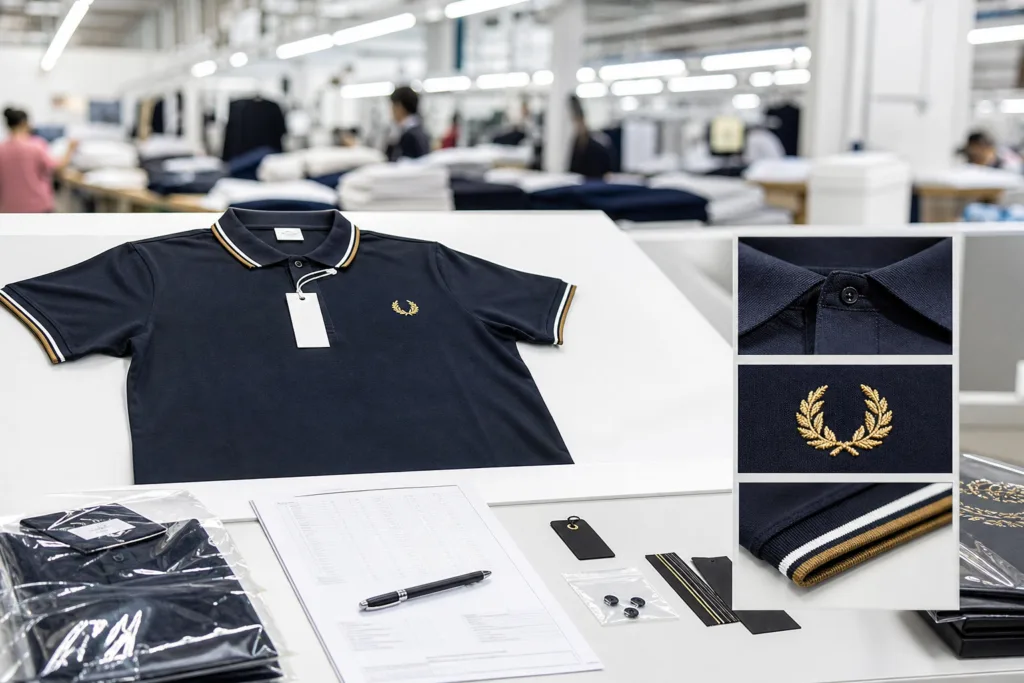
Before approving, buyers should ask one clear question: if this exact sample is repeated in bulk, will it meet the brand’s commercial, fit, and quality expectations? If the answer is uncertain, more clarification is usually needed.
The goal is not to chase perfection at any cost. The goal is to approve a sample that is accurate, repeatable, and aligned with the product’s market position, budget, and delivery plan.
- Check the garment on body, not only flat
- Review measurements against the approved chart
- Confirm fabric feel, weight, and recovery
- Inspect collar, placket, and sleeve balance closely
- Approve logo quality and placement on the actual fabric
- Verify labels, trims, and finishing details
- Document all final approvals in one file
- Confirm that no unresolved issue remains before PP sign-off
When sampling is handled carefully, it becomes a practical decision tool rather than a delay. It helps buyers avoid hidden production risk and gives manufacturers a clear standard to execute. For custom polo shirt sampling, the strongest results come when both buyer and factory use the process to make precise, informed decisions before bulk production begins.
FAQs
How many sample stages are usually needed for a custom polo shirt?
Most custom polo shirt projects need at least a first sample, a fit or revision sample, and a pre-production sample before bulk production. The exact number depends on how complete the tech pack is, whether custom fabric or trims are involved, and how many corrections are needed after each review.
Can buyers skip the fit sample if the first sample looks good?
Skipping the fit sample is possible only when the first sample already matches the approved measurements, wear balance, and construction expectations very closely. In most cases, a dedicated fit review is still valuable because polo shirts can look acceptable visually while still needing correction in collar shape, sleeve proportion, or body balance when worn.
What usually causes the biggest delay during custom polo shirt sampling?
The biggest delays usually come from incomplete initial information, slow comment feedback, fabric or trim changes after development starts, and unclear approval standards. When artwork, measurements, labels, and construction details are defined early, the sample workflow is usually much more efficient.
Should the sample use the exact bulk fabric?
Ideally, the pre-production sample should use the exact or near-final bulk fabric, especially when fabric hand feel, shrinkage, performance, or decoration quality matter to the product. Early development samples may use substitute materials in some cases, but buyers should understand that final approval is stronger when the actual production material is tested.
What is the difference between a development sample and a PP sample?
A development sample is used to test the design direction, fit, and construction approach, while a PP sample is the final production reference that should match the approved bulk standard closely. Buyers should not approve bulk based on a development sample unless all product details, materials, and workmanship standards are already fully aligned.
How can buyers give better sample comments to reduce revision rounds?
Buyers can reduce revision rounds by sending one consolidated comment file with exact measurements, location-specific notes, photos when needed, and clear priority levels for each correction. Specific comments such as placement changes, measurement adjustments, and trim replacements are much easier for a factory to execute consistently than broad aesthetic feedback.
Related Reading
- polo shirt manufacturing process from fabric selection to bulk production
- polo shirt quality checklist for bulk buyers
- Ninghow’s apparel order process for development and production planning
- clothing manufacturing process overview for B2B buyers
- custom fabric dyeing support for sample and production alignment