
Introduction: The Foundation of Quality Gym Clothing Sampling
For any apparel brand aiming to deliver high-performance gym wear, navigating the sampling process is essential. Sampling directly affects final product quality, fit accuracy, and production smoothness. From the first prototype to the milestone of pre-production approval, each stage serves to perfect both design intentions and manufacturing feasibility. Understanding this process helps brands, buyers, and sourcing teams achieve better outcomes and avoid costly missteps.
For a more focused look at gym clothing manufacturing, readers planning the next sourcing step may want to explore Explore custom gym clothing manufacturers, which outlines Ninghow’s custom gym clothing production capabilities, typical order scope, and the ways manufacturers like us help brands turn concepts into finished gym garments efficiently.
The Purpose of Clothing Samples in Apparel Manufacturing
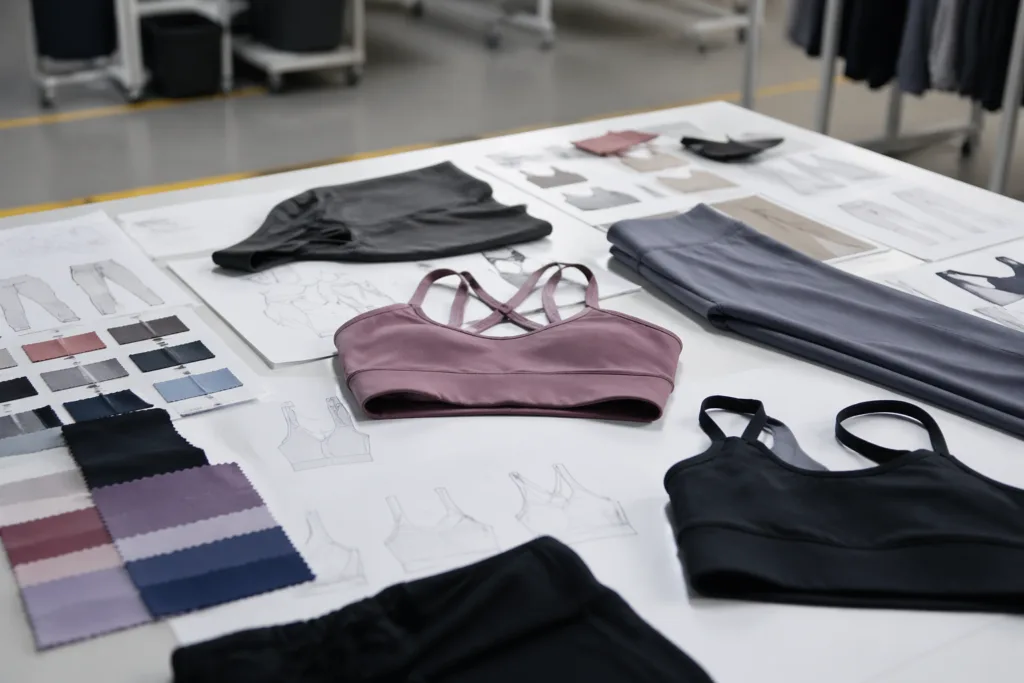
Sampling is more than just making a physical garment. It anchors communication between designers and factories, tests pattern accuracy, validates materials, and reduces risk before bulk production. Every sample is a tool for clarifying expectations, spotting issues early, and ensuring buyer requirements are understood downstream. In gym clothing, where fabrics are specialized and fit is critical, robust sampling prevents bigger problems later on.
Key Stages of the Gym Clothing Sampling Process
Let’s break down the main steps in today’s gym clothing sampling process:
- Development (Proto) Sample – The first tangible interpretation of a tech pack or spec sheet.
- Fit Sample – Focused on garment shape, measurements, and proportion using intended or similar fabrics.
- Salesman (SMS) Sample – Pre-production versions for sales teams or buyers, often in final colors and trims.
- Pre-Production Sample (PPS) – The final, factory-exact reference before mass manufacturing.
Development (Proto) Sampling: Turning Ideas into Tangibles
The proto or development sample’s role is simple: bring the digital design to life. This first sample may use available (not final) materials. Manufacturers like Ninghow draft an initial pattern based on your tech pack, create a sewn garment, and provide it for review. Most factories treat this round as an ideal place to identify obvious design, pattern, or trim-matching issues.
What It Shows
The cut, overall silhouette, and translation of your concept into an actual item. Structural questions (e.g., does the pocket angle work in practice?) are addressed here.
Why Not Perfect?
Proto samples balance speed and clarity. They’re for rapid feedback before resources are spent fine-tuning fabrics or colors. Any modifications at this stage are low-cost compared to rework later on.
Fit Sample: Honing Measurements and Athletic Comfort
This round focuses on structure and movement. Alignment with your gym clothing’s measurement chart is essential since athletic apparel must perform and fit true to brand expectations.
Fabric & Fit Details
Fit samples usually use production-intent fabric so stretch, recovery, and feel can be tested. Seams are examined for irritation risks, and garments are measured against base size specs.
Speed Tips
Clear, annotated fit comments from your fitting sessions greatly speed approvals. Indicate areas for grading (size scaling) concerns at this stage, not after salesman samples are made.
Salesman (SMS) Sampling: Selling the Vision
SMS samples play a commercial role. These are closest to the final product and are often made in the full size set, with intended branding, trims, and colorways. Sales teams, buyers, or showroom reps use these for presentations or pre-orders.
Why SMS Matters
Feedback here often involves not only product preference but commercial insights (e.g., certain colors sell better, or a pocket is too small for typical phone sizes).
Potential Modifications
Even now, trims may be switched or branding elements tweaked based on buyer input. It’s more expensive to change things at this point, so robust direction earlier pays off.
Pre-Production Sample (PPS): The Final Quality Gate
A PPS is the closest possible match to what will be mass produced. All fabrics, trims, prints, and construction methods must be true to the production order. Brands sign off on the PPS as the benchmark for every bulk item.
Approval and Production Link
Once PPS is approved, any deviation in bulk must be flagged as a quality concern. Delays at the PPS stage usually result from unresolved prior comments, so thorough communication earlier saves time here.
Bulk Production Sample (TOP): Your On-Line Checkpoint
Some brands request a bulk “Top of Production” (TOP) sample, pulled off the line during actual mass production. It serves as a verification that garments match the PPS and that quality is consistent. This sample is especially important when high-order quantities and tight QC tolerances are involved.
Why Sampling Takes Time in Gym Clothing Manufacturing
Every sampling phase uncovers new technical questions: Is the fabric the correct gauge? Are reflective details robust after wash? Do panel patterns sew accurately in 4-way stretch blends? Sampling isn’t about going slow—it’s about finding and fixing expensive problems on a garment or two rather than hundreds later.
- Material procurement for special fabrics
- Pattern adjustments after fit feedback
- Custom trims or logo applications
- Quality control at each step
How Buyers Can Speed Up Sample Approvals
| Step | Fast-Track Tips |
|---|---|
| Development Sample | Submit clear tech packs; supply reference photos for detail areas. |
| Fit Sample | Mark up change requests visually on the garment or spec sheet. |
| SMS | Limit colorway and trim changes; finalize branding early. |
| PPS | Provide consolidated feedback; include approvals from all stakeholders at once. |
Critical Documents and Communication at Each Stage
Sending revised tech packs, fit session photos with notes, and keeping a master comment log are strong practices. These support smooth sampling rounds, preventing redundant errors and confusion as the project moves forward.
Common Pitfalls: How to Prevent Delays and Cost Overruns
Lost time often comes from unclear feedback, last-minute material requests, or incomplete tech documents. Also, changing fit specs after SMS round creates cascading rework. Creating “final” expectations early enables everyone—factory and brand—to stay synchronized.
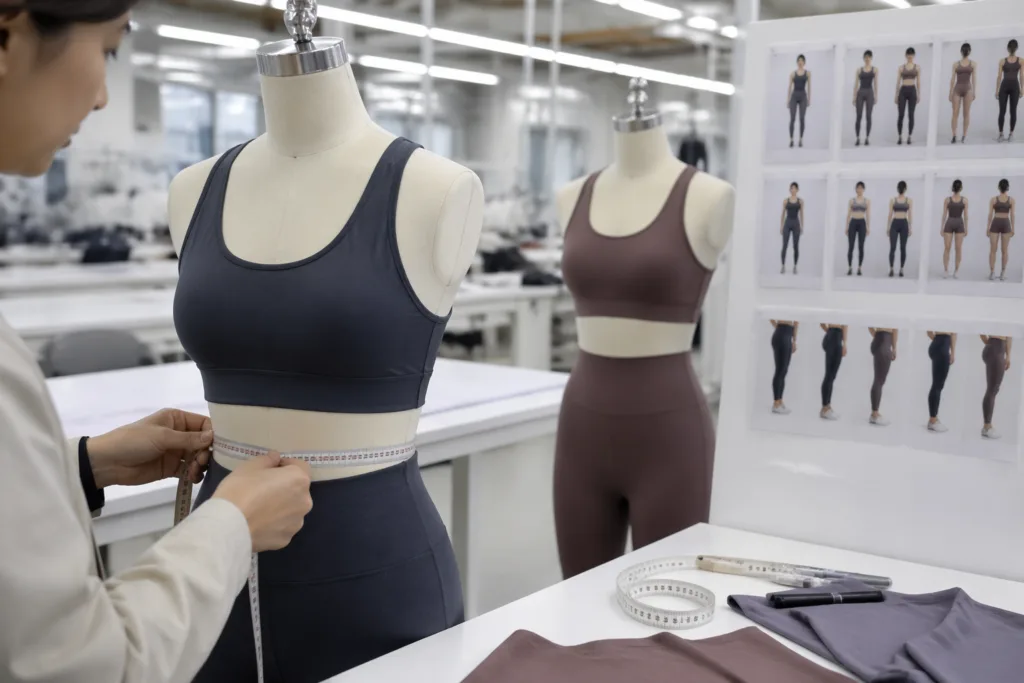
How Ninghow Approaches Sampling for Gym Clothing
Practical experience over hundreds of sampling runs shows: starting with production-feasible designs and consistently communicating helps avoid 90% of delays. At Ninghow, our sampling process emphasizes realistic fabric sourcing and iterative comments to keep the project on track, favoring substance over speed shortcuts. We recommend treating each sample review as a milestone, not a box to check.
When Do You Need Each Sample Type? Practical Scenarios
- Development sample: Always for new designs or with new factories.
- Fit sample: If pattern or fabric changes.
- SMS: For sales or if buyers need real samples.
- PPS: For every bulk production order—non-negotiable.
- TOP: For large or high-value orders; upon request.
Sampling Costs and Who Pays
Sampling almost always has a fee, even with bulk orders to follow. These cover pattern making, labor, and premium small-quantity fabric use. Many manufacturers offset these costs for committed brands, but not always for first-time buyers or very custom projects.
Sampling MOQs: Small Runs vs. Bulk Orders
Most factories have minimum order quantities (MOQ) for sampling and bulk runs. For samples, buyers can often request one or several units per design, but bulk runs may require dozens or hundreds of pieces per size/color. Clarifying MOQ expectations helps you plan launches and avoid disappointment at scale-up.
Managing Color, Trim, and Branding Details During Sampling
To avoid surprises, confirm all trims and branding (zipper pulls, reflective tapes, logo placements) no later than the SMS sample. Brands who lock down every detail before PPS gain much smoother production launches and reduce shipment delays.
Digitization in Sampling: 3D Prototyping vs. Physical Samples
Some brands adopt 3D digital sampling to preview designs and shorten proto rounds. This can be effective for visual checks, but physical samples remain necessary for fabric feel, fit, and technical approval—especially in high-stretch gym wear. Digital and physical prototyping are now complementary tools.
How to Ensure Sample Comments Are Understood by Manufacturers
Use annotated photos, redlining specific patterns, and clear measurements. Comments should be objective (e.g., “sleeve opening to reduce by 2cm”) instead of subjective (e.g., “make it looser”). This reduces translation errors between brand and manufacturing teams.
The Role of Technical Specification Packages (Tech Packs)
A complete tech pack is every manufacturer’s starting point. It must show construction details, graded size specs, materials, colorways, and branding placements. The clearer it is, the fewer rounds you’ll need.
How QC and Sampling Overlap in Pre-Production
Every approved sample becomes the reference for quality control in production runs. Both the buyer and the factory QC teams use the signed-off PPS to benchmark every production lot, reducing disputes and raising quality consistency.
How to Track Sampling Timelines and Reduce Uncertainty
Set agreed sample schedules up front and keep a shared sampling tracker. Predictable return dates for approvals, with buffer periods for shipped samples, allow for better launch and bulk allotment planning.
Clothing Sampling and Sustainable Practices
Sampling can create waste if not managed well—over-ordering rounds, unused prototypes, or unnecessary test colorways. Sustainable gym brands minimize rounds through better tech packs and testing ideas virtually before committing to fabric and trims.
What to Do When Sampling Reveals Production Feasibility Issues
Discovering a design is too complex or not factory-feasible during sampling is better than realizing post-production. Brands should adapt—either change the construction or opt for alternative materials, guided by manufacturer feedback and cost realities. Honest sampling feedback prevents late-stage surprises.
How to Transition from Sample Approval to Bulk Production
Once the PPS is signed off, the factory receives the green light for full-scale bulk manufacturing. Maintaining traceable communication and keeping all signed-off sample references in hand ensures what was approved is exactly what is delivered.
Gym Clothing Sampling Process: From Development Sample to Pre-Production Approval
Each sampling stage—development, fit, SMS, PPS, and, if needed, TOP—serves a distinct role in gym clothing manufacturing. Brands who understand and respect the value of each round not only achieve superior results but reduce costs and faults in large orders. Timely comments, detailed tech packs, and stable approvals keep sampling efficient and productive across diverse gym wear projects.
Useful Resources for Apparel Brands—Next Steps
Conclusion: Streamlining Gym Clothing Development
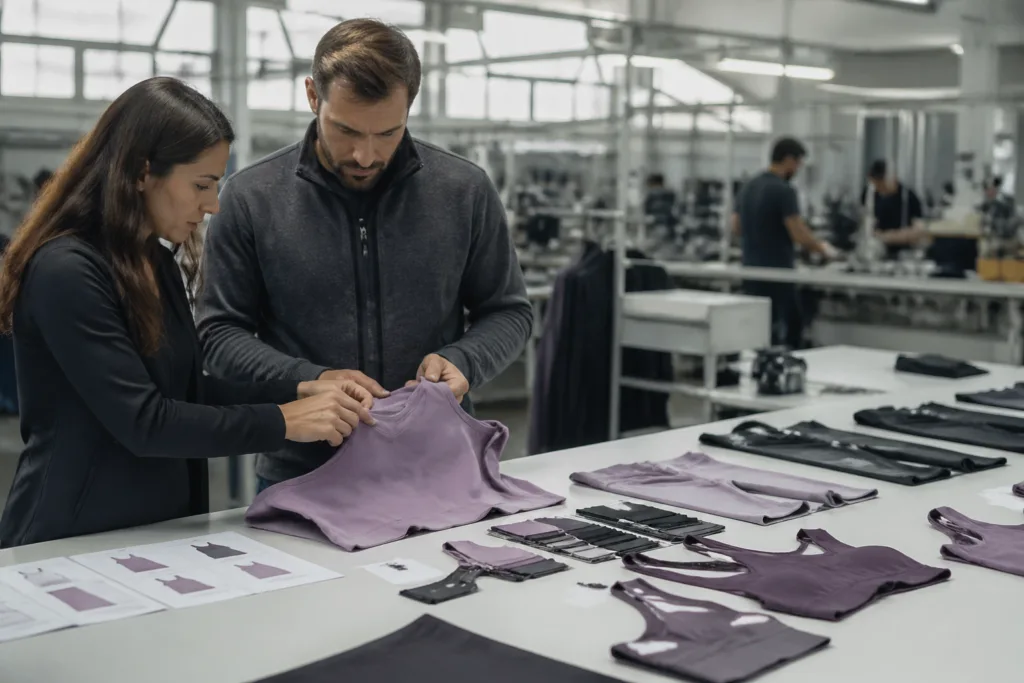
Mastering the gym clothing sampling process helps apparel brands reduce mistakes, control quality, and launch new collections with confidence. Brands who invest in tight early documentation, transparent feedback, and organized sample handling enjoy faster, more reliable bulk production and happier end customers. In today’s competitive gym wear market, smart sampling is not a cost—it’s an investment in long-term brand quality and supplier reliability.
Frequently Asked Questions
What is the most important sample in the gym clothing sampling process?
The pre-production sample (PPS) is the core approval reference; it’s made with final materials and methods, so what you see is what you will get in the bulk order.
How many rounds of sampling should I expect before bulk production?
Typically 2–4 rounds: development (proto), fit, SMS, and PPS. Complex or novel designs may require additional rounds to perfect details.
How long does the sampling process usually take for custom gym clothing?
Sampling can take 3–8 weeks depending on number of rounds, material sourcing, factory capacity, and the speed of your design feedback.
Can I skip some sample types to save time?
Skipping core samples risks bulk errors. Proto and PPS are usually non-negotiable, but sometimes SMS rounds are optional if you don’t need early sales samples.
What documents should I provide to speed up sampling?
A clear tech pack (with construction, grading, colorways) and annotated feedback photos streamline communication and reduce back-and-forth delays.
Is digital sampling a replacement for physical samples?
3D digital prototyping is helpful for early design checks, but physical samples remain crucial for final fit, feel, and production verification—especially in gym wear.