







100% Cotton Polo Shirts With Pocket: When Do Buyers Prefer Them?
Buyers usually ask for a 100 cotton polo with pocket when they need a shirt that feels familiar, looks tidy, and still handles daily wear. From a manufacturer’s point of view, the pocket is rarely just a style detail. It affects decoration, stitching, shrinkage control, packing, and the way the shirt performs after repeated washing. For team programs, uniforms, and practical workwear, those details can decide whether a pocket polo is the right choice or a costly compromise.
For readers comparing manufacturing options, a useful next step is to review polo shirt manufacturer. It gives a more focused look at how a factory like Ninghow approaches polo construction, customization, and production planning for buyers who need consistency across bulk orders.
Why a 100 Cotton Polo With Pocket Still Wins in Uniform Programs
A 100 cotton polo with pocket continues to show up in uniform programs because it meets a simple buyer need: comfort plus practicality. Cotton feels soft, breathes well, and is easy for staff to wear through long shifts. The pocket adds a small but useful function, especially in roles where workers carry pens, notes, room keys, or small tools.
In our production work, the pocket polo is most common in programs where appearance matters, but the shirt still has to work hard. That is why buyers in property management, warehouse support, retail floor teams, and service crews often prefer it over a plain polo. It looks complete, but it also gives the wearer a place to keep small items without needing extra accessories.
- Property teams often want a clean, practical shirt for front-facing staff.
- Warehouse and logistics buyers value the pocket for light utility.
- Retail and service teams like the neat, approachable look.
- Corporate polos with pockets can support a more classic uniform image.
Where Buyers Prefer Cotton Pocket Polo Styles Most
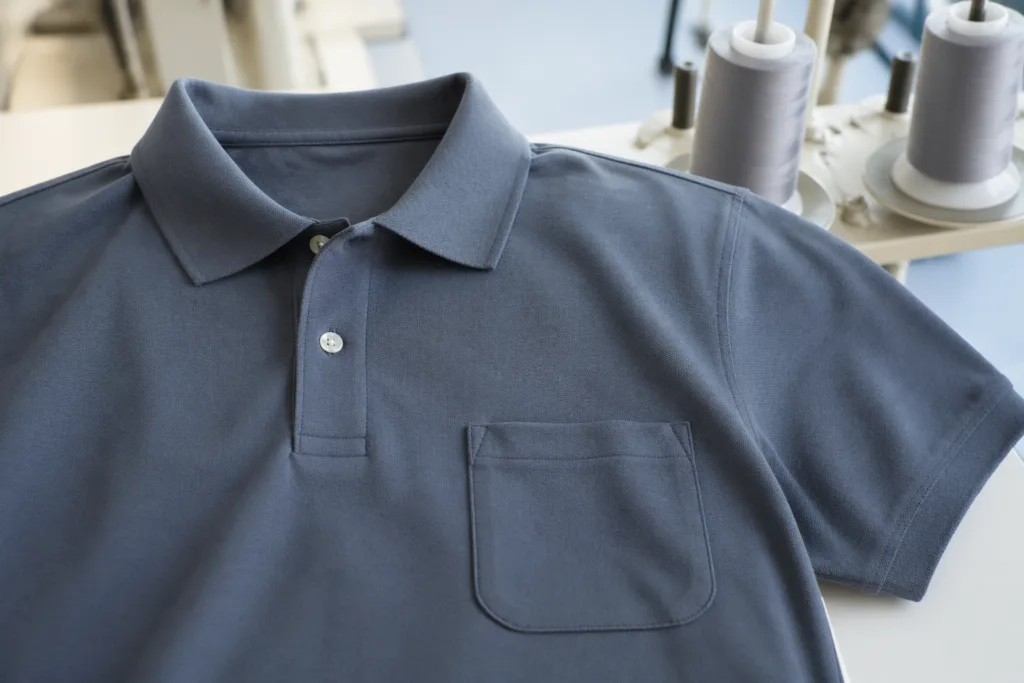
Not every program needs a pocket, but certain environments make the choice easy. Buyers tend to prefer a cotton pocket polo when the wearer needs a mix of comfort, utility, and low visual risk. In these settings, the shirt is part of the daily routine, not just a brand image piece.
Property Management and Facilities
Facilities teams often carry keys, a pen, or a notepad. A pocket gives them a practical place to store light items during inspections or service rounds. The shirt still has to look presentable for tenants, contractors, and visitors.
Warehousing and Light Operations
For warehouse support staff, a cotton pocket polo can be useful during inventory checks, receiving, or floor coordination. The pocket is not meant for heavy tools, but it works well for pens, markers, or small papers.
Retail and Customer Service
Retail buyers often want uniforms that feel approachable and simple. A pocket polo helps create a slightly more structured look without moving into full workwear territory.
Service and Hospitality Support
For support staff who move between guest-facing and back-of-house tasks, the pocket is practical and the cotton body keeps the shirt comfortable over long shifts.
What Makes Work Pocket Polo Orders Different
Work pocket polo programs usually fail or succeed on construction details, not on the color alone. The pocket affects how the shirt sits on the chest, how decoration is placed, and how much the fabric can handle after washing. That is why buyers should not treat the pocket as a small add-on.
In production, we look closely at three things: pocket placement, pocket reinforcement, and how the pocket interacts with decoration. A pocket sewn too low looks off. A pocket sewn too close to the placket can interfere with embroidery or heat transfer. If the pocket edge is weak, it can curl after laundering and make the garment look cheap.
For longer-sleeve uniform programs, some buyers compare pocketed short-sleeve shirts with cotton workwear polos. That comparison usually comes down to season, task type, and how much coverage the team needs.
| Buyer concern | Why it matters | Factory response |
|---|---|---|
| Pocket placement | Affects appearance and decoration space | Confirm chest position in sampling |
| Reinforcement | Prevents curling and sagging | Use strong stitching and stable pocket shape |
| Decoration conflict | Embroidery may overlap the pocket | Plan logo size and location early |
| Fabric shrinkage | Can distort pocket alignment after wash | Test shrinkage before bulk cutting |
Why Pocket Placement Matters More Than Many Buyers Expect
At first glance, pocket placement seems simple. In real production, it is one of the most noticeable details on the shirt. Even a small shift can change the whole visual balance of the garment. If the pocket sits too high, the shirt can look stiff. If it sits too low, it can feel awkward and unprofessional.
Manufacturers usually confirm placement during sampling because body size, placket length, and logo position all affect the final result. On a men’s size M, the pocket may look fine. On larger or smaller sizes, that same placement may need adjustment to keep the design balanced.
Ninghow has seen many bulk issues start with a pocket that looked fine in photos but was not tested on multiple sizes. That is why we always recommend checking the pocket on the full size range before approving production.
How Embroidery and Pocket Design Can Clash
One of the most common problems in a cotton pocket polo is decoration conflict. Buyers often want a chest logo, but the pocket already occupies part of the same area. If the logo is too large or too low, it can crowd the pocket and reduce readability.
The simplest fix is to decide early whether the shirt will carry embroidery, print, a woven label, or a combination. When the decoration plan is clear, the factory can adjust pocket size, placement, or logo position before the cutting stage. That avoids rework later.
Some teams prefer a clean chest logo above the pocket. Others choose sleeve decoration or a small woven tab. The key is to avoid forcing too many elements into one zone. A shirt can look busy very quickly, and uniform buyers usually want tidy, repeatable results.
Useful decoration checks before bulk
- Confirm logo distance from the pocket edge.
- Test embroidery density on cotton fabric.
- Review size placement across all garment sizes.
- Check whether pocket stitching disturbs the design line.
Why Cotton Shrinkage Control Is Essential for Pocket Polos
Cotton brings comfort, but it also brings shrinkage risk. That matters even more in a 100 cotton polo with pocket because the pocket line can show distortion after washing. If the fabric shrinks unevenly, the pocket may twist or appear off-center.
Buyers should ask how the mill, dye house, and garment factory handle shrinkage control. Pre-shrunk fabric helps, but it is not enough on its own. The factory still needs to test wash results, check stitch recovery, and make sure the pocket panel behaves the same as the body fabric.
For brands and procurement teams, shrinkage is not just a quality topic. It affects uniform fit, logo alignment, and re-order consistency. If the first order shrinks too much, replacement orders can create size disputes very quickly.
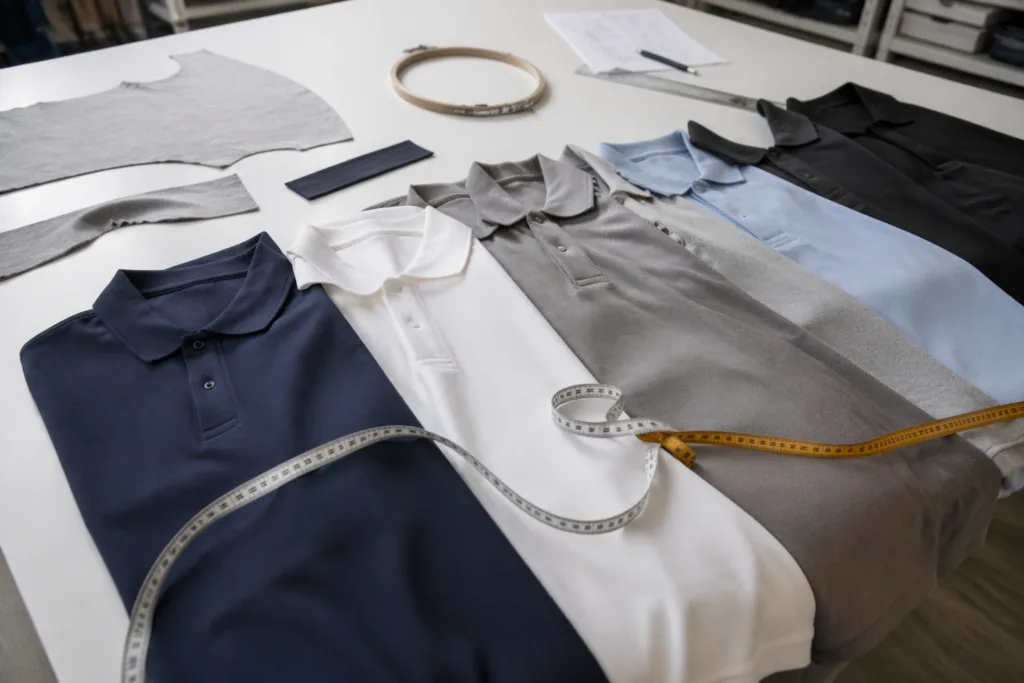
What a factory should test
- Fabric shrinkage after wash and tumble.
- Side seam and pocket alignment after laundering.
- Color fastness for repeated use.
- Shape stability around the chest area.
When Buyers Choose a Pocket and When They Skip It
Buyers do not choose a pocket only because it looks traditional. They choose it when the function is worth the extra design risk. In some programs, a plain polo is still the better answer. In others, the pocket is the reason the shirt gets approved.
| Situation | Pocket polo? | Reason |
|---|---|---|
| Front-desk service | Yes | Neat look with small storage need |
| Field-heavy labor | Sometimes | Depends on how much movement is involved |
| High-end corporate image | Sometimes no | Cleaner look without pocket bulk |
| Warehouse support | Yes | Useful for pens and notes |
| Retail floor staff | Yes | Balanced image and utility |
Buyers who want a more formal uniform look may also compare the pocket style with uniform polo fit. Fit choice often matters as much as the pocket itself, especially when the garment must look professional on different body types.
What Good Pocket Construction Looks Like
A good pocket should lie flat, keep its shape, and stay consistent after laundering. It should not curl, buckle, or pull the chest fabric out of line. In factory terms, that means clean pocket panels, stable topstitching, and enough reinforcement to survive normal wear.
For bulk buyers, the best way to judge pocket construction is not by the front-view photo alone. Ask for a sample, wash it, press it, and inspect the pocket edge. If the pocket still sits neatly after that, the construction is on the right track.
Signs of strong pocket construction
- Straight stitching with even spacing
- Flat pocket opening without wave lines
- Balanced placement on left and right sizes
- No visible twisting after wash testing
How Corporate Polos Use the Pocket Strategically
Corporate polos with pockets are often used when a brand wants a practical uniform, but still wants the team to look coordinated. The pocket can make the shirt feel slightly more grounded and functional, especially for operations, maintenance, and mixed-role staff.
That said, corporate buyers usually care more about consistency than novelty. If the shirt will be worn across several departments, the pocket design must be stable from size to size and from one production run to the next. This is where a manufacturer’s pattern control and stitching discipline matter a lot.
In some programs, the pocket is used to support a more utilitarian brand image. In others, it simply gives the shirt a familiar work-ready look. Either way, the pocket should support the uniform program, not fight it.
Material Choices That Affect Pocket Performance
Fabric choice changes how the pocket behaves. A heavier cotton can hold shape better, but it may feel warmer. A lighter cotton can feel more breathable, but it may show pocket shadowing or edge curling more easily. Buyers should balance comfort, appearance, and use case instead of chasing the softest hand feel alone.
Ring-spun cotton often feels smoother. Combed cotton can improve surface quality. But no matter which cotton is chosen, the fabric must work with the pocket structure. If the body fabric stretches too much or shrinks too much, the pocket can lose its clean shape.
Fabric questions buyers should ask
- What is the fabric weight?
- How much shrinkage should be expected?
- Will the fabric support embroidery without puckering?
- Is the cotton pre-shrunk or tested after wash?
Practical Buyer Checklist Before Ordering
Before placing a bulk order, buyers should review the pocket polo as a complete product, not just a shirt with a pocket added on. A few small checks can prevent major problems later.
- Confirm the exact pocket position on all sizes.
- Check whether embroidery will overlap the pocket.
- Ask for wash-tested shrinkage results.
- Review the pocket edge for reinforcement.
- Approve the sample on at least two body sizes.
- Confirm whether the uniform team needs the pocket in daily use.
For teams with heavier-duty needs, it is also worth reviewing cotton workwear polos as a related construction option. Sleeve length, fabric weight, and pocket placement often work together in real-world uniform planning.
How Ninghow Approaches Pocket Polo Production
From a factory perspective, a pocket polo is only reliable when the pattern, fabric, stitching, and decoration plan are treated as one system. Ninghow typically checks the pocket position during sampling, confirms stitch strength, and reviews wash behavior before bulk cutting. That process saves time later because pocket issues are much harder to fix after production starts.
We also pay attention to whether the customer’s logo or department marking conflicts with the chest pocket. A shirt can look very different once embroidery is placed, so it is better to solve those details early. In practice, the best programs are the ones where the buyer shares use case, wash frequency, and decoration needs before approval.
100% Cotton Polo Shirts With Pocket: When Do Buyers Prefer Them?
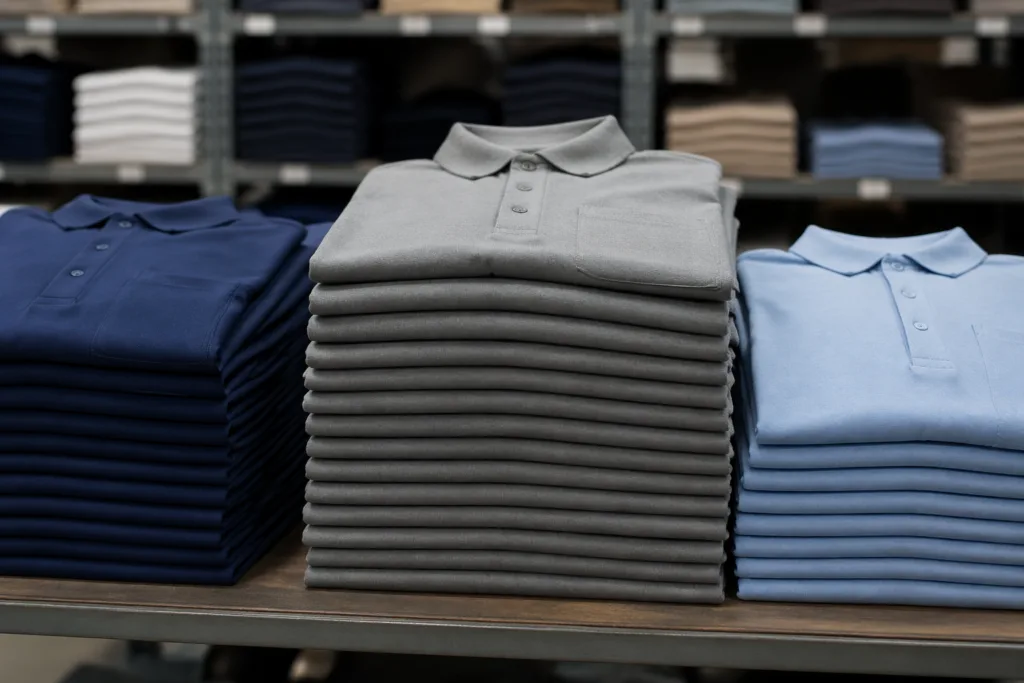
Buyers prefer 100% cotton polo shirts with pocket when comfort, utility, and a tidy uniform look all matter at the same time. The pocket makes sense in property, warehouse, retail, and service settings where staff need a small amount of function without moving into full workwear. But the garment only works well when pocket placement, reinforcement, embroidery planning, and shrinkage control are handled carefully.
For sourcing teams, the decision is less about whether the pocket looks good in a catalog and more about whether the shirt will still look right after repeated use. That is the real test. If the factory can control the construction details, the pocket polo remains a strong, practical option for many uniform programs.
Frequently Asked Questions
Why do buyers choose a pocket on a polo shirt?
Buyers choose a pocket when they want light utility and a more practical uniform look. It is common for teams that carry pens, notes, or small items during the day.
Is a 100 cotton polo with pocket good for uniforms?
Yes, it works well for many uniform programs because cotton is comfortable and the pocket adds function. It is especially useful in service, retail, and facilities roles.
Does a pocket affect embroidery placement?
Yes, it often does. The pocket can limit chest decoration space, so the logo size and position should be planned before bulk production.
How does cotton shrinkage affect pocket polos?
If the fabric shrinks unevenly, the pocket may twist or look misaligned after washing. That is why shrinkage testing is important before cutting bulk fabric.
Are pocket polos better than plain polos for workwear?
Not always. Pocket polos are better when staff need small storage or a more functional look, but plain polos can be cleaner for more formal programs.
What should buyers check before ordering pocket polos?
They should check pocket placement, stitch strength, wash shrinkage, and logo clearance. A sample test across sizes helps avoid bulk order problems.