


OEM vs Private Label vs Wholesale Gym Clothing: Which Model Fits Your Brand?
Choosing the right gym clothing sourcing model—OEM, private label, or wholesale—is one of the most critical decisions apparel brands and sourcing teams face. Each approach comes with unique benefits, challenges, and suitability depending on your brand’s stage, budget, and ambitions. Understanding these models can save time, prevent costly missteps, and set your business up for sustainable growth.
For readers considering launching their own gym apparel line or expanding on a current range, a useful next step is to explore custom gym clothing manufacturers. This resource outlines key capabilities, categories, and practical decision factors for brands mapping out their manufacturing options. Brands and sourcing teams can use it as a benchmark for evaluating what custom production can deliver in comparison to OEM, private label, and wholesale models.
Understanding the Three Main Gym Clothing Business Models
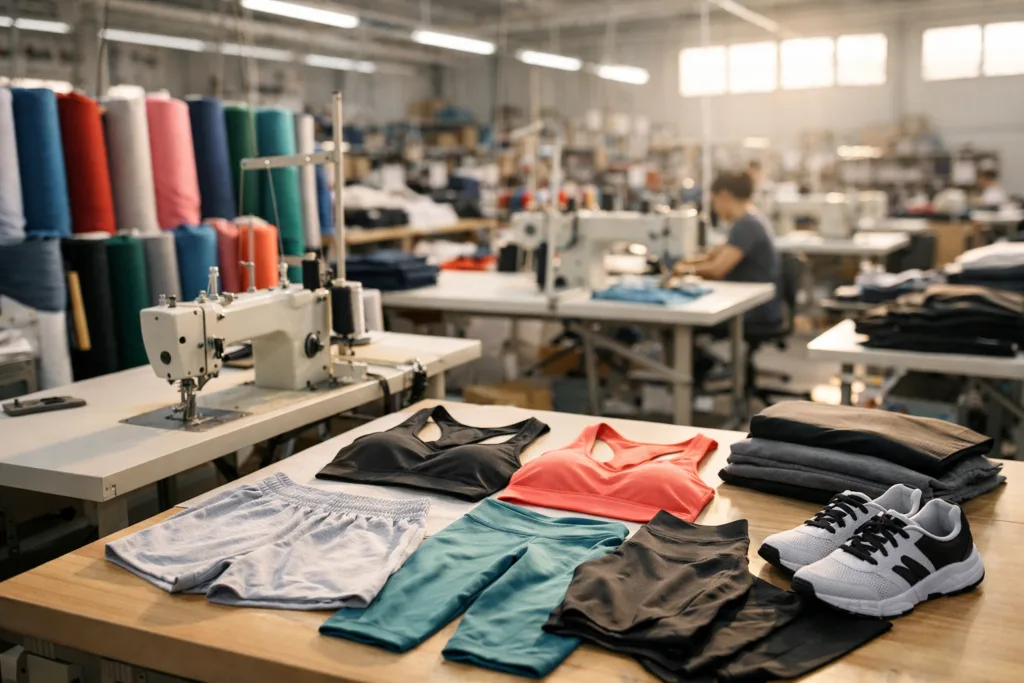
If you’re researching oem clothing suppliers, private label activewear, activewear wholesale, custom gym clothing, wholesale gym apparel suppliers, you’ll typically land on three main options:
- OEM (Original Equipment Manufacturer): Full custom design, manufacture to your exact spec.
- Private Label: Manufacturer’s standard product + your brand label or some customization.
- Wholesale: Ready-made products, minimal or no branding, quickest route to market.
What is OEM Gym Clothing Production?
OEM means your brand controls design, materials, trims, sizing, and all details. The manufacturer executes your “tech pack” exactly. This path offers full customization, control over fit and branding, and lets you create unique market-ready pieces.
Key Features of OEM Production
- Custom patterns and fit for your demographic
- Pick your own fabrics, colors, and silhouettes
- Brand exclusivity—nobody else sells your exact product
- Higher MOQs (Minimum Order Quantities)
- Longer lead times—requires sampling, fitting, approval rounds
Private Label Gym Clothing: An In-Between Solution
Private label is often the most popular middle ground for new and growing brands. Here, the manufacturer offers pre-made “blank” or semi-custom gymwear styles which you can enhance with your own logo or limited changes (such as color or fabric swaps).
Why Private Label is Popular
- Faster product development than OEM
- Lower MOQs than OEM (but higher than wholesale in most cases)
- More predictable cost and lead time
- Pre-tested fits and materials
- Some design freedom, but within templates
Want to see what goes into building your own branded collection using this model? It helps to navigate private label gym clothing manufacturing, where processes, design options, and cost drivers are clearly laid out for brand teams and sourcing managers.
Wholesale Gym Apparel Explained
Wholesale gym clothing is typically ready stock or made-to-order using manufacturers’ standard catalog items. These can be sold as is, or sometimes (for higher volumes) with simple label application. It’s the quickest, lowest-risk entry into the athleisure market.
Wholesale Model Benefits
- Lowest MOQs (sometimes as few as 10–20 pieces per style)
- Immediate shipping or short production cycles
- No design headaches—choose, pay, and go
- Lowest unit cost but lowest brand exclusivity
- Often no product customization options
If wholesale fits your initial needs, do comprehensive market checks and evaluate wholesale gym apparel suppliers to compare inventory flexibility, catalog depth, sample availability, and restock speed.
OEM vs Private Label vs Wholesale: Comparison Table
| Criteria | OEM | Private Label | Wholesale |
|---|---|---|---|
| Product Design | Fully Custom | Template w/ minor changes | As-is (catalog styles) |
| Branding Potential | High (unique patterns/labels) | Moderate | Low to Medium |
| MOQ | High (often 300+ pcs/style) | Moderate (100–200 pcs) | Very Low (10–50 pcs) |
| Lead Time | Longest | Medium | Fastest |
| Cost per Piece | Lowest at large volume | Competitive | Lowest upfront |
| Fit Customization | Full (control every detail) | Some (template only) | Standard only |
| Main Risks | Complex process, Higher finance risk | Lack of full uniqueness | Easy replication by others |
| Scaling | Best for long-term/own designs | Good for growing brands | Good for proof of concept |
Factors to Choose the Best Model for Your Brand
Budget & Cash Flow
- Tight budgets: Start wholesale or basic private label
- High investment: Consider OEM for unique market positioning
Speed-to-Market
- Wholesale wins for speed—quickest way to launch
- Private label is next fastest
- OEM is slowest, but gives total control
Branding Needs & Market Differentiation
- If you need full custom branding/fit: OEM
- If your main focus is affordability/variety: Wholesale
- If brand visibility is important but budget is limited: Private label
Long-Term Brand Strategy
- Brands building proprietary IP or signature collections eventually move to OEM
- Brands testing market fit often begin wholesale or private label before scaling
How Factory Capabilities Shape Your Choice
The best manufacturers offer options across all three models but differ in strength. OEM requires advanced patternmaking, material sourcing networks, detailed sample management, and solid QC procedures. Private label needs strong catalog development, in-stock availability, and flexible branding methods. Wholesale demands inventory depth and logistics efficiency.
Tips for Communicating with Factories
- Always clarify your real customization goals up front
- Share budget, timeline, and long-term vision with the factory early
- Send reference samples/photos for clarity
Pros and Cons at a Glance
| Model | Pros | Cons |
|---|---|---|
| OEM | Unique product rights, full fit control, expandable branding | Slow, high cost, complex management, high MOQ |
| Private Label | Fast, moderate MOQ, some uniqueness | Templated, less exclusive, limited fit changes |
| Wholesale | Cheapest, fastest, flexible cash flow | Generic style, low branding, easy to copy |
Ninghow’s Manufacturing Insight
From a manufacturer’s perspective, the main production pain points and quality benchmarks are different. For OEM, Ninghow finds that sampling accuracy and fabric QC are the bottlenecks that define launch success. Private label clients need fast, clear communication about available stock, trims, and achievable branding tweaks. Wholesale buyers must balance inventory costs with rapid trend changes: the best results happen when expectations for QC checks and packaging are defined up front.
Real-Life Scenarios: Which Model Suits Whom?
New Startups
Low-risk, quick launches favor wholesale or basic private label. Focus on GROWTH, not reinvention.
Growing Brands
Private label is the stepping stone for brands with some traction, wanting to stand out but with moderate budgets.
Established Brands/Long-Term Strategy
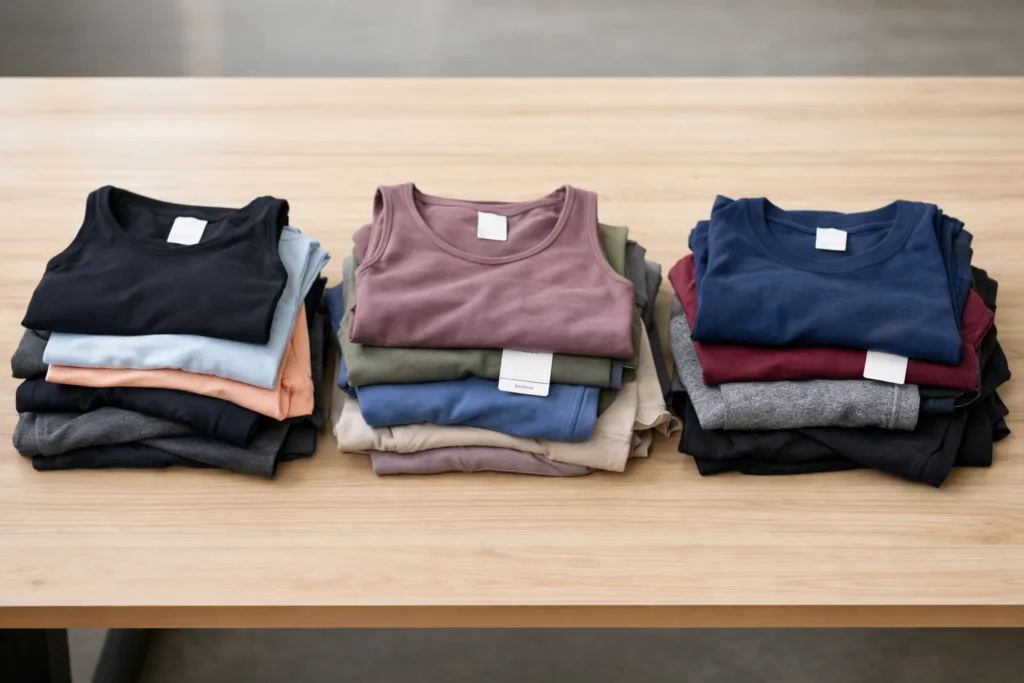
OEM custom brings signature collections to life and locks in true product differentiation. Useful for scaling and market leadership.
How MOQ Impacts Decision Making
Minimum Order Quantities are often the deciding factor. Clarify with your supplier—actual MOQs vary based on material, complexity, and collection size. OEM requires commitment, private label is more flexible, wholesale best for testing the waters.
Cost Considerations: What Goes Into the Price Tag
- OEM: tooling, patterns, tests, sample wastage
- Private Label: catalog amortization, branding setup fees
- Wholesale: pick & ship; lowest overhead but less say in final look
Lead Time Breakdown
- OEM: 45–90 days (or more, with repeated samples)
- Private Label: 20–40 days (typical)
- Wholesale: 7–21 days depending on stock & shipping
Risk & Quality Control at Each Level
- OEM: High risk/payoff—set up clear sample, QC & approval checkpoints
- Private Label: Middle risk, rely on supplier’s stability & catalog track record
- Wholesale: Low risk, but brand reputation can suffer if quality is inconsistent
Branding, Packaging, and Labeling: How Flexible Is Each?
- OEM: Total control—custom care labels, swing tags, packaging, and trims
- Private Label: Logo application on standard garments, options for basic packaging changes
- Wholesale: Usually as-is, very limited (if any) branding flexibility
Scalability and Long-term Brand Value
Long-term, moving toward OEM is typical for brands seeking unique market identity. But many success stories start with private label or even clever buying and branding of wholesale clothing before scaling up as margins and market fit become clear.
Which Model is Most Sustainable?
Sustainability depends on order size management, excess inventory handling, and material transparency for each model. OEM lets you design for recyclability; private/wholesale depend heavily on supplier standards and inventory practices.
How to Transition from One Model to Another
Success often means evolving. Brands may start wholesale, shift to private label with brand growth, and embrace OEM as capital and identity strengthen. Plan for this evolution by documenting what works and building trusted relationships with adaptive suppliers or manufacturers.
Pitfalls and Costly Mistakes to Avoid
- Poor communication of desired changes in private label (assume nothing!)
- Misreading actual MOQs and minimum lot requirements
- Ignoring post-production costs (shipping, tariffs, packaging)
- Assuming QA/QC is “included”—always specify details in advance
Conclusion: Matching Model to Mission
In summary, no single model is “best” for everyone—OEM, private label, and wholesale all have their time and place. Start with your real objectives, resources, and risk tolerance. Test small before going big, forge clear communication with manufacturers, and remember: quality and reliability always outweigh the promise of “quick and cheap.” As your company matures, the right sourcing path may change—successful gymwear brands stay flexible and keep a close eye on both the spreadsheet and the fit model alike.
Frequently Asked Questions
What does OEM mean in gym clothing manufacturing?
OEM means the manufacturer produces fully custom gym clothing exactly to your brand’s design, materials, and fit specifications. You own the product design and exclusivity.
Is private label or OEM better for new gym brands?
Private label is faster, cheaper, and lower risk for new brands. OEM suits brands with unique designs, proven market fit, and bigger budgets.
What is the lowest MOQ for each sourcing model?
Wholesale MOQs can be as low as 10–20 pieces, private label typically 100–200 pieces, and OEM often starts at 300+ pieces per style/variant.
Can I customize packaging and tags with all three models?
OEM allows total customization. Private label usually offers branded tags and packaging for moderate orders. Wholesale rarely offers these options unless buying in bulk.
How long does each gym clothing model take from order to delivery?
OEM: 45–90 days or more; Private label: 20–40 days; Wholesale: 7–21 days if stocked.
Which model offers the best profit margin?
OEM delivers the best per-unit margin at high volume, but wholesale/private label have lower upfront risks and costs, useful for building initial cash flow.