





Introduction: Why Women’s Polo Shirts for Uniforms Require More Than Just a Quick Pattern Change
Designing women’s polo shirts for uniforms is not as simple as resizing a men’s template and calling it a day. Brands, buyers, and sourcing managers who settle for shortcut solutions often encounter unwanted fit issues, higher return rates, and negative end-user feedback. For buyers seeking durability, comfort, and cohesive brand identity in women’s uniform polos, focusing on technical fit, practical fabric selection, and thoughtful branding from the very beginning is essential.
For readers comparing manufacturing options or planning a uniform program, a useful next step is to explore polo shirt manufacturing options on the Ninghow site. This page offers a detailed look at key production capabilities, customization approaches, and essential considerations when sourcing high-quality polos directly from an experienced manufacturer’s perspective.
Understanding Core Challenges: Common Pitfalls in Women’s Uniform Polo Development
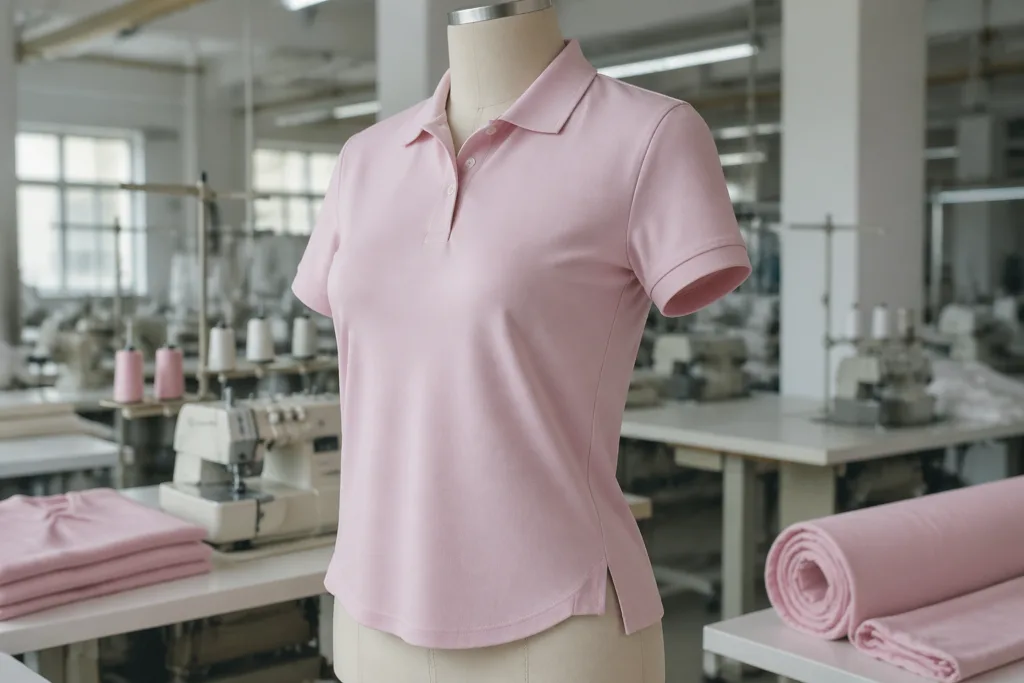
A frequent error in uniform programs is adapting a men’s polo shirt pattern for women by just reducing the size. This often leads to garments that tug at the bust, flare at the hip, or restrict movement in the shoulders. To avoid these issues and streamline production, it’s crucial for buyers and brands to understand the unique requirements of a true women’s fit from the proto sample onward.
The Key Differences: Women’s Versus Men’s Polo Shirt Specifications
Pattern Adjustments By Gender
Women’s polos require dedicated base blocks that account for shoulder slope, bust shaping, sculpted waists, and hip accommodations. Men’s fit is typically squarer, with less contouring.
Chest, Waist, and Hip Ratios
Proper women’s polos follow body ratios, providing space at chest and hips while creating definition at the waist. Overlooking this leads to discomfort and poor visual appeal in uniforms.
Placket and Front Details
Standard placket length for women’s polos is shorter, supporting a professional look and better chest coverage. Button position and overlap should also be tailored to reduce gaping.
Shoulder and Sleeve Shaping
Women often benefit from narrower shoulders and a slightly forward-rotated armhole. Sleeve position, length, and opening should allow natural movement without excess fabric gathering.
Evaluating Key Fit Elements in Women’s Uniform Polos
Neckline and Collar Construction
- Smaller neck openings keep the look tidy
- Collar height and stiffness should balance brand style and wearer comfort
Side Slit or Not?
Side slits increase hip mobility and comfort. For uniform polos, they also help the garment lay flat when tucked or untucked, a key functional and aesthetic consideration. Many brands request side slits for women’s versions, especially when the uniform must accommodate different postures.
Body Length and Hem Options
Women’s polos are often 2–5cm shorter in body length than men’s. Depending on how the shirt is to be worn (in or out), the hem can be straight or curved, with a split for extra room if required by the wearer profile.
Bust Dart Versus Princess Seams
Some uniforms benefit from subtle shaping with bust darts or princess seams; others rely on side panel construction. The decision depends on the required visual effect and cost constraints in production.
Fit Grades: Regular, Slim, Classic
It’s important to clarify fit style expectations during development—a regular fit may suit most users, but some brands need a slim silhouette for their image. Make sure these terms are defined so your factory applies the right grading rules at pattern stage.
Fabric Selection: Getting Uniform Polos Right for Women
Cotton, Poly-Cotton, Performance Blends
Cotton polo shirts for women remain a top choice for breathability, but adding polyester increases durability and shape retention, key for uniforms. High-stretch blends (with 3–7% spandex) improve comfort and recovery, especially for more fitted women’s polos.
Weight and Thickness Considerations
180–220gsm is standard for good opacity and durability without overheating. Lighter weights may suit hot climates, but risk being see-through in lighter colors.
Piqué, Double Knit, and Jersey: Texture & Performance
- Piqué: Durable texture, resists pilling, classic uniform look
- Jersey: Smoother surface for a sportier, softer feel
- Double knit: More structure, suitable for higher-end branding
Stretch and Recovery: The Importance for Women’s Fits
Avoiding rigid fabrics is critical in women’s uniform polos, especially those with a tailored fit. A little elastane allows the shirt to move with the body and reduces restriction, resulting in higher wearer satisfaction and lower size exchange rates.
Color, Dye-Fastness, and Uniform Consistency
Uniform programs often specify strict color standards (e.g., Pantone matching) for consistent branding across the team. Discuss dye-fastness and wash durability with your manufacturer to ensure a professional appearance after repeated laundering. For deeper tips, brands can read more about choosing colors for custom team clothing.
Why Side Slit Detail Matters in Women’s Uniform Polos
Side slits offer added freedom around the hip and help polos drape better when worn by a greater variety of body types. If omitted, the shirt may bunch uncomfortably at the hip or ride up during movement, especially in uniforms requiring active roles. Most female end-users report greater comfort and improved silhouette when side slits are included.
Coordinated Design: Matching Women’s and Men’s Uniform Polo Series
Unified Brand Look, Different Base Patterns
Uniform programs often call for parallel men’s and women’s polos with the same colors, trims, and branding—but the underlying patterns must remain gender-specific. Using a unisex block or simply resizing can cause complaints from women about tight chests, overly long sleeves, and awkward shoulders.
Shared Details Across Genders
- Logos, patches, and placket designs
- Main color and trim selection
- Neck label and wash care instructions
Careful planning ensures each shirt delivers on brand consistency, style, and wearer comfort without sacrificing functional differences needed for men’s and women’s bodies.
Sampling and Pattern Approval: Critical Steps
The Danger of ‘Hard-Modified’ Men’s Samples
Cutting a men’s fit down for women’s sizing—even with adjusted side seams—often leads to skewed proportions and uncomfortable fits. Instead, request a true women’s pattern at the proto sample stage and require live model fittings with your target demographic before proceeding to bulk production.
Fit Testing and Feedback Loops
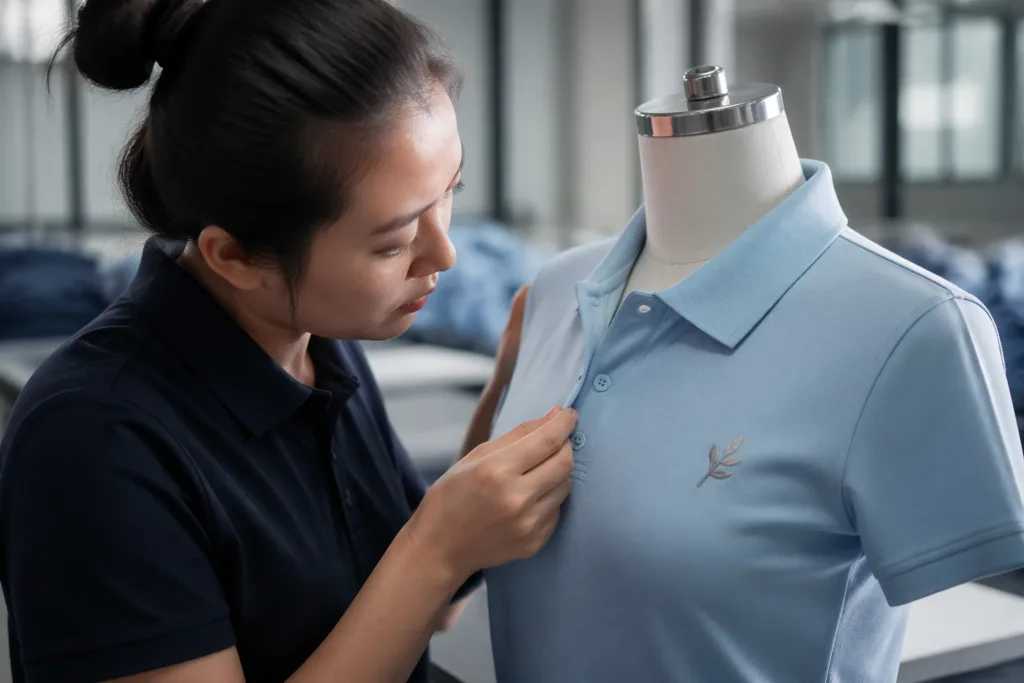
Invite input from intended end-users during development—check shoulder mobility, hip comfort, chest gaping, and garment length. This reduces the risk of rework and increases long-term satisfaction.
Ninghow’s Experience Insight
Factories like Ninghow recommend reviewing shoulder, chest, and waist ratios relative to body spread charts, especially for uniforms destined for mixed-use environments. Accurate models and detailed fit notes help convert on-paper designs into production-ready polos with fewer fit grievances.
Quality Control for Women’s Uniform Polos: What Brands Should Watch
Consistent Grading and Size Range Integrity
Size run grade errors can disproportionately affect women’s sizing due to smaller pattern differentials. Check that the base pattern is applied consistently from XS to 3XL, maintaining fit integrity at both ends of the range.
Checking Placket, Collar, and Branding Position
Uniform polos demand uniform branding placement for a professional, cohesive look on teams. Run pre-production checks focusing on embroidery/logo location, collar construction angles, and symmetrical front plackets to avoid QC failures later in bulk production.
Customization and Branding for Women’s Uniform Polos
Logo Application Techniques
- Embroidery: Durable for wash and wear, clean look
- Heat transfer: Good for performance blends (low thickness)
- Screen print: Cost-effective for large programs if fabric allows
Discuss with your factory which application suits your fabric choice and long-term durability requirements.
Private Labeling and Tagging
Custom neck labels and care labels reinforce your brand’s image and make uniforms feel more tailored to the company identity. Reliable factories offer options including woven labels, heat seals, and size pips placed without visible neck irritation.
Care and Maintenance Factors
Poly-cotton and blended fabrics simplify long-term care for uniform polos. Confirm with your supplier that the recommended care instructions align with actual wash and wear testing, and specify anti-pilling or anti-shrink treatments if required by your brand’s promise.
Cost and Lead Time Considerations: What Impacts Your Schedule?
Dedicated women’s patterns may have a slightly higher development cost up front compared to a unisex template but save time and money down the line by reducing returns, exchanges, and complaints. Balance your desired complexity of design (darts, side slits, custom trims) against your ideal lead time and place fit approval as a non-negotiable early step.
MOQ (Minimum Order Quantity) and Production Scale
Uniform programs typically fall in the mid-high MOQ range depending on number of colorways and sizing breakdowns. Plan to commit MOQ for both women’s and men’s series to ensure fabric dye lots and trim purchasing are consistent.
How to Communicate Specification and Fit Details to Your Factory
Tech Pack Essentials
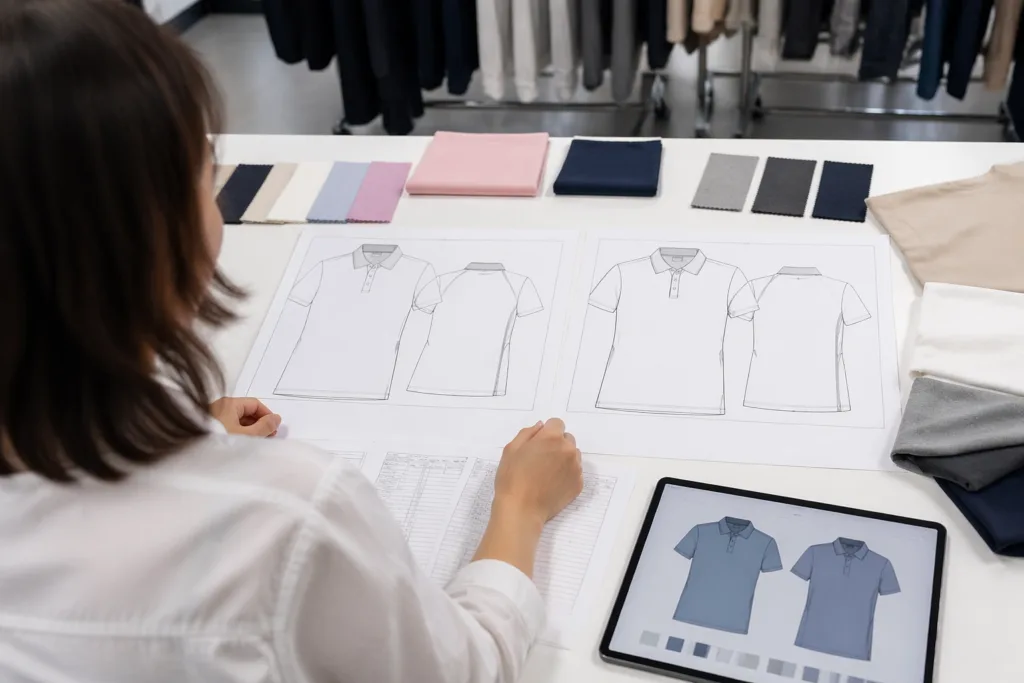
A complete tech pack including size spec charts (with bust, waist, hip, body length), construction diagrams, and fabric composition notes is vital. Include photographic references, requested points of measure, and examples of acceptable or unacceptable fit tolerances to align expectations with the production team.
Physical, Digital, or Live Model Protos?
While digital approvals can be faster, provide at least one live proto for onsite wearer feedback when possible. This bridges the gap between technical drawings and real-life movement to catch fit or comfort issues before bulk cutting begins.
Returns, Exchanges, and How to Minimize Fit-Driven Complaints
Poor fit, especially in the bust and shoulders, is the leading cause of uniform returns. Addressing women’s polo fit at the development stage massively reduces this risk. Factories can advise on common mismatches from customer feedback and suggest preventive changes. For uniform programs involving seasonal workers or multiple locations, clear fit criteria and allowance for stretch play a major role in a successful rollout.
The Importance of Wear Testing for Uniform Polo Success
Ask your manufacturer about conducting in-house wear tests with female model sizes. This helps verify side slit comfort, placket gaping, and general garment behavior over daily use. Feedback from this step should loop back into pattern refinement.
The Next Step: Custom Options for Women’s Uniform Polos
Brands ready to build a unified, comfortable set should consult with factories that can demonstrate a history of true women’s fit development and uniform program management. Proper sampling, flexible fabric choices, and factory-led insight prevent ‘just shrink it and pink it’ mistakes that have plagued the uniform sector for years.
Common Mistakes to Avoid When Sourcing Women’s Polos
- Using men’s base patterns to save on development
- Specifying only S-XL when larger size spread is needed
- Ignoring wearer feedback during fitting stages
- Choosing low-stretch or heavy fabrics without considering the application
- Rushing grading, sacrificing range integrity in favor of faster lead times
Comparison Table: Men’s vs. Women’s Uniform Polo Specs
| Feature | Men’s Polo | Women’s Polo |
|---|---|---|
| Fit Block | Straighter, wider shoulders | Contoured at chest, waist, hips |
| Placket Length | Longer (16–18cm) | Shorter (10–13cm) |
| Shoulder Width | Natural shoulder line | Narrower, forward armhole |
| Side Slit | Optional, less needed | Often required for mobility |
| Body Length | Standardized longer | Shorter, shaped hem common |
| Size Range | S–5XL (region-dependent) | XS–3XL usually |
When to Consider Long Sleeve or Specialty Polos for Women
For year-round uniform needs or cooler climates, consider long sleeve cotton polos for work. Fabric density, cuff type, and sleeve fit should be adapted for female comfort and movement. Specialty fabrics may require alternate branding or construction methods, so plan accordingly.
Comparing Collared Shirts and Polos for Uniform Programs
Buyers may need to compare collared shirts and polos for uniforms. While polos offer more comfort and flexibility, collared shirts can project a more formal look. Evaluate factors like ease of movement, expected frequency of laundering, and budget when making this choice.
Women’s Polo Shirts for Uniforms: Fit, Fabric, and Branding Guide
Developing high-performing women’s uniform polos takes careful planning, gender-specific technical expertise, deliberate sampling, and strategic coordination with your manufacturer. Avoid the shortcut of quick resizing—prioritize proper fit blocks, flexible fabric, consistent branding, and feedback-backed pattern development to ensure a successful, comfortable, brand-right uniform program that lasts.
Conclusion
Designing and manufacturing women’s polo shirts for uniforms demands an investment in correct pattern development, fabric selection, and functional details—like side slits and true fit grading. By partnering with experienced garment factories and supplying thorough specification packs, brands and buyers reduce risk, lower return rates, and deliver polished, comfortable, and unified results across their workforce. When buyers move beyond shortcuts and ‘hard modifications,’ uniform polos not only fit better but also create a more positive experience for everyone wearing the team’s brand.
Frequently Asked Questions
What is the main fit difference between men’s and women’s uniform polos?
Women’s polos are designed with more shaping at the waist and hips, narrower shoulders, and a shorter placket. This results in better comfort and mobility compared to a men’s block simply scaled down.
Why are side slits important in women’s uniform polos?
Side slits provide extra ease around the hips, making the shirt more comfortable for sitting or moving, especially for female wearers with wider hip ratios. They also help the garment lay more smoothly over trousers or skirts.
What fabric is best for women’s cotton uniform polos?
Midweight cotton blends (180–220gsm) with a touch of stretch give both breathability and shape retention. Poly-cotton blends are popular for durability and easier care needs in uniforms.
Can I use the same pattern for both men’s and women’s polos?
No, using the same pattern often results in poor fit for women. Develop separate base blocks for each gender to ensure the best fit and comfort in uniforms, reducing returns and complaints.
How do I ensure color consistency across men’s and women’s uniform polos?
Specify exact color standards such as Pantone or labdip approval before bulk. Use single dye lots and confirm all trims and fabrics match for both men’s and women’s ranges before production starts.
What’s the best way to prevent fit-related returns?
Insist on dedicated women’s samples, run live fit testing, and gather feedback from end-users before bulk order confirmation. Address fit concerns early to minimize costly returns later.