




Low MOQ custom clothing options work best when the customization plan stays focused, scalable, and realistic for the order size. For most small runs, the easiest path is usually stock fabric, standard garment patterns, limited colorways, and low-complexity branding such as neck labels, hangtags, basic prints, or simple embroidery. When buyers try to combine custom fabric, multiple trims, special packaging, and several decoration methods at once, cost, lead time, and sampling risk usually increase faster than expected.
If your project needs flexible small-batch apparel production support, the most practical approach is to build the product around what can be sourced and produced efficiently at lower quantities. We often help buyers narrow the customization mix, compare branding options, review fabric availability, and set up sampling so the final order still feels private label without forcing unnecessary MOQ pressure.
What low MOQ really means in custom clothing manufacturing
Low MOQ does not simply mean “any design in any quantity.” In manufacturing, MOQ is shaped by fabric availability, trim sourcing, decoration setup, labor efficiency, and how much variation is built into the garment.
For example, 100 hoodies in one fabric color with one logo placement may be feasible. The same 100 units split across four colors, three print locations, custom drawcords, woven labels, and special packaging may no longer behave like a low-complexity order. From our manufacturing perspective, MOQ is tied to how many production variables must be managed, not just the unit count.
This matters most for startups, test launches, schoolwear buyers, and growing brands. They often need branded products without taking on large inventory positions. The right strategy is not to remove customization completely, but to choose the options that create visible brand value without introducing too many sourcing and production layers.
Key takeaway: For low-quantity apparel orders, success usually comes from simplifying the product architecture first, then adding the most brand-visible custom details second.
Which low MOQ custom clothing options are easiest to produce and scale?
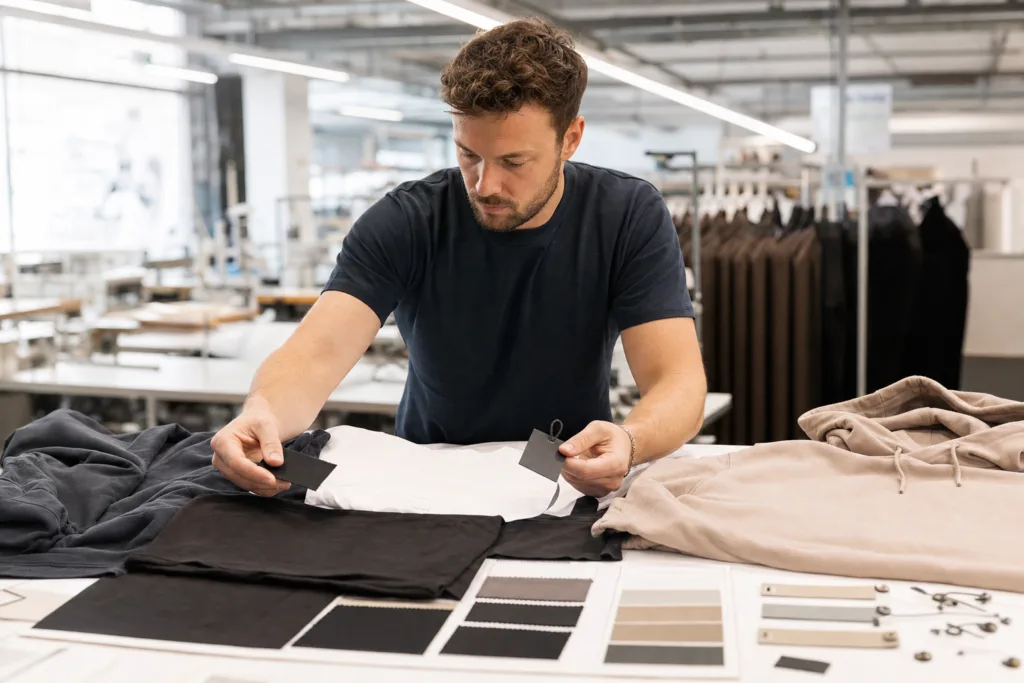
The most reliable low MOQ custom clothing options are the ones that use available materials, standard garment construction, and decoration methods with limited setup burden. These options are easier to sample, easier to repeat in bulk, and easier to expand later if the style sells well.
| Customization Option | Low MOQ Feasibility | Why It Works | Main Limitation |
|---|---|---|---|
| Printed neck label or standard main label | High | Strong branding with low trim complexity | Depends on garment construction and fabric surface |
| Basic hangtag | High | Easy brand addition with low sewing impact | Needs clear packaging plan |
| Single-location heat transfer or DTF logo | High | Low setup and flexible for small runs | Durability depends on correct application |
| Simple embroidery | Medium to high | Premium look for polos, caps, hoodies | Stitch count and placement affect cost |
| Stock fabric with custom color selection from available range | High | Reduces fabric MOQ pressure | Color choices are limited to availability |
| Custom woven fabric or special dyeing | Low | Unique product identity | Raises minimums and lead time |
| Branded zipper, cord ends, hardware | Low to medium | Adds premium detail | Separate sourcing increases complexity |
The easiest options to scale later are also usually the easiest options to start with. That is important because many low-MOQ buyers are testing product-market fit. A small first run should teach you what customers respond to before you invest in deeper customization layers.
Why labels and neck tags are one of the best branding tools at low quantities
Labels and neck tags are often the smartest first branding decision for a small order. They give the garment a private label identity without changing the base pattern, fabric structure, or sewing sequence too much.
For T-shirts, hoodies, and sports tops, common low-risk options include printed inside neck labels, woven main labels, size labels, and care labels. A printed neck label can be especially practical when the fabric and garment style allow it, because it reduces the number of separate trim components while still showing brand identity clearly.
What buyers should check is not only the logo design, but also the information layout. Fiber content, care instructions, country of origin, size, and brand placement must all fit the label strategy. If the garment will be sold in a market with labeling requirements, that should be discussed before sampling, not after bulk approval.
When a low-volume program includes children’s products or specialized packaging, regulatory marking can add another layer of planning. In those cases, it helps to review relevant CPSC tracking label requirements early so packaging, trim decisions, and batch identification do not create surprises later.
How standard packaging and hangtags add brand identity without much production strain
Standard packaging and hangtags are often underused in low MOQ planning. Buyers sometimes focus heavily on custom fabric or complex decoration, even though packaging and tags can create a branded presentation with much less manufacturing risk.
A simple branded hangtag, barcode sticker plan, polybag label, and folded presentation can be enough for many startup and retail-ready programs. This is especially useful when the garment itself is intentionally simple.
- Hangtags help establish brand language and retail identity.
- Size stickers and SKU labels improve warehouse handling.
- Standard polybags reduce packaging cost and packing delays.
- Simple insert cards can work if they do not require multiple sourcing rounds.
The risk increases when buyers request custom boxes, tissue paper, insert sets, string seals, and separate packaging for each style variation. Those elements may look small, but for low quantities they often become a coordination bottleneck.
Which print methods work best for low MOQ custom clothing orders?
For low MOQ custom clothing orders, print methods with flexible setup and lower screen or tooling requirements are usually the most practical. The right method depends on artwork complexity, fabric type, placement, and how many units are being decorated.
| Method | Best For | Low MOQ Suitability | Watchouts |
|---|---|---|---|
| Screen printing | Simple logos and larger repeat runs | Medium | Setup cost is harder to justify on very small orders or many colors |
| Heat transfer | Names, numbers, simple logos, teamwear | High | Application quality and heat settings matter |
| DTF | Detailed artwork and short runs | High | Hand feel and wash performance depend on film and press quality |
| Sublimation | Polyester sportswear with all-over design potential | Medium to high | Best on suitable synthetic fabric; color control matters |
Screen printing can still work at lower quantities when the design is simple and the order is concentrated into one or two print colors. But once you add many color separations, multiple garment colors, or several placements, setup efficiency drops.
Heat transfer and DTF are often better suited to lower-volume logo programs, especially for clubwear, event apparel, test runs, and small branded collections. They allow flexibility without requiring the same screen setup logic as conventional printing. For teamwear, names and numbers are often a natural fit for transfer-based decoration.
Sublimation can be excellent for polyester sportswear when the product is built around that process from the start. It is less suitable when buyers are mixing natural-fiber expectations with sublimation-based visuals, or when they assume any fabric can produce the same result.
Before committing, buyers should align artwork, garment fabric, and wash expectations during the apparel sampling process. Sampling is where print scale, color interpretation, and hand feel can be checked before bulk production locks the plan in.
When basic embroidery works well and when it becomes difficult
Basic embroidery works well for low MOQ orders when the logo is compact, the placement is stable, and the stitch count remains controlled. It is commonly a good option for polos, hoodies, jackets, caps, and some uniform categories because it gives a durable, premium-looking brand mark.
The challenge starts when embroidery becomes too dense, too large, or too technically demanding for the garment area. Heavy fills on lightweight fabric can distort the panel. Sleeve placements, hood edges, rib areas, or seams can also increase production difficulty.
- Small chest logos are usually easier than oversized back embroidery.
- Clean line art performs better than highly textured artwork.
- Stable fabrics handle embroidery more consistently than very stretchy or ultra-light materials.
- A single embroidery placement is easier to control than multiple placements across the garment.
From our production perspective, embroidery should be treated as both a branding choice and a fabric-behavior decision. The same logo that looks good on pique polo fabric may not behave the same way on lightweight jersey or brushed fleece.
How stock fabrics and ready-made bases reduce MOQ pressure
Using stock fabrics or ready-made blanks is one of the strongest ways to make low-volume customization feasible. It reduces the need for custom knitting, dyeing, or finishing minimums, which are often the first reason a small custom program becomes difficult.
For example, if a buyer selects an available cotton jersey, fleece, or polyester interlock already used in regular production, the garment can move faster into sampling and bulk planning. The same applies when working from proven silhouettes rather than building an entirely new pattern for a short run.
This does not mean the product must look generic. Branding, print choice, fit selection, and packaging can still give the garment a strong identity. The difference is that the material platform is already production-friendly.
When buyers need a clear roadmap for quantities, approvals, and milestones, early apparel order process planning helps identify which parts of the program should stay standardized and which parts are worth customizing.
Why simple colorways and standard fits make low MOQ orders easier
Simple colorways improve feasibility because each additional fabric color, thread match, print variation, and size split can reduce manufacturing efficiency. For low quantities, the most practical setup is often one to three core colors instead of a full seasonal palette.
Standard garment fits help for the same reason. If the pattern block is already proven, fit consistency is easier to maintain and grading is less risky. Small orders are usually not the right stage for aggressive fit experimentation unless the fit itself is the product’s main selling point.
Key takeaway: If your quantity is limited, reduce variation first. Fewer colors, fewer fit changes, and fewer decoration placements usually create a stronger chance of smooth bulk execution.
Which customization choices usually raise MOQ difficulty and cost?
The customization choices that raise MOQ difficulty are the ones that require separate sourcing, special machine setup, more manual labor, or irreversible material commitments. These features are not wrong, but they need to be used carefully when order volume is low.
Custom fabric development
Custom fabric development often increases minimums because mills may require larger yarn, knitting, dyeing, or finishing runs. Even if the garment factory can sew small quantities, the upstream fabric supply may not support the same flexibility.
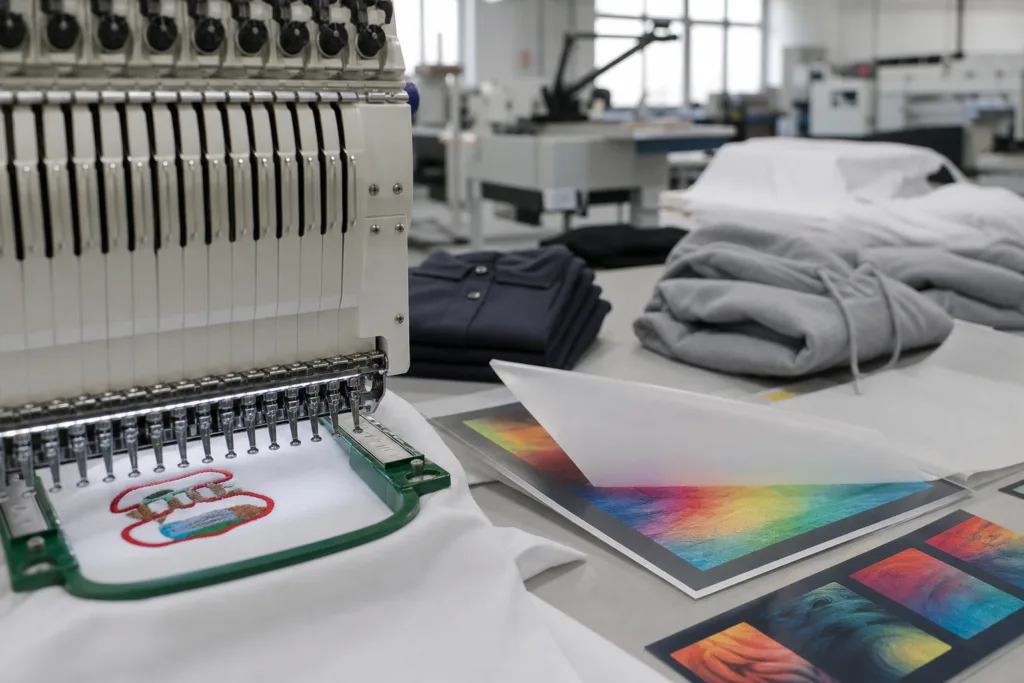
This is especially true when buyers request unique blends, proprietary hand feel, brushed effects, moisture management finishes, or exact Pantone-developed dye lots. Those are valuable features, but they usually belong in a more established repeat program rather than a first low-volume test.
Complex embroidery, appliqué, and multi-location decoration
Large embroidery panels, tackle twill, appliqué, chenille, and mixed decoration programs can quickly change the labor profile of the garment. Multi-location logos also create more chances for placement inconsistency and more time at decoration stations.
For many small runs, one well-executed logo gives better cost-performance than several decorative elements competing on the same garment.
Custom trims, branded hardware, and special accessories
Branded zipper pulls, molded cord ends, custom buttons, metal badges, and silicone patches can look strong, but each one may need separate tooling, supplier coordination, and approval timing. That can be manageable for scale programs, but at low quantity it often consumes budget that could have gone into better fabric or cleaner logo execution.
Retail-ready packaging systems
Special boxes, nested packaging sets, multiple inserts, and highly customized presentation materials can delay final packing. In small orders, this can be more disruptive than buyers expect because one late packaging component can hold back the shipment of completed garments.
Pattern changes and fit adjustments
Pattern changes affect more than appearance. They influence marker planning, sewing balance, grading logic, and fit approval cycles. When the order is small, several rounds of fit revision can make the development cost per unit much less efficient.
How to prioritize customization when your quantity is limited
The most effective way to prioritize is to separate brand-visible customization from production-heavy customization. Brand-visible features are the ones customers notice quickly. Production-heavy features are the ones that increase setup, sourcing, or technical complexity behind the scenes.
- Start with one hero branding element such as a chest logo, printed neck label, or signature hangtag.
- Choose an available fabric and standard fit unless the fabric or fit is the core selling point.
- Limit the number of colors and size splits where possible.
- Add premium details only if they clearly strengthen the product story.
- Keep one part of the product simple so another part can carry the brand impact.
This is often where buyers benefit from working with Ninghow as a manufacturer rather than treating customization like a menu of unlimited add-ons. In real production, the best low-MOQ result usually comes from balancing visual identity with process stability.
A practical decision framework for low-volume customization
When evaluating low MOQ custom clothing options, we recommend comparing every requested feature across four questions: How much brand impact does it create? How much cost does it add? How much lead time does it require? How much execution risk does it introduce?
| Feature | Brand Impact | Cost Effect | Lead Time Effect | Risk Level |
|---|---|---|---|---|
| Printed neck label | Medium | Low | Low | Low |
| Basic front logo transfer | Medium to high | Low to medium | Low | Low |
| Small chest embroidery | High | Medium | Medium | Medium |
| Custom dyed fabric | High | High | High | High |
| Branded zipper hardware | Medium | Medium to high | Medium to high | Medium to high |
| Custom box packaging | Medium | Medium | Medium | Medium |
This framework helps buyers avoid a common mistake: investing heavily in low-visibility details while skipping the features that customers actually notice first.
Best low MOQ customization combinations by product type
T-shirts
The most practical T-shirt combination is usually stock cotton or cotton-blend jersey, a standard fit, printed neck labeling, and one print method such as DTF, transfer, or a simple screen print. This keeps the garment easy to produce while still creating a branded finish.
Hoodies and sweatshirts
For hoodies, the safest combinations are stock fleece fabric, one body color, a front or chest logo, woven or printed labels, and standard drawcord or rib components. Custom hardware and major fit modifications should be added carefully because they affect both sourcing and assembly.
Polo shirts
Polo shirts often work well with stock pique or performance knit fabric, standard collar construction, and a small chest embroidery. This gives a polished result without requiring heavy print setup.
Teamwear and sportswear
For teamwear, transfer-based names, numbers, and logos are often practical at low volumes, especially when size distribution varies. Polyester bases and sublimation may also work if the style is designed specifically for that production route from the beginning.
Buyers should always compare decoration timing against the expected production timeline for low-volume orders, because decoration choice can affect when garments can be packed and shipped.
Common mistakes buyers make on low MOQ custom clothing programs
The most common mistake is asking a small order to behave like a fully developed large-scale collection. Low quantities need sharper prioritization.
- Requesting too many custom features at once.
- Approving artwork before confirming decoration suitability for the fabric.
- Using many colorways on a limited quantity.
- Changing fit after trim and branding decisions are already underway.
- Underestimating packaging complexity.
- Skipping tolerance, placement, or label detail review in samples.
Another frequent problem is assuming every customization method scales the same way. A logo might be easy to place by transfer on 80 garments but inefficient as a multi-color embroidery program on the same order.
What buyers should ask a clothing manufacturer before placing a low MOQ order
Direct questions save time. The more specific the buyer is about product goals, the easier it is to identify a feasible customization mix.
- Which parts of this garment can stay standard to support my quantity?
- Which customization options have the lowest setup burden for this fabric and style?
- What is the most realistic logo application method for my artwork?
- Will my requested packaging create sourcing or packing delays?
- Which trims are available now and which require custom development?
- How many sample rounds are likely before bulk approval?
- What checkpoints will be used for logo placement, measurements, and finishing?
Those discussions should also cover inspection logic and acceptable tolerance ranges. Clear quality control checks for small runs are especially important because a low-volume order still needs bulk consistency, even when flexibility is part of the program.
How to reduce risk while still building a private label look
The safest route is to build a layered identity rather than forcing every feature to be custom. That means combining one or two visible brand elements with one or two easy operational choices.
A practical example would be a stock heavyweight T-shirt, custom neck label, one left-chest transfer logo, one branded hangtag, and standard polybag packing. That combination can look intentional and market-ready without depending on custom fabric development or special hardware.
Another example would be a polo shirt using stock pique fabric, a standard fit, chest embroidery, size and care labels, and a simple retail hangtag. For many B2B buyers, that is enough to create a strong private label appearance while keeping the order feasible.
Key takeaway: A private label look does not require every component to be custom. It requires the right components to be custom.
Conclusion: choosing the right customization mix for low MOQ apparel production
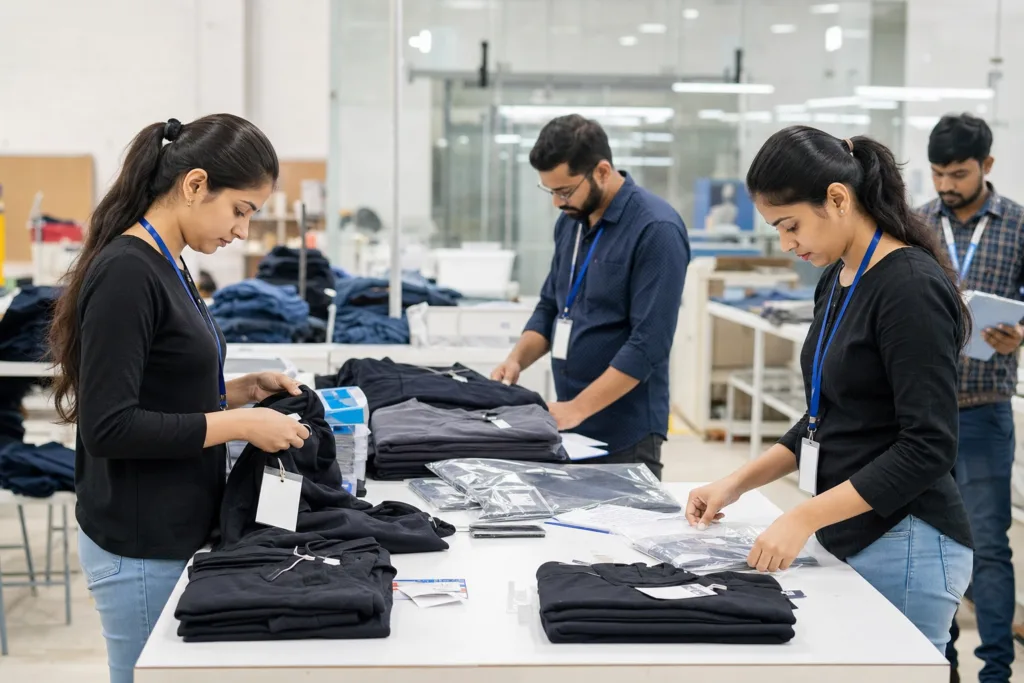
The best low MOQ custom clothing options are usually the ones that maximize visible brand identity while minimizing sourcing layers, technical uncertainty, and unnecessary variation. Labels, hangtags, simple packaging, focused print methods, and basic embroidery often perform well because they create a branded result without forcing high material minimums or overcomplicated production.
When order quantity is limited, buyers should treat customization as a priority exercise, not a feature checklist. Start with available materials, stable fits, and one or two strong branding elements. Then add complexity only where it clearly improves the product.
At Ninghow, we usually find that the most successful low-quantity programs are the ones built around feasibility from the beginning. That means aligning fabric, decoration, trims, sample expectations, and packing before bulk production starts, so the small run can still look polished, consistent, and ready to scale.
Frequently Asked Questions
What is the best customization method for very small apparel orders?
The best method is usually one that adds visible branding without requiring heavy setup. Printed neck labels, simple hangtags, DTF or heat transfer logos, and small embroidery placements are often practical because they create a private label look while keeping sourcing and production complexity under control.
Can I use custom fabric on a low MOQ clothing order?
Yes, but it is often less feasible than using stock fabric. Custom fabric usually involves mill minimums, dyeing commitments, and longer development timelines, so it can raise both cost and risk unless the order has enough volume or strong repeat potential.
Is embroidery or printing better for low MOQ custom clothing options?
It depends on the garment and artwork, but printing is often easier for very small runs. Basic embroidery works well for compact logos on stable fabrics like polos or hoodies, while transfer or DTF printing is usually more flexible for detailed artwork, short runs, and variable teamwear decoration.
How many custom features should I include in a low-volume order?
A focused mix of one to three meaningful custom features is usually the safest plan. Most buyers get better results by choosing a strong logo method, clear label setup, and simple packaging rather than spreading budget across too many trims, colors, and construction changes.
Why do packaging requests sometimes delay small apparel orders?
Packaging can delay a small order because it adds separate sourcing, approvals, and packing steps. Custom boxes, inserts, stickers, or retail presentation materials may seem minor, but if one packaging component arrives late or needs revision, finished garments may not be able to ship on time.
How can I make a low MOQ order look private label without overcomplicating production?
The best approach is to customize the parts customers notice most while keeping the production base simple. A stock fabric garment with a branded neck label, one clean logo application, and a well-designed hangtag often creates a stronger and more feasible private label result than a small order overloaded with complex trims and special development requests.