







If you want to customize polo shirts with labels and packaging for a retail-ready launch, the key is to plan branding trims and packaging at the same time as fabric, fit, and logo decoration. A polo shirt may look complete after sewing and embroidery, but it is not truly private label ready until the neck label, care label, hangtag, barcode system, polybag, and presentation packaging are aligned with your sales channel.
For buyers developing polos for retail, e-commerce, clubs, uniforms, or golf collections, polo shirt manufacturing support for private label brands becomes most useful when product development covers fabric selection, fit refinement, logo execution, trims, labeling, packaging, and bulk finishing as one coordinated plan. From our manufacturing perspective, this reduces sampling confusion, avoids last-minute packaging changes, and helps buyers move from a good garment to a market-ready product.
Why labels and packaging matter in polo shirt private label production
Labels and packaging are not minor accessories. They shape how your polo shirt is identified, handled, sold, and remembered.
A clean garment with poor trim execution can still feel unfinished. We often see buyers spend significant time on fabric, color, and embroidery, then treat labels and packaging as an afterthought. That usually creates delays, inconsistent branding, and avoidable repacking before shipment.
In private label production, trims and packaging serve several functions at once:
- brand presentation
- size and style identification
- care and compliance communication
- warehouse and retail scanning readiness
- protection during transport
- customer unboxing experience
Key takeaway: A polo shirt becomes easier to sell, stock, and scale when branding trims and packaging are developed as part of the product, not as a final add-on.
What makes a polo shirt retail-ready versus bulk-only
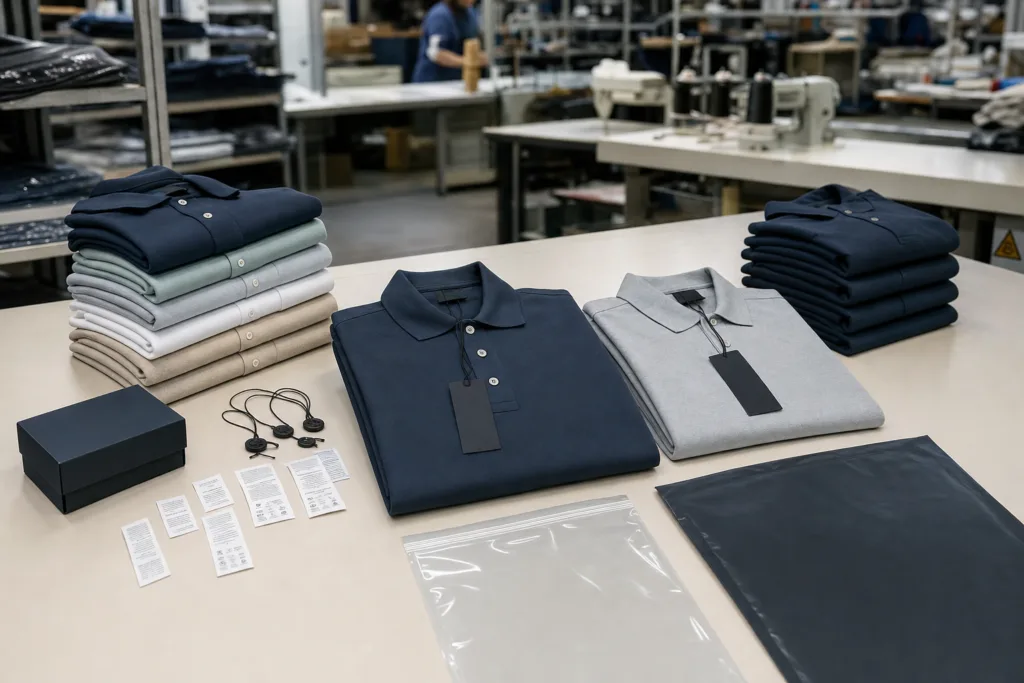
A bulk-only polo is usually produced for internal use, events, or simple team distribution. A retail-ready polo is prepared for shelf display, e-commerce fulfillment, or branded resale.
The difference is not only visual. It affects information accuracy, packaging consistency, and operational handling across warehousing and sales channels.
| Area | Bulk-Only Polo | Retail-Ready Polo |
|---|---|---|
| Neck branding | Generic or simple label | Custom brand label or printed neck mark |
| Care information | Basic or standard label | Brand-specific care and fiber content details |
| Size identification | Simple sticker or loose sorting | Consistent size label and SKU system |
| Hangtag | Often not included | Custom hangtag with brand presentation |
| Barcode readiness | Optional | Essential for retail and inventory control |
| Polybag and folding | Basic protection | Consistent folding, labeling, and presentation |
| Retail packaging | Usually none | May include inserts, sleeves, or boxes |
Buyers building private label clothing development for retail-ready collections usually need all these parts to work together. If one element is missing, the garment may still be wearable, but it may not be ready for stores, marketplaces, or brand presentation standards.
How to customize polo shirts with labels and packaging without overcomplicating production
The best way to customize polo shirts with labels and packaging is to match the trim level to your target market and order structure. Not every polo needs a box, a woven neck label, and multiple inserts.
We usually advise buyers to decide early on three practical questions:
- Where will the polos be sold: retail shelf, online, events, school shop, club distribution, or corporate use?
- What price point is the product targeting?
- Which branding details are visible to the end customer and therefore worth upgrading?
For example, a uniform polo for staff distribution may need durable neck branding, clear care labeling, size stickers, and simple protective bags. A golf or fashion polo may also need premium woven labels, textured hangtags, barcode organization, and a stronger folded presentation.
Neck label options: printed labels, woven labels, and custom branding methods
The neck label is one of the first private label details customers notice. It also affects comfort, perceived quality, and how premium the garment feels when handled.
For polo shirts, the most common neck branding options are heat transfer printed labels, woven labels, and satin labels. Each option has different implications for comfort, cost, and visual style.
| Label Type | Best For | Advantages | Trade-Offs |
|---|---|---|---|
| Heat transfer printed label | Sportswear, soft-hand polos, performance styles | No scratchy edge, clean look, lightweight feel | Limited texture, depends on correct application |
| Woven neck label | Fashion, golf, premium branded polos | Stronger brand identity, durable, upscale appearance | Can feel firmer if poorly positioned |
| Satin label | Mid-range and cost-sensitive projects | Smooth surface, clear information printing | Less premium than woven branding in many cases |
If the polo uses chest embroidery, the neck trim should feel equally considered. Buyers exploring custom embroidered polo shirt options for branded programs often pair the embroidery with a woven neck label to keep the overall product image consistent.
From our manufacturing perspective, neck label choice should also consider collar construction and back neck seam finish. A thick woven label in a lightweight polo can feel mismatched, while a printed neck mark may be a better fit for performance fabrics.
Size label, care label, and compliance basics for apparel buyers
Size and care labels are functional, but they also reduce customer confusion and after-sales problems. Even simple polo programs benefit from clear, consistent labeling.
At minimum, buyers should confirm the information required for their market, including size, fiber composition, washing guidance, and country-of-origin handling where applicable. Requirements vary by destination market, so the final label plan should be reviewed before bulk approval.
Care labels should be easy to read and placed consistently. If the print is too small, the edge is uncomfortable, or the information is incomplete, the garment may create avoidable returns or retail rejection.
When we build label packs for polos, we typically confirm:
- brand name or trademark presentation
- size format such as S to 3XL or numeric grading
- fabric composition wording
- wash care symbols or text instructions
- country-specific wording if required by the buyer
- country-of-origin labeling plan
- label placement location and sewing method
Key takeaway: A polished private label polo does not rely on appearance alone. Clear size and care labeling supports compliance, customer trust, and smoother retail operations.
How custom woven labels support brand consistency and perceived value
Custom woven labels are often worth the added trim cost when the polo is positioned as a long-term branded product rather than a one-time promotional item. They add structure to the identity of the garment and make repeat styles feel more consistent across seasons.
We commonly see woven labels used for golf polos, resortwear, club merchandise, and elevated uniform collections. They work especially well when buyers want the polo to feel like a real branded product instead of decorated stock apparel.
A good woven label should match the rest of the product language. That means logo scale, background color, yarn contrast, fold type, and edge finish all need review. Oversized woven labels can distort the neck area, while labels with weak contrast can make the brand difficult to read.
Custom hangtags for polo shirts: purpose, materials, finishes, and branding impact
Hangtags are more than a branding extra. They give the buyer room to communicate price positioning, product story, material highlights, collection name, or retail information without crowding the sewn-in labels.
For polo shirts, common hangtag material options include coated paper, kraft paper, textured stock, and layered board. The right choice depends on whether the product is basic, sporty, eco-focused, or premium.
| Hangtag Element | Basic Program | Mid-Range Program | Premium Program |
|---|---|---|---|
| Paper type | Standard card | Thicker matte stock | Textured or layered board |
| Printing | 1-color or simple CMYK | Full-color front and back | Special finish or refined print detail |
| Attachment | Plastic fastener | Branded string or loop pin | Custom cord or premium fastener |
| Information level | Brand and size | Brand, SKU, care note, story | Full brand presentation and retail data |
Good hangtags should stay aligned with the garment identity. If the polo is clean and premium, a flimsy tag can weaken the presentation. If the product is cost-sensitive, overdesigned tags may increase cost without improving sell-through.
For printed logo polos, hangtags often need to support a more modern graphic identity. Buyers evaluating custom printed polo shirt production paths should consider whether the printed artwork, swing tag palette, and outer packaging use one coherent visual system.
Barcode stickers, SKU labels, and inventory readiness for retail and e-commerce
Retail-ready polos need barcode planning long before packing day. If SKU labels, size stickers, and UPC placement are unclear, warehouses and stores may need to relabel goods manually.
Barcode stickers may be applied to hangtags, polybags, or retail boxes depending on the buyer workflow. What matters is consistency, scan reliability, and correct assignment by color and size. Guidance on barcode placement on apparel packaging is useful because poor placement, weak contrast, or damaged quiet zones can create checkout and inventory issues.
In practical production terms, we recommend confirming:
- SKU naming logic by style, color, and size
- whether the barcode is printed on hangtag, sticker, or both
- label dimensions and scan area
- human-readable text below the barcode
- whether outer carton marks must match unit-level labels
- how packed ratio and assortment reports will be checked
This section often seems administrative, but it directly affects retail readiness. A beautiful polo can still create problems if inventory teams cannot identify units quickly and accurately.
Individual polybag options: protection, presentation, and fulfillment efficiency
Individual polybags are usually the simplest packaging component, but they still deserve planning. They protect the folded polo from dust, moisture, friction, and handling damage during transit and warehousing.
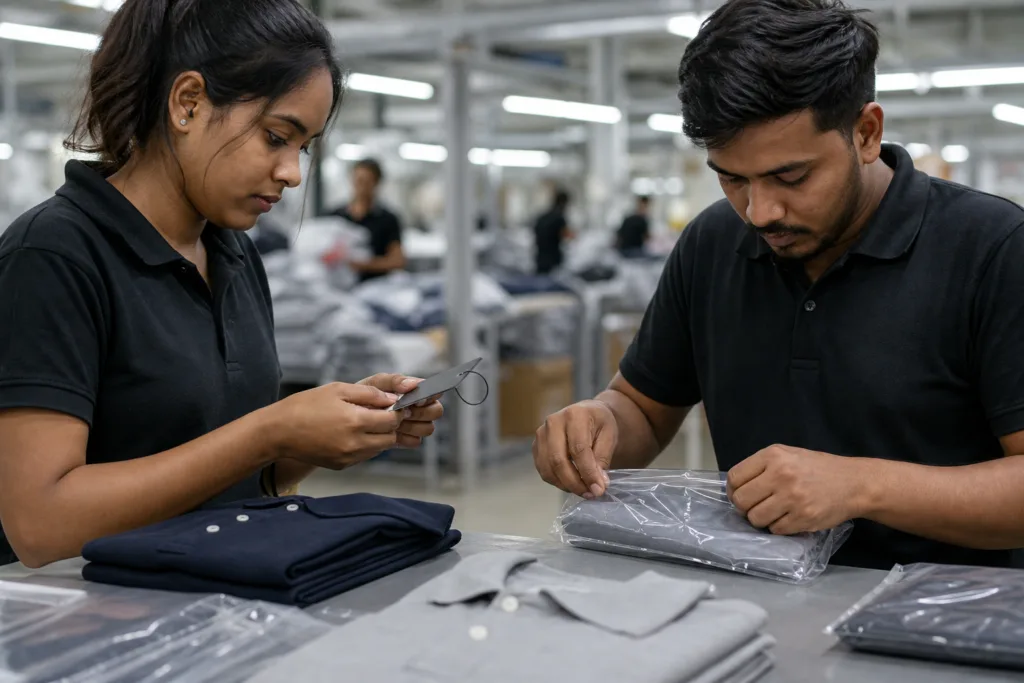
Not every project needs a heavy or fully branded bag. The right choice depends on shipping method, retail presentation, and fulfillment handling. Practical guidance on poly bag protection for apparel can help buyers think through thickness, closure style, and protective purpose before they over-spec or under-spec packaging.
| Polybag Option | When It Works Well | Main Benefit | Watch-Out |
|---|---|---|---|
| Clear standard self-seal bag | Basic retail and bulk warehouse use | Low cost, easy size visibility | Can look plain without added sticker or insert |
| Resealable bag | E-commerce and returns handling | More convenient after inspection | Slightly higher unit cost |
| Printed warning and SKU sticker bag | Retail compliance and inventory control | Clear handling information | Needs accurate sticker placement |
| Branded outer bag | Premium collections and gifting | Stronger presentation | May be unnecessary for cost-sensitive programs |
From a manufacturing and fulfillment standpoint, the bag opening direction, fold format, sticker position, and air vent requirements should be locked before bulk packing begins. Small inconsistencies here can slow carton packing and increase rework.
Branded polo shirt packaging: retail boxes, sleeves, inserts, and premium presentation
Retail boxes and presentation components should be used selectively. They make the most sense when the selling environment rewards presentation, gifting value, or premium shelf presence.
For many polo programs, a simple folded presentation with a clean polybag, size sticker, and structured hangtag is enough. For higher-end launches, the addition of belly bands, paper sleeves, inserts, tissue-style wrapping, or rigid boxes can elevate the product story.
We generally advise buyers to ask whether the outer packaging adds real sales value or only added cost. A box can improve presentation, but it also increases cubic shipping volume and may require stronger carton planning.
- Use sleeves or belly bands when you want visible branding without a full box
- Use inserts when folded structure needs support for display consistency
- Use retail boxes when gifting, premium display, or organized shelving justifies the added packaging cost
- Keep dimensions practical so packed units remain efficient to store and ship
How to choose label and packaging combinations by target market and price point
The right setup depends on who will buy the polo and how it will be sold. One trim package does not fit every channel.
| Target Market | Recommended Label Setup | Recommended Packaging Setup |
|---|---|---|
| Corporate uniform | Printed neck label, care label, size mark | Clear polybag with size sticker |
| Team or club apparel | Printed or woven neck label, care label, branded hangtag | Polybag plus barcode sticker if inventory is needed |
| Golf retail | Woven neck label, care label, size label, refined hangtag | Structured fold, quality polybag, optional sleeve or insert |
| Fashion private label | Custom woven label, care label, branded size and hangtag system | Presentation fold, branded bag or sleeve, barcode plan |
| E-commerce basics | Clear label hierarchy with readable SKU data | Protective resealable bag optimized for fulfillment |
At Ninghow, we usually help buyers simplify this choice by starting with the end use, then matching branding detail to budget and MOQ. That is often more effective than beginning with packaging ideas alone.
Artwork, logo files, and packaging information you need before sampling
Sampling moves faster when artwork and packaging information are prepared in a usable format. Most delays happen because the garment is approved conceptually, but the trim files are incomplete.
Before sampling, buyers should ideally provide:
- vector logo files for labels, tags, and packaging print
- brand fonts or approved text treatment
- Pantone or color references when color matching matters
- neck label dimensions and fold preference
- care label wording and composition details
- hangtag size, hole position, and front-back layout
- barcode data and SKU matrix if available
- polybag size expectations and sticker placement
- box or sleeve dimensions if premium packaging is planned
Key takeaway: Sampling quality improves when branding files are production-ready, not just visually approved in a mood board.
Sampling workflow for labels, hangtags, and packaging before bulk production
Trim and packaging sampling should happen in a clear order. If the polo body is approved but the labels and packaging are still unresolved, bulk timelines can become unstable.
We normally recommend a sequence like this:
- approve garment fit, fabric, color, and logo method
- confirm label artwork and required legal information
- develop hangtag artwork and barcode structure
- approve folding method and polybag dimensions
- review any sleeves, inserts, or retail boxes
- check final packed sample before bulk signoff
This is where detailed apparel order process support for labeling and packaging details becomes valuable. Small trim details often affect bulk packing accuracy, carton ratios, and final inspection criteria more than buyers initially expect.
MOQ, lead time, and cost drivers for custom labels and packaging
Custom labels and packaging do not all follow the same MOQ logic. Some items can be produced in relatively flexible quantities, while others become expensive or slow when the order is too small.
The main cost drivers usually include setup charges, material type, print complexity, number of SKUs, finishing detail, and whether special packaging components require dedicated sourcing.
| Component | Common Cost Driver | Lead Time Sensitivity |
|---|---|---|
| Woven neck labels | Loom setup and color count | Moderate |
| Printed care labels | Language versions and format changes | Low to moderate |
| Hangtags | Paper type, print finish, and attachment | Moderate |
| Barcode stickers | SKU quantity and data accuracy | Low if prepared early |
| Polybags | Size, thickness, and branding print | Low to moderate |
| Retail boxes | Structure, board type, and print coverage | High |
When buyers ask for low MOQ support, we usually explain that a practical solution may involve keeping some packaging simple while customizing the most visible brand elements first. That often means prioritizing neck branding, hangtags, and organized unit labeling before moving into more complex premium boxes.
Common mistakes in polo shirt private label packaging and how to avoid them
Most packaging problems are avoidable. They usually come from incomplete specs, inconsistent approval steps, or treating trims as separate from the garment.
- Choosing a premium label that feels uncomfortable against the neck
- Approving artwork without checking actual print size and readability
- Using hangtags that do not match brand positioning
- Forgetting barcode logic until after production starts
- Selecting bags that are too tight for the fold format
- Adding boxes without considering shipping volume and carton planning
- Skipping packed sample review before bulk packing
The simplest prevention method is to approve one complete retail-ready sample, not only a garment sample. That full packed sample should include labels, hangtags, stickers, folding, and packaging presentation exactly as intended for bulk.
Quality control checklist for labels, hangtags, and packaging during bulk orders
Bulk quality control should check more than sewing and measurements. Retail-ready polo programs need trim and packaging inspection points as well.
We commonly inspect these areas during production and final packing:
- correct neck label style, color, and placement
- size label consistency with garment measurement set
- care label content and stitching quality
- hangtag artwork, attachment method, and position
- barcode correctness and scan readability
- polybag size, seal quality, warning print, and sticker location
- folding consistency across the packed lot
- retail box or sleeve finish, if included
- carton assortment accuracy by color and size
A strong QC routine protects brand presentation at the final stage, where the product is closest to shipment and the cost of rework is highest.
A practical private label packaging setup for fashion brands, teams, and retailers
A practical setup is usually better than an overloaded one. Most successful polo programs use a branding package that fits the channel rather than trying to maximize every trim.
For many buyers, a balanced setup looks like this:
- comfortable printed or woven neck branding
- clear size and care labeling
- one brand-consistent hangtag
- barcode sticker system aligned with SKU planning
- protective individual polybag with stable fold format
- optional sleeve or insert only if the market justifies it
This approach works well for growing brands, organized team programs, and retailers that need clean presentation without excessive packaging complexity.
How Ninghow supports custom polo shirt branding and retail-ready finishing
From our manufacturing perspective, retail readiness works best when branding, packaging, and production planning are connected from the start. That includes fabric and fit decisions, decoration method, trims, packing method, and bulk QC checkpoints.
We support buyers by reviewing how label choice affects comfort, how hangtags and barcode systems affect packing flow, and how packaging affects final presentation and shipping efficiency. For private label polo projects, that joined-up process helps reduce revisions between sample approval and bulk execution.
Conclusion: build the branding system around the polo, not after it
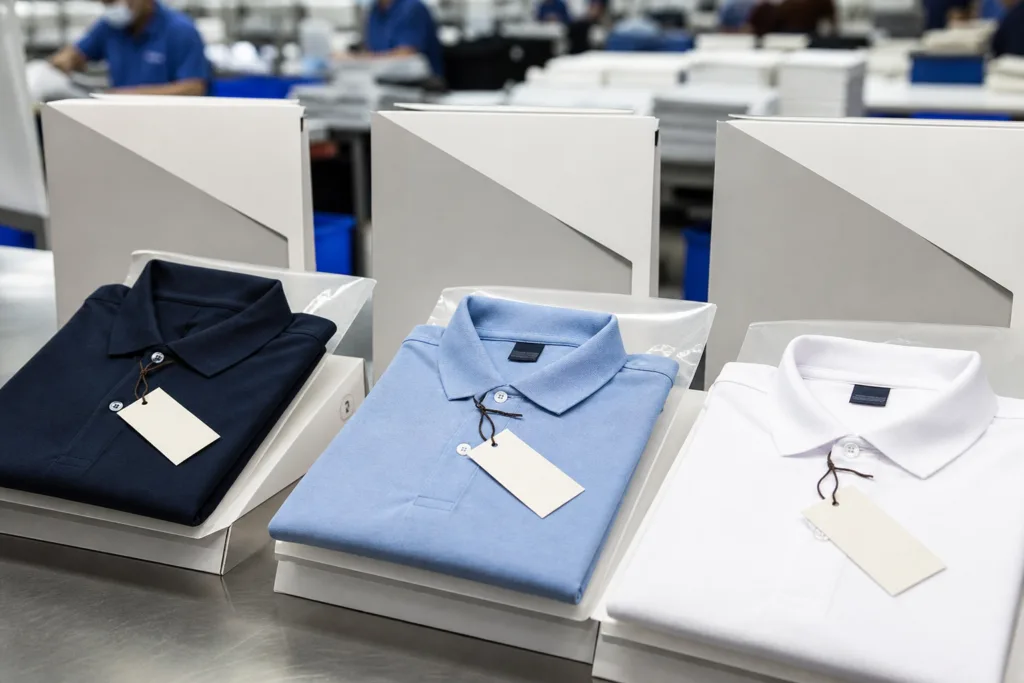
To customize polo shirts with labels and packaging successfully, think beyond decoration and focus on the full branded unit. A retail-ready polo should look consistent, feel intentional, communicate clearly, and move smoothly through warehousing, retail, or e-commerce handling.
When labels, hangtags, barcode stickers, polybags, and presentation packaging are planned together, private label execution becomes cleaner and more scalable. For buyers developing polos for resale, gifting, uniforms, clubs, or golf collections, that planning is what turns a finished garment into a finished product.
FAQs
Do all private label polo shirts need custom woven neck labels?
No, custom woven neck labels are not required for every project. They are most useful when the polo is positioned as a premium or long-term branded item, while printed neck labels often work better for performance polos, softer hand feel, or more cost-sensitive programs.
What information should be on a polo shirt care label?
A polo shirt care label should clearly show the size-related or garment-specific care information required for the target market, typically including fiber composition and washing guidance. Buyers should also confirm whether country-of-origin wording or additional market-specific labeling details are needed before bulk production.
Should the barcode go on the hangtag or the polybag?
Either placement can work, as long as the buyer’s warehouse and retail workflow is clear. Many programs place the barcode on the hangtag for store use and on the polybag for packing and fulfillment visibility, but consistency and scan quality matter more than choosing only one location.
Is branded retail box packaging worth it for polo shirts?
Branded boxes are worth it when presentation, gifting, or premium shelf impact supports the added cost and shipping volume. For many mid-range polo programs, a strong hangtag, clean folding method, and well-labeled protective polybag provide better cost-performance balance than a full box.
How early should labels and packaging be sampled?
Labels and packaging should be sampled before bulk approval, ideally once the garment body, fit, and decoration method are already confirmed. Reviewing one packed sample with all branding components together helps catch sizing, placement, readability, and packing issues before they become bulk-order problems.
What is the simplest retail-ready packaging setup for a private label polo?
The simplest effective setup usually includes a branded neck label or print, a clear care label, a size system, one hangtag, a barcode plan, and an individual polybag with consistent folding. This gives the polo a professional retail-ready finish without creating unnecessary packaging complexity.