



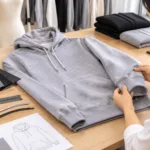
For a clothing brand or retailer, the right men’s shirt style depends on the end use, target price and positioning, climate, desired fit, fabric behavior, decoration method, and required construction details. Start with the style family, then define the fabric, fit block, trims, labeling, decoration, quality checkpoints, and sample requirements in a production-ready brief. This approach helps a buyer compare men’s shirt styles as product-line options rather than treating appearance alone as the selection criterion. For a related process overview, review apparel sourcing center.
How to Choose Men’s Shirt Styles for a Product Line
Begin with the role the shirt must play in the range. A shirt for everyday casual wear may prioritize a familiar silhouette, easy care, and flexible layering. A workwear-oriented product may require a more structured appearance, defined pocket placement, and construction details suited to repeated use. A lifestyle or active product may need closer attention to fabric stretch, weight, moisture behavior, movement, and decoration durability. These outcomes depend on the selected fibre, fabric construction, finishing, and specification, so the style name alone is not enough.
Define the target customer and selling context before choosing a block. A slim, regular, relaxed, or oversized fit is a design direction, not a universal measurement standard. Record the intended body shape, wearing ease, body length, sleeve length, shoulder position, collar proportions, and size range. A supplier or men’s shirt manufacturer needs garment measurements, tolerances, construction notes, and a reference garment or technical drawing to interpret the request consistently.
Price positioning also affects the decision. A simpler shirt may reduce the number of construction and trim variables, while a more detailed style can require additional components, decoration placements, or appearance checks. Buyers should compare the complete product specification, not just the fabric quotation. Before sampling, document fabric composition, fabric weight or other agreed material parameters, color standards, trims, label requirements, decoration artwork, packaging inputs, size breakdown, and approval responsibilities. An apparel sourcing center can be a useful reference point when organizing supplier evaluation, quality questions, and delivery planning, but the buyer still needs direct confirmation of project-specific terms.
Men’s Shirt Styles and Their Typical Product Roles

The main style families can occupy different positions in a collection. A button-down shirt with a collar and front placket can be developed in a casual or more structured direction depending on the collar, fabric, fit, pocket, cuff, and finishing details. An Oxford-style interpretation is often associated with a more textured woven appearance, but the actual product behavior must be checked against the selected fabric and construction. Buyers should state whether the shirt is intended to be worn alone, layered, tucked, or worn open.
Chambray is a woven-shirt direction that can support a lighter, casual appearance, while linen-based styles may be considered where the buyer wants a particular hand feel, drape, and warm-weather positioning. Neither label establishes a guaranteed weight, opacity, wrinkle behavior, or care result. Those points should be confirmed through the proposed fabric specification and sample review. Flannel-style shirts are commonly developed with a brushed or soft-looking surface, but warmth and performance depend on fabric composition, weight, finishing, and construction rather than the style name alone.
Polos use a different product language from woven button-downs. Their collar, placket, sleeve construction, and knit structure can support a casual or more polished product role. Buyers comparing men’s polo shirts should define whether the priority is decoration area, movement, appearance after care, or a particular fabric behavior. A focused custom polo shirt manufacturing planning resource can help frame the buyer inputs needed for a polo brief without replacing product-specific confirmation.
Henleys and crew-neck or V-neck T-shirts can serve as simpler base-layer or casual options, while overshirts add a layer between a shirt and lightweight outerwear. The difference is not only visual. Placket construction, button count, pocket design, hem shape, sleeve finish, fabric weight, and intended layering space should be documented. For each option, ask whether the product must be worn next to skin, over another garment, tucked into trousers, or used as an outer layer.
| Shirt style | Typical product role | Key design and construction inputs | Fabric considerations | Decoration and branding considerations | End-use questions to confirm |
|---|---|---|---|---|---|
| Button-down or Oxford-style shirt | Casual, work-oriented, or versatile woven shirt | Collar, placket, cuff, pocket, hem, fit, and button specification | Texture, opacity, weight, drape, shrinkage, and care instructions | Placement must work around the front placket, pocket, and collar | Will it be tucked, layered, worn open, or worn alone? |
| Chambray or linen-based shirt | Casual or warm-weather product direction | Collar shape, sleeve finish, pocket position, hem, and fit block | Confirm composition, weight, wrinkling, opacity, color variation, and care | Check artwork contrast and decoration suitability on the chosen surface | What climate, layering use, and appearance standard apply? |
| Flannel-style shirt | Casual layering or seasonal product direction | Placket, pocket matching, cuff, seam details, and body length | Review surface, weight, hand feel, shrinkage, and wash appearance | Consider embroidery, labels, or patches in relation to fabric thickness | Is it a base layer, mid-layer, or standalone shirt? |
| Polo shirt | Casual, uniform, lifestyle, or active product line | Collar, placket, sleeve opening, side vents, hem, and fit | Confirm knit structure, weight, stretch, recovery, care, and moisture claims | Define logo size, placement, method, thread or print colors, and approval standard | What movement, decoration, and appearance requirements apply? |
| Henley, T-shirt, or overshirt | Base layer, casual top, or light layering piece | Neck or placket, shoulder, sleeve, pocket, hem, and layering ease | Compare opacity, drape, stretch, weight, shrinkage, and care behavior | Confirm whether decoration sits on jersey, woven fabric, a pocket, or a label | What garment is worn underneath, and how will it be cared for? |
Fabric Selection: Match Material Behavior to End Use
Fabric selection should translate the desired product experience into measurable or reviewable inputs. Start with fibre composition, fabric construction, weight, width where relevant, color standard, and finishing. Then assess hand feel, drape, opacity, stretch, recovery, likely shrinkage, wrinkling, care method, and appearance after laundering. These characteristics can vary within the same broad fibre category, so “cotton,” “linen,” “blend,” or “performance fabric” is not a complete fabric brief. Buyers should request the supplier’s fabric specification, care information, and any product-specific test records before treating a property as confirmed.
Cotton-based fabrics may be selected for a particular hand feel, but the final result depends on yarn, construction, finishing, and weight. Linen-based fabrics may offer a distinct texture and drape, while the buyer should define acceptable wrinkling and care expectations. Blends can be considered when the product brief requires a balance of properties, but the ratio and construction should be stated. Performance claims such as stretch or moisture management should be tied to documented fabric information and an agreed evaluation method, not assumed from a generic label.
Before approving a fabric, compare the actual sample against the intended end use. Check whether the cloth is sufficiently opaque, whether the collar and placket hold the intended shape, whether the sleeve and body fall correctly, and whether decoration changes the hand or appearance. Record any wash or appearance requirement in the specification and agree how it will be reviewed. Where care, shrinkage, colorfastness, dimensional stability, pilling, moisture management, or seam performance matters, request the applicable supplier documentation or product-specific test record rather than relying on a general fibre description.
For sourcing decisions, buyers should also separate product requirements from supplier capabilities. A guide on how to choose a custom clothing manufacturer for private-label and bulk production can support the evaluation process, while the buyer should request direct confirmation of available fabrics, development stages, decoration methods, order conditions, documentation, and quality controls for the specific shirt program.
Fit, Measurement, and Size-Range Decisions
Fit labels should be converted into a measurable fit block before sampling. Define whether the shirt is slim, regular, relaxed, or oversized, then record the intended ease, shoulder position, chest shape, body length, sleeve length, and collar proportions. These labels are useful for communication, but they do not replace garment measurements because brands may apply them differently.
A sampling brief should include the base size, body measurements used for development, finished garment measurements, measurement points, grading direction, and tolerances. State whether measurements are taken flat, along a seam, or around the garment. Include chest, waist, sweep, shoulder, sleeve length, bicep, cuff opening, body length, collar, placket, and pocket position where relevant. A reference garment, technical drawing, or complete tech pack helps the manufacturer interpret the desired proportions.
Size-range planning also requires decisions about grading and proportion. Sleeve and body length may need separate review across sizes, while collar, shoulder, cuff, and pocket dimensions should remain consistent with the intended fit. Confirm which points are critical, what tolerance is acceptable, and how deviations will be measured. A sample should be reviewed on the intended fit model or against an agreed reference before the size set is approved.
Construction Details That Affect Perceived Quality
Construction quality should be reviewed against the approved specification rather than judged only by appearance. Check seam alignment, seam allowance, stitch consistency, skipped stitches, loose threads, puckering, and hem evenness. Where stitch density or seam allowance matters, state the requirement in the tech pack and identify the inspection method. Assign the review to a named buyer, supplier, or inspection representative so responsibility is clear.
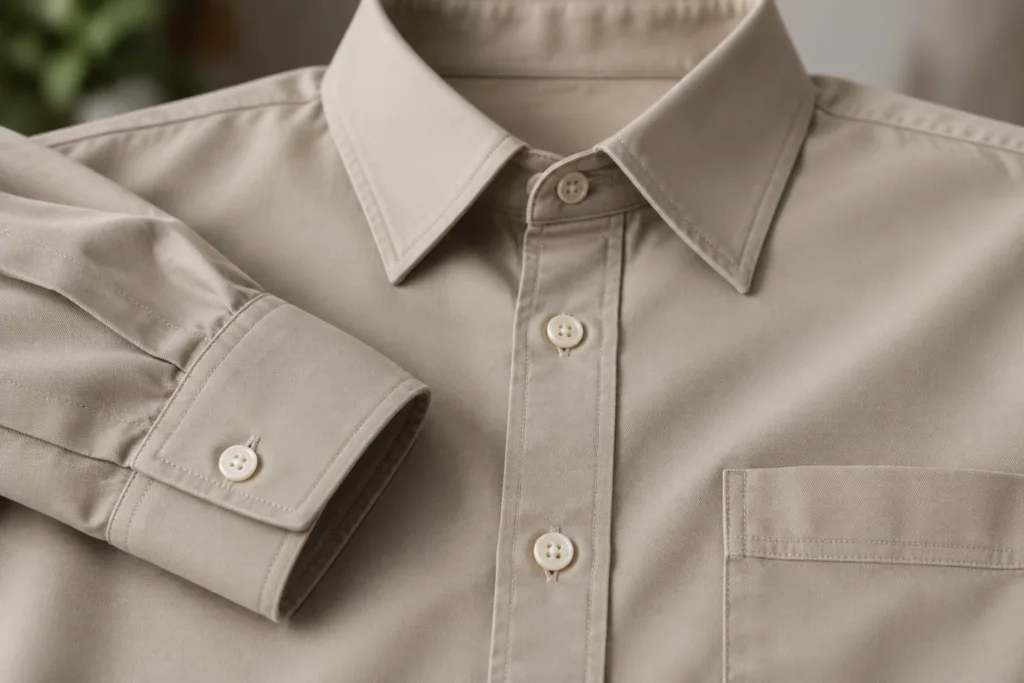
Collar and cuff structure can change the shirt’s appearance and handling. Specify collar shape, point length, stand height, interlining or support requirements where applicable, cuff dimensions, and button placement. The front placket should be checked for alignment, smoothness, and consistent spacing. Buttonholes should match the button size and remain cleanly finished, while buttons should be securely attached according to the agreed construction method.
Pocket position, size, and symmetry should be measured, especially when the pocket interacts with a stripe, check, logo, or chest seam. Reinforcement may be appropriate at stress points, but the location and method should be defined rather than assumed. Review labels, hems, bartacks, seam finishes, and wash or appearance requirements as separate checkpoints. No single detail proves durability; the buyer should agree the relevant inspection criteria and, where needed, request product-specific testing or documentation.
Decoration, Branding, and Private-Label Requirements
Decoration must be selected with the fabric surface, placement, artwork, and end use in mind. Embroidery, screen or transfer printing, woven labels, printed labels, and patches can create different visual and handling results. The specification should identify the method, artwork file, dimensions, placement measurements, thread or ink colors, permitted variation, and approval sample. Placement near a placket, pocket, collar, or seam requires additional measurement control.
Private-label requirements should cover the main label, size label, care and fiber information, country-of-origin information where required, hangtags, barcode or SKU inputs, folding, polybagging, carton marks, and other packaging instructions. Legal labeling requirements vary by destination, so the buyer should confirm the applicable rules before production. Decoration and labeling should be reviewed on the actual shirt construction because a method that works on one fabric or garment area may not produce the same result on another.
For buyers developing a uniform or team-oriented range, custom company polo shirts provides a related navigation point for considering logo placement and branded polo requirements. For a performance-oriented polo brief, custom moisture-wicking polo shirts is another related resource, while any moisture-management statement still needs product-specific fabric information and an agreed evaluation method.
A Buyer Checklist for Sampling and Bulk Production

Before requesting a sample, assemble a controlled production brief containing the style reference, intended end use, fabric composition, construction, weight or other agreed material parameter, color standard, fit block, size range, garment measurements, tolerances, trims, buttons, labels, decoration, packaging, and artwork. Identify which details are fixed and which may be proposed by the supplier.
- Issue the brief: The buyer sends the tech pack, reference sample or drawing, fabric requirements, color standard, measurement chart, tolerances, artwork, labeling, packaging, quantity assumptions, and required documents.
- Review the development sample: The supplier provides the agreed sample information, and the buyer checks fabric, color, fit, measurements, construction, decoration, labels, and packaging against the brief.
- Record measurable deviations: The buyer or appointed inspector logs each variance by measurement point or construction detail, including the approved value, observed value, tolerance, photo or test record where relevant, responsible party, and corrective action.
- Approve the revision: The supplier addresses the recorded comments, and the buyer reviews the revised sample or agreed evidence before issuing 1 controlled revision approval. Open deviations remain listed until accepted or corrected.
- Confirm pre-production: Before bulk production, the buyer and supplier confirm the approved sample, size breakdown, color allocation, inspection criteria, commercial terms, MOQ, timing, packaging, and required documentation in writing.
This sequence gives the buyer and supplier a shared approval record. Requirements involving measurements, tolerances, color standards, test records, care instructions, and inspection criteria should be numeric or documented wherever possible. General style descriptions should not substitute for project-specific confirmation.
Working With a Men’s Shirt Manufacturer
A useful inquiry gives the manufacturer enough information to respond to the actual product rather than to a broad category. State the shirt style, intended market, use case, target fit, size range, fabric direction, colors, trims, decoration, labels, packaging, expected quantity, sample requirements, destination, and required documents. Ask which elements can be supported, which need development, what sample stages are available, and how approval comments will be recorded.
As a B2B apparel manufacturer, Ninghow may be evaluated as a potential supplier, but the buyer should verify project-specific product scope, fabric options, decoration methods, sampling stages, quality controls, MOQ, lead time, packaging, and documentation directly. A supplier comparison should consider the clarity of its response, its handling of specifications and revisions, and its willingness to define measurable approval criteria, not only its quoted price.
To move from a preferred style to a reviewable inquiry, Request a Quote with the product brief, intended use, quantity, material direction, decoration, labeling, packaging, and sampling requirements.
FAQ: Men’s Shirt Styles for Apparel Buyers
What are the main men’s shirt styles a clothing brand can develop?
Common product directions include button-down or Oxford-style woven shirts, chambray or linen-based shirts, flannel-style shirts, polos, Henleys, T-shirts, and overshirts. Select among them by end use, layering role, fit, fabric behavior, construction, decoration, and target positioning.
How do I choose the right fabric for a custom men’s shirt?
Compare composition, construction, weight, hand feel, drape, opacity, stretch, recovery, shrinkage, wrinkling, care, and appearance after laundering. Tie performance claims to supplier documentation or an agreed product-specific evaluation.
What measurements should be included in a men’s shirt tech pack?
Include the base size, body and finished garment measurements, measurement points, tolerances, grading direction, chest, waist, sweep, shoulder, sleeve, bicep, cuff, body length, collar, placket, and pocket measurements where relevant.
Which shirt construction details should buyers review before bulk production?
Review seam alignment, stitching, hems, collar and cuff structure, placket, buttonholes, buttons, reinforcement, pocket placement, labels, decoration, and agreed wash or appearance checks against the approved specification.
Can a men’s shirt manufacturer provide private-label labels and branded decoration?
Some suppliers may support particular label or decoration methods, but availability must be confirmed for the selected fabric, garment area, artwork, quantity, and destination. Specify the method, placement, dimensions, colors, labels, and approval standard.
What should I confirm with a supplier before approving a men’s shirt sample?
Confirm the fabric and color, measurements and tolerances, fit block, trims, construction, decoration, labels, packaging, size range, sample revisions, inspection criteria, MOQ, lead time, commercial terms, and required documentation.
Related guidance: custom moisture-wicking polo shirts.