
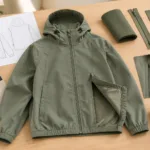
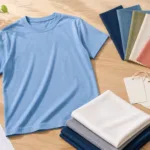
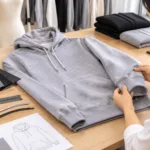
For 100 custom T-shirts, choose decorated blanks if an existing fit works, stock-fabric customization if you need your own cut using available materials, and full development if essential details cannot be sourced otherwise. When evaluating a low moq clothing manufacturer, treat 100 as a planning quantity—not proof that every style and color combination is feasible.
For 100 Custom T-Shirts, Choose the Production Route Before You Request a Quote
Choose the simplest route that meets your required fit, branding, and repeatability. A logo on an existing garment is a different project from a new pattern, custom color, and coordinated trims. Confirm feasibility by style and color before comparing quotes.
Ninghow’s public T-shirt manufacturing options include custom development, decoration, and private-label packaging. That describes its listed scope, not confirmation that every 100-piece configuration is available.
1. Hypothetical example: a graphic-led launch
Situation: A startup wants 100 shirts with one graphic. Available evidence: It has selected an established blank and prepared artwork. Gap: Size availability and the decorated result remain unconfirmed. Outcome: Clarify those points before ordering decorated blanks. If demand is uncertain and holding inventory is the main concern, evaluate print on demand instead; neither route requires an exclusive fit.
2. Hypothetical example: a defined private-label product
Situation: A team buyer needs 100 shirts with a specific fit, neck finish, label, and packaging. Available evidence: It has a reference garment and branding brief. Gap: Available fabric and construction feasibility are unknown. Outcome: Pause bulk commitment while a supplier reviews stock-fabric customization; consider full development only if available options cannot meet the essentials.
Clarify What “100 Pieces” Means Across Styles, Colors, and Sizes
Does 100 pieces mean per style or total? Neither interpretation is automatic. State the project total and its allocation. Separate styles and colors can create distinct material, cutting, decoration, and approval requirements; sizes also need an explicit allocation.
Prepare a quantity worksheet with one row per style and color. Record quantities for each size, decoration position, label requirement, and packaging requirement. Check that size totals equal row totals and that all rows total 100. Keep artwork variants visible rather than hiding them inside a single quantity.
Ask whether quoted feasibility applies to the whole project, each style, each color, or each material route. Request separate confirmation of garment, fabric, dyeing, trim, decoration, and packaging minimums or setup requirements. An accepted garment quantity does not establish acceptance for every component.
Ninghow’s public low-MOQ guidance ties feasibility to fabric, customization, and production setup rather than a universal threshold. For small batch T-shirts, focused styles and shared available materials can simplify review, but do not assume guaranteed savings. Obtain an order-specific response against your actual allocation.
Compare Decorated Blanks, Stock-Fabric Custom T-Shirts, and Full Custom Development
The boundary between routes is what already exists: a finished garment, usable fabric, or neither. The comparison below is a selection framework, not a supplier-confirmed availability or MOQ table.
| Route and suitable buyer | Customization scope | Main consideration and question |
|---|---|---|
| Decorated blanks: buyers who accept an existing body | Available fit, fabric, and colors; artwork and placement; labels and packaging where feasible | Stock continuity and decoration setup: are all sizes available, and can the proposed garment accept the artwork and label changes? |
| Stock-fabric custom: buyers needing their own fit | Pattern and construction changes using confirmed available fabric and colors; trims and branding subject to sourcing | Pattern work and material availability: what fabric quantity, trim minimums, and sample approvals apply? |
| Full development: buyers whose essential specification is unavailable | New pattern and more original material, color, construction, and branding decisions | Separate development and production requirements: which elements require custom sourcing and approval? |
Can you customize the fit? A blank retains its existing body unless alterations are separately agreed. Stock-fabric and full-development routes can accommodate pattern changes subject to supplier review. A new pattern alone does not necessarily require custom-made fabric.
Is print on demand better for your launch? The custom apparel vs print on demand decision concerns fulfillment and product control, not simply quality versus cost. POD can suit demand testing without committing to finished inventory upfront. Check its garment range, decoration, branding, and fulfillment terms. Manufacturing becomes more relevant when a defined physical specification is essential.
For repeat orders, ask what can be retained or resourced: blank model, fabric specification, pattern, color reference, decoration file, and approved sample. No route automatically guarantees identical future availability.
Copyable route-review request
“Please assess our attached style/color/size allocation against decorated blanks, stock-fabric customization, and full development. Identify the simplest feasible route, available garments or materials, fit limitations, decoration conditions, label and packaging options, separate minimums and setup charges, required samples, and repeat-order dependencies. Mark unconfirmed items explicitly.”
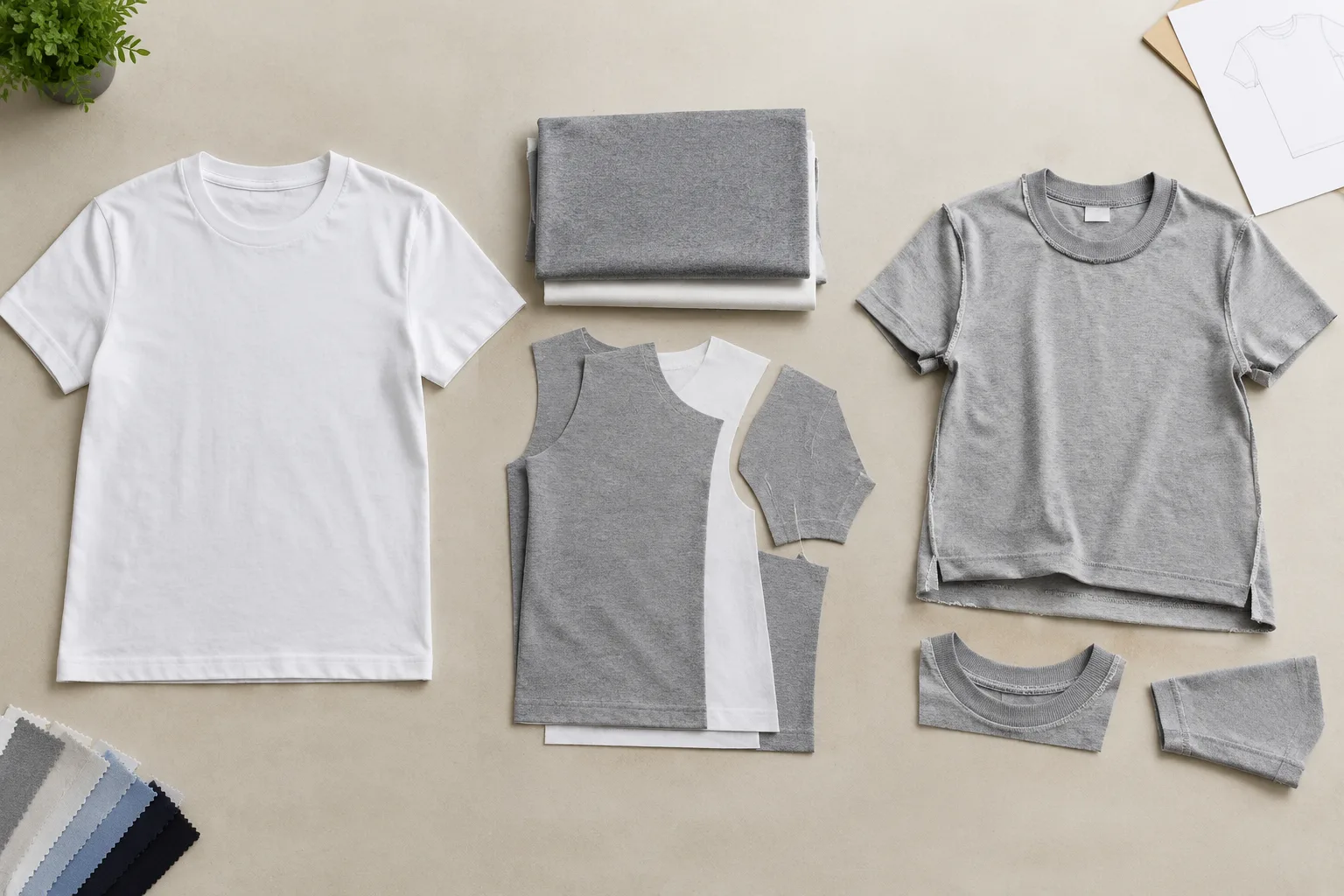
Set the Fit, Fabric, Color, and Decoration Specification Before Sampling
Fit: Define silhouette, body length, sleeve shape, neckline, and intended ease. Supply a reference garment or measurement chart, identify measurement points, and agree tolerances before sample review.
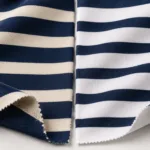
Fabric: Specify composition, target weight, construction, surface, and desired hand. Compare actual single-jersey and interlock swatches or garments for drape, stability, and sewing behavior. CottonWorks explains that single jersey can curl at cut edges; construction names alone do not establish shrinkage, strength, or comfort.
Color: Provide a physical or agreed color reference and identify whether the request uses a blank stock color, existing dyed fabric, or custom color development. Agree how variations will be reviewed and approved.
Decoration: Name the proposed process—screen print, digital print, embroidery, transfer, or another method—and provide artwork dimensions, placement, colors, and desired hand or appearance. Ask the supplier to confirm compatibility rather than assuming every method suits every substrate.
CottonWorks describes how cotton printing preparation removes interfering residues and helps create a suitable printing surface. Request a trial on the actual proposed fabric with the intended process, not just an artwork preview.
For white or light colors, review opacity on a representative garment under consistent lighting and layering, including standing, raised arms, and reasonable movement or stretch. Record the conditions; fabric weight alone is not an opacity guarantee.
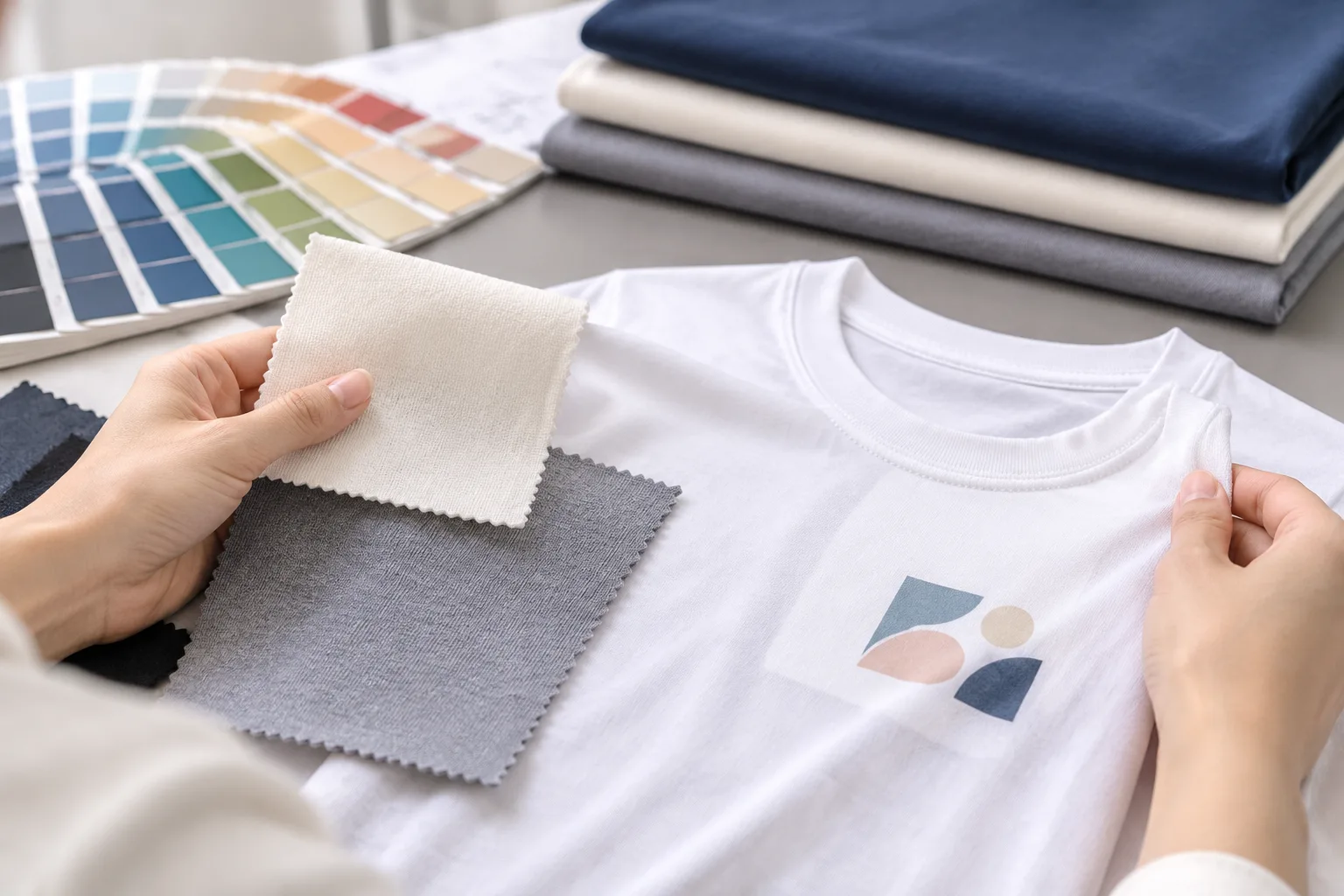
Calculate the Real Scope of Branding, Labels, Packaging, and Setup
Once the garment route is defined, branding and packaging can add separate development decisions. A 100-piece order may still involve a body garment, decoration, labels, hangtags, folding, bags, cartons, and approval work. Ask the manufacturer to separate these items rather than presenting one unexplained unit figure.
Separate one-time and recurring scope
Request an itemized quotation that distinguishes the garment, fabric or blank, pattern and sample work, decoration, decoration setup, labels, hangtags, folding, polybags, cartons, and other packaging. Ask which costs apply once for development or setup and which recur for each unit or variant. Do not assume that a single artwork or label applies across every style and color.
Specify whether you need a printed neck label, sewn brand label, size label, care label, hangtag, or plain packaging. State where each item belongs and whether it applies to every piece. Different artwork, decoration positions, label formats, or packaging instructions can create additional approval and setup work even when the total quantity remains 100.
For a launch test, retain only the branding elements that support the immediate sales objective. For retail presentation or a repeat program, define the complete private-label system from the beginning. Ninghow publicly lists garment decoration and private-label packaging options for custom T-shirt projects, but the available formats and feasibility remain subject to the selected garment, materials, customization, and setup requirements.
Use a Sample-to-Bulk Process That Controls Fit, Decoration, and Quantity Risk
With the scope separated, move from a general enquiry to a controlled sample-to-bulk review. The objective is to ensure that the approved garment, decoration, labels, and packaging all refer to the same specification.
A practical approval sequence
- Submit the brief. Include the quantity matrix, style and color split, size breakdown, artwork, reference images or garment, destination, intended use, and target delivery window.
- Confirm the route. Ask whether decorated blanks, stock-fabric customization, or full development best fits the design, fit, branding, and quantity. Request feasibility questions for each style and color.
- Review materials and construction. Confirm the proposed blank or fabric, surface, color, neckline, sleeves, hems, and construction details before approving a sample. For fabric choices, distinguish construction clearly: single jersey can curl at cut edges, while interlock is generally a more stable double-knit construction. This is a construction tendency, not a universal performance guarantee.
- Evaluate the sample. Check measurements, fit, neckline, seams, fabric appearance, color, print or embroidery placement, label position, and packaging presentation. For light garments, use consistent layering and lighting when reviewing opacity.
- Record revisions. Keep one approval document covering measurement changes, artwork files, decoration placement, label instructions, packaging, and the final size and color allocation.
- Release bulk carefully. Before production, confirm the approved reference sample, workmanship checkpoints, quantity plan, decoration files, packaging instructions, and any inspection expectations. Where performance claims matter, request order-specific requirements or test evidence; a public company description is not a substitute.
- Review finished goods. Compare the delivered goods with the approved specification and document any unresolved deviation before shipment or distribution.
This sequence also gives a manufacturer enough information to identify an order-specific feasibility gap before bulk commitment. A structured project review is more useful than treating 100 pieces as an automatic production threshold.
Send a Manufacturer-Ready 100-Piece T-Shirt Specification Brief
A manufacturer-ready brief should make the project understandable without a long exchange of assumptions. Use the following checklist when preparing an enquiry for 100 custom T-shirts.
Specification brief checklist
- Project: buyer type, intended use, sales or distribution channel, destination market, target delivery window, and whether this is a test or repeat program.
- Quantity: total units plus the exact style, color, and size allocation. List separate quantities for each decoration or branding variant.
- Garment: body silhouette, reference garment, measurement chart, fabric preference, color references, neckline, sleeves, hems, and construction notes.
- Decoration: artwork files, preferred print or embroidery method, placement diagrams, artwork dimensions, and any required color references.
- Branding and packing: labels, care and size information, hangtags, folding, bags, cartons, and barcode requirements if applicable.
- Approval: sample type, agreed measurement tolerance, color review method, decoration approval, packaging approval, and the condition required before bulk release.
Questions for the quotation
- Which production route fits this quantity and design?
- What is feasible for each style, color, and size allocation?
- Which materials are currently available for the proposed route?
- Which development or setup items apply, and which charges recur per unit or variant?
- Which details require a sample or test before bulk production?
Send the brief as a single reference document and identify any unresolved decisions. Ninghow’s public information describes custom T-shirt development, garment decoration, and private-label packaging as listed project areas; the quotation should confirm the actual route, materials, branding formats, packaging, and quality requirements for your order.
Qualified buyers should send the garment reference or sketch, total quantity with style/color/size allocation, fabric and fit requirements, logo or artwork files, decoration placement, label and packaging needs, destination, and intended delivery window for a project review.
Frequently Asked Questions
Does 100 pieces mean 100 T-shirts total or 100 per style and color?
It can mean either, so state both figures. “100 total” may be divided across styles, colors, and sizes, while a supplier may evaluate feasibility separately for each style and color. Provide a quantity matrix and ask which minimums or setup requirements apply to each variant before treating the order as one production run.
Can I customize the fit when ordering only 100 custom T-shirts?
Fit customization may be possible, but the scope depends on the route. A decorated blank normally limits pattern changes, while stock-fabric customization or full development can support more fit decisions. Send a measurement chart, reference garment, silhouette notes, and target fabric, then confirm whether a sample is required before bulk approval.
Is print on demand better than manufacturing 100 custom T-shirts for a launch?
Print on demand can suit a launch with uncertain demand because it avoids committing to a 100-piece production plan, but it may limit garment, fit, branding, and packaging control. Manufacturing 100 pieces can be more suitable when you need a defined product and repeatable presentation. Compare demand certainty, customization, inventory exposure, and unit economics.
Which production route is best for 100 T-shirts: decorated blanks, stock-fabric customization, or full custom development?
Choose the least complex route that meets the brief. Decorated blanks suit a standard garment with custom artwork; stock-fabric customization adds selected fit, fabric, or branding decisions; full development suits distinctive construction or fit requirements. The correct choice depends on style and color splits, not the total of 100 pieces alone.
Can I add custom labels, hangtags, and packaging to a 100-piece T-shirt order?
Often, labels, hangtags, and packaging can be discussed as part of a small-batch project, but each format and variant requires confirmation. Specify sewn or printed labels, size and care information, hangtags, folding, bags, cartons, and whether they apply to every style and color. Ask for separate development, setup, and recurring scope.
What information should I send a manufacturer to confirm feasibility and prepare a quote?
Send the total quantity and style/color/size breakdown, garment reference or sketch, fit and measurement requirements, fabric preference, color references, artwork, decoration placement, labels, packaging, destination, intended use, and target delivery window. Also identify what is fixed, what is flexible, and which sample or test approvals are required before bulk.