




Custom Moisture-Wicking Polo Shirts for Bulk and Private-Label Programs
Custom moisture-wicking polo shirts should be sourced from a defined garment brief, not a logo-and-color request alone. Before requesting a quotation or sample, specify the intended use, fabric composition and knit, weight or hand-feel target, stretch requirement, collar and placket construction, logo method and placement, fit block and size grading, labels and packaging, quantity by color and size, sample requirements, and delivery destination. The approved material and construction determine how the finished polo feels, moves, manages moisture, looks after care, and supports decoration. For a related process overview, review custom polo shirt manufacturing planning.
In this context, moisture-wicking describes a polo specification intended to move moisture through the fabric system. It is not a universal result attached to every synthetic or performance-style polo. Fiber selection, yarns, knit structure, fabric weight, finishes, garment fit, decoration area, care conditions, and the test method used can all affect the outcome. Ask a manufacturer to assess the proposed material rather than treating a product name as proof of a particular performance level.
A clear brief also separates made-to-order development from a request for ready-made stock. A buyer comparing custom performance polo shirts needs enough detail for a supplier to assess material sourcing, pattern work, trims, decoration, sampling, and the quantity split. For the broader process of converting an idea into a production brief, custom polo shirt manufacturing planning provides useful context beyond performance-fabric decisions.
Start by identifying which requirements are fixed and which are open to supplier input. A fixed brand color, mandatory logo location, or required fit should be documented early. A buyer may instead leave the knit, collar construction, or placket details open for feasibility discussion. This distinction helps avoid quotations that appear comparable but are based on different garments.
Choose the Polo by End Use Before Choosing the Fabric
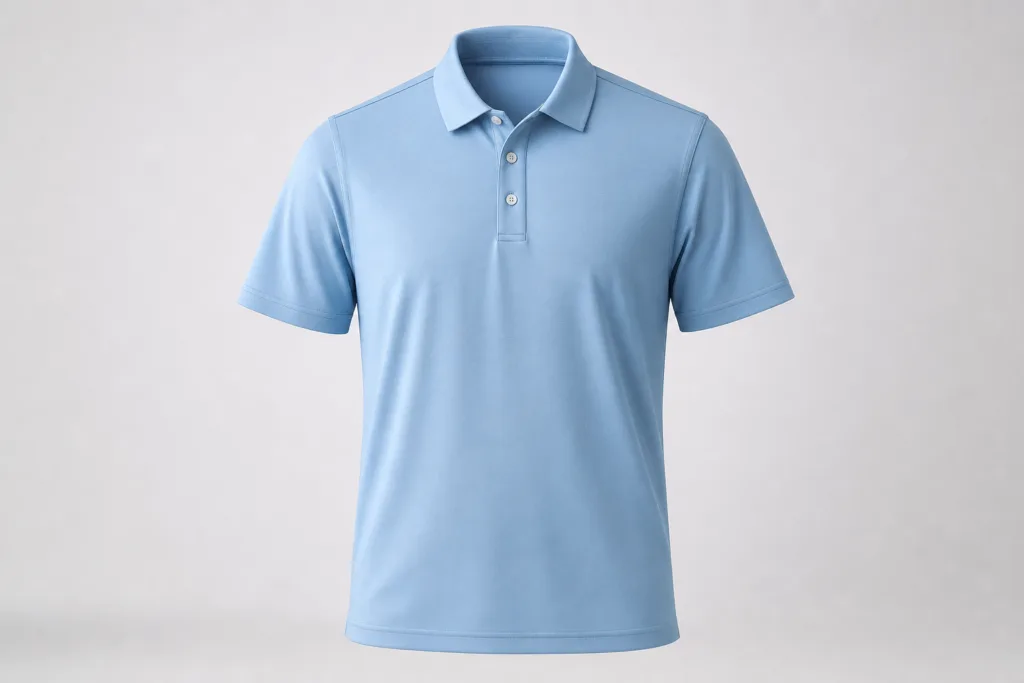
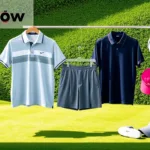
The intended wear condition should lead the specification. A work-uniform polo may prioritize a consistent appearance, logo visibility, and a practical fit for repeated issue. A golf, event, or team order may place more importance on movement, visual identity, or a particular silhouette. A retail or private-label collection may need its own fit block, trim direction, and packaging presentation. None of these uses automatically requires the same fabric or construction.
| Brief area | Buyer decision to provide | Examples of specification inputs | Why it affects sourcing | What to confirm in sample or quotation |
|---|---|---|---|---|
| Wear use | Who wears it and in what conditions | Uniform, golf, event, team, retail collection | Guides fabric hand, fit, construction, and branding priorities | Whether the proposed garment matches the stated use |
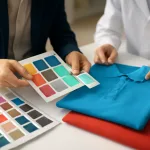
| Fabric direction | Required feel and movement | Light or substantial hand-feel; stretch required or not required | Changes material options, cost basis, and sample evaluation | Composition, knit, hand-feel, stretch, and care instructions |
| Branding | Artwork, placement, and visual standard | Chest logo, sleeve mark, back graphic, patch position | Decoration can influence fabric appearance and local hand-feel | Method feasibility, placement, artwork preparation, and approval need |
| Order split | Units by color and size | Colorways, size range, ratio by size | Determines the production breakdown rather than total units alone | Whether each variant can be quoted and planned as requested |
Describe actual use rather than relying on broad labels such as “active” or “premium.” For example, state whether the wearer is expected to sit, travel, walk, work outdoors, play golf, or participate in a short event. State whether the garment must layer under another item, whether a tucked presentation is expected, and whether the order includes different wearer groups. These details help frame trade-offs without assuming that a lighter fabric, more stretch, or a particular knit is always preferable.
Buyers who need wider polo sourcing considerations, including choices outside moisture-management fabrics, can use this custom polo shirt manufacturing guide for buyers alongside the performance-polo brief.
Build a Fabric and Construction Specification
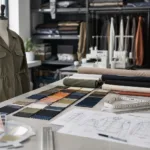
A manufacturer-ready fabric request names the composition target if known, knit direction, hand-feel or weight target, desired stretch, color requirement, and care expectations. If composition or weight is not yet decided, state the decision criteria instead: for example, a smooth face for a clean corporate appearance, a textured surface, a softer hand, or added movement. Request the supplier’s proposed material details for review; do not assume different fabrics with similar names will perform or wear alike.
Separate mechanical stretch from elastane content. Mechanical stretch comes from fabric construction, while elastane content is a material choice. Either approach may change recovery, feel, appearance, and decoration behavior, but the result depends on the specific fabric and garment build. The sample is the practical point to evaluate the approved combination.
Construction should cover collar type and structure, placket depth and button arrangement, sleeve finish, seam placement, side vents if requested, hem shape, and reinforcement requirements where relevant. Collar and placket decisions affect the polo’s visual form and can change how it sits after wear and care. Record the requested care instructions, but have final fiber-content and care labeling reviewed for the destination market and product category.
Match Logo Decoration to the Polo Fabric and Brand Use
Decoration should be chosen with the actual artwork and fabric, not from a generic preference. Embroidery may suit some logo styles and placements, while print, transfer, or patches may better suit other artwork, scale, or branding effects. Each option can alter local thickness, flexibility, drape, or appearance. A method that works on 1 fabric should not be assumed suitable for another knit or stretch level.
Provide vector artwork where available, intended dimensions, placement measured from clear garment reference points, thread or color references if applicable, and whether names or individual numbering are needed. Ask for the proposed method to be confirmed against the selected fabric. The comparison of embroidery, heat transfer, and screen print on stretch fabrics can help buyers identify questions to resolve before approving a logo treatment.
Where a decoration sample or strike-off is offered for the project, assess it on the approved polo fabric and colorway. Check artwork legibility, placement, puckering or distortion, local hand-feel, edge appearance, and the garment’s overall presentation. Approval should identify the material, color, artwork version, placement, and decoration method so the production instruction is unambiguous.
Specify Fit, Garment Measurements, and Size Grading
Fit control starts with a defined block, not a general label such as regular, slim, or unisex. State the intended wearer group, desired silhouette, wearing ease, body-length expectation, and whether the polo is normally worn tucked or untucked. If the order serves more than 1 wearer group, clarify whether 1 shared block is intended or whether separate blocks are required.
Provide a garment measurement chart with the points of measure that matter to the approved design. Typical points may include chest width, body length, shoulder width, sleeve length, sleeve opening, collar measurement, placket dimensions, and hem width. The chart should identify the sample size, measurement method, and requested size range. A factory should confirm its measurement method, tolerance approach, and grade rules during development rather than relying on a retail size label alone.
For wholesale custom polo shirts, the quantity split needs the same discipline as the garment specification. List units by color and size, including any separate fit blocks. Avoid submitting only a total unit quantity with an estimated size range. The actual color-size breakdown affects material allocation, cutting, labeling, packing, and quotation review. If the final ratio is not available, identify it as provisional and establish when it must be locked.
- Attach the approved measurement chart or state that a development sample will establish it.
- Identify required fit references, such as an existing garment, pattern, or annotated photographs.
- Specify whether measurements are garment measurements or body measurements.
- Record the size range and quantity for every color-size variant.
- Document any fit changes made after sample review before production is released.
Plan Private Labels, Colors, Packaging, and Order Splits
Private-label performance polos require branding inputs beyond the exterior logo. Define the requested main label, size label, care or content label, hangtag, barcode requirement, individual packing direction, carton marking, and packing ratio. Supply brand artwork in usable files and identify which elements are buyer-provided. The manufacturer should confirm which label and packaging options are feasible for the project.
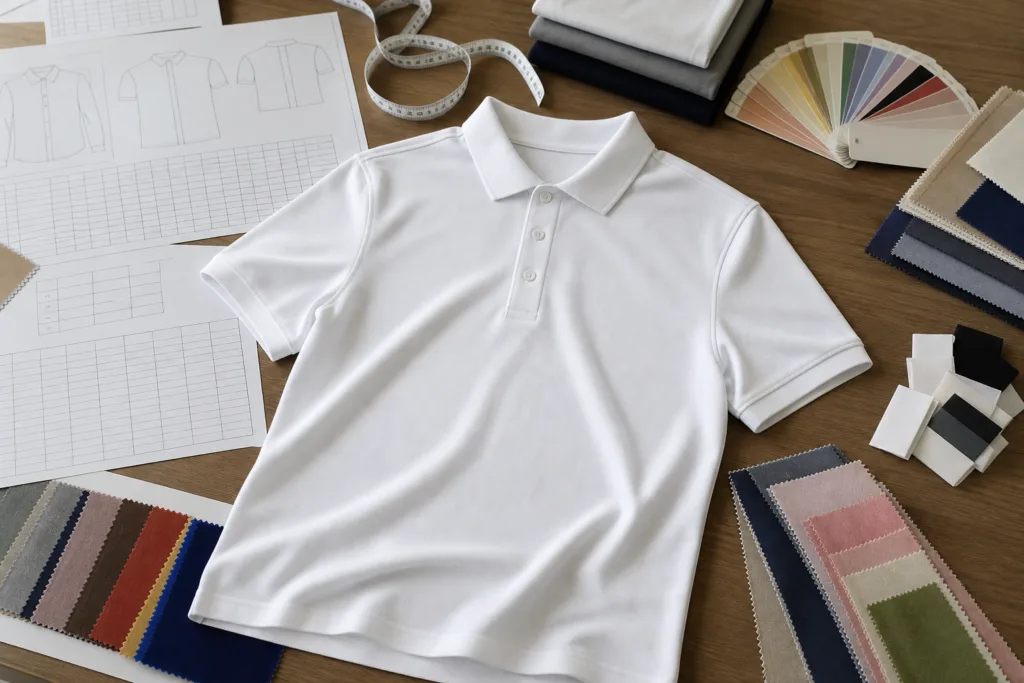
Care and fiber-content labeling obligations vary by destination market and product category. Buyers should provide or validate the required labeling content with the appropriate internal or external compliance resource; a production team can then incorporate the approved wording and placement into the garment specification.
Color planning also needs a clear approval path. State the colorway names or references, whether a physical standard is available, and which garment parts must match or contrast, including collar, placket, buttons, thread, labels, and decoration. Review the approved fabric and trim combination together, because a color reference alone does not define the final appearance across different materials.
For a wider view of branded polo development, a private label polo shirt program can help position labels, presentation, and product direction within the larger range plan.
Sampling, Production Planning, and Quality-Control Checkpoints
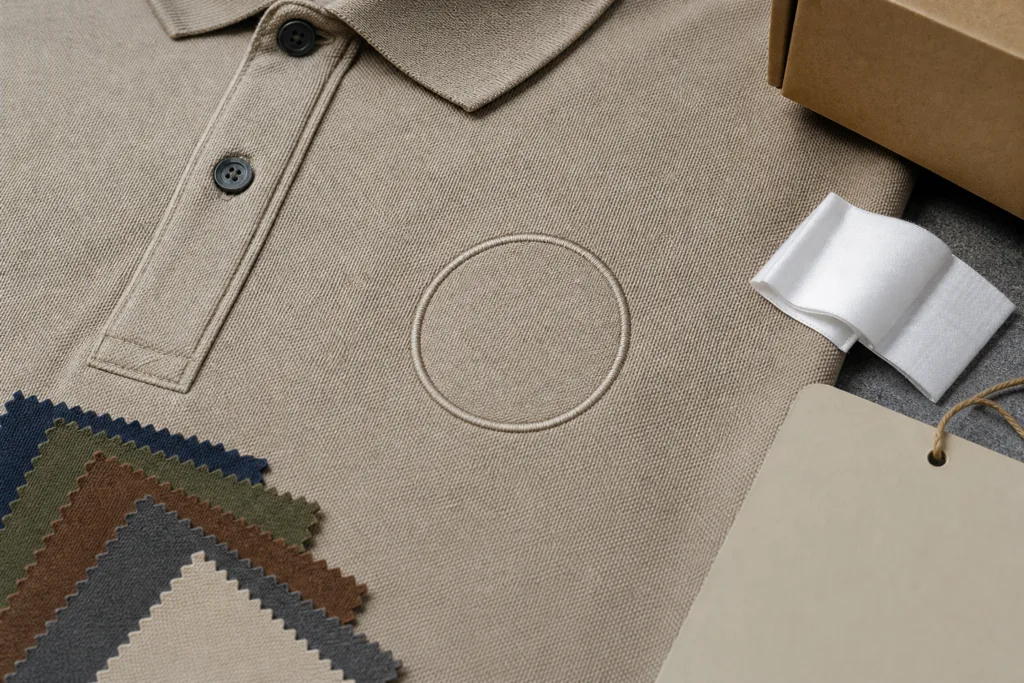
A usable approval sequence turns the brief into controlled production instructions. Begin with RFQ review and feasibility discussion, then confirm the proposed material, trims, colors, artwork treatment, measurement chart, and packing direction. A sample or pre-production approval may be appropriate depending on the project. The approval record should identify exactly what was reviewed, including fabric, colorway, garment version, logo file, placement, measurements, labels, and packaging components.
Before bulk production, make sure open decisions are resolved rather than carried forward as assumptions. These commonly include the final size ratio, button and thread direction, collar construction, artwork revision, labeling content, folding method, carton information, and shipment destination. If a buyer requires inspections or particular checks, the request should be raised early enough to be incorporated into the production plan.
Quality review should compare the goods with the approved production specification, not with an informal expectation. Define the visible and measurable points that matter: garment measurements, fabric and trim identity, colorway identification, construction details, logo appearance and placement, labels, packing, and quantity by variant. Any requested test scope or acceptance criteria should be agreed before production, especially when a performance, care, or appearance property is important to the project.
MOQ and lead time should be requested as quotation-specific information. They can depend on the selected fabric, colors, trims, decoration, quantity by variant, sample route, production schedule, and destination. Confirm the applicable basis at the time of inquiry and again when the order details are finalized; do not treat a figure from a different polo project as transferable.
Send a Manufacturer-Ready Moisture-Wicking Polo RFQ
A concise RFQ lets a moisture wicking polo shirt manufacturer assess feasibility without guessing. Include the end use, target customer or wearer, garment images or sketch, fabric direction, construction details, colorways, decoration artwork and placement, fit chart, size range, quantity by color and size, labels, packaging, sample requirement, quality priorities, and delivery destination. Clearly mark each point as fixed, preferred, or open for supplier recommendation.
For embroidered moisture wicking polos, include the artwork version, logo dimensions, placement reference points, thread-color direction if known, and whether an approval sample is required. For printed or patched branding, provide the equivalent artwork, placement, visual-standard, and sample requirements. This creates a traceable instruction set for comparing proposals and reviewing samples.
Before requesting a final price, check that all stakeholders agree on the approved sample basis and production-ready files. A lower quotation based on a different fabric, fit, logo method, or packing configuration is not a like-for-like comparison. Keep the final RFQ, sample comments, and approved revisions together so the bulk order is tied to one current specification.
To move the project into feasibility review, contact Ninghow with the product brief, intended use, quantity, material direction, decoration, and sampling requirements.
What should be included in an RFQ for custom moisture-wicking polo shirts?
Include intended use, fabric and construction direction, colors, artwork and placement, fit chart, size range and ratios, labels, packaging, sample needs, quantity by variant, quality priorities, and destination.
Which fabric details affect the feel and performance of a custom performance polo?
Specify or request confirmation of fiber composition, yarn or knit direction, fabric weight or hand-feel, stretch approach, finish, color, care expectations, and the garment construction used with that fabric.
Can moisture-wicking polos be embroidered with a company logo?
Embroidery may be feasible for a project, but suitability depends on the approved fabric, artwork, logo size, placement, and expected garment appearance. Review a project-specific sample or strike-off where applicable.
How should I provide sizing and size ratios for a bulk polo order?
Provide a garment measurement chart, sample size, measurement method, size range, and units for each color-size variant. Confirm grade rules and tolerances during development.
What should I approve before bulk production begins?
Approve the material and trims, colorway, garment measurements, construction details, decoration, labels, packaging, quantity split, and the current production specification.
How are MOQ and lead time determined for private-label performance polos?
They are confirmed during quotation based on the material, colors, trims, decoration, quantity by variant, sample route, production schedule, and destination.