




Custom Company Polo Shirts: What Business Buyers Need to Specify Before Ordering
Businesses ordering custom company polo shirts should define the wear environment and order requirements before asking for prices. The brief should cover fabric, fit, logo decoration, color references, size breakdown, quantities, sample approval, and quality checks. It gives each polo shirt manufacturer the same inputs, so quotes can be compared on a like-for-like basis. Buyers who are planning a longer-term issue system can also review business polo shirts for corporate uniform programs.
This page focuses on an initial or 1-time business bulk order. Its job is to help the buyer prepare a controlled RFQ, assign approval owners, record supplier assumptions, and turn the selected quote into clear purchase-order requirements. Do not begin with a broad request such as “smart staff polo.” Start with who will wear it, where it will be worn, how it will be cared for, and what must be approved before bulk release.
Mark every item in the brief as required, preferred, or open for supplier proposal. A logo file, color reference, and measurement chart may be required. A placket detail or knit structure may be open to options. This simple distinction lets suppliers identify proposed substitutions instead of treating every image or comment as fixed.
Start With the Wearing Environment and Business Use Case

The use case tells the supplier what to assess. It does not automatically choose a fabric or logo method. Reception, retail, hospitality, field work, trade-show staffing, and promotional distribution can have different movement, care, appearance, and replacement needs. Write these conditions in plain language and name the buyer who will approve the product choice.
| Buyer decision | Information to define | Examples of acceptable inputs | Why the manufacturer needs it | Approval evidence to retain |
|---|---|---|---|---|
| Wear environment | Location, activity, and expected care | Indoor reception; outdoor event; active site visits; home laundering | Sets the questions for fabric, construction, and decoration review | Written use-case statement |
| Garment appearance | Required visual features and allowed alternatives | Solid body color; contrast trim optional; collar reference image | Clarifies which construction details affect the quote | Marked reference image or specification sheet |
| Order structure | Issue type and quantity split | Initial employee issue; event allocation; replacement order anticipated | Allows quantities to be quoted by color, size, and decoration version | Quantity matrix and version list |
| Care and acceptance | Care route and review points | Buyer-approved care instructions; sample required before bulk release | Identifies information and approvals needed before production | Approved sample record and purchase-order notes |
For active roles, ask for the documented composition, knit type, garment weight, stretch content where relevant, care instructions, and any relevant test documents. Use those records before making a performance decision. For customer-facing roles, define the appearance needed after the planned care routine. This may include collar shape, placket details, or body color. For an event order, state the event date, destination, distribution plan, and whether the garment is expected to be kept after the event.
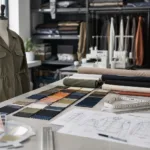
A reference garment can help, but it is not a full specification. State exactly what it is meant to show: fabric hand, fit, collar, color, logo scale, or styling. Also state whether that feature is required or only a guide. For broader product background, the custom polo shirt manufacturing guide is useful; the RFQ itself should stay focused on this buyer’s order and approval record.
Choose Fabric and Construction for the Required Performance
Ask suppliers to quote from material specifications, not fibre labels alone. Cotton, polyester, and blends describe fibre content. Pique and jersey describe knit structure. A brief should request both the exact composition and knit structure for every proposed option.
For each corporate polo shirt option, request composition, knit type, garment weight, stretch-fibre content if present, care-label guidance, and relevant color or finish details. If a supplier claims dimensional change, colorfastness, or another measurable result, ask for the test method, test conditions, sample, and result. Fabric behavior can vary with fibre, construction, finishing, laundering, and use.
List construction details that affect the sample or quote. These can include collar and cuff construction, placket length or button arrangement, seam details, and matching or contrast trim. Avoid “high quality” as a requirement because it does not tell a supplier what to make or inspect. Record the selected option, supplier proposal, and buyer decision in the quote-assumption log. For wider development context, see custom polo shirt manufacturing planning for brands.
Match the Logo Method to the Artwork, Fabric, and Order Purpose
Do not choose decoration from appearance alone. Embroidery, screen printing, and transfer-based decoration can produce different results depending on the artwork, fabric, location, size, and care conditions. Confirm which methods the selected supplier offers for the proposed garment before listing a method as available for the order.
Send the original artwork file and identify the intended logo colors. Flag small text, fine lines, gradients, and color transitions that must remain. Ask the supplier to identify limits that affect the artwork on the selected fabric. A small location may need a simpler mark. A larger graphic may need a different treatment. Record the supplier’s recommendation as a proposal until the buyer approves it.
A sample is where the buyer can review the garment and decoration together. Plan the apparel sampling and product-development process around clear approval points rather than general feedback. Keep a dated record with the sample version, garment specification, artwork version, logo location, finished dimensions, and any permitted variation.
Confirm Logo Placement, Decoration Size, and Color Matching Before Sampling
Describe placement with measurements, not only “left chest” or “back.” State the reference point, finished decoration dimensions, orientation, and any distance from the placket, shoulder seam, collar, hem, or sleeve edge that matters. List every location separately when the same logo appears in more than 1 place.
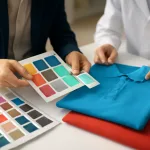
For color, name the reference system or buyer-approved physical reference. State whether it applies to body fabric, trim, thread, print, or all of these. Screen images and photos can support discussion, but they should not be the only approval standard. The sample sign-off should identify the color reference reviewed and any accepted difference agreed by the buyer and supplier.
Add these decisions to a simple approval sheet. Include the decision owner, date, approved version, and open points. This sheet becomes the link between the RFQ, sample review, supplier quote, and purchase order.
Plan Fit, Size Ranges, and Quantity Splits for a Bulk Company Order
Fit planning starts with the proposed garment block, not an assumed size range. Request the current size chart for the exact style and revision. Confirm whether it shows garment measurements or body measurements. These are different. Record the points that matter to the wearer group, such as chest, body length, shoulder width, and sleeve length, along with any stated tolerance.
Validate fit before fixing the size split where possible. The buyer may use a fit sample, representative sizes, or comparison with a named existing garment. Record the style code, chart version, sample size, fit comments, and decision owner. If changes are requested, ask whether they affect the pattern, price basis, material use, or production feasibility.
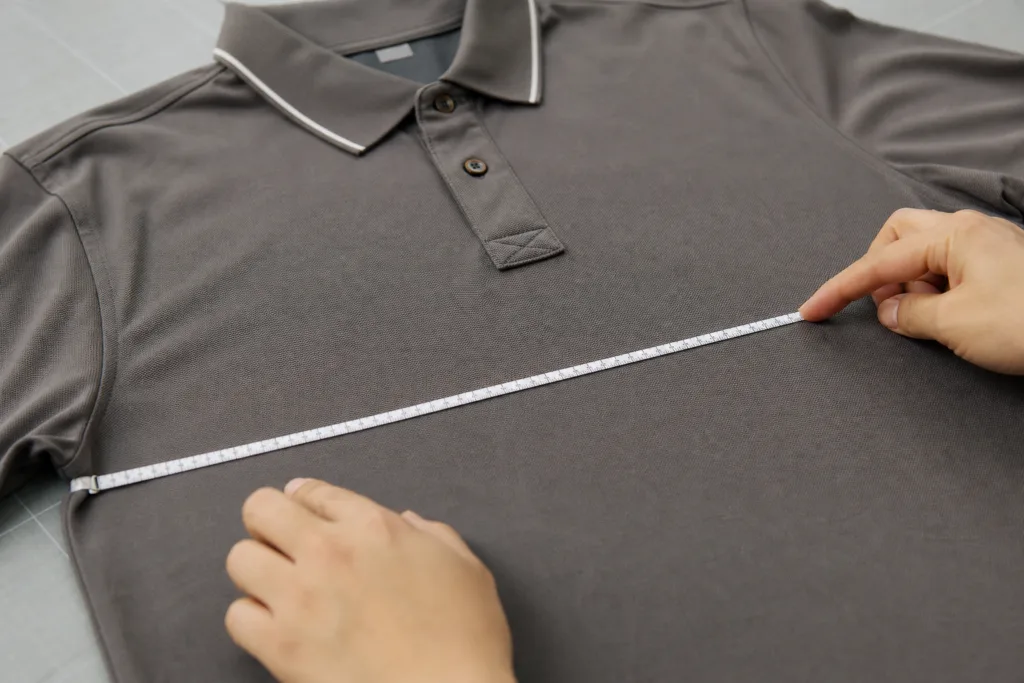
Build quantities by garment version, not only as a total. A version can differ by body color, logo location, artwork, fit block, or size. List every color and its size quantities on separate rows. Then check the total. Mark any contingency quantity separately from the standard employee or event allocation.
For an employee issue, collect size choices against the current chart and retain the source record. For an event, registration data or a documented planning assumption can guide the split, but it does not validate fit. If future replacements may be needed, retain the approved chart, fabric specification, color reference, artwork version, decoration method, and placement sheet.
Ask About MOQ, Sampling, Production Timing, and Reorder Continuity
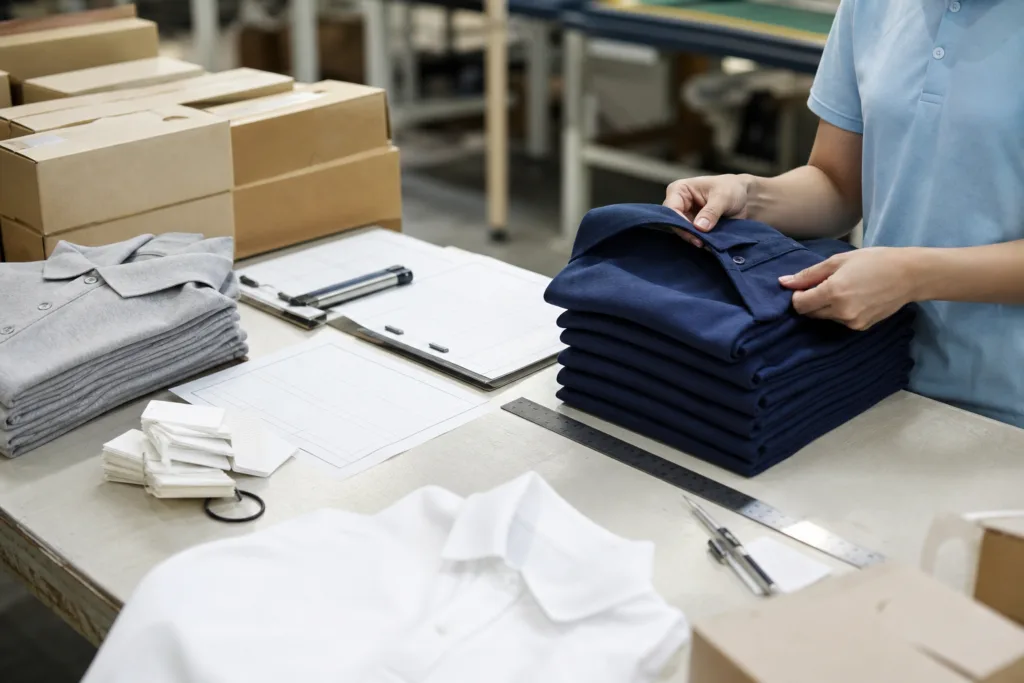
Confirm minimum order quantity, sample route, production timing, and delivery arrangements against the full specification. Fabric, color, decoration, size distribution, packaging, and order structure can all affect the quote. Ask for the applicable minimum by style, color, and decoration version. Ask whether samples are available for the proposed specification and which approvals are needed before bulk production can start.
Set the approval sequence in writing. It may include artwork confirmation, material or color review, fit review, decoration review, pre-production sample approval, and final packing information. Name the buyer with authority at each stage. Record approval against an identified sample or document version. A verbal comment or unmarked photo can be unclear later.
For a date-sensitive event, provide the required in-hands date, destination, and fixed distribution date in the RFQ. Ask what information the supplier needs before it can assess a production and delivery schedule. An estimated schedule is not confirmed until the specification, approvals, commercial terms, and shipping arrangement are agreed.
For supplier comparison, keep a quote-assumption log. Give every supplier the same brief. Then record its proposed fabric, decoration method, sample route, minimums, excluded items, alternatives, and unanswered questions. This helps the buyer compare scope, not just price. When a supplier change is under review, apparel sourcing risk planning explains why product records and approval history should move with the order.
Build Quality Control Into the Company Polo Purchase Order
Quality control works best when the purchase order states what will be checked and which approved record will be used. Replace broad notes such as “no defects” with clear acceptance inputs. Name the garment version, measurement points, workmanship expectations, logo placement, color reference, packing setup, and quantity records to review.
Before bulk release, reconfirm the approved fabric and trim specification, color reference, size chart, artwork version, logo method, placement dimensions, and care-label text where relevant. The pre-production reference should show the final combination. Separate approvals can leave gaps. If the supplier proposes a change to material, trim, color, or process, require written buyer approval before use.
For final inspection, specify checks that can be recorded consistently:
- Correct style, color, size, and quantity for each order line.
- Garment measurements at agreed points and against the stated tolerance.
- Logo artwork, colors, orientation, dimensions, and placement against the approved sample or placement sheet.
- Visible workmanship, seams, collar and placket construction, labels, and approved components.
- Cleanliness, packaging, carton markings, assortments, and shipping marks where required.
If the buyer needs a specific inspection level, test method, defect category, or report format, name it in the purchase order or attached quality document. If not, request the supplier’s proposed process and decide if it meets the order’s needs. The sequence in custom polo shirt quality-control checkpoints can help organize review points, but the order’s approved specification and purchase documents should set the binding requirements.
Prepare a Manufacturer-Ready Custom Company Polo Brief
A complete RFQ lets suppliers assess the same request. It also gives the buying team a clear way to compare responses and approve a final order. Send 1 controlled brief with attachments instead of spreading requirements across emails, images, and informal comments. Mark every item as required, preferred, or open for supplier proposal.
- Business use, wearer environment, care route, delivery context, and decision owner.
- Style description, reference images, required construction details, and allowed alternatives.
- Fabric composition, knit structure, garment weight, stretch content if relevant, and requested support for any performance claim.
- Body, trim, thread, and decoration color references, with the approval standard named.
- Original artwork files, logo locations, finished dimensions, orientation, and decoration questions for supplier review.
- Current size chart or fit target, measurement basis, size-by-color quantity breakdown, and total quantity.
- Sample requirements, approval stages, approval owners, and required in-hands date.
- Quality checks, measurement tolerances, packing instructions, labels, carton requirements, and required inspection records.
- Reorder reference information, supplier assumptions, quote exclusions, and substitutions that need written approval.
Ask each polo shirt manufacturer to identify assumptions, unavailable requirements, proposed alternatives, quote inclusions, and missing information. Add the responses to the quote-assumption log. The selected supplier, sample, and final specification can then be approved as 1 order record. Bulk production should be released against that record, not against a general description of branded company polo shirts.
What information should I include in a custom company polo shirt quote request?
Include the use case, style and fabric specification, color references, artwork files, logo placement and dimensions, size-by-color quantities, sample requirements, delivery context, packaging needs, approval owners, and quality acceptance criteria.
Are custom embroidered polo shirts better than printed polos for company uniforms?
Neither method is universally better. Confirm the supplier’s available methods and review the artwork, fabric, logo size, placement, care conditions, and approved sample before choosing.
What fabric is suitable for corporate polo shirts used in active work environments?
Select from documented options after defining the work conditions and care route. Request composition, knit type, garment weight, stretch content where relevant, care guidance, and support for any stated performance attribute.
How do we choose sizes for a bulk order of branded company polo shirts?
Use the current size chart for the exact style, confirm whether it shows garment or body measurements, validate fit where possible, and submit quantities separately for every color and size.
Should we approve a sample before placing a bulk polo shirt order?
Yes. A documented sample approval can confirm the garment, fit, color reference, artwork, decoration method, placement, and dimensions before bulk release.
What quality checks should be agreed for custom company polos?
Agree checks for style, color, measurements, logo details and placement, workmanship, labels, packaging, carton assortment, and order quantities against defined approved references.