
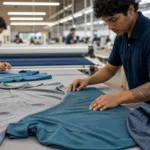
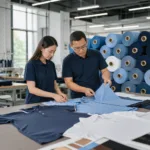


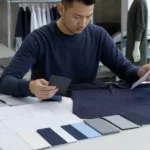

Choosing custom polo shirts is not only about adding a logo. The right order depends on fabric, fit, collar recovery, decoration method, and how the shirts will be worn after delivery. A polo that looks clean in a sample can still fail in bulk if the spec is vague or the fabric and logo method are mismatched.
If you are still comparing construction choices, you can review polo shirt manufacturing options and see how fabric, collar structure, and customization decisions change the bulk result. From our manufacturing perspective, this is the point where sampling, trim selection, and fit approval can save time and prevent expensive rework later.
What Buyers Should Define Before Requesting Samples
The fastest way to get a useful quote is to define the use case first. A golf program may need a cleaner collar and better shape retention, while a school or team order may care more about durability, repeatability, and easy washing. A retail brand may put more weight on hand feel, neckline shape, and brand presentation than on the lowest possible unit cost.
At Ninghow, we usually turn those answers into a tech pack, sample plan, and production schedule before cutting anything in bulk. That gives both sides a clear target for fabric sourcing, fit adjustments, logo placement, and packaging details.
- Confirm the end use: retail, corporate, school, team, golf, or workwear.
- Decide the preferred fit: classic, slim, relaxed, or athletic.
- List the decoration areas: chest, sleeve, back neck, or hem.
- Share the size range and expected size ratio before sampling.
- Set the packaging expectation: folded, bagged, labeled, or boxed.
Key takeaway: a better brief usually produces a better sample, and a better sample gives the bulk order a much lower risk of surprises.
How to Choose Custom Polo Shirts for the Right Use Case
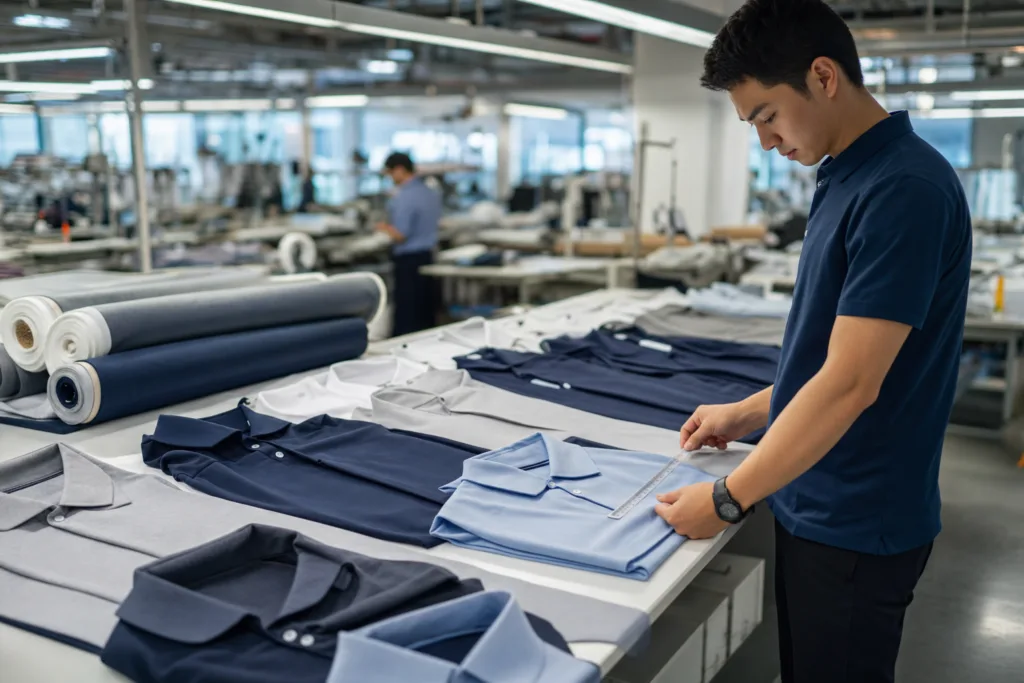
Buyers often compare polos with tees because both can carry a logo, but the garments solve different problems. If the project needs a more casual look, a softer drape, or a simpler production path, it can help to compare custom T-shirt production paths before locking the order. A T-shirt may win on simplicity, while a polo may win on structure, polish, and a more uniform-friendly look.
The right choice is not about fashion language. It is about how the garment will perform in real use, how often it will be washed, and how much brand presence the buyer expects from the finished piece.
| Use case | Recommended direction | Why it works | What to watch |
|---|---|---|---|
| Office and client-facing uniforms | Midweight pique or interlock blend | Looks polished and holds shape well | Check collar recovery and chest logo balance |
| School, club, or team programs | Durable blend with easy-care finishing | Supports repeat orders and frequent washing | Confirm size spread and color consistency |
| Retail or private label launches | Premium cotton blend or softer knit | Improves hand feel and perceived value | Test shrinkage and surface stability |
| Active or performance-led use | Polyester-led knit with good recovery | Supports movement and faster drying | Make sure the logo method suits the stretch |
For most buyers, the real decision is between presentation and performance. If the shirt must look neat all day, carry a logo clearly, and stay consistent across sizes, the polo format usually makes sense. If the buyer only needs a light casual top for general use, a tee may be simpler to source and produce.
Fabric Weight, Hand Feel, and Breathability
Fabric choice changes almost everything about a polo shirt order. It affects drape, breathability, stitch behavior, logo compatibility, and the final feel in hand. GSM is useful, but it should never be the only number driving the decision because knit structure and fiber blend matter just as much.
In practice, many custom polo shirts sit in a midweight range that feels substantial without being stiff. Lighter fabrics can work for warm climates or casual wear, while heavier knits usually support a more premium or structured look. The key is to match the fabric to the buyer’s use case, not to chase a weight number on its own.
| Fabric direction | Typical feel | Best for | Manufacturing note |
|---|---|---|---|
| Cotton-rich pique | Classic, textured, breathable | Retail, golf, casual uniforms | Test shrinkage and collar recovery carefully |
| Polyester pique | Crisp, stable, easy-care | Teamwear and frequent-wash programs | Can feel synthetic if the weight is too light |
| Interlock knit | Smoother, denser, often softer | Premium polos and cleaner logo placement | Usually looks more refined, but may run warmer |
| Poly-spandex blend | Stretchy with good recovery | Activewear and motion-heavy use | Decoration must be checked on stretched areas |
Breathability and hand feel should be checked together. A fabric can be soft but too warm, or breathable but too thin for the intended logo method. We usually encourage buyers to touch the swatch, compare it after washing, and look at the fabric under normal lighting, not just in a sample room.
Key takeaway: the best fabric is the one that fits the garment’s purpose, decoration plan, and care expectations, not just the one that feels good on the table.
Logo Application and Private Label Details
Decoration should follow the fabric, not fight it. A dense embroidered logo can look excellent on a stable polo knit, but the same artwork may feel heavy on a thin or highly stretchy fabric. Print methods can be more flexible for detailed graphics, but they still need the right fabric surface and wash expectation.
For office teams and dealer programs, our custom corporate polo shirt options usually prioritize clean chest placement, stable collars, and durable finishing that still looks polished after repeated wear. That is where logo size, thread color, and garment color all need to be confirmed together instead of one by one.
| Method | Best use | Strength | Watchout |
|---|---|---|---|
| Embroidery | Chest logos, initials, small icons | Durable and premium-looking | Can pucker if the fabric is too light |
| Screen print | Flat graphics and larger artwork | Cost-efficient for many runs | Needs a suitable fabric surface and size balance |
| Heat transfer | Names, numbers, and short-run detail | Flexible and quick for customization | Wash performance should be checked before bulk approval |
| Sublimation | Polyester performance polos | Good for full-color designs | Works best when the fabric choice supports the process |
Private label details matter just as much as the logo. Buyers should confirm woven labels, care labels, hangtags, folding method, carton marks, and bagging requirements before sample approval. Those details look small on paper, but they influence how the product feels when it reaches the end customer.
When a brand wants a more finished retail presentation, we also check whether the inner neck label should be printed, sewn in, or combined with a care label. That choice affects comfort, appearance, and production sequencing.
Fit, Grading, and Size Consistency
Fit issues are one of the easiest ways to turn a strong sample into a weak bulk order. A polo shirt can have the right fabric and the right logo, but still disappoint if the shoulder slope, sleeve opening, body length, or collar shape changes too much from size to size. Buyers should always approve the measurement spec, not just the visual look of the first sample.
Grading rules matter because a size run is not simply a scaled-up copy of one garment. The chest width, length, sleeve opening, and collar balance need to change in a controlled way so the full range looks intentional. We also keep an eye on shrinkage, because a small change after washing can shift the fit more than a buyer expects.
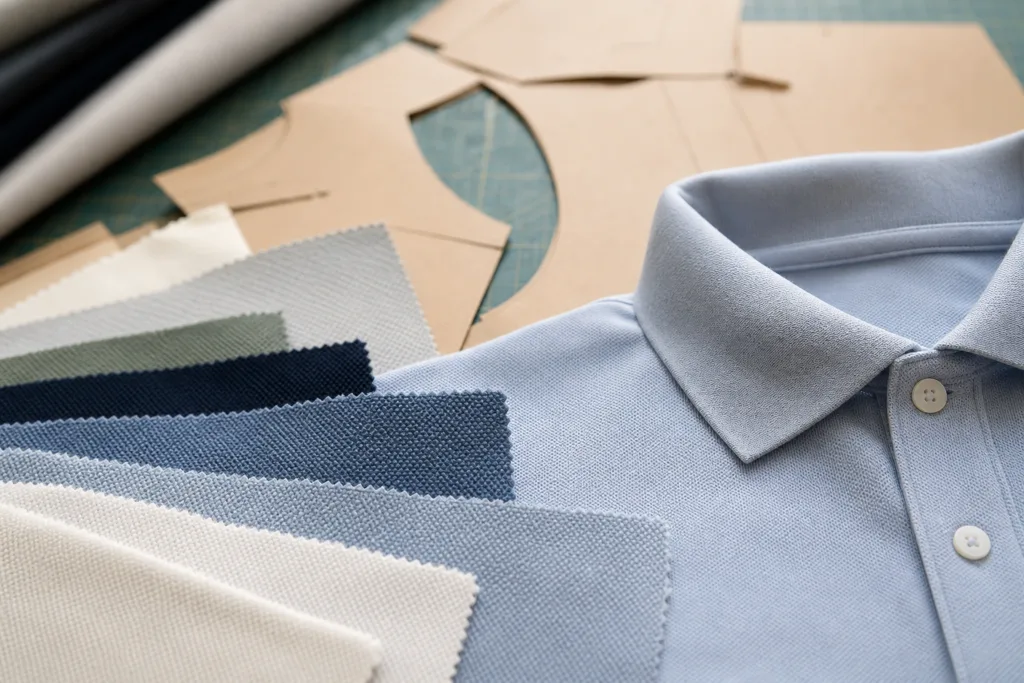
For school, club, and sports programs, team polo shirt solutions for uniforms often need broader size runs, more repeat orders, and tighter control over color and placement consistency across every batch. That is why the approved sample, the size chart, and the measurement tolerance sheet must all match before production starts.
- Measure the approved sample at the key points you want in bulk.
- Confirm the allowed tolerance for chest, length, shoulder, and sleeve.
- Check how the collar sits after washing and drying.
- Confirm whether the fit should stay consistent or relax slightly in wear.
- Keep one approved reference sample for factory comparison during production.
Key takeaway: the more specific the fit spec, the easier it is to keep a bulk order looking consistent across all sizes.
MOQ, Sampling, and Lead Time
MOQ is rarely just a sales rule. It is usually tied to fabric availability, color matching, trim sourcing, logo method, and how many size variations the order needs. A stock fabric with a simple decoration plan may allow a lower MOQ than a fully custom knit or a program that needs special labels, unique buttons, or mixed decoration locations.
Sampling should be treated as a decision tool, not a formality. The first sample is there to test fit, fabric behavior, decoration placement, and presentation details. If changes are needed, a second sample is often faster and cheaper than trying to correct problems during bulk production.
| Factor | How it affects MOQ | How it affects lead time |
|---|---|---|
| Fabric stock | Available stock can support lower quantities | Reduces waiting time for raw material sourcing |
| Custom fabric development | Usually pushes MOQ higher | Adds time for lab dips, knitting, or dye approval |
| Decoration complexity | More logos or locations can raise planning needs | Adds setup and approval steps |
| Trim and label customization | Unique trims may require more minimum units | Can delay sample completion and bulk launch |
| Size range | More sizes can increase production planning load | Requires stronger grading and QC control |
If a buyer wants a faster launch, the safest path is usually to simplify the first order. Keep the fabric choice clear, reduce the number of decoration locations, and finalize the label and packaging plan early. That approach often creates a better production rhythm than trying to make the first order do everything at once.
Key takeaway: MOQ and lead time are not separate problems; they are both shaped by how customized the order becomes.
QC Checks That Protect Bulk Production
Bulk quality control starts before the sewing line runs. We look at fabric shade consistency, hand feel, shrinkage risk, stitch quality, logo position, and whether the reference sample has been translated correctly into production instructions. If the control points are clear, the factory can catch issues earlier and avoid unnecessary rework.
A good QC plan should cover both garment construction and presentation. A shirt that passes stitching checks can still be rejected if labels are upside down, logos are off-center, collars are twisted, or folding standards are inconsistent. Buyers who sell into uniforms or retail programs usually feel those details immediately.
| QC checkpoint | What to inspect | Why it matters |
|---|---|---|
| Fabric inspection | Shade variation, defects, hand feel | Protects consistency across the order |
| Measurement check | Chest, length, sleeve, collar balance | Prevents size drift in bulk production |
| Logo placement | Position, size, alignment, thread or print quality | Protects brand presentation |
| Stitching and seams | Puckering, loose threads, skipped stitches | Improves durability and finish |
| Packaging audit | Folding, labeling, bagging, carton marks | Keeps the delivery ready for distribution |
In bulk production, the final inspection should compare finished pieces against the approved sample, not against memory. That is why we prefer a clear sign-off package with measurement notes, approved color references, and written decoration details. It removes guesswork from the line and keeps the factory focused on the same target the buyer approved.
- Check the first output from the line before continuing the full run.
- Audit size ratios against the agreed order breakdown.
- Confirm that all labels, tags, and bags match the approved presentation.
- Record any correction request in writing so the next batch does not repeat it.
Common Mistakes Buyers Can Avoid
Most polo shirt production problems are preventable. They usually happen when buyers move too quickly, approve a sample without testing it, or leave too many details open until the bulk stage. The more complex the order, the more important it is to lock the core decisions early.
- Approving a sample without checking wash behavior or fit after laundering.
- Choosing a decoration method that does not suit the fabric weight or stretch.
- Using vague color names instead of clear references or approved swatches.
- Changing logo placement after the sample has already been approved.
- Forgetting to confirm packaging, fold method, and carton labeling before bulk production.
- Mixing size specs from different reference shirts and expecting one stable result.
- Ignoring MOQ or lead-time changes caused by custom trims and labels.
The biggest avoidable mistake is treating the sample as a picture instead of a production contract. A good sample should carry the decision set for the full order: fabric, fit, logo, labels, and packaging. Once those are locked, production becomes much more predictable.
Conclusion
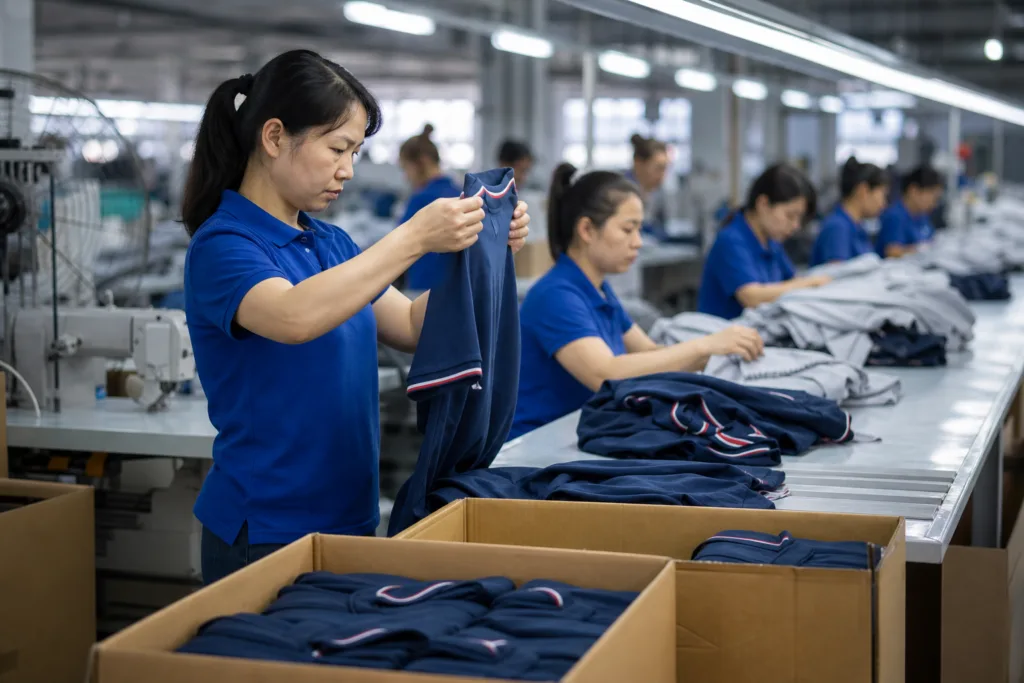
Custom polo shirts work best when the buyer treats the order like a production project, not just a decorated garment. Fabric choice, GSM, fit, logo method, labels, sampling, MOQ, and QC all interact with one another. If one of those choices is weak, the bulk order usually shows it.
From our manufacturing perspective, the strongest polo programs are the ones that define the use case early, approve the sample carefully, and keep the production spec clear through to packing. That approach helps brands, uniform buyers, and sourcing teams reduce risk while still getting a shirt that looks polished in the real world.
FAQ
How do I choose the right fabric for custom polo shirts?
Start with use case: cotton blends feel softer for casual or retail programs, while polyester-led knits usually hold shape better for activewear and frequent washing. We also check collar recovery, opacity, and whether the fabric can support the chosen logo method before approving a sample.
What MOQ should I expect for a polo shirt order?
MOQ depends on fabric availability, color, size spread, and decoration complexity. A stock fabric with a simple logo often supports a lower MOQ than a fully custom knit, custom trim set, or multi-location decoration plan.
Is embroidery or printing better for polo shirts?
Embroidery is usually the most durable choice for small chest logos and a more polished look, while printing can be better for larger graphics, lighter budgets, or special effects. The right choice depends on fabric thickness, logo detail, and how the shirts will be worn and washed.
How many samples do I need before bulk production?
Most buyers should expect at least one fit sample and one pre-production approval round if the first sample needs corrections. The goal is to lock the spec, not to chase endless revisions, so clear feedback and measured comments matter more than the sample count.
How do you keep sizing consistent across a bulk order?
Consistency comes from approved measurement points, grading rules, and a signed size spec before cutting begins. We also check shrinkage, collar shape, and tolerance ranges during production so the finished run matches the approved sample as closely as possible.
What should I prepare before asking for a quote?
Prepare the target use case, fabric preference, size breakdown, logo files, label and packaging ideas, color references, and your delivery window. The more complete the brief, the faster a manufacturer can quote accurately and tell you where MOQ or lead time may change.