

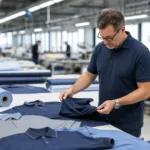
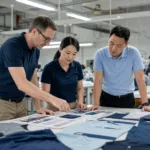




Team polo shirts are one of the most practical apparel choices for schools, clubs, nonprofits, and organized groups because they balance identity, comfort, and a more polished look than basic tees. From our manufacturing perspective, the best bulk order is not simply the cheapest shirt with a logo on it. It is the product that fits the group well, survives repeated washing, keeps branding consistent, and can be reordered without avoidable surprises.
If your project needs custom polo shirt manufacturing support, the most useful starting point is a supplier that can help with fabric selection, logo method planning, size range decisions, sampling, and bulk production control in one workflow. For schools, clubs, and organizations, that matters because group apparel usually involves mixed age ranges, repeated wear, strict budgets, and a need for reliable reorders rather than one-off fashion production.
Why team polo shirts work for schools, clubs, and organizations
The main reason team polo shirts work so well is versatility. They can look uniform enough for staff, students, volunteers, and club members, while still feeling comfortable for daily use, events, travel, and light activity.
They also sit in a practical middle ground. A polo can feel more structured than a T-shirt, but it is usually easier to wear and maintain than a woven shirt or formal uniform top. That makes it suitable for school houses, debate clubs, golf teams, campus staff, nonprofit events, youth programs, and membership organizations.
When buyers compare options, we usually suggest thinking about actual wear conditions first. Will the shirt be used indoors, outdoors, in hot weather, for long event days, or for weekly uniform use? Those answers will affect fabric, GSM, collar construction, logo method, and long-term maintenance more than color alone.
Who should use this guide
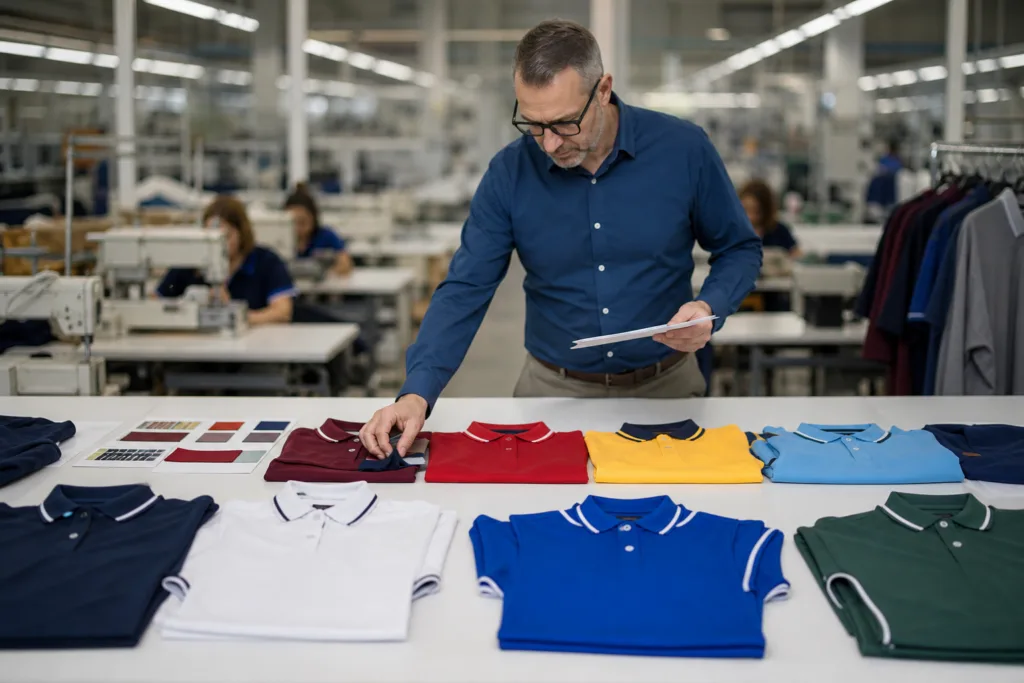
This guide is written for buyers who need a clear sourcing and manufacturing view before placing a bulk order. That includes school administrators, club leaders, team coordinators, event organizers, nonprofit purchasing staff, and procurement teams managing multi-size group apparel.
It is also useful for product developers or merchandisers who need to compare custom team polo shirts for clubs and organizations with other uniform or promotional options. The main questions are usually the same: what fabric to use, how to manage size runs, which logo method fits the budget, and how to avoid reorder problems later.
What to prioritize first before requesting quotations
Before you ask for pricing, decide what matters most in the order. In most group polo projects, the core priorities are identity, budget, comfort, durability, and reorderability.
If you do not rank those priorities early, quotations can become hard to compare. A lower price may come from a lighter fabric, simpler collar, different placket construction, looser color tolerance, or decoration method that does not fit the intended use.
| Priority | What it affects | What buyers should ask |
|---|---|---|
| Identity | Color, logo placement, trim details | Can the supplier match school or club branding consistently? |
| Budget | Fabric type, decoration, packaging, MOQ | What specification changes reduce cost without harming use? |
| Comfort | Fiber blend, breathability, fit, stretch | Will users wear it all day without discomfort? |
| Durability | Stitching, collar stability, wash performance | How will the polo perform after repeated washing? |
| Reorderability | Fabric continuity, dye consistency, trims | Can the style be repeated later with similar color and fit? |
Key takeaway: The right starting question is not “What is your cheapest polo?” but “What specification will hold up for our group use and future reorders?”
How to choose the right fabric for team polo shirts
Fabric is the biggest driver of comfort, performance, and price. For team polo shirts, the most common options are cotton, polyester, cotton-poly blends, and performance knits with moisture management.
Cotton polos usually feel softer and more natural against the skin. They are often a good fit for office-style school staff uniforms, club committees, or organizations that want a classic hand feel. The trade-off is that pure cotton may absorb more moisture, dry more slowly, and be less stable than synthetic-rich options in repeated institutional washing.
Polyester polos are often chosen for sports-adjacent teams, outdoor events, and frequent-use uniforms. They generally offer better moisture management, faster drying, and color retention. The feel depends heavily on yarn and knit quality, so not all polyester polos feel the same.
Blended fabrics often give the most balanced result. A cotton-poly blend can improve durability and maintenance while preserving a softer hand feel than a full synthetic option.
| Fabric option | Typical feel | Best for | Points to watch |
|---|---|---|---|
| 100% cotton pique | Soft, classic, breathable | School staff, clubs, everyday uniform use | May shrink more and dry slower |
| 100% polyester knit | Smooth to sporty | Outdoor teams, events, active use | Hand feel varies by yarn quality |
| Cotton-poly blend | Balanced comfort and stability | Mixed-use programs, large organizations | Need to confirm exact blend ratio |
| Performance polyester | Light, breathable, quick-dry | Golf, coaches, field staff, warm climates | Decoration method must suit the fabric |
GSM also matters. A lighter polo may feel cooler and cost less, but it can show through more easily and may feel less structured. A heavier polo can look more premium and durable, but may feel warmer and increase fabric cost.
For many school and organization projects, a middle GSM range works best because it balances comfort and appearance. In sampling, we usually advise buyers to compare not only the number on paper but also the knit density, recovery, and collar stability.
What buyers should check in fabric approval
- Fiber content and blend ratio
- Knit type such as pique or jersey
- Fabric GSM and expected hand feel
- Colorfastness and washing expectations
- Pilling resistance for frequent use
- Whether logos will be embroidered, printed, or heat applied
Care expectations should also be discussed early. If the garments will be washed by many individual users, clear care labels reduce confusion. Buyers comparing maintenance requirements can review the care symbol standard used for textile and apparel labels when discussing wash instructions and label clarity with a manufacturer.
Selecting fit and size ranges for mixed groups
Fit planning is where many bulk polo orders become difficult. Schools, clubs, and organizations rarely order for a narrow body profile. They may need youth sizes, adult sizes, men’s and women’s fits, or one unisex block that works reasonably across a broad group.
The first decision is whether the order should use separate fit blocks or a unisex approach. A unisex polo simplifies ordering and inventory, but some groups find it less accurate for appearance and comfort. Separate fit blocks can improve wearability, yet they require clearer size planning and communication.
For younger age groups or school programs, size continuity matters even more. If the project includes youth wear, buyers should review options such as custom kids polo shirts for school programs and confirm how youth sizing relates to adult XS or other crossover sizes.
From our production perspective, buyers should always request a size chart tied to the actual pattern, not a generic sales chart. Better still, ask for fit samples in the key sizes that usually create problems, such as youth-large, adult-small, adult-large, and plus-size ranges.
When fit consistency matters across a diverse group, it helps to use size tables as a baseline when reviewing fit and grading for team polos. Standards are not a substitute for your own fit approval, but they help frame more informed conversations about measurement logic and grade progression.
Size planning tips that reduce exchange problems
- Collect wearer counts by size before production, not after
- Identify whether the group prefers a relaxed or closer fit
- Approve measurements for chest, body length, shoulder, and sleeve opening
- Check youth-to-adult transition sizes carefully
- Ask whether tolerance ranges will be controlled in bulk QC
Key takeaway: The safest way to reduce fit complaints is to approve real samples and real measurement specs before bulk production starts.
Which logo and decoration method fits the project best
The best logo method depends on use, artwork, fabric, and budget. For team polo shirts, the most common choices are embroidery, screen printing, heat transfer, and sublimation.
Embroidery is often the first choice for uniforms because it looks professional and performs well on many polo fabrics. It is especially suitable for chest logos, school crests, club badges, and organization marks where durability and structure matter. If your project needs a polished uniform look, review embroidered logo options for uniform polo shirts early in development.
Screen printing can work well for larger graphics or event polos where budget matters, though it is less common than embroidery for classic left-chest uniform branding. Heat transfer is useful for detailed logos, names, numbering, or lower-volume variation, but the quality depends strongly on transfer material and application control.
Sublimation is ideal when the shirt is made from suitable polyester fabric and the design includes all-over color, striping, or strong custom graphics. It gives high design freedom, but it is not the default answer for every school or club order.
| Logo method | Best use case | Advantages | Things to confirm |
|---|---|---|---|
| Embroidery | School crests, club logos, staff polos | Durable, premium look | Backing, stitch density, puckering risk |
| Screen printing | Event polos, larger graphics | Cost-effective at volume | Ink feel, color match, print position |
| Heat transfer | Names, small runs, detailed art | Flexible, sharp detail | Heat sensitivity, wash durability |
| Sublimation | Polyester performance polos | Full design freedom, no heavy print feel | Requires correct fabric and pattern planning |
In manufacturing, logo approval should cover more than artwork. We check placement, scale, color, thread or ink choice, and how the decoration interacts with fabric stretch and surface texture. That is why a pre-production sample matters even for seemingly simple chest logos.
How to balance appearance and cost in bulk ordering
The most cost-effective order is usually not the lightest or most stripped-down product. It is the specification that avoids waste, remakes, and dissatisfaction while still staying within budget.
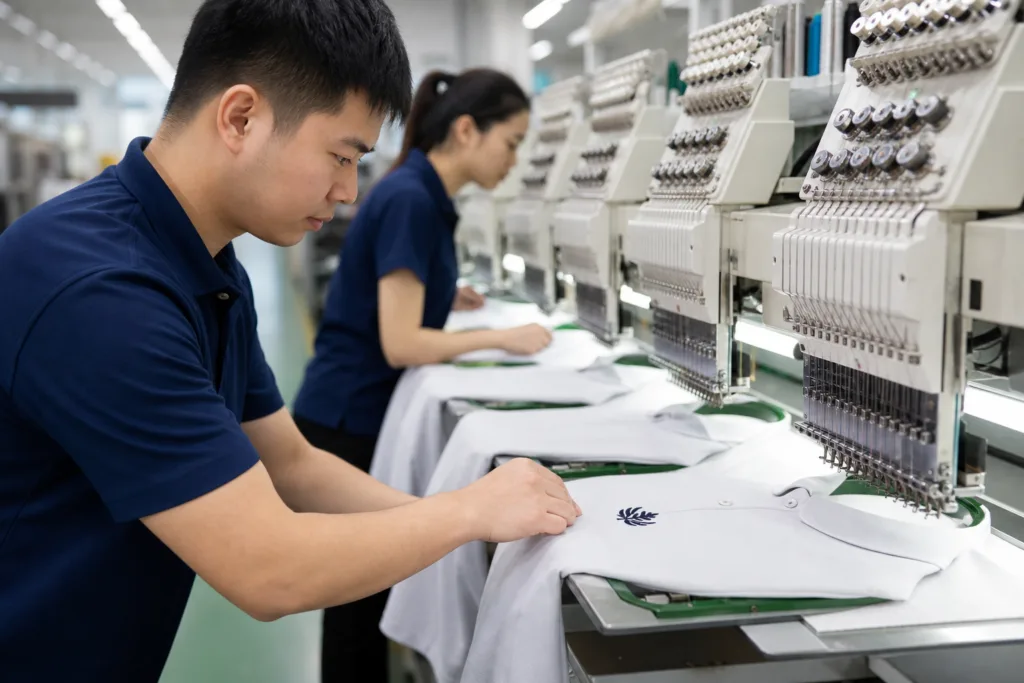
To manage cost well, start with the features users will actually notice. Fabric hand feel, collar shape retention, color consistency, and logo quality are usually more visible than upgraded packaging or unnecessary trim complexity. If the budget is tight, simplify what does not add real value to wearers.
We often help buyers compare whether they need the look of corporate polo shirt production for coordinated group orders or a more casual team style. That distinction affects placket structure, collar formality, fit block, and decoration choice, all of which influence cost.
Common cost drivers in custom polo production
- Custom-dyed fabric instead of stock color fabric
- Separate men’s, women’s, and youth patterns
- Complex embroidery with many stitches
- Multiple logo positions
- Special trims such as woven labels, contrast tape, or branded buttons
- Individual polybags, name labels, or retail packaging
- Very low quantity per color or per size ratio
Key takeaway: Cost control works best when buyers protect the specifications that affect daily wear and simplify the ones that do not.
What to prepare before contacting a supplier
Good preparation speeds up quotation, sampling, and production. It also helps manufacturers give more accurate advice rather than making assumptions that later need revision.
Before starting a project, prepare the following information:
- Target use: school uniform, club member wear, event staff, coaches, volunteers, or promotional distribution
- Estimated quantity by size and color
- Preferred fabric type or reference garment
- Logo files in vector format if available
- Preferred logo positions and approximate sizes
- Required delivery date and event deadline
- Private label needs such as neck label, hangtag, or packaging
- Whether future reorders are likely
If a buyer is not yet sure about all these points, that is normal. At Ninghow, we often work from a practical brief first and then refine the specification through sample development, especially when a group needs help balancing budget, fit, and logo execution.
Understanding MOQ, sampling, lead time, and bulk workflow
MOQ is not just a sales rule. It usually reflects fabric availability, dyeing efficiency, trim sourcing, and production setup. A buyer may see a low advertised MOQ online, but the realistic MOQ for a custom color, custom label set, and multiple logo applications can be much different.
For team polo shirts, MOQ often depends on whether the order uses stock fabric colors or custom-dyed material, standard trims or fully customized trims, and one decoration method or several. This is why it is important to discuss the real specification before assuming the order can be split into many small sub-groups.
Typical production stages buyers should expect
- Requirement review and quotation
- Material and decoration confirmation
- Pattern or size chart confirmation
- Sample development
- Sample revision if needed
- Bulk order approval and deposit
- Fabric preparation and trim sourcing
- Cutting, sewing, decoration, finishing, and packing
- Quality inspection and shipment release
Lead time can change based on season, quantity, decoration complexity, and how quickly approvals are returned. In our experience, sample delays are often caused less by factory speed and more by unclear logo files, uncertain color approval, or missing size decisions.
That is why the sample should be treated as a decision tool, not a formality. Use it to approve fit, hand feel, collar shape, logo quality, care labeling, and packaging expectations before bulk production begins.
How to plan reorders without losing consistency
Reorder planning should start during the first order, not after stock runs low. Schools and organizations often need additional sizes later, replacement units for new members, or repeat orders for the next term or season.
The biggest reorder risks are fabric discontinuation, color variation between dye lots, trim changes, and silent pattern adjustments. If reorder continuity matters, buyers should ask early whether the manufacturer can reserve fabric information, keep approved samples, and document decoration settings.
What to lock down in the first order for smoother repeats
- Approved fabric code or composition details
- Color standard or lab dip approval reference
- Final measurement chart and tolerances
- Embroidery file, thread colors, and placement record
- Label artwork and packaging specification
- Photos or sealed sample reference for future comparison
For many organizations, a small strategic overrun on the first order can also help. Holding a few extra units in key sizes may be more efficient than rushing a tiny reorder later under tighter costs or fabric constraints.
Quality control checklist for school and club polo orders
Quality control should be practical and use-based. A polo that looks good in one sample photo may still create problems in bulk if measurements drift, collar points curl, logo placement shifts, or color shading appears between cartons.
We recommend checking quality at multiple stages, not only at final packing. Early checks reduce the chance that a small issue becomes a full-order problem.
| QC checkpoint | What to inspect | Why it matters |
|---|---|---|
| Fabric inspection | Color, defects, weight, hand feel | Prevents cutting faulty or inconsistent material |
| Cutting stage | Panel accuracy, stripe or knit alignment | Protects size consistency and appearance |
| Decoration stage | Logo position, color, stitching or print quality | Avoids visible branding defects |
| Sewing inline check | Seams, placket, collar, loose threads | Catches construction issues early |
| Final inspection | Measurements, appearance, labeling, packing | Confirms shipment readiness |
For institutional buyers, clear labeling is part of quality. Size labels, carton marks, and care labels should all be easy to understand. That matters even more when garments are distributed to many wearers by an administrator rather than individually by the supplier.
Common mistakes that create delays or disappointment
The most common mistake is approving a product too quickly based on a photo or a generic reference. Polo quality depends on details that photos do not fully show, including knit density, collar recovery, embroidery tension, and true fit.
Another common problem is mixing too many variables into a small order. Multiple colors, several logo versions, separate fit blocks, and custom trims can all be done, but they increase complexity and may affect MOQ, lead time, and consistency.
Mistakes buyers should avoid
- Using a generic size chart instead of approving actual fit specs
- Choosing fabric only by composition and ignoring GSM and knit quality
- Approving artwork without confirming placement size
- Expecting a custom color with the same speed as a stock color order
- Skipping sample revision when issues are visible
- Not planning for reorders during the first production run
Key takeaway: Most preventable polo order problems start with unclear specifications, not with sewing alone.
How to evaluate a team apparel manufacturer
When comparing suppliers, focus on manufacturing fit rather than broad promises. A good match is a supplier that can handle your real requirements: consistent polo construction, logo execution, size management, repeat production, and communication that supports group ordering.
Ask practical questions. Can they explain which fabrics fit your use case? Do they review logo method suitability by fabric? Will they provide measurement specs, sample feedback handling, and QC checkpoints? Their answers often reveal more than a price sheet.
For larger or ongoing programs, look for evidence of process discipline. That includes sample approval workflow, bulk production planning, labeling accuracy, and the ability to manage repeat specifications. For schools and organizations, reliability is often more valuable than chasing the lowest opening quote.
Final buying checklist for team polo shirts
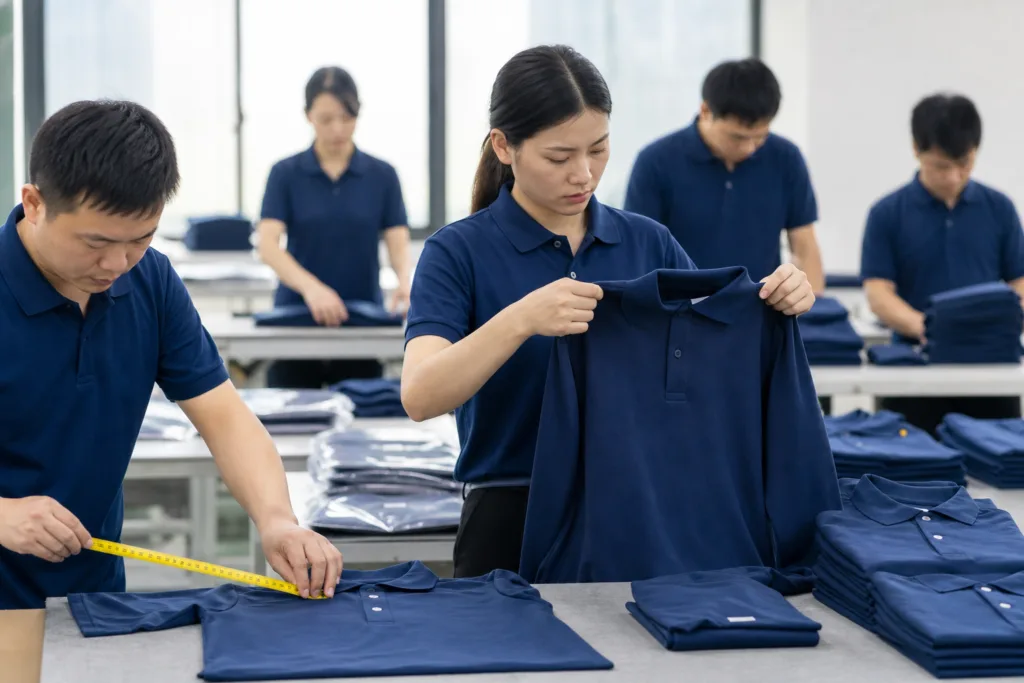
Before confirming a bulk order, buyers should make sure the decision is complete, not just affordable. A few final checks can protect the budget and reduce post-delivery issues.
- Fabric, GSM, and hand feel match the use case
- Size chart reflects the actual production pattern
- Key fit samples have been reviewed
- Logo method is suitable for the garment and expected washing
- MOQ and lead time are realistic for the chosen specification
- Care labels, size labels, and packaging are confirmed
- Reorder records will be kept for future continuity
- Quality checkpoints are agreed before shipment
Team polo shirts can be a strong long-term uniform solution when the order is built around real usage, not guesswork. For schools, clubs, and organizations, the most successful projects usually come from clear specifications, sample approval, practical size planning, and a manufacturing partner that understands repeatability as well as first delivery.
Frequently Asked Questions
What fabric is best for team polo shirts?
The best fabric depends on how the polos will be used. Cotton feels soft and classic, polyester performs well for active or outdoor use, and blended fabrics often give the best balance of comfort, durability, and easier care for schools, clubs, and organizations.
Is embroidery better than printing for school or club polo shirts?
Embroidery is usually better for left-chest logos on school or club polos because it looks more structured and durable over time. Printing can still be a good option for event polos, larger graphics, or budget-driven projects, but the right choice depends on fabric, artwork, and expected wash frequency.
How many team polo shirts do we need to meet MOQ?
MOQ varies by fabric source, color choice, logo method, and how customized the garment is. A stock-color polo with a simple logo may allow a more flexible minimum, while custom-dyed fabric, multiple size groups, or special trims usually increase the realistic order threshold.
Should we request samples before placing a bulk order?
Yes, samples are one of the most important steps in a bulk polo order. They let buyers confirm fit, fabric feel, collar shape, logo quality, label details, and overall appearance before full production starts, which reduces the risk of expensive bulk mistakes.
How can we reduce sizing problems for mixed groups?
The most effective way is to collect size data early and approve a real size chart linked to the production pattern. If the group includes youth and adult wearers or a wide range of body types, fit samples in key sizes help prevent avoidable exchanges and dissatisfaction later.
How do we make future reorders easier?
Future reorders become easier when the first order records fabric details, approved colors, measurements, logo files, label artwork, and packaging requirements clearly. Keeping an approved sample and documented production references helps protect consistency when additional sizes or repeat orders are needed later.