

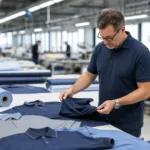





Custom golf polo shirts need to do more than carry a logo. For clubs, teams, and golf apparel brands, the right polo must balance on-course performance, polished presentation, brand consistency, and reliable bulk production. From our manufacturing perspective, the success of a golf polo program usually depends on a few practical decisions made early: fabric type, stretch and moisture management, fit grading, collar construction, logo method, and how clearly the sample is approved before bulk production begins.
If you are comparing suppliers or building a new program, it helps to review polo shirt manufacturing options in a way that connects product design with real production outcomes. At Ninghow, we support buyers who need fabric selection, fit refinement, embroidery or print planning, private label details, sample development, and bulk order coordination for polos that must look sharp in the clubhouse and perform well on the course.
What clubs and golf apparel brands need from custom golf polo shirts
The first question is simple: who will wear the polo, and in what setting? A member uniform, tournament polo, pro shop retail style, and modern golf brand launch can all start from the same garment category, but they often require different fabric weights, fits, and branding details.
Clubs usually prioritize consistency, easy repeat ordering, broad size coverage, and a clean logo presentation. Apparel brands often care more about hand feel, silhouette, collar shape, trend alignment, private label execution, and how the product compares visually against other performance polos in the market.
When buyers evaluate custom golf polo shirts for club and brand programs, we usually recommend defining the product around these practical needs first:
- Expected wearing environment: hot weather, travel, events, or daily course use
- Performance level: basic breathable polo or technical stretch performance style
- Brand image: classic club look, tournament uniform, or retail-ready modern fit
- Customization depth: front logo only or full private label presentation
- Reorder logic: one-time event order or long-term repeatable program
Key takeaway: The best golf polo is not just the one with the lowest unit price. It is the one specified clearly enough to perform well, fit the intended wearer, and stay consistent when reordered.
Why golf polo shirts are different from standard polo shirts

Golf polos may look similar to standard polos, but performance expectations are different. A casual polo can tolerate heavier fabric, lower stretch, and a simpler silhouette. A golf polo usually needs better movement through the shoulders and chest, stronger recovery after repeated wear, and a cleaner appearance even after hours on the course.
Another difference is visual expectation. Golf garments often need to look refined from a distance and up close. That means collar shape retention, placket balance, logo neatness, and color consistency matter more than many buyers expect.
In production, golf polos also require more attention to fabric behavior. Moisture management, drape, snag resistance, and stretch recovery can change the final result significantly. For brands building performance collections, we often discuss golf apparel manufacturing support for performance collections in terms of matching fabric performance with the price point the market will accept.
How to choose the right fabric for custom golf polo shirts
The fabric decision has the biggest impact on comfort, appearance, and bulk cost-performance. For golf use, buyers commonly compare polyester performance knits, cotton-rich blends, pique structures, jacquard textures, and smoother interlock or jersey constructions.
There is no single best fabric for every program. The right choice depends on whether you want a traditional polo look, a softer lifestyle feel, or a technical athletic presentation.
| Fabric option | Common feel and look | Best for | Trade-offs |
|---|---|---|---|
| 100% polyester pique | Dry hand feel, textured, structured | Club uniforms, events, large repeat orders | Can feel less soft if yarn quality is basic |
| Polyester spandex knit | Smoother, stretch performance feel | Modern golf brands, active fit polos | Usually higher fabric cost |
| Cotton polyester blend pique | Softer hand feel, classic polo appearance | Lifestyle golf, clubhouse wear | May dry slower than technical polyester |
| Jacquard knit | Premium texture or subtle pattern | Retail collections, elevated branding | Higher MOQ or fabric development limits |
| Interlock or jersey knit | Smoother surface, cleaner print base | Modern minimalist styles | Less traditional polo texture |
Pique remains popular because its texture helps the garment look structured and breathable. For buyers comparing knit choices, this explanation of pique and jersey knit constructions for polo shirts is useful background when deciding between a classic polo surface and a smoother performance face.
From our production experience, fabric selection should also include GSM planning. Many golf polos work well in a practical range around 160 to 220 GSM, but the ideal point depends on yarn type, knit structure, and intended market position. A light fabric can feel sporty and cool, while a midweight fabric can provide a more premium drape and better opacity.
What buyers should compare beyond composition
- Hand feel: dry, cool, smooth, soft, or textured
- Opacity: especially important for white and pastel colors
- Drape: relaxed retail look or more structured club uniform appearance
- Snag resistance: useful for repeat wear and washing
- Print or embroidery compatibility
- Color depth and dye consistency across repeat orders
Stretch, moisture management, breathability, and recovery: what matters most
For golf, freedom of movement matters more than extreme compression or high-stretch activewear behavior. Most buyers do not need the stretchiest fabric available. They need enough controlled stretch for swing motion and enough recovery so the polo keeps its shape after wear and laundering.
Moisture management is also often misunderstood. A fabric marketed as moisture-wicking still needs the right knit balance, yarn quality, and finishing to feel comfortable in use. If the fabric is too heavy or too dense for the climate, the wearer may still feel hot even if the material technically moves moisture.
Breathability is usually strongest when these elements work together:
- Appropriate GSM for the climate
- Knit structure that allows airflow
- Yarn and finishing suitable for moisture movement
- Pattern design that avoids unnecessary tightness through the chest and underarm
Key takeaway: For golf polos, balanced performance is usually better than chasing one feature claim. Moderate stretch, stable recovery, breathable construction, and a wearable hand feel create a more dependable product than marketing language alone.
Fit and sizing for clubs vs. brands
Fit decisions should be made early because they affect pattern development, size grading, and customer satisfaction. Clubs usually need inclusive, wearable sizing that works across a broad member base. Fashion-driven golf brands may want an athletic or modern cut with more shape through the body and sleeve.
In garment development, we normally separate fit into four common directions:
- Regular fit: easier wear, broader customer acceptance
- Athletic fit: cleaner chest and waist shape, often with stretch fabric
- Modern fit: slightly trimmer than regular without becoming tight
- Custom graded fit: developed from a brand’s own block and target customer
The most important sizing principle is that patterns should start from body measurement logic rather than guesswork. Standards-based guidance around apparel size designation based on body measurements helps explain why a clear base size and grading method matter when buyers want consistent fit across a full size run.
For clubs, we often recommend size sets or fit samples across key sizes before bulk approval. For apparel brands, fit comments should be very specific, such as shoulder width, front length, chest ease, bicep opening, collar stand height, and hem sweep. Vague comments like “slightly better fit” create delays and inconsistent revisions.
| Buyer type | Typical fit goal | Best development approach |
|---|---|---|
| Golf club | Comfortable fit for mixed age groups | Regular or modern fit with broad size run |
| Tournament organizer | Simple fit for one-time event wear | Stable stock-inspired fit with clear measurements |
| Golf apparel brand | Differentiated silhouette and repeatable block | Custom pattern and sample iteration |
| Retailer or distributor | Commercial fit with low return risk | Proven fit block with careful grading review |
Construction details that shape a premium golf polo
Small construction details strongly influence whether a golf polo feels premium or generic. Buyers often focus on fabric and logo first, but collar, placket, cuff, and hem execution are what make the shirt look finished in person.
Collar construction
A premium golf polo collar should sit cleanly, resist curling, and remain balanced after washing. Collar self-fabric, rib collar, collar stand structure, fusing choice, and stitch tension all affect the final look. If the collar feels too soft, it can collapse. If it feels too stiff, it may look cheap or uncomfortable.
Placket and button presentation
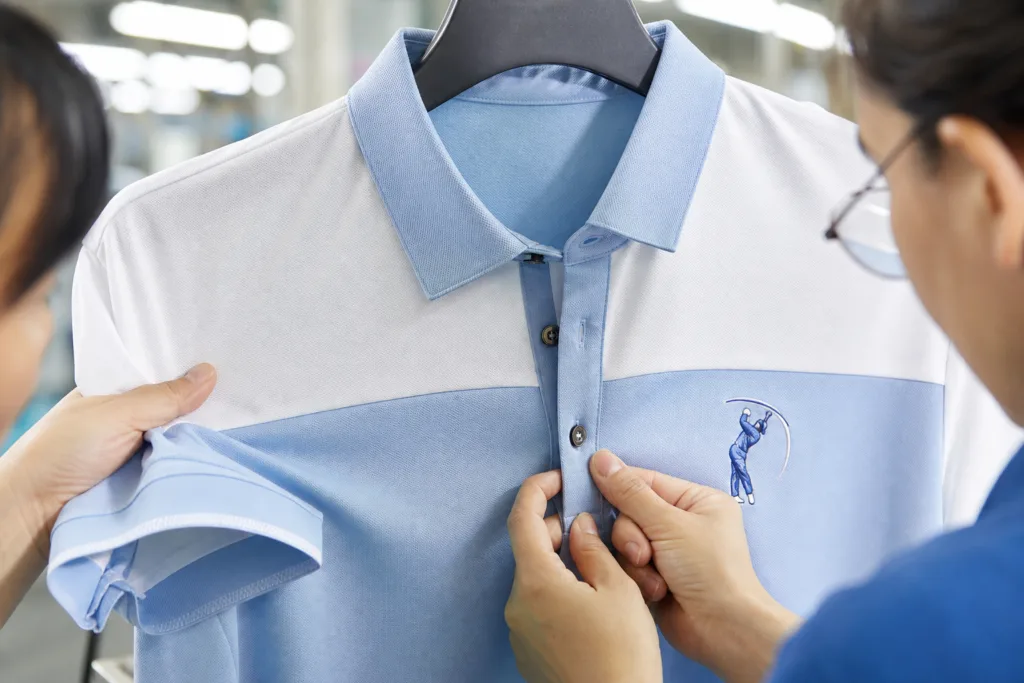
The placket should lay flat and align correctly at the neckline. Uneven button spacing, weak interlining, or poor topstitching can make the entire garment look off-balance. For higher-end private label polos, buyers may also specify branded buttons, contrast thread details, or hidden construction refinements.
Cuffs and sleeve finish
Golf polos can use hemmed sleeves or rib cuffs depending on the look. Hemmed sleeves tend to feel more modern and athletic. Rib cuffs can create a more traditional polo identity but need careful tension control so they do not grip too tightly.
Hem shape and side details
Side vents, back-drop hems, taped seams, and clean bottom finishing improve both comfort and appearance. These are small cost additions, but they often help clubs and brands present a noticeably more complete product.
When brands are comparing style directions, we often discuss performance polo production paths for activewear brands by looking at how these construction details support either a classic golf look or a more technical sportswear identity.
How to plan logo placement and branding details
Logo placement should support both visibility and wearability. A club crest on the left chest may be the standard choice, but some projects benefit from sleeve logos, back neck marks, hem tabs, or internal branding that supports a stronger retail identity.
Before sampling, define logo size, thread colors or print colors, exact position from key seams, and whether each logo is mandatory across all sizes. This matters because placement can shift visually on smaller or larger garments if the spec is not written clearly.
| Placement area | Common use | Production note |
|---|---|---|
| Left chest | Club crest or main brand logo | Most common and easiest to standardize |
| Sleeve | Sponsor, event, or secondary brand mark | Check visibility against seam curvature |
| Back neck | Subtle brand identity | Works well with heat transfer or small embroidery |
| Front hem | Woven label or small badge | Good for retail-focused private label presentation |
| Inside neck | Main label or printed neck branding | Important for comfort and brand consistency |
Buyers choosing embroidered polo shirt options for logo placement should also consider the size and density of the artwork. A detailed crest may look excellent in embroidery, but only if the digitizing, stitch count, and backing are matched to the fabric.
Embroidery, printing, or heat transfer: which branding method fits golf polos best?
Embroidery is often the first choice for golf polos because it communicates a classic club image and holds up well in repeated wear. That said, it is not always the best solution for every logo or every fabric. Dense embroidery on a lightweight performance knit can pull the fabric or affect drape.
Printing works well for fashion-forward graphics, tonal branding, or smoother technical fabrics. Heat transfer is useful for small performance logos, neck branding, or clean modern marks where embroidery would feel too heavy.
| Method | Best for | Advantages | Watch-outs |
|---|---|---|---|
| Embroidery | Club crests, classic logos | Premium look, durable, textured | Can add stiffness on light fabrics |
| Screen printing | Larger graphics or simple flat logos | Good color impact, scalable | Less common for traditional club polos |
| Heat transfer | Small technical logos and neck prints | Clean finish, low bulk | Application quality and temperature control matter |
| Sublimation | All-over pattern or panel graphics | Strong design flexibility on polyester | Requires the right fabric and design planning |
From our manufacturing side, the choice should follow the logo style, expected wear, target price, and fabric surface. A brand building a modern performance capsule may use heat transfer and internal print branding, while a club range may stay with left chest embroidery and simple woven labels.
Private label golf polos: what makes them retail ready
Private label development is where many golf polos move from “customized” to “brand-owned.” If the product will be sold in pro shops, retail stores, or online, internal and external branding details matter almost as much as the garment itself.
A retail-ready private label polo may include:
- Main neck label or heat-press neck branding
- Size label solution appropriate for comfort and compliance
- Hangtag with brand story, style name, and barcode if required
- Folded packaging, polybag requirements, and carton labeling
- Spare button, tissue support, or premium presentation details when needed
At Ninghow, we usually encourage buyers to finalize labeling and packaging during sampling rather than after bulk approval. That helps avoid last-minute changes that delay production or create mismatched branding across garments and packaging.
What the sampling and approval process should include
A strong sample process reduces expensive mistakes in bulk production. For custom golf polos, the sample is not just for appearance. It is where the buyer confirms fabric hand feel, stretch behavior, fit balance, collar shape, logo execution, color accuracy, and branding details.
The most efficient sample approvals usually include these checkpoints:
- Tech pack with measurement chart, construction notes, branding placements, and artwork files
- Fabric confirmation, including composition, GSM, texture, and color direction
- Lab dips or color references for body and trim approval
- Fit sample review on body or form
- Logo strike-off, embroidery sample, or print test
- Pre-production sample approval before bulk cutting
Common delays happen when artwork files are incomplete, collar construction is not specified, or fit comments are too general. If the buyer expects a premium result, sample feedback should be precise and documented.
Key takeaway: The sample should answer every major production question before bulk starts. If a detail is still uncertain at sample stage, it usually becomes slower and more expensive to correct later.
MOQ planning, lead time, and bulk scheduling
MOQ for golf polos depends on the fabric source, customization complexity, and whether the project uses stock-supported materials or custom-developed components. Buyers often assume MOQ is only about sewing capacity, but in reality fabric dyeing, label production, embroidery setup, and packaging requirements all affect the minimum.
Low MOQ can be realistic for simpler programs using proven fabrics and standard trims. MOQ rises when buyers request custom jacquard, many colorways, complex packaging, or multiple logo applications across small quantities.
| Factor | Effect on MOQ or lead time |
|---|---|
| Stock fabric availability | Can reduce development time and lower risk |
| Custom color dyeing | Usually increases lead time and planning needs |
| Embroidery complexity | Adds setup and approval steps |
| Multiple SKUs and colorways | Raises coordination and inventory planning needs |
| Private label packaging | Adds sourcing and packing preparation time |
For repeat club programs, forecasting helps a lot. If a club expects seasonal reorders, it is often better to standardize fabric, color references, and logo specifications early so repeat production can move more smoothly.
Quality control checkpoints that matter in golf polo production
Golf polos should be checked as performance garments and presentation garments at the same time. Good QC is not only about finding defects at the end. It is about controlling risk from fabric inspection through cutting, sewing, decoration, finishing, and packing.
We typically pay close attention to these checkpoints:
- Fabric shade consistency across rolls
- Fabric weight and hand feel consistency
- Shrinkage and twist behavior after wash testing when relevant
- Measurement accuracy against approved spec
- Collar symmetry and placket alignment
- Embroidery position, thread coverage, and logo accuracy
- Loose threads, seam appearance, and hem quality
- Packing accuracy for size ratio and label presentation
White, black, and strongly saturated colors often need extra attention. White can show transparency or stitch irregularity more easily. Dark colors can reveal shade variation between panels if fabric control is weak. High-contrast logos can also make placement errors more obvious.
Common mistakes that create avoidable problems
Most sourcing problems come from unclear decisions, not from the polo category itself. When we review delayed or disappointing projects, the same issues appear repeatedly.
- Choosing fabric by composition only, without checking knit structure and hand feel
- Approving a fit sample without a full measurement review
- Using detailed embroidery on fabric that cannot support it cleanly
- Ignoring collar construction until too late in development
- Requesting many colorways before confirming demand
- Leaving labels and packaging until after production planning starts
- Comparing supplier prices without matching the same specification level
Another common mistake is treating a golf polo like a basic promotional polo. If the product is meant for retail or long-term club identity, details like recovery, drape, logo refinement, and repeatability should be specified more carefully.
How to evaluate a golf polo shirts manufacturer
A good manufacturer should be able to explain trade-offs clearly. If a supplier cannot discuss why one fabric is better for embroidery, how grading will affect fit, or what causes collar distortion, it becomes harder to trust the bulk result.
When buyers evaluate a manufacturer, these questions are useful:
- Can the supplier recommend fabric options by use scenario, not just by price?
- Can they develop custom patterns or refine an existing fit block?
- Do they manage embroidery, printing, labels, and packaging in a coordinated way?
- How do they control color consistency and logo placement in bulk?
- What sample stages are available before production approval?
- How do they advise on MOQ when fabric or trims are custom?
A practical manufacturer conversation should feel specific. The more concrete the answers are around fabric, fit, production, and QC, the easier it is for clubs and brands to compare suppliers fairly.
What to prepare before requesting a quote or sample
The fastest quoting and sampling process happens when buyers prepare clear inputs. Even if every detail is not final, a structured request helps the factory recommend the right development path.
- Reference images or sketches
- Target fabric direction and expected hand feel
- Estimated GSM range if known
- Fit intention and target customer
- Logo files in usable format
- Placement requirements and decoration method preference
- Size range and approximate quantity by color
- Label, hangtag, and packaging requirements
- Target timeline for sample and bulk
If buyers are unsure about some of these points, that is still workable. The important thing is to identify which items are fixed and which ones need manufacturer guidance. That makes the development discussion more accurate and more efficient.
Balancing performance, presentation, and cost-performance in bulk golf polo production

The strongest custom golf polo programs are not built by maximizing every feature. They are built by choosing the features that matter most for the target wearer and price point. For some clubs, that means a dependable polyester pique with clean embroidery and broad sizing. For some apparel brands, it means a refined stretch knit, sharper fit, upgraded trims, and full private label presentation.
From our manufacturer perspective, the most successful projects are the ones that align fabric, fit, branding, and bulk planning from the start. When those decisions are made clearly, buyers reduce sampling delays, control production risk, and create golf polos that look credible both on the course and at retail.
FAQs
What fabric is usually best for custom golf polo shirts?
Polyester performance knits and polyester-spandex blends are usually the most practical choices for custom golf polo shirts because they offer good moisture management, shape retention, and durability. Cotton blends can work well for softer clubhouse or lifestyle styles, but the best fabric depends on whether the project prioritizes technical performance, classic texture, or retail hand feel.
How many samples should be approved before bulk production?
Most buyers should approve at least a fit or development sample and then a pre-production sample before bulk production starts. If the project includes special embroidery, custom color, or private label packaging, extra approval steps such as lab dips or logo strike-offs are often worth the added time because they reduce avoidable bulk mistakes.
Is embroidery always the right choice for golf polo logos?
Embroidery is often the right choice for club crests and classic golf branding, but it is not always the best option for every logo or fabric. Small technical logos, lightweight performance knits, or highly detailed artwork may work better with heat transfer or another method that keeps the fabric smoother and the logo cleaner.
What affects MOQ for custom golf polos?
MOQ is mainly affected by fabric sourcing, dyeing requirements, logo application, size and color count, and private label packaging rather than sewing alone. A simple polo using available fabric and standard trims can often be produced at a lower MOQ than a fully customized retail program with special jacquard, multiple logos, and custom packaging.
How can clubs reduce sizing problems in bulk orders?
Clubs can reduce sizing problems by choosing a clear fit direction, reviewing a full measurement chart, and checking samples on likely end users before confirming bulk production. Broad size coverage, stable grading, and realistic comments on body length, chest ease, and sleeve fit usually matter more than relying only on generic S to XXL labels.
What should buyers send when requesting a golf polo quote?
Buyers should send reference images, estimated quantities, preferred fabric direction, logo files, size range, fit intention, color requirements, and any label or packaging needs when requesting a quote. Even if some points are still open, this information helps the manufacturer recommend suitable fabric, decoration, MOQ, and sampling steps more accurately.