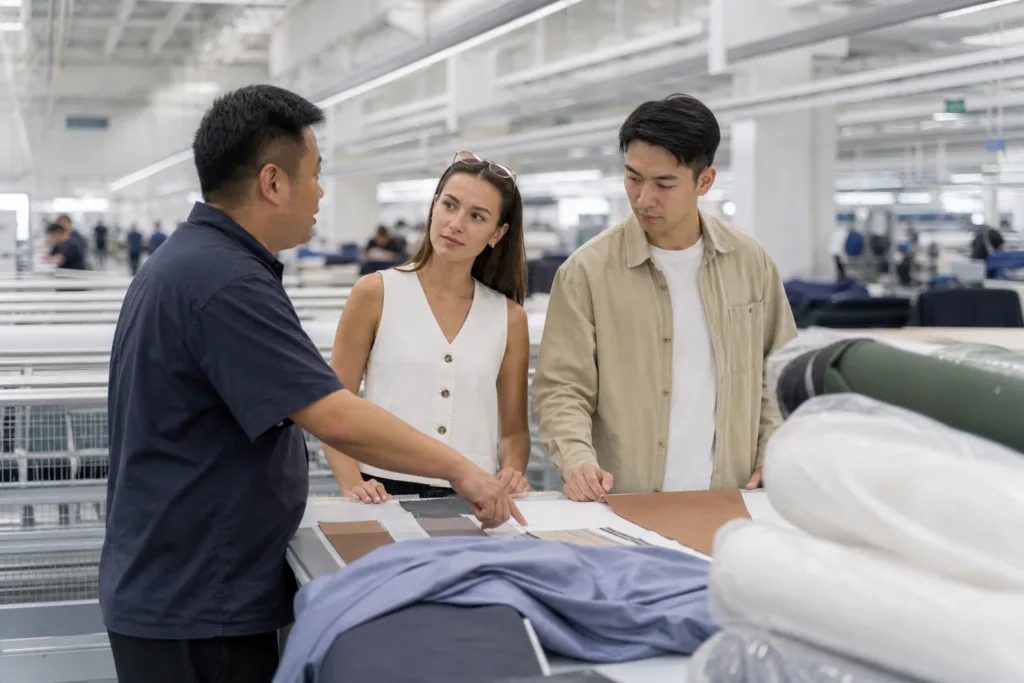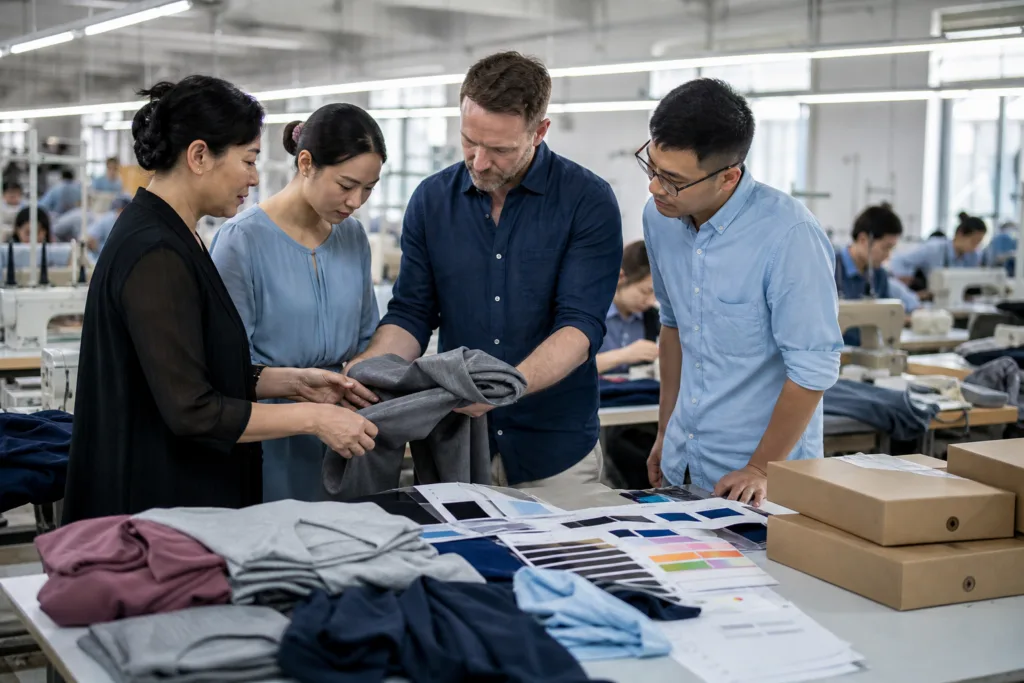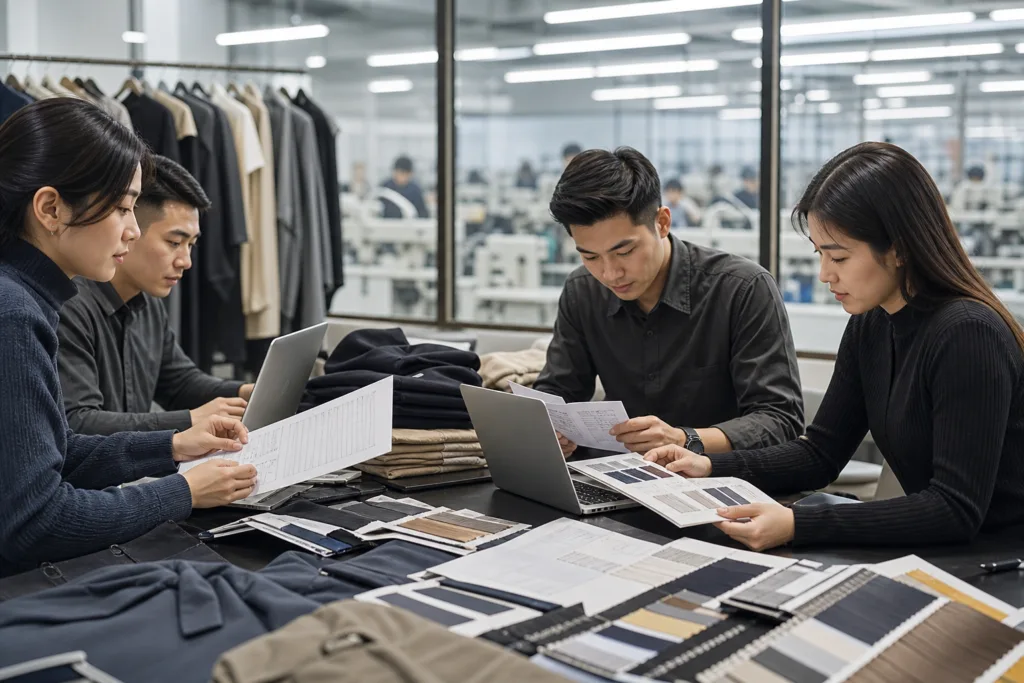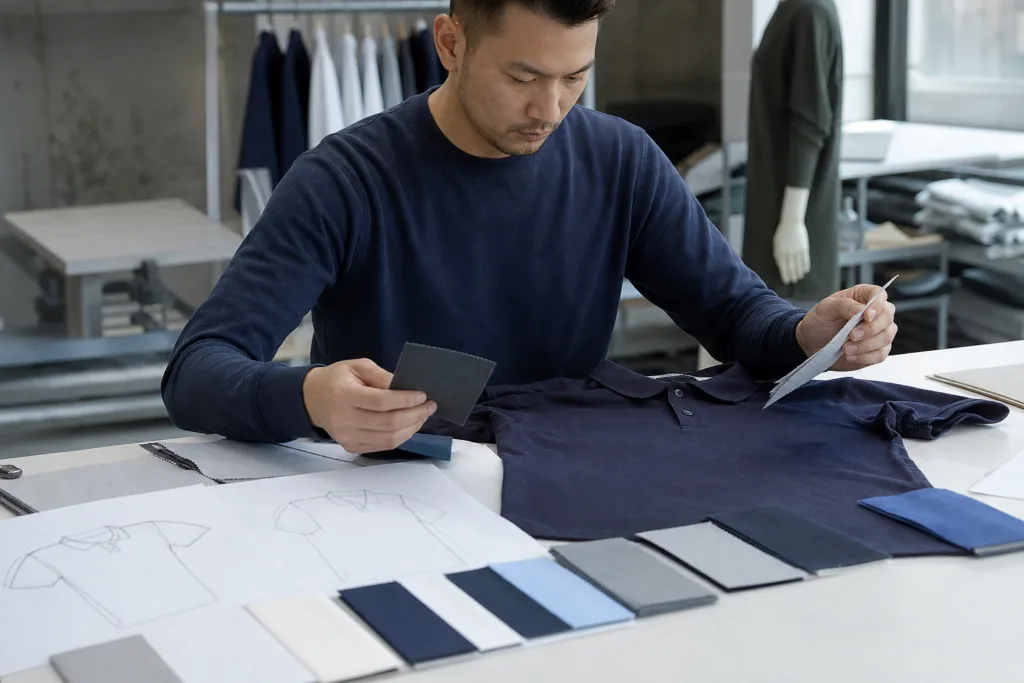
A buyer and factory team reviewing samples, specs, and production notes before order confirmation.

Questions to Ask a Chinese Clothing Manufacturer Before Placing an Order: A Practical Buyer Checklist

Before you place a sample request or production order, the quality of your questions matters almost as much as the factory’s answers. The right checklist helps you confirm whether a supplier is truly suitable for your product category, quality target, customization plan, and timeline. If you are searching for practical questions to ask clothing manufacturer […]

Questions to Ask a Chinese Clothing Manufacturer Before Placing an Order: A Practical Buyer Checklist Read More »

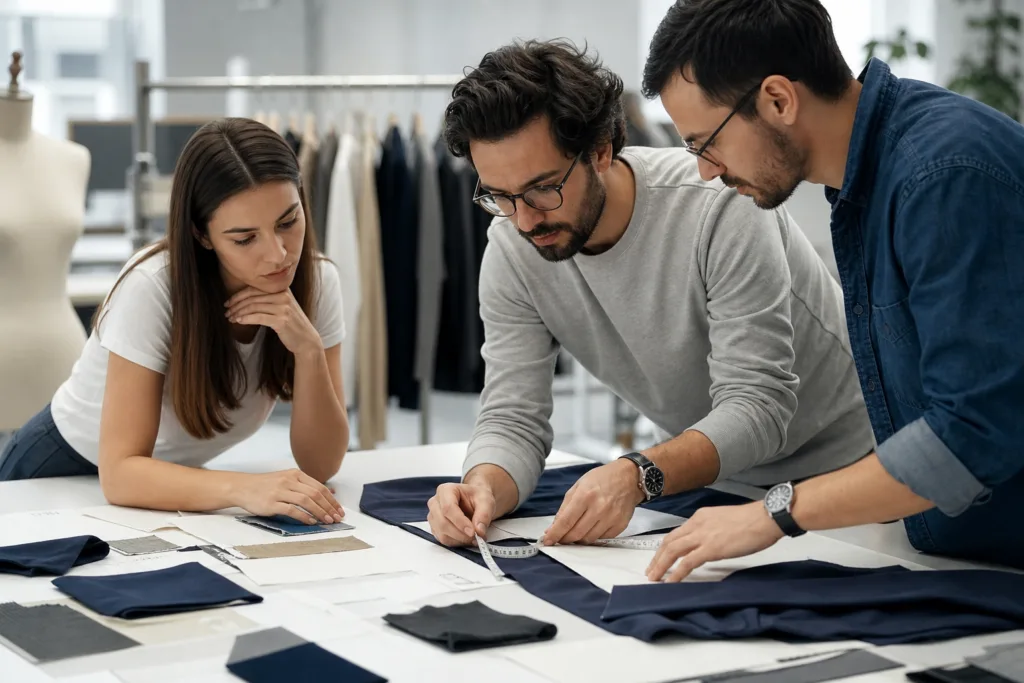
A realistic factory meeting showing a buyer and manufacturer reviewing samples, fabric, and production details before bulk order approval.

Common Mistakes First-Time Clothing Importers Make and How to Avoid Them

Common first time clothing importer mistakes usually happen when the buyer focuses on the quote before the product spec. In apparel, a low unit price can hide weak fabric, poor grading, unclear packaging, and a production schedule that has no real buffer for sampling or approvals. If you are importing clothing for the first time,

Common Mistakes First-Time Clothing Importers Make and How to Avoid Them Read More »

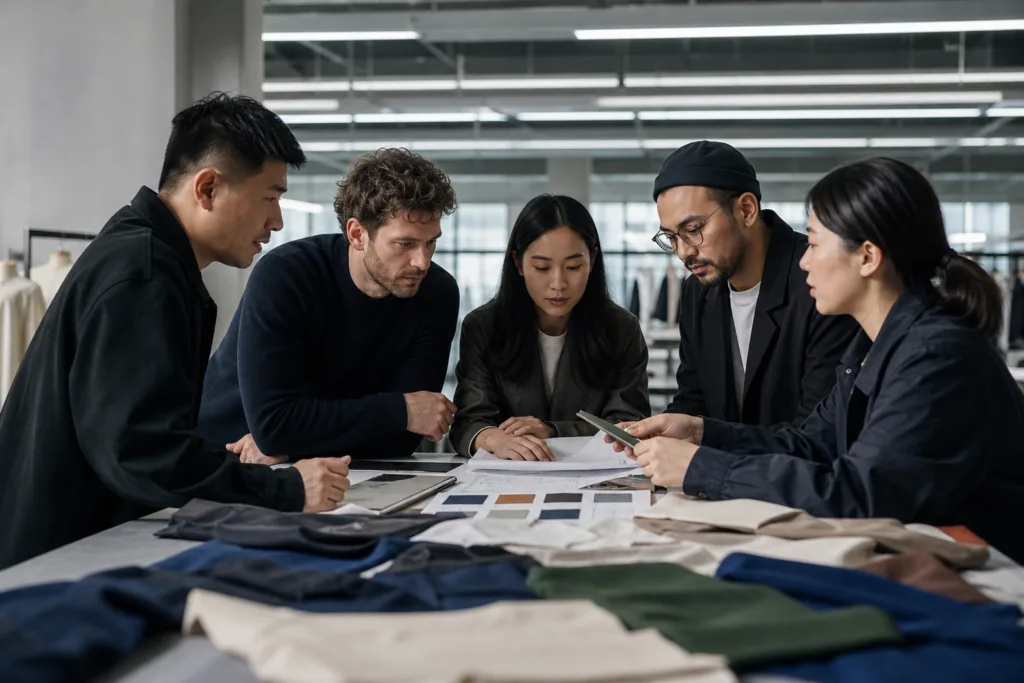
A professional sample review scene showing how buyers and factory teams align on measurements, fabrics, and construction before bulk production.

How to Reduce Risk When Ordering Custom Clothing from China

To reduce risk custom clothing China projects require more than choosing a factory and approving a price. Most production problems begin earlier, when the product brief is incomplete, the sample is approved too loosely, the size chart is not locked, or color and trim expectations are discussed verbally instead of documented clearly. From our manufacturing

How to Reduce Risk When Ordering Custom Clothing from China Read More »

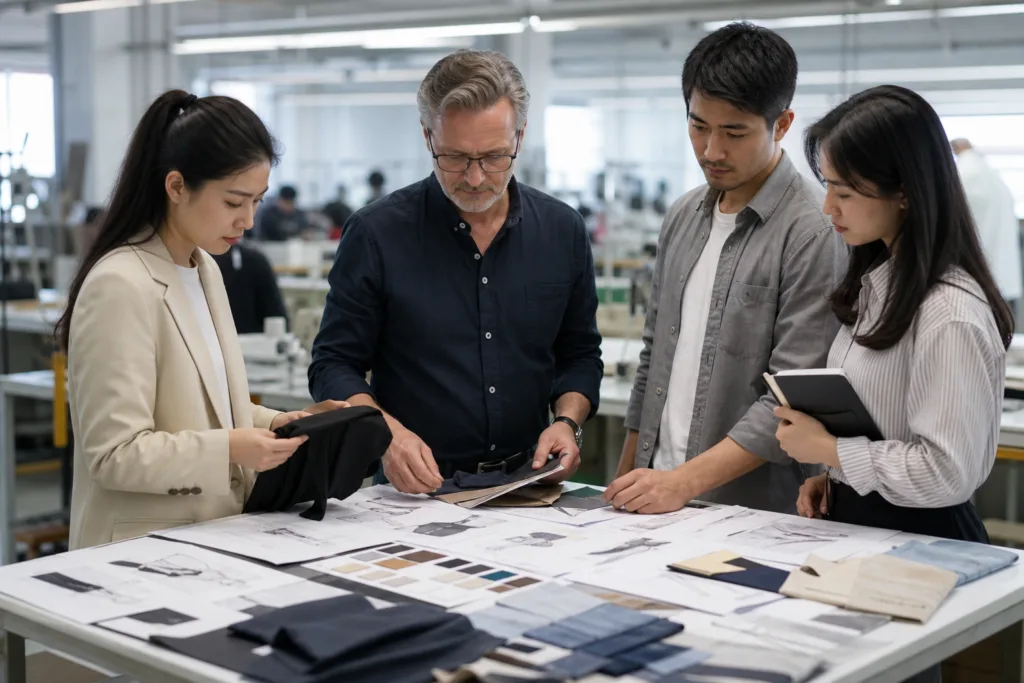
A professional sourcing review scene showing garment samples, costing sheets, and import planning documents for clothing orders from China.

Import Duties on Clothing from China: What Apparel Buyers Need to Know Before Sourcing

If you source garments internationally, import duty clothing from China should be treated as a core cost factor, not a shipping afterthought. Duty can change your target margin, alter which garment category is commercially viable, and even affect whether a sample-approved product still makes sense at bulk scale. For apparel buyers, the real issue is

Import Duties on Clothing from China: What Apparel Buyers Need to Know Before Sourcing Read More »

A sourcing and production team comparing fabric and garment details before customs classification.

How to Choose the Right Clothing HS Code for Imported Garments: A Practical Classification Guide by Garment Type, Fabric, Construction, Gender, and Use

Choosing the right clothing HS code is not just a paperwork task. It directly affects import duty, customs clearance speed, document accuracy, and the risk of inspections or post-entry corrections. For apparel buyers, sourcing teams, and brand owners, the challenge is that two garments that look similar at first glance can fall under different codes

How to Choose the Right Clothing HS Code for Imported Garments: A Practical Classification Guide by Garment Type, Fabric, Construction, Gender, and Use Read More »

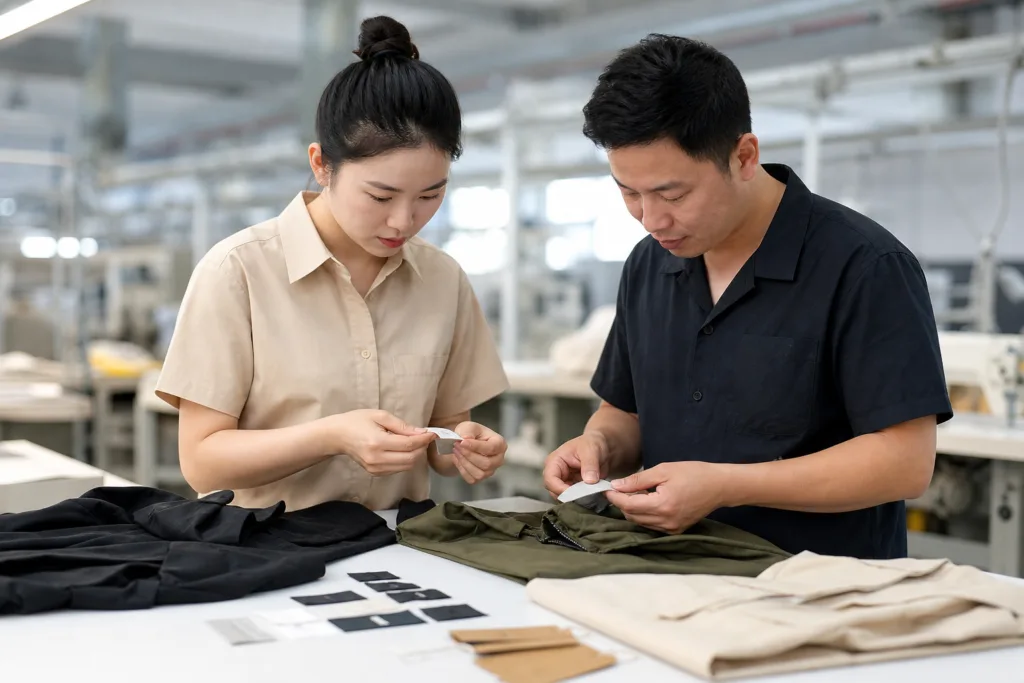
A realistic apparel quality inspection scene focused on sewn labels and garment compliance checks.

Country of Origin Labels for Imported Clothing: How to Read, Place, and Verify Apparel Origin Markings

A country of origin label clothing requirement is not just a small trim detail. For apparel buyers, importers, and product developers, it affects customs clearance, retail readiness, private label execution, and the accuracy of what reaches the end customer. If the origin marking is unclear, placed incorrectly, or missing from the approved labeling plan, a

Country of Origin Labels for Imported Clothing: How to Read, Place, and Verify Apparel Origin Markings Read More »

A quality-focused apparel production scene showing label planning and verification before bulk manufacturing.

Apparel Labeling Requirements for Imported Clothing: What Buyers Need to Confirm Before Production and Shipping

Apparel labeling requirements are not a small finishing detail. For imported clothing, labels affect customs clearance, retail acceptance, consumer information, and product consistency across every unit in the shipment. Buyers who confirm label content only at the end of production often discover avoidable problems such as incorrect fiber percentages, missing country of origin details, wrong

Apparel Labeling Requirements for Imported Clothing: What Buyers Need to Confirm Before Production and Shipping Read More »

A professional apparel team compares freight methods, timelines, and carton plans for an overseas clothing order.

Shipping Clothing from China: Air Freight, Sea Freight, Express Shipping, and DDP Explained for Different Order Sizes

Choosing the right method for shipping clothing from China affects more than freight cost. It changes your landed cost, delivery reliability, customs workload, cash flow timing, and even how safely garments arrive for retail or distribution. For apparel buyers, the best option depends on order size, carton volume, urgency, destination rules, and whether the supplier

Shipping Clothing from China: Air Freight, Sea Freight, Express Shipping, and DDP Explained for Different Order Sizes Read More »

A professional apparel development meeting focused on sample review, fit confirmation, and planning the move from small-batch orders to larger runs.

When a Startup Should Move from Low MOQ Small-Batch Apparel Production to Larger Bulk Runs

Knowing when to scale apparel production is one of the most important decisions a startup brand will make. Move too early, and you can tie up cash in slow-moving inventory, lock in design mistakes, or create fulfillment pressure your team is not ready for. Move too late, and you may miss margin gains, longer-term production

When a Startup Should Move from Low MOQ Small-Batch Apparel Production to Larger Bulk Runs Read More »

A manufacturer and startup team review sales results, garment samples, and production notes to plan the next order.

How Startup Clothing Brands Can Move from First Drop to Repeat Production: Using Sales Data, Reorders, Revisions, and SKU Expansion to Build a Scalable Apparel Supply Chain

Your first drop proves demand, but it does not yet prove that your supply chain is ready to scale. Repeat production for startup clothing brands works best when founders move from instinct to evidence by reviewing sales velocity, return reasons, size performance, fit issues, and production consistency before placing the next order. If your brand

How Startup Clothing Brands Can Move from First Drop to Repeat Production: Using Sales Data, Reorders, Revisions, and SKU Expansion to Build a Scalable Apparel Supply Chain Read More »

Scroll to Top

Get in Touch with Ninghow

Start your clothing business…

Response Time Notice

To help you get the fastest support:

  • 💬 For instant replies, click the “WhatsApp us” icon at the bottom right of this page.
  • 📧 Emails sent by clicking our email address:  [email protected] are typically replied to within 10 minutes.
  • 📝 Form submissions may take more time to receive a response.

If you do not receive a reply within 24 hours via email, please check your spam or junk folder.