
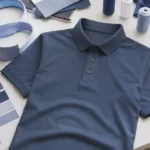
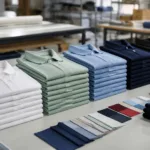
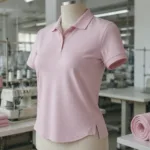
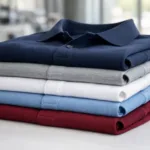




Successful apparel manufacturing starts before a factory receives an order. Buyers need a defined product, realistic quantity, clear target user, and documented customization requirements so fabric, fit, costing, sampling, and bulk production can move in the same direction. Without those decisions, even a simple polo program can face avoidable revisions, inconsistent sizing, or late changes to trims and branding.
For buyers developing uniforms, retail basics, or polished teamwear, polo shirt manufacturing options for polished workplace collections can provide a practical starting point. We can support fabric selection, collar and fit refinement, logo application, private-label details, sampling, and bulk planning when the product brief is ready for manufacturer review.
Start Apparel Manufacturing With a Product Brief, Not a Price Request
The fastest way to obtain a usable quotation is to explain what the garment must do, not simply ask for a unit price. A polo for hotel staff, a golf club, and a promotional event may share a basic silhouette, but their fabric performance, logo method, color expectations, and expected service life can be very different.
In early discussions, we recommend defining the wearer, use environment, target retail or program price, expected order quantity, and desired delivery window. This turns a broad apparel manufacturing inquiry into a product-development conversation with measurable choices.
- Garment category and intended use, such as corporate uniform, golf polo, retail collection, or workwear.
- Target customer, climate, movement needs, and expected wash frequency.
- Estimated quantity by color and size, including likely repeat-order needs.
- Branding requirements, including logo artwork, placement, decoration size, and color count.
- Private-label needs for neck labels, care labels, hangtags, bags, cartons, and barcode labels.
- Target ex-factory budget or the performance features that cannot be compromised.
Key takeaway: A product brief reduces uncertainty before sampling begins, which is usually more valuable than trying to lock in a price before fabric and construction are defined.
Choose Fabric by Wear Scenario, Hand Feel, and Production Reality

Fabric is the largest product decision because it affects comfort, appearance, durability, decoration compatibility, cost, and available MOQ. Buyers should describe the feel they want in plain language as well as technical terms: soft and casual, crisp and structured, cool-touch, substantial, or light and athletic.
For polos, cotton piqué offers a classic textured surface and familiar hand feel, while cotton-polyester blends can improve shape retention and drying time. Polyester performance knits are often appropriate where quick drying, color consistency, or active use is the priority. The right choice depends on the intended wearer rather than a universal “best” fabric.
| Fabric direction | Typical use | Buyer considerations |
|---|---|---|
| 100% cotton piqué | Premium casual and lifestyle polos | Natural hand feel; may require careful shrinkage and color testing. |
| Cotton-polyester piqué | Corporate uniforms and repeat-use programs | Balances comfort, durability, and easier care. |
| Polyester interlock or piqué | Sports, golf, and outdoor teams | Good for performance finishes and color stability; hand feel varies by yarn and knit. |
| Cotton jersey | Lightweight promotional or casual styles | Smooth surface for some prints; can look less structured than piqué. |
GSM should be treated as a weight indicator, not a complete quality grade. A 180 GSM piqué can feel firm or soft depending on yarn count, fiber blend, knit density, finishing, and wash treatment. Ask for fabric swatches or a development sample when hand feel and drape matter to the purchase decision.
For U.S.-bound garments, fabric planning should also include applicable safety and market requirements. The U.S. Consumer Product Safety Commission provides guidance on U.S. clothing-textile flammability requirements; buyers should identify destination-market obligations early, especially when a product uses unusual surface constructions or serves a regulated category.
Set Fit, Sizing, and Construction Before You Approve a Sample
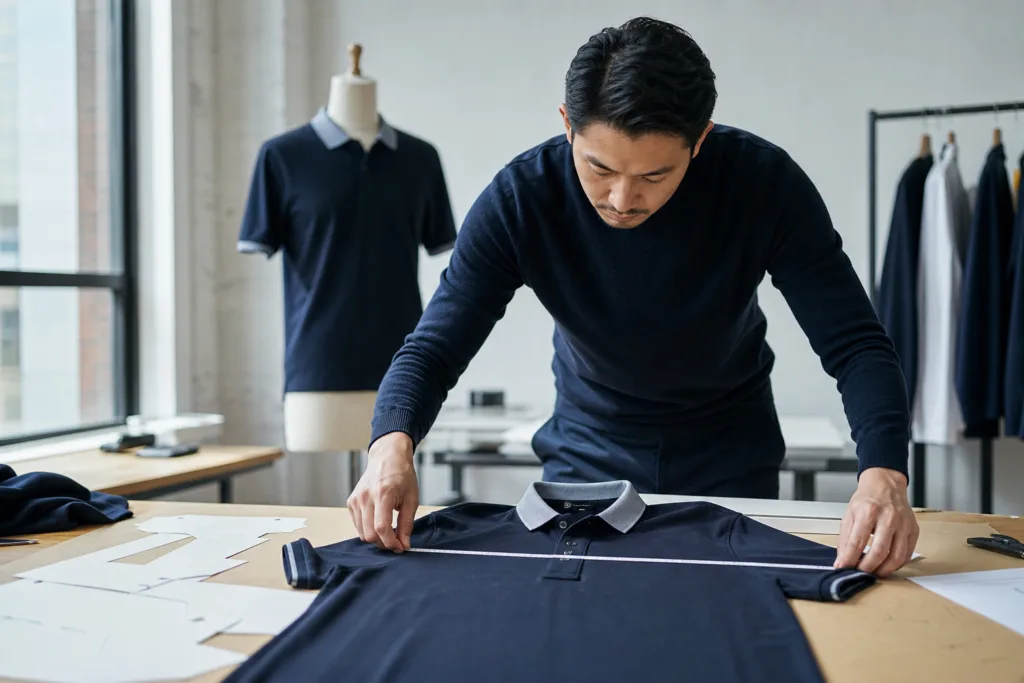
Fit consistency comes from a controlled pattern and measurement specification, not from copying a size name. A “medium” can vary substantially between regions, customer groups, and brand positioning. Provide a reference garment if useful, but translate the final decision into a measurement chart with tolerances.
For a polished uniform, details such as shoulder slope, chest ease, body length, sleeve opening, placket length, and collar stand all influence appearance. Buyers seeking custom polo dress shirt construction for a sharper office appearance should also review whether the fabric and collar structure support the intended office-ready look after repeated laundering.
Construction details that deserve written approval
- Collar knit, collar height, and whether a contrast tipping stripe is required.
- Placket length, button quantity, button material, and spare-button policy.
- Side vents, hem shape, sleeve cuff construction, and reinforcement points.
- Stitch density, thread color, neck tape, and internal seam finish.
- Measurement points, tolerances, grading rules, and final size range.
At Ninghow, we advise buyers to comment on sample measurements and appearance separately. A garment can meet a chest measurement yet still feel wrong because the armhole, shoulder, or body balance does not match the intended wearer. Clear sample feedback prevents subjective comments from becoming repeated bulk-production revisions.
Match Logo Application to Fabric, Quantity, and Brand Expectations
Logo decoration should be selected alongside fabric, not after the garment is completed. Embroidery adds texture and a durable branded appearance, but dense stitches can pull lightweight knits or make a large chest logo feel stiff. Screen printing can suit bold graphics, while heat transfer is practical for certain detailed or small-run applications.
| Method | Works well for | Planning point |
|---|---|---|
| Embroidery | Corporate logos, clubs, and uniforms | Review stitch count, backing, placement, and fabric distortion. |
| Screen printing | Simple graphics and larger quantities | Confirm ink colors, print size, and artwork separations. |
| Heat transfer | Detailed logos, names, and variable data | Check adhesion, surface feel, and wash testing on the chosen fabric. |
| Sublimation | All-over polyester sportswear graphics | Requires suitable polyester fabric and artwork prepared for panel placement. |
When evaluating custom corporate polo programs for employee uniforms, include logo placement rules for every size. A logo positioned correctly on a small size can appear too high or too close to the underarm on a larger size if grading and placement are not considered.
Send vector artwork where possible and state whether exact brand color matching is mandatory. For complex embroidery, an embroidery file or sew-out should be approved before bulk production. For print projects, confirm artwork dimensions, Pantone references when applicable, and whether individual names or department identifiers change by garment.
Understand MOQ, Sampling, and Lead Time as Linked Decisions
Low MOQ is realistic when fabric, colors, trims, and production processes can be shared or sourced efficiently. It becomes more difficult when an order requires custom-dyed fabric, special buttons, multiple small colorways, unique labels, or complex decoration. MOQ is therefore a production-planning question, not only a supplier policy.
A useful sampling path normally includes a development sample for fit and materials, then a pre-production sample that reflects the approved bulk specification. The second sample should confirm actual fabric, color, decoration, labels, packaging, and construction before cutting begins.
- Allow time for fabric and trim booking after sample approval.
- Separate development changes from bulk approval comments.
- Confirm color, size, and quantity breakdowns before material purchasing.
- Ask which items have the longest sourcing lead time, such as custom dyeing or special packaging.
- Keep one approved sample, measurement chart, and artwork version as the production reference.
From our manufacturing perspective, late artwork changes and incomplete size breakdowns are frequent causes of avoidable delay. A factory cannot reliably protect a delivery date when the production reference is still changing after materials have been ordered.
Build Quality Control Into the Production Plan
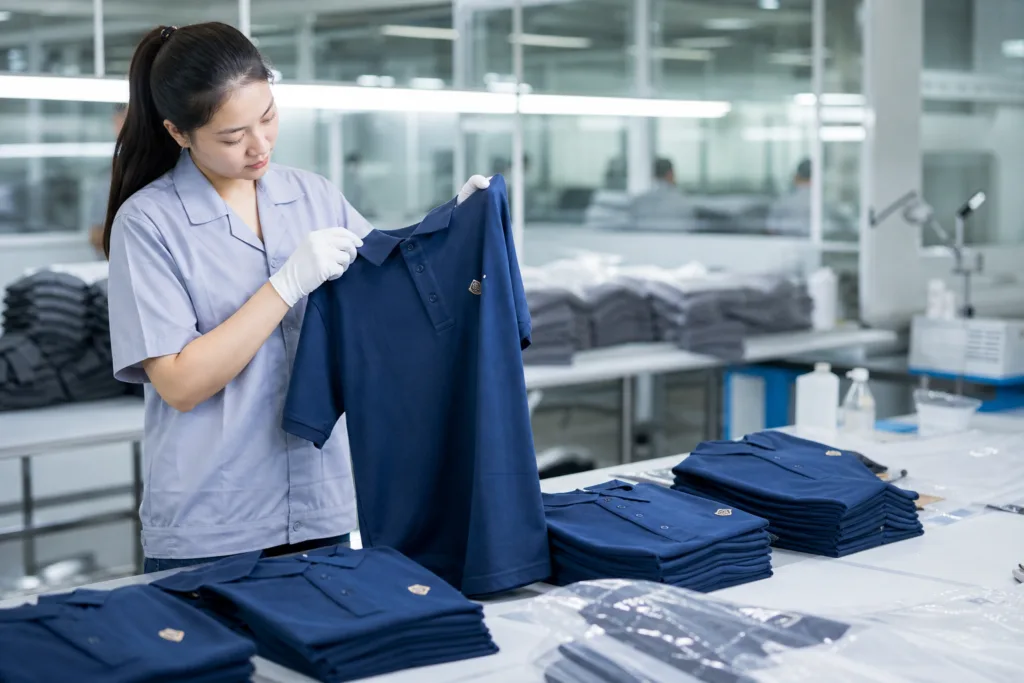
Quality control works best as a series of checkpoints rather than a final inspection only. Early checks can identify fabric shade variation, incorrect collar rib, embroidery placement, or a measurement drift before the issue affects the full quantity.
For custom work polo shirts designed for daily wear, buyers should prioritize practical durability: seam strength, collar recovery, button security, colorfastness expectations, shrinkage control, and logo appearance after washing. The correct standard depends on how frequently the garment will be worn and laundered.
| Production stage | What to check | Why it matters |
|---|---|---|
| Material receipt | Fabric shade, weight, defects, and trim accuracy | Prevents unsuitable materials entering production. |
| Cutting and sewing | Panel matching, stitch quality, key measurements | Controls fit and construction consistency. |
| Decoration | Logo position, color, size, adhesion or stitch quality | Protects visible brand presentation. |
| Final packing | Size stickers, labels, folding, bags, carton marks | Reduces warehouse and distribution errors. |
Buyers should agree on acceptable tolerances and inspection expectations before production. If a particular measurement, shade, or logo position is critical, identify it in the tech pack rather than assuming it will be understood from a photograph alone.
Evaluate a Manufacturer by Communication and Control Points
A suitable manufacturer should be able to explain how it will turn a brief into a repeatable bulk specification. Price matters, but buyers also need confidence in sample handling, fabric sourcing, pattern control, decoration coordination, quality checkpoints, and clear documentation.
Ninghow approaches custom apparel as a connected development process: decisions about fabric affect embroidery, fit affects grading, and packaging affects fulfillment. Buyers receive better outcomes when they ask production questions early instead of treating each element as an isolated purchase.
Questions to ask before confirming a supplier
- Can the supplier explain fabric options and limitations for the intended use?
- What is included in the sample stage, and what must be approved before bulk cutting?
- How will size specifications, logo files, labels, and packaging instructions be controlled?
- What checkpoints are used for incoming materials, in-line work, and final packing?
- Which requirements affect MOQ, lead time, and cost most significantly?
A good answer is specific. It should identify decisions, documents, and checkpoints rather than promise that every detail will be handled without buyer input.
Common Planning Mistakes That Create Bulk-Order Risk
The most common mistake is treating a visual mockup as a complete production specification. A mockup cannot define fabric hand feel, collar structure, stitch quality, size grading, label wording, or allowable measurement variation. Those details need written confirmation.
- Choosing a fabric only by composition and ignoring knit, GSM, finish, and shrinkage.
- Approving a sample without checking all sizes or a clear grading approach.
- Using a raster logo file for embroidery or print without confirming reproduction quality.
- Adding custom labels, special packaging, or new colors after the production schedule is set.
- Comparing quotations that use different fabric, decoration, or packing assumptions.
Key takeaway: The lowest quote is not necessarily the lowest total risk. Compare like-for-like specifications, sample scope, quality control, and delivery assumptions before selecting a production partner.
Use This Apparel Manufacturing Readiness Checklist
Before placing an order, assemble one approved production file that a factory, decorator, and internal team can all follow. This is especially important for recurring uniform programs, where a repeat order should match the first delivery as closely as practical.
- Approved tech pack or detailed garment specification.
- Fabric composition, GSM target, color reference, and required performance expectations.
- Measurement chart with grading and tolerances.
- Approved sample comments and final sample reference.
- Vector logo artwork, placement dimensions, and decoration approval.
- Label copy, care information, hangtag, bag, carton, and barcode requirements.
- Final quantity breakdown by style, color, and size.
- Delivery destination, shipping expectation, and required date.
Well-prepared information makes apparel manufacturing more predictable. It also gives buyers a clearer basis for comparing suppliers, controlling cost changes, and approving bulk production with confidence.
Frequently Asked Questions
What information should I send for an apparel manufacturing quote?
Send the garment type, quantity by color and size, fabric preference, target use, logo artwork, decoration method, size chart, label and packaging needs, and delivery market. If some details are undecided, state the target budget and priority features so the manufacturer can recommend practical options.
What is a realistic MOQ for custom apparel?
A realistic MOQ depends on fabric availability, color count, customization, trims, and production method. Existing fabrics and standard components can support smaller runs more easily, while custom-dyed fabric, special labels, and multiple small colorways usually require higher quantities.
Why is a pre-production sample important?
A pre-production sample is important because it verifies the bulk-ready combination of fabric, construction, logo application, labels, and packaging. Approving it gives both buyer and manufacturer a physical reference before the full order is cut and sewn.
How do I choose between embroidery and printing for polo shirts?
Choose embroidery for a textured, professional logo where stitch density and fabric support are suitable, and choose printing when the artwork is large, highly detailed, or better represented as a smooth graphic. Test the chosen method on the final fabric because appearance and durability depend on the garment surface.
What quality checks should be agreed before bulk production?
Agree on fabric shade and defect checks, measurement tolerances, construction standards, logo placement, label accuracy, packing instructions, and final inspection expectations. Critical points should be documented in the tech pack and confirmed against the approved pre-production sample.
How can buyers reduce delays in apparel manufacturing?
Buyers can reduce delays by submitting complete artwork and specifications, approving samples promptly, locking quantity breakdowns before materials are purchased, and avoiding late changes to colors, trims, labels, or packaging. A single approved production file helps every party work from the same instructions.
Conclusion
Reliable apparel manufacturing is built on clear product decisions and disciplined approval steps. Define the use case, select fabric for performance and hand feel, document fit and decoration, plan MOQ around actual materials, and create checkpoints that protect bulk consistency. This approach gives buyers a stronger foundation for uniforms, private-label collections, and repeat garment programs.