
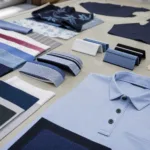
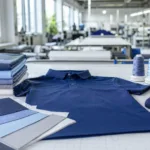
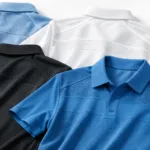




A successful apparel order is planned long before fabric is cut. Custom clothing manufacturing works best when a brand or bulk buyer turns a product idea into clear decisions about use, fabric, fit, decoration, quantities, timing, and acceptable quality before requesting a production quote.
If your project includes polos for a collection, a club, a corporate program, or a performance range, custom polo shirt manufacturing support for fit-focused collections can help connect product requirements with fabric selection, pattern refinement, logo application, private labeling, sampling, and bulk planning. This preparation is especially useful when buyers need consistent sizing and color across multiple sizes or repeat orders.
This guide is for founders, product developers, sourcing teams, retailers, schools, clubs, and organizations that need to make informed production decisions. From our manufacturing perspective, the objective is not simply to place an order: it is to create an approval path that reduces avoidable changes, protects the intended product quality, and gives the factory a complete basis for bulk production.
Who Should Use This Custom Clothing Manufacturing Guide?
This guide is most useful for buyers moving from an idea, reference garment, or existing product into development and bulk production. It applies equally to a small private-label launch and a larger uniform or retail replenishment program, although the available material options and MOQ structure may differ.
Use it to decide whether your project is ready to sample, what information a manufacturer needs to quote accurately, and which variables must be fixed before bulk approval. Clear choices early in the process usually prevent the most expensive late-stage changes.
- Brand founders can turn a design concept into a practical development brief.
- Sourcing teams can compare suppliers on more than unit price.
- Teams and organizations can balance durability, identity, fit consistency, and budget.
- Merchandisers can plan colorways, size ratios, packaging, and reorder continuity.
Key takeaway: A factory can manufacture what is specified; it cannot reliably infer the performance standard, fit preference, or visual detail that was never approved.
Define the Product Goal Before Choosing Materials

Start with the wearing situation, because it determines nearly every downstream choice. A retail sweatshirt, staff uniform, training jersey, promotional T-shirt, and golf polo may look similar in a flat sketch but need different fabric behavior, construction details, decoration methods, and inspection priorities.
Write a short product goal statement for each style. Identify the wearer, climate, frequency of use, desired price level, expected lifespan, core visual identity, and whether the product is seasonal or intended for repeat ordering. This prevents a common problem: selecting a fabric based only on appearance while overlooking shrinkage, abrasion, stretch recovery, or care needs.
| Program type | Primary production priority | Useful planning question |
|---|---|---|
| Brand collection | Distinctive hand feel and repeatable identity | What makes this garment recognizably ours? |
| Uniform or teamwear | Durability, size coverage, and color consistency | Will replacements match the original order? |
| Performance apparel | Mobility, moisture management, and construction | Where must the garment stretch or ventilate? |
| Promotional apparel | Clear decoration and cost control | Which details are essential to the campaign? |
Choose the Garment Category and Construction for Actual Use
Select the base garment only after defining its job. For example, a polo for golf or active hospitality use may need a breathable knit, a stable collar, side vents, and a fit that permits shoulder rotation. A promotional polo may prioritize a simpler construction and a clean logo surface instead.
Construction affects comfort and cost as much as fabric. Ask whether the garment needs reinforced shoulder seams, coverstitching, rib cuffs, gussets, zipper garages, lined pockets, taped neck seams, or a particular collar structure. Each choice should have a functional or brand reason.
For performance-focused ranges, review custom golf polo shirt options for performance-focused ranges as an example of how end use can guide choices around knit structure, mobility, collar design, and decoration placement. The same decision logic applies to many active and uniform garments.
Prepare Specifications That a Manufacturer Can Produce
A tech pack is the most efficient way to communicate the intended product, but it does not need to be complicated to be useful. Its purpose is to turn visual preferences into measurable, reviewable instructions. A reference sample can help, but it should be accompanied by notes explaining what to copy, what to change, and what is not relevant.
What to include in a practical product brief
- Front, back, and detail sketches or clear reference photos.
- Fabric composition, target GSM, color, finish, and stretch expectations where known.
- Point-of-measure chart with tolerances for each size.
- Artwork files, logo dimensions, placement coordinates, and decoration colors.
- Trim list covering zippers, buttons, drawcords, labels, hangtags, and polybags.
- Packaging instructions, carton requirements, and barcode or SKU needs.
- Required sample stages, approval owners, and target delivery date.
Use vector artwork for logos whenever possible. For a print, specify the print area and final physical dimensions rather than relying on a screen image. For embroidery, indicate the desired thread colors, backing expectations, and whether the logo must remain legible on small sizes.
At Ninghow, we find that a documented measurement chart and decoration placement sheet are often more valuable than a highly polished mood board. They give pattern, cutting, sewing, and QC teams the same production reference.
Select Fabric by Performance, Hand Feel, Composition, and GSM
Fabric should be chosen against the product goal, not by GSM alone. GSM indicates fabric weight per square meter, but it does not fully predict thickness, opacity, drape, warmth, durability, or hand feel. Fiber type, yarn count, knit or weave construction, finishing, and color all influence the finished garment.
| Fabric direction | Common strengths | Planning caution |
|---|---|---|
| Cotton jersey | Soft hand feel and familiar comfort | Confirm shrinkage control and opacity by color. |
| Cotton-poly blend | Balanced durability and easier care | Check surface appearance and print compatibility. |
| Polyester performance knit | Lightweight, quick drying, and durable | Assess snag resistance and decoration method. |
| Stretch blend | Improved mobility and recovery | Confirm recovery after washing and seam suitability. |
| Fleece or brushed knit | Warmth and substantial casual feel | Specify pilling expectations and finished weight. |
Request fabric swatches and, when the project is sensitive to color or performance, test the actual proposed fabric rather than a generic substitute. A dark shade can feel denser than a light shade, and a softener or brushing finish can change both hand feel and printing behavior.
Care-label decisions should be made with the material and intended market in mind. Buyers can use the garment quality-control checkpoints and fabric grading practices described by CottonWorks as a useful reference when defining fabric acceptance, accountability, and inspection planning.
Plan Fit, Sizing, Patterns, and Grading Before Sampling
Fit is a product decision, not a last-minute sample comment. Define whether the garment should be slim, regular, relaxed, oversized, cropped, unisex, or tailored, then establish the base size and intended body or garment measurements. A fit reference should state its size and explain why it is relevant.
Pattern development translates this direction into panels, seam shapes, balance, and movement allowance. Grading then scales the approved base pattern across the size range. A garment may fit well in medium but become unbalanced in larger sizes if grading rules are not reviewed carefully.
Before approving a fit sample, check shoulder position, chest ease, body length, sleeve opening, neckline or collar behavior, and movement in the intended activity. For styles requiring movement, use the apparel sampling process for validating fit and mobility to structure feedback around measurable corrections rather than broad comments such as “make it better.”
Choose Customization Methods That Match the Garment
Decoration should be assessed for visual effect, fabric compatibility, order volume, and expected wear. The cheapest method for an artwork is not always the right method if it cracks, distorts, adds unwanted stiffness, or prevents the garment from meeting its intended use.
| Method | Best suited to | Buyer check |
|---|---|---|
| Screen printing | Bold graphics and larger repeat orders | Confirm color count, hand feel, and print durability. |
| Embroidery | Logos, uniforms, and premium identity details | Check stitch density, backing, and puckering risk. |
| Heat transfer | Names, numbers, detailed small runs | Review adhesion, stretch, and wash performance. |
| Sublimation | All-over polyester sportswear graphics | Confirm fabric composition and panel alignment. |
| Woven labels and packaging | Private-label presentation | Approve spelling, placement, fold, and packing method. |
Private-label details should be included at the same time as garment development. Neck labels, care labels, size labels, hangtags, branded bags, and carton marks each require artwork, placement, and approval. Treating them as an afterthought can delay a bulk start even when the garment itself is approved.
Choose the Right OEM, ODM, or Private-Label Path
OEM is suitable when the buyer provides a developed design or clear specification and needs it manufactured. ODM is useful when the buyer wants to adapt an existing supplier-developed style, fabric platform, or construction. Private label may apply to either path when buyer branding is added through labels, packaging, and decoration.
The right path depends on how much product development is still needed. A highly original garment with special construction requires more pattern, sourcing, and sampling work than a color and logo adaptation of an existing base style. Be transparent about the intended path so quotation, MOQ, and lead time are based on the real scope.
Use Sampling as a Controlled Approval Process
Sampling is where assumptions become physical evidence. A development sample can test pattern direction and construction; a fit sample refines measurements; a size set checks grading; and a pre-production sample confirms the approved bulk standard with final fabric, trims, color, and decoration where possible.
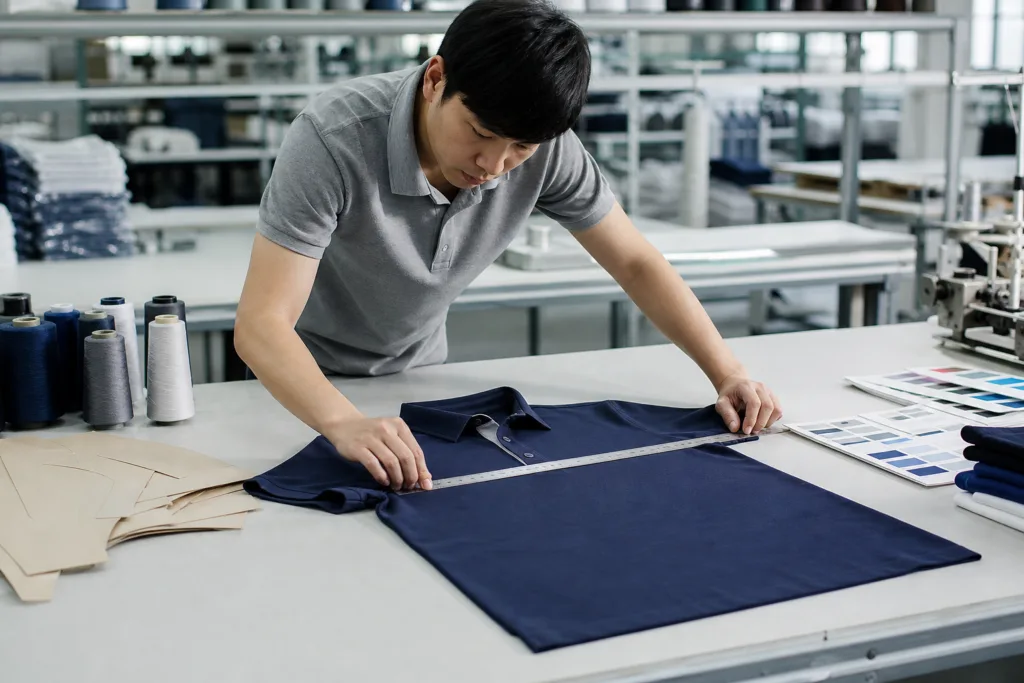
Approve samples with consolidated feedback from one decision owner or a clearly coordinated team. Conflicting comments from different stakeholders create revisions that may not improve the product. Record every approved change in the latest tech pack, measurement sheet, or sample comment document.
- Confirm fabric, color, and GSM or weight range.
- Measure the sample against the approved spec.
- Check logo size, position, thread or print colors, and appearance on the actual fabric.
- Review wash behavior, seam quality, and functional details.
- Keep a signed or clearly identified approval sample as the bulk reference.
Plan MOQ and Lead Time From Real Production Variables
MOQ is not only a factory policy. It is influenced by fabric availability, custom dyeing, color count, size breakdown, decoration setup, special trims, and whether materials can be shared across styles. A lower garment quantity may be feasible using available fabric and standard components, while a custom color or exclusive zipper can raise the practical minimum.
Plan quantities by style, color, and size before requesting a final quote. Too many colorways or very fragmented size quantities can create excess fabric, inefficient cutting, and difficult replenishment. For uniforms, reserve a practical buffer when likely replacement orders need to match the original color and construction.
Lead time should include material booking, lab dips or color approval where required, sampling, revision cycles, pre-production approval, bulk cutting and sewing, finishing, inspection, packing, and shipping. Do not count from the first inquiry alone. Count from the date on which specifications, materials, artwork, and commercial terms can actually be approved.
Key takeaway: The fastest production plan is usually the one with fewer unresolved variables, not the one with the shortest initial promise.
Build a Cost Framework Without Removing Critical Quality
Evaluate cost by looking at the finished product and its risk profile, not merely the ex-factory unit price. Fabric quality and consumption, garment complexity, decoration, trims, labels, packaging, order size, and testing or inspection requirements all affect cost.
When a budget needs adjustment, protect the decisions that define product function and customer experience. For example, reducing unnecessary print colors or simplifying a nonfunctional trim may be sensible. Reducing fabric stability, removing a required reinforcement, or ignoring fit development can create more expensive problems after delivery.
Set Quality Control Checkpoints Before Bulk Production
Quality control is most effective when it is planned as a sequence of checkpoints rather than a final inspection only. Define what is critical, what is acceptable within tolerance, how defects are classified, and who can approve deviations before production begins.
| Checkpoint | What to verify | Why it matters |
|---|---|---|
| Incoming materials | Fabric shade, defects, width, weight, and trims | Prevents unsuitable inputs entering production. |
| Pre-production | Approved sample, measurements, artwork, and packing | Aligns the production team to one standard. |
| In-line production | Sewing, measurement, decoration, and workmanship | Allows correction before defects multiply. |
| Final inspection | Appearance, quantities, labeling, packing, and cartons | Confirms the order meets the agreed requirement. |
Document tolerances for key points of measure, such as chest width, body length, sleeve length, and collar opening. Also specify shade expectations for components, acceptable print or embroidery placement variation, loose-thread standards, and packaging configuration. Clear criteria make inspection results actionable rather than subjective.
Evaluate a Manufacturer by Communication and Production Control
Capability matters, but communication discipline is equally important. A suitable manufacturer asks clarifying questions, identifies risks in unclear specifications, explains material and MOQ implications, and maintains revision control across samples and bulk approval.
Ask how patterns are developed, how fabric and trims are approved, what sample stages are available, who checks measurements in production, and how nonconformities are communicated. Review whether the supplier can support your garment category, decoration method, labeling requirements, and expected order cadence.
For measurement-sensitive programs, buyers should ask about apparel quality control for consistent grading and measurements before confirming bulk production. The answer should explain actual checkpoints and documentation, not only offer a general assurance of quality.
Common Mistakes That Create Delays or Bulk Risk
The most frequent ordering problems are preventable. They usually result from incomplete decisions, unclear ownership, or approving a sample without checking the details that will matter at scale.
- Quoting from a photo without confirming fabric, measurements, and construction.
- Approving a sample while leaving artwork, labels, or packaging undecided.
- Using a reference garment without identifying which features must change.
- Adding colorways or custom components after materials are booked.
- Skipping size-set review for a broad size range.
- Assuming a sample made with substitute materials represents final bulk performance.
- Allowing several stakeholders to issue uncoordinated sample comments.
Bulk Production Readiness Checklist
Before authorizing bulk cutting, confirm that the project has one current source of truth. This should include the approved sample, final specification, measurement chart, artwork files, color references, bill of materials, size ratio, packaging instructions, delivery plan, and agreed inspection criteria.
At Ninghow, we recommend buyers also confirm the commercial details that can affect execution: approved quantity by color and size, allowable over- or under-delivery where applicable, payment milestones, shipping terms, and the named person authorized to approve changes. This creates a clearer working relationship and helps the production team act quickly if an issue needs a decision.
How Ninghow Supports Development Through Bulk Production
Our role as a manufacturer is to help translate a buyer’s requirements into workable production controls. That can include reviewing specifications, suggesting fabric and construction options, developing patterns and samples, coordinating labels and decoration, planning feasible quantities, and using approved references throughout bulk production.
The most productive projects begin with practical information, not perfect artwork. If a buyer can explain the use case, target customer, product priorities, target quantity, and deadline, we can identify what needs to be decided next and where a sample or material review will reduce risk.
Conclusion: Plan the Decisions That Protect Your Product
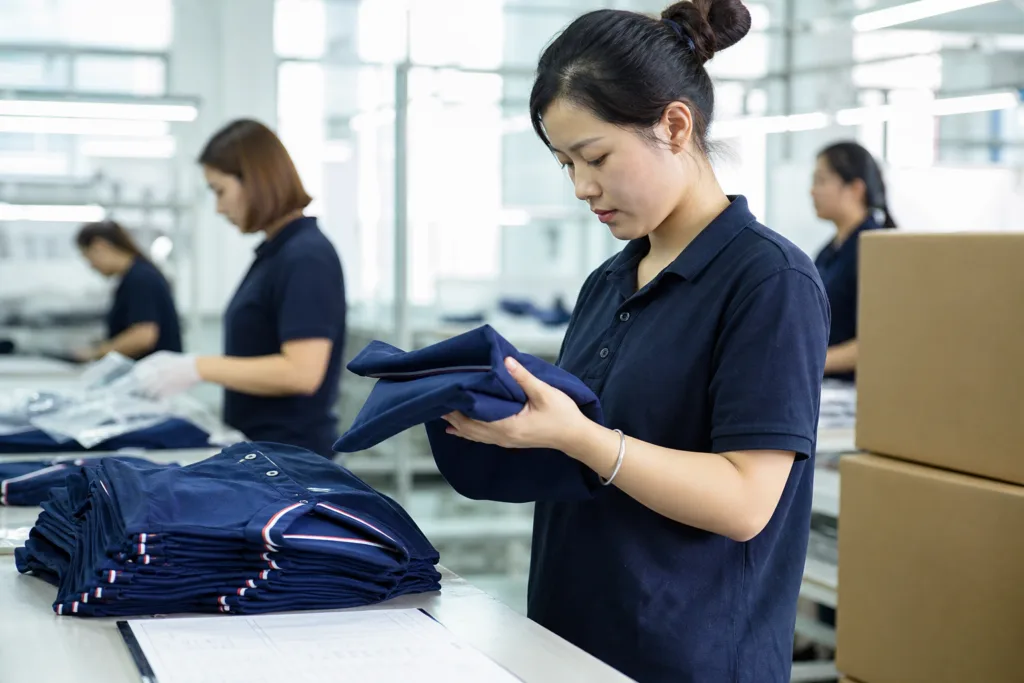
Custom clothing manufacturing becomes more predictable when product intent is converted into approved specifications, samples, and control points. Focus first on the variables that cannot be corrected cheaply after cutting: fabric behavior, pattern and grading, construction, color, decoration, and the final quality standard.
A structured brief, disciplined sample approval, realistic MOQ and lead-time planning, and clear supplier communication give brands and bulk buyers a stronger foundation for both launch orders and repeat production. The goal is a garment that performs as intended, represents the brand accurately, and can be reproduced consistently.
Frequently Asked Questions
What information should I prepare before requesting a custom clothing manufacturing quote?
Prepare a style description, reference images or sketches, target quantity by size and color, fabric direction, logo artwork, customization requirements, packaging needs, and delivery target. A measurement chart and tech pack improve quote accuracy because they clarify construction and material requirements rather than leaving the factory to estimate them.
How many samples are usually needed before bulk production?
Most projects need at least a development or fit sample and a pre-production approval sample, while complex styles may also need a size set, color sample, or decoration test. The appropriate number depends on how new the pattern, fabric, construction, and branding details are, so skipping stages should be a deliberate risk decision rather than an assumption.
What determines the MOQ for custom garments?
MOQ is determined by fabric availability, custom colors, trim minimums, decoration setup, style complexity, and the quantity split across colors and sizes. Using available fabrics and standard components can make smaller runs more practical, while exclusive materials or many fragmented colorways usually increase the quantity needed for efficient production.
How should I check garment quality before approving bulk production?
Check the approved sample against the current specification for measurements, fit, fabric, color, sewing, decoration, labels, and packaging. Keep a documented approval reference and agree tolerances and defect standards before cutting, because final inspection alone cannot fully correct errors introduced earlier in the process.
How long does a custom apparel project take?
A custom apparel project takes as long as its development, material sourcing, sample revisions, approvals, bulk production, finishing, and shipping stages require. The most reliable schedule starts after specifications and materials are sufficiently confirmed, and it includes time for buyer feedback rather than assuming every sample will be approved on the first review.
How do I choose a custom clothing manufacturer?
Choose a custom clothing manufacturer by assessing relevant garment capability, sample quality, communication clarity, documentation discipline, material sourcing options, MOQ fit, and quality-control process. A good manufacturing fit is a supplier that can identify production risks early and translate your approved product requirements into consistent bulk execution.