







A useful apparel manufacturing article begins with a usable brief: a defined garment topic, a target keyword, a reader, and a commercial question to answer. Without those inputs, an article can explain general production concepts, but it cannot reliably match the buyer’s search intent, product category, sourcing stage, or decision criteria. For Ninghow, the most effective content plans connect practical manufacturing knowledge with a specific B2B need, such as developing a private label polo, preparing a uniform order, comparing decoration methods, or reducing risk before bulk production.
If the project concerns workwear, event apparel, or team uniforms, custom polo shirt manufacturing support for bulk uniform programs can provide the practical production context needed for a stronger brief. We can use details such as fabric preference, logo method, size range, target quantity, private label requirements, and delivery expectations to shape content that helps buyers move from an idea to a workable sampling and bulk-order plan.
What Information Is Needed Before an Apparel Manufacturing Article Can Be Planned?
The minimum requirement is a clear topic and primary keyword. A topic tells us what the article is about, while the keyword reveals the language readers use to find that answer. For example, “custom corporate polo shirts” is a product-led topic, whereas “how to choose polo shirt fabric for uniforms” is a decision-led topic. The two articles may mention similar materials and logo options, but their structure, examples, and calls to action should be different.
A strong input brief should also identify the intended reader. A startup founder planning a first private label launch needs guidance on tech packs, sample revisions, and low-MOQ trade-offs. A procurement team ordering staff uniforms needs predictable sizing, repeatable colors, logo durability, and delivery coordination. These audiences do not evaluate a manufacturer in the same way.
- Primary topic or proposed article title
- Main keyword and any useful secondary phrases
- Target reader and sales region
- Garment category, use environment, and expected order scale
- Main decision or sourcing problem to solve
- Relevant service focus: custom manufacturing, private label, OEM/ODM, sampling, or quality control
- Commercial stage: early research, supplier comparison, sample development, or bulk-order preparation
Key takeaway: The best manufacturing content is not written around a broad product name alone. It is built around the buyer’s next production decision.
How to Define the Topic and Main Keyword

Start with a topic that states the garment and the buyer’s real concern. Broad phrases such as “apparel manufacturing” can work for a pillar page, but they are too wide for a focused guide unless the article is designed to explain an entire sourcing process. More specific topics create a clearer search match and allow deeper manufacturer-informed advice.
| Brief element | Too broad | More actionable direction |
|---|---|---|
| Garment | Polo shirts | Moisture-managing polo shirts for field teams |
| Buyer need | Custom clothing | Private label polo development for a new golf collection |
| Production issue | MOQ | How fabric and logo choices affect polo shirt MOQ |
| Decision stage | Manufacturer guide | What to approve before placing a bulk uniform order |
When no keyword has been supplied, it is better to request one than to force a phrase into headings and metadata. The eventual keyword should reflect search intent. Informational readers may search for fabric, fit, printing, or production explanations. Commercial readers may search for a custom garment manufacturer, a private label supplier, or an OEM/ODM production partner. A page can inform and still support commercial evaluation, but it should not pretend that every reader is ready to order.
Match the keyword to the search intent
Search intent determines the article’s opening, depth, and conversion path. Informational content should answer the practical question early, then explain production consequences. Comparison content should make trade-offs visible in a table. Supplier-evaluation content should give readers a checklist that can be used during quotation and sample review.
- Informational: fabric GSM, polo fit, embroidery versus print, or garment care.
- Commercial investigation: custom polo supplier, private label production, or uniform manufacturer evaluation.
- Transactional preparation: MOQ, sample requirements, bulk lead time, packaging, and quotation inputs.
Choose the Audience Before Writing About Fabric, Fit, or MOQ
Audience definition prevents generic advice. The same 220 GSM cotton piqué may suit a corporate uniform buyer seeking a structured appearance, while a sportswear label may prefer a lighter stretch knit with moisture management. The content plan must tell the writer which use case matters so material recommendations do not become vague or contradictory.
For example, content aimed at buyers considering custom men’s polo shirt production can discuss shoulder shape, body length, collar construction, grading, and size-set approval. These are useful details because fit consistency affects both wearer satisfaction and the risk of size-related replacements after distribution.
| Reader | Typical question | Production details worth covering |
|---|---|---|
| Brand founder | Can this design become a repeatable product? | Pattern, sample stages, labels, color approvals, MOQ |
| Procurement team | Will every delivery match the approved standard? | Size chart, logo placement, inspection plan, packing ratio |
| Golf or sportswear buyer | Will the garment perform in use? | Fiber blend, stretch recovery, breathability, seams |
| Retailer or distributor | Can the range be merchandised and replenished? | Colorways, grading, barcodes, packaging, repeat-order controls |
At Ninghow, we find that buyer clarity at this stage reduces later changes. A manufacturer can advise on feasible options, but a useful article brief should establish whether the priority is comfort, durability, presentation, technical performance, price target, or a balance of these factors.
Specify the Garment and Use Scenario
Every garment category has decisions that should guide the article. For polos, the collar, placket, sleeve finish, fabric knit, shrinkage control, and logo location matter. For hoodies, fleece weight, brushed finish, hood shape, rib quality, and print surface matter. For activewear, recovery, opacity, seam placement, and movement range may be more important than a conventional fabric-weight discussion.
Use scenario is equally important. A corporate reception polo should look clean after repeated laundering and may require a restrained embroidered logo. A warehouse uniform may prioritize abrasion resistance and easy care. A promotional event polo may be planned around a fixed date, broader sizing, and a print method that works at the required quantity.
Include the technical details that change the recommendation
Fabric composition and GSM should never be treated as isolated specifications. GSM indicates fabric weight per square metre, but the final hand feel also depends on fiber, yarn count, knit structure, finishing, and garment construction. A lighter fabric can feel substantial with the right knit, while a heavier fabric can feel unsuitable if it lacks breathability for the intended climate.
- State the desired fiber composition or the performance goal if composition is undecided.
- Describe the desired hand feel: soft, crisp, structured, smooth, dry-touch, or brushed.
- Explain expected wear conditions, washing frequency, and climate.
- Confirm whether stretch and recovery are essential.
- Identify fit expectations: regular, slim, relaxed, unisex, or a custom block.
Where goods are intended for consumer sale in the European Union, the intended market should be identified before labels are finalized. The EU textile fiber-composition labeling requirements illustrate why exact composition, accepted fiber names, and labeling preparation are production inputs rather than afterthoughts.
Plan Customization and Private Label Content Around Production Reality
Customization should be described as a series of choices with cost, visual, and scheduling effects. A well-planned article explains what the buyer needs to provide and what a manufacturer needs to verify. This makes the content more useful than simply listing embroidery, screen printing, transfer, and sublimation.
For a company apparel program, an article may compare logo durability, color detail, placement, and the appearance of each method. Readers evaluating corporate polo shirts for company uniform programs also benefit from guidance on logo approval, departmental color coding, individual name personalization, and packaging by location or employee size.

| Customization method | Good fit | Planning consideration |
|---|---|---|
| Embroidery | Polos, caps, uniforms, durable small logos | Stitch count, backing, fabric puckering, placement |
| Screen printing | Bold artwork and larger quantities | Color separations, print area, artwork readiness |
| Heat transfer | Detailed logos, names, variable data | Fabric compatibility and heat application control |
| Sublimation | All-over graphics on suitable polyester fabrics | Artwork scale, panel layout, color expectation |
Private label requirements should be equally specific. A content brief can state whether it needs woven main labels, printed neck labels, size labels, care labels, hangtags, polybags, cartons, or retail-ready barcodes. These details affect sourcing, artwork approval, and production timing, especially where custom trims are involved.
Key takeaway: A logo file is not a complete customization brief. The garment, location, dimensions, colors, decoration method, label package, and approval standard must work together.
Build Sampling, MOQ, and Lead-Time Guidance Into the Article
An effective sourcing article explains that MOQ is not a single fixed number. It can depend on fabric availability, custom dyeing, color count, decoration setup, label and trim requirements, size ratio, and whether the order uses an existing block or a new pattern. Low MOQ may be realistic for certain materials or standard components, but custom fabric development and bespoke trims usually raise the production threshold or lead time.
Sampling should be presented as a risk-reduction stage, not an administrative delay. The first sample may verify construction and fit. A revised sample may confirm fabric, color, decoration, and final measurements. Before bulk cutting, buyers should approve the standard that production will follow, including the measurement tolerance, logo placement, color reference, packaging, and workmanship expectations.
- Provide a tech pack, reference garment, or clear specification sheet.
- Confirm a size chart and identify the base size for measurements.
- Supply editable artwork and approved brand colors where available.
- State the quantity by color and size, not only the total order quantity.
- Identify the required in-hand date and any delivery constraints.
- Confirm whether a pre-production sample is needed before bulk cutting.
Use Quality Control Details to Make the Content Commercially Useful
Quality control should be explained in terms buyers can act on: what gets checked, when it is checked, and what standard is used for approval. A useful article does not promise perfection; it explains how defined specifications and checkpoints reduce avoidable variation across a bulk order.
Content about apparel quality control for consistent bulk orders can cover fabric inspection, shade assessment, measurement checks, construction review, logo placement, loose-thread removal, packing verification, and final random inspection. The exact inspection focus should match the garment’s end use. For example, teamwear buyers may place greater importance on player names and numbers, while retail buyers may require barcode and folding consistency.
| Checkpoint | What should be confirmed | Risk reduced |
|---|---|---|
| Material approval | Composition, color, hand feel, defects | Incorrect fabric or inconsistent shade |
| Pre-production review | Pattern, size spec, artwork, trims | Bulk production against an outdated standard |
| In-line inspection | Seams, measurements, construction | Repeated workmanship faults |
| Final inspection | Appearance, quantity, packing, labeling | Shipment discrepancies and presentation issues |
Common Briefing Mistakes That Make Manufacturing Content Less Useful
The most common mistake is requesting a broad article without stating what the reader is trying to decide. A guide titled around “custom clothing” may attract a mixed audience, but it will struggle to deliver enough depth for a buyer choosing a fabric, evaluating a supplier, or preparing an order.
- Providing no main keyword or using several unrelated keyword themes.
- Not identifying whether the reader is a brand, procurement team, club, or retailer.
- Combining multiple garment categories without a clear comparison purpose.
- Describing MOQ or lead time as universal instead of dependent on the product brief.
- Discussing decoration without defining artwork, placement, or intended use.
- Ignoring target market, labeling, and packaging requirements until after sampling.
Another mistake is treating content planning and product development as separate. The strongest articles reflect the same decisions buyers must make in production. They explain not only what is possible, but also what information allows a supplier to quote accurately, sample efficiently, and control consistency at bulk stage.
How to Turn Missing Inputs Into a Focused Content Plan
When the topic, keyword, and direction are missing, the practical next step is a short discovery brief. This does not need to be complicated. A few complete answers can establish a focused article angle and a logical structure.
- What garment or product family should the article address?
- What phrase should it rank for, and what does the searcher want to accomplish?
- Who is the intended reader and what is their likely order or development stage?
- Which manufacturing service is central to the page?
- Which decision creates the most uncertainty: fabric, fit, logo, MOQ, sample, lead time, or QC?
- Which market, use scenario, and customization requirements affect the recommendation?
Once those answers are supplied, the article can be tailored into a sourcing guide, buying guide, private label development page, comparison article, or production-planning resource. From our manufacturing perspective, that focus produces more credible content because every technical section has a reason to be included and every recommendation can be tied to a buyer decision.
Conclusion: A Clear Brief Creates More Valuable Manufacturing Content
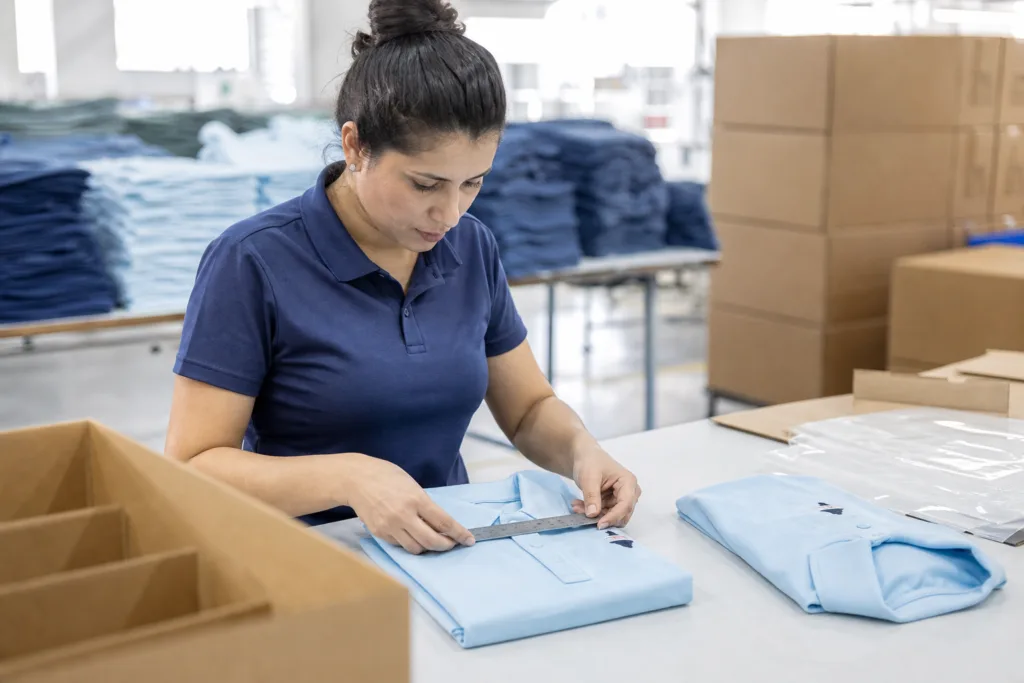
Topic, keyword, and content direction are required to create a Ninghow apparel manufacturing article plan because they determine the reader, search intent, technical depth, and commercial relevance of the page. A focused brief allows the article to explain fabric, GSM, fit, decoration, sampling, MOQ, lead time, and quality control in the context that matters to the buyer.
For the strongest result, provide the garment category, target keyword, audience, use case, primary sourcing question, and service focus. That information turns general manufacturing knowledge into a practical resource that helps readers evaluate their next apparel development or bulk-production decision.
Frequently Asked Questions
Why is a main keyword needed before planning an apparel manufacturing article?
A main keyword is needed because it indicates the language and intent of the reader the article should serve. It helps determine whether the content should explain a technical issue, compare suppliers, support private label development, or guide a bulk-order decision.
What should a clothing manufacturing content brief include?
A clothing manufacturing content brief should include the garment category, target reader, main keyword, search intent, use scenario, customization needs, target market, and the production question the article must answer. Quantity range, fabric preference, and desired service scope also improve the relevance of sampling, MOQ, and lead-time guidance.
Can one article cover private label, OEM, and bulk production?
One article can cover private label, OEM, and bulk production when it has a clear unifying buyer journey. If each service requires different audiences or decisions, separate articles usually provide clearer guidance and stronger search relevance.
How detailed should fabric and GSM guidance be?
Fabric and GSM guidance should be detailed enough to connect weight with composition, knit or weave, hand feel, durability, stretch, climate, and intended use. GSM alone does not define quality or comfort, so the article should explain the trade-offs that matter for the garment.
What production information helps explain MOQ accurately?
Accurate MOQ guidance needs the fabric type, color options, custom dyeing needs, decoration method, labels, trims, size breakdown, and whether a new pattern is required. These choices affect material purchasing, setup work, and the feasibility of a lower-volume production plan.
Why should quality control be included in a sourcing article?
Quality control should be included because buyers need to know how approved specifications are protected during bulk production. Explaining checkpoints for fabric, measurements, workmanship, decoration, labels, and packing helps readers prepare clearer standards and reduce preventable order risk.