


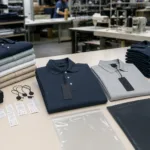




Labels, hang tags, and packaging often look like final-stage details, but from our manufacturing perspective they should be locked before bulk production starts. A practical private label clothing checklist helps brand founders, sourcing teams, product managers, and retail buyers confirm what will actually be attached, printed, packed, scanned, and shipped with each garment. When these details are unclear, problems show up fast: wrong fiber wording, missing country-of-origin text, labels sewn in the wrong seam, unscannable barcodes, polybags that do not fit the folded garment, or cartons that miss retailer routing rules.
If your order includes custom branding, retail presentation requirements, or multi-SKU production planning, Ninghow provides private label clothing production support that helps buyers align label materials, hang tag artwork, packaging specs, sampling, and bulk approval steps before goods move into production. This is especially useful when you need supplier-ready files, clear placement instructions, washable branding methods, and a realistic sign-off path for trims, labels, and final packed presentation.
This guide is designed as a pre-order readiness document you can use before issuing a purchase order, confirming a tech pack, or approving pre-production samples. We will keep the language practical and copy-ready, with spec examples, simple tolerances, and checklist items that make supplier communication easier.
At-a-glance pre-order snapshot
Before bulk cutting starts, we recommend a one-page go or no-go check covering every branding and packaging component.
- Brand label type confirmed: woven, satin, printed, or heat transfer
- Care label wording approved: fiber content, care instructions, country of origin, size, legal wording if required
- Hang tag front and back approved: logo, SKU, size, barcode, price zone if needed
- Packaging format approved: fold method, polybag size, suffocation warning if required, sticker location
- Artwork files supplied: AI or vector PDF, fonts outlined, linked images embedded
- Pantone colors specified: not just visual references from screenshots
- Dimensions in mm provided: no “standard size” wording without actual measurements
- Placement coordinates approved: distance from neck seam, side seam, hem, or center back
- Sample proof stage agreed: digital proof, physical trim proof, PP sample
- MOQ and lead time checked: labels, tags, custom bags, cartons, and garment production aligned
- QC acceptance criteria defined: color tolerance, barcode readability, wash durability, stitch security
- Packing ratio confirmed: units per polybag, inner pack, carton, and pallet
If even two or three of these are still open, the order is usually not fully ready.
How to use this guide and where to place items in the tech pack

We advise buyers to separate files into folders rather than sending one mixed email thread with changing attachments. A clear file structure reduces preventable mistakes.
- 01_Artwork_Master — approved logo vectors, icon files, barcode source data
- 02_Label_Specs — neck label, size label, care label drawings and wording
- 03_Hangtag_Dielines — cut line, bleed, hole placement, string details
- 04_Packaging — polybag specs, stickers, cartons, shipping marks
- 05_Approvals — dated PDFs showing revision status and sign-off owner
Useful naming convention:
- STYLE123_NeckLabel_V3_Approved_2026-05-16.pdf
- STYLE123_Hangtag_Back_Barcode_V2.ai
- STYLE123_Polybag_10x14in_50mic_V1.pdf
Inside the tech pack, place labels and packaging in their own section after construction details and before carton packing instructions. For development teams, it also helps to reference the apparel sampling process for neck labels and hang tags so trim approvals are tied to sample stages rather than treated as separate afterthoughts.
Recommended sign-off flow:
- Brand designer prepares source artwork
- Product manager checks dimensions, wording, and SKU logic
- Sourcing manager confirms material, MOQ, and lead time
- Manufacturer issues proof for approval
- Buyer signs off dated final version
- Only then should bulk trim ordering start
Artwork and tech file requirements every label, tag, and box should include
Most trim errors start with incomplete artwork files. A supplier-ready file package should include both visual design and production data.
Core file requirements
- Vector file in AI, EPS, or editable PDF
- Fonts outlined
- Linked images embedded
- Layered source file retained for revisions
- Pantone references for spot colors
- CMYK values only when process printing is intended
- Dieline on separate layer for tags and boxes
- Bleed area marked, usually 2 to 3 mm
- Safe area marked, usually 2 to 4 mm inside trim line
- Final dimensions in mm
Practical tolerances and proofing points
| Item | Typical spec | Useful note |
|---|---|---|
| Color tolerance | Visual match to approved Pantone under standard light | Define acceptable shade shift before bulk |
| Barcode quiet zone | At least 2.5 mm clear area around code | Avoid placing text too close |
| Tag bleed | 2 to 3 mm | Prevents white edges after die cutting |
| Heat transfer line width | Not too fine for wash durability | Very thin strokes may break after washing |
| Woven label text height | Keep small text readable | Fine legal wording may need printed care label instead |
Sample proof expectations should be written into the order. We typically recommend digital proof first, then a physical trim proof for any custom woven label, specialty hang tag finish, printed polybag, or heat transfer logo.
Private label clothing checklist for neck and brand labels
Neck branding affects comfort, wash durability, and first impression. The correct option depends on garment category, price architecture, and wearer sensitivity.
Main neck label types
- Woven label: suitable for durable brand identity, crisp logo definition, premium look
- Satin printed label: useful for care content or soft hand feel, but can fray if edge finishing is poor
- Direct printed neck label: low bulk, comfortable for activewear, depends on print durability
- Heat transfer neck label: soft and clean appearance, common in sportswear and underwear
Typical spec fields to include:
- Label type: damask woven / satin printed / heat transfer
- Finished size: 55 mm x 20 mm
- Fold type: center fold / end fold / straight cut / Manhattan fold
- Placement: centered at back neck, top edge 6 mm below neck seam
- Stitch method: 2 edge stitches or box stitch
- Seam allowance considered: yes
- Ground color: Pantone Black C
- Logo color: Pantone Cool Gray 1 C
- Edge finish: ultrasonic cut / woven edge / folded edge
Example tech pack wording:
Neck brand label: woven damask, 55 x 20 mm finished, black ground, logo in off-white, center fold, insert into back neck seam, visible drop below seam 18 mm, stitch securely at both folded ends, no loose thread ends, label must remain flat after 5 home washes.
When softness is a priority, especially for performance tops, we often suggest checking whether a printed or transfer neck solution will perform better than a folded woven label. Buyers comparing trim methods can also review the broader production implications with Ninghow during development because branding choice can affect sewing steps, wearer comfort, and trim sourcing timing.
Care and content labels
Care labels are not just branding pieces. They also carry compliance and garment-use information. Exact legal requirements vary by market, so buyers should verify wording for the selling region rather than relying on old templates.
Minimum information commonly reviewed
- Fiber content by percentage
- Country of origin
- Care instructions in symbols, words, or both
- Manufacturer or registered identity if required in the target market
- Size reference if the program uses combined care-size labels
Material options include polyester satin, nylon, coated labels, and cotton twill. For skin-contact garments, hand feel matters. For workwear or uniforms, durability and legibility after repeated laundering matter more.
Suggested acceptance criteria:
- Text remains readable after agreed wash test
- No major ink loss, peeling, or bleeding
- Edges do not fray excessively
- Label stitching does not break under normal wear
Example wording block for supplier confirmation:
Please confirm care label includes: 60% cotton / 40% polyester, Made in China, machine wash cold, wash with like colors, do not bleach, tumble dry low, cool iron if needed. Please provide black text on white satin, final size 70 x 30 mm, double-fold, sewn into left side seam 100 mm above hem.
Hang tags and swing tags
Hang tags are often the first branded element a buyer sees at retail. They need stronger planning than many teams expect because print method, board thickness, hole position, and barcode space all affect usability.
Key material and finish choices
- Board stock: 250 gsm, 300 gsm, 350 gsm, kraft, recycled board
- Print method: digital for short runs, offset for larger consistent runs, screen print for specialty solid inks
- Finish: matte laminate, gloss, soft-touch, spot UV, emboss, foil
- Shape: standard rectangle, rounded corners, die cut custom shape
- Attachment: cotton string, elastic loop, plastic fastener, safety pin, metal seal
Backside data should be checked line by line:
- Style name or style number
- SKU
- Color
- Size
- Barcode or UPC/EAN
- Price field if retail requires it
- QR code if used
Barcode placement should not be squeezed into decorative layouts. Keep a quiet zone around the code and avoid textured coatings over scannable areas. This is also why trim timing should be aligned with the apparel production timeline and lead times, since custom tags often need separate proofing and die-cut preparation before bulk attachment.
Example hang tag spec snippet:
Hang tag: 50 x 90 mm finished, 350 gsm matte coated board, 4C print both sides, 3 mm bleed, 5 mm safe area, 3 mm hole at top center positioned 6 mm from edge, black elastic loop, back side includes SKU, size, UPC barcode, and country of origin line. Barcode to print in 100% black only with no varnish overlay.
Printed labels and heat transfers
Printed branding can reduce bulk and improve comfort, but it requires proper artwork setup and wash testing.
Common options and when they fit
| Method | Advantages | Watch-outs |
|---|---|---|
| Screen printed neck label | Good opacity, familiar process, scalable | May feel heavier with thick ink deposit |
| Heat transfer | Soft hand feel, clean look | Adhesion and wash durability must be tested |
| Silicone or TPU transfer | Raised visual effect, sporty branding | Higher cost and more exact application settings |
| Sublimation | Suitable for polyester-based garments | Limited by fabric composition and color setup |
| DTF application | Flexible for some developments | Need to verify hand feel and durability |
Required setup details should include transfer size, placement coordinates, application temperature, pressure, dwell time if supplier-managed, and expected wash performance. We recommend defining a basic protocol such as 5-wash and 10-wash visual checks for cracking, edge lifting, and color loss.
Size labels, tapes, and internal branding
Size communication sounds simple, but poor placement can irritate the wearer or create picking errors in packing.
- Sewn-in size tab: common for knit tops and outerwear
- Fold-over size label: useful with neck brand label integration
- Printed size on heat transfer: ideal when comfort is critical
- Branded neck tape: supports cleaner inside finish and extra identity
Best practice is to keep size visibility high for warehouse picking while avoiding scratchy touch points on the skin. If neck tape is added, specify width, fold style, seam capture, repeat artwork spacing, and colorfastness expectations.

Packaging for retail and e-commerce
Packaging decisions should support the sales channel, not just appearance. A retail-ready folded polo and an e-commerce hoodie often need different bag dimensions, sticker logic, and insert materials.
Polybag and inner-pack checklist
- Bag material and thickness, for example 40 to 60 micron
- Finished bag size, for example 300 x 400 mm
- Resealable strip yes or no
- Vent holes and location
- Suffocation warning if required by destination market
- Size sticker content and placement
- Barcode label content and placement
- Fold orientation and garment presentation standard
- Tissue paper, insert card, or recycled paper wrap if needed
For clearer execution, we recommend documenting these items within the apparel order process and packaging specifications so folding, labeling, and final packing are approved before warehouse teams start bulk packing.
Example polybag spec:
Individual polybag: LDPE, clear, 50 micron, 280 x 360 mm, self-adhesive flap 40 mm, two vent holes diameter 5 mm, size sticker at bottom right on front, style barcode sticker at top left on back, garment folded with front facing outward, one unit per bag.
Retail packaging extras
- Header cards for socks or accessories
- Custom printed boxes for premium sets
- Hangers with size cubes for store display
- Branded belly bands or paper sleeves
If sustainability is a brand priority, specify the material claim carefully. “Recycled” or “biodegradable” should not be used loosely without the actual packaging material callout and supplier confirmation.
Cartonization, palletization, and shipping marks
Outer packing mistakes can delay receiving even when garments are made correctly. Buyers should define carton rules early.
| Field | Example | Why it matters |
|---|---|---|
| Units per carton | 40 pcs | Controls handling and receiving |
| Size ratio | Solid size or assorted ratio | Affects store allocation |
| Carton dimensions | 58 x 38 x 32 cm | Impacts freight planning |
| Max gross weight | Below 18 kg | Supports compliance and manual handling |
| Shipping mark | PO, style, color, size run, carton count | Needed for warehouse identification |
Include a simple shipping mark template in the order pack. Do not assume the supplier will infer what must appear on the outer carton.
Quality control and acceptance criteria
Labels and packaging need QC standards just like stitching and measurements do. Incoming trim approval, in-line checks, and final random inspection should all include branding and packing points.
A practical QC checklist should cover:
- Color match against approved standard
- Correct logo artwork version
- Woven label edge cleanliness and fray level
- Hang tag print clarity and cut accuracy
- Barcode readability by scanner
- Sticker adhesion and clean placement
- Neck label stitch security or transfer adhesion
- Care label wording accuracy
- Polybag size and vent hole accuracy
- Carton marking accuracy
For many buyers, it helps to align this work with broader apparel quality control checks for labels and packaging so defects are documented at trim receipt, pre-pack, and final inspection stages rather than discovered after shipment arrival.
Example rejection triggers:
- Wrong country-of-origin wording
- Barcode fails standard scan test
- Heat transfer lifts after agreed wash test
- More than agreed percentage of labels sewn off-center beyond tolerance
- Incorrect SKU or size on hang tag
Costs, lead times, MOQ effects, and production planning
Custom trims can move faster or slower than garments depending on materials and finish choices. Woven labels may need loom setup. Foil tags may need extra tooling. Custom printed polybags may need larger minimums than plain bags with stickers.
- Cost drivers: special yarns, multiple colors, premium board stock, foil, emboss, custom molds, printed bags, low-volume customization
- Lead time drivers: approval delays, source file issues, custom tooling, color matching, holiday congestion
- MOQ drivers: custom trim factory minimums, print setup waste, carton print runs
To control cost without hurting function, we often suggest using standard tag sizes, shared die dimensions where possible, practical ink counts, and sticker-applied barcodes instead of fully unique printed bags for early-stage runs.
Supplier responsibilities and PO clauses
Even good suppliers need written responsibility boundaries. Purchase orders and trim approval sheets should state who owns file accuracy, proof approval, remake responsibility, and replacement cost if branded materials are wrong.
Useful clause examples:
- Artwork approval: Supplier shall produce trims only against buyer-approved final artwork file dated and signed.
- Revision control: Only latest approved file version may be used for production.
- Replacement liability: Supplier is responsible for replacement of trims produced against incorrect supplier-generated revision after buyer-approved comments were incorporated.
- Chargeback basis: Incorrect labels, tags, or packaging causing repack, relabel, or resale restriction may be subject to chargeback as agreed in PO terms.
Short supplier email snippet:
Please confirm by return email: 1) final approved artwork version numbers, 2) trim material and finish, 3) placement and packing specs, 4) barcode data source, 5) who bears remake cost if bulk is produced against an unapproved revision.
Pre-production approval workflow and timeline
A trim-heavy order needs a sign-off calendar, not just a ship date. We recommend this sequence for most private label programs:
- Digital proof
- Physical trim proof
- Lab dip or color approval if relevant
- Pre-production sample with actual labels and packaging where possible
- In-line packed sample for final pack-out review
- Production inspection sample retention
Time buffers matter. A barcode issue discovered one week before ex-factory can affect repacking, carton marks, and shipping documents. Build room for at least one correction loop on important branding elements.
Common mistakes and how to avoid them
- Wrong Pantone used: always state Pantone code in writing and request proof under standard lighting
- Unreadable barcode: keep quiet zone clear and avoid decorative varnish over scan area
- Label falls off after washing: define stitch method or transfer wash test before approval
- Legally incomplete care wording: verify by target market before printing
- Polybag too small after folding change: freeze fold method before ordering bags
- Version confusion: use file names with style number, version, date, and approval status
Practical templates and copy-ready snippets
Neck label spec template
Item: Back neck brand label
Type: Damask woven, center fold
Size: 50 x 18 mm finished
Colors: Ground Pantone Black C, logo Pantone Warm Gray 1 C
Placement: Center back neck, top folded edge inserted into seam, visible drop 16 mm
Attachment: Sewn at both ends, stitch length to match neckline operation
Performance: No fray, no twisting, readable after 5 washes
Hang tag dieline sample
Finished size: 55 x 90 mm
Bleed: 3 mm all sides
Safe area: 4 mm inside cut line
Hole: 3 mm centered, 7 mm from top edge
Backside fields: Style no., color, size, barcode, price area
Polybag spec sample
Material: Clear LDPE 50 micron
Size: 300 x 400 mm + flap
Vent holes: 2 holes, 5 mm diameter
Sticker: 35 x 25 mm size sticker on lower right front
Barcode: 50 x 30 mm on back upper left
Supplier confirmation email snippet
Subject: Final trim and packaging approval for STYLE123
Please confirm all points below before bulk trim ordering:
– Approved artwork files received and version matched
– Neck label material, size, fold, and placement confirmed
– Care label wording and country of origin confirmed
– Hang tag stock, finish, hole position, and barcode placement confirmed
– Polybag size, thickness, vent holes, stickers, and fold method confirmed
– Carton marks, ratio pack, and carton weight limits confirmed
– Bulk production will follow only approved files dated [insert date]
Printable detailed checklist
- Brand label artwork final and approved
- Brand label dimensions in mm confirmed
- Fold type and seam insertion confirmed
- Care label legal wording reviewed for destination market
- Fiber content percentages verified against garment BOM
- Country of origin wording confirmed
- Hang tag dieline approved with bleed and safe area
- Barcode source data confirmed and test scan completed
- String or fastener type approved
- Polybag dimensions tested with actual folded sample
- Sticker size and position confirmed
- Carton markings approved
- Units per carton and size ratio approved
- Physical trim proof approved where required
- PP sample includes final branding and packing details
- QC tolerance and rejection criteria agreed in writing
Conclusion

A strong private label clothing checklist is not about adding paperwork. It is about converting branding intent into production-ready instructions that factories, trim suppliers, pack teams, and QC teams can execute consistently. When labels, hang tags, and packaging are defined with exact wording, dimensions, file standards, placement, and acceptance criteria, orders move with less rework and fewer avoidable delays. For brand founders and sourcing teams, this checklist should become part of every pre-order review, especially when launching a new collection, changing suppliers, or scaling a private label program.
FAQs
What files should I send for custom neck labels and hang tags?
Send editable vector artwork in AI, EPS, or layered PDF format, with fonts outlined, Pantone references listed, and final dimensions shown in millimeters. For hang tags or boxes, include dielines, bleed, safe area, hole position, and barcode source data. A JPG preview is useful for visual review, but it should not be the only production file.
How do I choose between woven labels and heat transfer neck labels?
Choose woven labels when you want a durable branded trim with a more structured look, especially for outerwear, polos, or premium casual garments. Choose heat transfer neck labels when wearer comfort, low bulk, and a clean inside finish matter more, such as in sportswear or base-layer products. The decision should also consider wash durability, garment fabric, and target price point.
What information must appear on a care label?
The exact requirement depends on the selling market, but buyers commonly need fiber content, country of origin, and care instructions shown in words, symbols, or both. Some markets may also require a registered company identifier or other legally defined wording. The safest approach is to confirm regulatory wording by destination before printing bulk labels.
How can I prevent barcode problems on hang tags and packaging?
Use verified barcode data, print the code in solid high-contrast color, keep a quiet zone around it, and avoid decorative finishes over the scan area. Ask for a physical proof or sample and test it with a scanner before approving bulk production. Barcode issues are much easier to fix at proof stage than after tags are attached.
When should packaging be approved in the production process?
Packaging should be approved before bulk output begins for trims and ideally before the pre-production sample is finalized. Fold method, bag size, sticker placement, carton ratio, and shipping marks all affect downstream packing work, so late packaging decisions can create repacking costs or shipping delays even if the garments are already completed.
What is the most important part of a private label clothing checklist before placing a PO?
The most important part is making sure every branded and packing component has an approved file, exact specification, placement instruction, and responsibility owner. If artwork version control, legal wording, barcode data, or packaging dimensions are still unclear, the order is not fully ready for bulk commitment.