


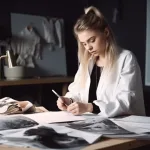


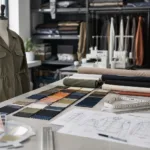


Choosing the right clothing manufacturer has a direct impact on product quality, margin control, delivery reliability, and how confidently your brand can scale. For buyers developing custom apparel, private label collections, or repeat bulk programs, the decision is not only about price. It is about whether the factory can translate your product idea into consistent bulk production with the right fabric, fit, customization, and quality control.
If you are looking for startup-friendly clothing manufacturing support, it helps to work with a manufacturer that can guide early decisions before bulk production begins. In projects like first collections, teamwear programs, or private label launches, we often support buyers with fabric selection, sample development, logo application planning, label and packaging setup, MOQ review, and production coordination so that the project is practical from the beginning rather than corrected too late.
From our manufacturing perspective, the most successful buyers do not start by asking only for a quote. They start by defining the product, target market, and production requirements clearly enough for a factory to evaluate feasibility. That is what reduces sampling loops, mismatched expectations, and preventable bulk issues.
What should you define before contacting a clothing manufacturer?
The first step is to define your buying goal clearly. A supplier that is suitable for plain stock replenishment may not be the right partner for private label development, performance sportswear, or detail-heavy custom garments.
In practice, buyers usually fall into one of four categories:
- Custom apparel development: You need a specific garment built to your design, fit, color, and branding requirements.
- Private label production: You need manufacturer-supported development with your brand labels, hangtags, packaging, and commercial-ready presentation.
- OEM or ODM development: You may provide a tech pack or adapt existing factory capabilities to speed development.
- Bulk replenishment: You already have an approved product and need stable repeat production.
If your project is at the launch stage, it is smart to align sourcing decisions with broader commercial planning. That is why many new brands benefit from understanding how manufacturing choices connect with planning a fashion brand launch, including target price, target customer, product mix, and inventory risk.
Key takeaway: The clearer your business goal is, the easier it is to identify whether a manufacturer fits your project technically and commercially.
What product details should buyers prepare before requesting a quote?
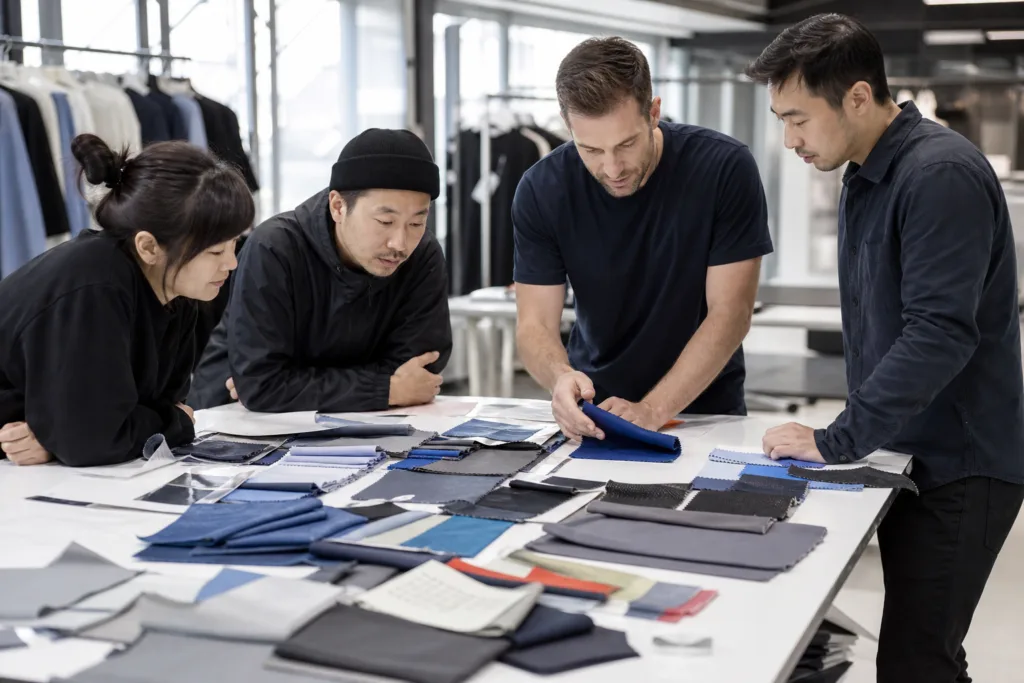
A manufacturer can only give meaningful feedback when the product information is specific enough. Vague requests like “premium hoodie” or “sports polo” usually lead to rough pricing only, not a reliable production plan.
Before making contact, prepare as many of these details as possible:
- Garment category and intended use
- Target customer and fit direction
- Fabric composition
- Estimated GSM range
- Color requirements
- Logo application method
- Artwork files
- Size range
- Quantity by color and size
- Label, hangtag, and packaging needs
- Target delivery window
- Reference photos, samples, or tech pack
If you do not have all of this ready, that does not stop the project. At Ninghow, we often help buyers turn reference ideas into workable production specifications. But the more complete your brief is, the more accurate the advice on cost, MOQ, lead time, and development path will be.
How do you evaluate a clothing manufacturer by product category and complexity?
Not every factory is equally strong across every garment type. A manufacturer may produce basic cotton T-shirts efficiently but struggle with bonded outerwear, compression sportswear, or highly engineered uniforms.
Buyers should evaluate capability by asking whether the factory regularly handles similar construction, fabric behavior, and customization demands. Product complexity is not only about style appearance. It includes pattern accuracy, seam construction, stretch recovery, color matching, trim coordination, and finishing consistency.
| Product Type | What to Check | Why It Matters |
|---|---|---|
| T-shirts and polos | Fabric stability, collar shape, print quality, shrinkage control | Basic garments still fail easily if fit and finishing are inconsistent |
| Hoodies and sweatshirts | Fleece GSM, rib quality, panel alignment, embroidery compatibility | Heavy fabrics affect cost, silhouette, and sewing efficiency |
| Sportswear | Stretch fabric handling, recovery, moisture management, seam strength | Performance issues show up quickly in wear and washing |
| Jackets | Pattern complexity, zipper setting, lining, structure, water-related finishes | Outerwear has more construction risk and more trim dependencies |
| Uniforms or teamwear | Size consistency, color continuity, repeat order control | Programs often require stable replenishment over time |
A good manufacturer should be able to explain where the risks are for your specific category, not just say yes to every request. That transparency is often a better sign than an unrealistically easy promise.
How to choose the right fabric for custom apparel production
Fabric is one of the biggest drivers of hand feel, fit, durability, price, and minimum order structure. Buyers often focus on composition first, but composition alone is not enough. A 100% cotton jersey can feel soft and premium or thin and unstable depending on yarn quality, knitting structure, finish, and GSM.
When evaluating fabric, we usually look at five practical factors first: end use, composition, GSM, stretch behavior, and surface finish. A golf polo, gym T-shirt, school hoodie, and streetwear heavyweight tee may all require very different fabric logic even if the basic silhouette looks simple.
| Fabric Factor | What Buyers Should Check | Production Impact |
|---|---|---|
| Composition | Cotton, polyester, blends, elastane content | Affects comfort, performance, shrinkage, and price |
| GSM | Light, medium, or heavyweight target | Changes drape, opacity, warmth, and cost |
| Stretch | Mechanical or elastane stretch, recovery level | Affects movement, fit tolerance, and sewing method |
| Durability | Pilling resistance, colorfastness, seam stability | Important for repeat wear, sports, and uniforms |
| Hand feel | Soft, crisp, brushed, smooth, technical | Shapes brand positioning and customer perception |
For safety-sensitive categories such as children’s wear or sleepwear, fabric review should also include applicable testing expectations. Buyers should confirm fabric suitability early and review relevant clothing flammability and textile safety guidance before bulk commitments when the product category requires it.
Key takeaway: The best fabric is not the one with the most attractive description. It is the one that fits the end use, target price, fit goal, and production reality.
Why fit, sizing, and grading often determine bulk success
Many bulk problems are not fabric problems. They are fit and grading problems that became visible too late. A sample can look acceptable in one size while the full size range performs poorly once graded into XS through XXL or youth to adult sets.
Buyers should confirm:
- The base sample size
- Target body measurements
- Garment measurement chart
- Fit intention such as slim, regular, relaxed, or oversized
- Tolerance expectations for production
- How grading changes across the size range
From our manufacturing perspective, clear measurement approval is one of the most effective ways to reduce disputes later. It is also the reason we encourage buyers to review not just sample appearance, but also spec sheets, point-of-measurement details, and grading logic before bulk cutting begins.
This is also where a capable manufacturer matters. Ninghow supports development by connecting pattern making, sample review, and bulk feasibility so that the approved fit can be reproduced more consistently in production.
Which customization methods are best for your garment?
The right logo or branding method depends on fabric type, design complexity, quantity, and the image you want the product to communicate. There is no single best method for every garment.
| Customization Method | Best For | Things to Check |
|---|---|---|
| Embroidery | Polos, caps, hoodies, uniforms | Thread density, backing, placement, fabric puckering risk |
| Screen printing | T-shirts, sweatshirts, promotional apparel | Color count, hand feel, artwork separation, print durability |
| Heat transfer | Names, numbers, small runs, sportswear | Wash performance, film feel, application temperature |
| Sublimation | Polyester teamwear and all-over graphics | Requires suitable fabric content and print planning |
| Woven labels and hangtags | Private label presentation | Brand consistency, attachment method, MOQ by trim type |
Customization planning should also cover packaging, barcode labels, size stickers, polybags, and carton marks if the goods are intended for retail, distribution, or organized team delivery. Small branding details are easy to underestimate, but they can affect trim sourcing time and carton packing accuracy.
Buyers comparing factories should ask whether decoration is done in-house, through stable partner processes, or through changing subcontractors. That affects lead time, consistency, and the factory’s ability to troubleshoot when a logo method reacts badly with a fabric surface.
What should you expect from the sampling process?
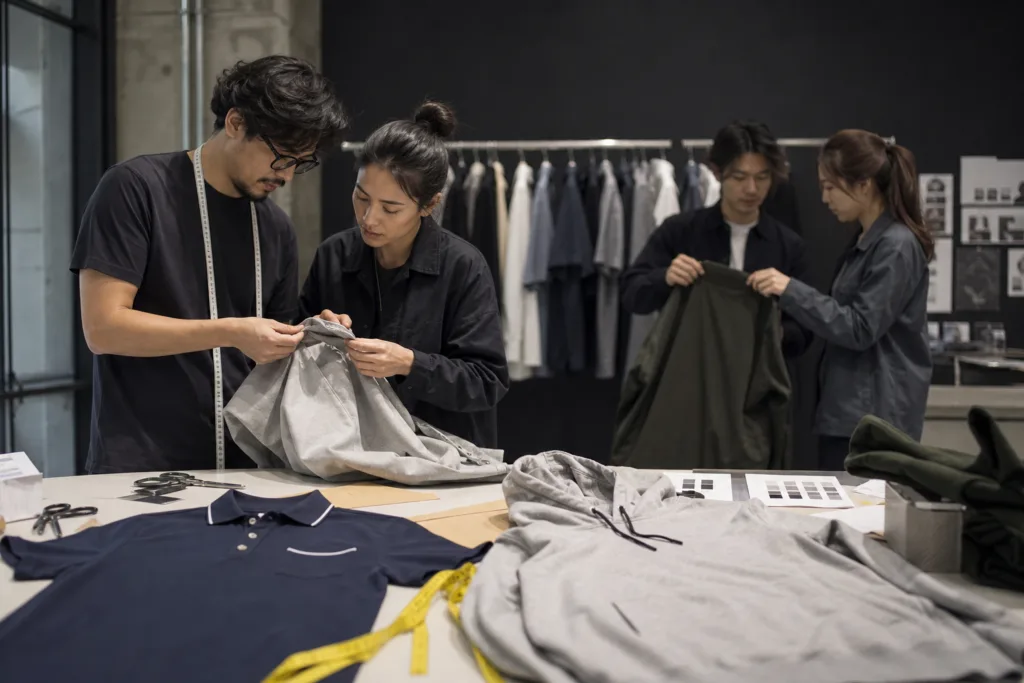
You should expect sampling to validate both design intent and production feasibility. A sample is not only for photos or approvals. It is where issues with fit, construction, fabric behavior, print placement, and trim compatibility are discovered before bulk risk becomes expensive.
Most projects move through a development path that may include proto samples, fit samples, pre-production samples, or sales samples depending on the order type. Buyers who understand the apparel sampling process usually make faster decisions because they know what each round is meant to confirm.
During sample review, check more than overall appearance:
- Measure the garment against the spec sheet
- Test shrinkage and shape retention where relevant
- Review print or embroidery accuracy
- Check collar, cuff, and hem behavior after washing
- Assess seam comfort and stretch performance
- Confirm labels, hangtags, and packaging details
- Compare the sample to your target customer expectation, not only to the sketch
Key takeaway: Bulk production should not begin because the sample looks close enough. It should begin because the sample has been checked against fit, construction, branding, and use requirements.
When is low MOQ realistic and when is it not?
MOQ depends on more than the factory’s willingness to help. It usually depends on fabric sourcing conditions, dyeing requirements, trim customization, production efficiency, and whether the style can share materials with other orders.
For example, a low-volume blank-body style using available fabric and standard trims may be realistic at a much lower quantity than a fully custom hoodie with special dyeing, custom drawcords, woven labels, and printed packaging. Buyers exploring low MOQ clothing manufacturing options should review the whole material package, not just the sewing quantity.
| MOQ Situation | Usually More Realistic | Usually Less Realistic |
|---|---|---|
| Available stock fabric | Yes | No issue if colors fit your brief |
| Custom dyed fabric | Sometimes | Often requires higher volume |
| Standard trims | Yes | Lower trim risk |
| Custom labels and packaging | Depends | Separate trim MOQs may apply |
| Complex multi-panel styles | Less often | Production efficiency drops at low runs |
Good MOQ discussions are honest discussions. If a factory says yes to every low quantity request without explaining fabric and trim constraints, buyers should ask more questions.
How should buyers assess sample and bulk lead time?
Lead time should be evaluated as a process, not a single number. Sample timing depends on pattern work, fabric availability, trim sourcing, and revision count. Bulk timing depends on approvals, raw material readiness, line scheduling, and finishing capacity.
Buyers should review typical apparel production timelines with enough detail to understand where delays usually happen. The most common issues are not always factory sewing speed. They are late artwork confirmation, slow fabric approval, revised labels, color changes, and sample comments that alter the production plan.
Useful lead time questions include:
- Is the fabric in stock or made to order?
- When do labels and packaging need to be approved?
- What approvals are required before bulk cutting?
- How long do print or embroidery programs take?
- What happens if the sample needs one more revision?
- Is shipping arranged after final inspection or after packing only?
From our side, realistic planning always works better than overpromising. A slightly longer but controlled timeline is usually safer than a rushed schedule that creates rework, packing errors, or inconsistent finishing.
What quality control checkpoints matter most in apparel production?
Strong quality control starts before sewing. The most effective factories check materials, specs, artwork, and construction logic early rather than relying only on final inspection.
In garment manufacturing, we usually separate QC into three main checkpoints:
| QC Stage | What Is Checked | Why It Reduces Risk |
|---|---|---|
| Pre-production | Approved sample, measurements, fabric, trims, artwork, packing instructions | Prevents incorrect materials or specs entering the line |
| In-line inspection | Sewing quality, measurement control, logo placement, construction consistency | Finds issues before the full order is completed |
| Final inspection | Appearance, count, packing, labeling, carton marks, workmanship | Confirms shipment readiness and order consistency |
Buyers should ask for QC logic that matches the product type. Stretch garments, white garments, embroidered products, and multi-size programs all require different attention points. A useful manufacturer can explain what will be checked and why.
When does a lower price create higher production risk?
A lower quotation is not automatically better value. Price can fall because the fabric quality is lower, the GSM is reduced, the print method is changed, the pattern work is simplified, or the inspection standard is lighter.
That does not mean higher pricing is always justified either. Buyers should compare what is actually included in the offer:
- Fabric quality and composition
- Actual GSM and finish
- Logo method and color count
- Label and packaging scope
- Sample charges and revision policy
- Inspection process
- Tolerance expectations
- Delivery terms
Key takeaway: Cost-performance balance is about repeatable product quality at a workable margin, not about chasing the lowest first quote.
What common mistakes do buyers make when choosing a clothing manufacturer?
The most common mistake is choosing based on price alone. The second is sending incomplete product information and expecting accurate commitments on MOQ, lead time, and quality.
Other frequent mistakes include:
- Approving samples visually without checking measurements
- Assuming all cotton or all polyester fabrics behave the same
- Ignoring trim lead times
- Changing artwork or packaging too late
- Not confirming grading across the size range
- Using too many customization techniques on a small order
- Expecting factory MOQ to solve supplier-side trim MOQs automatically
These problems are avoidable when communication is detailed and decisions are made in the right order. In our experience, bulk consistency improves when the buyer and manufacturer agree early on what matters most: fit, fabric feel, branding accuracy, or speed to market.
How can you compare manufacturers objectively?
The best comparison method is a simple scorecard built around your actual project requirements. Buyers should compare factories on technical fit, communication quality, transparency, consistency, and scalability, not just on headline pricing.
| Comparison Area | What to Ask | Good Sign |
|---|---|---|
| Category experience | Do they regularly make this garment type? | They discuss specific construction and fabric issues |
| Communication | Are replies clear and practical? | They answer directly and identify missing information |
| Sampling | How do they manage revisions? | They explain stages and approval logic |
| MOQ transparency | What drives minimums? | They separate fabric, trim, and style constraints clearly |
| Scalability | Can they support repeat orders? | They discuss bulk consistency and replenishment planning |
| Quality control | How is quality checked? | They describe pre-production, in-line, and final checks |
This kind of comparison is especially helpful for procurement teams managing both short-term buying and longer-term supplier evaluation. It also reveals whether a factory is suitable for one project only or for continued product development.
What questions should you ask before your first bulk order?
Before confirming production, buyers should ask the questions that expose hidden assumptions. This is where many costly misunderstandings can still be prevented.
- What exact fabric, GSM, and composition will be used?
- Has the measurement spec been approved for all sizes?
- Which trims are custom and which are standard?
- What is the approved logo method and placement?
- What are the key QC checkpoints?
- What approval is required before bulk cutting starts?
- What is the expected production timeline by stage?
- How will goods be packed and labeled?
- What are the tolerance standards for measurements and workmanship?
- What changes would affect price or lead time after approval?
These questions matter whether you are buying for a startup collection, school program, sports team, retailer, or distributor account.
When should you choose a long-term factory partner instead of a one-time supplier?
Choose a long-term factory partner when fit consistency, fabric continuity, repeat branding standards, and replenishment control matter to your business model. This is common for growing brands, teamwear programs, golf apparel lines, and private label retailers.
A one-time supplier may be enough for a simple event order or a very limited promotional run. But if you expect seasonal development, recurring best sellers, or improved margin through process refinement, a manufacturer relationship becomes more valuable over time. The learning built during sampling and early bulk orders often improves future speed and consistency.
That is why we encourage buyers to think beyond the first PO. The right production partner should not only make the first order possible, but also make future orders easier to manage.
Final checklist for selecting the right clothing manufacturer
Before you move forward, use this checklist to confirm that the supplier matches your project in a practical way:
- The factory has relevant experience with your garment category
- Your product brief includes fabric, sizing, customization, and packaging details
- MOQ logic has been explained clearly
- Sample stages and approval points are understood
- Lead time includes material and trim realities
- QC checkpoints are defined before bulk production
- The quote reflects the same quality level you expect to receive
- Communication is clear, realistic, and technically informed
- The supplier can support your future order model, not only the first run
If your project involves custom apparel, private label development, or bulk manufacturing with multiple moving parts, taking time to evaluate the right factory now usually saves much more time and cost later.
Conclusion
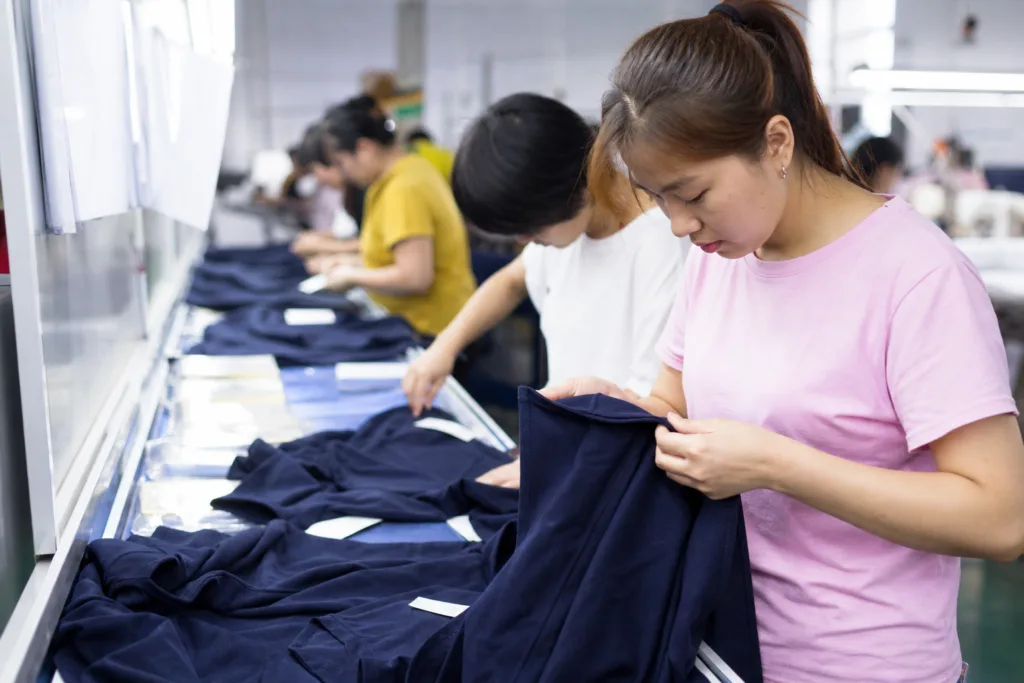
The right clothing manufacturer is the one that fits your product type, quality target, customization needs, MOQ reality, and production timeline. Buyers make better decisions when they compare technical capability, sample discipline, communication clarity, and quality control together rather than treating manufacturing as a simple price comparison.
From our perspective, strong apparel production starts with clear specifications, honest feasibility review, and disciplined sample approval. When those foundations are in place, custom apparel and private label development become far more predictable. That is the most practical way to move from inquiry to sample development and then to confident bulk production.
FAQs
How do I know if a clothing manufacturer is right for my product?
You know a clothing manufacturer is right for your product when they can discuss your garment type in specific technical terms and explain fabric, fit, customization, MOQ, and QC risks clearly. A good fit is not just capacity; it is relevant experience with similar products and the ability to turn your requirements into repeatable bulk output.
What information should I send in my first manufacturer inquiry?
You should send garment type, target fabric, estimated GSM, colors, size range, quantity, logo method, packaging needs, delivery timing, and any tech pack or reference images in your first inquiry. The more complete the brief is, the more accurate the factory’s feedback on price, sampling, MOQ, and production feasibility will be.
Why can sample quality differ from bulk production?
Sample quality can differ from bulk production when measurements are not locked, materials change, approvals are incomplete, or in-line controls are weak. To reduce that risk, buyers should approve the sample together with the spec, fabric, trims, and branding details that will actually be used in bulk.
What affects minimum order quantity the most?
Minimum order quantity is affected most by fabric sourcing, custom dyeing, trim requirements, decoration complexity, and production efficiency. Sewing quantity alone does not determine MOQ, because labels, packaging, and made-to-order materials often have their own minimums that shape the full production plan.
How long does custom apparel production usually take?
Custom apparel production usually takes as long as the combined sample, approval, material, and bulk scheduling process requires, not just the sewing time. Projects move faster when artwork, measurements, trims, and packaging are confirmed early, while repeated revisions and custom materials usually extend the timeline.
What should I approve before placing a bulk apparel order?
You should approve the final sample, measurement spec, grading, fabric details, color standard, logo application, trims, labels, packaging, quantity breakdown, and production timeline before placing a bulk apparel order. Bulk orders are much safer when every item that affects appearance, fit, and packing has been confirmed in advance.