





Common first time clothing importer mistakes usually happen when the buyer focuses on the quote before the product spec. In apparel, a low unit price can hide weak fabric, poor grading, unclear packaging, and a production schedule that has no real buffer for sampling or approvals. If you are importing clothing for the first time, the safest approach is to control the order like a manufacturing project, not a shopping cart.
For projects that need custom fits, private label details, or a cleaner path from sample to bulk, our custom clothing manufacturing workflow helps buyers lock in fabric, construction, labels, and production timing before they commit to quantity. That matters most when the style is new, the order is seasonal, or the buyer needs support with sampling, logo placement, and packaging decisions that affect cost later.
Why first-time importers make costly sourcing mistakes
Most mistakes come from incomplete information. A supplier can only quote accurately when the buyer gives fabric targets, size specs, artwork, quantities, and delivery expectations that are specific enough to produce against. When those details are vague, factories fill the gaps with assumptions, and those assumptions often show up as fit problems, color variation, slow approvals, or rework.
The other common issue is sequencing. First-time buyers often ask for bulk pricing before they have a finished sample, or they lock in delivery dates before confirming how long fabric, trims, labeling, and inspection will take. From a manufacturing perspective, the earlier decisions are the ones that drive the rest of the order.
| Mistake | What It Can Cause | Better Check |
|---|---|---|
| Choosing by price only | Weak fabric, poor workmanship, hidden add-ons | Ask for a full quote breakdown and included specs |
| Skipping samples | Fit errors, logo issues, avoidable bulk rework | Approve a sample that matches the order spec |
| Unclear size chart | Returns, complaints, inconsistent grading | Define body measurements, garment measurements, and tolerances |
| Ignoring MOQ | Limited color choices, higher unit cost, packaging limits | Match quantity to fabric, trims, and production structure |
| Vague packaging notes | Wrong labels, missing hangtags, shipment delays | Confirm labels, cartons, barcodes, and insert requirements early |
| Unrealistic lead time | Missed launch dates and rushed approvals | Build time for sampling, approval, bulk, and inspection |
| Weak fabric approval | Color drift, shrinkage, hand-feel problems | Confirm composition, GSM, and color standard in writing |
| No defect tolerance | Inspection disputes and shipment hold-ups | Set clear QC checkpoints before production starts |
Choosing the lowest price can create the most expensive problem
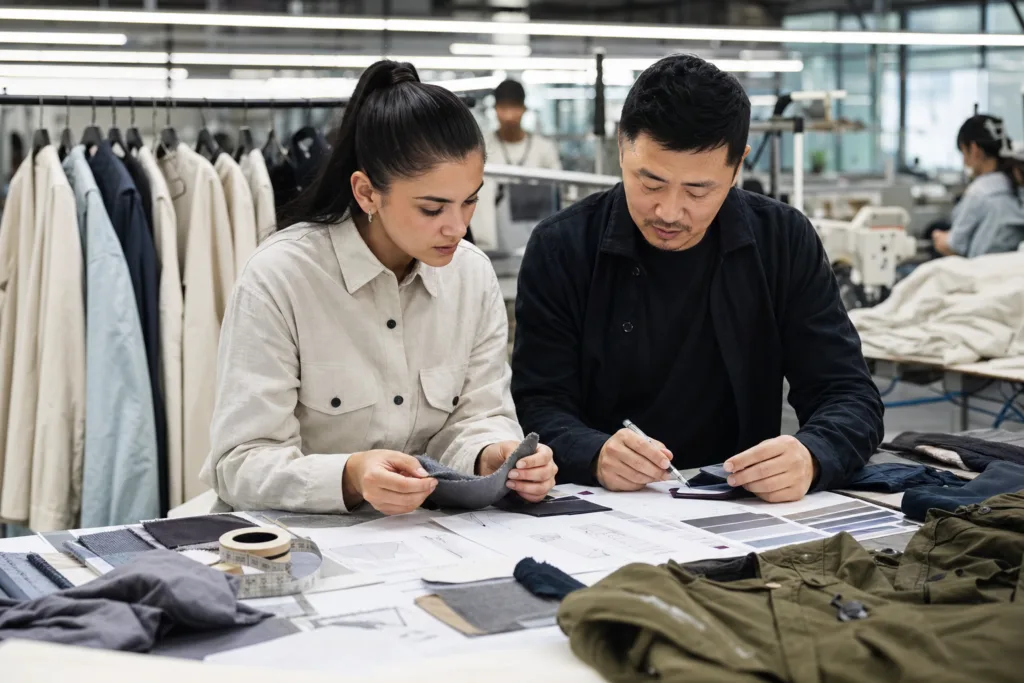
Price matters, but it should never be the only filter. At Ninghow, we often see buyers compare the headline number before they compare what is actually included. A quote that looks cheaper may leave out sample rounds, fabric development, labels, hangtags, carton marking, or inspection support, and those missing items usually appear later as extra cost or delay.
The better question is not, “What is the cheapest price?” The better question is, “What level of quality and service is covered by this price?” A clear quote should show fabric type, GSM, logo method, trims, label type, packaging, and whether the factory is sourcing the material or using stock fabric.
- Ask whether the quote includes or excludes sampling, trim sourcing, and artwork revisions.
- Check if the factory is quoting the exact construction you want or a cheaper substitute.
- Confirm whether the price changes if you adjust color count, size ratio, or packaging style.
- Request the expected cost impact before approving any change in fabric or decoration.
Key takeaway: A low quote is only useful if the order still meets your fabric, fit, branding, and delivery requirements.
Do not approve a sample until it proves the product spec
The sample is the closest proof of what the bulk order will become. A fast approval without checking the sample carefully is one of the most common first time clothing importer mistakes because the buyer assumes the factory will “fix it in bulk.” In practice, bulk production usually repeats the sample, including its mistakes, unless the problem is clearly corrected before cutting starts.
Use the apparel sampling guide as a reference point when you want to check what should be reviewed before moving from sample to mass production. A strong sample should confirm fit, fabric hand feel, stitching quality, print or embroidery placement, label position, shrinkage expectation, and finish quality.
- Measure the sample against the approved spec sheet, not against a subjective feel.
- Check the neckline, shoulder balance, sleeve length, body length, and seam finish.
- Review the logo position, logo size, and color accuracy under normal light.
- Wash or test the sample when shrinkage or color migration may affect the final product.
If the sample is not right, revise the spec and approve a second sample before bulk production. That extra round is often cheaper than fixing a whole order after cutting and sewing have already started.
Size charts need measurement data, not guesses
First time clothing importer mistakes often start with size charts copied from another brand. Sizes vary by market, fit model, garment type, and intended user. A size chart should be built from body measurement targets, garment allowance, and grading logic, not from generic small, medium, and large assumptions.
For a factual basis, the NIST guidance on apparel sizing and grading basics shows why body measurements should guide clothing fit decisions instead of relying on label names alone. That matters because a garment can technically be “size large” and still fit too short, too tight, or too loose for the customer you are trying to reach.
Size development should also define tolerances. Without tolerances, a factory may meet the label size but still ship pieces that vary too much in chest width, body length, or sleeve opening. Those small differences can create a large problem when the order is sold online or distributed to teams, schools, or retailers.
| Size Planning Item | What to Confirm | Why It Matters |
|---|---|---|
| Body measurements | Target wearer chest, waist, hip, and height range | Helps the garment match the actual customer base |
| Garment measurements | Finished width, length, sleeve length, and opening points | Lets the factory cut to a measurable spec |
| Grading rules | How each size increases or decreases across the range | Keeps the full size run balanced |
| Tolerances | Acceptable variation on key points | Reduces disputes during inspection |
MOQ affects more than the final unit price
MOQ is not only about quantity. It also affects whether the factory can use existing fabric, how many colors are realistic, how the size ratio is arranged, and whether custom packaging is practical. If the order is too small for the chosen fabric or decoration method, the quote can rise quickly even when the style itself is simple.
Using a practical MOQ planning approach helps first-time buyers understand where flexibility exists and where it does not. Some styles can work with lower quantities if the factory already has suitable stock fabric or standard trims. Other styles need more quantity because the mill, dye house, or label supplier will only quote efficiently above a certain volume.
- Ask which parts of the order are fixed cost and which parts change with quantity.
- Confirm whether each color needs its own MOQ or whether colors can be combined.
- Check if size runs or packaging variations change the production cost.
- Compare the cost of a simpler style against the cost of a fully customized one.
Packaging, labeling, and hangtags should be decided before bulk
In many first-time orders, packaging becomes an afterthought. That causes delays because label content, barcode format, hangtag artwork, country-of-origin requirements, and carton markings all need review before production closes. If packaging is unclear, the factory may sew in the wrong label or hold the shipment while artwork is corrected.
For private label work, even small details matter. Woven labels, care labels, neck prints, tissue paper, size stickers, and carton quantities should all be defined before the sample is approved. Packaging does not only affect appearance; it also affects labor time, material sourcing, and how easily the product ships and stores.
- Confirm label language, placement, and content before printing begins.
- Decide whether hangtags are custom or standard.
- Set carton quantities and packing sequence in advance.
- Check whether the buyer or factory supplies packaging materials.
Lead time is a chain of steps, not one date
Lead time includes sampling, fabric sourcing, trim approval, production, finishing, inspection, and packing. If any one step changes, the delivery date changes with it. The safest schedule is one that separates sample approval from bulk production and leaves time for correction after fit or artwork feedback.
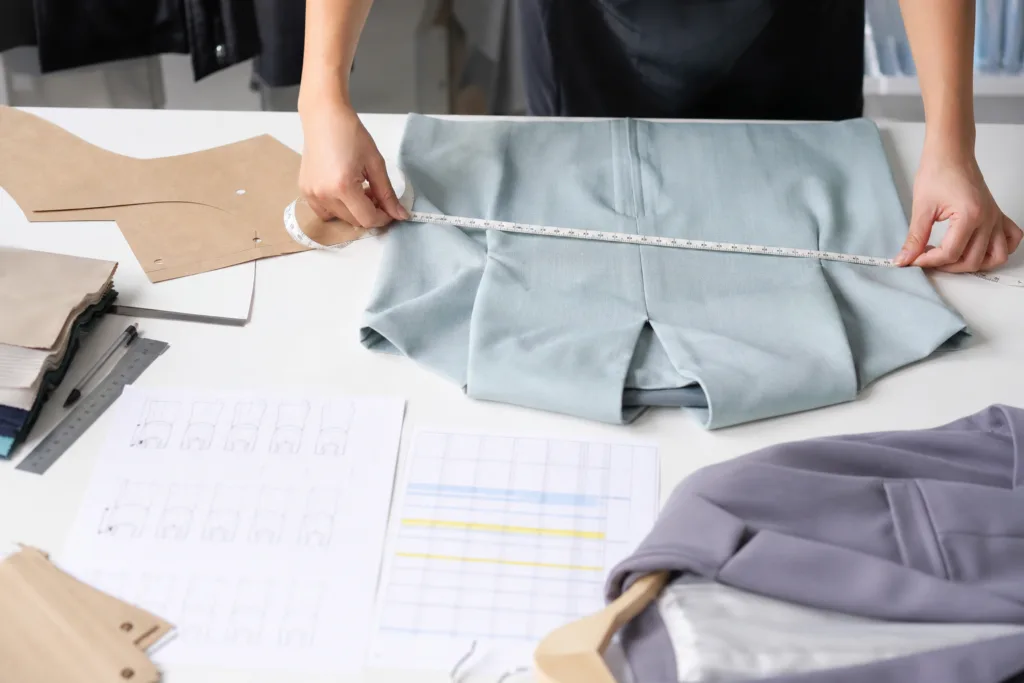
First-time buyers often underestimate how long small decisions can take. A logo file may need revision, a lab dip may need a second round, or the size spec may need clarification after the first sample. That is normal in apparel development, but it only stays manageable when the calendar includes room for it.
- Ask for a production schedule that shows every major checkpoint.
- Build in time for sample review, fit comments, and labeling approval.
- Allow extra days if the fabric must be dyed, printed, or sourced specially.
- Plan around shipping and customs so launch dates stay realistic.
Fabric composition, GSM, and color approval should be confirmed in writing
Fabric choice affects weight, drape, breathability, stretch, and cost. GSM helps describe weight, but it does not tell the full story unless the composition and construction are also clear. A 180 GSM cotton T-shirt can feel very different from a 180 GSM blended knit depending on yarn quality and finish.
Color approval deserves the same attention. Lab dips, strike-offs, and bulk shade bands can all vary slightly, so the buyer should decide in advance what tolerance is acceptable and whether all pieces must match one approved reference. If the target color is important to the brand, the reference should be approved in writing before mass production starts.
- Confirm fiber content and whether any blend ratio can change the hand feel.
- Ask for GSM, knit or weave type, and finish details.
- Approve a physical color standard when color consistency matters.
- Clarify whether shrinkage, pilling, or stretch recovery should be tested.
Quality control only works when defect tolerance is defined early
QC should start before sewing, not after packing. We usually advise buyers to confirm inspection points for fabric, cut panels, stitching, sizing, print placement, label position, and final carton counts. The earlier the defect rules are written down, the easier it is to avoid disagreement at shipment.
From a production point of view, the most effective QC plan is simple and specific. It should tell the factory what to inspect, how much variation is acceptable, and what happens if a defect is found. Without that clarity, even a minor issue can become a delay because the buyer and factory are judging the same garment by different rules.
| QC Stage | What to Confirm | Why It Matters |
|---|---|---|
| Pre-production | Fabric, trims, sample approval, size spec, artwork | Locks the target before bulk cutting |
| In-line inspection | Stitching, measurements, print placement, workmanship | Catches problems while they are still fixable |
| Final inspection | Piece count, folding, packaging, carton marks, damage | Prevents shipment surprises and missing items |
| Release approval | Buyer sign-off on accepted tolerance and packing standard | Reduces disputes at the end of production |
A simple pre-order checklist for first-time clothing importers
Before you confirm a clothing order, check whether you have enough information to protect the sample, the fit, and the delivery date. If any of the items below are missing, the order is not ready yet.
- Approved product sketch or reference photo
- Clear fabric target with composition, GSM, and color reference
- Size chart with measurements and tolerances
- Logo method, artwork file, and placement instructions
- Label, hangtag, and packaging requirements
- MOQ, size ratio, and color count confirmation
- Sample approval record before bulk production
- Realistic lead time with inspection and shipping buffer
This checklist is especially useful if your project includes private label development or a new product category. The fewer assumptions left open at the start, the fewer correction rounds you will need later.
Questions to ask a clothing manufacturer before confirming an order
The right questions help you see whether the factory is ready for your order or only ready to quote it. Good manufacturers should be able to explain how they will source fabric, manage sample revisions, confirm sizing, and plan production around your target delivery date.
- What is included in the quote, and what is extra?
- Can you show how the sample will be measured against the spec?
- What MOQ applies to fabric, color, size ratio, and packaging?
- How will you confirm labels, hangtags, and carton markings?
- What are the QC checkpoints before shipment?
- What happens if the first sample needs revision?
These questions help you compare suppliers on process, not only on price. That usually gives a more accurate picture of who can support a repeatable bulk order and who can only support a one-time quote.
How to reduce risk while keeping cost and quality balanced
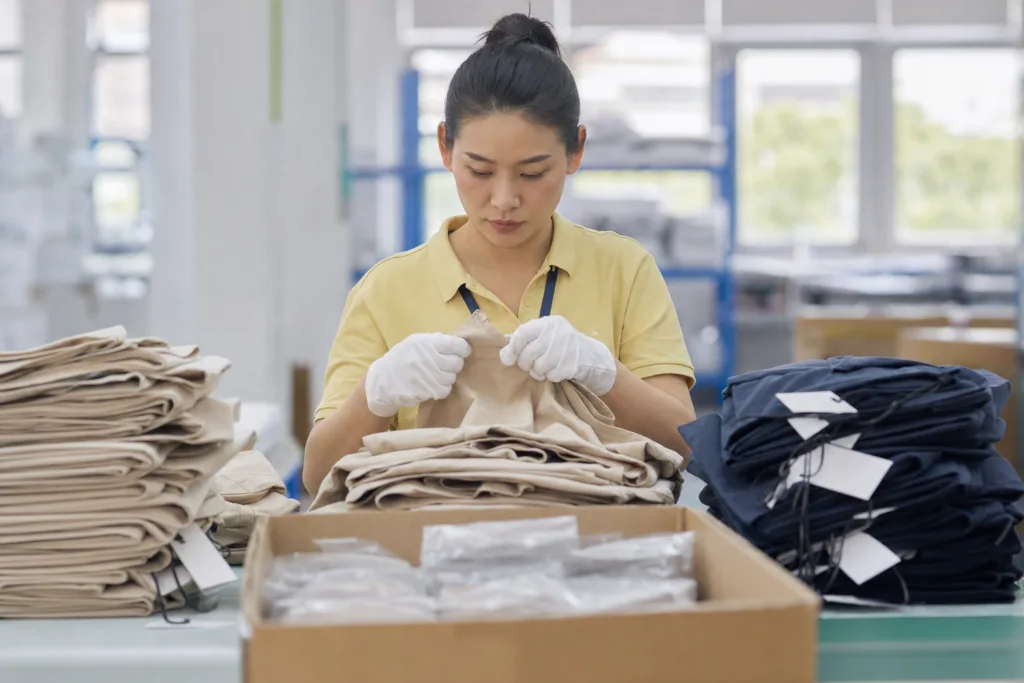
The best way to avoid first time clothing importer mistakes is to simplify the first order where possible. Keep the fabric choice practical, avoid unnecessary decoration on the first round, and build a size range that matches the target market instead of trying to serve every customer profile at once.
When buyers keep the project focused, factories can spend more effort on fit, workmanship, and consistency. That often produces a better result than a complicated order with too many colorways, too many trims, or a lead time that leaves no room for approval.
Use your first order to learn where the real risks are. If the fabric is critical, request a stronger sample process. If the sizing is critical, slow down on fit approval. If the branding is critical, spend more time on labels, logos, and packaging before bulk starts.
Key takeaway: The safest first order is not the cheapest one; it is the order with clear specs, a proven sample, realistic MOQ, and a schedule that leaves room for approval.
Frequently Asked Questions
What is the biggest mistake first-time clothing importers make?
The biggest mistake is choosing a supplier on price alone. A low quote can hide weak fabric, poor workmanship, missing trims, or a schedule that cannot absorb sample changes.
Should I approve a sample before confirming bulk order?
Yes. A sample should confirm fit, fabric, stitching, logo placement, labeling, and color before bulk production starts, because the sample is the closest proof of how the order will perform in production.
How detailed should a size chart be?
It should include body measurements, garment measurements, grading rules, and tolerances. The more precise the chart, the less likely you are to see fit complaints or uneven sizes in bulk.
How does MOQ affect price and customization?
MOQ affects fabric sourcing, color options, size ratios, and packaging flexibility. Smaller quantities usually mean fewer customization options and a higher unit cost.
What should be confirmed before production starts?
Confirm fabric composition, GSM, color approval, size specs, logo method, labeling, packaging, inspection points, and delivery schedule before the factory cuts bulk fabric.
How can I reduce risk without raising costs too much?
Keep the order simple at first, approve a detailed sample, ask for a quote breakdown, and build a realistic production calendar. That reduces rework and usually saves more than it costs.