





The cost to start clothing brand with manufacturer support varies more than most founders expect. The total is not just about the factory price per piece. It usually includes development, samples, fabric sourcing, trims, branding details, production minimums, quality control, packing, freight, and the cost of fixing mistakes when planning is incomplete. From our manufacturing perspective, the most useful way to budget is to understand which decisions raise upfront spend, which ones improve long-term consistency, and where startups can stay lean without creating avoidable production risk.
If your launch plan depends on smaller runs, simpler customization, or careful product development before scaling, it helps to compare startup-friendly clothing manufacturing options early. For new brands, we usually see the biggest budget wins come from aligning fabric choice, MOQ, logo method, private label details, and sample expectations before bulk production begins, rather than trying to reduce cost only at the final quotation stage.
What a first-order apparel budget usually includes
A realistic startup budget should be built in layers. Founders often focus on the garment itself, but the first order usually has both visible and hidden cost categories.
In practical terms, your budget often includes product development, pre-production approvals, raw materials, production labor, branding details, packing, and logistics. If you skip one of these lines in your planning, the final landed cost can feel much higher than expected.
| Budget Area | What It Usually Covers | Why It Matters |
|---|---|---|
| Development | Tech pack review, pattern work, sample setup, revisions | Sets the base for fit, construction, and communication |
| Materials | Fabric, rib, zipper, drawcord, labels, trims | Drives hand feel, performance, and a large share of unit cost |
| Production | Cutting, sewing, finishing, pressing, packing | Impacts consistency, speed, and total order value |
| Customization | Print, embroidery, woven labels, hangtags, packaging | Builds brand identity but can raise MOQ and setup cost |
| Quality Control | In-line checks, measurement checks, final inspection | Reduces returns, claims, and bulk order surprises |
| Logistics | Cartons, freight, export documents, duties, local delivery | Affects true landed cost, not just ex-factory price |
Key takeaway: Startup brands should budget for the full path from concept to delivered goods, not only the bulk sewing cost.
Sample and development costs can shape the whole project
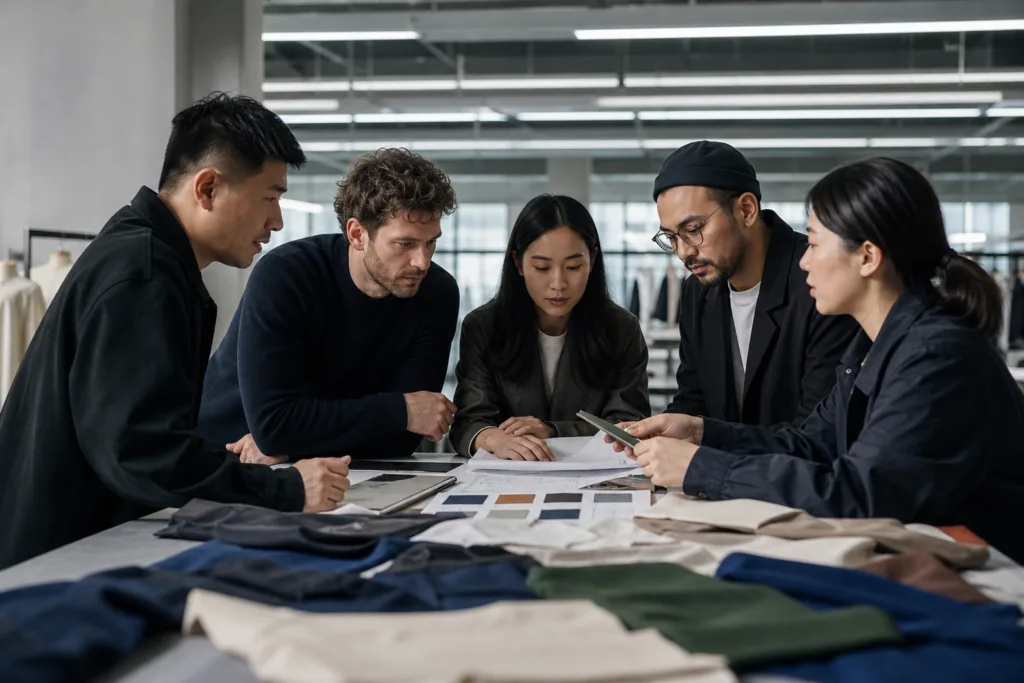
For a new brand, development cost is often the first major investment. This stage may include pattern making, fit review, prototype sewing, material substitutions, and multiple sample rounds if the first version does not match the intended product.
If the garment is simple and your specifications are clear, development can move faster. If the product is technical, performance-based, oversized, heavily branded, or designed from scratch, the budget usually increases because more trial and refinement are needed.
We encourage startup buyers to treat sampling as risk reduction, not as a side expense. A stronger sample stage usually prevents costlier problems in bulk production, especially with fit, fabric behavior, shrinkage, logo placement, and construction details.
When planning the apparel sampling process for first samples, founders should allow room for at least one round of revision. Even when a sample looks visually correct, measurements, collar shape, sleeve balance, print size, or fabric weight may still need adjustment before approval.
What usually increases sample and development spend
- Incomplete or unclear tech packs
- Custom patterns instead of using a factory base block
- Non-standard fits such as boxy, dropped shoulder, or compression fit
- Special fabrics that must be sourced in small quantities
- Complex trims, multiple logo techniques, or custom packaging in the sample stage
- Repeated changes after each revision
A practical approach is to decide what must be perfect in the first launch and what can wait for a second production cycle. Many startups overspend by trying to finalize every branding detail before product-market fit is proven.
Fabric and trim costs: the biggest cost driver for many startups
Fabric choice often has the largest effect on both unit cost and overall startup budget. This is true for basic T-shirts, premium hoodies, golf polos, sportswear, and jackets. The fabric determines not only price, but also drape, stretch, opacity, durability, breathability, wash behavior, and whether the garment feels aligned with your target customer.
In our production work, we often see founders compare garment prices without comparing fabric specifications carefully. Two hoodies may look similar in photos, but one may use heavier brushed fleece, better rib, cleaner yarn quality, and more stable dyeing, which changes the cost structure significantly.
| Material Factor | Lower Budget Effect | Higher Budget Effect |
|---|---|---|
| Fiber type | Standard cotton or common polyester blends | Premium cotton, recycled content, performance blends |
| GSM / weight | Lighter and often lower material usage | Heavier fabric with stronger hand feel and more yarn use |
| Fabric finish | Basic finish | Brushing, peaching, moisture management, special wash |
| Color program | Fewer colors, stock availability | Custom dyeing or strict color matching |
| Trim complexity | Standard labels and simple closures | Custom zippers, molded trims, woven tapes, special hardware |
For startups, fabric selection should match the actual use case. A gym tee needs different priorities than a fashion heavyweight T-shirt or a school polo. The wrong fabric does not just waste money; it can create returns, poor reviews, and costly reorders.
If your first collection includes multiple styles, try to reduce unnecessary fabric fragmentation. Shared fabrics across several products can simplify sourcing and make budget planning more manageable.
How MOQ planning changes your upfront spend
Minimum order quantity has a direct effect on startup cash flow. A lower MOQ can reduce total initial spend, but it does not always produce the lowest unit cost. Factories still need to cover setup time, material handling, cutting efficiency, printing or embroidery setup, and packing labor.
This is why founders should not ask only, “What is the MOQ?” A better question is, “What MOQ is realistic for this fabric, this design, and this level of customization?”
Projects using stock fabrics, common colors, and simple construction are often more flexible. On the other hand, custom-dyed materials, many size breaks, and heavy branding details usually push minimums up or make low quantities less economical.
For brands exploring low MOQ clothing manufacturing solutions, it is important to understand the trade-off: lower quantity can help testing and launch control, but it may come with fewer fabric options, simplified customization, or a higher price per piece.
What buyers should compare when reviewing MOQ
- Total order quantity versus quantity per color
- Quantity per size ratio and whether uneven size runs are accepted
- Whether fabric is dyed specifically for the order or pulled from available stock
- How many logo applications are included
- Whether labels, hangtags, or packaging have separate minimums
- Whether the MOQ applies per style, per color, or per fabric group
Key takeaway: Lower MOQ reduces launch exposure, but the cheapest first order is not always the strongest commercial test if the product quality or branding standard drops too far.
Customization costs are often underestimated by new brands
Branding details make a product feel real, but they also affect setup time, sourcing complexity, and production coordination. A plain blank garment and a fully branded private label version can have a very different budget structure.
Common custom elements include screen printing, embroidery, heat transfer, woven neck labels, size labels, wash labels, hangtags, polybags, sticker labels, custom cartons, and brand-specific folding instructions. Each element may look small, but together they can materially change your first-order budget.
For founders building a more complete brand presentation, private label clothing development support becomes relevant because labels, packaging, logo files, care content, and trim approval all need to be coordinated before bulk production. The earlier these details are confirmed, the easier it is to control both cost and lead time.
| Customization Item | Cost Impact Tendency | Planning Note |
|---|---|---|
| Screen print | Moderate setup, efficient for volume | Works well when artwork and placement stay consistent |
| Embroidery | Higher time cost on some garments | Good for polos, caps, fleece, and premium logo use |
| Heat transfer | Flexible for smaller runs and sportswear | Surface and wash expectations should be tested |
| Woven labels | Low unit impact, added sourcing step | Usually requires separate approval |
| Hangtags | Small item, but design and string choice matter | Can create separate minimums |
| Custom packaging | Can rise quickly with printed bags and inserts | Useful for retail presentation, less critical for all launches |
Startups should decide whether branding details are customer-facing necessities or internal preferences. For example, premium hangtags may matter more for store presentation than for an online test launch, while an accurate neck label and care label are operationally more important.
Production and quality control costs are not just line-item charges
Factories may quote production in different ways. Some include standard in-line quality checks and final packing inside the unit price. Others break out certain services, especially if the garment involves extra inspection, custom packing methods, or a stricter measurement tolerance.
From a manufacturer view, quality control cost is really about process discipline. The more detailed the garment requirements, the more important it is to confirm measurement tolerances, sewing construction, logo position, shade consistency, and finishing expectations before and during bulk production.
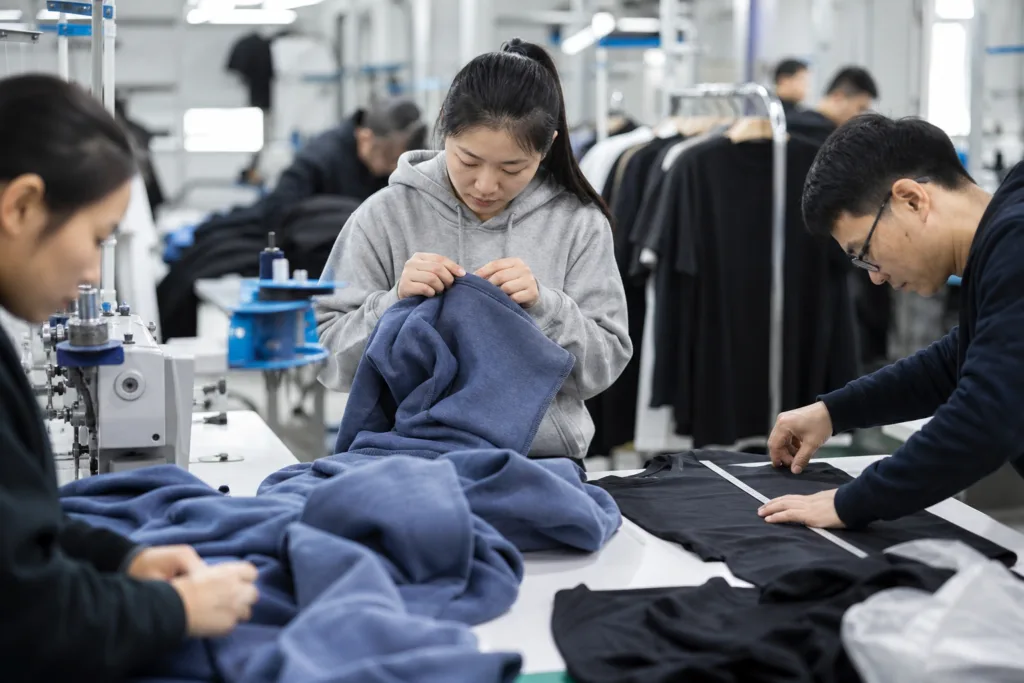
When buyers want a clearer picture of the clothing manufacturing workflow from development to bulk order, they usually understand cost more accurately. Bulk production is not one step. It includes material arrival, cutting, panel checks, sewing line control, decoration coordination, finishing, final inspection, and packing approval.
This is also where the manufacturer relationship matters. At Ninghow, we find that clearer pre-production alignment usually lowers total project cost because fewer revisions are needed after materials are committed.
QC checkpoints that can protect startup budget
- Fabric inspection before cutting
- Lab dip or color approval when color consistency matters
- Pre-production sample approval
- In-line measurement and workmanship checks
- Final random inspection before shipment
- Packing verification by size, color, barcode, or carton mark
A slightly higher investment in process control can be cheaper than handling delayed launches, customer complaints, or unsellable stock.
Shipping, import duties, and logistics are common hidden costs
Many startups underestimate logistics because the manufacturing quote looks manageable on its own. But the true cost to start clothing brand with manufacturer production includes how finished goods move from factory to your warehouse, fulfillment center, store, or event location.
Freight cost depends on shipment volume, weight, route, season, urgency, and delivery method. Air shipment may support a launch deadline but can raise landed cost sharply. Sea freight may reduce cost per unit on larger orders but requires more planning time and stronger inventory timing.
Buyers should also budget for outer cartons, carton markings, palletization when required, broker coordination, duties, taxes, and shipment documents. Even simple garments need organized packing data. The International Trade Administration’s explanation of an export packing list is a useful reminder that shipment preparation is part of cost planning, not just an admin detail.
For startups, the safest budgeting method is to separate factory cost from landed cost. If you only compare ex-factory quotes, you may choose a product plan that looks affordable but becomes difficult once freight and import charges are added.
What changes startup apparel manufacturing cost the most
Not every decision affects cost equally. In most first-order projects, a few variables account for the majority of the budget shift.
- Product type: A basic cotton T-shirt usually has a simpler cost structure than a lined jacket or performance quarter-zip.
- Fabric specification: Fiber content, GSM, finish, and sourcing route can move cost significantly.
- Order quantity: Total quantity and quantity per color affect production efficiency.
- Customization: Multiple logo applications, private labels, and packaging layers add both unit and setup cost.
- Fit development: New patterns and multiple revisions increase development time.
- Timeline pressure: Rush development, urgent production, or air freight often raise total spend.
If a startup founder wants a leaner first launch, those are the first levers to review. Cutting random details without understanding these main drivers usually does not create meaningful savings.
How to estimate your launch budget by product type
The right budget framework depends on what you are launching. A T-shirt collection, a golf polo line, and a technical sportswear capsule do not require the same development path.
T-shirts
T-shirts are often the easiest place to start because construction is simpler and sampling is usually more straightforward. Still, cost changes with cotton quality, GSM, enzyme wash, oversized fit, print scale, and label setup.
A startup test run can stay controlled when the brand limits color count, keeps graphics focused, and uses one or two stable fabric options.
Hoodies and sweatshirts
Hoodies generally require a larger budget because they use more fabric and often include rib, drawcords, eyelets, and thicker decoration surfaces. Heavyweight fleece, brushed interiors, and oversized fashion fits increase material usage and pattern attention.
For a first order, these garments can still work well if the style count is small and the fabric program is disciplined.
Polos and golf apparel
Polos depend heavily on knit quality, collar construction, placket stability, and logo execution. Performance golf apparel may also involve moisture management, stretch, or refined finishing, which adds sourcing and testing considerations.
The budget risk here is not always obvious from the first quote. Inconsistent collar shape or poor placket construction can damage perceived quality quickly.
Sportswear
Sportswear often looks simple but can become complex because of stretch fabrics, panel construction, heat transfer logos, flatlock seams, and fit expectations tied to movement. Sampling matters more because comfort and recovery are not always visible until worn.
A startup brand in this segment should protect budget for wear testing, logo adhesion review, and accurate size grading.
Jackets and outerwear
Jackets usually sit at the higher end of startup complexity. Shell fabric, lining, zipper quality, pocket construction, insulation choices, and finishing details all add cost and execution risk.
For a first launch, outerwear is usually more manageable when the design is commercially clear and the brand has enough budget for sample refinement.
How to reduce startup cost without hurting product quality
Lowering cost does not have to mean downgrading the product. The smarter route is to remove unnecessary complexity while protecting the features customers will actually notice.
- Start with fewer styles and deeper focus on the best-selling concept.
- Use available or adaptable fabrics before requesting highly custom materials.
- Keep color counts tight in the first launch.
- Choose one main logo method instead of stacking multiple applications.
- Delay premium packaging layers if the sales channel does not require them.
- Approve fit and measurement carefully before bulk to avoid rework.
- Use standard trims where they do not damage brand positioning.
From our perspective, one of the best ways to control cost is to launch with a product architecture that is simple enough to execute well. A clean, reliable first collection usually performs better than an overbuilt one with too many moving parts.
Key takeaway: Cost control works best when you simplify what customers do not value, while protecting fabric feel, fit consistency, and construction quality.
Common budgeting mistakes new clothing brands make
The most expensive startup mistakes usually happen before production starts. They are often planning mistakes rather than factory mistakes.
- Comparing quotes without matching fabric and trim specifications
- Ignoring development rounds in the budget
- Requesting low MOQ with highly customized details
- Approving samples without checking measurements and wash behavior carefully
- Forgetting labels, cartons, freight, duties, and local delivery costs
- Launching too many SKUs in the first order
- Assuming the cheapest quote gives the best landed outcome
We also see founders underestimate communication cost. If artwork files, size charts, label content, and packaging instructions are not ready, delays and sample changes often follow. That extra time becomes cost, even when it does not appear as a single line item.
A simple first-order budgeting framework for startup founders
A practical way to estimate your first order is to divide the project into five budget blocks and assign a working allowance to each. You do not need fixed public price benchmarks to build a useful planning model.
| Budget Block | What to Include | Founder Question |
|---|---|---|
| Product development | Tech pack support, pattern work, samples, revisions | How many sample rounds are realistic? |
| Materials and trims | Fabric, rib, labels, hangtags, packaging components | Which items are essential for launch? |
| Bulk production | Cutting, sewing, finishing, standard QC, packing | What quantity makes sense for testing demand? |
| Branding and presentation | Print, embroidery, labels, custom packaging | Which details affect customer perception most? |
| Landed delivery | Freight, duties, broker fees, local transport | What is the delivered cost per piece? |
Then add a contingency reserve. Startup apparel projects commonly change during development, and having budget flexibility helps you respond without forcing poor decisions at the end.
When to ask for a quote and what manufacturers need
You should ask for a quotation once your product direction is defined enough for the factory to evaluate it accurately. Very early budget conversations are still useful, but exact pricing is difficult when the garment, fabric, and quantity are still open-ended.
The more complete your brief, the more useful the quote will be. A good quote request usually includes:
- Product type and target customer
- Fabric composition and approximate weight if known
- Color count
- Size range and size ratio
- Expected order quantity
- Artwork files and logo application method
- Label, hangtag, and packaging requirements
- Target market and shipping destination
- Reference photos or a tech pack
If some points are still undecided, say so clearly. Manufacturers can often suggest lower-risk options when they know which parts are fixed and which parts are flexible.
Conclusion: build a realistic launch budget before placing your first order
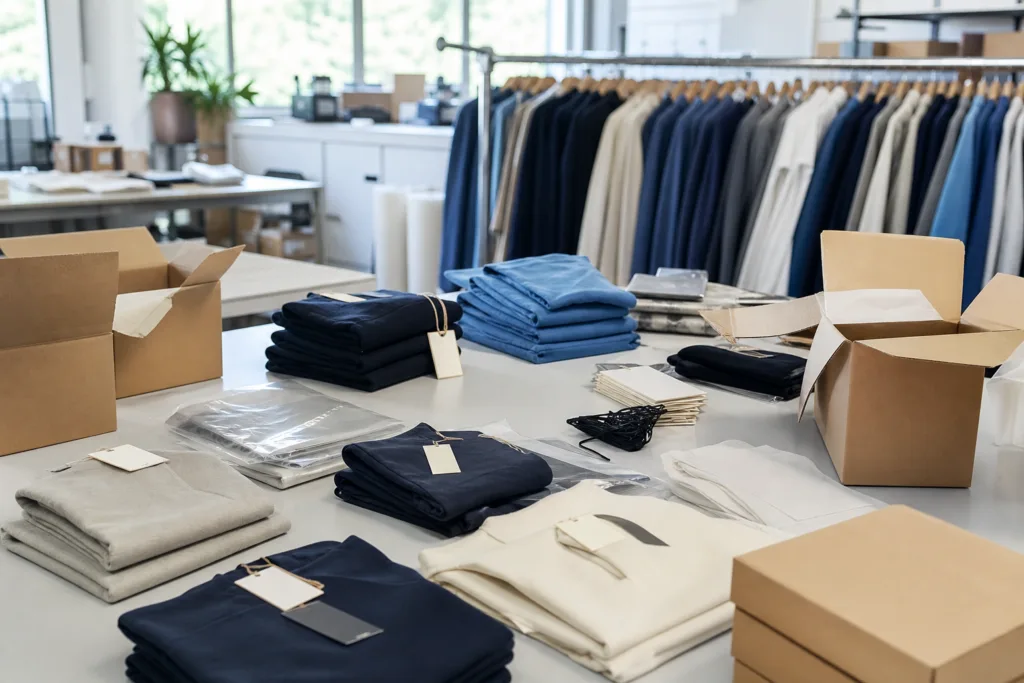
The cost to start clothing brand with manufacturer support should be evaluated as a full launch system, not a single garment quote. Founders who budget for development, material choice, MOQ logic, customization, QC, and landed delivery usually make stronger sourcing decisions and avoid expensive surprises.
The goal is not to build the cheapest first collection. The goal is to build a first collection that matches your market, protects your cash flow, and can be produced consistently. When startup brands plan at that level, manufacturer-based production becomes much easier to manage and scale.
FAQs
How much budget should a startup reserve before asking a manufacturer for bulk production?
A startup should reserve budget for more than the bulk order itself. In practice, you should also expect development costs, sampling, trims, branding details, freight, duties, and a contingency buffer because first orders often require adjustments before final approval.
Is a low MOQ always the best choice for a new clothing brand?
No, a low MOQ is helpful for reducing inventory exposure, but it is not always the best commercial choice. Smaller quantities can increase unit cost, limit fabric options, and reduce production efficiency, so the right MOQ depends on your product strategy and launch goals.
What part of the startup apparel budget is most often underestimated?
Logistics and branding details are often underestimated most. Founders frequently remember garment production but forget labels, hangtags, cartons, freight, duties, local delivery, and the effect that these smaller items have on landed cost.
Do samples really matter if the design looks simple?
Yes, samples still matter even for simple garments. Basic products can still fail on fit, shrinkage, collar shape, print scale, or fabric hand feel, and approving those points before bulk production is usually cheaper than correcting them later.
Can private label details be added after the first sample is approved?
Yes, but adding private label details later can change both timing and cost. If labels, packaging, and branded trims are introduced after the base sample stage, the factory may need separate approvals or additional sourcing steps before production starts.
What information helps a manufacturer give a more accurate startup quote?
The most helpful information includes product type, fabric direction, quantity, size range, color count, logo method, packaging needs, and destination market. Even if every detail is not finalized, a clear brief helps the manufacturer recommend a realistic cost structure and development path.