




Product details often raise clothing MOQ because every custom choice creates setup work, sourcing steps, and production risk. The more a style depends on special fabric, custom dyeing, branded trims, or nonstandard finishing, the harder it is for a factory to run it efficiently at a very small quantity.
If you want to evaluate low MOQ clothing manufacturing options, the first step is separating the details that are easy to change from the details that force a production minimum. At Ninghow, we review fabric availability, decoration methods, label requirements, and packaging plans early so buyers can see which choices are flexible and which ones usually push MOQ higher.
What MOQ Means in Apparel Manufacturing
MOQ is the smallest quantity a factory is willing to produce for a specific style, fabric, or customization set. In apparel, the number is not only about how many garments you want. It is also about how many units are needed to justify fabric setup, cutting, sewing, labeling, finishing, packing, and quality control.
A simple stock T-shirt with one print placement may have a much lower MOQ than a fully custom polo with dyed fabric, woven labels, contrast trim, and retail packaging. That difference exists because each added detail creates one more production step, one more supplier coordination point, or one more chance for waste.
Key takeaway: MOQ rises when your design stops being a standard factory workflow and starts becoming a custom production project.
What Increases Clothing MOQ the Most?
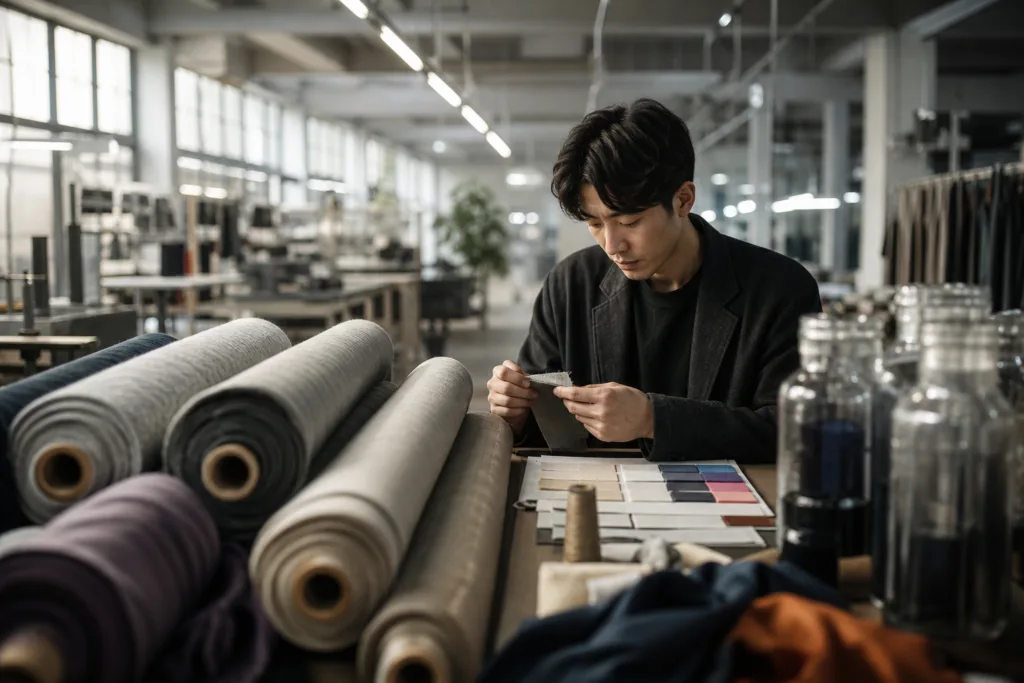
The biggest MOQ drivers are usually custom fabric, custom dyeing, custom trims, complex decoration, and special packaging. If a project uses several of these at once, MOQ rises faster than many buyers expect.
| Product detail | Why it raises MOQ | Buyer-friendly alternative |
|---|---|---|
| Custom fabric development | Requires special yarn, knit, weave, weight, or finish | Use an existing base fabric and adjust color or GSM |
| Custom dyeing | Needs lab dips, color approval, and batch control | Choose a stock color closest to the target shade |
| Custom trims | Buttons, zippers, labels, and hardware often have their own minimums | Use stock trims with custom branding where possible |
| Complex decoration | Printing and embroidery add setup and approval steps | Reduce placements or limit the number of colors |
| Special construction | More panels and sewing operations slow production | Simplify seams, inserts, and bonded details |
| Packaging customization | Retail-ready packs and branded boxes are separate sourcing items | Start with standard packing and add branding later |
Why Custom Fabric Development Raises MOQ
Custom fabric development raises MOQ because fabric is usually made in batches, not one garment at a time. If you want a special knit structure, woven construction, blend, hand feel, stretch profile, or weight, the mill or fabric supplier must run a separate production order.
That means more setup time, more material waste during start-up, and more risk if the order is too small to absorb those costs. We often see this when buyers want a unique performance fabric for gym wear, a heavier fleece for hoodies, or a very specific pique for polos.
If your style depends on a custom textile, our custom fabric dyeing requirements discussion can help you think about the difference between changing color and changing the fabric itself. In many projects, using an existing fabric base and customizing only the color is the most practical way to keep MOQ under control.
How Custom Dyeing and Color Matching Affect MOQ
Custom dyeing usually raises MOQ because factories need enough fabric to make lab dips, confirm color approval, and keep the shade consistent across the whole batch. Small orders can be difficult when the color must match a brand Pantone closely or when several colors are involved in one delivery.
Textile wet processing has its own technical demands. NC State’s textile dyeing and finishing fundamentals are a good reminder that preparation, dyeing, printing, and finishing are separate process steps, not just one simple color change. Each step can affect batch size, lead time, and quality risk.
From a manufacturing perspective, dye consistency matters as much as the color itself. If a buyer approves a shade too late, or changes the color after sampling, the factory may need a fresh dye run, and that can push MOQ higher again.
When color changes are easiest
- When the fabric already exists in a close stock shade
- When the color is used across multiple styles in the same order
- When the buyer approves the lab dip quickly
- When the order uses one solid color instead of several shade variations
Why Trims, Labels, and Packaging Have Their Own Minimums
Trims and packaging increase MOQ because they are separate components with their own sourcing rules, supplier minimums, and lead times. A shirt may be simple to sew, but a custom zipper pull, molded button, woven label, hangtag, and retail box can each require a dedicated order.
That is why a project with basic garment construction can still have a high total MOQ once branding details are added. Cascale’s customized trims and packaging guidance is useful here because it shows how these items are separate product elements, not just optional extras.
For many buyers, the easiest way to manage MOQ is to keep the garment custom but the packaging standard. That lets the factory focus on the style itself while reducing the number of small-volume components that need to be sourced.
Common trim and packaging items that push MOQ up
- Custom woven labels
- Special care labels with unique finishing
- Logo buttons or metal hardware
- Branded zippers and pullers
- Printed hangtags and inserts
- Custom polybags, mailers, or boxes
- Retail stickers, size stickers, and barcode systems
Why Special Printing and Decoration Need More Quantity
Decoration methods raise MOQ because they create setup, calibration, and approval work before bulk production starts. A simple one-color screen print is usually easier to run than a multi-location, multi-color graphic, puff print, or detailed embroidery on a structured garment.
Printing, coating, and dyeing also come with process complexity and operational considerations. That is one reason factories may prefer higher quantities for special effects or technical decoration. For buyers, the most important question is not whether decoration is possible, but whether the decoration matches the order size and delivery target.
If you need lower MOQ, it often helps to reduce print size, simplify the artwork, or keep decoration in one location only. Embroidery can also be efficient when the logo is small and the stitch count is controlled, but large dense embroidery usually needs more labor and more careful sampling.
Why Complex Construction Raises MOQ
Special garment construction increases MOQ because it uses more pattern pieces, more sewing operations, and more time per unit. A style with panel inserts, bonded seams, hidden details, or technical shape changes takes longer to cut and sew than a basic garment cut.
From our cut-and-sew work, we see this most clearly in outerwear, sportswear, and structured teamwear. A style that looks simple from the outside may still be labor-heavy if the internal construction is complex. Our cut-and-sew production support for complex styles is the kind of planning that helps buyers understand where the extra time and quantity requirements come from.
When construction is complicated, a factory also needs more time to train operators, check measurements, and control consistency. That makes a small run less efficient, especially if the style has multiple size grades or several colorways.
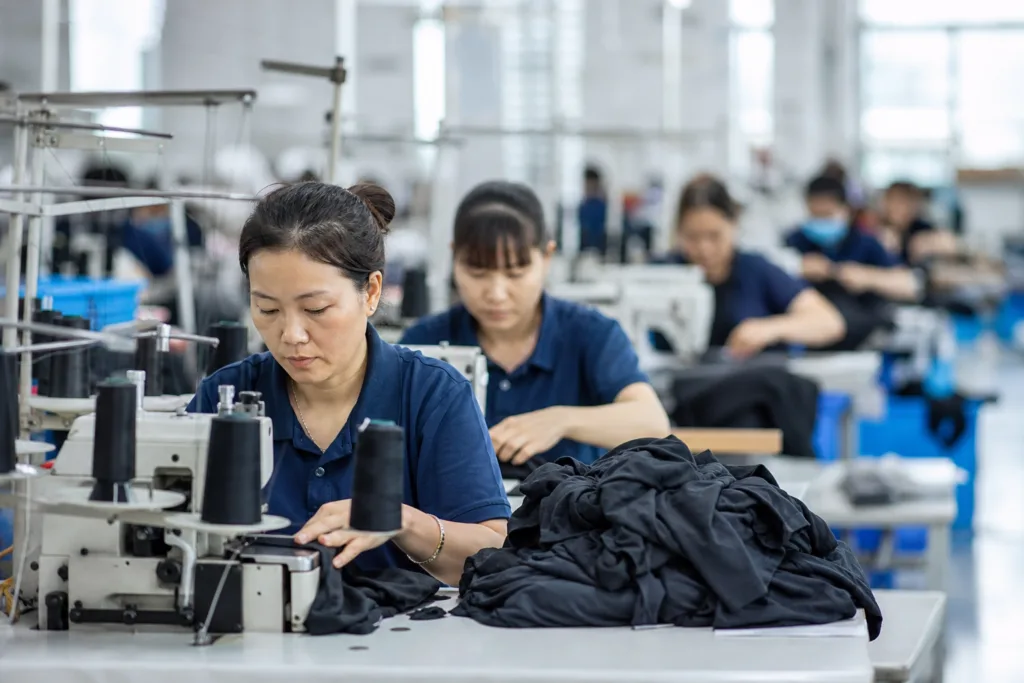
Construction details that usually increase MOQ
- Many panel pieces
- Bonded seams
- Hidden pockets or linings
- Contrast inserts
- Raglan or curved panel shaping
- Technical seam finishing
- Multiple fit adjustments across sizes
Private Label Details That Often Get Overlooked
Private label features can raise MOQ even when the garment itself is simple. Woven labels, neck prints, care labels, branded tape, hangtags, folding style, and final packaging all need approval and coordination.
At Ninghow, Ninghow usually checks these details together because the lowest-risk MOQ estimate comes from the full product package, not from the garment shell alone. A buyer may think they are ordering only 200 polos, but the real production plan includes labels, tags, cartons, size stickers, and packing instructions.
That is why private label development should be treated as a complete workflow. When the branding system is defined early, the factory can decide whether stock components are enough or whether custom sourcing is required.
Which Details Have the Biggest MOQ Impact?
Some product details increase MOQ much more than others. As a rule, anything that changes the raw material, requires a new sourcing run, or adds a custom production step will have a stronger MOQ effect than a small visual change.
| High impact | Medium impact | Lower impact |
|---|---|---|
| Custom fabric development | Logo embroidery | Standard folding method |
| Custom dyeing | One-color screen printing | Basic size stickers |
| Custom hardware | Special neck print | Standard polybags |
| Retail-ready packaging | Simple woven labels | Minor hangtag changes |
The practical lesson is simple: if your goal is a lower MOQ, focus first on the details that touch materials and sourcing. Small branding tweaks are often easier to keep than full custom fabric, full custom trim packages, and premium packaging together.
How to Reduce MOQ Without Losing Your Brand Identity
You do not need to remove every custom feature to lower MOQ. In many cases, the smartest approach is to keep the brand story visible while simplifying the expensive parts of production.
- Use an existing fabric base instead of a fully custom textile
- Keep one main color instead of several colorways
- Limit decoration to one or two placements
- Choose stock trims and customize only the visible brand elements
- Use standard packaging first, then upgrade later if sales justify it
- Approve samples quickly so the factory does not lose scheduling efficiency
It also helps to think in stages. A startup can launch with a clean, efficient version of the product and then add premium packaging, extra labels, or advanced finishing in the next order once the style proves itself in the market.
What to Ask Your Manufacturer Before You Confirm MOQ
The best MOQ conversations are specific. Instead of asking only for a number, ask which part of the product is driving that number and which features are optional.
Our apparel order planning and production steps usually start with fabric, trims, decoration, size range, and packing method because those are the main drivers behind the real minimum. If the factory can identify the bottleneck early, buyers can decide whether to simplify the style, split the order, or keep the design but adjust the launch plan.
- Is the MOQ driven by fabric, trims, decoration, or packaging?
- Can you use stock fabric or stock colors?
- Which custom details have separate minimums?
- Are sample approvals required before bulk confirmation?
- What lead time changes if I add more branding or finishing?
- Can some items be standardized for the first run?
Common Mistakes Buyers Make When They Underestimate MOQ Drivers
The most common mistake is treating every custom detail as if it were free to add. In production, almost nothing is free if it changes sourcing, setup, or finishing.
- Requesting custom fabric, custom dyeing, and custom packaging in the first order
- Changing colors after samples are already approved
- Adding too many trim variations for a small launch quantity
- Ignoring the time needed for artwork approval and label proofing
- Assuming embroidery and print use the same setup logic
- Forgetting that each size range must still be cut, sewn, checked, and packed
Another mistake is comparing MOQ quotes without comparing the full product spec. Two factories can give very different numbers because one is quoting a stock-based version while the other is quoting a fully custom build.
Practical Checklist for a Low-Risk Custom Apparel Order
Before you ask for a final MOQ, prepare the basic product information that a factory needs to judge feasibility. The cleaner the brief, the more realistic the quote.
- Garment type and intended use
- Target quantity by color and size
- Fabric idea, weight, and feel
- Logo files and decoration locations
- Label, hangtag, and packaging requirements
- Desired fit and size range
- Delivery window and launch date
- Any must-have details versus flexible details
When these points are clear, the factory can tell you where MOQ is coming from and where you still have room to negotiate. That is usually much more useful than chasing the lowest number without understanding the production tradeoffs.
How to Plan Smarter Custom Clothing Projects
The easiest way to manage MOQ is to treat it as a design decision, not only a purchasing decision. A product with fewer custom dependencies is easier to source, easier to sample, and easier to scale in the next order.
When buyers understand what increases clothing MOQ, they can protect the parts of the product that matter most while simplifying the parts that create unnecessary production pressure. That approach usually leads to better pricing, fewer sample revisions, and a more reliable bulk order.
If you are still shaping your project, send the garment concept, material ideas, branding files, and target quantity early. A practical feasibility check at the beginning will save time later and help the final order match both your brand goals and your real production budget.
FAQ
What product details usually increase clothing MOQ?
Custom fabric, custom dyeing, special trims, decoration, complex construction, and branded packaging usually increase clothing MOQ. These details add setup work, sourcing steps, and approval points that make very small runs less efficient for a factory.
Does custom fabric always raise MOQ?
Yes, custom fabric usually raises MOQ because mills and fabric suppliers run materials in batches. If you can use an existing fabric base and change only the color or finish, the MOQ is often easier to manage.
Why do trims and packaging affect MOQ so much?
Trims and packaging affect MOQ because they are separate sourced components with their own minimums. Labels, zippers, hangtags, boxes, and stickers each require ordering, proofing, and handling, so a small garment order can still become a larger total project.
Can embroidery or printing be done at a low MOQ?
Yes, embroidery and printing can be done at a low MOQ when the artwork is simple and the placement is limited. The more colors, locations, or special effects you add, the more likely the setup requirements will push the minimum higher.
How can I reduce MOQ without losing my brand look?
You can reduce MOQ by using stock fabric, limiting colors, simplifying decoration, and standardizing packaging. Many brands keep the core product identity while postponing premium trim or packaging upgrades until the next order.
What should I send a manufacturer to get a realistic MOQ quote?
You should send the garment type, target quantity, fabric idea, size range, decoration plan, label requirements, packaging needs, and delivery timing. A complete brief helps the manufacturer identify the real MOQ drivers instead of giving a rough estimate that may change later.