

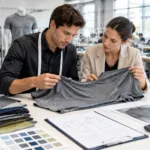
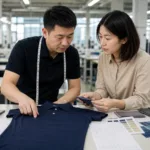

Seamless activewear is not simply cut-and-sew clothing with fewer visible seams. It is produced by programming a circular knitting machine to form much of the garment directly, which changes the available shapes, fit behavior, decoration methods, sampling process, minimum order logic, and production planning. For a private label brand, the right question is not whether seamless looks modern. The better question is whether its manufacturing strengths match the product experience, price position, and launch plan you want to build.
For brands comparing factories, it is useful to review custom activewear manufacturing support before choosing a construction method. A practical evaluation should cover fabric development, pattern or knitting-program adjustments, logo application, sample approval, size consistency, packaging, MOQ, and bulk quality control. At Ninghow, we use those factors to help buyers distinguish a visually attractive concept from a production plan that can be repeated reliably.
What Seamless Activewear Means in Manufacturing
In manufacturing terms, seamless activewear is a knitted garment made with limited or no conventional side seams and fewer cut fabric panels. A circular knitting machine creates a tube or shaped knitted section, while yarn selection, stitch structure, color programming, and machine settings determine the garment’s surface, stretch, ventilation, and visual texture.
Some garments marketed as seamless still include a gusset, waistband attachment, crotch join, shoulder join, or other finishing seams. The term therefore needs to be defined in the technical specification. A supplier should state which areas are knitted in one piece, which areas require linking or sewing, and where reinforcement or support components are added.
Technical references on how seamless knitting differs from cut-and-sew construction describe the central distinction: the garment is formed on a circular knitting machine rather than assembled primarily from separately cut fabric panels. That can reduce seam exposure and support integrated performance zones, but it does not remove the need for finishing, inspection, and controlled assembly.
Key takeaway: Seamless is a construction and production method, not just a surface appearance. Define the actual knitted and sewn components before comparing supplier quotes.
Why Brands Compare Seamless and Cut-and-Sew
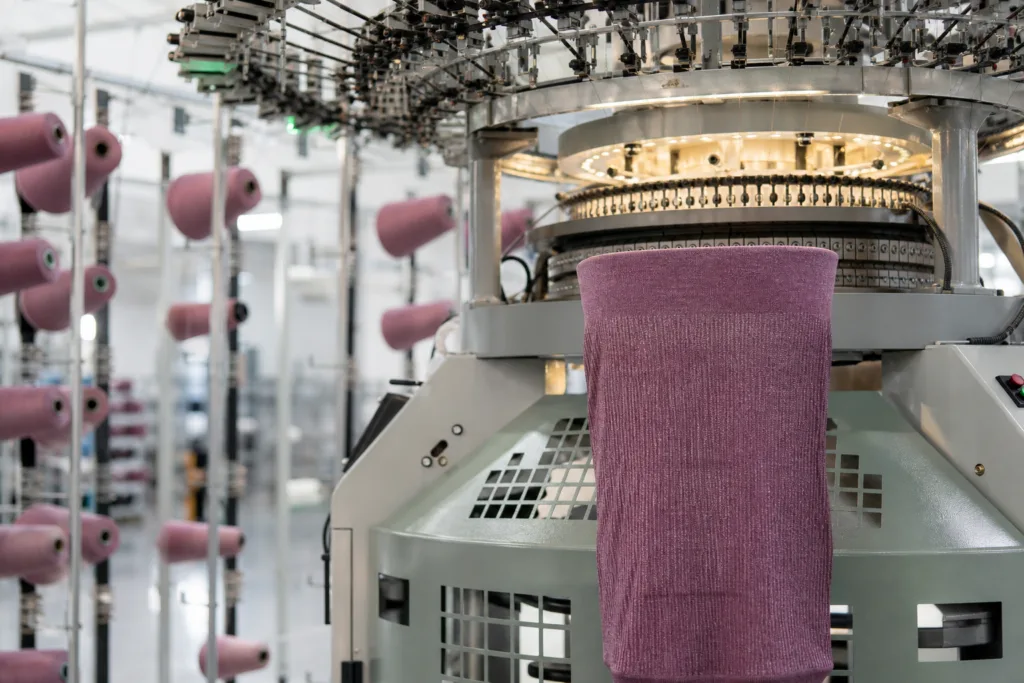
Brands usually compare the two methods before launching a private label activewear line because each method solves a different product problem. Seamless can create a close-to-body, low-chafing experience with engineered textures and zoned ventilation. Cut-and-sew can provide more freedom with panels, body shaping, lining, support layers, pockets, color blocking, and structured silhouettes.
The decision affects the entire development chain. A seamless design may need a knitting program and machine capacity before a physical sample can be produced. A cut-and-sew design may move faster from a tech pack to a fabric sample, but it can require more seams, panels, labor operations, and pattern corrections.
For a startup, the choice also affects how many styles and colors can be launched within the available budget. A narrow collection with one hero legging and one matching top may benefit from a focused seamless program. A broad collection with jackets, cargo pockets, longline bras, lined shorts, and strong color blocking may be more practical with cut-and-sew construction.
Seamless vs. Cut-and-Sew: Core Manufacturing Differences
| Decision area | Seamless manufacturing | Cut-and-sew manufacturing |
|---|---|---|
| Basic construction | Garment sections are knitted directly with programmed stitch structures. | Fabric is cut into pattern pieces and joined through sewing operations. |
| Surface design | Jacquard motifs, rib zones, mesh areas, and texture can be integrated into the knit. | Prints, panels, appliques, trims, and color blocking are highly flexible. |
| Fit behavior | Stretch and compression are strongly influenced by yarn, stitch, and knitting settings. | Fit is controlled through patterns, fabric stretch, seams, and garment panels. |
| Complex structures | Best for close-fitting, tubular, and knitted silhouettes with controlled shaping. | Better for pockets, linings, jackets, heavy support, complex paneling, and sculpted forms. |
| Development focus | Knitting program, yarn, stitch density, size settings, and finishing. | Tech pack, pattern, fabric, sewing construction, and finishing sequence. |
| Change flexibility | Changes may require program, machine, yarn, or gauge adjustments. | Pattern and panel changes are often more direct, subject to fabric and sewing limits. |
Neither method is automatically more advanced or more economical. A manufacturer evaluates the intended use, target price, support level, fabric performance, size range, decoration, order quantity, and repeat-order expectations together.
How Seamless Machines, Knitting Programs, and Setup Work
Seamless development starts with a technical concept rather than a conventional paper pattern alone. The buyer and manufacturer define the body length, waist height, leg opening, rise, compression zones, ventilation areas, color placement, and logo positions. Those requirements are translated into knitting instructions that control stitch types, yarn feeds, density, and dimensions.
Yarn choice is a production decision as much as a comfort decision. Nylon or polyamide blends can provide a smooth hand feel and useful durability, while polyester blends may suit certain moisture-management and color requirements. Elastane content affects stretch and recovery, but the final behavior also depends on stitch structure, machine gauge, finishing, and the balance between yarns.
A seamless sample may therefore require more than changing a few measurements. The factory may need to adjust the program, knit a new trial, wash or finish it, measure the result, and compare it against the approved size specification. When a buyer requests many colors or sizes, each variation must be checked for consistent dimensions and appearance.
At this stage, suppliers should also clarify machine availability. A sample can be technically possible but commercially difficult if the required machine gauge is heavily booked or the production floor cannot support the planned quantity within the requested delivery window.
How Cut-and-Sew Activewear Stays Flexible
Cut-and-sew activewear begins with a fabric roll, marker planning, pattern pieces, cutting, sewing, pressing, finishing, and inspection. This process creates more visible construction lines, but it also gives the product developer direct control over panel shape and garment architecture.
That flexibility matters for designs with a shaped waistband, separate lining, power mesh, pockets, bra cups, adjustable straps, zipper openings, reflective trims, or multiple support layers. Designers can combine fabrics with different weights and stretch levels in one garment. They can also make targeted fit changes to the waist, hip, thigh, bust, or shoulder through pattern adjustments.
When a project needs cut-and-sew production for structured activewear, the supplier should review fabric shrinkage, stretch direction, seam allowance, coverstitch or flatlock requirements, and reinforcement points before sampling. These details influence both comfort and durability. A design that looks simple on a sketch may involve many sewing operations once support and movement are considered.
Product Limitations: Shape, Paneling, and Support
Seamless activewear works best when the product benefits from stretch, close body contact, and an uninterrupted knitted surface. Leggings, fitted shorts, crop tops, tanks, base layers, and some sports bras are common candidates. Yoga seamless clothing ladies collections often use the method because a body-hugging fit and reduced seam exposure support a soft movement-focused product story.
There are limits. A seamless knit does not automatically provide the same structural support as a lined, paneled, or reinforced cut-and-sew garment. High-impact bras may need elastic construction, lining, molded cups, stabilizing panels, or adjustable components that are easier to manage through cut-and-sew methods.
Pockets are another practical constraint. Small integrated pockets may be possible, but large side pockets, secure phone pockets, cargo shapes, and pocket bags generally require additional construction. Likewise, sharp color blocks, asymmetrical panel lines, stiff trims, and tailored outerwear shapes may be more efficient through cut-and-sew production.
Before choosing seamless, write down the non-negotiable functions:
- Required support level for the intended activity.
- Need for pockets, lining, cups, adjusters, or reinforcement.
- Target body coverage and acceptable transparency during stretch.
- Desired compression without restricting movement.
- Number of color zones, textures, logos, and size variations.
Fit and Sizing: Stretch Recovery Matters
Seamless fit is strongly connected to stretch recovery. The garment may fit a range of bodies because the knit expands, but it still needs to return to its intended dimensions after movement and washing. Poor recovery can lead to bagging at the knees, a loose waistband, distorted rib zones, or inconsistent compression between sizes.
Stretch should be evaluated in both directions and at multiple garment locations. The waist, hip, thigh, bust, armhole, and leg opening can behave differently because their stitch structures and yarn arrangements may differ. Buyers should ask for measurements in a relaxed state and after controlled extension, not only a flat measurement from one sample.
ASTM test methods for knit stretch and recovery provide a useful technical reference for understanding why these properties should be measured rather than described with general words such as flexible or supportive. In production, testing does not replace wear trials, but it gives the development team a more objective way to compare fabrics and revisions.
Grading also differs from simply enlarging a base size. Each size needs an appropriate relationship between body measurements, knit relaxation, stretch range, and compression. A supplier should confirm whether the size range is created through separate knitting parameters, adjusted dimensions, or a combination of programmed and finishing changes.
Our preferred sample review includes a measurement chart, on-body fit test, movement test, wash test, and visual inspection under normal lighting. Buyers should assess squat coverage, waistband roll, hem pressure, bust support, transparency, recovery, and comfort after extended wear.
Decoration and Branding Options
Seamless construction creates distinctive branding opportunities, but decoration needs to be planned before the knitting program is finalized. Jacquard logos, tonal patterns, rib textures, and mesh zones can be integrated into the knit. This gives the garment a refined appearance and avoids adding a separate decoration operation.
Heat transfers can work well for selected logos, care information, and small graphics when the transfer is compatible with the stretch and surface texture. The supplier should test adhesion after stretching and laundering. A transfer that looks acceptable on a flat panel may crack, lift, or feel stiff on a highly elastic ribbed area.
Embroidery is more limited on thin, highly stretchable seamless fabrics. It may require stabilization, a denser knit area, or a separate patch, and it can affect hand feel. Woven labels can be placed in a waistband or other stable area, while printed labels may be more comfortable for close-fitting garments.
Packaging also needs review. Folded leggings, bras, and tops can show pressure marks or lose their presentation if compressed too tightly. Confirm the folding method, size stickers, hangtags, polybag requirements, carton markings, and whether packaging changes are included in the sample approval process.
MOQ, Development Cost, and Sampling Differences
Seamless MOQ is influenced by more than the number of finished garments. Machine programming, yarn purchasing, color minimums, machine allocation, and the efficiency of running a specific style all affect the commercial threshold. A small order may be possible when the yarn and color are readily available, but less realistic when the project needs custom yarn, multiple colors, or a dedicated program.
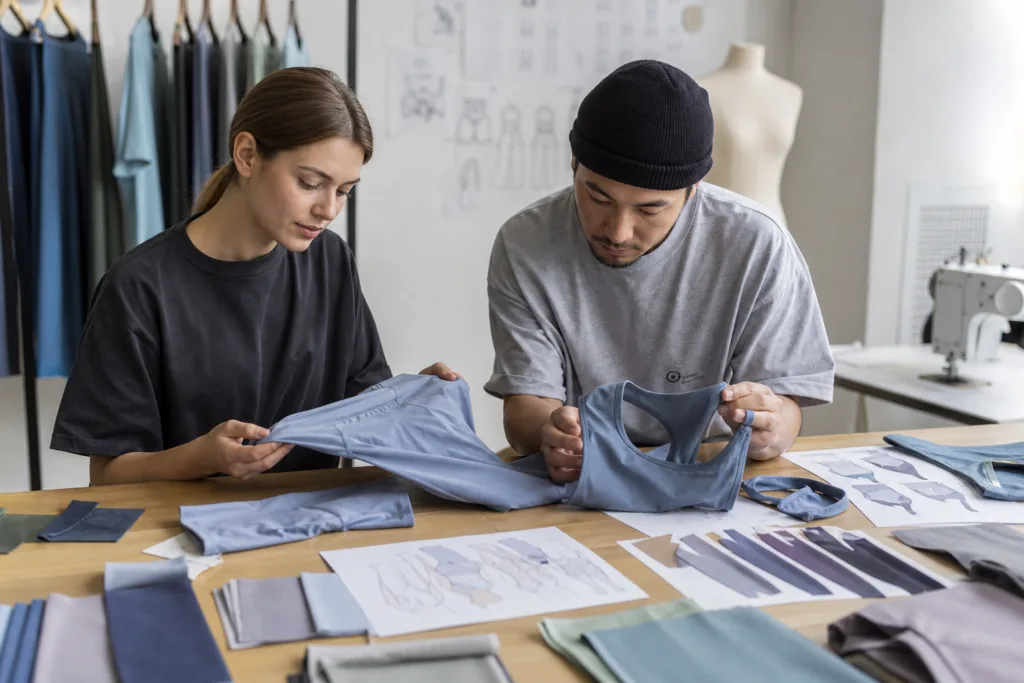
Cut-and-sew MOQ is often tied to fabric minimums, dyeing quantities, cutting efficiency, trims, and the number of panels. It may be easier to share a fabric across several styles, but a complex design can increase labor and quality-control requirements.
| Cost or planning factor | What to check for seamless | What to check for cut-and-sew |
|---|---|---|
| Development | Program creation, yarn trials, gauge, stitch mapping, and finishing. | Pattern development, fabric sourcing, marker efficiency, and sewing construction. |
| Sampling | Whether every size and color requires a separate machine trial or approval. | Whether fabric, pattern, trims, and decoration are available for the sample. |
| MOQ | Machine run efficiency, yarn minimums, color requirements, and program utilization. | Fabric minimums, dyeing quantities, trim minimums, and cutting efficiency. |
| Repeat orders | Program retention, yarn continuity, machine availability, and color matching. | Pattern control, fabric continuity, trim availability, and sewing capacity. |
Do not compare MOQ only as a single number. Ask whether it applies per style, per color, per size, or per fabric. Also ask what happens if the planned quantity is below the efficient run level. A transparent supplier should explain the trade-off instead of presenting a low figure that later changes after sampling.
Lead Time, Capacity, and Style Changes
Seamless lead time can be efficient once a program is approved and the machine is scheduled, but development changes may take longer when they require new knitting trials. A change to the waistband height may be simple; a change to the body contour, logo placement, stitch density, or ventilation map may require program work and another sample.
Color changes also need careful planning. The buyer should confirm yarn stock, dye-lot control, color matching method, and whether the same color will appear consistently across different yarn blends or stitch structures. A black rib area and a black smooth area may reflect light differently even when the nominal color is the same.
For both methods, the production calendar should separate material preparation, sampling, approval, bulk knitting or cutting, sewing, decoration, finishing, inspection, and packaging. Approving a sample late can affect every downstream stage. We recommend fixing an approval deadline and documenting which version of the measurements, artwork, labels, and packaging is final.
Which Brands Fit Seamless Activewear?
Seamless is a strong fit for brands whose product promise centers on body-hugging comfort, smooth movement, integrated texture, moderate compression, and a clean technical appearance. It can work well for studio, yoga, training, lifestyle, and athleisure collections where the consumer notices hand feel and fit continuity.
It may be less suitable for brands built around structured support, extensive utility, tailoring, layered construction, or highly customized panel graphics. A running brand that needs secure pockets and reflective placement, for example, may use seamless for base layers but choose cut-and-sew for outer shorts and jackets.
At performance sportswear production paths, the construction method should follow the activity and risk level. A soft yoga legging, a medium-support training bra, and a high-impact team garment should not be evaluated by the same criteria.
Consider starting with seamless when:
- The hero product is close-fitting and primarily knitted.
- Minimal seam exposure is a meaningful customer benefit.
- Textures, ventilation, and tonal patterns are central to the design.
- The collection can be focused rather than overloaded with complex features.
- The budget supports proper development and testing before bulk production.
Consider cut-and-sew when:
- The design requires pockets, lining, cups, adjusters, or strong reinforcement.
- The range depends on many panel shapes or contrasting fabrics.
- The brand needs frequent small design changes across many styles.
- Structured silhouettes are more important than a continuous knitted surface.
How Seamless Changes Brand Positioning
Seamless can support a premium product story, but the story must be backed by measurable and visible product value. Customers may respond to smooth comfort, a sculpted fit, integrated textures, or a minimal aesthetic. They may also expect reliable recovery, opacity, wash durability, and consistent sizing because the garment is marketed as technical rather than basic.
A brand should avoid treating seamless as a shortcut to premium pricing. The product still needs thoughtful fit testing, accurate composition information, clear care instructions, stable trims, and quality packaging. If the garment pills quickly, rolls at the waistband, or varies noticeably between colors, the construction method will not protect the brand reputation.
From our manufacturing perspective, the strongest positioning usually comes from matching the construction to a specific use case. A focused seamless studio collection can be easier for a customer to understand than a broad line that uses seamless only as a visual trend without a clear performance reason.
For supplier evaluation and development planning, Ninghow approaches the decision through the complete product brief: intended activity, target fit, fabric behavior, decoration, quantity, delivery window, and quality checkpoints. That approach helps buyers compare production methods on total product suitability rather than factory terminology alone.
Common Sourcing Mistakes to Avoid
The most common mistake is assuming that a reference photo is enough to define a seamless product. A photo does not specify yarn composition, stitch density, compression, transparency, recovery, size grading, or the exact locations of sewn components.
Another mistake is approving only one size on a mannequin. A base-size sample can look excellent while the larger sizes have excessive stretch, insufficient coverage, or a different compression experience. Size-set approval is especially important for body-hugging garments.
Buyers also underestimate artwork constraints. A small logo may be easy to integrate, while a large high-contrast graphic can affect stitch balance, stretch, or the appearance of the knit. Artwork should be reviewed with the knitting or production team before commercial pricing is finalized.
Finally, some buyers select a low MOQ without asking whether the quoted quantity is realistic for the required color and yarn. A lower quantity may increase the unit cost, restrict color choices, or delay production if the machine must wait for a suitable run. Ask for the complete commercial conditions in writing.
Questions to Ask a Seamless Activewear Supplier
- Which garment areas are knitted directly, and which areas are sewn or linked?
- What yarn composition, gauge, stitch structure, and finishing process are proposed?
- How will stretch, recovery, opacity, shrinkage, and colorfastness be checked?
- Can the supplier provide measurements in a relaxed state and after extension?
- How is grading handled across the requested size range?
- What decoration methods are suitable for the selected knit surface?
- Is the MOQ calculated per style, color, size, or total order?
- Are custom yarns, special colors, labels, and packaging subject to separate minimums?
- What machine capacity and production window are available for the bulk order?
- Which approvals are required before bulk production begins?
- How are defects such as dropped stitches, uneven texture, holes, or inconsistent dimensions controlled?
- What happens if the approved yarn, trim, or packaging is unavailable when the order is placed?
A supplier’s answers reveal its manufacturing fit. Precise answers about machine settings, testing, approvals, and capacity are more useful than broad assurances that a style is easy to make.
When Seamless Is the Right Manufacturing Path
Use this decision framework before committing to a seamless program:
| Question | If the answer is yes | Likely direction |
|---|---|---|
| Is the garment close-fitting with few structural components? | The knitted surface can carry much of the fit and visual design. | Seamless is worth developing. |
| Are comfort, stretch, and reduced seam exposure central to the product? | The construction method directly supports the customer benefit. | Seamless may strengthen positioning. |
| Does the design need pockets, lining, cups, adjusters, or heavy reinforcement? | Additional construction is central to function. | Cut-and-sew may be more suitable. |
| Can the launch support program development and a proper sample process? | The brand can absorb development before bulk production. | Seamless risk is more manageable. |
| Do you need many styles, colors, and rapid design changes? | Program and capacity changes may become a constraint. | Compare both methods carefully. |
| Is the expected order quantity compatible with yarn and machine efficiency? | The production run can be planned without excessive setup waste. | Seamless becomes more commercially practical. |
When the project needs flexible quantities, it is still important to compare low MOQ apparel manufacturing options against the actual fabric, yarn, trim, and machine requirements. Low MOQ support does not mean every construction method, color, and customization level has the same minimum.
Key takeaway: Choose seamless when the knitted construction creates a clear product advantage and the brand can plan around machine, yarn, fit, and quantity constraints. Choose cut-and-sew when structural flexibility and feature integration matter more.
Conclusion: Match Production to the Product Promise
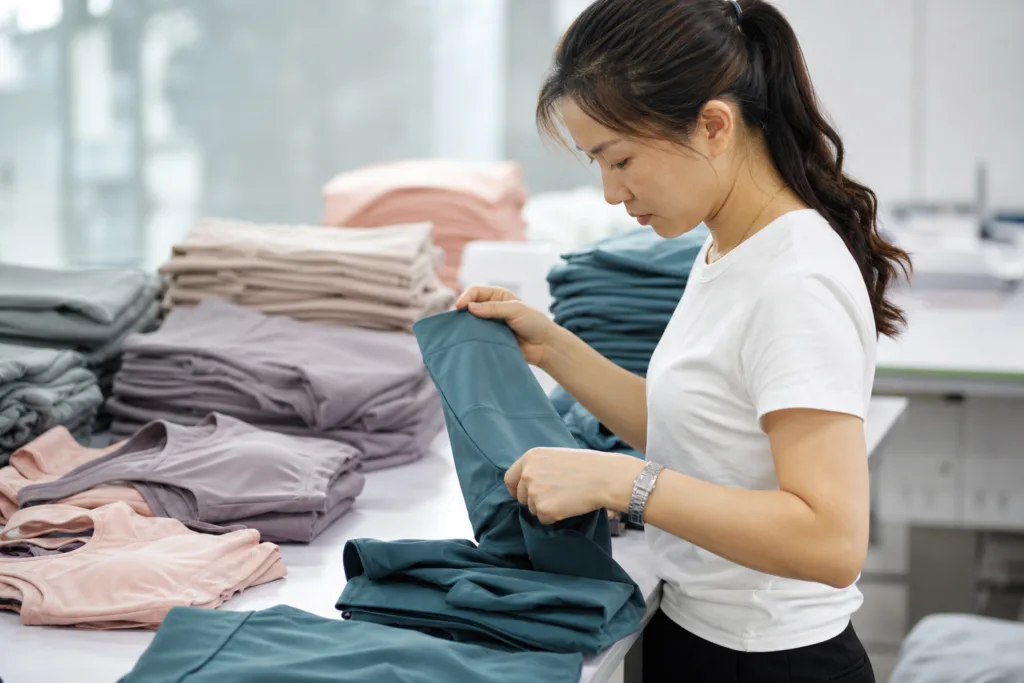
Custom seamless activewear can be a strong manufacturing path for private label brands that want close-to-body comfort, integrated textures, controlled stretch, and a focused technical aesthetic. Its advantages come from forming the garment through knitting, but that same process creates limits around complex shapes, support structures, pockets, grading, machine capacity, and style changes.
Cut-and-sew remains highly relevant because it gives product teams broader control over panels, linings, support, trims, and functional features. The better method depends on the garment’s use scenario, target customer, price architecture, expected order quantity, design complexity, and ability to complete proper sampling.
Before placing a bulk order, approve the construction definition, fabric or yarn specification, size set, decoration, packaging, quality standards, MOQ conditions, and delivery schedule. A manufacturer-informed decision at this stage reduces the chance of paying for a product that looks right in a concept image but does not perform consistently in production.
Frequently Asked Questions
Is seamless activewear better than cut-and-sew activewear?
Seamless activewear is better when a brand prioritizes close-body comfort, integrated knit textures, stretch, and reduced seam exposure, while cut-and-sew is better for pockets, lining, structured support, complex panels, and functional trims. The correct choice depends on the product requirements rather than the construction label alone.
What products are commonly made with seamless manufacturing?
Common seamless products include leggings, fitted shorts, sports bras, crop tops, tanks, base layers, and yoga or studio garments. These styles generally benefit from stretch and a body-hugging silhouette, although support components and pockets may still require sewn construction.
Does seamless activewear require a higher MOQ?
It can require a different or higher practical MOQ because the factory may need to plan machine efficiency, knitting programs, yarn quantities, and color runs. The quoted MOQ should be checked per style and color, because available yarn and machine capacity can make a small order feasible in one case but difficult in another.
How should buyers test seamless garment fit?
Buyers should review a size set, relaxed and extended measurements, on-body movement, squat coverage, waistband stability, opacity, recovery, and wash performance. Testing only one sample size can hide grading and compression problems in the rest of the size range.
Can logos be added to seamless activewear?
Yes, logos can be integrated through jacquard knitting, tonal textures, heat transfers, printed labels, or selected embroidery applications. The method should be chosen according to the knit density, stretch, location, expected wash exposure, and desired hand feel.
What should a private label brand approve before bulk production?
A private label brand should approve the final construction, yarn or fabric composition, measurements and grading, color standard, artwork, labels, packaging, care information, inspection requirements, quantity, and delivery schedule. Written approval of these details gives the factory a controlled reference for bulk production.