







When importers compare a clothing manufacturer vs trading company, the right choice usually depends on three things: how much product control they need, how complex the garment is, and how much risk they can tolerate on cost, quality, and lead time. A simple reorder can work in either model, but custom apparel exposes the trade-offs quickly.
If your project starts with a blank style, a technical pack, or a private label launch, the direct clothing manufacturing options path is often the fastest way to see what is truly possible at factory level. At Ninghow, we help buyers test fabric options, refine fit, approve samples, and plan bulk production so they can decide whether factory-direct sourcing or a coordinated trading model fits the order.
Why This Comparison Matters for Importers and Apparel Buyers
Importers do not just choose a supplier. They choose a sourcing structure that affects pricing, communication, customization, inspection, and delivery timing. A trading company can simplify coordination, but it can also add a layer between the buyer and the factory. A direct manufacturer can improve control, but it asks the buyer to be more precise with specifications and approvals.
That difference matters most when the order is more than a basic repeat style. If you need any of the following, the sourcing model becomes a real business decision rather than a pricing question:
- custom fit development and size grading
- special fabrics, trims, or color matching
- private label labels, hangtags, and packaging
- clear accountability for quality issues
- short lead times with fewer revision cycles
Key takeaway: the cheaper-looking path is not always the lower-risk path. Importers should compare total landed cost, not only the first quote.
What a Clothing Manufacturer Does

A clothing manufacturer turns your product idea into finished garments inside its own production system, or inside a closely managed factory setup. In practical terms, that means the factory handles fabric sourcing, cutting, sewing, finishing, packing, and usually the core technical decisions that shape the final product.
From our manufacturing perspective, the biggest advantage is direct control. When the buyer works closer to the production floor, fit comments are easier to translate, fabric substitutions are easier to evaluate, and quality expectations are easier to align before bulk production starts. That is one reason many brands choose why brands work directly with Ninghow when they want fewer communication layers and clearer responsibility.
Typical manufacturer responsibilities include:
- pattern making and sample development
- fabric sourcing and shade approval
- cutting, sewing, and finishing
- custom logo application and label placement
- bulk production planning and in-line QC
What a Trading Company Does
A trading company usually acts as a coordinator between the buyer and one or more factories. It may help source products, compare supplier options, combine different items into one shipment, and manage communication when the buyer does not want to deal with multiple factories directly.
This can be useful when the order is small, the product range is broad, or the buyer lacks in-house sourcing staff. A trading company may also help if the project needs faster administrative support, consolidated shipping, or a simpler entry point into a new market. The trade-off is that the buyer often has less visibility into which factory is making the product and how production decisions are being made.
Typical trading company strengths include:
- sourcing coordination across several factories
- product consolidation in one order
- communication support for buyers without local teams
- basic problem solving across multiple vendors
- convenience for mixed or lower-complexity orders
Clothing Manufacturer vs Trading Company: What Buyers Should Compare First
| Factor | Direct Clothing Manufacturer | Trading Company |
|---|---|---|
| Pricing structure | Factory price is usually more transparent, with fewer middle layers. | Price often includes coordination margin and sometimes extra handling fees. |
| Product control | High control over pattern, fabric, trims, and production decisions. | Control depends on how well the trading company manages the factory. |
| Customization depth | Usually better for private label, technical changes, and fit refinement. | Good for standard custom work, but deeper changes may need more back-and-forth. |
| Communication speed | Direct to the source, which can reduce confusion. | Can be easier for the buyer, but messages may pass through an intermediary. |
| MOQ flexibility | Often tied to fabric and production efficiency. | May help consolidate smaller orders, depending on the supplier network. |
| Lead time | Can be shorter when the factory is ready and the spec is clear. | Can be slower if coordination across suppliers is required. |
| Quality accountability | Clearer responsibility because production and inspection are closer together. | Accountability can be shared, which sometimes makes root-cause review harder. |
| Best fit | Brands that need consistency, customization, and long-term scale. | Buyers who value convenience, mixed sourcing, or lower internal workload. |
Cost Comparison: Where Savings Appear and Where They Disappear
Direct factory sourcing often looks cheaper on paper because the buyer is closer to the production cost. That is true when the order is technically clear, the quantity fits factory efficiency, and the buyer can manage sampling and approvals without excessive revision cycles. The lower quote, however, should be tested against actual execution risk.
Trading companies may appear more expensive because their margin is visible in the quote. But that margin sometimes pays for sourcing coordination, multilingual communication, shipment consolidation, and problem solving. The real question is whether the added layer saves the buyer enough time or reduces enough risk to justify the higher unit cost.
Hidden costs can appear in both models. Common examples include:
- sampling delays caused by unclear specs
- rework from weak fit approval
- fabric changes after quote confirmation
- carton or label changes late in production
- quality claims after goods have shipped
For imported apparel, landed cost should include sample rounds, inspection time, packaging changes, and the cost of correcting mistakes. A cheaper unit price does not help if the order needs to be remade.
Communication and Development Control
Good communication is not just about fast replies. It is about whether the supplier can understand technical details, translate feedback into the sample room, and keep the final bulk order aligned with the approved sample. This is where a direct manufacturer often has the advantage, especially for new styles.
When a style needs multiple revisions, sample development and fit approval matter more than a low quoted unit price. A buyer who approves the wrong sample too early may save one week in sampling and lose three weeks in bulk corrections.
We usually see the cleanest projects when the buyer shares a tech pack, measurement chart, logo files, artwork placement, and any non-negotiable fabric requirements before sampling begins. That reduces misunderstanding and gives the factory a clear approval path.
Key takeaway: the party that manages sampling best often controls the final product best. That is usually the manufacturer when the project is technical or custom.
Customization Depth: Fabric, Fit, Branding, Trims, and Packaging
Customization is where the sourcing model becomes very visible. If the buyer only needs a standard blank style with a small logo change, both sourcing paths can work. If the project needs custom fabric weight, special stretch recovery, specific stitching, or branded packaging, the direct production route usually gives more control.
At the factory level, the buyer can often align fabric hand feel, GSM, seam finish, label placement, and carton packaging in one production discussion. That is especially helpful for brands that want a consistent private label experience across multiple seasons. When those decisions are made by a middle layer, details can be lost between the buyer and the actual sewing line.
For brands that want a coordinated product build, Ninghow can support fabric selection, pattern refinement, logo placement, and packaging decisions together so the order stays technically consistent from sample to bulk.
If you are comparing customization depth, ask these questions:
- Can the supplier recommend fabrics based on stretch, drape, and durability?
- Can the factory adjust fit without rebuilding the whole style?
- Are labels, hangtags, and packaging handled in the same production plan?
- Can print or embroidery methods be matched to the fabric and use case?
- Will the supplier keep the same details from approved sample to bulk?
MOQ, Lead Time, and Production Flexibility
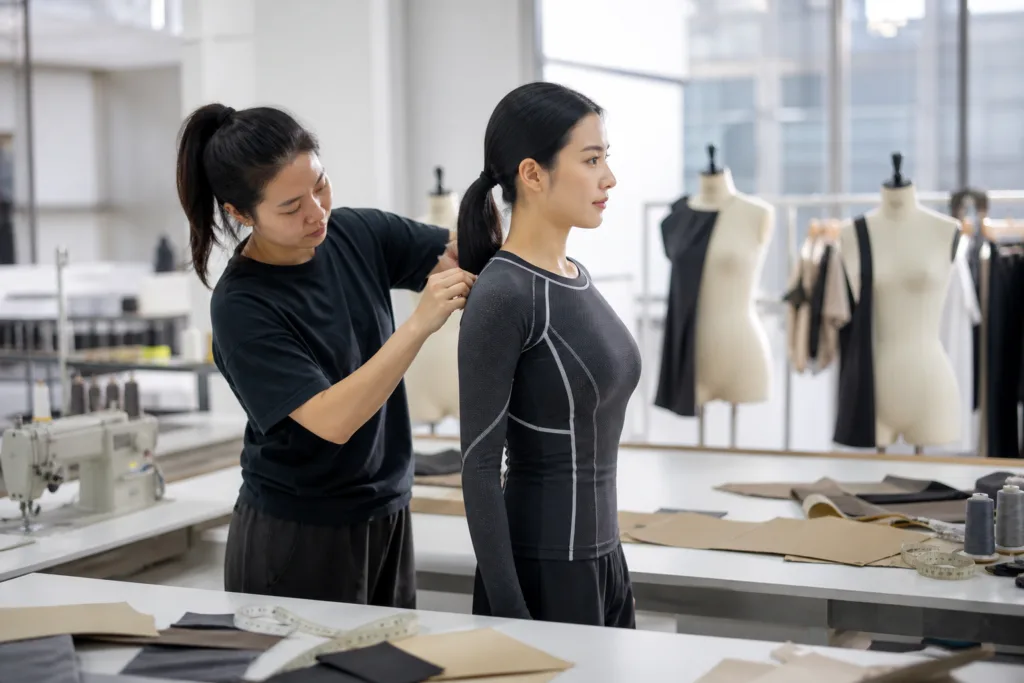
MOQ is not only about supplier policy. It is also about fabric availability, cutting efficiency, trim sourcing, and how many production steps are shared across styles. A manufacturer may offer a lower MOQ on one style and a higher MOQ on another depending on the materials involved.
Trading companies can sometimes make smaller orders feel easier because they can consolidate requirements across suppliers. That can help importers launching a small collection or testing demand in a new market. The trade-off is that the order may depend on more coordination, which can slow the schedule if one upstream supplier changes plans.
In general:
- direct manufacturers are stronger for repeat production and scale
- trading companies can help when the buyer needs sourcing flexibility
- low MOQ is most realistic when fabrics and trims are already available
- lead time improves when approvals are complete before bulk starts
For urgent launches, the best path is not automatically the fastest quote. It is the supplier who can move from sample approval to bulk production without confusion.
Quality Control and Accountability
Quality control is where direct sourcing often becomes easier to manage. A manufacturer that controls the sewing line, finishing, and packing can inspect issues earlier and correct them before the goods are complete. That usually improves consistency across size runs and color lots.
Trading companies can still support quality, but they rely on the factory’s discipline and their own follow-up process. That is why buyers should ask who checks measurement tolerances, how defects are recorded, and who approves final packing. A buyer can also review bulk order quality control checks to see which checkpoints matter before shipment.
The Export-Import Bank’s due diligence standards also reinforce a basic sourcing habit: verify whether the exporter is the real OEM or only an intermediary, and ask for proof when the chain is not clear. That documentation step helps reduce fraud risk and makes it easier to understand who is actually responsible for the order.
In practice, we recommend buyers check:
- fabric shade consistency across production lots
- measurement tolerance against the approved spec
- stitch quality, seam strength, and finishing
- label accuracy, barcode or size mark placement, and packing count
- final carton condition and shipment documents
When to Choose a Clothing Manufacturer Directly
Choose a direct manufacturer when you need control, technical clarity, and better long-term production consistency. This path usually fits brands that are growing beyond test orders and want a supplier relationship built around repeatability.
A direct manufacturer is usually the better fit when:
- the product has custom fit, construction, or fabric requirements
- you need stronger control over sampling and revisions
- you want private label development with brand-specific details
- your team can review tech packs and approvals carefully
- you plan to reorder and scale the style over time
If these points describe your project, direct factory sourcing often gives the buyer more leverage over cost-performance balance.
When a Trading Company May Be the Better Option
A trading company can be the better choice when convenience matters more than direct control. This is especially true for buyers who need to move quickly, source multiple product types, or work without an internal technical team.
A trading company may fit better when:
- you are buying mixed categories and want one point of contact
- the order is small and does not justify heavy development work
- your team needs help coordinating across multiple suppliers
- you prefer simplified communication over factory-level detail
- you are still testing a market and do not want to commit to one production setup
Even then, the buyer should confirm who the actual producer is, what quality standards apply, and how accountability will be handled if problems appear after shipment.
How to Verify a Supplier Before Placing an Order
No matter which sourcing path you choose, supplier verification should happen before you send a deposit. The goal is to confirm that the business you are dealing with can actually deliver the product, on time and to spec.
- Ask for the factory address, business registration, and production photos.
- Request samples that match the exact fabric, size, and logo method.
- Check whether the quote includes fabric, trims, labels, packaging, and shipping assumptions.
- Test communication speed on a technical question, not just a simple price request.
- Confirm who signs off on the sample, the bulk order, and the final carton count.
- Ask for proof of the production chain if the supplier is not the manufacturer.
When the seller is not the actual factory, verification becomes even more important. That is where documentation, sample consistency, and a clear chain of responsibility help separate a real production partner from a purely intermediary setup.
Why Direct Factory Sourcing with Ninghow Helps Importers Reduce Middleman Cost and Improve Production Clarity
Direct factory sourcing is not about removing every middleman for the sake of it. It is about reducing unnecessary layers when the product requires technical control, consistent quality, and a predictable path from sample to bulk.
At Ninghow, we focus on the practical parts of apparel production that affect importers the most: fabric selection, sampling, fit approval, branding details, and bulk execution. When those steps are handled in a single production conversation, the buyer usually sees fewer misunderstandings and better control over final results.
That approach is especially useful for brands that are comparing a clothing manufacturer vs trading company decision and want a clearer answer based on the actual order, not on theory. For some projects, a trading company can still make sense. For many custom or repeat apparel programs, direct factory sourcing is the cleaner path.
Final Decision Checklist for Importers
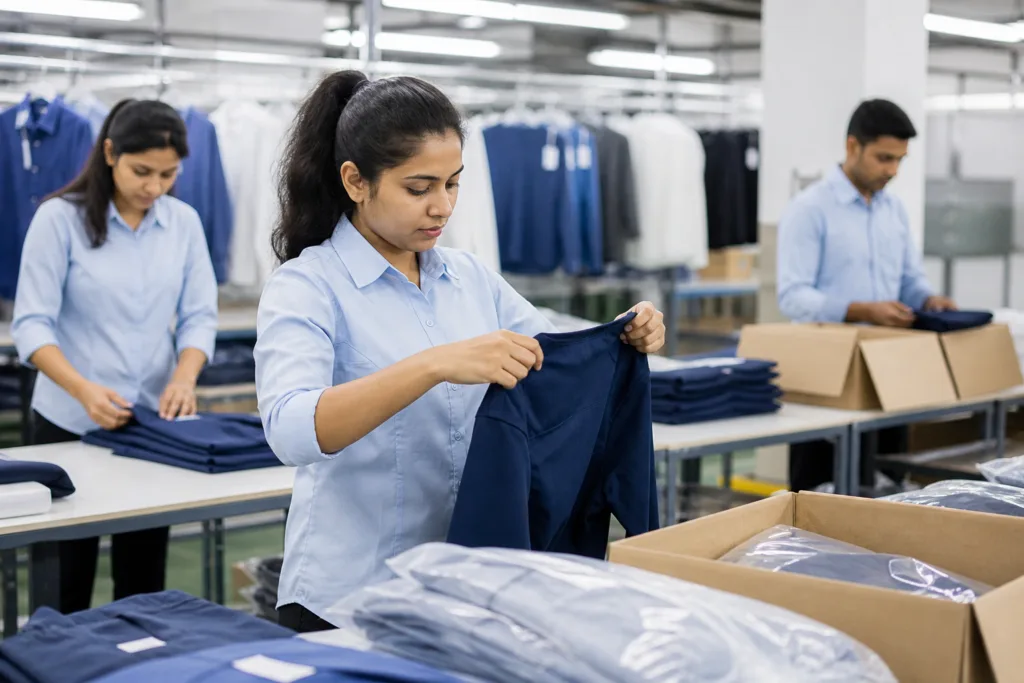
Use this checklist to choose the right partner based on the real requirements of the order:
- If your product is highly custom, lean toward a direct manufacturer.
- If your order is small and mixed, a trading company may save coordination time.
- If you need faster technical back-and-forth, ask who will handle sampling directly.
- If pricing looks unusually low, check what is missing from the quote.
- If quality risk is a concern, ask how inspection and accountability are handled.
- If you expect repeat orders, favor the model that improves consistency over time.
- If your team lacks sourcing resources, decide whether convenience is worth the margin.
The best decision is usually the one that matches product complexity, budget, urgency, and growth plans together. A simple order can tolerate more sourcing layers. A custom private label program usually cannot.
FAQs
Which option usually gives the lowest unit price?
A direct clothing manufacturer usually gives the lowest base unit price because there is no extra intermediary margin. That said, the cheapest quote is not always the cheapest total outcome if it leads to sampling delays, rework, or quality claims later.
Can a trading company be better for small orders?
Yes, a trading company can be better for small orders when the buyer needs convenience, mixed sourcing, or help coordinating several product types. It can reduce the amount of work on the buyer’s side, but the buyer should still confirm the actual factory and the quality process behind the order.
Does a manufacturer always offer better quality control?
No, but a manufacturer usually has clearer control over production and inspection because the work happens closer to the sewing line. Quality still depends on the factory’s discipline, the buyer’s specs, and how well the sample was approved before bulk production.
What documents should I ask for before paying a deposit?
Ask for a formal quotation, product specifications, sample approval details, business registration or factory proof, and clear terms for production, payment, and delivery. If the supplier is not the actual factory, ask for proof of the production chain so you know who is responsible for making the goods.
Can I do private label development with either model?
Yes, both models can support private label development, but a direct manufacturer usually gives deeper control over labels, trims, fit, and packaging. That extra control matters when the brand wants consistency across multiple sizes or future repeat orders.
When should I switch from a trading company to a direct factory?
Switch when your product becomes more technical, your order size grows, or you need tighter control over cost and quality. Many importers start with convenience and move to direct manufacturing once the style, size spec, and demand pattern become more stable.