



Choosing the best fabrics for polo shirt manufacturing is not only about fiber content. For apparel buyers, the right decision depends on end use, price target, branding method, wash expectations, fit, and how consistently the fabric can perform in bulk production. In our manufacturing work, we see that two polo shirts can look similar on a sales sheet but behave very differently once they are worn, embroidered, washed, packed, and reordered.
If your project needs custom polo shirt manufacturing support, it helps to evaluate fabric choice together with fit development, logo method, sizing, MOQ, and bulk consistency from the start. At Ninghow, we usually guide buyers through knit selection, GSM planning, sample refinement, color matching, private label details, and production checkpoints so the final polo fits the real use scenario instead of only looking good in a swatch.
Why fabric choice matters in polo shirt manufacturing
The fabric controls most of the product experience. It affects hand feel, breathability, structure, shrinkage risk, logo appearance, and whether the shirt feels premium, sporty, or budget-driven.
From a sourcing perspective, fabric also affects MOQ and lead time. A stock-supported knit may allow a smaller trial order, while a custom-dyed or custom-developed fabric usually requires higher commitment and more planning.
Key takeaway: A good polo fabric is the one that matches the buyer’s use case, brand position, decoration plan, and reorder strategy, not simply the softest or cheapest option.
How to evaluate polo shirt fabrics from a buyer’s perspective
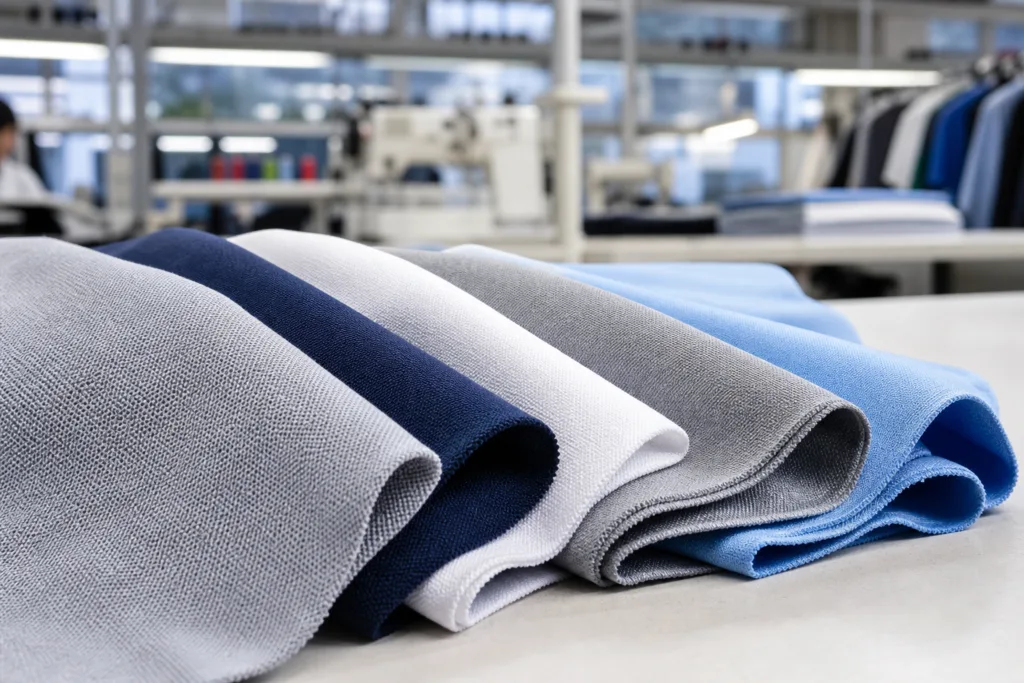
Buyers should start with five filters: comfort, durability, cost, decoration compatibility, and use case. This answer-first approach prevents a common mistake where teams approve a fabric because it feels nice in hand but later discover problems with shrinkage, pilling, transparency, or embroidery support.
- Comfort: softness, breathability, weight, stretch, and skin feel
- Durability: wash performance, pilling resistance, shape retention, and seam stability
- Cost: yarn type, knit complexity, dyeing, finishing, and available stock
- Decoration: embroidery, screen printing, heat transfer, and sublimation suitability
- Use case: retail, golf, corporate, school, teamwear, or promotional programs
We also recommend checking whether the buyer needs long-term repeatability. A fabric that works for one short campaign may not be ideal for a continuing uniform or private label program where color continuity and stable sizing matter more.
What makes cotton polo fabric appealing for comfort-led products?
Cotton is usually the first choice when softness and natural hand feel matter most. It is breathable, familiar to consumers, and often preferred for lifestyle polos, premium casual uniforms, and brand collections that want a more natural touch.
However, cotton is not one single performance category. Ring-spun yarn, combed cotton, yarn count, knitting quality, and finishing all affect the final result. A smoother combed cotton polo can feel much more refined than a basic open-end cotton option, even if the fiber label sounds similar.
From our production perspective, pure cotton polos often need more attention during pre-shrinking, washing tests, and bulk measurement control. Cotton can shrink more than polyester-rich options, and darker shades may need stricter wash and colorfastness review. For frequently laundered programs, comparing laundering performance against recognized methods such as colorfastness testing for domestic and commercial laundering helps buyers judge whether the fabric is suitable for repeat-use environments.
When cotton works well
- Premium casual or retail polos
- Brand collections focused on natural feel
- Corporate programs where softness matters more than athletic performance
- Markets where consumers expect a classic cotton touch
What buyers should check with cotton polos
- Expected shrinkage after washing
- Surface smoothness for embroidery or print clarity
- Potential torque or side seam twisting in lower-quality knits
- Color consistency across repeat orders
Why pique cotton remains the classic polo fabric
Pique cotton remains the traditional polo standard because it balances structure, air flow, and a recognizable textured surface. The raised knit effect helps the shirt look more substantial than plain jersey while still staying breathable.
Many buyers use the term pique without fully understanding construction differences. In simple terms, pique is a knit structure rather than a fiber by itself, so you can have cotton pique, polyester pique, or blended pique. That structure influences how the polo drapes, how it holds embroidery, and how much texture appears on the surface. Buyers who want clearer terminology for spec sheets can review technical definitions in this textile glossary for pique and fabric performance terms.
In bulk manufacturing, pique is often a practical choice because it hides minor wrinkles better than some jersey fabrics and gives the garment a more established polo identity. It is especially useful when the buyer wants a balance between comfort and a neat, uniform appearance.
| Fabric Type | Main Feel | Visual Effect | Typical Strength | Common Watch-Out |
|---|---|---|---|---|
| Cotton jersey | Softer and smoother | Cleaner flat surface | Good comfort | Can feel less structured |
| Cotton pique | Textured and breathable | Classic polo look | Good shape and identity | Texture can affect some print methods |
| Poly pique | Lighter and more technical | Sport-driven look | Strong wash performance | May feel less natural |
| Blend pique | Balanced softness and utility | Versatile appearance | Stable everyday performance | Quality varies by blend ratio |
When polyester polo fabric is the smarter performance choice
Polyester is often the better option when moisture management, shape retention, color retention, and lower maintenance are priorities. For schools, sports, events, and active use, polyester can deliver a lighter, faster-drying, more durable result than standard cotton.
Modern polyester polos are not all shiny or stiff. Yarn engineering, brushing, micro-pique structures, and finishing can significantly improve hand feel. For buyers building performance-focused golf polo options, polyester or polyester-rich blends are often chosen because they support movement, repeated washing, and cleaner appearance retention over time.
Polyester also performs well for sublimation and for vibrant shades that must stay stable after repeated laundering. This is useful for teamwear, promotional programs, and high-visibility branding where color consistency matters.
Best use cases for polyester polos
- Golf and sportswear programs
- School and team uniforms with frequent washing
- Promotional polos where budget and color consistency matter
- Warm-weather uniforms requiring lighter dry performance
Key takeaway: Polyester is usually the practical choice when operational performance, wash efficiency, and lower maintenance matter more than a fully natural hand feel.
How cotton-poly blends balance softness, strength, and cost
Cotton-poly blends are often the most commercially balanced option for large B2B orders. They can reduce some shrinkage, improve wrinkle resistance, and offer better durability than pure cotton while still feeling softer and more approachable than 100% polyester.
Common blend ratios include 60/40, 65/35, and 50/50, but the best ratio depends on the project goal. A higher cotton ratio usually improves hand feel, while a higher polyester ratio usually helps wash stability and cost efficiency.
For corporate polo production for uniform programs, blends are often a strong middle ground because they support a neat appearance, repeat wear, and acceptable comfort across a broad user group. In our experience, they are also easier to position when the buyer needs a reliable reorder style rather than a highly fashion-led seasonal product.
| Blend Ratio | Likely Benefit | Typical Use | Buyer Note |
|---|---|---|---|
| 60% cotton / 40% polyester | Softer hand feel | Casual uniforms, retail basics | Check shrinkage and surface finish |
| 65% polyester / 35% cotton | Better durability and lower maintenance | Corporate, school, workwear-style polos | Good for stable repeat use |
| 50% cotton / 50% polyester | Balanced cost-performance | Promotional and general-use programs | Evaluate pilling and branding compatibility |
When stretch fabrics improve polo shirt fit and comfort
A small amount of spandex or elastane can noticeably improve wearer comfort, especially in fitted polos or active uniforms. Even 3% to 8% stretch content can help mobility at the chest, shoulders, and sleeve opening.
This matters most for golf wear, hospitality uniforms, modern corporate fits, and premium retail polos where movement and shape recovery are important. Stretch also supports a slimmer silhouette without making the garment feel restrictive.
That said, stretch fabrics need careful recovery testing during development. If the knit recovers poorly, elbows, plackets, or side areas can bag out after wear. We usually advise buyers to review both on-body fit and post-wash recovery before approving the final sample.
How GSM changes drape, durability, and seasonal suitability
For polos, GSM affects how substantial the garment feels, how it hangs on the body, and whether it suits summer, all-season, or more structured uniform use. A lighter GSM can feel cooler and more athletic, while a heavier GSM can feel more premium and durable.
Buyers should not treat higher GSM as automatically better. A heavy fabric can feel too warm, too rigid, or too costly for the intended market. The right GSM depends on knit structure and end use.
| GSM Range | Typical Result | Common Use Case | Watch-Out |
|---|---|---|---|
| 160-180 GSM | Light and breathable | Sports, summer promos, light uniforms | Can feel less premium if too thin |
| 180-220 GSM | Balanced everyday weight | Most standard polos | Best range for broad commercial use |
| 220-260 GSM | Heavier, more structured feel | Premium polos, cooler climates | May increase cost and heat retention |
From a sampling standpoint, GSM should always be checked together with stitch density, yarn quality, and finishing. Two fabrics with the same listed GSM can still feel very different in hand and wear performance.
Which knit constructions matter most for polo shirts?
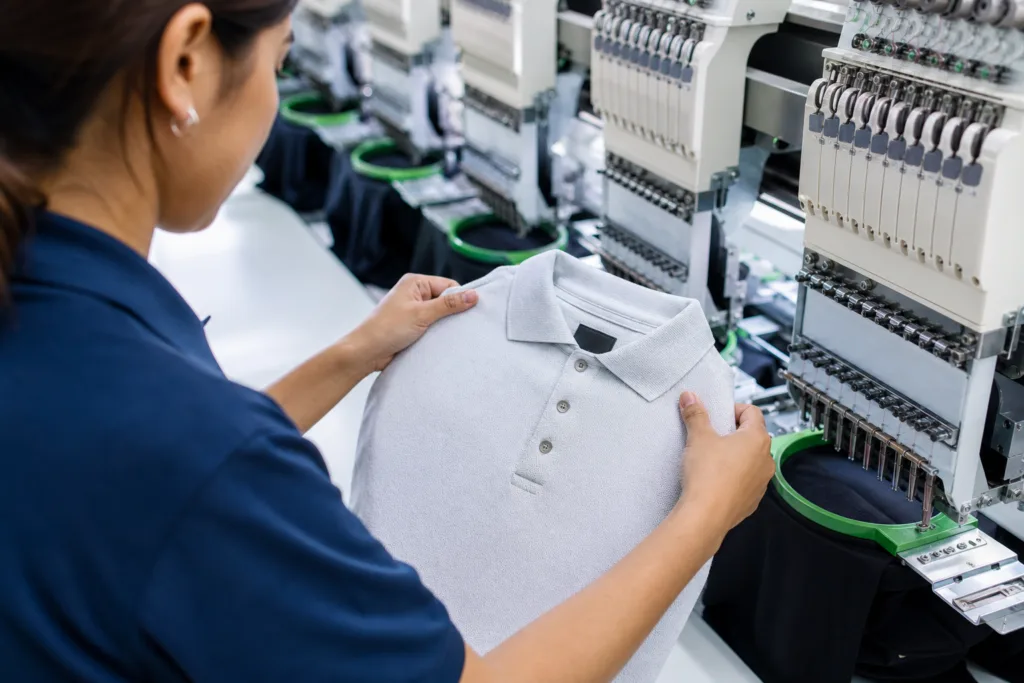
The most common polo constructions are pique, jersey, and interlock. Each one changes surface texture, drape, and decoration behavior, so buyers should compare construction as carefully as fiber content.
Pique
Pique is the classic structured polo knit. It offers texture, airflow, and a more recognizable polo appearance.
Jersey
Jersey feels smoother and often softer. It works well for fashion polos or slimmer modern silhouettes, but it can look less traditional if the buyer expects a classic uniform style.
Interlock
Interlock is denser, smoother, and often more stable than jersey. It can create a cleaner premium look, though it may feel warmer and cost more depending on yarn and finishing.
Key takeaway: If a buyer wants the classic polo identity, pique is still the safest starting point. If they want a softer retail hand feel, jersey or interlock may be more suitable.
Which fabrics work best for embroidery, screen printing, heat transfer, and sublimation?
Decoration method should be decided early because fabric texture can support or limit branding quality. A polo that looks excellent blank may not be the best base for a specific logo application.
| Decoration Method | Best Fabric Surface | Works Well For | Buyer Consideration |
|---|---|---|---|
| Embroidery | Pique, stable jersey, interlock | Corporate logos, school crests | Check puckering risk on lighter fabrics |
| Screen printing | Smoother jersey or stable blends | Promotional graphics, event polos | Texture on pique can affect detail |
| Heat transfer | Smooth polyester or blends | Names, numbers, small graphics | Test adhesion after washing |
| Sublimation | Polyester-rich fabrics | Teamwear, all-over color graphics | Not suitable for high-cotton fabrics |
For buyers prioritizing logos with a premium look, embroidered polo styles for branding projects often work best on stable pique or interlock fabrics that can support the stitch density. For larger graphics or event-driven visuals, printed polo alternatives for promotional orders may deliver better clarity and lower application cost than embroidery.
Best fabric choices by application
The fastest way to narrow fabric choice is to map it to the real wearing environment. A polo for a golf brand should not be developed the same way as a school uniform or a corporate reception shirt.
- Corporate uniforms: cotton-poly pique or stable blends for neat appearance, logo support, and repeat washing
- Golf wear: polyester or stretch performance knits for mobility, moisture management, and shape retention
- School uniforms: blend or polyester-rich pique for durability and lower maintenance
- Teamwear: polyester or sublimation-compatible structures for color, function, and repeated laundering
- Retail brands: combed cotton pique, jersey, or premium interlock depending on target price and hand feel
- Promotional orders: economical blends or polyester, depending on logo method and quantity target
This is also where a manufacturer’s guidance matters. Through Ninghow, buyers can align fabric choice with sampling, fit refinement, private label details, and bulk planning before confirming a fabric that later creates avoidable cost or quality issues.
How to compare cost-performance trade-offs for bulk production
The best commercial fabric is often the one that reduces total risk, not just FOB price. A cheaper fabric can create higher costs later through rework, inconsistent shrinkage, logo failure, customer returns, or poor reorder continuity.
In our experience, buyers should compare cost-performance through these questions:
- Will the fabric maintain acceptable appearance after repeated washing?
- Does it support the chosen logo method without distortion?
- Can the supplier source the same or equivalent fabric reliably for reorders?
- Does the GSM and knit structure fit the target season and market?
- Will the hand feel justify the intended price point?
If the polo is for uniform use, industrial wash expectations can matter as much as softness or price. Standards-based testing considerations such as industrial washing performance for workwear textiles are especially relevant when appearance retention, seam behavior, and dimensional stability matter across repeated service cycles.
Common buying mistakes when selecting polo shirt fabrics
The most common mistake is approving fabric based on swatch feel alone. A good swatch does not reveal how the shirt will behave after sewing, logo application, washing, and packing.
- Choosing fiber content without checking knit construction
- Ignoring shrinkage and recovery testing before sample approval
- Selecting heavy GSM when the market expects a lighter athletic feel
- Using textured pique for detailed prints without testing logo clarity
- Assuming all polyester fabrics feel the same
- Not confirming whether the fabric is stock-supported or custom-developed
- Approving color before checking wash and rub performance
Key takeaway: Fabric approval should be based on end-use performance, not only showroom appearance or a single lab dip impression.
How to choose the right fabric for sampling before bulk production
Sampling should reduce uncertainty. Before you move to bulk, the fabric should be tested in the actual garment form, with real trims, collar construction, placket treatment, and logo method.
We usually suggest buyers compare at least two or three fabric directions if the project is new. For example, a retail polo may be sampled in cotton pique, cotton-poly pique, and smooth jersey to compare drape, branding, and target consumer feel side by side.
- Request the exact fabric composition and GSM on the sample record
- Confirm whether the collar and cuffs match the body fabric or use separate rib
- Check after-wash measurement changes
- Review embroidery or print result on the actual sample
- Note hand feel differences between pre-wash and post-wash garment condition
- Ask whether bulk fabric will come from the same mill source
What supplier questions should buyers ask before approving polo fabric?
Clear supplier communication prevents expensive misunderstandings. The right questions help buyers compare mills, garment factories, and sample proposals more accurately.
- Is the fabric stock-supported or made to order?
- What is the actual composition tolerance?
- What is the finished GSM tolerance?
- What shrinkage standard is being used after washing?
- How does the fabric perform with embroidery, print, or heat transfer?
- Will the same fabric quality be available for reorders?
- What pilling, colorfastness, or dimensional stability checks are included?
- Does the MOQ change based on color count, trims, or custom dyeing?
For private label development, we also recommend confirming neck label method, hangtags, polybag requirements, carton marking, and fold standards during the sample stage. These details are small individually, but they directly affect final consistency in bulk.
Final decision guide for choosing the best fabrics for polo shirt manufacturing
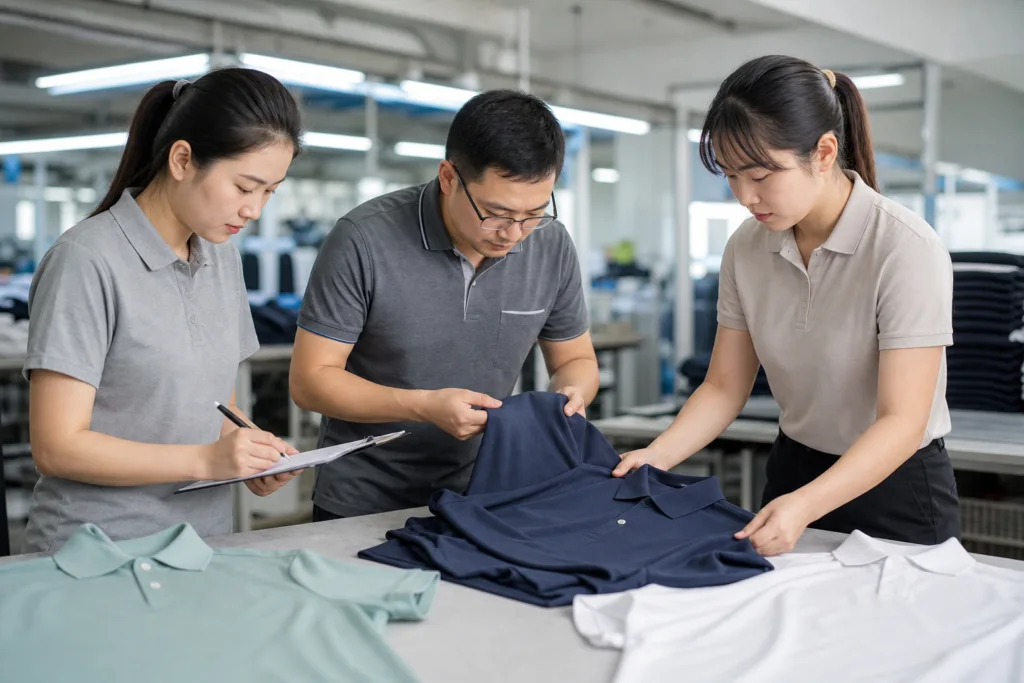
If your goal is premium casual appeal, start with better-quality cotton pique or smooth cotton-led knits. If your goal is durability, lower maintenance, and repeat wash performance, polyester or polyester-rich blends are often the safer choice. If your goal is broad commercial balance, cotton-poly blends usually offer the most flexible middle ground.
The best fabrics for polo shirt manufacturing are the ones that fit the buyer’s real scenario: who will wear the polo, how often it will be washed, what logo method is needed, what price point must be achieved, and whether the style will be reordered. From our manufacturer perspective, the strongest fabric decisions are made when fabric, fit, branding, MOQ, and bulk QC are planned together rather than in separate steps.
If buyers prepare clear use-case details, target GSM, branding method, and quality expectations early, sampling becomes faster and bulk production becomes more predictable. That is usually the difference between a polo program that only looks acceptable in development and one that performs well in real-world delivery.
FAQs
What is the best fabric for a classic polo shirt?
Cotton pique is usually the best starting point for a classic polo shirt because it provides the textured look, breathable structure, and traditional appearance buyers expect. It works well for casualwear, uniforms, and branded polos, but the exact choice should still depend on target price, logo method, and wash expectations.
Are polyester polos better than cotton polos?
Polyester polos are better when fast drying, lower maintenance, and repeated wash performance matter more than a natural hand feel. Cotton polos usually feel softer and more premium to many wearers, while polyester often performs better for sports, schoolwear, teamwear, and operational uniforms.
What GSM is good for polo shirts?
A good GSM for polo shirts is often around 180 to 220 GSM because this range balances comfort, structure, and everyday durability. Lighter GSM can work well for athletic or summer use, while heavier GSM may suit premium or more structured polos if the climate and price point support it.
Which polo fabric is best for embroidery?
Stable pique, interlock, and some smoother blended knits are usually best for embroidery because they can support the stitch area more cleanly than very thin or unstable fabrics. Buyers should still test the actual logo size and backing method on a sample, since light fabrics can pucker even when the base fabric looks suitable on paper.
Is a cotton-poly blend good for uniform polos?
Yes, a cotton-poly blend is often a very practical choice for uniform polos because it balances comfort, durability, wrinkle resistance, and cost. It is especially useful for programs that need repeat orders, consistent branding, and easier garment care across many users.
Should buyers approve polo fabric before or after sampling?
Buyers should first shortlist the fabric before sampling, but final approval should happen after reviewing the fabric in a finished sample with the real collar, placket, logo application, and wash result. That process shows how the material behaves in the actual garment, which is far more reliable than approving from a swatch alone.