





Introduction: Why Logo Placement Matters in Gym Clothing Manufacturing
In gym clothing production, where every design detail can affect both the cost and the final fit, the placement of your brand’s logo is a pivotal decision. Strategic logo positioning not only influences visual branding impact but also alters manufacturing processes, cost structures, and even wearer comfort. Brands seeking consistency at scale must understand these nuances to avoid costly mistakes and delays during sampling, bulk production, and post-production.
For a more focused look at production capabilities related to logo application and garment customization, readers planning the next sourcing step may want to explore how we approach custom gym clothing manufacturers on our main production category page. This page details our technical scope, customization options, and typical manufacturing setups, offering a logical next step for brands evaluating turnkey and OEM solutions.
Understanding Logo Placement Options
Chest Logos
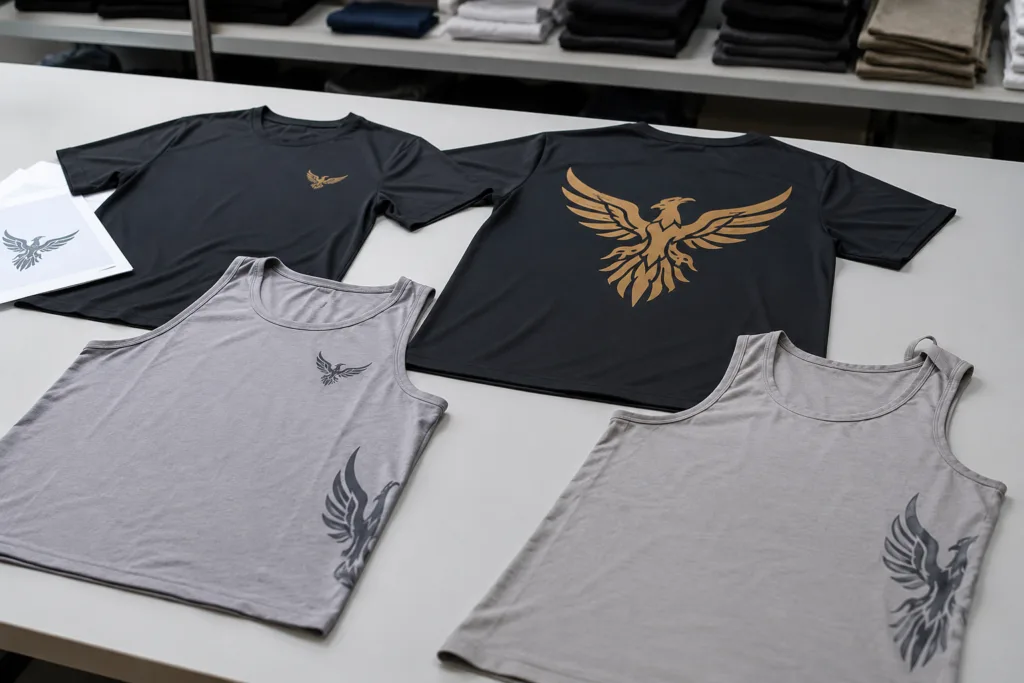
Chest logos are one of the most popular branding choices for gym shirts, tanks, and athletic tops. Centrally placed or left-side chest logos are highly visible but relatively easy to apply using embroidery, screen printing, or heat transfers. Their standard location helps streamline the production process, minimizing placement errors and rework. That said, chest logos are usually the reference point for size grading and template placement.
Side Panel Prints
Logos or designs along side panels present complexity because gym apparel fabrics are often stretchable and require precise alignment between front, back, and side seams. This added complexity can increase sampling time and the need for template engineering, which may raise production costs.
Back Prints
Back logo placements deliver strong brand impact, especially on T-shirts and training hoodies. Execution often depends on print method—large-format screen printing requires special platens and sometimes custom screens, while heat seal application must ensure uniform adhesion, particularly on performance fabrics with high elasticity. Incorrect placement can introduce fit distortions or garment misalignment, so technical awareness during patternmaking and cutting is essential.
Waist Branding
Waist area logos, often seen as woven elastics or silicone heat seals, call for dedicated machinery and extra production steps. Placement at seams or on curved edges increases labor costs, especially if every piece requires manual positioning instead of automated alignment. Misalignment is more visible at the waist due to body contour differences, making fit and QC more challenging.
Woven Labels
Woven branding labels (not printed) are common for hem, neck, or side-seam placement. Custom die-cutting, stitching, and potential label scratching are all concerns for gym apparel. Factory preference is often for sewing woven labels during flat stage assembly rather than post-production, which can help maintain fit integrity but requires earlier design finalization.
Heat Seals
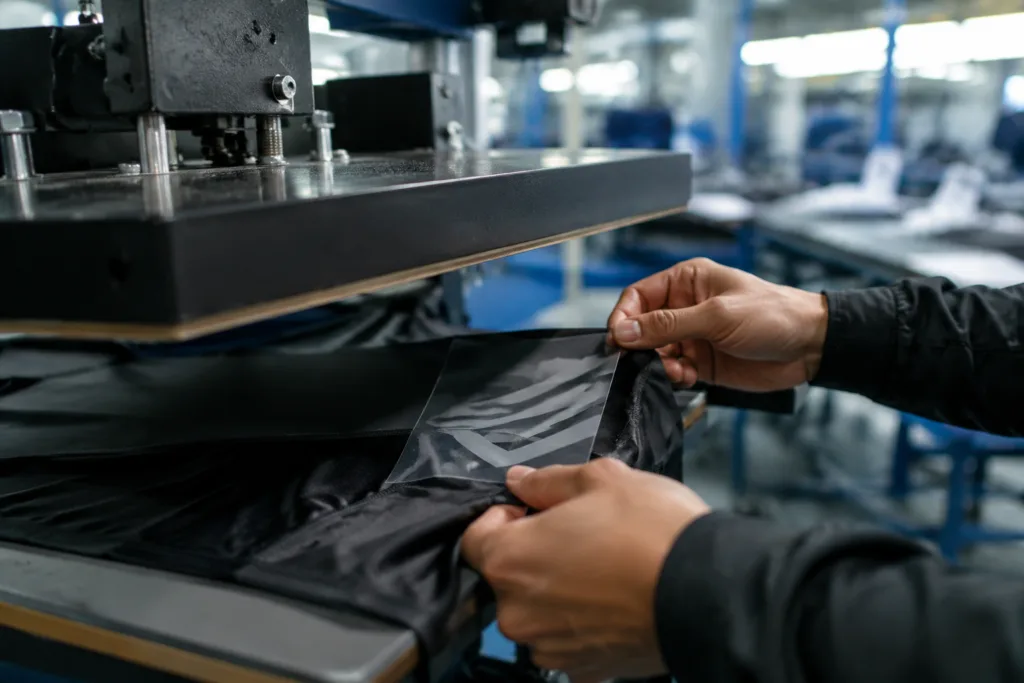
Heat seal logos offer a smooth, minimally intrusive look favored in technical sportswear. However, they require controlled temperature and pressure during application, which can slightly alter fabric elasticity and feel. Placement on stretch zones (like across the chest or back) must be precisely engineered to avoid bubbling, puckering, or shrinkage during wear and washing.
Logo Placement and Production Cost Breakdown
Material Considerations
The logo’s position affects which printing or embroidery method is optimal and whether additional stabilizers or underlays are needed. For instance, logos on highly elastic jersey blends may require silicone backing, raising material costs.
Labor Steps and Machine Setup
Some locations, such as side panels or curved hems, require extra alignment checks during stitching or printing, impacting labor time. Large back prints demand bigger platens, which can cause slower machine cycling rates. All these micro-decisions accumulate in the production cost calculation.
Sampling and Approval Iterations
Designs spanning multiple garment panels—e.g., a logo that transitions from front to side—often need more sample iterations to achieve standard placement in all sizes. This lengthens the development timeline and increases pre-production sampling expenses.
Batched Production Risks
If logo placement requires high-precision manual work, batch-to-batch variation may lead to inconsistent final product fit—a common pain point for mid-size brands. Factories like Ninghow routinely build custom jigs to improve repeatability when handling complex placements.
Low Minimum Order Quantity (MOQ) Implications
Complex logo placements amplify costs at lower order volumes since set-up time is split across fewer units. Brands with boutique launch runs should consider positioning that aligns with industry-standard setups when possible.
How Logo Placement Influences Garment Fit and Comfort
Impact on Stretch Zones
When logos are placed across areas with frequent movement (shoulders, chest, side seams), they must allow for stretching and recovery. Heat seals that restrict elasticity can create discomfort or even increase stitch popping over time.
Stitching Integrity
Embroidery or heavy heat-seal logos added to slim-fitting gym tops may stiffen the fabric, affecting drape and contour. Strategic placement can preserve natural movement and ensure lasting comfort.
Seam and Panel Placement Risks
When logos cover seam joints or multiple fabric types, bulking, distortion, or seam puckering may appear—especially in lightweight athletic wear. This impacts not only fit but also the perceived quality level during consumer wear tests.
Visibility and Sizing Consistency
Front chest and back prints are more forgiving of minor placement shifts, as the surface is generally flat. Logos positioned on angled or curved parts (like the outer sleeve or lower waist) may look off-center or poorly aligned across size grades unless extra care is taken during pattern engineering.
Choosing the Best Logo Printing Methods for Each Placement
Not every logo application method works equally well for all positions. For chest and back prints, screen printing and embroidery remain traditional, cost-effective choices. Heat transfer printing excels with complex designs, especially on technical performance fabrics. Direct-to-film and silicone heat seals are often recommended for side panel prints due to their flexibility and wash resistance.
To understand the full pros and cons of each technique for gym clothing, see our post on best logo printing methods, which details the compatibility, durability, and practical considerations for each logo technique.
Sample Development: Minimizing Logo Placement Mistakes
Pre-Production Pattern Testing
Prototyping logo placement on multiple sizes and body types reduces post-production surprises. Factories often print or heat-seal placement markings on base fabric before committing to bulk runs, ensuring real-world accuracy during mass production.
Approval Samples and Technical Packs
Clear visual reference points, accurate CADs, and explicit technical pack diagrams allow both the factory and brand to agree on exact positioning before production sewing. This is especially important when dealing with multi-panel application or products with both inner and outer branding elements.
QC Checklist for Logo Placement
A well-structured QC process involves checking both the absolute distance from key reference points (e.g., center-front neck to bottom of logo) and alignment with seams or hems. Mistakes typically occur when rushed approvals skip this level of detail.
Fabric Performance, Print Durability, and Long-Term Wearability
Fabric Recovery and Logo Adhesion
Some logo methods, like metallic foils, do not stretch with performance knits and may crack or peel prematurely if placed on high-movement areas. Print testing on production fabric is mandatory to guarantee result durability.
Sweat Management and Comfort
Placement of thick, non-breathable logos on sweat-prone zones can harm the moisture-wicking function that sets gym wear apart from casual apparel. Matte silicone and micro-perforated vinyl are options for high-comfort branding.
Wash Testing
Repeated testing for wash shrinkage, peeling, and fade is crucial for both first bulk and ongoing production. At Ninghow, we integrate laundry testing into both development and final QC, especially for complex logo placements on technical fabrics.
Logo Placement and Mass Production Workflow
Bulk Layout and Cutting Efficiencies
Patterns designed with uniform logo location (across a batch) help minimize layout changeovers, which speeds up cutting and decoration. Inconsistent logo requirements slow down throughput and increase defect rates.
Multi-PO and Reorder Consistency
Logo placement set up in the first run should be documented (with CAD and photo references) so future POs hit the same quality mark. Even a small logo shift between runs undermines consumer confidence and brand experience.
Common Production Challenges With Gym Clothing Logos
Misregistration and Off-Center Logos
Poor alignment or stretching during printing causes logos to appear off-center, particularly on performance knits with significant give. This leads to rework, scrap, and ultimately higher cost per unit.
Fit Distortion and Banding Issues
Heavy or thick logos over high-stretch zones can cause puckering, distortion, or seam slippage, negatively impacting the garment fit. Using lighter, flexible methods and strategic placement is the best prevention.
Sizing and Scale Mismatches
Logo size and scale must be adjusted up or down for each garment size. Failure to do so often results in disproportionately large or tiny logos on certain sizes, impacting both brand presentation and resale value.
Inconsistent MOQ and Sampling Strategies
Small-run production faces higher unit costs for complex placements. Early discussion with your manufacturer about minimums can help match design ambition to project feasibility.
Practical Solutions for Efficient and Reliable Logo Application
Selecting Industry-Standard Placements
Where possible, use standard placements (classic chest, central back) to streamline machine setup and reduce labor. Non-standard placements are best kept for unique fashion collections or high-margin product lines.
Templates, Folders, and jigs
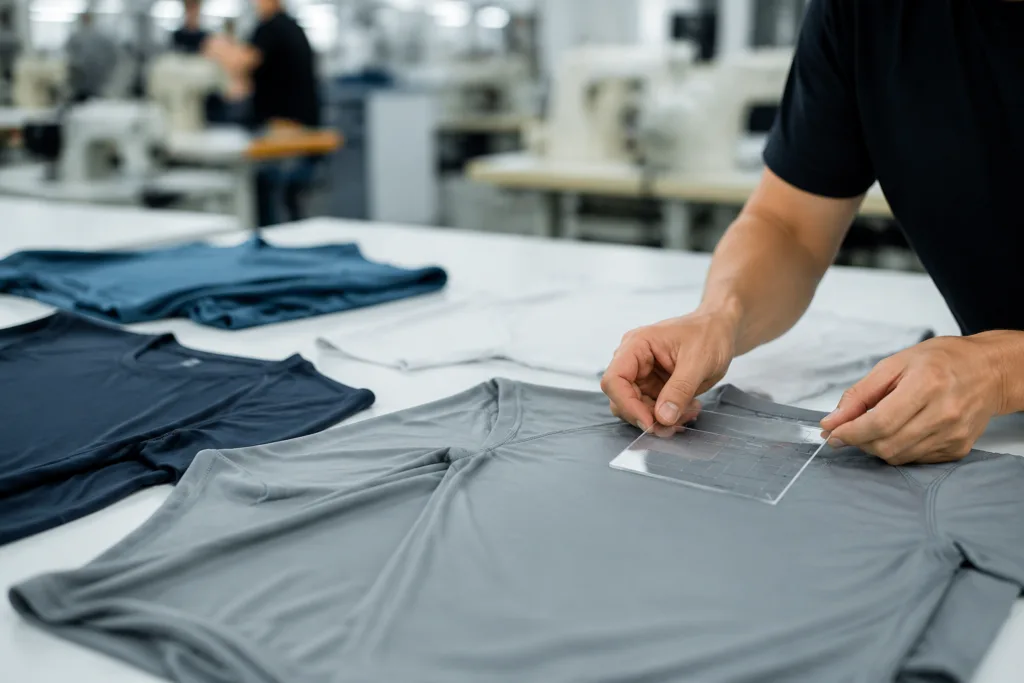
Investing in dedicated logo placement tools (such as acrylic folders, placement jigs) helps achieve repeatable precision and lower QC rejection rates, particularly for large-scale production or long-running SKUs.
Regular Bulk Production Checks
On-floor sampling and mid-batch QC can catch drift or machine setup changes before a large portion of work proceeds, saving both cost and reputational risk. This is part of a well-organized manufacturing flow and one Ninghow applies to most complex gym apparel projects.
How Logo Placement Impacts Gym Clothing Manufacturing Costs and Fit
The cumulative effect of logo placement in gym wear manufacturing is clear: it shapes cost per unit, fit reliability, bulk repeatability, and ultimate customer satisfaction. Chest, back, waist, side, woven, or heat seal—each location carries its own practical trade-offs. Considering these at the design stage is a lasting competitive advantage for brands sourcing from any quality-focused manufacturer.
Blank vs Fully Custom Gym Clothing: A Logo Perspective
Brands launching with blank apparel (pre-made, ready for print) have much less flexibility in non-standard logo placement compared to developing fully custom-fitted gym wear. Complex logos—like wrap-around waist details or engineered side panels—almost always require original patterns and higher minimums. Our analysis of blank vs fully custom gym clothing outlines how logo ambition and business model shape each route’s practicality.
Conclusion: Smarter Logo Planning for High-Performance Gym Apparel
Brands can optimize their gym clothing production by making logo choices that enhance brand presence without undermining fit, comfort, or costs. Industry insight is your ally—knowing what logo placements mean for sampling, QC, and long-run cost dynamics prevents delays and rework. When in doubt, align design intent with standardized manufacturing logic, or consult with specialists who routinely bridge branding vision with production feasibility. Thoughtful logo placement is not just about standing out in the gym; it’s about setting your business up for scalable, repeatable, and profitable growth.
Frequently Asked Questions
What is the most cost-effective logo placement for gym shirts?
Standard chest logos are typically the most efficient and lowest-cost placement since most factories have established machine setups and QC processes for this position.
How does side panel logo placement impact production time?
Side panel logo placement requires extra alignment steps and sometimes manual handling, which can slow down both sampling and bulk manufacturing flows and raise labor costs.
Are heat seal logos suitable for all gym fabrics?
Heat seals work well on most technical knits but can affect stretch performance in high-movement areas. Placement and temperature must be precisely controlled to avoid puckering or cracking.
Can I use large back prints on lightweight training shirts?
Yes, but choose print methods that flex with the fabric. Large, heavy prints can lead to fit distortion or reduce the breathability of performance materials.
How do factories ensure consistent logo placement across sizes?
Factories rely on detailed pattern grading, placement jigs, and strict QC checks comparing logo distance from specified reference points for every size run.
Does complex logo placement raise minimum order quantities?
Yes. More complicated placements increase setup and labor costs, so manufacturers often require higher minimums to justify these added complexities.