


Introduction: Wholesale Gym Apparel Suppliers in Bulk — What Buyers Need to Know
Ordering from wholesale gym apparel suppliers is a strategic move for activewear brands that aim to balance fast stock availability and scalability with quality, branding, and long-term reliability. But buying wholesale is never a one-size-fits-all solution. B2B buyers—from startup labels to growing mid-market brands—have to make critical decisions about fabric choices, supplier transparency, inventory, and overall suitability for branded or private label lines. Thorough evaluation upfront can mean the difference between smooth launches and costly supply chain headaches.
For a more focused look at production capabilities, product customization, and detailed category options, it also helps to review how manufacturers present this category on our custom gym clothing manufacturers page. Readers planning the next sourcing step may want to explore this resource to better align factory strengths with their activewear brand requirements.
Understanding the Wholesale Gym Apparel Supply Chain
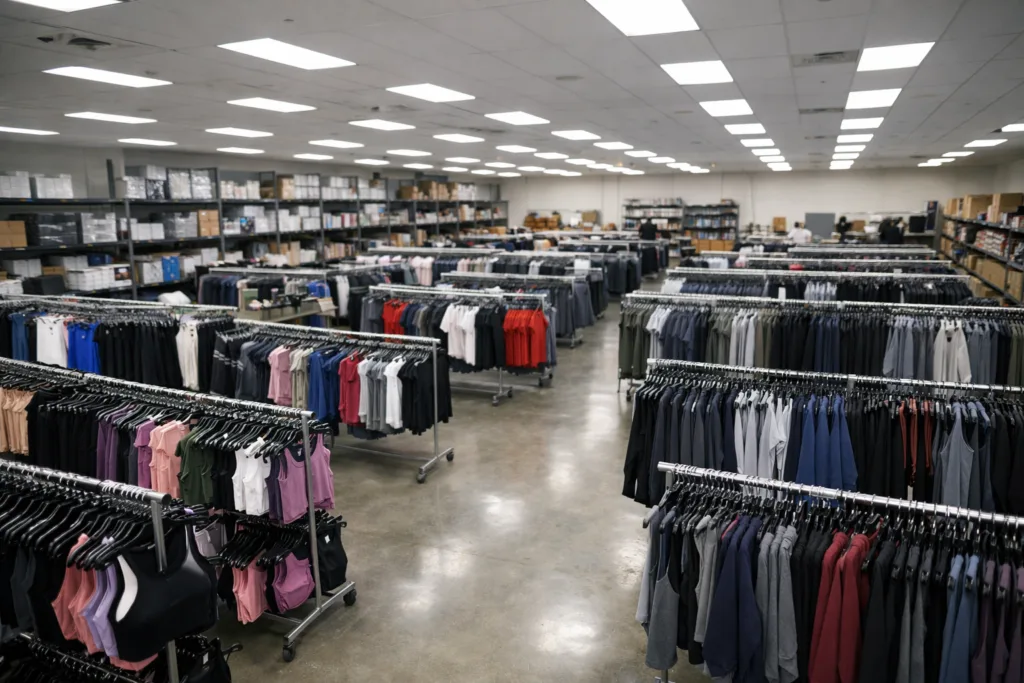
Wholesale channels in gym apparel typically involve either manufacturer-direct offers or intermediary distributors. Suppliers source or produce ready-made collections suited for multi-brand retailers, resellers, or brands needing rapid access to in-demand styles.
- Suppliers may hold inventory in overseas warehouses or central distribution hubs
- Range typically focuses on high-rotation basics—T-shirts, tanks, shorts, sports bras, leggings
- Order minimums vary by supplier and product type
- Customization is often limited to simple logos or color selections
When Should Brands Choose Wholesale Gym Apparel?
Wholesale gym apparel often fits buyers who:
- Need quick stock for seasonal drops, promo events, or test launches
- Want smaller MOQ (minimum order quantity) and faster turnaround than full custom
- Are launching secondary product lines and don’t need heavy customization
- Are new brands assessing initial customer response before investing in unique designs
However, as demand grows, many brands outgrow wholesale limitations. Brands needing unique fit, specific performance features, or complete visual control will eventually require factory-level custom development.
Wholesale vs. Custom Gym Apparel: Key Differences
| Factor | Wholesale | Custom Manufacturing |
|---|---|---|
| Development Time | Immediate (stocked) | 4–20 weeks (design & sampling) |
| MOQ | Low–medium (usually 50–300) | Medium–high (100–500+) |
| Logo/Branding | Limited (placement, method) | Fully customizable |
| Fit & Pattern | Fixed per style | Brand-controlled |
| Fabric Choice | Supplier stock list only | Wide/fully selectable |
| Repeatability | Dependent on supplier stock | Controlled by client |
| Price per Unit | Lower at small scale | Lower at scale (better as volume increases) |
Evaluating Supplier Consistency: The Heart of Repeat Orders
Consistency in size, color, and fabric is non-negotiable for brands planning bulk purchases and repeat orders. Ask for past batch samples, current stock photos, and repeat order data to verify if the supplier provides uniform product over multiple shipments.
- Do size specs fluctuate batch to batch?
- Has fabric composition shifted due to material shortages?
- Is the dye lot consistent for your “black” leggings across several orders?
Buyers should prioritize suppliers disclosing recent batch QC reports or using a certified, trackable process for all repeat styles.
Spotting Reliable Inventory and Stock Management Systems
Nothing derails a launch faster than a supplier running out of your top-selling style. Key signals of strong stock management include:
- Up-to-date online inventory dashboards, not just sales PDFs
- Real-time inventory reservation capability
- Advance warning of stockouts or fabric/range changes
- Proposed substitution plans before discontinuation
Rating Fabric Performance: Key Metrics for Gym Apparel
Wholesale suppliers should provide detailed fabric specifications for each product. Critical factors for gym/activewear include:
- Moisture-wicking (hydrophilic or hydrophobic finishes)
- Four-way stretch ratings
- Pilling resistance (Martindale, Wyzenbeek)
- Opacity / squat-proofness for leggings
- Heat set or pre-shrunk status
Always test a received sample—brands scaling up should request third-party lab reports if possible, especially for core ongoing lines.
Logo Application Options: Printing, Embroidery, Heat Press & More
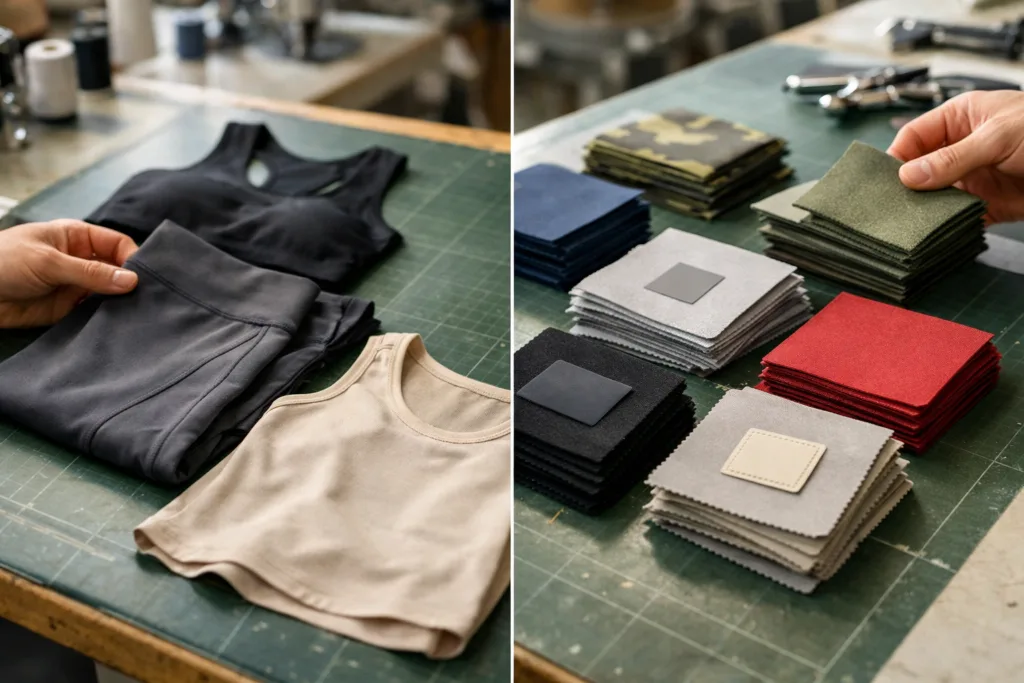
Most wholesale gym apparel suppliers allow simple logo applications—screen print, embroidery, heat-transfer, or silicone patches. Carefully review:
- Artwork requirements (vector files, color specs, minimum size)
- Maximum logo placement areas per product
- Durability test options (wash, stretch, abrasion)
- MOQ for each application method
For brands prioritizing unique trims or all-over prints, wholesale suppliers may not suffice—a shift to custom manufacture will be inevitable for advanced logo or branding needs.
Minimum Order Quantities (MOQ): Read the Fine Print
MOQ is often presented as “per color per style.” For brands launching with smaller budgets or more SKUs, ask for:
- MOQ breakdowns per size and color
- Mixed-style or assortment order policies
- MOQ exceptions for initial orders or sampling
Hidden costs can lurk in extra logo set-up fees or color surcharges—clarify all upfront to project reliable landed costing.
How to Check Stock Reliability: Real-Time Inquiry Tactics
To validate stock reliability, take these steps:
- Request current warehouse inventory snapshots
- Inquire about expected replenishment cycle (especially after holidays)
- Place a test order on two SKUs to measure actual fulfillment speed
- Ask for stock-out case studies from past clients
Comparing Wholesale Gym Apparel Suppliers: A Global Look
Geography matters. Suppliers in the USA, China, and other regions offer different strengths:
- USA: Faster domestic delivery, higher price, more sustainable/local options
- China: Larger selection, lower cost, higher MOQ, better for longer-term scaling
- Europe: Strict compliance, mid-sized ranges, eco credentials
For a transparent take on the trade-offs, see our in-depth USA vs China Gym Clothing Manufacturing overview.
Private Label or White Label? Options for Branding
Private label (your brand, their design/spec) and white label (standard product with your branding) remain two dominant models. Knowing when to move from white label to fully private label is critical for margin and customer loyalty—detailed in our dedicated private label gym clothing guide.
Evaluating Return and Defect Policies Before Order Placement
Bulk orders naturally carry some risk. Check policies for:
- Return window (days after receipt)
- Accepted defect rates (%) and photographic proof requirements
- Replacement or credit policies for irreparable defects
Well-structured suppliers present sample contracts or template agreements on request for transparency.
Communication Standards: Why Response Speed Matters
Supplier responsiveness signals operational maturity. Strong suppliers offer:
- 24–48 hour email or chat response time
- Proactive production or delay notifications
- Dedicated account manager or B2B rep
- Clear, written escalation processes for urgent issues
Sample Order Testing: An Essential Risk Filter
Before going to bulk, run an initial sample order for:
- Fit and measurement accuracy
- Thread/stitching quality
- Logo durability
- Packaging and labeling accuracy
Document your unboxing and usage so you can flag issues before scaling up the order.
Production Lead Times: From Order to Shipment
Expect wholesale lead times to range from next-day shipping (in-stock) to several weeks (if partial stock or logo application is needed). Confirm:
- Standard lead times for main collection items
- Extended timelines for logo/branding processing
- Holiday and seasonality delays
Repeat Order Capability: Ensuring Future Supply
Smart brands ask: how repeatable is this SKU? Questions to validate:
- Guaranteed style lifetime (how long will this stay in stock?)
- Minimum warning time before discontinuing a best-seller
- Advance order/priority reservation programs
Transparency on Product Origins and Ethical Standards
Modern buyers increasingly require visibility into where and how products are made. Best-in-class suppliers provide:
- Factory location/address, audit reports
- Relevant labor and materials certifications (e.g., BSCI, OEKO-TEX)
- Environmental policy disclosures
Shipping, Importing, and Duties: Planning Landed Cost
Understanding logistics is essential. Suppliers should disclose:
- Standard FOB (Free on Board) locations
- Courier/air/sea options and timelines
- Customs documentation support
- Clear landed cost estimation tools
Packaging, Labelling, and Customization Limits
Wholesale lines may offer limited customization on packaging and labels. Request samples for:
- Hang tags
- Care/instruction labels
- Branding/size position on folded product
This helps ensure a consistent customer experience for e-commerce fulfillment or brick-and-mortar retailing.
Supplier Audit and Verification Steps for Bulk Orders
Before sending payment for large orders, perform these checks:
- Review supplier business license and export registration
- Check third-party references or client reviews
- Request independent product inspection (e.g., SGS, Intertek)
These steps minimize risk and support long-term, scalable relationships.
Typical Mistakes Buyers Make When Ordering Wholesale Gym Apparel
Common pitfalls for new B2B buyers:
- Choosing price over quality or support
- Underestimating inventory risk (relying on “always in stock”)
- Skipping sample/fit tests before first bulk run
- Overlooking logo/application restrictions vs. brand vision
- Ignoring transit/duty cost fluctuations
Transitioning from Wholesale to OEM/Custom Development
As brands scale, gaps in control and agility often emerge with standard wholesale. Transition triggers include:
- Desire for unique fits, premium fabrics, or advanced branding
- Repeat stock-outs or unpredictable lead times
- High defect rates with little recourse
Working with experienced manufacturers (such as Ninghow) becomes vital here: sampling, refining fit, and adjusting materials to support brand growth beyond pre-stocked ranges.
Making the Final Choice: Wholesale or Manufacturer Partnership?
Brands should weigh all factors—cost, timing, repeatability, and control. Wholesale is ideal for lower initial risk and speed. Custom manufacturing wins on long-term control and differentiating your activewear line in a crowded market.
Wholesale Gym Apparel Suppliers: What Buyers Should Check Before Ordering in Bulk
For buyers committed to wholesale gym apparel, the most successful decisions come from rigorous vetting. Every order should be a calculated move: check for consistent quality, predictable inventory, fabric performance validation, logo application limits, and a reliable process for repeat and future orders. Know when to use wholesale as a stepping stone—then be ready to graduate to full factory partnership when you need real control and market differentiation.
Conclusion
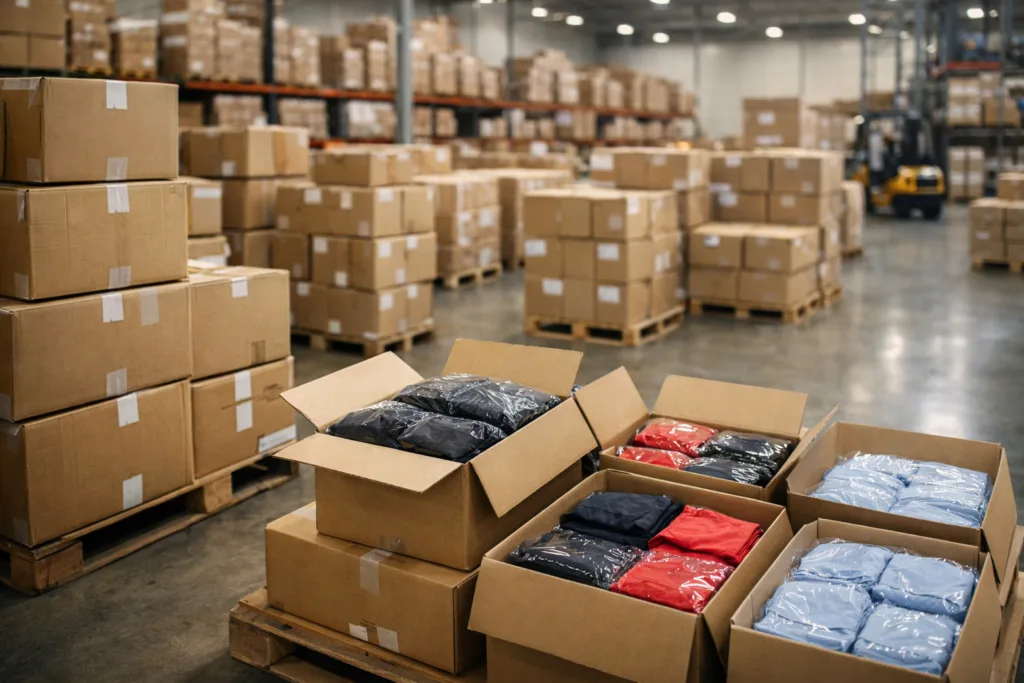
Bulk ordering from wholesale gym apparel suppliers offers brands rapid access to trending styles and moderate customization. Yet not every solution fits every stage of brand maturity. The most resilient activewear brands know when to leverage speed and stock—and when to seek more tailored, manufacturer-driven solutions. Consistency, transparency, and strategic partnership are your best checks before any bulk order, keeping you ahead as demand grows and trends evolve.
Frequently Asked Questions
What are the common risks in buying from wholesale gym apparel suppliers?
Inventory shortages, inconsistent sizing or colors, and limited branding options. Vetting suppliers and running sample tests helps reduce these risks.
How do I know if a gym apparel supplier is reliable for repeat orders?
Check if they provide QC reports, show consistent stock stats, and honor shipment timelines in both your and other clients’ orders.
What logo application methods are usually available for wholesale gym apparel?
Most offer screen printing, embroidery, and sometimes heat transfer—each with placement and durability limits. Large or complex logos may require OEM manufacturing.
Is there a minimum order quantity (MOQ) for bulk gym clothing?
Yes, usually by style and color. MOQ may range from 50 to 300 units per SKU. Always clarify specific rules with the supplier for your order type.
When is it better to choose a manufacturer over a wholesale supplier?
Choose a manufacturer when your brand needs unique fits, custom fabrics, complex branding, or higher consistency that wholesale cannot guarantee.
How can I ensure the fabric quality meets my brand’s standards?
Request detailed fabric specs and certifications, test samples personally, and ask for third-party lab reports—especially for ongoing or scaled lines.