






Introduction: Collared Shirts vs Polo Shirts for Uniform Programs
Choosing the right uniform can impact your team’s image, comfort, and even morale. Collared shirts and polo shirts both offer distinct advantages for uniform programs in companies, schools, services, and sports teams. Understanding how each type fits your unique needs is key to setting the right impression and ensuring daily practicality.
When considering uniform options for your team, understanding the differences between collared shirts and polos is essential. For a more focused look at production capabilities, see the dedicated page on polo shirt manufacturers—readers planning the next sourcing step may want to explore how manufacturers present this category on Ninghow.
What Are Collared Shirts and Polo Shirts?
Defining Collared Shirts
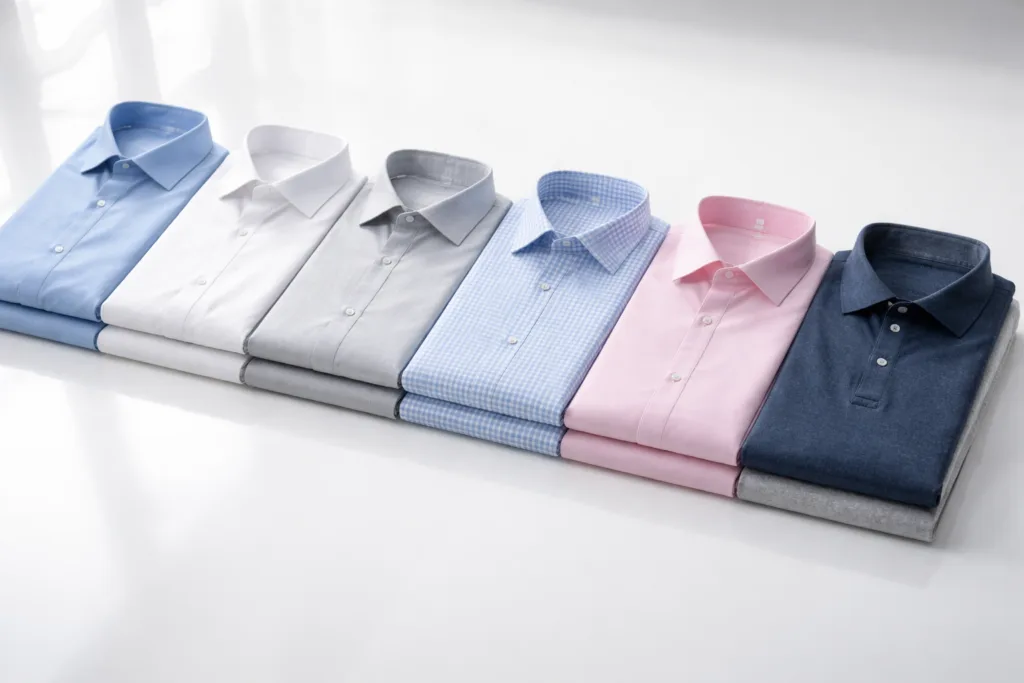
Collared shirts generally refer to woven button-up shirts, often long or short-sleeved, featuring a structured collar. These may be classic dress shirts or business casual options made from cotton, blends, or even technical fabrics. Their crisp look is a staple in more formal or traditional uniform settings.
Understanding Polo Shirts
Polo shirts are knit garments with a soft, unstructured collar and short placket, typically made of piqué or jersey fabric. They balance comfort with a smart look, making them a favorite for active workplaces, events, and school uniforms. The distinct polo collar gives a sense of professionalism without the stiffness of a dress shirt.
Core Differences: Structure, Style, and Functionality
- Fabric & Construction: Collared shirts use woven fabrics, delivering a crisp feel and structured appearance, whereas polos use knits, widely recognized for their stretch and breathability.
- Style Range: Collared shirts offer more variations—long sleeves, cuffs, pockets, contrasting plackets. Polos stick to a classic design with subtle detail changes, making them easier for uniformity.
- Maintenance: Collared shirts usually need ironing or steaming, while polos are wash-and-wear for low-maintenance teams.
Workplace Environments: Where Each Excels
Formal Offices
Corporate environments, such as banks or law offices, often lean toward collared shirts. Their sharp look suits a professional image, especially when layered with blazers or vests.
Active or Service Settings
Polo shirts are more popular for retail staff, event teams, and field roles requiring freedom of movement. Their breathability and casual-polished vibe hit the sweet spot between comfort and presentability.
Hybrid & Creative Industries
Startups and creative agencies sometimes mix collared shirts and polos, letting staff balance personal comfort with varying degrees of formality.
Uniform Application: Team, School, and Service Settings
Sports Teams & Club Events
Polos are a staple for sports teams and club uniforms, creating a unified look with enough sportiness. Their knit structure manages sweat and movement during activity.
Educational Institutions
Many schools opt for polos because they combine easy care with a neat look. However, collared shirts are favored for dress days, debate clubs, or leadership groups where a more formal uniform is desired.
Hospitality and Service Sectors
Reception, hotel, and restaurant roles often require collared shirts for front-facing staff, projecting refinement and trust. Polos serve well for support staff or behind-the-scenes roles needing comfort during long shifts.
Comfort and Wearability: What Matters Most?
If your staff needs to stay active or work long hours, comfort quickly becomes non-negotiable. Polos, due to their knit fabrics, provide better stretch, moisture-wicking, and breathability. Collared shirts might feel stiff if worn without layering or in hot climates. It’s always wise to survey team preferences before deciding.
Formality and Brand Image Considerations
Uniforms do more than standardize an appearance—they reinforce your brand’s professionalism. Collared shirts elevate formality, signaling reliability and attention to detail. Polos, while a notch more casual, foster approachability. Decide which message matches your organization’s culture and goals.
Using Logos to Reinforce Your Brand
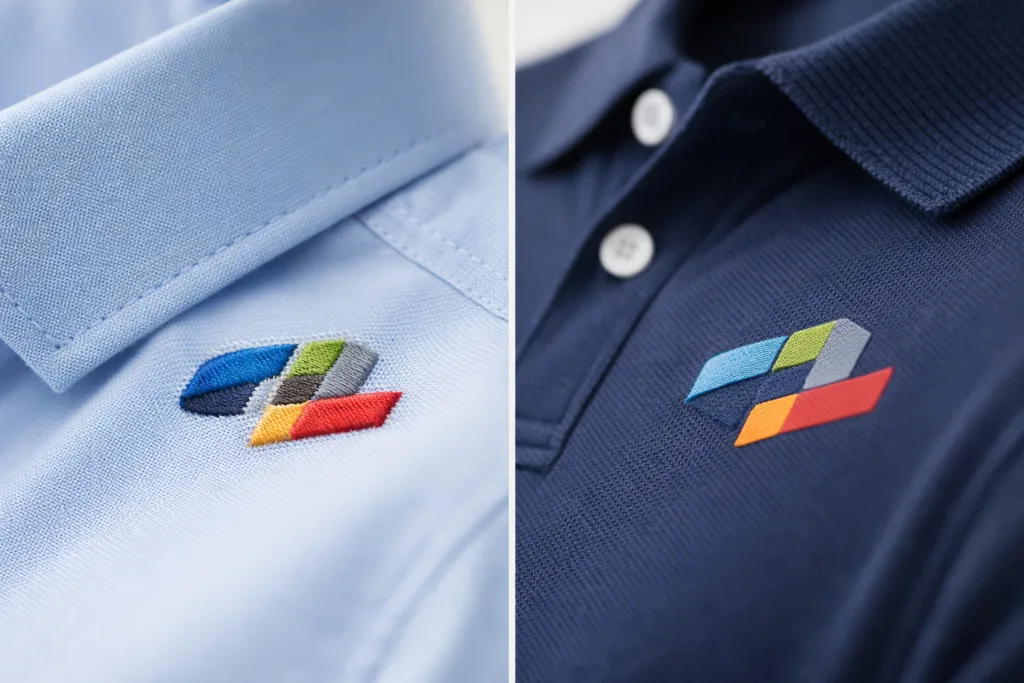
Both shirt types are easy canvases for logos, but embroidery and printing techniques react differently depending on the material. Polos often take to embroidery well, while woven collared shirts deliver crisp logo results with patching or direct embroidery. If you want subtle tone-on-tone branding or bold color, consult your apparel supplier for samples.
Cost Factors: Price Differences in Bulk Orders
Polos are usually less expensive due to simpler construction and fewer fit variations. Collared shirts, especially with custom details like plackets or contrast fabric, drive costs higher. Schools and nonprofits often choose polos for budget reasons, while corporations may stretch for tailored collared shirts for senior roles.
Size Range & Fit Management
Polo shirts have forgiving cuts and stretch, making size assignment straightforward even without individual fittings. Collared shirts require precise measurement—shoulder width, sleeve length, neck size—for a clean look, which can complicate mass outfitting. For custom team clothing, confirm that your supplier offers a wide size range and can assist with fit charts.
Brand Consistency and Style Longevity
Consider how easy it will be to reorder or adapt if your team grows or if people change roles. Polos, being classic and less driven by fashion, tend to stay consistent year to year. Collared shirts may shift with trends in collars, cuts, or cuffs, requiring occasional updates to maintain a unified look.
Ease of Logo Application and Personalization
Embroidery vs. Print
Logos on polos typically use embroidery, which lasts wash after wash. Collared shirts allow both embroidery and patches, depending on material weight and branding detail. When teams require individual names or departments, polos are easier and more cost-effective to personalize in bulk.

Durability and Upkeep
Both shirt types are robust, but polos may better tolerate frequent washing and wearing due to their knit structure. Collared shirts can lose shape if not cared for correctly. Ensure uniforms use quality stitching to prevent unraveling, especially in high-turnover roles. For more on industry expectations, see what clubs and brands typically prefer in team apparel.
Seasonal Adaptability and Layering
Polos shine in warm climates and as a single layer. Collared shirts offer flexibility—worn alone in summer or layered under sweaters and jackets in cool environments. Consider if your team operates year-round or if you need uniformity across changing weather.
Color Variety and Visual Identity
Polos come in a wide spectrum of colors, often more than traditional collared shirts. This makes them excellent for color-coding departments or teams. Collared shirts, by contrast, tend to favor muted, solid tones suitable for formal presentations. Your logo and color palette may influence which shirt type best suits your uniform strategy.
Consistency of Sourcing and Reorders
Polos are a staple for most apparel manufacturers, so reorders or color matching is relatively easy. Collared shirt fabrics and trims may be discontinued due to shifting trends. To avoid surprises, always ask for a commitment on fabric and accessory supply from your manufacturer or review key insights on custom team polo shirts before committing to a large uniform rollout.
Packaging and Presentation for Uniform Programs
How your uniforms are packed impacts first impressions—wrinkle-prone collared shirts benefit from careful folding and individual bagging, while polos are more forgiving when packed in bulk. For distributed teams, clear size labeling and simple, protective packing speeds your onboarding process and preserves the look of each garment.
Sustainability and Fabric Choices
Uniform buyers are increasingly aware of fabric content and sourcing. Polos often use poly-cotton blends for longevity, while collared shirts might offer more pure cotton or sustainable options. Confirm your supplier’s eco-certification if it’s part of your organizational values.
Order Flow and Lead Times
Polo shirts, as mass-market items, often come with shorter lead times, especially for simple colorways. Collared shirts can take longer to produce if they include unique trims or complex fit requirements. Plan extra time for sample approvals and shipment coordination when choosing collared options. From the perspective of manufacturers like Ninghow, it’s essential to balance material sourcing and QC planning with your project timeline to reduce delays.
Quality Control: Points to Watch
Both shirt types require diligent QC, but different details take priority: collared shirts must have symmetrical collars, even plackets, and crisp edges; polos need smooth collar seams, tidy placket stitching, and resilient buttons. Communicate exact parameters with your production partner to minimize surprises at delivery.
Uniform Program Management: Stocking, Loss & Replacement
Polos are easier to stock in bulk—less risk of sizing mistakes or excess inventory due to their forgiving fit. Collared shirts may need size auditing every cycle, especially as teams change. Set a schedule for audits and reorders to avoid lapses in team appearance and morale.
Repurchase & Restocking: Keeping Programs Consistent
For organizations that hire in waves or experience turnover, uniform consistency matters. Polos provide reliable restock options due to their evergreen design, while collared shirts may experience style drift if not specified year after year. Lock in fabric and color codes with your supplier for easier management.
Future Trends: The Evolving Role of Uniforms
With more brands seeking authentic, approachable images, polos continue to grow in uniform use. Meanwhile, hybrid uniforms (e.g., polos for most staff, collared shirts for managers) are becoming common, offering flexibility with unified branding. Keep an eye out for performance fabrics, stretch wovens, and subtle design twists that may become the next wave in work and school apparel.
Collared Shirts vs Polo Shirts: Which Is Better for Uniform Programs?
| Feature | Collared Shirts | Polo Shirts |
|---|---|---|
| Formality | High; traditional and formal settings | Medium; smart-casual and active settings |
| Comfort | Structured, may restrict movement | Stretchy, breathable, easy to move |
| Branding Options | Crisp embroidery, patch, or print | Best for embroidery, easy personalization |
| Cost | Generally higher, specialty make adds cost | Often more budget-friendly |
| Size Coverage | Precise fits needed, can be complex | Flexible fit, fewer sizing errors |
| Repurchase Simplicity | Subject to style/fabric changes | Stable, easy to restock |
Conclusion: Making the Right Choice for Your Uniform Program
Choosing between collared shirts and polo shirts for your uniform program ultimately hinges on your team’s environment, brand values, wearability needs, and budget. Collared shirts elevate formality and work for traditional, corporate, or front-desk roles—while polos suit active roles, casual environments, and cost-conscious programs. Keep long-term consistency, sourcing confidence, and wearer comfort at the forefront, and you’ll select a uniform solution that boosts team image and productivity, year after year.
Frequently Asked Questions
Are polo shirts considered professional enough for all workplaces?
Polos are smart-casual and work well in retail, tech, service, and education. However, some formal business or executive settings still require collared shirts for a more polished image.
Which is easier to maintain: collared shirts or polos?
Polos are easier to care for since they require less ironing and handle frequent washing better. Collared shirts need more maintenance to stay crisp.
Are there any fit challenges with bulk ordering collared shirts?
Yes, collared shirts need exact measurements, which may complicate bulk sizing. Polos’ stretch and forgiving cut make fit management simpler in larger programs.
Can both shirt types include embroidered logos?
Yes, but polos are more commonly embroidered due to their knit structure. Collared shirts can support embroidery, patches, or printing depending on the fabric and logo size.
What uniform strategy reduces restocking headaches?
Using polos as the main uniform piece is typically more consistent over time; styles shift less, and color matching remains reliable with most manufacturers.
How do I choose between collared shirts and polos for brand display?
If your brand values formality and structure, choose collared shirts. For a friendly, active, modern image, polos may be the better bet. Consider logo application and uniform comfort for staff.