





Polo Shirts for Employees: How to Build a Consistent Uniform Program
When a company chooses polo shirts for employees, the real job is not just picking a shirt. The job is building a uniform program that stays consistent across sizes, colors, departments, reorder cycles, and delivery dates. From a manufacturer’s point of view, the best programs are the ones that reduce confusion on both sides: the buyer knows what to expect, and the factory knows exactly what to produce every time.
For readers comparing manufacturing options, it also helps to review the manufacturer source for uniform polos. A focused production page gives a better sense of fabric choices, customization scope, and how a supplier organizes repeat orders for polo shirts for employees.
If a uniform program is built well, work polo shirts become easier to manage than one-off apparel buys. They support brand consistency, help new hires look aligned from day one, and make long-term reorders much simpler. The challenge is setting the system up correctly at the start.
Why Polo Shirts for Employees Work So Well
Polo shirts for employees remain popular because they strike a practical balance. They look neater than basic tees, but they are more comfortable and easier to wear than formal shirts. For many teams, that balance is exactly what the workplace needs.
From a production perspective, employee polo shirts are also easier to standardize than many other garments. The silhouette is familiar, the size range is manageable, and the same base style can often be adapted for different departments without creating a completely new product line.
- They create a clean, professional look.
- They work across many industries, from retail to logistics.
- They are comfortable for long shifts.
- They are easier to reorder than highly styled uniforms.
- They support branding without looking overdone.
That said, a uniform program still needs structure. A company may start with a simple order of polo shirts for employees, but without clear rules, future reorders can quickly drift in color, trim, fit, or logo placement.
Start With the Uniform Program Goals
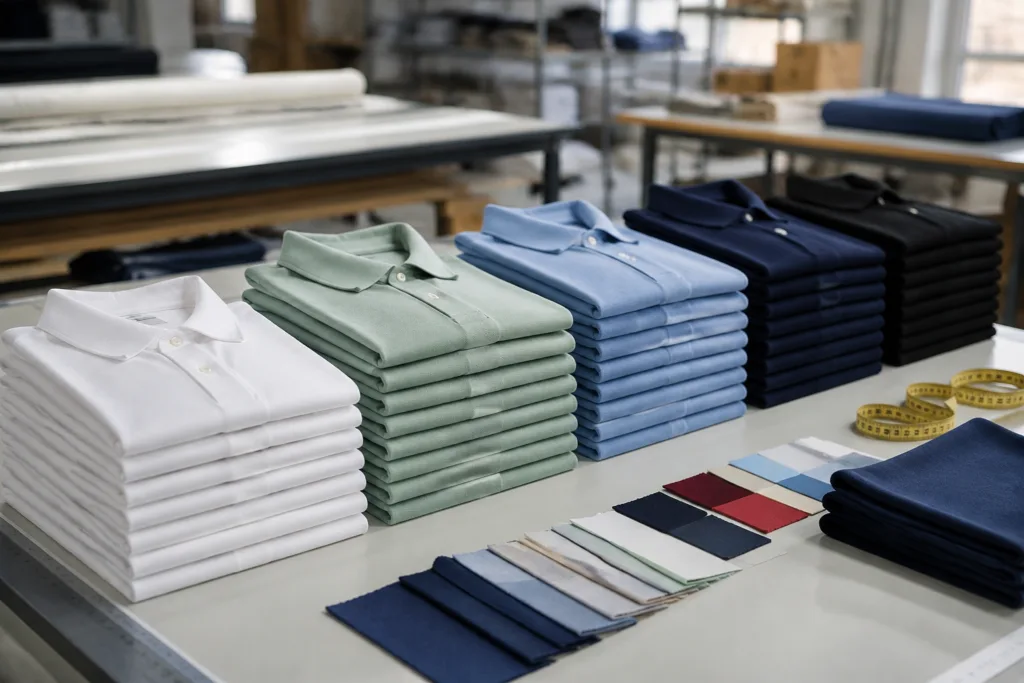
Before sampling begins, the buyer should define what the uniform is meant to solve. Is the goal brand recognition, department control, better customer-facing presentation, or a more comfortable daily dress code? The answer affects fabric weight, color choice, logo size, and budget.
At Ninghow, the first production question is usually not about decoration. It is about use. A shirt for a front desk team, for example, may need a cleaner appearance and a softer hand feel. A shirt for warehouse staff may need more breathability and wash durability. Both may be work polo shirts, but they should not be built the same way.
Clear goals also help avoid overcomplication. A uniform program should be easy enough to repeat every season, every quarter, or every time new staff join.
Build a Size Range That Actually Fits Your Team
One of the most common mistakes in employee polo shirts is ordering a size chart that looks good on paper but does not match the real workforce. A good uniform program starts with size planning, not guesswork.
In manufacturing, the safest approach is to study the team profile first. A sales team, a restaurant group, and a factory floor all tend to need different size ratios. The right size mix reduces waste and keeps the first issue smooth.
| Size Planning Factor | What to Check | Why It Matters |
|---|---|---|
| Employee group | Age, body type, gender mix | Helps shape the size curve |
| Fit preference | Regular, slim, relaxed | Reduces complaints after issue |
| Work setting | Desk, retail, field, warehouse | Affects movement and comfort needs |
| Replacement demand | New hires, damage, shrinkage | Prevents stockouts later |
It is smart to hold a small buffer in the most common sizes. That makes the program easier to support when someone changes departments or a new employee joins unexpectedly.
Choose Colors That Stay Consistent Over Time
Color is where many workplace polo shirts go off track. One batch looks right, the next batch looks slightly darker or lighter, and suddenly the uniform system feels messy. The issue is not always visible at order stage, but it becomes obvious once different production lots are worn together.
Color control starts with a stable fabric source and a clear reference standard. A buyer should define the exact shade, approve lab dips if needed, and keep a master sample for future reorders. This matters even more when the uniform will be replenished over several months or years.
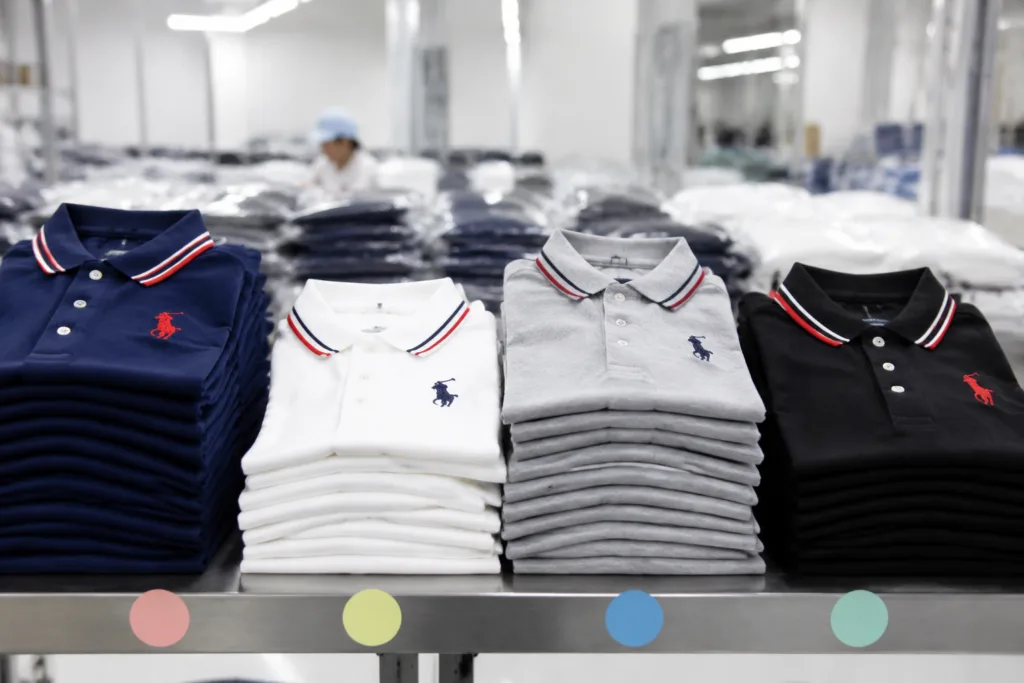
Departments may need different colors, but the palette should still feel like one program. A retail team might use navy for front-of-house staff and gray for stockroom staff, while keeping the same fabric and logo placement. That keeps the system coordinated without making it boring.
Use Department Differences Without Breaking the Brand
Department distinction is useful when employees need to be identified quickly. The trick is to create separation without losing the overall brand line. In a good uniform system, the shirt family should look connected, even if the color or trim changes slightly.
Common methods include:
- Different polo shirt colors for each department
- Small changes in piping, placket, or collar color
- Logo placement that stays fixed across all versions
- Optional name embroidery for client-facing teams
This is where polo shirt customization for uniforms becomes especially useful. Small design adjustments can make employee polo shirts more practical for different job roles while still keeping the program visually unified.
The mistake to avoid is making each department too different. If the variations are too large, the uniform stops feeling like one system and starts feeling like several unrelated products.
Set Logo Rules Early
Logo placement is one of the most important parts of polo shirts for employees because it affects both brand image and repeat production. A logo that is too large can look heavy. A logo that is too small can disappear. A logo placed differently from batch to batch creates a sloppy impression.
The best practice is to lock in a simple logo spec sheet before bulk production. That should include size, placement, thread color if embroidered, print type if printed, and approval images for the front and back if needed.
Manufacturers usually prefer one clear rule set because it reduces variation during production. If a company expects the same employee polo shirts to be reordered later, the logo file and placement standard should be saved with the order record.
- Decide embroidery or printing early.
- Approve exact placement measurements.
- Keep one master logo file.
- Store thread and color references for reorders.
Fabric Choice Affects Comfort, Appearance, and Reorder Stability
Fabric is not just about feel. It affects shrinkage, wrinkle resistance, color retention, and how well the polo holds up after repeated washing. For work polo shirts, that matters a great deal.
Cotton-rich fabric can feel softer and more natural, while polyester blends often hold shape better and dry faster. Some teams need moisture management, especially in active workplaces. Others care more about a smooth, polished look for customer contact.
The best choice depends on the job, not on trend. A uniform that looks good on day one but fades or twists after a few washes becomes expensive very quickly.
| Fabric Type | Main Strength | Best Use |
|---|---|---|
| 100% cotton | Soft hand feel | Comfort-focused office or retail use |
| Cotton-poly blend | Balanced comfort and durability | Most everyday employee polo shirts |
| Polyester blend | Fast drying and shape retention | Active, outdoor, or high-wash programs |
For teams that want a stable base for long-term reorders, fabric consistency matters just as much as style selection. That is one reason many buyers keep a tested spec and do not change materials casually once the program is running.
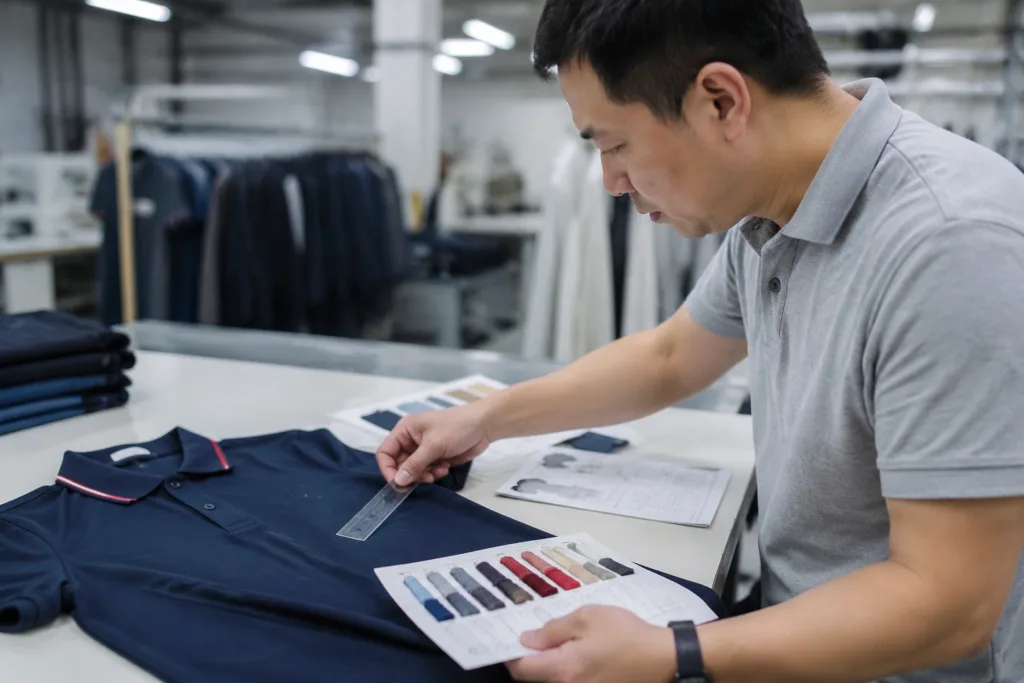
Plan the Reorder System Before the First Shipment
A strong uniform program is not finished when the first bulk order ships. The real test comes later, when new hires need shirts or when replacements are required. If the reorder process is unclear, the program becomes messy very quickly.
Good planning means keeping records of approved colors, size curves, fabric specs, logo placements, and packaging instructions. It also means deciding how many extra units to hold as reserve stock. That reserve may feel unnecessary at the start, but it saves time later.
In practice, companies that treat polo shirts for employees as a replenishable system do much better than companies that treat them as a one-time purchase. A uniform program should support steady continuity, not repeat the buying process from zero every time.
Coordinate Lead Times With Hiring and Seasonality
Lead time is one of the most overlooked parts of employee polo shirts. A shirt can be perfect on paper and still fail the program if it arrives after onboarding or after a seasonal shift has already started.
The buyer should plan around actual business cycles. If a company hires in batches each quarter, uniform orders should be placed early enough to absorb sampling, approval, production, inspection, and freight. If the shirts are part of a seasonal dress code, production timing should be even tighter.
From a factory perspective, the best orders are the ones that anticipate demand rather than react to it. That helps reduce rush fees, approval delays, and last-minute packaging changes.
How Ninghow Helps Build a Stable Uniform System
When Ninghow works on a program for polo shirts for employees, the focus is usually on repeatability. A factory can make a single sample look good, but the harder part is making the same result again in bulk and again on the next replenishment order.
That means checking the full production chain: fabric booking, color consistency, size grading, logo method, stitching quality, inspection points, and packing instructions. If any one of those steps changes without control, the uniform can drift.
Good manufacturing support also helps a buyer avoid over-ordering. A careful size mix, a practical reserve plan, and stable trim sourcing can make the entire program easier to manage over time.
Quality Control Keeps the Uniform Program Honest
Uniform programs only stay consistent when quality control is built into the process. Work polo shirts may look fine at first glance, but small issues can create a weak result: loose stitching, uneven collar shape, color mismatch, or poor logo alignment.
At the factory level, QC should check measurements, stitching strength, shade consistency, embroidery placement, and packaging accuracy. A buyer should also set acceptance standards before bulk begins. That prevents arguments later and keeps the process professional.
A well-run QC system is not about perfection. It is about keeping variation within a range the company can live with, order after order.
Common Mistakes Buyers Make With Employee Polo Shirts
Even experienced buyers can make avoidable mistakes when setting up polo shirts for employees. Most of these problems come from rushing the program or assuming the next order will behave exactly like the first.
- Choosing a color without a stable reference sample
- Skipping size planning and ordering random quantities
- Changing fabric without checking fit or shrinkage
- Allowing different logo versions across departments
- Forgetting to keep reserve stock for replacements
- Placing repeat orders without a saved spec sheet
These are small issues individually, but together they can weaken a uniform program. A little control at the start saves a lot of correction later.
Long-Term Reordering Works Best With Clear Records
For a uniform program to stay consistent, records need to be simple and complete. The buyer should store the approved sample, tech pack, color code, logo file, size chart, packing method, and past order quantities in one place. That makes repeat ordering much easier.
In our experience, companies that keep good records are faster to support and easier to scale. They can add new staff, open a new location, or shift to a new seasonal cycle without rebuilding the program from scratch.
That is the real goal with employee polo shirts: not just a shirt that works today, but a uniform system that still works six months or two years from now.
Conclusion
Polo shirts for employees work best when they are managed as a uniform program, not a one-time apparel order. The main pieces are simple: choose a practical fit, lock in size ratios, control colors, define department differences carefully, set logo standards, and plan reorder support from the beginning.
From a manufacturing standpoint, the most reliable programs are the ones with clear specs and stable expectations. When the buyer and factory are aligned, work polo shirts stay consistent, easier to replenish, and more useful for the business over time. That is how a basic garment becomes a dependable part of the company’s daily operation.
Frequently Asked Questions
Frequently Asked Questions
What makes polo shirts for employees better than T-shirts?
Polo shirts for employees usually look more polished while still staying comfortable. They are a strong choice when a company wants a cleaner work image without moving to formal shirts.
How many size options should a uniform program include?
Most programs need a practical full range from small to extra large, with extended sizes if the team requires them. The right mix depends on the actual workforce, not a standard retail guess.
How do you keep uniform colors consistent across reorders?
Use a master sample, save the exact color reference, and keep the same fabric source whenever possible. Reorders should always match the approved standard before production begins.
Should different departments wear different polo colors?
Yes, if department separation is useful for operations or customer service. The key is to keep the overall style family consistent so the program still feels like one system.
What is the best logo method for work polo shirts?
Embroidery is often preferred for a durable, professional look, while printing can suit certain branding needs. The best method depends on fabric, budget, and how formal the uniform should appear.
How much extra stock should a company keep?
A small reserve is usually wise for new hires, exchanges, and damage replacement. The exact amount depends on turnover, seasonality, and how often the company reorders.
For teams building a practical uniform system, the next step is usually to compare shirt style, fabric, and production method against the way the garments will actually be used. That is where the program becomes more than apparel and starts becoming a reliable workplace standard.