








If you are comparing quotes from apparel suppliers, the fastest way to get confused is to look only at the final unit price. In practice, private label clothing cost is built from several moving parts: fabric, trims, decoration, labor, sampling, packaging, quality checks, and how much fixed cost can be spread across the order. For founders and sourcing teams, understanding that structure is the difference between accepting a quote and actually evaluating it.
If your project includes custom branding, sample development, or startup-friendly order quantities, it helps to review private label apparel development options early. From a manufacturing perspective, the smartest costing conversations happen when buyers already know their fabric target, fit goal, decoration method, and packaging needs, because those decisions shape sampling time, minimums, and the way we build the final price.
How manufacturers calculate unit price
At a basic level, we calculate unit price with a simple model:
Unit price = materials + trims + labor + overhead + profit + extras
Then we adjust for quantity, complexity, and timeline. Extras may include sampling amortization, testing, freight terms, packaging upgrades, or special finishing. The important point is that a quote is rarely one single cost; it is a bundle of direct and indirect costs shaped by your spec.
A practical way to think about pricing is this:
Fixed costs are things like pattern development, sample rounds, setup, and some testing. These costs do not change much whether you order 300 pieces or 3,000 pieces.
Variable costs are things like fabric consumption, trim count, sewing minutes, decoration area, and packaging. These rise with every additional garment.
That is why the same hoodie can look expensive at 100 pieces and far more efficient at 1,000 pieces. The factory is not simply “discounting”; it is spreading fixed work over more units.
The seven primary cost drivers to ask about first
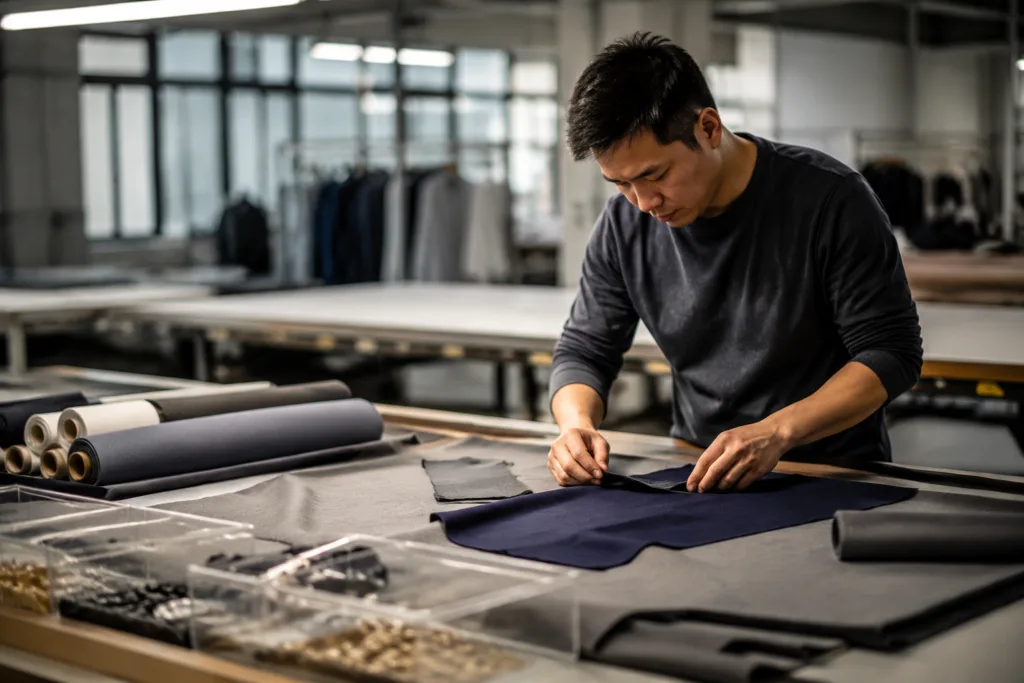
Before you accept any quote, ask suppliers to clarify these seven items:
- Fabric type, composition, and GSM
- Garment construction complexity
- Decoration method and setup fees
- Trims, labels, and private branding details
- Sample rounds and development scope
- MOQ and size/color breakdown
- Packaging, testing, and shipping terms
When these are unclear, quotes are often impossible to compare. Two suppliers can quote the same style and still be pricing different fabrics, different sewing standards, or different packaging assumptions. That is one reason buyers sometimes think private label clothing cost is inconsistent when the real issue is incomplete information.
Fabric is usually the biggest price lever
Fabric choice often has the largest impact on total garment cost because it affects raw material price, cutting efficiency, labor behavior, and garment feel. A lightweight cotton jersey, a combed cotton/spandex blend, and a heavy brushed fleece may all look like “basic tops” from a buyer’s point of view, but they behave very differently in production.
What changes fabric cost
- Fiber type: cotton, polyester, rayon, nylon, wool, or blends all carry different base costs.
- Composition: adding spandex, recycled content, or specialty fibers usually increases cost.
- GSM or fabric weight: heavier fabric generally uses more material per garment.
- Construction: knit fabrics and woven fabrics sew differently and may require different allowances.
- Finish: brushing, peaching, anti-pilling, moisture management, or wicking can raise price.
For example, a 180 GSM cotton tee usually costs less than a 240 GSM premium tee because the heavier version uses more yarn and often feels more substantial. But if a brand is positioning a product as premium retail, the higher fabric cost may be justified by better hand feel and lower return risk.
In our own production work, we often see buyers save money on fabric only to lose value later through poor drape, shrinkage, or customer complaints. Fabric should be chosen by use case, not just by the lowest quote.
Fabric sourcing options and cost impact
Fabric sourcing method changes both price and timing. Stocked fabrics are usually the fastest and easiest to price. Custom-developed fabrics, custom dyeing, or custom prints add more steps and usually more cost.
| Fabric option | Cost effect | Lead time effect | Buyer fit |
|---|---|---|---|
| Stock fabric | Lower setup cost, often better for small runs | Faster | Best for standard basics and early launches |
| Custom dyeing | Higher because of dye setup and lab dips | Longer | Best for brand-specific colors |
| Custom print base | Higher due to print prep and yield considerations | Longer | Best for statement styles |
| Imported specialty fabric | Can be higher with shipping and duties | Variable | Best when fabric performance matters most |
If your project needs brand-specific shade matching, custom fabric dyeing options and cost trade-offs can be a useful topic to resolve early. Lab dips, strike-offs, and approval rounds may look like small steps, but they influence both timeline and the final quote. A delayed fabric approval often creates rush costs later.
Trims, labels, and branding details add up quickly
Trims are small on a spec sheet, but they can materially change the cost of a style. A zipper hoodie, for example, requires more components than a pullover hoodie. A jacket with branded snaps, cord ends, and internal binding has a very different cost structure from a simple T-shirt.
Common trim items include zippers, buttons, rivets, elastic, drawcords, interlinings, pocket bags, sew-in labels, hangtags, and care labels. Each item has a unit price, plus possible supplier minimums or setup fees. If you request custom-dyed cords, branded zipper pullers, or specialty elastic, expect the quote to rise.
Label choices also matter. Woven labels usually cost more than simple printed labels, but they often create a more premium brand impression. Heat transfer labels can reduce bulk and improve comfort, but they may require test runs to confirm wash durability. Hangtags are not expensive individually, but custom shapes, strings, specialty paper, or multi-piece tag sets can increase the per-unit packaging cost.
Private branding costs that are easy to overlook
- Custom neck labels or woven main labels
- Size labels and care content labels
- Hangtag design and printing
- Polybag printing or insert cards
- Sticker systems for size and color identification
If your style uses many of these elements, the private label clothing cost can move much more than the garment body itself suggests. From a manufacturer’s perspective, the simplest way to control this is to standardize your brand kit across multiple products.
Decoration method changes both setup cost and run cost
Surface decoration is another major cost driver, especially for branded basics and sportswear. A small chest print, a full front graphic, embroidered chest logo, or sublimated pattern all use different production methods and pricing logic.
Screen printing usually has lower run cost for larger quantities, but it adds setup work for screens and color separation. Digital printing can be more flexible for small runs and complex artwork, but unit cost may be higher. Embroidery often creates a premium finish, but it increases labor minutes and can affect garment drape or stretch. Sublimation works well on performance polyester and all-over graphics, but it depends on fabric compatibility. Heat transfer can be efficient for smaller runs, but it requires durability testing and may not suit every application.
The main question is not “Which decoration is cheapest?” It is “Which decoration fits the fabric, the quantity, and the brand standard?” A lightweight performance tee with a large embroidered logo may be technically possible but commercially inefficient. A dense printed graphic on a dark garment may require more passes, more setup, or a more expensive process than expected.
Decoration choice and cost logic
- Low setup, higher flexibility: heat transfer, digital print
- Better for scale: screen print
- Premium look, higher labor: embroidery
- Fabric-dependent solution: sublimation
For buyers managing sportswear or branded activewear, decoration should be planned alongside garment use, not after pricing. That is especially true for repeat orders, where consistency matters more than a one-off sample effect.
Construction complexity drives labor minutes
One of the most underestimated cost inputs is how long a garment takes to sew. Labor time is not just about the number of operations; it is also about handling difficulty, seam types, reinforcements, alignment, and quality standards. A simple tee may move quickly through the line, while a lined jacket, panelled hoodie, or technical short may require significantly more minutes.
As construction becomes more complex, labor minutes rise. More panels mean more sewing operations. Gussets, linings, rib inserts, bartacks, flatlock seams, and special pocket construction all add time. If a style needs tighter tolerances or a cleaner inside finish, the factory may spend more time per piece to achieve it.
For cost planning, think in terms of manufacturing effort:
- Low complexity: basic tees, simple polos, straightforward shorts
- Medium complexity: hoodies with multiple trim elements, panelled joggers
- High complexity: technical jackets, lined outerwear, performance sets with many details
At Ninghow, we often advise buyers to decide whether the style is meant to be a volume basic or a premium detail-driven garment. That decision influences stitch count, operation flow, inspection time, and ultimately the quote.
Patterns, grading, and colorways affect the quote more than many buyers expect
Pattern work is a real cost, especially when a new fit must be developed from scratch. If the garment needs multiple revisions, each revision can add pattern time, sample labor, and delays in fabric or trim booking. Grading also matters because every size needs to preserve fit intent while respecting body variation.
When a brand asks for a full size run, the factory has to manage grading rules, marker efficiency, and cut planning. More sizes mean more complexity in cutting and packing. If the size range includes extended sizes, the grading may require extra adjustment and additional fitting checks.
Colorways are another cost factor. Multiple colors can increase dye lots, changeover time, and inventory risk. If each color needs a separate lab dip or approval, the timeline stretches. Garment dye and yarn dye usually add more process complexity than piece dye, especially when color consistency is important across a collection.
As a simple rule, every added colorway should be justified by demand, not just by design preference. A brand can easily turn a clean launch into a costly production puzzle by asking for too many options too early.
Sampling is not free, even when it is credited later
Sampling costs are often treated as a small line item, but they are part of real development effort. Proto samples, fit samples, fabric samples, size set samples, and final pre-production samples all take labor, material, and shipping. If there are revisions, the cost rises further.
We usually tell buyers to treat sampling as a separate development budget, not as a hidden discount to the first PO. The first order may absorb some sample cost if the supplier credits it, but the buyer should still understand what work happened before bulk production started.
For brands new to development, it helps to study the apparel sampling process and sample cost drivers. That makes it easier to compare quotes that include multiple sample rounds versus quotes that only price bulk production. A low bulk quote with expensive or slow sampling can be more costly overall than a slightly higher quote with better development support.
How sample costs are often amortized
Sample expenses may be absorbed into the first bulk order, split across the PO, or charged separately. There is no single standard. The key is to ask whether the quoted unit price includes sample recovery, tooling, or development time. If it does, you should know how much of the price is tied to one-time work.
MOQ changes the economics of every line item
MOQ matters because it controls how fixed costs are spread. If you order less, each unit carries more of the setup burden. If you order more, the per-piece cost often falls, but inventory risk rises. That is why low-MOQ quotes usually look higher on a unit basis.
A simple example:
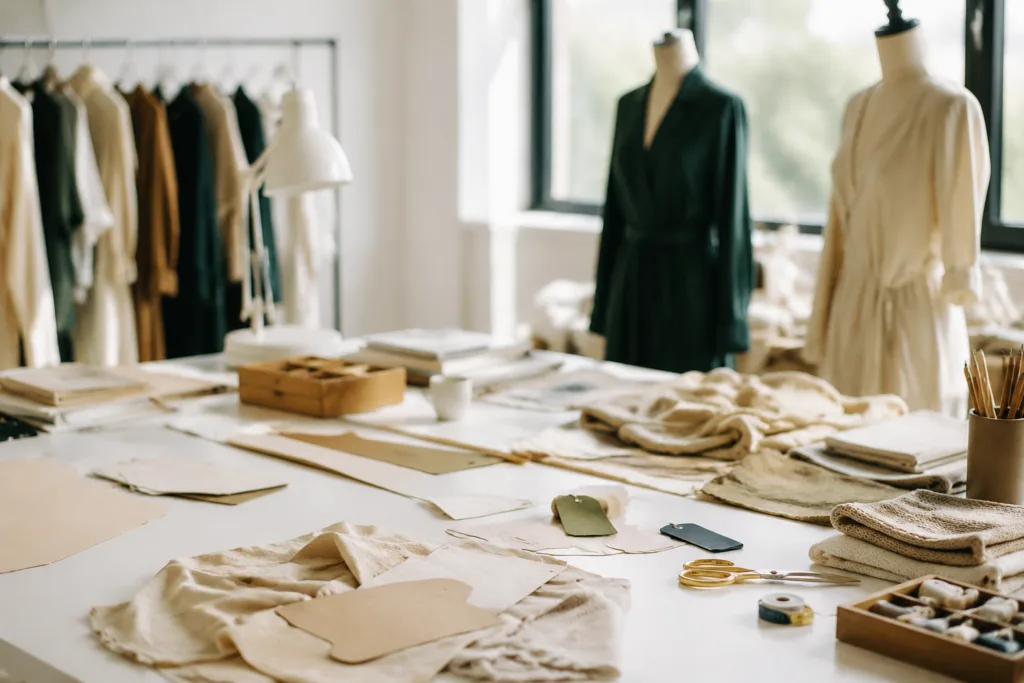
- 100 units may require the same pattern work, approvals, and setup as 500 units
- The fabric may need to be purchased in a less efficient quantity
- Trim suppliers may charge small-run premiums
- Packaging and handling may not benefit from scale yet
For startups, this does not mean small orders are bad. It means the cost structure is different. If the goal is market testing, lower quantity can be a better commercial decision even with a higher unit cost. If the goal is a stable replenishment style, larger runs often make more sense.
For teams evaluating smaller launch quantities, low MOQ clothing manufacturing options for small runs can help you compare how flexibility affects fabric sourcing, setup effort, and pricing tiers. In many cases, the best strategy is to simplify the style so the smaller run stays commercially viable.
Production method and factory capability matter
Different garment categories use different production systems. Cut-and-sew programs rely on fabric cutting and assembly. Fully-fashioned knitwear can reduce waste in some cases but needs different machinery and planning. Knit-to-shape production can change how the garment is built and priced.
Factory capability also matters. A manufacturer that is optimized for basic tees may price a technical outerwear style conservatively because it requires different equipment, more operators, or specialized QA. Conversely, a factory with the right line setup may produce a style more efficiently and with less risk.
That is why a quote should always be read alongside the factory’s process fit, not just the number. If the facility is not aligned with the product type, the quote may be attractive but the execution risk can be high.
Finishing, washing, and special processes can raise both cost and risk
Special finishing often improves product feel or appearance, but it also introduces uncertainty. Enzyme wash can soften the fabric. Garment dye can create a specific visual effect. Stone wash and other aggressive finishes can change texture and size behavior. Coatings or specialty treatments can make the garment more unique, but they require more control.
These processes usually add direct processing cost, additional inspection, and a higher chance of variation. If a wash effect is not consistent, rework or rejection can happen. That risk should be acknowledged in the quote.
Buyers should ask whether the price includes shrinkage allowance, wash loss, re-inspection, or extra handling after finishing. Those details often explain why two quotes for the same silhouette can differ materially.
Packaging and retail-ready details influence per-unit cost
Packaging seems simple until it becomes retail-ready. A standard polybag is one thing. A folded garment with size sticker, barcode label, hangtag, carton insert, and branded box is another. Each added step costs labor and materials.
If your product is intended for shelf display or direct-to-consumer delivery, packaging quality becomes part of the brand experience. But if the garment is for teamwear, club distribution, or wholesale, a simplified packaging spec may save money without hurting the customer outcome.
As a rule, packaging should match the sales channel. Over-packaging a bulk wholesale order wastes money. Under-packaging a premium retail style can create downstream handling issues.
Quality control, testing, and compliance are part of real cost
Quality control is not a nice-to-have. It is a cost that protects the rest of the order. Inline inspection, final inspection, measurement checks, needle detection where relevant, and lab testing all consume time and resources. If a quote ignores QC, the final production result may become expensive in rework.
Depending on the product and market, testing may be needed for colorfastness, shrinkage, pilling, or chemical compliance. Buyers sometimes request certifications or independent testing standards, and those can affect fabric choice, supplier selection, and cost.
It is wise to budget for some rework contingency, especially on new styles or first-time supplier relationships. Stronger QC at the front end often reduces total landed cost by avoiding customer complaints, chargebacks, and replacement inventory.
Lead time and seasonality can change the price
Time pressure is expensive. If you need a rush slot, you may pay more for labor priority, fabric allocation, or overtime. During peak seasons, factories may quote more conservatively because capacity is tight. The same style can cost less when booked early and more when requested late.
Our production lead time and its cost implications guide explains why timing affects material booking, line scheduling, and approval windows. From a sourcing perspective, the lesson is simple: a more realistic timeline gives the factory more room to control cost.
How to read supplier quotes line by line
To compare quotes properly, ask for detail. A useful quote should show the fabric spec, construction notes, trim list, decoration method, packaging assumption, MOQ, sample terms, and shipping term. If the supplier gives only one lump number, you cannot tell where the cost is coming from.
Ask for these details:
- Fabric composition, GSM, and source
- Trim list and branding components
- Decoration method and setup fees
- Labor assumption or complexity notes
- Sample cost and sample credit policy
- MOQ and price break tiers
- Packaging and carton assumptions
- FOB, EXW, or CIF terms
Red flags include vague fabric descriptions, unclear quantity breakpoints, no mention of sample recovery, and quotes that seem much lower than the rest without any explanation. A low quote is only useful if it describes the same thing.
Worked examples of cost movement
Example one: basic tee versus heavier premium tee
A standard 180 GSM cotton tee may be cheaper than a 240 GSM version. The heavier tee uses more fabric, may require different cutting behavior, and usually targets a higher retail position. If the heavier style also uses a woven label and premium packaging, the total private label clothing cost can rise across several small line items rather than one large one.
Example two: small-run hoodie with embroidery
A low-MOQ hoodie with chest embroidery, custom labels, and branded hangtags can cost more per unit than a larger run of the same style. The reason is not only quantity; it is the spread of setup, embroidery programming, and trim sourcing across fewer garments.
Example three: sports short with custom dyeing
A performance short using custom-dyed fabric, heat transfer branding, and multiple size labels may seem simple on paper, but the combination of dye approval, decoration testing, and size management can add time and cost. If the order is small, a simpler stock-fabric version may produce a better launch margin.
Practical ways to reduce cost without hurting the product
Cost reduction should protect your brand standard. The goal is not to make the garment cheap; it is to remove unnecessary complexity.
- Use stock fabric when the exact custom shade is not essential
- Limit colorways in the first production run
- Standardize labels and hangtags across styles
- Choose one decoration method instead of combining several
- Simplify trims, especially specialty components
- Optimize the tech pack before requesting quotes
- Consolidate suppliers where practical to reduce handoff friction
If a style must remain premium, reduce cost elsewhere instead of downgrading the customer-visible features that define the product.
Quote-prep checklist for buyers
Before requesting pricing, prepare a complete package so suppliers can quote comparably:
- Clear tech pack with measurements
- Fabric target with composition and GSM
- Color references or Pantone targets
- Decoration placement and size
- Label and packaging requirements
- Size range and quantity by size
- Target delivery window
- Market and compliance needs
If possible, include reference photos and notes on what should be matched exactly versus what can be optimized. That helps the factory price the right product instead of guessing.
How to validate whether a quote is realistic
Ask the supplier for evidence of how the number was built. This can include similar production photos, fabric swatches, trim references, mill or vendor pricing logic, and confirmation of sampling or testing assumptions. You do not need every factory’s internal spreadsheet, but you do need enough detail to understand the quote.
Good validation questions include:
- Is this price based on the exact fabric and trim spec?
- What changes if the quantity increases?
- What happens if we reduce decoration or simplify packaging?
- Does the price include sample recovery or setup?
- Are freight and duties included or excluded?
The best sourcing decisions come from transparent assumptions. When assumptions are visible, comparison becomes much easier.
Decision framework: balancing cost, brand, and speed
When the numbers compete, rank the options against three questions:
- Brand integrity: Does the garment still look and feel like the brand promise?
- Time-to-market: Can the factory deliver within the launch window?
- Commercial viability: Does the landed cost support the target margin?
Sometimes the cheapest quote is not the smartest. Sometimes the fastest quote is not the safest. A sound manufacturing decision balances product quality, timeline, and margin rather than chasing one variable alone.
Conclusion
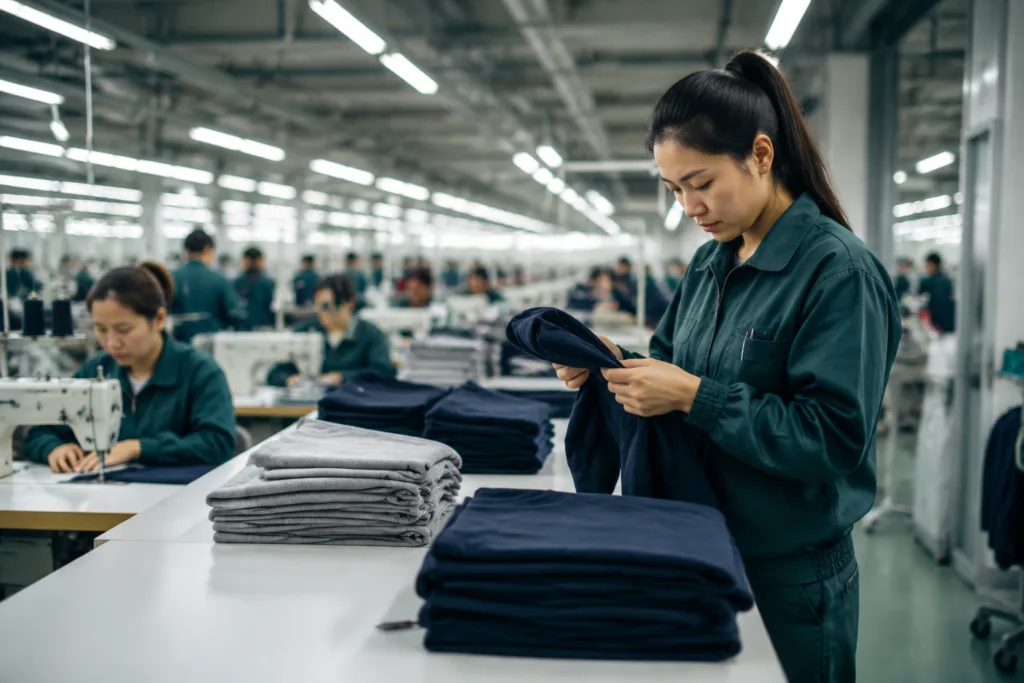
Private label pricing becomes manageable once you break it into parts. Fabric, trims, labels, decoration, construction, sampling, MOQ, packaging, QC, and lead time all shape the final figure. If you understand how each one moves the number, you can ask better questions, compare quotes more fairly, and avoid hidden cost surprises. That is the real value of understanding private label clothing cost: not just knowing the price, but knowing why it is the price.
For sourcing teams and founders, the next step is simple: prepare a clean tech pack, define the non-negotiables, and request quotes that separate fixed costs from variable costs. That gives you a defensible basis for decision-making and a more accurate path to bulk production.
FAQs
Why do two suppliers quote very different prices for the same garment?
They may be quoting different fabric grades, trim packages, sewing standards, packaging assumptions, or MOQ structures. A fair comparison requires the same spec and the same commercial terms.
What is the biggest driver of private label clothing cost?
Fabric is often the largest driver, but construction complexity and order quantity can also have a major effect. For technical or branded styles, decoration and trim choices may become equally important.
Does a lower MOQ always mean a higher unit price?
Usually yes, because fixed costs are spread over fewer units and suppliers may face less efficient material sourcing. Small runs can still be the right choice when you are testing a market or launching a new product.
How much do samples usually affect the first order price?
It depends on whether sample work is credited, absorbed, or billed separately. Prototype, fit, and final samples all take real labor and materials, so you should always ask how those costs are handled.
What should I check before approving a quote?
Check fabric spec, GSM, decoration method, trims, labeling, packaging, shipping terms, MOQ, sample policy, and delivery time. If any of those are missing, the quote is not fully comparable.
How can I reduce cost without lowering quality too much?
Simplify trims, reduce colorways, choose stock fabric when possible, standardize labels, and keep the first run focused. The goal is to cut unnecessary complexity, not remove the features that define the product.