


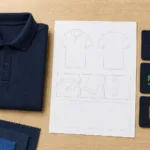

The choice between CMT and full-package apparel manufacturing depends on who can manage materials and production responsibilities—not which quote shows the lowest sewing charge. When evaluating Cut and Sew Services, choose CMT when retaining material control is deliberate and adequately resourced; consider full-package when broader supplier coordination better fits your team. Compare both against the same garment requirements and total project cost.
CMT vs Full-Package Apparel Manufacturing: Choose by Responsibility and Total Project Cost
CMT means cut, make, trim. The buyer typically supplies some or all principal materials, while the manufacturer handles confirmed cutting, sewing, trimming, and related operations. The name does not establish who purchases every trim or performs development.
Full-package manufacturing describes broader coordination: the manufacturer may manage agreed materials, development, production, quality activities, and packing. Exact responsibilities still depend on the quotation and contract.
Full-package is not the same as FOB. FOB describes a trade or delivery basis; full-package describes production responsibility. Neither term alone establishes the complete service scope.
CMT is not automatically cheaper. Material purchasing, testing, inspection, shortages, waste, freight, rework, and buyer coordination remain costs even when excluded from the factory invoice.
Copyable comparison brief
Complete these fields for both quotations before comparing totals.
| Field | Buyer entry |
|---|---|
| Common garment scope | Style/version; materials; size mix; decoration; labels |
| Buyer-supplied items | Item; specification; quantity; arrival date |
| Requested factory scope | Development; sourcing; checks; production; packing |
| Comparison boundary | Approvals; testing; delivery basis; destination; exclusions |
| Unresolved ownership | Task; proposed owner; cost payer; written confirmation |

CMT vs Full-Package Responsibility Matrix: Who Owns Each Production Task?
Use a responsibility matrix with separate entries for the buyer, manufacturer, possible third party, buyer inputs, and written confirmation. The allocations below are starting assumptions, not universal duties.
Materials and development
Fabric, lining, trims, labels, and packaging materials: CMT commonly leaves purchasing with the buyer; full-package may assign it to the manufacturer. Mills and nominated vendors may supply either model. Provide specifications, quantities, artwork, and approved references; confirm purchasing, receiving, shortage, and replacement ownership separately.
Technical specifications, patterns, grading, prototypes, and fit samples: the buyer supplies requirements and approvals. Development may be buyer-managed under CMT or manufacturer-coordinated under full-package; independent patternmakers may participate. Confirm deliverables, version ownership, approval authority, and charges.
Checks and execution
Testing coordination and incoming material checks: name the coordinator under either model. Laboratories or inspectors may perform agreed work. Provide test requirements and material acceptance criteria; confirm coverage, reporting, payment, and release authority. Buyer-supplied fabric still needs usable-width, shade-lot, shrinkage, defect, and quantity controls.
Cutting, sewing, and decoration: cutting and sewing normally sit within the agreed manufacturing scope; decoration may involve a specialist. Supply approved construction and artwork; confirm placement, process, subcontracting, and rework responsibility.
Final inspection, packing, freight, and delivery documentation: do not infer inclusion from either model. Inspectors and freight providers may remain separate. Supply size ratios, barcodes, carton marks, packing-list requirements, and destination details; confirm who checks, packs, books transport, prepares documents, and pays.
For a Ninghow quotation request, state proposed owners and unresolved tasks. Any sourcing, receiving, inspection, or logistics scope requires project-specific confirmation.
How to Compare CMT and Full-Package Total Project Cost
A CMT charge can be compared with a full-package garment price only after scope normalization. A lower factory charge may simply leave more purchasing and coordination outside the invoice.
Use this comparison: quoted production cost + excluded buyer-side costs + explicit risk allowances = comparable project cost. Separate confirmed expenses from estimates so uncertainty remains visible.
Account for fabric and trims, patterns and grading, development samples, decoration, labels, testing, inspection, packaging, freight, applicable duties and destination charges, buyer coordination time, and potential shortage or rework costs. Avoid counting items twice when already included.
Hold material quality, usable width, size ratio, decoration, labels, approved sample, testing, packing method, and delivery basis constant. A broader full-package quotation may include coordination without including every test or transport charge. How to Define Your Custom Clothing Manufacturing Requirements Before Requesting Quotes helps establish the common brief.
Estimate fabric consumption from the actual pattern, usable width, size mix, stripe or check matching, shrinkage, and stated waste assumptions—not garment weight alone. Separate net pattern consumption from procurement allowance. Is CMT cheaper once sourcing and testing are included? Not necessarily; only the completed comparison can answer that for the project.
Buyer-Supplied Fabric and Trims: Production-Readiness Checklist
Before shipping buyer-supplied materials, establish production readiness against approved references. Supplying fabric does not automatically assign its inspection to the manufacturer.
Match specifications and quantities
Provide fabric construction, color reference, usable width, roll and lot identification, quantities, shrinkage assumptions, known defects, and shade variations. Include trim specifications, label artwork, decoration files, and required test evidence. Supply approved patterns or sufficient development information before requesting consumption estimates.
Keep net pattern consumption separate from the procurement allowance for cutting waste or unusable material. Assign ownership of excess stock, shortfalls, defective material, replacement purchases, and associated transport.
Agree on arrival review and exceptions
Define who checks counts, identification, packaging, condition, and conformity with the approved specification on arrival. Specify the review coverage, records, discrepancy reporting, and authority to release materials for cutting. These checks are an agreed activity, not an automatic guarantee of material suitability.
Document who pays for delays, replenishment, or rework when materials are incomplete or unsuitable. No substitution should proceed without approval: similar composition and GSM do not establish equivalence. Review affected appearance, fit, construction, processing, and performance requirements, then record the approved change.

Sampling, Testing, Quality Control, Decoration, and Packing Before Bulk
Once arrival and substitution responsibilities are documented, the next control point is approval before bulk production. A practical sequence is: technical pack or reference sample, pattern and prototype, fit review, revised sample where needed, pre-production approval, bulk production, final inspection, and packing verification. The exact stages depend on the garment and project scope, but each approval should identify the version being released.
Assign the inputs before sampling starts: measurement chart, construction details, material standards, decoration artwork, label files, size ratios, barcode data, and packing instructions. An approved sample should be traceable to these inputs. This is also where a buyer should confirm whether the manufacturer coordinates testing, whether the buyer supplies reports, and who pays if additional evaluation is required.
Testing responsibility should be written as a project task, not implied by the manufacturing model. Record the required property, sample source, evaluator, timing, pass criteria, and cost owner. A fabric report may not establish the condition of the finished garment, particularly when construction, decoration, closures, or washing affect the result. For US-market care instructions, the FTC states that a reasonable basis should support care information for the garment as a whole; buyers should confirm the applicable market and product category before finalizing labels.
Fit and appearance also need a change-control loop. Check measurements, grading, size distribution, construction, decoration placement, label attachment, and the effect of any substituted material. A replacement with similar composition or GSM is not automatically equivalent. Reapprove affected fit, appearance, processing, or performance requirements before bulk release.
Decoration and labeling should be checked against the approved artwork and physical sample: position, scale, color, method, brand identity, care content, and attachment. Final checks can include measurements, decoration, labels, size ratios, carton marks, barcode information, and packing-list consistency. Ninghow’s public quality-control guidance identifies these items as part of final checks, but the inspection coverage and acceptance rules still need project confirmation.
Packing is part of the delivered scope, not a minor finishing detail. Choose prepacks or open-size packing according to receiving, replenishment, box, barcode, and destination requirements. Confirm whether each SKU, logo version, and size ratio has its own packing instruction. Buyers preparing a development brief can also use this clothing-buying preparation checklist to organize the information sent for review.

CMT or Full-Package? Two Hypothetical Buyer Scenarios
The right model depends on whether the buyer can retain responsibility without creating gaps between materials, approvals, production, and delivery. These hypothetical examples show how the decision can be made without treating either model as universally better.
1. Private-label brand with controlled materials
Buyer situation: A private-label brand has an approved fabric mill, defined material specifications, trims, labels, artwork, a size chart, and an experienced sourcing team. It wants a manufacturer to cut and sew the approved inputs.
Available evidence: The buyer can provide material purchase records, usable width and consumption assumptions, arrival dates, approved physical standards, artwork, and a documented size ratio. It can also assign responsibility for shortages, replenishment, testing coordination, and sample approval.
Evidence gap: The buyer has not yet confirmed who checks incoming quantities and condition, who may release materials for cutting, or how an unsuitable lot is handled. The production quotation also does not state whether packing and final inspection are included.
Outcome: Clarify, then potentially Go with CMT. CMT may fit when buyer-supplied materials and retained coordination are deliberate and resourced. First complete the responsibility matrix, confirm the manufacturer’s applicable scope, and compare the quotation after adding buyer-side procurement, inspection, testing, shortage, and replenishment costs.
2. Startup importer without a procurement system
Buyer situation: A startup has a design direction, reference garments, target colors, logo artwork, and an estimated quantity, but no established fabric or trim sources. It also lacks consumption calculations, grading control, and a complete packing specification.
Available evidence: The buyer can provide sketches, reference samples, intended sizes, decoration files, destination, and a preliminary quantity. It cannot yet provide approved material standards, confirmed suppliers, or a release-ready technical pack.
Evidence gap: Material composition, usable width, consumption basis, testing needs, label content, size ratios, carton marks, and responsibility for substitutions remain open. A broad quotation may therefore appear complete while excluding development, material coordination, or packing tasks.
Outcome: Clarify before choosing full-package; Pause bulk approval. A broader full-package route may reduce interfaces if the quotation clearly defines material development, sourcing coordination, approvals, testing coordination, decoration, packing, and exclusions. The buyer should approve materials and samples before committing to bulk, and should not treat an FOB term as proof that these services are included.
For either route, a uniform or team program with multiple logo versions, size mixes, labels, and destinations should use a variant matrix connecting each approved garment specification to its logo, packing format, and destination.
Complete a Responsibility Matrix Before Sampling or Bulk Production
Before requesting a final quotation or releasing bulk production, complete a responsibility brief that makes every open interface visible. Use one row for each task and assign the decision owner, approval record, and cost owner.
- Product: garment category, construction, reference sample, technical pack, measurement chart, grading, and approved version.
- Materials: fabric and trim source, usable width, net pattern consumption, procurement allowance, quantity, arrival date, inspection coverage, and shortage response.
- Development: pattern, prototype, fit review, sample approval, testing requirement, decoration artwork, label files, and change control.
- Production and release: size ratios, inspection scope, substitution approval, final measurement checks, decoration and label checks, and release authority.
- Packing and delivery: prepacks or open-size packing, box requirements, carton marks, barcodes, packing-list format, destination, and delivery basis.
Ask each quotation to identify included and excluded services, material assumptions, any development charges, inspection scope, packing deliverables, and the basis for fabric-consumption estimates. Compare CMT and full-package offers only after both describe the same garment, quantity, approval stage, packing requirement, and delivery scope.
Record FOB or another delivery term in a separate field. It describes a delivery arrangement and does not, by itself, define who develops the garment, buys materials, coordinates testing, manages shortages, or prepares packing information.
For every change, record the approved version, requested change, affected materials or inventory, cost effect, schedule effect, testing effect, and written approval. Submit this matrix with the material list, artwork, size information, quantities, destination, and any buyer-supplied-material scope for a project-specific review. The applicable responsibility and quotation basis remain subject to confirmation.
For a project review, send your garment specifications, quantities, size distribution, logo and decoration files, destination, material sources, and a clear list of buyer-supplied fabric or trims. Share the responsibility brief with Ninghow through its contact page so the applicable production scope and quotation basis can be confirmed.
Frequently Asked Questions
Who provides fabric under CMT manufacturing?
Under CMT, the buyer typically provides the fabric and other agreed production materials, while the manufacturer cuts, makes, and trims the garment within the confirmed scope. The contract should still identify who purchases each input, checks arrival condition and quantity, handles shortages, and approves any substitution.
Is full-package manufacturing the same as FOB shipping?
No. Full-package manufacturing describes a broader production responsibility arrangement, while FOB is a delivery term. An FOB quotation does not automatically include material sourcing, garment development, testing coordination, packing preparation, or shortage management. Those responsibilities must be stated separately in the quotation and agreement.
Who checks buyer-supplied materials?
It depends on the agreed responsibility matrix. The buyer may inspect its own materials, the manufacturer may check materials received for production, or a third party may be assigned. Define the review coverage, records, discrepancy process, release authority, and cost owner. Arrival checks do not automatically prove final material suitability.
Can a CMT quote be compared with a full-package garment price?
Only after the scopes are normalized. Add buyer-side material procurement, inspection, testing, development, decoration, packing, shortage, replenishment, and delivery costs to the CMT sewing charge where applicable. Then compare the result with a full-package price covering the same garment specification, approvals, packing requirements, and delivery basis.
Is CMT always cheaper than full-package apparel manufacturing?
No. CMT may show a lower factory charge because the buyer retains material and coordination work, but those responsibilities still carry cost and risk. Full-package pricing may include sourcing and development activities that are absent from a CMT quote. Compare total project cost and retained workload, not sewing price alone.
What costs should be added to a CMT sewing quotation?
Review fabric and trim purchase, freight and handling, incoming checks, consumption and procurement allowance, development, patterns, samples, testing, decoration, labels, inspection, packing, replenishment, shortages, rework, and delivery. Also record who pays for changes or substitutions. The exact additions depend on the agreed scope and project requirements.