




Buying clothing from China is much easier when you prepare the right product, cost, and compliance details before you ask for quotes. A complete brief helps the manufacturer match the correct fabric, construction, fit, and branding method, while reducing back-and-forth during sampling and production.
For buyers who want to evaluate custom clothing manufacturing support, it helps to think like a production team before you think like a shopper. A good supplier can guide fabric selection, fit refinement, logo application, private label setup, and bulk planning, but only if you give enough information for the factory to quote accurately and spot risks early.
Why Preparation Matters Before You Contact a Chinese Clothing Manufacturer
The best quotes come from clear inputs. When a buyer sends only a reference photo, the factory has to guess the fabric weight, size spec, print method, trims, and packaging standard, and those guesses usually create pricing gaps later.
From our manufacturing perspective, most quote problems come from missing basics rather than from difficult products. If the supplier does not know the target market, order size, fit intent, or decoration method, the first number you receive may not reflect the real production cost.
| Missing Information | Typical Result | Better Input to Send |
|---|---|---|
| Product type | Wrong fabric or structure is quoted | State the garment category and end use |
| Quantity | MOQ surprises or unstable unit pricing | Share first order volume and growth plan |
| Fabric direction | Hand feel and cost do not match expectations | Give composition, GSM range, and finish goals |
| Branding details | Decoration cost and lead time are delayed | Confirm logo method, placement, and artwork files |
Key takeaway: Preparation is not paperwork for its own sake. It is the fastest way to turn a rough idea into an accurate manufacturing quote.
Define the Product Type and End Use Clearly

Start with the garment category and what the product must do in the real world. A promotional T-shirt, a retail polo, a golf layer, and a team hoodie can all look similar in a picture, but they will not use the same fabric, fit, or construction.
Tell the manufacturer whether the item is for retail resale, team use, corporate promotion, sports performance, school uniforms, or private label launch. End use affects everything from stretch and breathability to stitching strength, shrinkage control, and packaging style.
- State the garment type clearly, such as T-shirt, polo shirt, hoodie, sweatshirt, jacket, shorts, or pants.
- Explain who will wear it, such as men, women, youth, unisex, athletes, or staff.
- Describe the season and climate, because summer weight and winter weight are very different buying decisions.
- Share the use scenario, such as retail, sports, teamwear, workwear, or event merchandise.
A short sentence like retail heavyweight unisex hoodie for fall launch gives the factory more useful direction than a long mood board without technical context.
Decide Your Order Quantity, Target MOQ, and Growth Plan
Order quantity changes the quote more than many first-time buyers expect. Lower quantities usually increase unit cost because setup, cutting, decoration, and inspection work are spread across fewer pieces, while larger orders often unlock better fabric and trim efficiency.
At Ninghow, we usually look at the first order, the repeat order potential, and the number of colors or size ratios before suggesting a production route. A buyer who plans to reorder every season should share that plan early, because it can change fabric sourcing choices and help the factory think beyond a one-time run.
- State the first order quantity by style and by color.
- Share the target MOQ you want to stay within.
- Explain whether the project may scale into a repeat program.
- Clarify if the size mix will be broad or concentrated.
- Note whether you need stock support, launch inventory, or phased delivery.
When a buyer asks for a very low MOQ with many colorways, many decoration points, and custom trims, the factory may still be able to help, but the sourcing plan needs to be realistic from the beginning.
Choose the Fabric, Composition, and Fabric Weight Range
Fabric is one of the biggest drivers of hand feel, durability, and price. If you are buying clothing from China without a final fabric decision, give the factory a target feel, a target use, and a budget band rather than a vague request for the best material.
Composition and GSM should be chosen together. A fabric that feels soft on a sample card may behave very differently once it is cut into a fitted garment, washed, and decorated with embroidery or print.
| Garment Type | Common Fabric Direction | Useful Starting GSM Range | What to Confirm |
|---|---|---|---|
| T-shirt | Cotton, combed cotton, cotton polyester blend | 140 to 220 GSM | Softness, shrinkage, opacity, print performance |
| Polo shirt | Pique cotton, cotton blend, performance knit | 160 to 240 GSM | Collar recovery, drape, breathability, pilling control |
| Hoodie or sweatshirt | French terry, brushed fleece, cotton blend | 280 to 420 GSM | Warmth, structure, shrinkage, print or embroidery support |
| Sportswear top | Polyester, spandex blend, moisture management knit | 120 to 220 GSM | Stretch, recovery, drying speed, color fastness |
If you do not know the exact fabric yet, send the target hand feel, season, wash expectation, and price target. That gives the manufacturer a workable starting point instead of forcing a guess.
Lock in Fit Requirements, Size Range, and Grading Expectations
Fit should be described in practical terms, not just by size labels. The same medium can feel slim, regular, relaxed, or oversized depending on the block, and that difference affects pattern making, grading, and sample approval.
Ask yourself whether the garment should follow a retail fashion fit, a uniform fit, or a performance fit. A tech pack that includes chest width, body length, shoulder slope, sleeve opening, and tolerance is far more useful than a simple size label list.
- State the full size range you need, including youth sizes if relevant.
- Explain whether the fit should be slim, standard, relaxed, or oversized.
- Provide a reference garment or measurement chart whenever possible.
- Confirm tolerance levels for key points, especially chest, length, and sleeve measurements.
- Specify whether the grading should be even across the range or adjusted for a target market.
Key takeaway: Fit errors are hard to fix after bulk cutting starts, so the spec sheet should answer sizing questions before sample approval.
Specify Logo Placement, Decoration Method, and Branding Details
Decoration is not just a design choice. It changes production time, cost, tooling, minimum quantity, and how the garment wears after washing. A simple print, a dense embroidery, and a sublimation design may all look good on a concept board, but they behave very differently in production.
Be specific about the logo size, placement, color count, and artwork format. If you want multiple placements, list them separately so the factory can estimate each process correctly.
| Method | Best For | Production Notes |
|---|---|---|
| Screen printing | Bold graphics and larger runs | Good for flat artwork, depends on color count and mesh setup |
| Embroidery | Polo shirts, caps, logos, and premium branding | Requires stitch file planning and may affect fabric drape |
| Heat transfer | Small runs, names, numbers, and variable data | Fast and flexible, but heat and wash testing matter |
| Sublimation | All-over graphics on polyester garments | Best when the full design is planned before cutting and sewing |
When branding is still evolving, tell the supplier which details are fixed and which are open to revision. That prevents unnecessary sample changes and helps the factory quote the right production route.
Prepare Packaging, Labels, Hangtags, and Private Label Requirements
Private label details should be decided early because they affect both sampling and final packing. Brand name spelling, label placement, care instructions, barcode needs, and carton marks all need to match the final launch plan.
A manufacturer can usually support woven labels, printed neck labels, size stickers, swing tags, polybags, and export cartons, but the buyer needs to define the style and content first. If you change label artwork after sample approval, it can add time and rework.
- Confirm the brand name exactly as it should appear on labels and hangtags.
- State whether you need woven labels, printed labels, or both.
- Provide care content, country of origin marking, and size labeling rules.
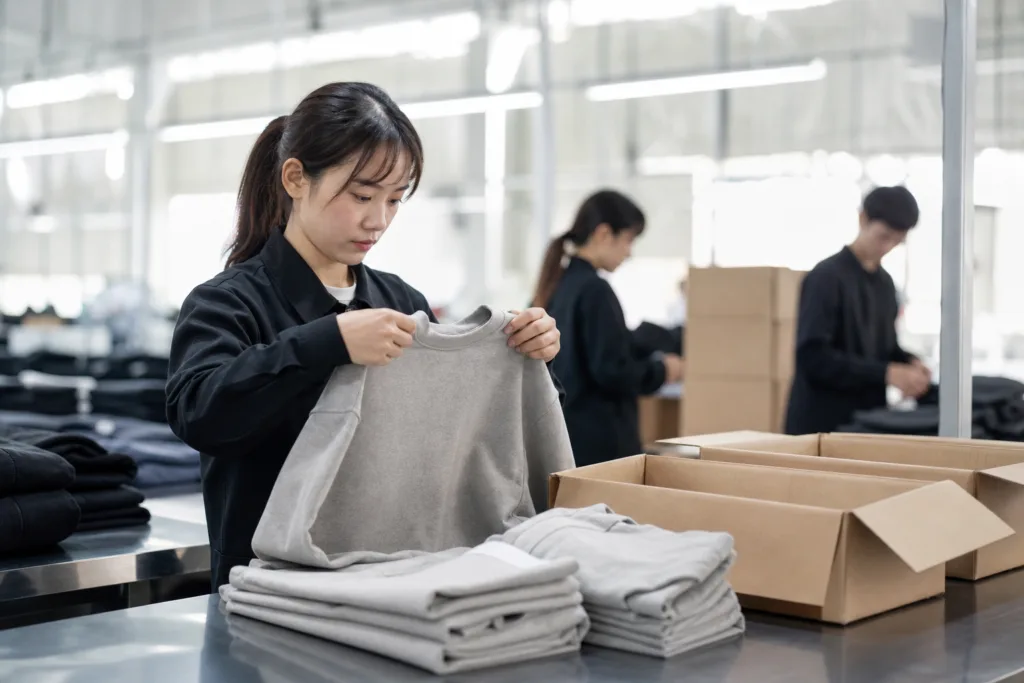
- Specify packaging format, such as folded, flat packed, or retail-ready packing.
- Share any barcode, carton, or master pack requirements for your channel.
Private label development is smoother when the factory receives the full branding picture before sample work begins, not after the sample has already been approved.
Confirm Your Target Market, Destination Country, and Compliance Needs
Destination country matters because labeling, testing, and documentation expectations can differ by market. A supplier needs to know where the goods will land so the factory can think about care labels, fiber content rules, restricted substances, and customs documents in the right context.
Shipping terms should also be clear. If you and the supplier are using different assumptions about freight, insurance, and delivery responsibility, the quote may look attractive at first and then become confusing later. The official Incoterms 2020 rules are useful for aligning shipping terms and risk allocation before you finalize the order.
- Share the destination country and any known market-specific rules.
- Confirm whether the order is for domestic resale, import, or distribution.
- State if you need special labeling for youth, performance, or promotional goods.
- Clarify who handles freight, insurance, and customs entry responsibilities.
For some buyers, compliance is simple. For others, especially when dealing with children’s apparel or branded retail programs, it should be checked early rather than treated as an afterthought.
Set a Realistic Budget and Understand What Affects Unit Cost
The cheapest quote is not always the most efficient quote. A lower unit price can hide higher costs later if the fabric is weak, the fit is off, or the packaging does not match the sales channel.
Unit cost is influenced by more than labor. Fabric quality, order quantity, decoration complexity, trim sourcing, wash treatments, packaging, inspection time, and shipping assumptions all have an impact.
| Cost Driver | Why It Raises Cost | How Buyers Can Control It |
|---|---|---|
| Fabric weight and quality | Heavier or higher-grade fabric usually costs more | Share a target range instead of asking for premium by default |
| Decoration method | Embroidery and complex prints add setup time | Limit unnecessary placements and color changes |
| Packaging | Retail packaging and inserts increase handling | Define the minimum packaging standard you actually need |
| Quantity split | Many colors or sizes can reduce production efficiency | Concentrate the initial run where demand is strongest |
If you want a tighter price range, tell the factory your target landed cost, not only your ex-factory target. That helps the manufacturer think through the whole order structure instead of quoting just one line item.
What to Include in a Manufacturer Inquiry or Tech Pack
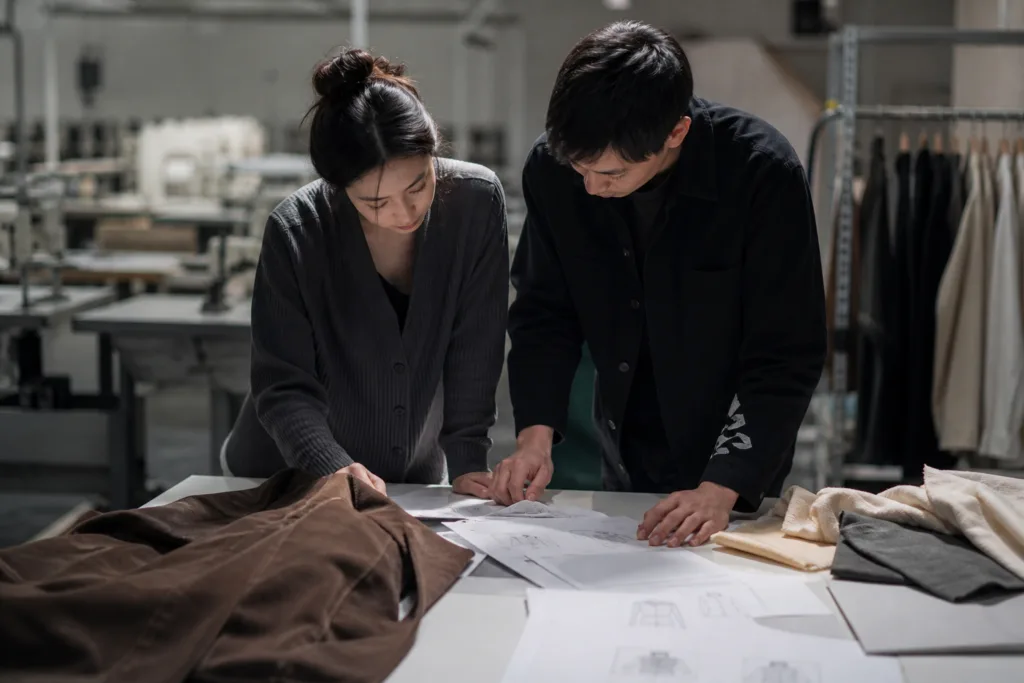
A clear inquiry saves time for both sides. If you are not ready with a full technical package, send enough information for the factory to build a workable first sample and quotation.
If you are building your first request, a practical apparel RFQ template can help you organize the essentials in one place. It is usually better to send one complete package than to send many scattered messages with missing measurements or unfinished artwork.
- Product name, use case, and target market
- Reference images or a reference garment
- Fabric composition, GSM, and finish direction
- Measurement chart and fit comments
- Logo files, placement notes, and print or embroidery method
- Label, hangtag, and packaging requirements
- Quantity by color and size
- Target price, target launch date, and ship-to country
A simple RFQ does not need to be perfect, but it should be complete enough for the manufacturer to price fabric, labor, decoration, packaging, and timing with confidence.
How to Evaluate Samples, Lead Time, and Production Risk
Sampling is where many projects either get aligned or drift off track. The sample should answer the key questions before bulk production begins: does the garment fit correctly, does the fabric feel right, does the branding look right, and can the factory repeat it at scale?
If you want to understand what happens at each stage, it helps to review the apparel sampling process and then compare it with the apparel production timeline. That makes it easier to see where approvals, fabric booking, cutting, sewing, finishing, and packing can slow down a project.
- Check measurements against the agreed spec, not against a visual guess.
- Review fabric hand feel, stretch, shrinkage risk, and color matching.
- Inspect logo placement, stitch quality, print registration, or heat transfer adhesion.
- Confirm label content, packaging style, and carton marks before bulk.
- Ask how long each change will take if the sample needs revision.
Key takeaway: Samples are not just for approval. They are the fastest way to reduce bulk production risk and identify whether your spec is complete enough.
Common Mistakes Buyers Make When Buying Clothing from China
Most avoidable problems come from incomplete or inconsistent instructions. A factory can only work with what it receives, so vague input often becomes delay, rework, or a quote that changes after the sample stage.
One common mistake is asking for a price before the product is defined well enough to quote. Another is changing the fabric, fit, or decoration method after the first sample without checking how that change affects MOQ and lead time.
- Sending only a photo without size, fabric, or branding details
- Forgetting to specify the destination market or compliance expectations
- Approving a sample before measuring it carefully
- Assuming all factories can handle the same decoration method or packaging format
- Not asking the screening questions you would normally ask a Chinese clothing manufacturer before order
- Ignoring how color count, trims, and packaging affect unit price
If you want to reduce surprises, ask direct questions early and make the supplier prove that it understands your category, your market, and your commercial target.
Final Buyer Checklist Before Requesting Quotes
Before you send requests, check that your package covers the essentials below. This is the fastest way to get comparable quotes from multiple suppliers and avoid unnecessary clarification loops.
- Product type and end use are clearly stated
- Order quantity, target MOQ, and growth plan are defined
- Fabric composition, GSM, and finish direction are included
- Fit, grading, and size range details are ready
- Logo method, placement, and artwork files are prepared
- Labels, hangtags, and packaging requirements are listed
- Destination country, shipping terms, and compliance needs are confirmed
- Target budget and timing expectations are realistic
- Sample approval criteria are written down
- One contact person owns the next revision and quote round
If you can answer those points clearly, your quotation process will be cleaner, faster, and much easier to compare.
Conclusion
When buying clothing from China, the strongest results usually come from clear preparation, not from sending the first message quickly. The more accurately you define product type, fabric, fit, branding, packaging, market, and budget, the easier it is for the manufacturer to quote, sample, and plan production without avoidable surprises.
For brands, startups, and sourcing teams, the real goal is not just to get a price. It is to get a price that reflects the actual product you want to sell, with enough detail to keep sampling and bulk production on track. Send one complete specification package, review the sample carefully, and use that approval step to protect your margin and your timeline.
Buyer FAQs Before Requesting Quotes
What should I prepare before buying clothing from China?
Prepare the product type, target use, quantities, fabric direction, size range, logo method, packaging needs, destination market, budget, and timeline. The clearer the brief, the more accurate the quote and the fewer sample corrections you will need.
How much detail do I need for an accurate quote?
Give enough detail for the manufacturer to estimate fabric, trims, labor, decoration, packaging, and freight assumptions. If you do not know every spec, provide a reference garment, photos, target price, and the non-negotiables.
What if I do not have a tech pack yet?
You can still start with a simple RFQ that includes sketches, reference images, measurements, fabric direction, branding needs, and quantity. A manufacturer can often help turn that into a first sample plan.
How does MOQ affect price and sampling?
MOQ affects price because small runs spread setup costs across fewer units. It also affects sampling because fabric availability, custom trims, and decoration methods may change whether the factory can start quickly.
Which details matter most for lead time?
Fabric availability, decoration method, sample approval speed, labeling, and shipping terms usually matter most. Faster quoting does not always mean faster production if a missing detail forces extra approvals.
What should I check before approving bulk production?
Check measurements, fabric feel, color, print or embroidery placement, label accuracy, packaging, and wash or wear expectations. Bulk approval should happen only after the sample matches your agreed spec as closely as possible.