






Apparel manufacturing planning cannot be reliable when the product subject and target search term are still undefined. The placeholder phrase keyword not provided signals a useful first step: pause before requesting prices, samples, or content, and define the garment, wearer, use case, customization level, and commercial goal. For a gym clothing project, those choices determine everything from fabric performance and pattern shape to decoration method, minimum order quantity, and bulk quality controls.
If the project concerns training apparel, custom gym clothing manufacturing support for performance-focused brands can help turn an initial concept into a production brief through fabric selection, fit development, logo application, private label details, sampling, and bulk planning. The useful starting point is not a broad request for “gym wear,” but a decision about the specific product a customer will train in and the standards it must meet.
Why a Defined Subject Comes Before Apparel Manufacturing Planning
A defined subject gives a manufacturer something measurable to develop. “Athletic T-shirt for strength training,” for example, is far more actionable than “custom clothing.” It suggests a wearer, movement range, likely sweat exposure, preferred silhouette, fabric priorities, logo placement, and a route to market.
When the subject is unclear, buyers often receive estimates that are not comparable. One supplier may assume stock cotton jersey and a standard size chart, while another assumes a polyester-spandex performance knit, custom pattern, woven labels, and individual packaging. Both quotations may be technically correct, but neither answers the same request.
Key takeaway: Define the garment before comparing suppliers. A clear brief reduces revisions, protects the sample budget, and makes lead-time and MOQ discussions more realistic.
Start with a product decision, not a vague category
For most apparel brands, a subject can be clarified by answering a short set of commercial and technical questions:
- What exact garment is being developed: T-shirt, compression top, hoodie, shorts, polo, jacket, or coordinated set?
- Who will wear it, and during what activity or climate?
- Is the priority performance, everyday comfort, visual identity, durability, price point, or a balance of these?
- Will the design use an existing blank body, a modified fit, or a fully custom pattern?
- Which branding elements are essential: print, embroidery, neck label, hem label, hangtag, or retail packaging?
- What sales quantity, launch date, and size range are being planned?
At Ninghow, we find that these answers also reveal whether a low-MOQ approach is practical. A simple stock-fabric T-shirt with one print is different from a custom-dyed, cut-and-sew performance top with specialty trims. Both can be valid projects, but their development paths should not be treated as identical.
How to Turn “Keyword Not Provided” Into a Useful Product Brief

The phrase keyword not provided is not a product specification. It should be replaced internally with a buyer-focused topic such as “private label gym T-shirt manufacturing,” “custom team polo shirts,” or “low MOQ cut-and-sew activewear.” A specific topic gives content planners a search intent and gives production teams a defined product scenario.
For a performance T-shirt, the brief should state whether it is intended for lifting, running, studio training, team uniforms, or casual athleisure. The answer influences the fabric blend, garment weight, side seam construction, shoulder shape, and fit tolerance. A running top may favor a lighter, quick-drying knit, while a gym lifestyle T-shirt may favor a heavier cotton-rich jersey and a more structured hand feel.
| Brief element | What to specify | Why it affects production |
|---|---|---|
| Use scenario | Training, running, teamwear, retail, or promotional use | Guides fabric, durability, fit, and finish choices |
| Target fit | Regular, oversized, athletic, compression, unisex, or gender-specific | Determines pattern work, grading, and sample evaluation |
| Fabric direction | Composition, GSM target, stretch, hand feel, and performance needs | Changes cost, drape, shrinkage control, and decoration suitability |
| Branding | Logo size, placement, colors, labels, and packaging | Sets decoration setup, trim sourcing, and approval requirements |
| Order plan | Estimated units, colorways, size curve, and delivery window | Supports MOQ, material booking, and production scheduling |
Choose Fabric by Wearer Need, Not by a Generic Fabric Name
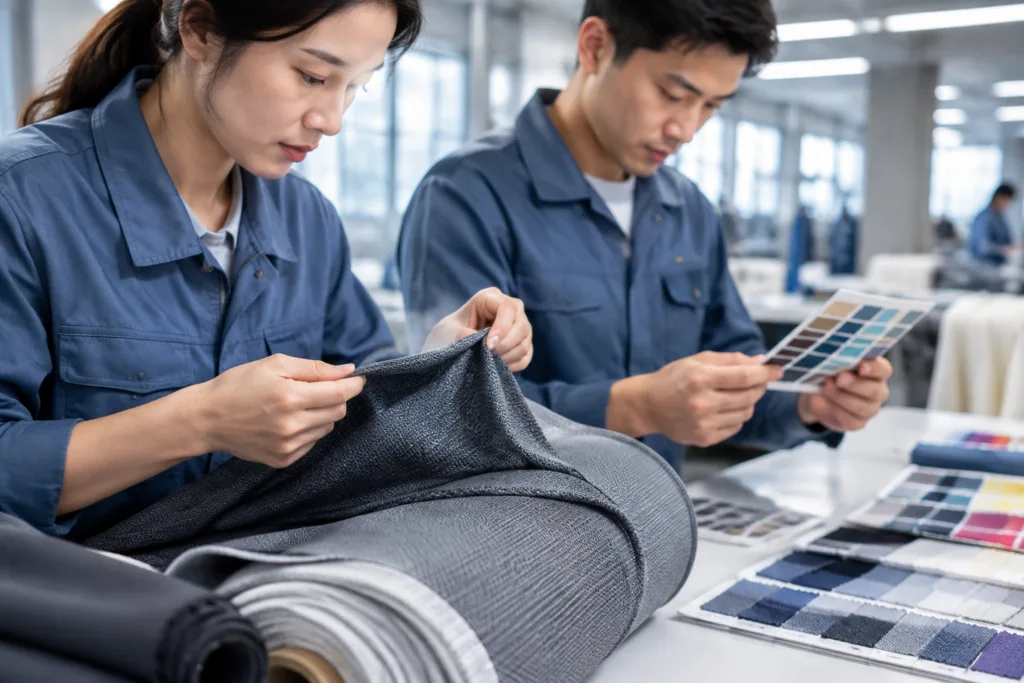
Fabric selection should begin with the required wear experience. “Polyester” and “cotton” alone are not enough specifications because yarn type, knit construction, weight, finish, and blend ratio can substantially change the finished garment. Two fabrics with the same fiber content can feel and perform very differently.
For gym T-shirts, polyester or polyester-spandex knits are commonly considered where moisture movement, stretch, and fast drying matter. Cotton-rich jersey can offer a familiar soft touch and greater casual appeal, but its recovery and drying behavior differ from a technical knit. Blends can be useful when a brand wants a softer hand feel without abandoning a performance-oriented appearance.
| Fabric direction | Typical feel and use | Production questions to confirm |
|---|---|---|
| Cotton-rich jersey | Soft, natural, structured for lifestyle training tees | Weight, shrinkage allowance, pilling expectations, print compatibility |
| Polyester interlock | Smooth, stable, performance-oriented surface | Wicking finish, opacity, snag resistance, sublimation suitability |
| Polyester-spandex knit | Stretchy and close-fitting for active use | Stretch and recovery, seam type, logo method, heat sensitivity |
| Poly-cotton blend | Balanced softness and easier-care performance | Blend ratio, colorfastness, hand feel, and color consistency |
GSM is useful because it describes fabric weight, but it does not independently define quality. A lower GSM performance knit may be appropriate for warm-weather training, while a heavier jersey can support an oversized premium silhouette. Ask to assess actual swatches and a sewn sample rather than approving fabric from a composition line alone.
Color is another manufacturing variable. Brands developing signature shades should discuss custom fabric dyeing for distinctive brand colorways early, because color development, lab dips, minimums, and color approval can affect timing. Dye-lot variation is manageable when expectations and approval standards are agreed before bulk cutting.
Fit, Sizing, and Pattern Development Decide Whether the Garment Is Repeatable
A strong design can still fail commercially when sizing is inconsistent. Buyers should provide a size chart, graded measurements, tolerance expectations, and fit intent. If these do not exist, the development process should establish a base size and review a physical sample before grade rules are finalized.
Fit is more than chest width and body length. For an athletic tee, shoulder slope, armhole shape, sleeve opening, neck rib recovery, body sweep, and back length all affect mobility and appearance. A garment that looks correct on a flat measurement sheet may twist, ride up, or feel restrictive in movement if the pattern has not been developed for its intended use.
A proprietary product benefits from cut-and-sew development for proprietary athletic tee specifications when the brand needs control over panel lines, silhouette, pocket placement, neckline, or construction details. This route requires more decisions than selecting a standard blank, but it can create a clearer product identity and improve fit for a defined customer.
What to review during fitting
- Garment measurements against the approved specification sheet
- Shoulder position, sleeve mobility, and neckline comfort during movement
- Transparency, drape, and recovery under normal wear
- Seam appearance after wash testing or stretch assessment where relevant
- Consistency between intended logo placement and pattern panels
- Fit across the target body type, not only on one model
Match Logo Methods to Fabric, Artwork, and Expected Wear
Decoration should be selected for the garment rather than chosen only by visual preference. Screen printing can suit bold artwork and larger runs, while heat transfers can be efficient for detailed logos, smaller placements, or variable designs. Embroidery offers dimension and a premium uniform look, but can add stiffness or distortion on lightweight stretch knits if backing and placement are not managed carefully.
Sublimation is generally considered for compatible polyester fabrics and is particularly useful for all-over graphics, teamwear panels, or designs that must remain integrated into the fabric surface. It is not a substitute for proper fabric selection, and the artwork should be reviewed for color, scale, and placement before printing is approved.
| Method | Best suited to | Buyer watchpoint |
|---|---|---|
| Screen print | Bold graphics and repeat bulk orders | Ink hand feel, color count, and artwork separation |
| Heat transfer | Detailed logos and smaller placements | Adhesion, stretch performance, and heat sensitivity |
| Embroidery | Polos, outerwear, and structured branding | Backing, puckering, and comfort against skin |
| Sublimation | Polyester teamwear and full-color designs | Fabric compatibility and artwork placement |
Trims and packaging belong in the same approval path. Neck labels, care labels, woven hem labels, hangtags, polybags, cartons, and barcode requirements can each cause avoidable delay when submitted after the garment sample is approved. Prepare logo files in usable formats and state which details are mandatory for launch versus optional for later production runs.
Plan Sampling, MOQ, and Lead Time as Connected Decisions
Sampling is the stage where a concept becomes a production instruction. It is the right point to validate fabric hand feel, color, fit, sewing quality, print placement, labels, and packaging assumptions. Skipping sample review may appear faster, but it transfers unanswered questions into bulk production, where corrections are more expensive and disruptive.
Use the apparel sampling process for validating fabric, fit, and performance to define each approval stage and capture comments in one controlled document. Conflicting feedback from different stakeholders is a frequent reason for repeated samples, so brands should nominate one final approver and consolidate revisions before requesting another version.
MOQ is shaped by fabric availability, dyeing requirements, decoration setup, custom trims, color count, and the number of sizes. A low quantity may be workable with available materials and simplified branding, whereas a custom-developed fabric or exclusive colorway usually needs a larger commitment. The practical question is not simply “What is the MOQ?” but “Which product choices make this order quantity feasible?”
Build a more dependable production request
- Provide the target quantity by color and size, not only a total unit count.
- State the required delivery date and whether it includes shipping or only factory completion.
- Identify which materials and trims are custom versus acceptable from available options.
- Approve the pre-production sample, color standard, artwork, and packing instructions in writing.
- Leave time for material sourcing, sample changes, bulk production, inspection, and packing.
Our manufacturing perspective is that clearer approvals are often more valuable than aggressive timelines. Ninghow can support buyers in converting a concept into a coordinated fabric, pattern, trim, decoration, and bulk-production plan, but final consistency depends on the information approved before production starts.
Quality Control Should Follow the Product’s Real Risks
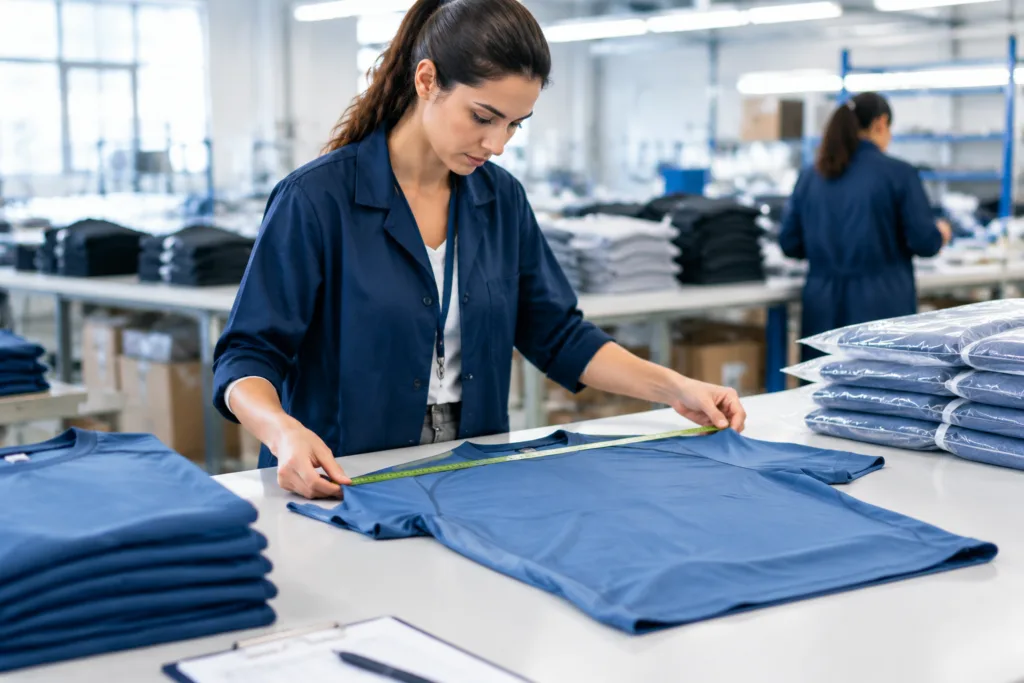
Quality control is most effective when it checks the points most likely to affect customer satisfaction. For a gym T-shirt, that may include measurement consistency, stitch integrity, fabric defects, shade variation, print adhesion, logo placement, label accuracy, and packing quantity. For a fleece hoodie, pilling, rib recovery, and drawcord details may deserve greater attention.
QC should not occur only at the end of the line. Fabric inspection before cutting can identify visible defects or shade concerns. During sewing, teams can check seam quality, construction alignment, and measurement trends. Final inspection verifies the finished garment against the approved sample and packing requirements before cartons are closed.
Key takeaway: An approved sample is the production reference, not merely a presentation piece. Keep it aligned with the latest measurement sheet, artwork, trim list, and packaging instruction.
Common Planning Mistakes That Create Unnecessary Delays
The most common mistake is asking for a final quotation before the garment is sufficiently defined. Early budget guidance is useful, but a confirmed price requires clarity on fabric, construction, decoration, quantities, colors, sizes, and packaging. Changes to any of these can change material use, labor, setup, and schedule.
- Using inspirational images without measurements, construction notes, or an identified fabric direction
- Approving a fit sample while leaving labels, artwork, or packaging undecided
- Requesting an exclusive color without allowing time for dye approval
- Assuming every colorway and size can share the same practical MOQ
- Providing artwork without stating its exact placement and finished dimensions
- Changing the size chart after bulk cutting has started
A better process is to document decisions in a tech pack or structured production sheet. It does not need to be elaborate at the first inquiry, but it should identify what is known, what is still open, and who has authority to approve each decision.
Conclusion: Define the Product Before You Define the Production Plan
The topic “Topic Not Provided” highlights a real sourcing lesson: apparel manufacturing needs a clear subject before it can produce clear decisions. Replace keyword not provided with a precise product, audience, and use scenario, then connect fabric, fit, branding, sample requirements, quantity, and quality controls to that product.
For brands developing performance apparel, a disciplined brief creates a stronger sample, more comparable supplier discussions, and a more predictable bulk order. Start with what the garment must do for the wearer; the appropriate manufacturing route follows from that answer.
Frequently Asked Questions
What information should I provide before requesting an apparel manufacturing quote?
Provide the garment type, reference images or tech pack, fabric direction, quantity by color and size, logo method, label and packaging needs, and target delivery date. If some details are undecided, identify them clearly so the supplier can distinguish a budget estimate from a production-ready quotation.
Can I develop custom gym clothing without a complete tech pack?
Yes, a manufacturer can help develop an initial brief from reference images, measurements, and use requirements, but a written specification should be created before bulk production. The more clearly fit, fabric, construction, artwork, and trims are documented, the fewer assumptions are carried into sampling and production.
How does fabric GSM affect a gym T-shirt?
GSM affects weight, coverage, drape, and perceived structure, but it does not define fabric quality by itself. A lighter technical knit may suit warm training conditions, while a heavier cotton-rich jersey may better support a structured lifestyle fit, so composition and knit construction should be reviewed alongside GSM.
Why is a pre-production sample important?
A pre-production sample confirms the approved combination of fabric, color, measurements, construction, decoration, trims, and packing details before the full order proceeds. It gives both buyer and factory a shared reference for quality control and reduces the risk of bulk garments differing from the intended product.
What makes low MOQ more difficult for custom apparel?
Low MOQ becomes more difficult when a project requires custom-dyed fabric, exclusive trims, multiple colors, extensive size splits, or complex decoration because each element has its own sourcing or setup requirements. Using available materials and simplifying early launches can make smaller quantities more practical.
How can I compare apparel manufacturers fairly?
Compare manufacturers using the same product brief and ask how they handle fabric sourcing, pattern development, samples, customization, MOQ, lead time, quality checks, and packing. A lower quote is only meaningful if fabric, workmanship, labels, decoration, and delivery assumptions are equivalent.